
Reviewed · JEWISH GHETTO WALKING TOURS
Rome: Traditional Cooking Class in the Jewish Ghetto
Fresh pasta, right in the Jewish Ghetto. The best part of this Rome cooking class is how you get hands-on in the kitchen while the setting around you stays real, the Jewish Quarter energy included. I especially like the seasonal Roman menu angle, with winter artichokes or summer zucchini flowers shaping what you cook and taste.
One heads-up: this is not a school-type, super academic class. It is friendly, relaxed, and practical, so if you want highly technical instruction for every single step, you may wish it were a bit more intense.
In This Review
- Key highlights worth showing up for
- Why This Pasta Class Works in Rome’s Jewish Ghetto
- Meeting at Taverna del Ghetto and Getting Your Bearings
- The 3-Course Roman Menu You Actually Cook
- Hands-On Pasta Dough, Crank Machines, and Real Kitchen Flow
- Cacio e Pepe and Seasonal Vegetable Secrets
- Wine, Small Group Size, and the Meal You Sit Down To
- What You Take Home: Recipes, Follow-Up Tips, and Confidence
- Price and Value for a 3-Hour Roman Cooking Evening
- Who Should Book This Jewish Ghetto Cooking Class
- Who Might Skip It (Or Adjust Expectations)
- Quick Practical Notes Before You Go
- Should You Book This Rome Jewish Ghetto Cooking Class?
- FAQ
- Where is the meeting point?
- How long is the cooking class?
- How big is the group?
- What language is the guide?
- What is included in the price?
- Is the restaurant kosher?
- Can I join if I need gluten-free?
- Are vegetarians or vegans welcome?
- What allergens should I be aware of?
- Is wheelchair access available, and can I bring pets?
Key highlights worth showing up for
- Jewish Ghetto location that feels like part of the neighborhood, not a staged experience
- Make pasta from scratch using classic methods, then eat what you cook
- Seasonal cooking like artichokes in winter or zucchini flowers for fritto romano in summer
- Cacio e pepe know-how taught by the chef, plus quality tasting time
- Small group size capped at 10, with translator support when needed
- Recipes and follow-up tips to help you recreate the menu after Rome
Why This Pasta Class Works in Rome’s Jewish Ghetto
Rome has no shortage of cooking classes. This one works because it starts where real daily life happens, the Jewish Ghetto area, and it stays there in spirit. You are not just learning recipes. You are learning how locals think about food, especially the seasonal rhythm that drives Roman cooking.
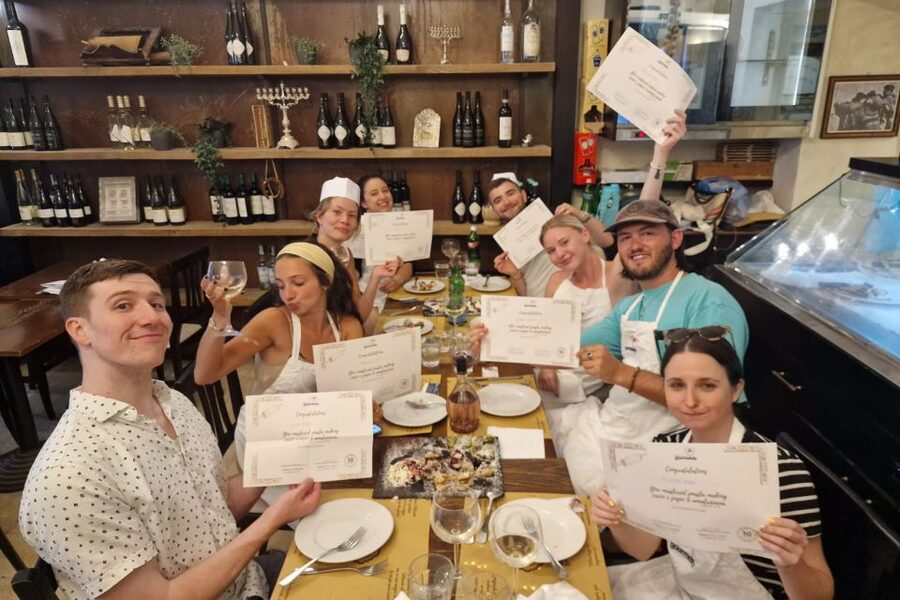
I also like that the vibe is social without being chaotic. With a small group and a local host in the mix, you get a proper rhythm: hands in dough, then sit down to eat, then talk and compare notes. It makes the whole evening feel like you joined a family kitchen for a few hours.
Finally, the food focus is clear. You make a 3-course Roman-style menu built around homemade pasta and what the season offers. That is a better use of your time than a class that throws random dishes at you.
Other walks through the old Jewish Ghetto:
- Rome Food Tour: Campo de’ Fiori, Ghetto, Trastevere Winner 2024
★ 5.0 · 3,205 reviews - Rome: Eat Like a Roman Ghetto & Campo de’ Fiori Food Tour
★ 5.0 · 1,037 reviews - Jewish Ghetto and Synagogues with Jewish Roman Guide 3 Hours
★ 5.0 · 907 reviews - Jewish Ghetto & Piazza Navona: Food, Wine & Sightseeing Rome Tour
★ 5.0 · 460 reviews
Meeting at Taverna del Ghetto and Getting Your Bearings
You meet your guide at Restaurant Taverna del Ghetto, outside the door. This matters more than it sounds. You start the experience in the right place, then the neighborhood walk and context help you understand what you are about to cook.
Once you are together, you get a local-style introduction to the area, including the history and legend connected to the Jewish district and its food traditions. The goal is not to turn it into a lecture. It is to help you connect flavors to place, so when you taste something later, it has a story behind it.
This is also where many guides set the tone for the night. I saw names like Lili, Lisa, Clelia, Livia, and Eleonora connected to this experience, with translators like Andy or Asia often helping with English support. In some sessions, the chef may speak mostly Italian at first, so having a translator around makes the cooking feel smooth, not stressful.
The 3-Course Roman Menu You Actually Cook
The class is built around a typical Roman dinner structure. You are not just making one small thing and calling it a day. You work through courses, with homemade pasta as the anchor.
Here is what you should expect at a practical level:
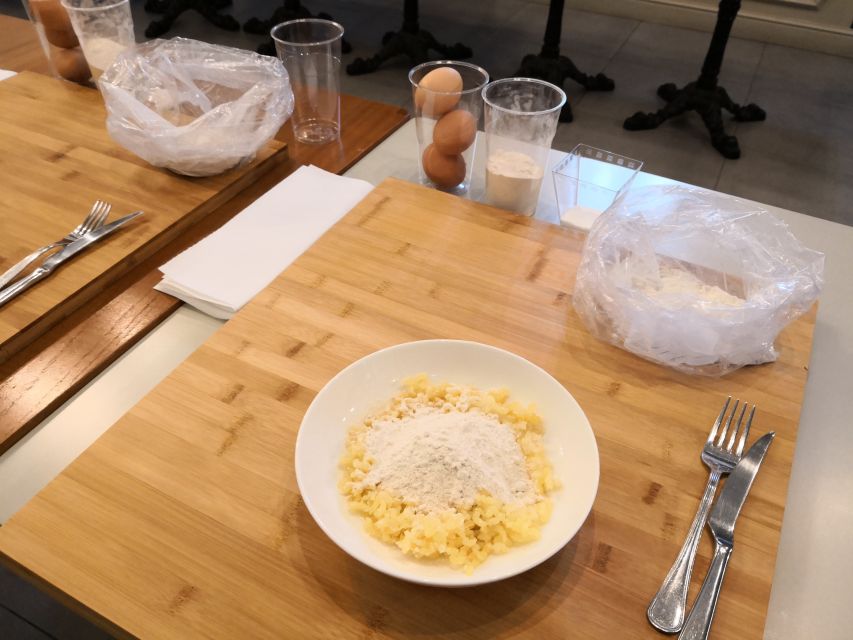
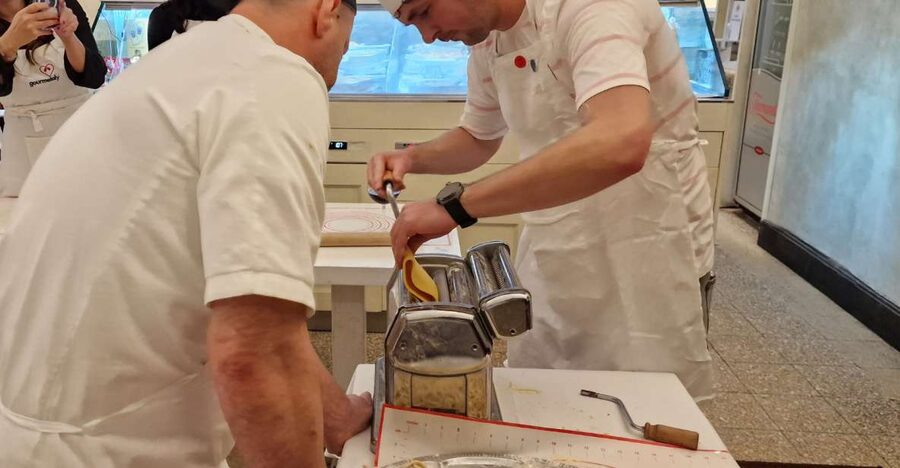
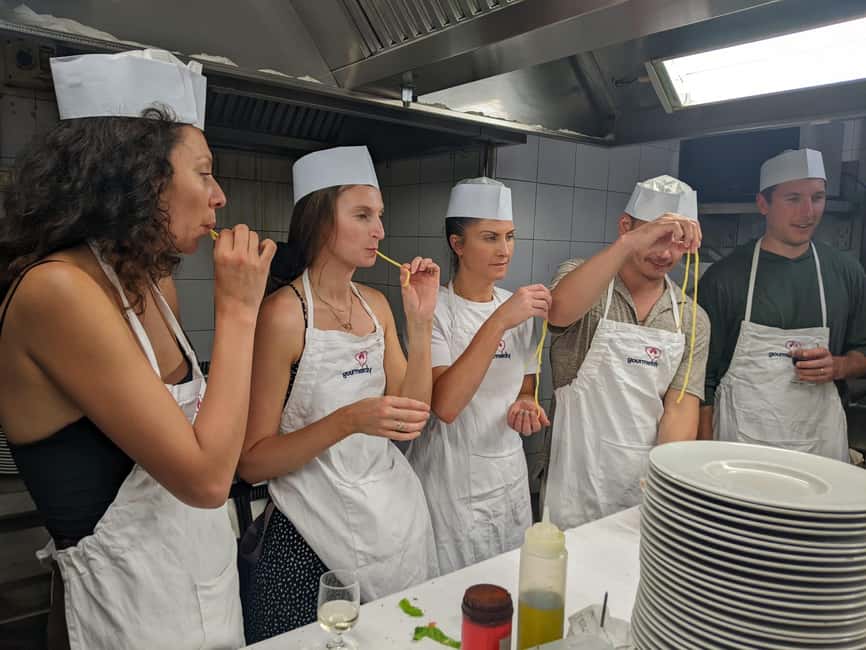
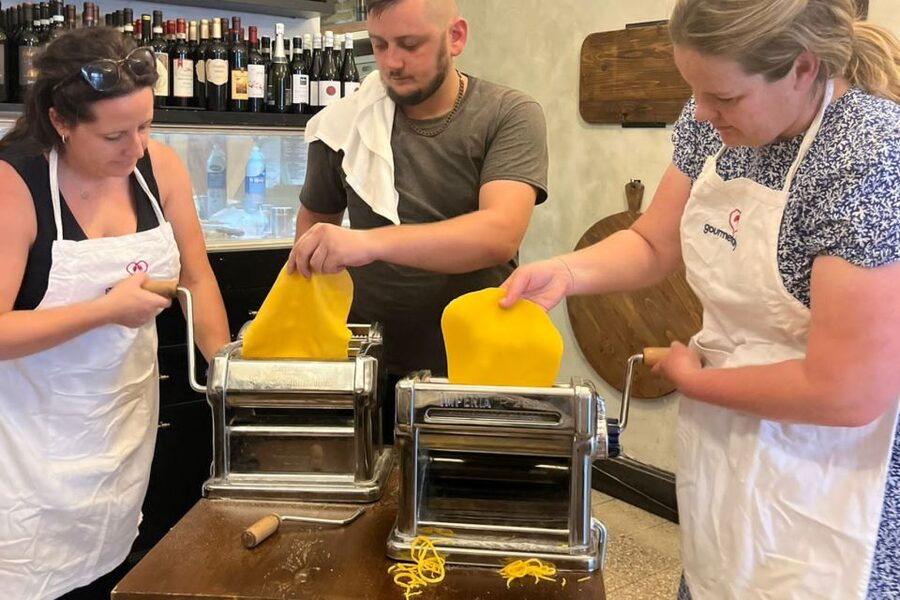
First, you make fresh pasta from scratch. In many sessions, that includes learning the dough basics and working with the kind of crank machine you would expect in a real kitchen. You roll, cut, and form pasta so you leave with muscle memory, not just a recipe card.
Second, you prepare a seasonal savory course driven by what is best in that moment. In winter, that often points toward artichokes cooked in a Jewish style. In summer, you may work with zucchini flowers to make the original fritto romano.
Third, you end with dessert. The signature finish is torta di ricotta e visciola, a classic ricotta cheesecake made with simple, straightforward ingredients.
The best part is that each course ties into the others. Pasta is not random. The vegetables and dessert feel like they belong to a shared dinner logic.
Hands-On Pasta Dough, Crank Machines, and Real Kitchen Flow
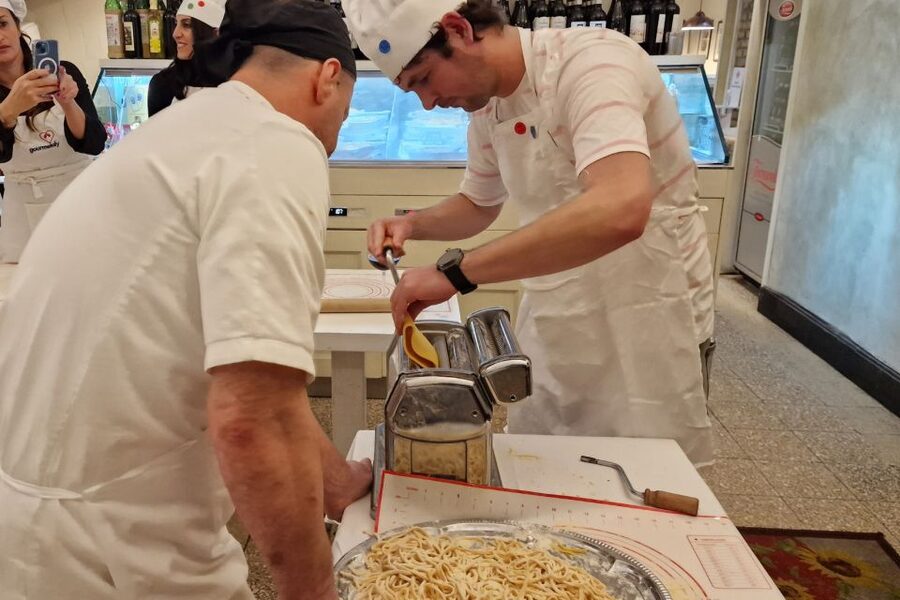
The heart of the class is learning how to make pasta dough from scratch. You start with the foundational choices, like the flour used and how to work the dough until it behaves. Then you put it through the machine, cut it, and get it ready for cooking.
You should also know the class is hands-on, but it is not a drill sergeant situation. If you want to take it easier, you can relax and watch the chef working, glass of wine in hand. Still, the class aims to get you doing something each step, stirring, forming, and tasting, so you do not feel like you are just a spectator.
One practical benefit of the pacing is how it builds confidence. By the time you sit down to eat, you have already felt the dough change under your hands. That makes it much easier to repeat the basics later at home.
Cacio e Pepe and Seasonal Vegetable Secrets
Roman cooking loves simplicity, and the magic is in the method. You get hands-on time connected to classic flavors, including cacio e pepe. This is where the chef’s guidance helps most, especially if you have never cooked with these kinds of sauces before.
Then you shift into the seasonal vegetable component. This is where you learn that local cooking is not just about taste. It is about technique that fits the ingredient.
- Winter artichokes: you may learn how to peel and prep artichokes so they can be cooked in a Jewish style. This is one of those tasks that sounds fussy until someone shows you the quick way.
- Summer zucchini flowers: you may learn how to handle zucchini blossoms and prepare them for fritto romano, a Roman-style fried dish.
Either way, you are learning more than a single recipe. You are learning how to prep vegetables properly so they cook well, not just how to eat them.
Other Roman benches to work at for a morning:


Wine, Small Group Size, and the Meal You Sit Down To
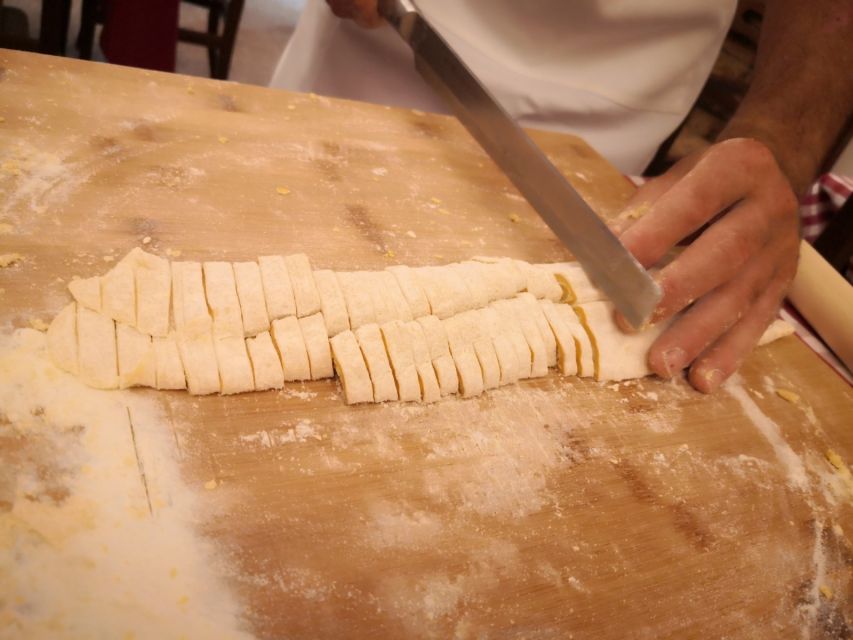
You get Italian wine and bottled water during the class. This is not just an add-on. The wine keeps the evening social and helps the pacing feel like dinner with friends rather than a rushed demo.
Group size is limited to 10 participants. That is the sweet spot for a cooking class in a small restaurant kitchen. You are close enough to ask questions and get feedback, but not so packed that the host gets overwhelmed.
You also get to taste what you make. The included meal is a true sit-down part of the experience, so you are not standing around nibbling while the cooking continues for the rest of the night. And yes, you spend enough time at the table that you actually experience the dinner you just built.
In past sessions, people have praised the chef checks in and gives feedback, and that you can move between hands-on tasks and watching moments depending on how confident you feel.
What You Take Home: Recipes, Follow-Up Tips, and Confidence
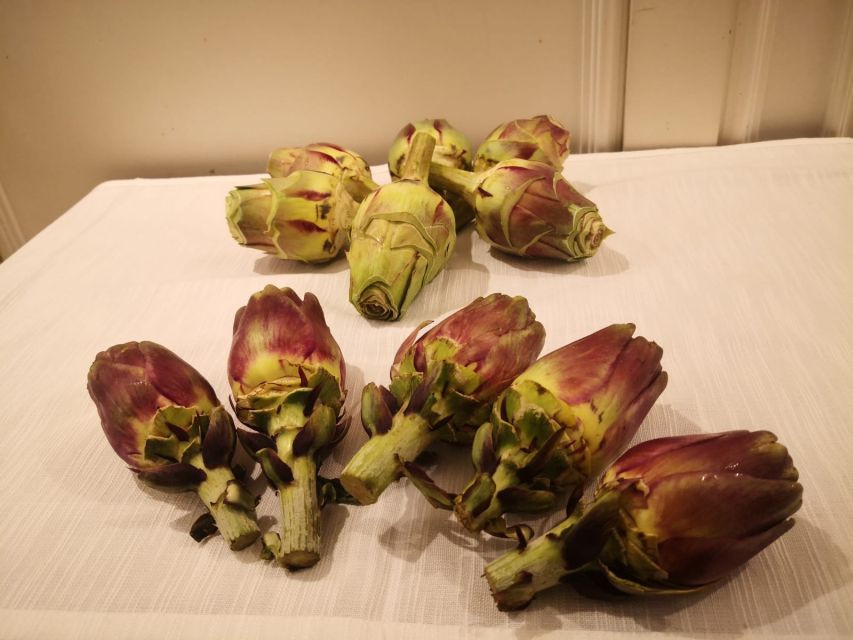
At the end of the class, you receive recipes. You also get a list of tips and recommendations for the days that follow. That follow-up part matters because Rome is fast. You want guidance that turns one great evening into a smarter food plan for the rest of your trip.
The recipes are especially useful if you have been to Italy before and still feel stuck when you try to recreate pasta at home. The class is practical. You learn the dough process, then you eat your result, so the written steps make sense later.
The tips list can also help you travel smarter, like what to order next, what flavors connect to this cooking style, and how to keep your expectations aligned with Roman food logic.
Price and Value for a 3-Hour Roman Cooking Evening
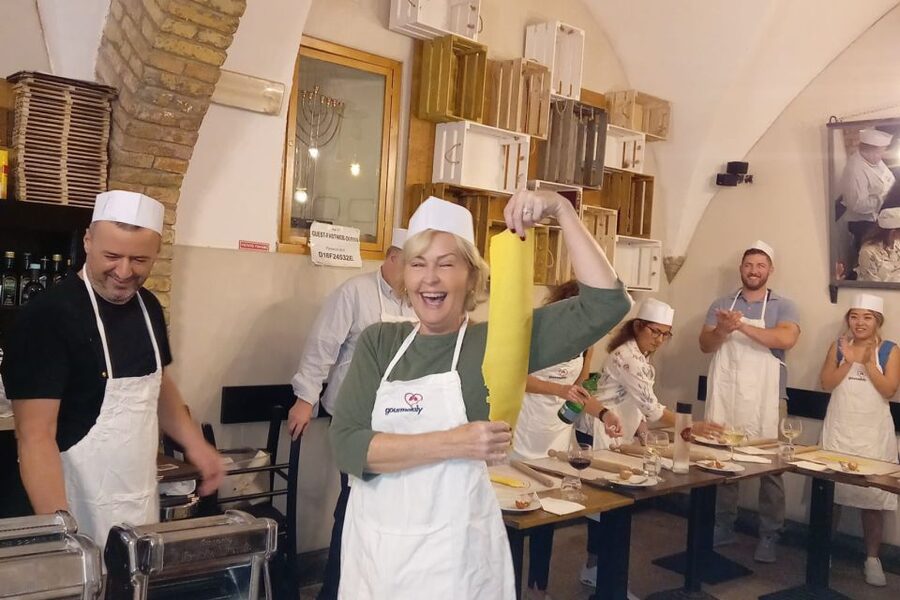
It costs $94 per person for a 3-hour experience. On paper, it is not cheap. But when you break it down, the value is easier to understand.
You are paying for:
- a hands-on pasta from scratch lesson,
- a full 3-course meal (pasta plus seasonal main course plus dessert),
- wine and bottled water,
- kitchen equipment and a chef’s instruction time,
- and recipes plus local recommendations to take home.
In Rome, the cost of a good dinner, plus wine, plus a guided, hands-on food experience can add up quickly. This class packages all of it in one evening, without you needing to book multiple things or guess how to learn the techniques.
If you do like food with a practical payoff, this is strong value. If you are only interested in tasting and want zero kitchen work, you may decide it is more than you need.
Who Should Book This Jewish Ghetto Cooking Class
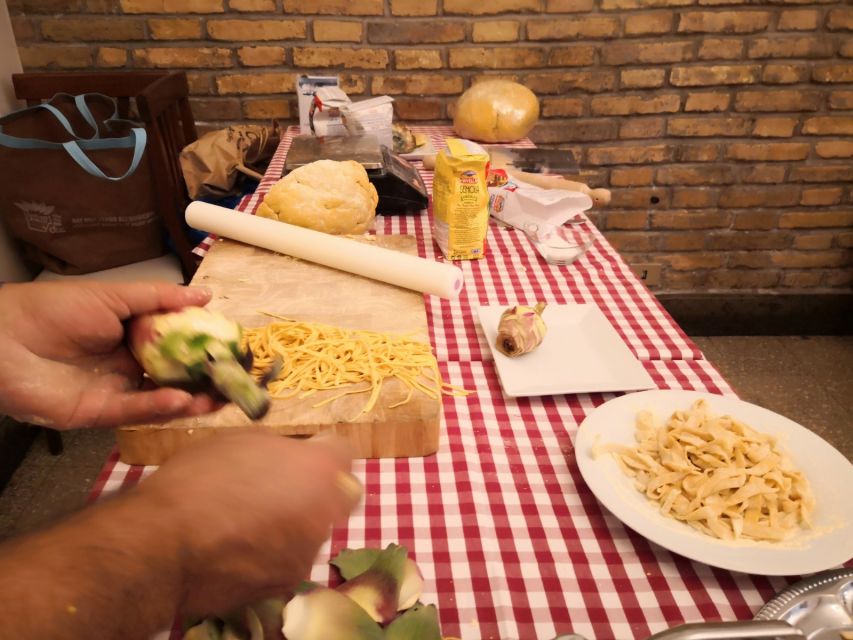
This is a great fit if you want a Rome experience that feels local and human. You are meeting people, learning a classic Roman menu structure, and spending time in the kitchen with a chef who is clearly passionate about the tradition.
It is also a good choice for families and mixed groups. Many sessions are described as enjoyable for kids, and there is mention that vegetarians and vegans are welcome, with accommodations available.
Here are good reasons to book:
- you want fresh pasta from scratch guidance you can repeat at home
- you like seasonal cooking, especially artichokes and zucchini blossoms
- you want an experience that includes history, but keeps it friendly and tied to food
- you prefer a small group setting where you can actually talk
Who Might Skip It (Or Adjust Expectations)
A few things might steer you away, or at least help you set expectations.
First, this is not a lecture-style, super technical cooking class. It is relaxed and social, which many people love. But if you are the type who wants a very structured, step-by-step method for every detail, you may find the pace a little easy.
Second, the restaurant is not kosher, and the class is not kosher. If that matters to you for religious reasons, you will want to skip.
Third, the class is not designed for wheelchair users.
Fourth, gluten-free is not the default. The class is not gluten-free, but packaged gluten-free pasta may be available. If you are okay touching flour, you may still be able to participate and use the gluten-free pasta option.
Finally, this is not about pets. Pets are not allowed.
Quick Practical Notes Before You Go
Plan around food details so you are comfortable.
Allergens: milk, eggs, soya, mustard, nuts, and gluten can be present in tastings. If you have a serious allergy, you should plan carefully and speak with the team in advance.
Dietary preferences: vegan and vegetarian guests are welcome, and accommodations are mentioned. Still, because you are cooking with seasonal Roman ingredients, the exact substitutions can vary by menu and season.
Location: you are meeting at Taverna del Ghetto. Wear comfortable shoes, since you will be in the neighborhood area before cooking.
Language: the guide is English. The chef may speak Italian, so the translator support is part of how the class stays understandable.
Notably, the class includes wine and bottled water, so it is an evening activity, not an early daytime plan.
Should You Book This Rome Jewish Ghetto Cooking Class?
If you want a hands-on Rome food experience with a real neighborhood setting, I think it is an easy yes. The combination is hard to beat: you learn fresh pasta from scratch, cook a seasonal Roman menu, and end with dessert like torta di ricotta e visciola, all while getting recipes and local tips.
I would only hesitate if you need strict dietary control for religious reasons, or if you require wheelchair accessibility. And if you want a super technical cooking workshop, adjust your expectations toward a relaxed, friendly, practical class.
If that sounds like your style, book it. Then show up hungry, wear comfy clothes for dough work, and get ready to bring home recipes you will actually use.
FAQ
Where is the meeting point?
You meet your foodie guide at Restaurant Taverna del Ghetto outside the door.
How long is the cooking class?
The duration is 3 hours.
How big is the group?
It is a small group with a limit of 10 participants.
What language is the guide?
The live tour guide provides English.
What is included in the price?
The price includes a 3-course meal (fresh homemade pasta, a seasonal main course, and traditional dessert), Italian wine and bottled water, and all kitchen and cooking equipment.
Is the restaurant kosher?
No. The restaurant is not kosher, and this cooking class is not kosher.
Can I join if I need gluten-free?
This cooking class is not gluten-free. However, packaged gluten-free pasta may be available. The class notes that if you can touch flour with no problem, you can join.
Are vegetarians or vegans welcome?
Yes. Vegan and vegetarian guests are welcome, with accommodation mentioned.
What allergens should I be aware of?
Allergens that can be present include milk, eggs, soya, mustard, nuts, and gluten.
Is wheelchair access available, and can I bring pets?
Wheelchair users are not suitable for this experience, and pets are not allowed.
Roman Kitchens to Cook In
- Rome: 3-in-1 Fettuccine, Ravioli, and Tiramisu Cooking Class
★ 4.9 · 2,704 reviews - Rome: Fettuccine Pasta Cooking Class in Rome’s City Center
★ 4.8 · 2,414 reviews - Fettuccine & Tiramisù: Cooking Class with Wine & Limoncello
★ 4.9 · 2,103 reviews - Rome: Pasta & Tiramisu Cooking Class near the Spanish Steps
★ 4.8 · 1,395 reviews
Latest additions from Rome
- Guided Tour Vatican Museums & Sistine Chapel★ 4.1 · 30 reviews
- Exclusive Rome by Night Vespa Tour★ 5.0 · 30 reviews
- Transfer Rome to Airports★ 4.5 · 30 reviews
- Vatican: St.Peter’s Basilica & Dome – Reserved Entry & Tour★ 4.1 · 30 reviews
- Rome street art tour: off the beaten path with a local guide★ 5.0 · 30 reviews
- Tivoli, Hadrians Villa and Villa d’Este, a charming day trip from Rome★ 4.5 · 30 reviews
- Rome Food Tasting with Wine Pairing Italian Authentic Flavors★ 5.0 · 31 reviews
- Inspirational Cooking on the Roman Chef’s Panoramic Terrace★ 5.0 · 30 reviews
Jewish Ghetto Walking Tours, compared.
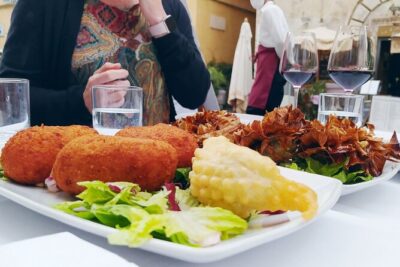
Rome Food Tour: Campo de’ Fiori, Ghetto, Trastevere Winner 2024
Read our review →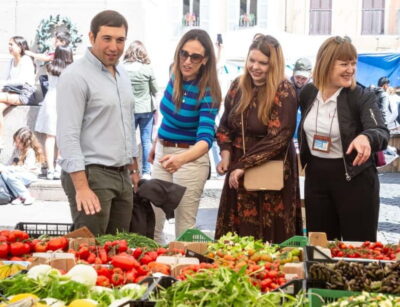
Eat Like a Roman Ghetto & Campo de’ Fiori Food Tour
Read our review →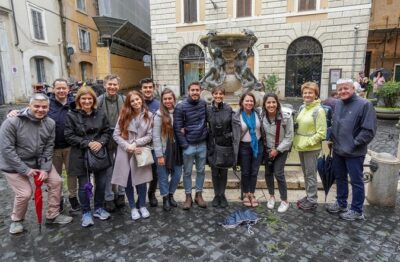
Jewish Ghetto and Synagogues with Jewish Roman Guide 3 Hours
Read our review →
Jewish Ghetto & Piazza Navona: Food, Wine & Sightseeing Rome Tour
Read our review →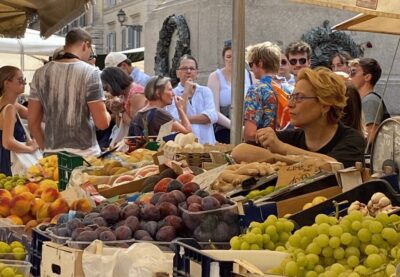
Food & Wine Tour of Campo de Fiori, Ghetto, Trastevere
Read our review →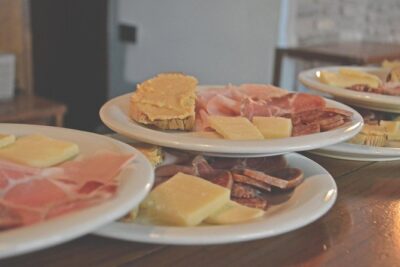
Jewish Ghetto and Campo Dè Fiori By Night Food, Wine and Sightseeing Tour
Read our review →
Trastevere and Rome’s Jewish Ghetto Half-Day Walking Tour
Read our review →
Browse the lists this tour appears in