
Reviewed · JEWISH GHETTO WALKING TOURS
Rome: Jewish Ghetto Walking Tour
Two millennia of Rome, on foot. This Jewish Ghetto walking tour connects classic ruins with the lived story of a neighborhood shaped by centuries of change. You start at Foro Traiano and move through sights that still feel active, not just museum-set scenery.
What I love most is how the route threads together Roman power and Jewish community life. You get stops like the Theater of Marcellus and the Turtle Fountain in Piazza Mattei, with the guide turning details into a clear timeline you can actually hold in your head.
One consideration: the tour focuses on outdoor landmark viewing, so if you’re hoping for a big interior visit to every site, manage expectations ahead of time. Also, if you’re planning for Friday afternoon, check the timing around sabbath starts, since that can affect the feel of the area.
In This Review
- Key highlights you should care about
- From Trajan’s Column into the Jewish Ghetto’s 2,000-year story
- Theater of Marcellus: older than the Colosseum, and that matters
- Piazza Mattei and the Turtle Fountain: love, legend, and good timing for photos
- Jewish Ghetto streets: resilience you can see in the details
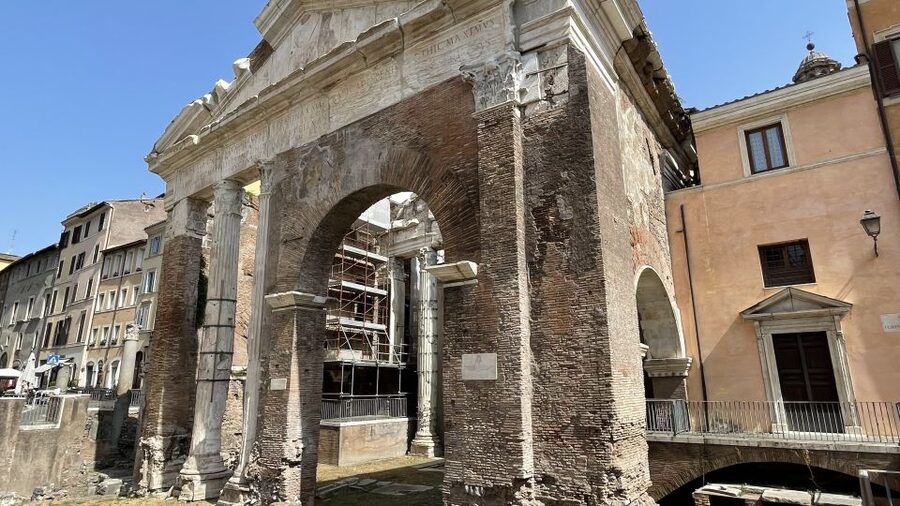
- Portico d’Ottavia: where Roman architecture still feels in use
- Tiber Island and the oldest functioning bridge: WWII stories and Asclepius
- The kosher gelato (or coffee) break, and how to use it well
- Price and timing: what $65 buys you, and why 2.5 hours works
- Who should book this tour (and who should plan differently)
- Should you book the Rome Jewish Ghetto Walking Tour?
- FAQ
- Where does the tour start?
- How long is the Rome Jewish Ghetto walking tour?
- What is included in the price?
- What should I wear or bring?
- Does the tour run in bad weather?
- Are there any clothing rules for churches?
- Can I reserve without paying right away, and is cancellation possible?
Key highlights you should care about
- Two eras in one walk: Roman monuments plus Jewish community history in the same radius
- Marcellus first, Colosseum vibes later: the Theater of Marcellus is older than the Colosseum
- Piazza Mattei story stop: the Turtle Fountain with its tale of unrequited love
- Real “still-there” history: the last remnant wall piece is part of what you’ll see on the route
- Tiber Island payoff: you cross the oldest functioning bridge in Rome and hear why the island mattered in WWII
- Included kosher gelato or coffee: a real break, not just a photo stop
From Trajan’s Column into the Jewish Ghetto’s 2,000-year story

This is the kind of walk where you notice Rome differently. Instead of only chasing famous icons, you start in the center of things and then trace how one neighborhood evolved across empires, laws, street-level survival, and heartbreak.
The meeting point is Foro Traiano, 84, and you’ll look for the orange Roman Vacations sign. The tour is 2.5 hours long, guided in English, and it’s built for steady walking with multiple short history stops.
I like that the rhythm stays practical. You’re not stuck in one place. You’re constantly repositioning, so the story keeps moving forward the way a real neighborhood does. You also get multiple big names in one route, like the Theater of Marcellus and Portico d’Ottavia, without needing to piece together anything on your own.
More Walking Tours in Rome
- Rome: Guided Food Walking Tour with Wine in Trastevere
★ 4.9 · 3,105 reviews - Rome: Trastevere & Campo de Fiori Street Food Walking Tour
★ 4.9 · 2,768 reviews - Rome: Paranormal Night Walking Tour & Secret Backstreets
★ 4.9 · 1,921 reviews - Rome: Trastevere Street Food Walking Tour with Local Expert
★ 4.8 · 1,784 reviews
Theater of Marcellus: older than the Colosseum, and that matters
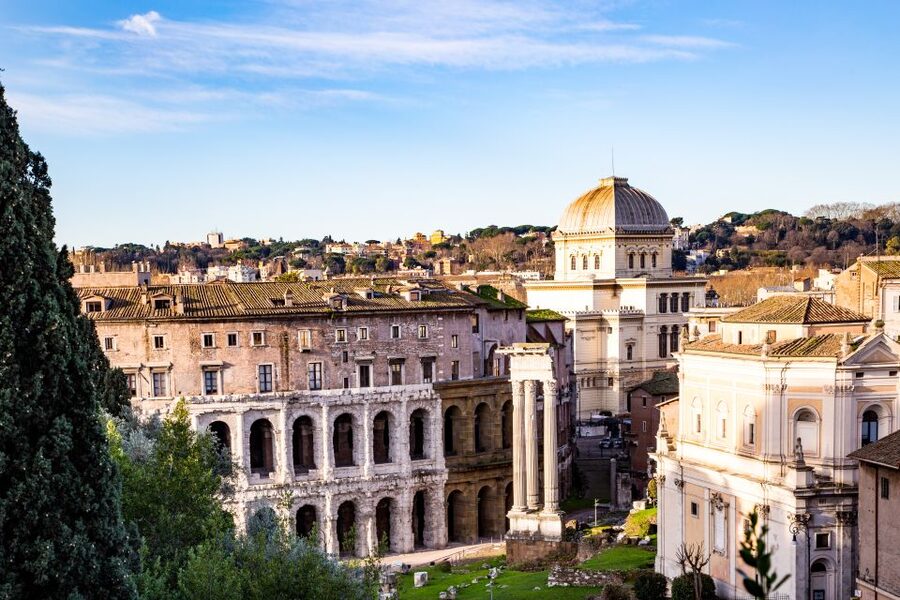
Your first major Roman stop is the Theater of Marcellus, and the key detail is the timing. It’s older than the Colosseum, so it helps you reset your sense of what “early Roman” really means. A lot of visitors look at ancient Rome like it was built in one dramatic burst. This stop quietly corrects that.
You get guided time here (about 20 minutes), which is enough to see the structure, understand its role in the urban plan, and then connect it to what comes next. Think of it as a foundation stop. The guide uses this spot to give context for how Romans shaped public life with stone, space, and spectacle.
The best part is the way the guide frames it so you don’t get lost in dates. Even if you’re not a Roman-history superfan, you’ll come away with a clearer picture of what kind of city Rome was building long before you recognize it from postcards.
Piazza Mattei and the Turtle Fountain: love, legend, and good timing for photos

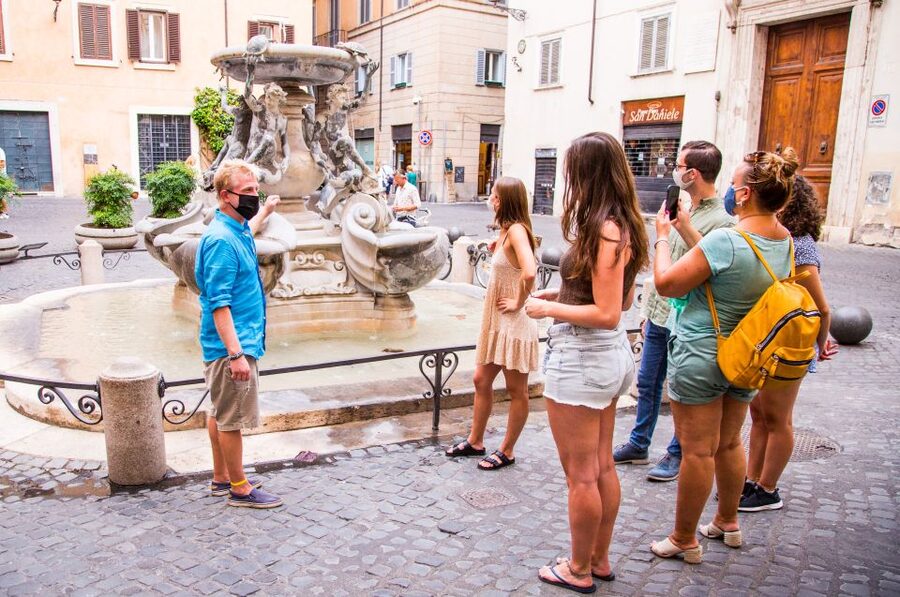
Next up is the Fontana delle Tartarughe in Piazza Mattei, a favorite stop because it mixes beauty with a human story. The guide shares the tale tied to the fountain, including the famous bit of unrequited love. It’s the kind of detail that makes the plaza feel less like a stop on a checklist and more like a place where people once gathered for daily life and lingering.
You’ll have about 20 minutes here with your guide. That’s not just time to look. It’s time to understand why this fountain became famous and how the square fits into the story of the area.
Practical note: Piazza Mattei can be lively. Bring your patience and your camera, but also remember that the fountain is only part of the moment. The best photos usually come when you pause long enough to let the guide finish the story, because then the place clicks into place in your mind.
Jewish Ghetto streets: resilience you can see in the details
This is the emotional center of the walk, and it’s handled with care. You’ll explore the Jewish Ghetto area and learn how the neighborhood changed over centuries, not as a single event but as a long arc.
You’ll pass key landmark points connected to the community, including the area around the Great Synagogue of Rome. Based on the route style, plan on seeing it as part of the neighborhood walk, with context and story rather than a guaranteed inside visit. Some people hope for more interior access, and if that’s your priority, you’ll want to double-check expectations before you go.
One particularly memorable stop is the section where you see the last remaining piece of the wall that kept the Jewish community in this area for centuries. That kind of physical remnant is powerful because it turns abstract history into something your eyes can track. It helps you understand how restrictions were not just laws on paper, but lines that shaped daily routes, relationships, and routines.
If you’re unsure about how to talk about heavy history while sightseeing, this walk is built to do that without turning the experience into either a lecture or a blur. The guide pacing is one of the big reasons people rate this tour so highly.
Portico d’Ottavia: where Roman architecture still feels in use
After the ghetto segment, the tour shifts again into Roman-city fabric with a stop at the Portico d’Ottavia. This is a great counterbalance if you’ve just been hit with intense stories, because architecture gives you an immediate sense of scale and structure.
You’ll spend about 15 minutes here, guided. The value isn’t only in the look of the portico. It’s in understanding how ancient Rome reused and repurposed spaces, and how the area’s layers overlap instead of cleanly separating.
This stop also helps you see the ghetto story in a wider city context. Rome wasn’t one uniform stage. It was a patchwork of communities, rules, and power centers. Portico d’Ottavia makes that clear in a way that feels visual.
Other walks through the old Jewish Ghetto:
Tiber Island and the oldest functioning bridge: WWII stories and Asclepius
The final leg of the tour is one of the most memorable parts for many people: crossing to Tiber Island. You’ll do it by crossing the oldest functioning bridge in Rome, which adds a satisfying “this still works today” element to the experience.
Once you’re on the island, the guide connects you to two big themes. First, the role of a hospital saving people during WWII, which is the kind of story that turns a viewpoint into a lesson. Second, the tale of Asclepius, tied to a temple that is now a church.
This stop is a strong finish because it brings together three things that Rome does well: history, faith, and survival. You end with a place that lets you look out across the river and suddenly understand why Rome’s geography mattered so much.
It’s also a smart way to wrap up a walking tour. By the time you reach Tiber Island, you’ve had multiple stops that build the narrative. Now you get space to think.
The kosher gelato (or coffee) break, and how to use it well
Midway through, you’ll get a stop at a gelateria for homemade Kosher gelato, and the tour includes kosher gelato or coffee. This isn’t just a snack token. It gives you a real reset during a concentrated 2.5 hours, especially if you’ve been walking in sun or heat.
Value-wise, it’s a nice add because you don’t have to track down a separate meal stop immediately. The walk is already packed with major landmarks, so an included refresh keeps the day from turning into a rushed scramble.
When you’re planning your own schedule, I suggest treating this tour as your “anchor” activity. After the tour, you’ll have a better sense of where you want to roam next, including how the area connects back toward the broader historic center.
Price and timing: what $65 buys you, and why 2.5 hours works

At $65 per person for 2.5 hours, you’re paying for a guided route that includes multiple landmark stops plus a included refresh. In practical terms, you’re buying time, context, and someone to connect the dots fast.
Two details make the duration work:
1) The stops are short enough to keep energy up, but not so short that you only skim the surface.
2) You move through big, visually distinct locations, so your brain keeps updating the story map as you go.
You’ll also find that many guides really lean into storytelling, and the result is that the tour tends to feel more like a guided walk with a good teacher than a fast conveyor belt. Some people even report ending up in a smaller group or private-feeling experience on certain days, which can make the question time more rewarding.
Who should book this tour (and who should plan differently)
This is a great fit if you want to understand Rome beyond the usual postcard loop. You’ll enjoy it most if you like history you can see, and if you’re the type who enjoys connecting architecture to human stories.
It’s also a strong choice for families and teens, as long as you’re okay with some serious topics. Several guide performances are specifically praised for keeping younger people engaged through narrative style.
If your main goal is only to tick off famous interiors, you might feel slightly less satisfied, because the focus is on guided viewing and context across outdoor landmarks and key neighborhood points. If you care a lot about synagogue interior access, you’ll want to confirm that directly with the operator before you book.
And if you’re walking slowly or need pacing adjustments, the good news is that some guides have been praised for matching the group’s walking needs. Bring your comfort priorities, and talk to the guide at the start if you need a slower pace.
Should you book the Rome Jewish Ghetto Walking Tour?
I think you should book if you want a route that explains how Rome’s Jewish neighborhood fits into the city’s larger story of power, space, and survival. You get a tight mix of ancient Roman landmarks plus community history, and you finish on Tiber Island with WWII and Asclepius themes that stick.
Book it if you like guided storytelling. Guides such as James, Angela, Gabi, and Elena are repeatedly singled out for clear presentation, good pace, and answering questions. That matters on a tour like this, because the best moments come when you can ask follow-ups and connect details.
Skip or reconsider if your top priority is guaranteed interior visits to specific religious sites, or if you’re only interested in the most famous ancient ruins without neighborhood history. Also, if you’re traveling for Friday afternoon, plan carefully around sabbath timing.
FAQ
Where does the tour start?
The meeting point is at Foro Traiano, 84. Look for an orange Roman Vacations sign.
How long is the Rome Jewish Ghetto walking tour?
It runs for 2.5 hours.
What is included in the price?
The tour includes a tour guide, plus kosher gelato or coffee.
What should I wear or bring?
Wear comfortable shoes. Bring a sun hat, umbrella, sunscreen, weather-appropriate clothing, and a reusable water bottle.
Does the tour run in bad weather?
Yes. Tours proceed in all weather conditions.
Are there any clothing rules for churches?
Yes. You should bring a cover for bare shoulders when you visit any churches.
Can I reserve without paying right away, and is cancellation possible?
Yes, there is a reserve now & pay later option. Free cancellation is available up to 24 hours in advance for a full refund.
Latest additions from Rome
- Guided Tour Vatican Museums & Sistine Chapel★ 4.1 · 30 reviews
- Exclusive Rome by Night Vespa Tour★ 5.0 · 30 reviews
- Transfer Rome to Airports★ 4.5 · 30 reviews
- Vatican: St.Peter’s Basilica & Dome – Reserved Entry & Tour★ 4.1 · 30 reviews
- Rome street art tour: off the beaten path with a local guide★ 5.0 · 30 reviews
- Tivoli, Hadrians Villa and Villa d’Este, a charming day trip from Rome★ 4.5 · 30 reviews
- Rome Food Tasting with Wine Pairing Italian Authentic Flavors★ 5.0 · 31 reviews
- Inspirational Cooking on the Roman Chef’s Panoramic Terrace★ 5.0 · 30 reviews
Jewish Ghetto Walking Tours, compared.

Rome Food Tour: Campo de’ Fiori, Ghetto, Trastevere Winner 2024
Read our review →
Eat Like a Roman Ghetto & Campo de’ Fiori Food Tour
Read our review →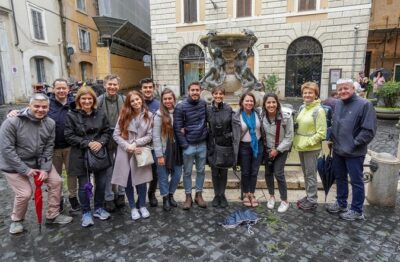
Jewish Ghetto and Synagogues with Jewish Roman Guide 3 Hours
Read our review →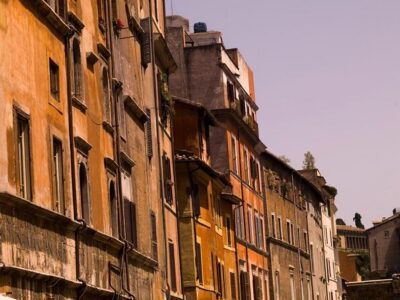
Jewish Ghetto & Piazza Navona: Food, Wine & Sightseeing Rome Tour
Read our review →
Food & Wine Tour of Campo de Fiori, Ghetto, Trastevere
Read our review →
Jewish Ghetto and Campo Dè Fiori By Night Food, Wine and Sightseeing Tour
Read our review →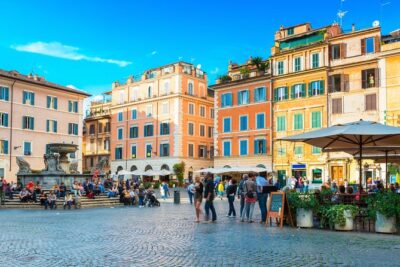
Trastevere and Rome’s Jewish Ghetto Half-Day Walking Tour
Read our review →
Jewish Ghetto & Campo de Fiori by Night Food Wine Tour
Read our review →Browse the lists this tour appears in