
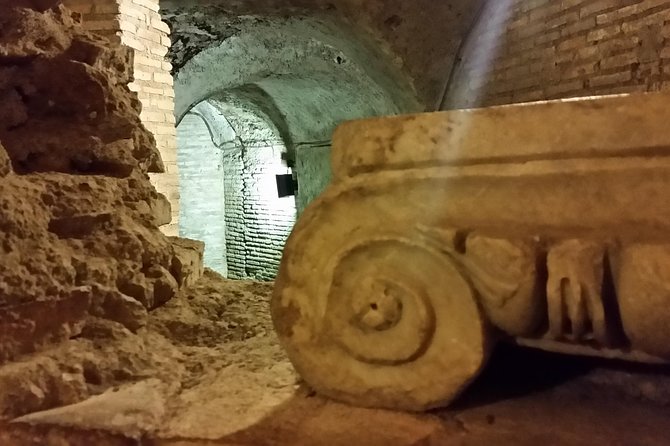
Reviewed · UNDERGROUND ROME TOURS
Underground Rome Tour: St. Clement and Celian Houses
Rome has layers, and you can walk them. This Underground Rome tour takes you under the city to see how buildings changed over centuries, from early Christian spaces down to older Roman structures. I especially like the up-close look at St. Clement and the clear, story-driven way the sites connect.
The second thing I like is the stop at Caelian Hill, where you get a real sense of Rome’s topography and why wealthy neighborhoods sat on these heights. A quick peek underground adds the feeling that Rome’s past is literally stacked beneath your feet.
One consideration: this is not a great match if you’re strongly claustrophobic, since you’ll spend time walking in underground areas and narrow passages. Also, plan for extra paid entrance tickets, since ticket prices are not included in the tour rate.
In This Review
- Key things to know before you go
- Why St. Clement and Caelian Hill are worth going underground
- Tour at a glance: timing, pace, and what to wear
- Stop 1: Basilica dei Santi Giovanni e Paolo and the ancient houses under the church
- Caelian Hill: one of Rome’s Seven Hills, with an underground connection
- Stop 3: Basilica di San Clemente, multiple levels and the long walk through time
- The guide makes the story click, from Francesca to Angelica
- Price and tickets: what you’re paying for, and what to budget
- How this Underground Rome route fits into your Rome plan
- Who this tour suits best, and who should think twice
- Should you book Underground Rome: St. Clement and Caelian Houses?
- FAQ
- How long is the Underground Rome tour?
- Is the tour private?
- What language is the tour offered in?
- Where does the tour start?
- Where does the tour end?
- Are admission tickets included in the tour price?
- How much are the entrance tickets?
- Is hotel pickup and drop-off included?
- Is the tour suitable if I’m strongly claustrophobic?
- What if I need to cancel?
Key things to know before you go
- Private tour for your group: only your party joins, so the pace can feel personal.
- A multi-layer route: you move through different time periods, often within a few steps.
- St. Clement takes the spotlight: expect the longest on-site visit and the most dramatic change in levels.
- English guided tour: the experience is offered in English.
- Moderate fitness helps: you’ll be walking and going between levels, so wear comfortable shoes.
- Entry fees are extra: tickets are not included, so budget for admission.
Why St. Clement and Caelian Hill are worth going underground
If you love Rome for its ruins, you’ll still be excited here. But this tour is for people who like something rarer: proof that a city keeps changing, and the old world doesn’t just vanish. Rome is built on top of itself, and this route shows the layers in a way you can actually follow.
St. Clement is the star because it’s a church with multiple levels. You can see how one holy site sat on top of earlier ones, and how the underground spaces tell you what people valued at different moments in time. It’s not just about stones, it’s about the repeated reuse of space in Rome.
Then comes Caelian Hill, one of the Seven Hills. From there, the story shifts to a residential Rome, with aqueducts and temples in the mix and homes tied to life on the hill. You’re not only seeing religious landmarks, you’re getting a sense of where different people lived and how the city worked above and below ground.
More levels of the city stacked below:
- Rome: Caracalla Baths & Circus Maximus — Private or Shared
★ 4.7 · 835 reviews - Catacombs and Hidden Underground Rome: Small Group Max 6 People
★ 5.0 · 293 reviews - Rome: Small-Group Tour of Caracalla Baths and Circus Maximus
★ 5.0 · 140 reviews - Rome underground: Piazza Navona, the Illusion Church and Pantheon
★ 5.0 · 67 reviews
Tour at a glance: timing, pace, and what to wear
This Underground Rome tour runs about 2 to 3 hours. The route is structured with three main stops, and the time on site adds up fast because each location has multiple levels and details to track.
The tour is mobile ticket style and it’s offered in English. Hotel pickup and drop-off are not included, so you’ll want to plan to meet on your own at the first church, then finish at the last one.
For comfort, I’d treat this like a walk with some stairs and some enclosed space. You’ll feel it most at the long St. Clement visit, so wear shoes you’d trust on uneven or worn surfaces. If you’re sensitive to tight spaces, take the warning seriously and consider skipping the underground portions.
Stop 1: Basilica dei Santi Giovanni e Paolo and the ancient houses under the church
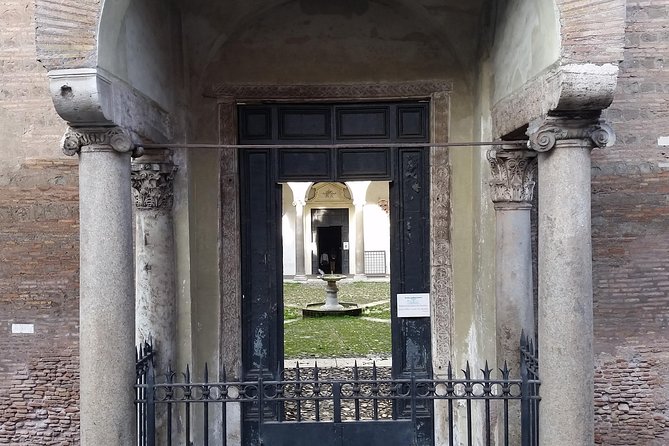
You start at Basilica dei Santi Giovanni e Paolo (meeting point). This stop centers on what’s underneath the church dedicated to Saints John and Paul. The big idea here is time travel by location, you walk from medieval setting down toward ancient structures associated with the saints’ story.
The visit includes an underground walk tied to the Ancient Roman Houses of Saints John and Paul. The most satisfying part is the feeling of transformation. You can sense the way a place shifted from one era’s purpose to another, while the bones of the earlier building remain.
Expect about 45 minutes at this first stop. It’s not the longest, but it sets the theme for everything after it. If you show up with the mindset that Rome is a layered city, this opener pays off right away.
Practical note: the ticket for this specific stop is listed separately, so you’ll want to have your budget ready. Admission here is not included in the tour price.
Caelian Hill: one of Rome’s Seven Hills, with an underground connection
Next you move to Caelian Hill, one of Rome’s Seven Hills of Rome. This stop is shorter, around 20 minutes, but it’s useful because it gives you context. You’re stepping into the geography that shaped where buildings and resources landed, including aqueducts and temples.
The reason Caelian Hill matters on this tour is that it connects the big underground theme to how neighborhoods formed. When you understand the hill setting, the underground rooms feel less random. You’re seeing why homes sat where they did, and why later buildings ended up on top.
You’ll also get a link back underground, including the underground house area connected with John and Paul. Even if the time is brief, it acts like a bridge between the first and last stops, so the overall story feels continuous.
Because this is a quick stop, it’s also a good moment to adjust your expectations. You’re not there to linger at Caelian Hill. You’re there to get the “why” so the underground floors at the next church land with more meaning.
Stop 3: Basilica di San Clemente, multiple levels and the long walk through time
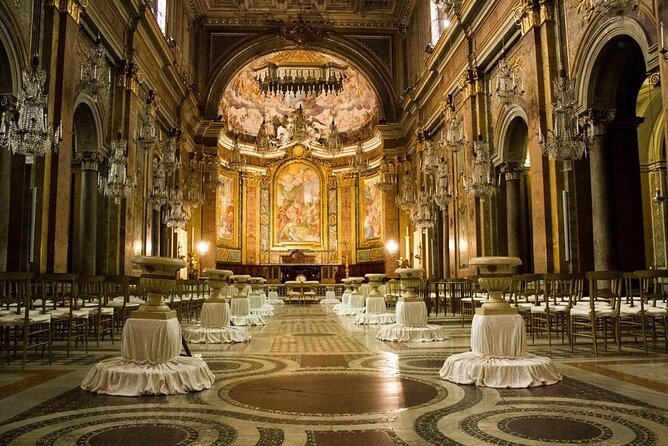
Basilica di San Clemente is where the tour really spends its energy, with about 1 hour 45 minutes on site. This is the stop that most people remember because it’s a true multi-layer site. You’re not just looking at one period and calling it a day.
The structure is the point. You visit the church of Saint Clement, then go down into older levels associated with earlier Christian spaces and even further back toward Roman periods. One review notes you’ll be around 50 feet below street level, which matches the feeling you get as you move through the layers and realize how much is hidden in plain sight.
If you like visual storytelling, this is built for you. The changes in levels make the timeline feel physical. It’s one of those places where you stop thinking in dates and start thinking in how people used the same footprint for centuries.
This stop also gives your guide a lot of room to explain. The guide can connect the archaeology, the architecture, and the everyday reason people reused sites. When it works well, it turns a church visit into a “how Rome kept rebuilding itself” lesson.
One caution: this is also where claustrophobia can become a problem for some people. Even if you’re fine at ground level, the underground corridors and enclosed areas can feel tighter than you expect.
Another shape for the same afternoon in Rome:
The guide makes the story click, from Francesca to Angelica
You’re getting a professional guide, and the impact of that shows up in the strongest parts of the experience. In the feedback, Francesca and Angelica come up again and again as guides who made the information easy to follow and enjoyable to listen to. That matters here, because underground sites can feel like a maze if you don’t know what you’re looking at.
The best guides do two things at once. First, they explain what you’re seeing right now. Second, they connect it to the next room so the stop doesn’t feel like separate attractions stacked in a row.
One reason this tour often feels shorter than the time on the clock is pacing. Guides who know the route well can keep you moving while still giving you enough to absorb the changes between layers. If you end up with a guide who can spot your interests, you’ll feel the difference fast.
If you care about context, ask questions. Underground Roman sites can raise lots of practical ones, like why one building ended up under another, or how a site changed function over time. A good guide will turn those questions into part of the tour, not an interruption.
Price and tickets: what you’re paying for, and what to budget
The tour includes a professional guide, but admission tickets are not included. The total entry budget is listed as about 30 euro per adult and 18 euro per child. In addition, the Basilica dei Santi Giovanni e Paolo has a listed fee of 25 euro per person.
So is it worth it? I think it can be, because underground access without a guide is usually a hit-or-miss experience. You can stand in a room and see structures, but you might not understand what the different levels are telling you. Here, the guide is the value engine, and the story links the stops so you get a coherent picture of how Rome layered itself over time.
You should also factor in that your tour time is fairly structured, about 2 to 3 hours, and you don’t need to arrange separate visits to each site. The route ends at Basilica di San Clemente, which is convenient for people who want a single through-line rather than juggling transport between scattered underground areas.
Because extra tickets are required, check your timing. If you’re trying to stack museums and churches in the same day, add a cushion so you can keep the flow without feeling rushed.
How this Underground Rome route fits into your Rome plan
This is ideal when you want something different from the classic daytime “big three” list. It works especially well on a day when you want culture and atmosphere more than wide-open ruins.
It’s also a strong match for people who already visited Rome once and want a different angle. Even if you know the famous sights, this tour shows another kind of Rome, the city that continues to hide its past under today’s streets.
Because the tour ends at San Clemente, you can plan a gentle finish nearby. It also means you’re not forced to backtrack to the start point, which helps when you’re trying to keep a day moving without stress.
If you’re doing multiple guided experiences, this one pairs well with an itinerary theme like early Christianity, Roman urban life, or “Rome as an evolving city.” The stops connect to each other so your brain keeps the timeline in order.
Who this tour suits best, and who should think twice
This tour fits best if you:
- want underground Rome rather than another above-ground church checklist
- enjoy architecture and how spaces get reused over centuries
- like guided interpretation to connect the dots
It may not fit if you:
- are strongly claustrophobic, since you’ll be in underground areas for significant portions of the route
- prefer fully open-air sites only, because the core payoff here comes from being underground
- have trouble with moderate walking and moving between levels, since the experience includes time at three sites with different floors
The good news is that the route is designed to be manageable for people who travel light but smart. Comfortable shoes and a calm attitude toward enclosed spaces go a long way.
Also remember it’s a private tour. That’s a win for families or small groups who want steadier pacing, and for couples who want quieter conversation without constant crowd noise.
Should you book Underground Rome: St. Clement and Caelian Houses?
If you want Rome where the past isn’t just behind glass, book it. The combination of Basilica di San Clemente plus Caelian Hill gives you a unique perspective on how the city grew, changed, and layered itself. I think the extra time underground is justified when you have a guide like Francesca or Angelica setting the story.
Only skip if enclosed spaces make you uncomfortable. Also, be ready for the reality of paid admissions on top of the tour price, so you don’t get surprised. With those two checks covered, this is one of the better ways to experience Rome’s hidden floors, at street level and far beneath it.
FAQ
How long is the Underground Rome tour?
It runs about 2 to 3 hours.
Is the tour private?
Yes. It’s a private tour, and only your group participates.
What language is the tour offered in?
The tour is offered in English.
Where does the tour start?
The start point is Basilica Santi Giovanni e Paolo, Piazza Dei SS. Giovanni e Paolo, 00184 Roma RM, Italy.
Where does the tour end?
The tour ends at Basilica di San Clemente, Via Labicana, 95, 00184 Roma RM, Italy.
Are admission tickets included in the tour price?
No. Admission tickets are not included.
How much are the entrance tickets?
Entrance fees are listed as about 30 euro per adult total and 18 euro per child total. Basilica dei Santi Giovanni e Paolo is listed at 25 euro per person.
Is hotel pickup and drop-off included?
No. Hotel pickup and drop-off are not included.
Is the tour suitable if I’m strongly claustrophobic?
It may not be suitable for people who are strongly claustrophobic.
What if I need to cancel?
You can cancel for free up to 24 hours in advance for a full refund.
Latest additions from Rome
- Rome: Testaccio Market Food Tour with Street Food & Wine★ 5.0 · 8 reviews
- Exclusive Pasta & Tiramisu Class with Wine near by Colosseum★ 5.0 · 8 reviews
- Private Professional Photoshoot in Rome★ 5.0 · 8 reviews
- Loreto “Shrine of the Holy House of the Virgin Mary” Private Tour from Rome★ 5.0 · 8 reviews
- Rome Day to discover Florence and Pisa Hotel Pickup★ 4.5 · 8 reviews
- Rome: Christmas Nativities and Angels Tour★ 3.1 · 8 reviews
- Guided Tour of Vatican Museums and Sistine Chapel★ 5.0 · 8 reviews
- Rome: Cooking Class of fresh Pasta and Tiramisu Cake★ 5.0 · 8 reviews
Underground Rome Tours, compared.
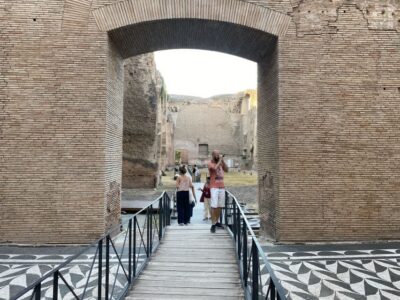
Caracalla Baths & Circus Maximus — Private or Shared
Read our review →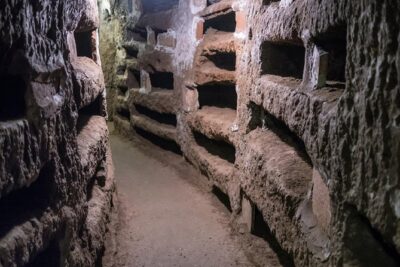
Catacombs and Hidden Underground Rome: Small Group Max 6 People
Read our review →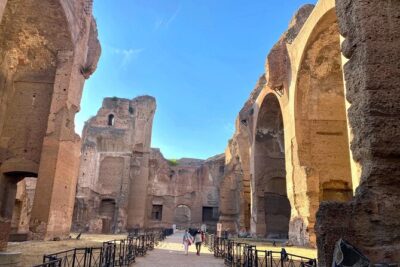
Small-Group Tour of Caracalla Baths and Circus Maximus
Read our review →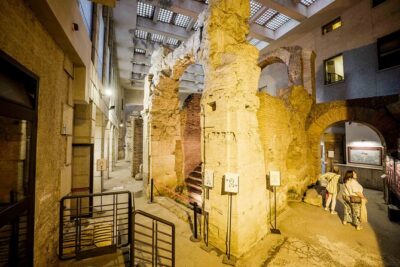
Rome underground: Piazza Navona, the Illusion Church and Pantheon
Read our review →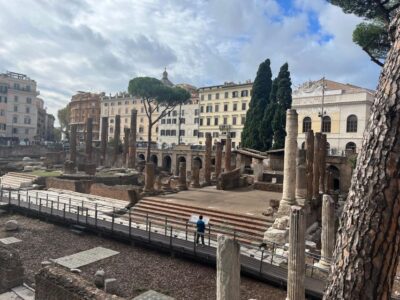
Ancient Rome: Archeological area Largo Argentina
Read our review →
Circus Maximus Virtual Reality Game near the Colosseum
Read our review →
Circus Maximus Virtual Reality Game near the Colosseum
Read our review →Browse the lists this tour appears in