
Reviewed · UNDERGROUND ROME TOURS
Rome: Caracalla Baths & Circus Maximus — Private or Shared
Two Roman icons in one efficient block. You get Caracalla Baths plus Circus Maximus with an expert archaeologist guide, in a green area not far from the Colosseum.
I especially like two things. First, the tour is built around how Romans actually used the baths, with clear, step-by-step storytelling. Second, the small-group format helps you ask questions and move at a human pace, which makes the ruins feel less like a checklist. Guides I saw mentioned include Ciara, Chiara, Cynthia, Lars, Anestis, Sam, Samuele, and Mario.
One thing to consider: Circus Maximus is mostly foundations and open space, so this second stop can feel lighter if you want big, standing archaeology. You will still get the context, but you will be doing more imagining than sight-gazing.
In This Review
- Key highlights you should care about
- Two Roman icons, one 1.5-hour plan that makes sense
- Meeting point near Circo Massimo, and why arriving early matters
- Caracalla Baths: the ruins feel personal, not just monumental
- How the baths worked: underfloor heat, temperature control, and mosaics
- Circus Maximus in 30 minutes: where to look when it is mostly space
- Private or small-group: choose the size that helps you learn
- Price check: does $77 per person hold up?
- Who should book this tour, and who might want a different day plan
- Should you book the Caracalla Baths and Circus Maximus tour?
- FAQ
- How long is the Rome Caracalla Baths and Circus Maximus tour?
- Where do I meet the guide?
- What is included in the tour price?
- Is the tour private or shared?
- Which languages are available for the guide?
- Is the tour wheelchair accessible?
- Do I need to bring anything specific?
- Do I need an official document for entry?
- What is not allowed during the visit?
- Is hotel pickup and drop-off included?
Key highlights you should care about
- Caracalla Baths, where the best-preserved Roman ruins still do the talking
- Sterilized headsets so you hear every detail without leaning in
- A spa-day walkthrough from a 3rd-century routine, not just a photo stop
- Underfloor heating and mosaic motifs explained in practical terms
- Circus Maximus in about 30 minutes, ideal for context-focused history
Two Roman icons, one 1.5-hour plan that makes sense
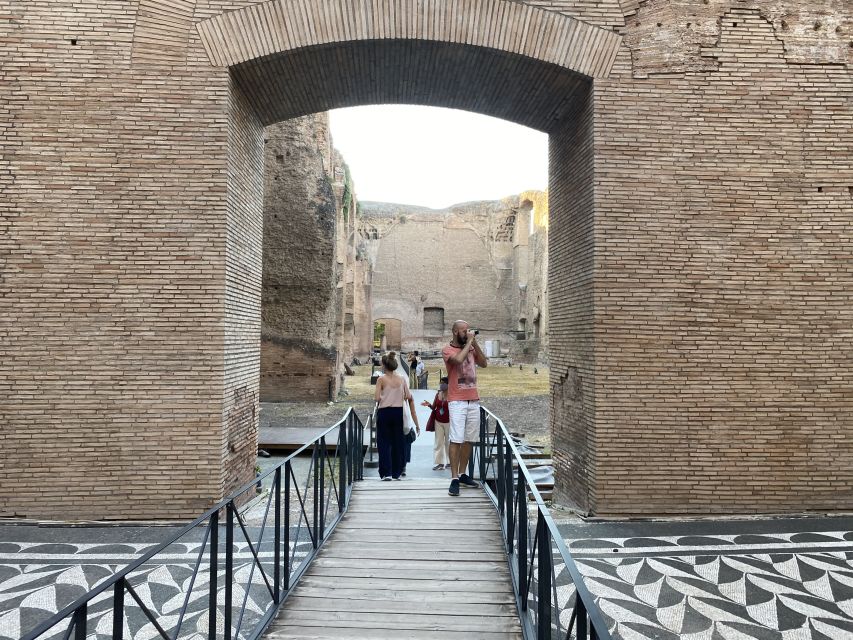
This tour works because it pairs two places tied to everyday Roman life. Caracalla Baths were a social and physical hub, while Circus Maximus was mass entertainment on a huge scale. The combination also helps your brain: baths explain how Romans spent time, and the circus explains how they made noise while spending it.
I like that the route stays compact. You are not bouncing across half the city for one quick photo. Instead, you get a serious guided look at Caracalla, then a shorter, context-heavy look at the circus area.
The duration is right for a Rome day. At 1.5 hours, you can fit it between bigger sights without sacrificing dinner plans. And with small groups, the guide can keep the flow tight without rushing you through the important rooms.
If you are trying to see more than the obvious Colosseum and Vatican circuit, this is a smart way to add variety without going too far off-route.
More Private Tours in Rome
- Rome by Golf Cart Private Tour: Beyond the Landmarks
★ 5.0 · 4,361 reviews - Early Morning Vatican, Sistine, St. Peter’s Semi or Private Tour
★ 5.0 · 3,779 reviews - Rome on a Golf Cart Semi-Private Tour Max 6 with Private Option
★ 5.0 · 2,502 reviews - Rome Private Arrival Transfer: Fiumicino Airport to Hotel in Rome
★ 4.5 · 2,492 reviews
Meeting point near Circo Massimo, and why arriving early matters
Meet your guide at the exit of the Metro Station Circo Massimo, in the direction of Laurentina, in front of the FAO building. Look for a yellow label with the local partner name.
The key practical tip is timing: arrive about 5 minutes early so you can finish sign-up and get set up before you move. This tour also runs with full on-site assistance, so once you are matched with your group and headsets, you will be guided smoothly.
The starting point is listed as Viale Aventino 3, but your real-world anchor for finding people is that Circo Massimo metro exit by FAO. If you are used to Rome meeting points that feel vague, this one is refreshingly specific.
Wear comfortable shoes. Even though the group size is small, you will be walking through archaeological paths and uneven ground. Think “good walking day,” not “museum slippers.”
One last thing that matters in Rome: this experience might be canceled for unfavorable weather. If that happens, you should plan for an alternative date or a full refund.
Caracalla Baths: the ruins feel personal, not just monumental
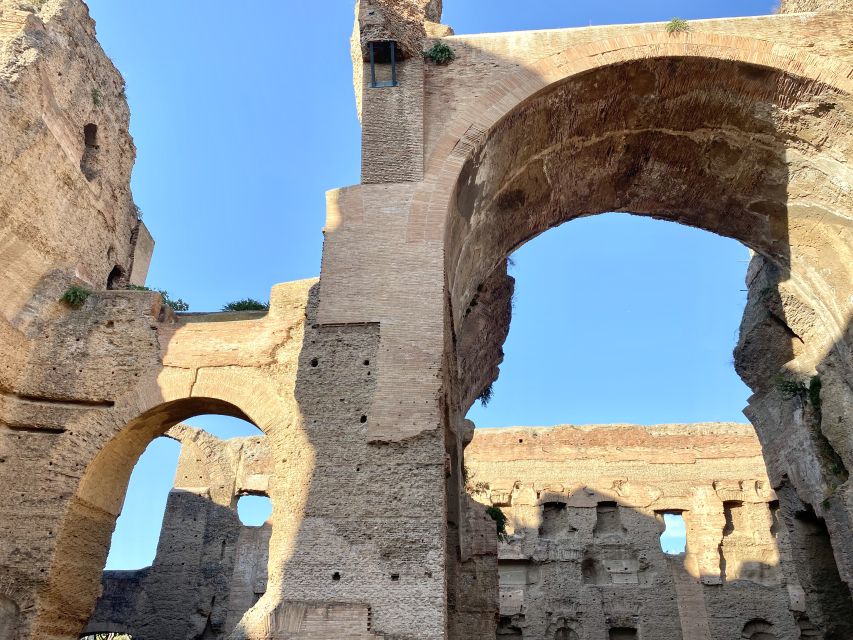
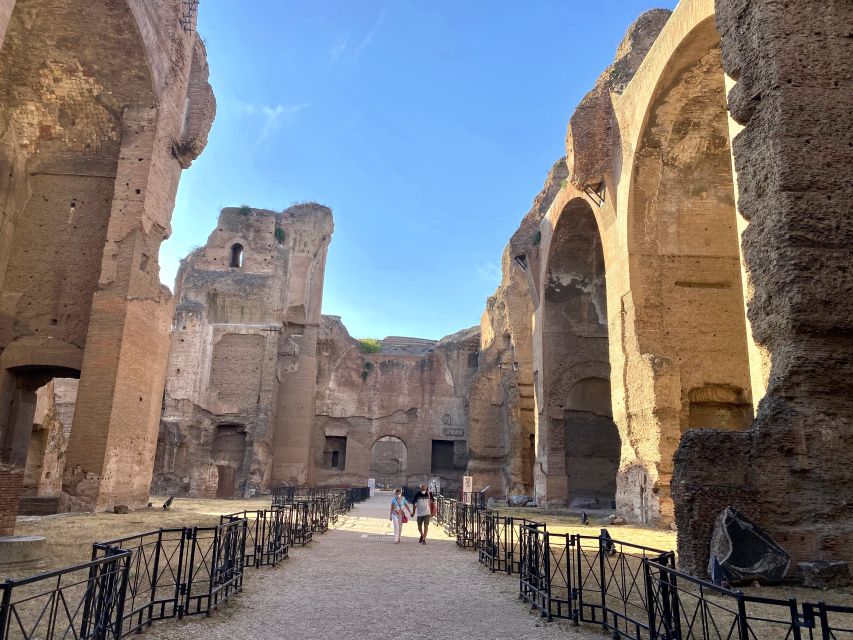
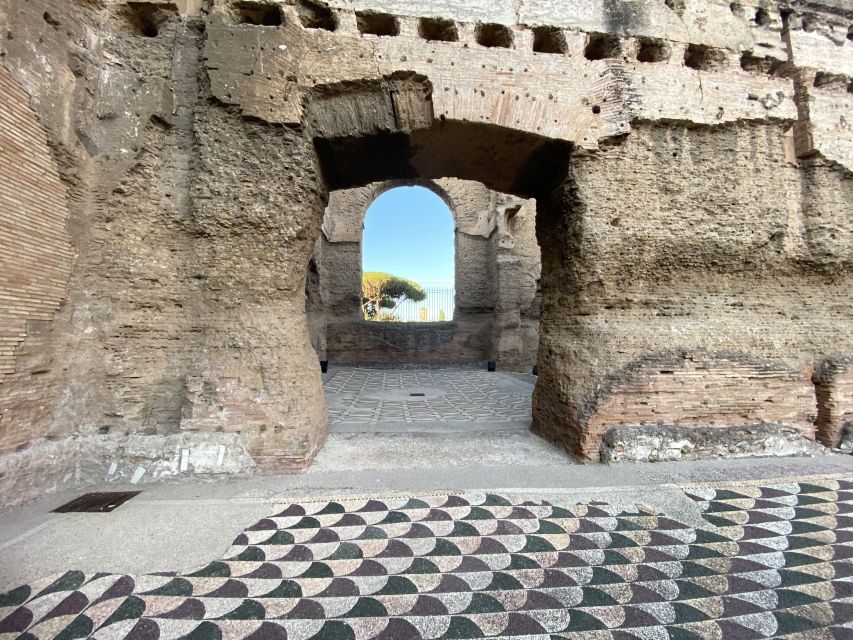
Caracalla Baths are one of Rome’s best places to understand scale. Yes, you will see gigantic walls and big architectural forms, but what makes it memorable is how the guide turns those shapes into daily movement.
You are led through a guided portion of the Caracalla complex for about an hour. The tour is designed as an express, complete walkthrough, but it does not treat you like you are speeding through. Instead, the guide brings you through the layout as if you are following a typical day at the baths in the 3rd century AD.
What I like here is the mix of awe and clarity. You get to feel the size of the complex, then you get explanations that help you read the space. That matters because baths can look like a pile of walls if you do not know what you are looking for.
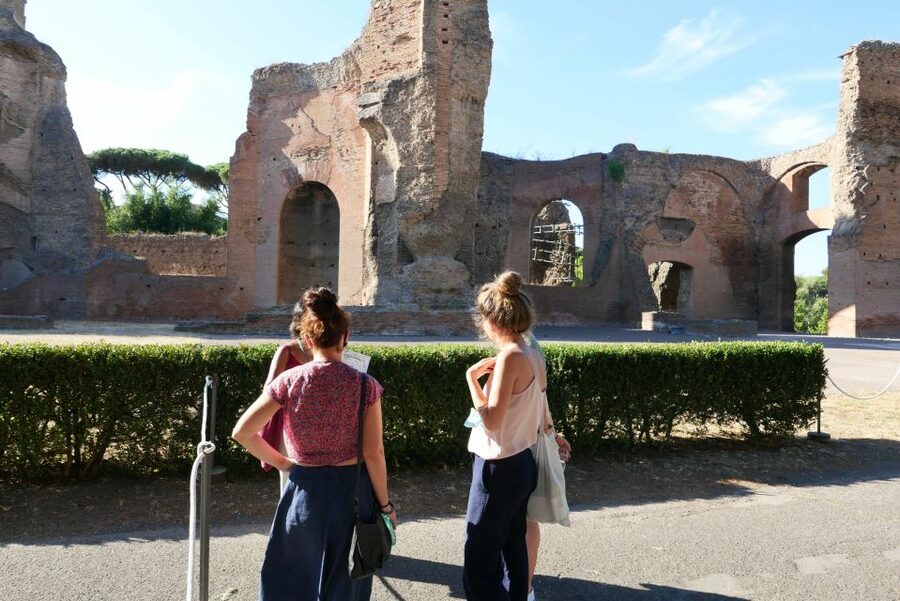
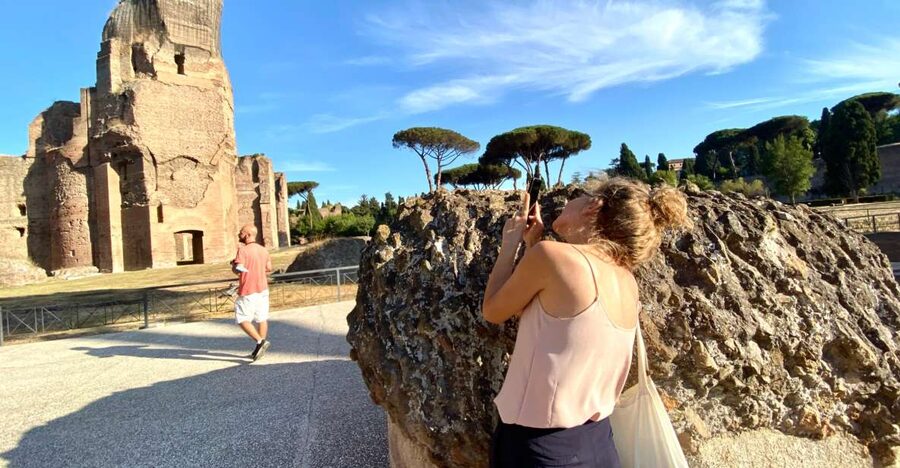
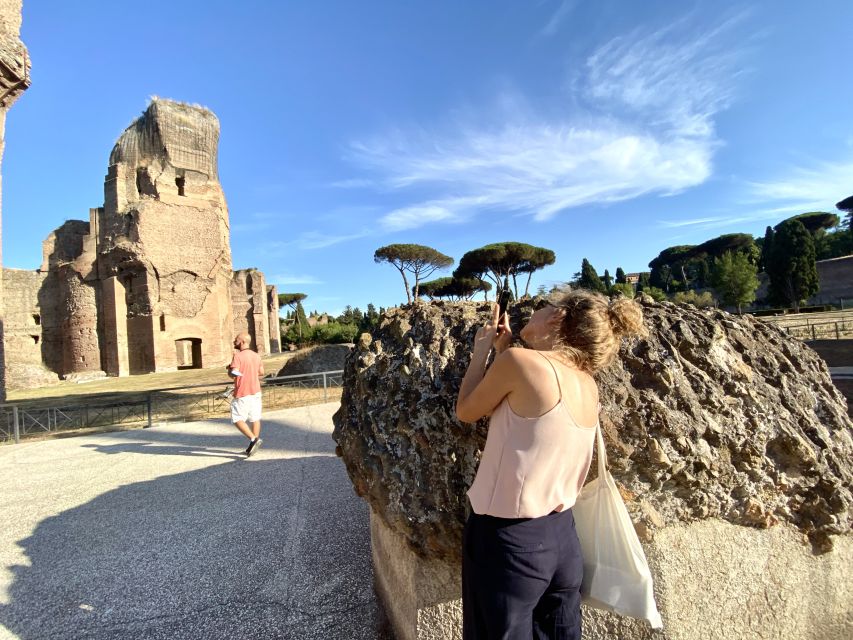
Also, this is in a calmer archaeological setting than the most crowded landmarks. The ruins have a quieter feel, so you can actually slow down when you spot mosaics or worn floor sections that survived.
When you visit Caracalla, you are not only seeing Roman engineering. You are also learning what the baths offered for body and mind, including a range of services that went beyond splashing water and leaving.
How the baths worked: underfloor heat, temperature control, and mosaics
The Caracalla stop gets specific in the best way. You are not just told it was impressive. You learn how it worked.
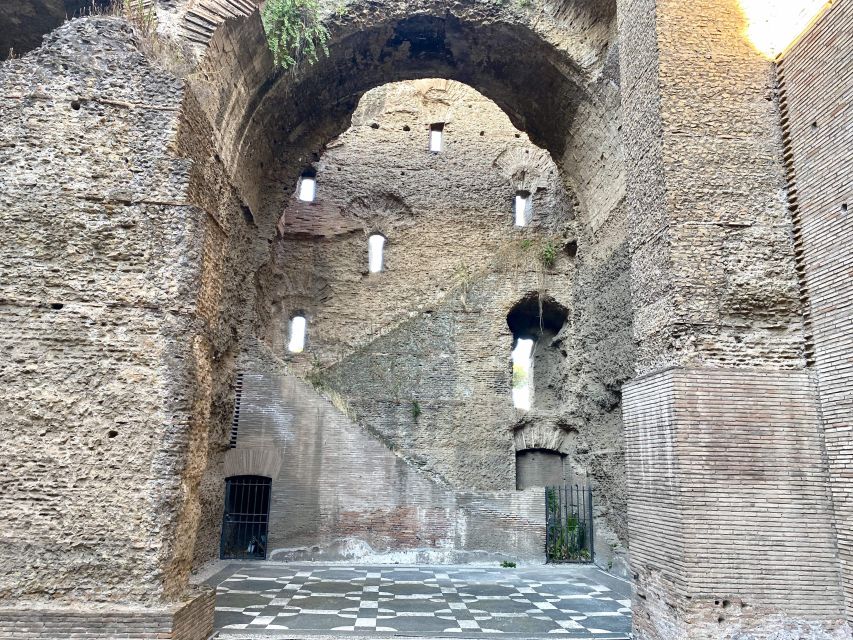
One of the biggest “how did they do that” moments is the labor-intensive underfloor heating system. The tour explains how the heat moved beneath floors and helped warm rooms. You will also hear about the techniques used to maintain a desired temperature in different spaces, which is the kind of detail that makes Roman life feel real.
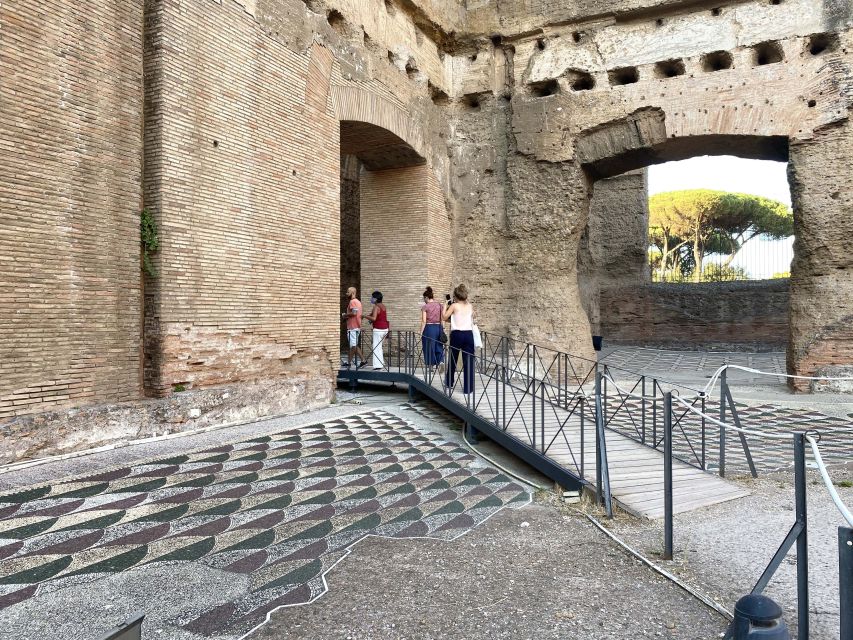
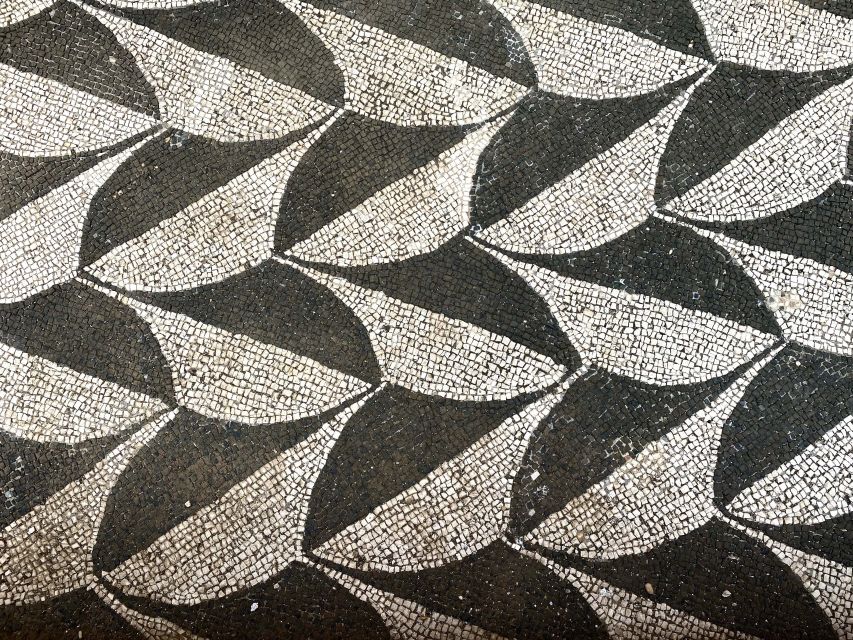
Then there are the visuals that stick with you. The guide points out geometric motifs on mosaics, scattered across the complex. These patterns are not just decoration, they help you understand that this place was designed to feel intentional and polished, even for something public.
You also learn to connect what you see to what you would do there. The tour aims to walk you through the exact steps of a typical day at the baths. That structure is useful because it turns a ruin into a story you can follow, room by room.
One practical reason this stop is worth your time: the ruins here are among the best-preserved in Rome. That means the architecture still “reads” well enough for guided interpretation, so you are not spending your hour guessing what each fragment used to be.
Circus Maximus in 30 minutes: where to look when it is mostly space
After Caracalla, you head to what was considered the largest public games structure ever built by mankind. The tour gives you about 30 minutes at Circus Maximus.
Here is the honest part of the expectation setting. Circus Maximus is not like a coliseum you can walk around and get a full view of at every angle. The remains are more limited, so you will spend more time understanding the setting than staring at towering stone.
That said, the guide makes the difference. You stand where the circus once existed and learn about Roman public celebrations called the Ludi. You also hear tales tied to the atmosphere: chariot races, gladiator fights, and the clamor of the crowd while standing on the soil where events took place.
You will also get myth-and-origins context, including the circus foundations in early myths and gods. If you like Roman religion and storytelling behind civic life, that part will land well.
If you are short on time and want a full Roman arc, this stop works. It is quick, but it connects entertainment, politics, and culture into one picture.
If you are a “show me the massive ruins” type, you may wish the circus had more standing structure. You can still leave satisfied, just adjust your expectations to context over concrete.
More levels of the city stacked below:
Private or small-group: choose the size that helps you learn
This tour caps at 10 participants, with private options or small groups available. That size matters here because both sites are best when the guide can answer questions and slow down when something catches your eye.
If you go in a private or tiny group, you can tailor your pace. You can spend a few extra minutes on mosaics, or ask for more detail on how baths and heating systems worked. In a group of 10, you still get that guided attention, but the flow stays efficient.
The guide language range is also a plus if you are not fluent in English. You can book in French, Portuguese, Spanish, English, German, or Italian.
One more real-world detail I appreciate: the tour provides sterilized headsets. In Rome, sound can be a mess outdoors and in open areas, so headsets help you hear the guide clearly without constantly trying to find the right angle.
If you are traveling with kids, this is a tour where having a guide can make history feel less like memorization. Just remember there is special document guidance for participants under 18, and for European citizens under 25.
Price check: does $77 per person hold up?
At $77 per person for 1.5 hours, this is not a budget “grab-and-go” activity. But it is also not overpriced for what you get, especially in a city where self-guided museum time can turn into expensive ticket lines and confusion.
You are paying for several value drivers that matter on-site:
- Entrance fees to the Caracalla Baths
- A live archaeologist guide
- Sterilized headsets so you can actually follow the story
- Skip the ticket line
- Full on-site assistance
Those pieces add up because you are not just receiving basic narration. You are getting interpretation at two related sites, with practical guidance on what the architecture meant and how it worked.
Where you might feel the price less strongly is if you are expecting Circus Maximus to provide lots of dramatic structure. Most of your time and depth is at Caracalla. The circus portion is more about setting the stage, then using your imagination.
In other words, I see the value as weighted toward Caracalla. If Caracalla is your priority, the price feels more justified. If Circus Maximus is your main target, you should know the circus stop is shorter and less about standing ruins.
Who should book this tour, and who might want a different day plan
This tour is a great match if you:
- Love Roman engineering and want specifics on how spaces functioned
- Prefer smaller groups and clearer explanations over crowds
- Want to swap out one of the busiest big landmarks for a calmer archaeological experience
- Enjoy guided storytelling that turns ruins into daily life
It can also be a solid choice for couples. The pace is manageable, you will have time to look, and you get a shared story that is easy to talk about afterward.
You might consider skipping or adjusting expectations if you:
- Want only the most impressive standing ruins at every stop
- Only care about Circus Maximus as a big, visible structure
- Are traveling with lots of luggage or items not allowed inside monuments
Also, keep your shoes practical. This is Rome, and this walk is not made for fancy footwear.
Should you book the Caracalla Baths and Circus Maximus tour?
I think you should book it if you want a guided, story-based look at two Roman leisure worlds, with strong focus on Caracalla and enough circus context to complete the picture. The small-group limit, headsets, and live archaeologist guide are the kind of details that make it feel organized instead of chaotic.
If your priority is Caracalla, this is an easy yes. If your priority is Circus Maximus, go in knowing it is lighter on stone and heavier on interpretation. In that case, treat the circus stop like the closing chapter that explains what happened there, not the main attraction.
Bottom line: book this when you want value through guidance, and when you enjoy learning how Romans spent time, not just where they built things.
FAQ
How long is the Rome Caracalla Baths and Circus Maximus tour?
The duration is 1.5 hours total.
Where do I meet the guide?
Meet at the exit of the Metro Station Circo Massimo (direction Laurentina), in front of the FAO building. Look for a yellow label with the local partner’s name.
What is included in the tour price?
Entrance fees to the Caracalla Baths are included, along with a live archaeologist guide, sterilized headsets, and full on-site assistance. The tour also skips the ticket line.
Is the tour private or shared?
It is offered as private or small-group options. The tour has a maximum of 10 participants.
Which languages are available for the guide?
Guides are available in French, Portuguese, Spanish, English, German, and Italian.
Is the tour wheelchair accessible?
Yes, the tour is wheelchair accessible.
Do I need to bring anything specific?
Bring comfortable shoes for walking.
Do I need an official document for entry?
For participants younger than 18 years old, and for European citizens under 25, it is important to carry an official document (or a digital copy).
What is not allowed during the visit?
Pets, weapons or sharp objects, baby strollers, luggage or large bags, and drones are not allowed.
Is hotel pickup and drop-off included?
No, hotel pickup and drop-off are not included. Food and drinks are also not included.
Latest additions from Rome
- Guided Tour Vatican Museums & Sistine Chapel★ 4.1 · 30 reviews
- Exclusive Rome by Night Vespa Tour★ 5.0 · 30 reviews
- Transfer Rome to Airports★ 4.5 · 30 reviews
- Vatican: St.Peter’s Basilica & Dome – Reserved Entry & Tour★ 4.1 · 30 reviews
- Rome street art tour: off the beaten path with a local guide★ 5.0 · 30 reviews
- Tivoli, Hadrians Villa and Villa d’Este, a charming day trip from Rome★ 4.5 · 30 reviews
- Rome Food Tasting with Wine Pairing Italian Authentic Flavors★ 5.0 · 31 reviews
- Inspirational Cooking on the Roman Chef’s Panoramic Terrace★ 5.0 · 30 reviews
Underground Rome Tours, compared.
Catacombs and Hidden Underground Rome: Small Group Max 6 People
Read our review →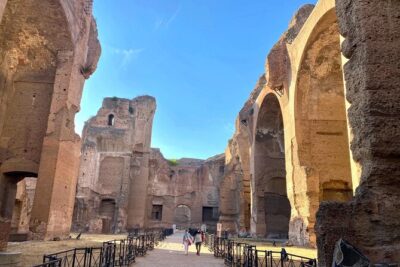
Small-Group Tour of Caracalla Baths and Circus Maximus
Read our review →
Rome underground: Piazza Navona, the Illusion Church and Pantheon
Read our review →
Ancient Rome: Archeological area Largo Argentina
Read our review →
Circus Maximus Virtual Reality Game near the Colosseum
Read our review →Browse the lists this tour appears in