
Reviewed · UNDERGROUND ROME TOURS
Rome Underground San Clemente Basilica Exclusive Tour & Tickets
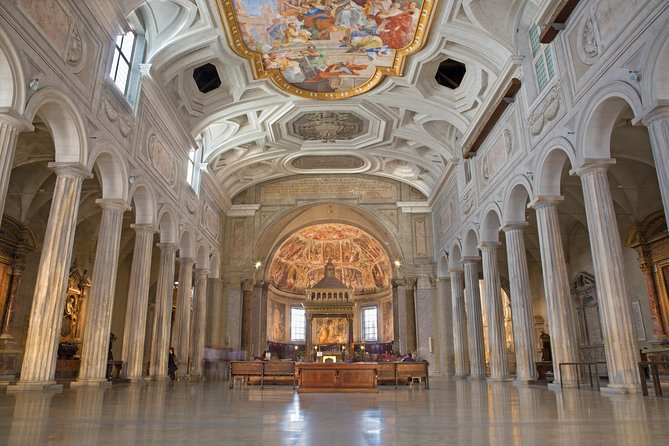
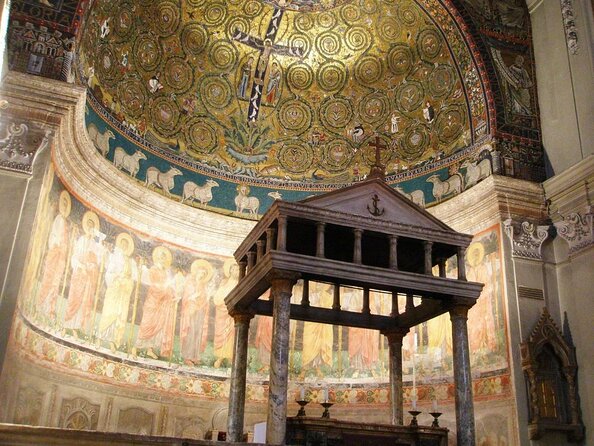
San Clemente is Rome history stacked like floors of a building. This experience takes you from the everyday church level down into the earlier Christian and Roman worlds, plus nearby gladiator history and Michelangelo’s Moses if you choose the guided option. It is also one of those rare stops where you can slow down and actually see time change in the same footprint.
I especially like the way the tour is built around options, private guiding or self-guided audio, so you control how much you want to talk versus explore. I also like that you are not just looking, you are learning how the layers connect: Christian worship, medieval rebuilds, and a very specific underground spiritual layer called a Mithraeum. The main consideration is that the audio-only option depends on your phone and setup, including a smartphone from around 2020 or later and bringing headphones for best sound.
In This Review
- Key things I would zero in on
- San Clemente Underground is the kind of Rome you cannot fake
- Private guide or self audio: choose your pace honestly
- Private guided tour (best for people who want meaning)
- Self-guided audio tour (best for independent planners)
- Timing, meeting points, and what to bring (so you do not waste time)
- Stop 1: Basilica of San Clemente, where Rome changes direction
- Stop 2: Ludus Magnus, Domitian-era gladiator school
- Stop 3 and underground levels: the Mithraeum and the layers most people skip
- Stop 4: San Pietro in Vincoli, St. Peter’s chains and Michelangelo’s Moses
- How the guide experience changes everything
- Value check: is $33.64 worth it?
- Who should book this, and who might rethink it
- Practical FAQ
- FAQ
- How long does the Rome Underground San Clemente Basilica tour take?
- What is the price per person?
- What language options are available for the audio guide?
- Which sites are included with the private guided tour?
- What is included with the self-guided audio tour option?
- Where do I meet if I choose the audio-only option?
- What should I wear to visit?
- Do I need my own headphones?
- Is free cancellation available, and how far in advance?
- Should you book this Rome Underground San Clemente tour?
Key things I would zero in on
- Three levels at San Clemente so you understand Rome’s shift from Roman-era life to early Christianity and later medieval changes
- Real gladiator training context with Ludus Magnus, Domitian-era brick architecture, and a miniature training amphitheater in the courtyard
- Michelangelo’s Moses plus St. Peter’s chains at San Pietro in Vincoli, a strong pairing if you pick the guided tour
- Two ways to do it: a licensed English-speaking guide for the full underground plus nearby sites, or an audio app for San Clemente only
- Skip-the-line entry for San Clemente with tickets and a reservation handled for you
- Dress for church spaces with shoulders and knees covered, plus all-weather operation
San Clemente Underground is the kind of Rome you cannot fake
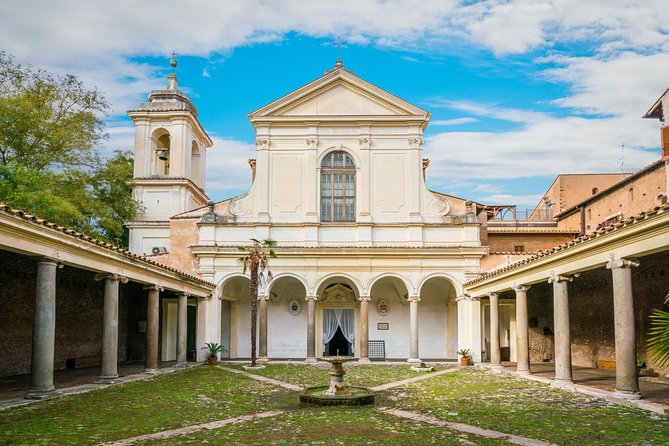
Rome has lots of ancient ruins. San Clemente gives you something rarer: a living site where the past keeps getting reused. Above ground, it is a functioning basilica. Below ground, it turns into a time machine you walk through, level by level.
What makes this tour practical is that it is designed around that “stacked time” idea. You start at the Basilica of San Clemente, then you go down into the earlier layers that most visitors never even try to find. If you pick the private guided version, you also get the surrounding context that helps the underground feel less random.
This is also a good choice for history and archaeology fans, because the explanations focus on how buildings changed purpose over centuries. You will not just hear that old things exist. You will understand why this exact place matters, especially when you reach the rare underground Mithraeum layer.
Other trails between the great basilicas:
- Santa Maria Maggiore: Pope Francis Entry Ticket, Audio Guide
★ 3.9 · 688 reviews - Cloister of St John in Lateran Basilica Ticket
★ 3.9 · 399 reviews - Rome: Santa Maria Maggiore Upper Areas Skip-the-Line Ticket
★ 3.8 · 223 reviews - Pope Francis Tomb and Papal Basilicas Tour
★ 4.5 · 165 reviews
Private guide or self audio: choose your pace honestly
The tour is offered in two formats, and picking the right one is the biggest decision.
Private guided tour (best for people who want meaning)
With the private guided option, you get a licensed, English-speaking guide who leads you through the underground levels at San Clemente and also covers the extra nearby stops. The included scope is broader: it adds San Pietro in Vincoli and Ludus Magnus, with entrance tickets included as part of the guided experience.
If you care about “how did they build that” and “what does that detail mean,” this is the one. A great guide can also help you manage the physical flow of the site so you are not stuck rereading signs or rushing through levels too fast.
In the same spirit, strong guides like Sabrina and Martin have been praised for deep knowledge and clear explanations, including making sure your group stays comfortable while moving through the levels.
Self-guided audio tour (best for independent planners)
With the audio-only option, you explore San Clemente at your own pace using a multilingual audio app. The included access is limited to San Clemente and its underground levels only. A tour guide is not included in this format.
This choice works well if you hate group pacing, like to pause for photos and reading, or you know you want to focus tightly on the stacked underground layers without extra walking to other sites.
The tradeoff is that you will not have a person to ask questions. If you are the type who wants interpretation on the spot, the guided tour will feel more satisfying.
Timing, meeting points, and what to bring (so you do not waste time)
This tour runs about 2 hours to 2 hours 30 minutes. You pick a time slot, and it helps that the tour offers a wide range of times so you can fit it into a Rome schedule without squeezing everything else.
Plan to arrive early. For the San Clemente entry, you should be at the meeting point at least 20 minutes before your scheduled entry time. That buffer matters because underground visits are easiest when you are not trying to figure things out half in the door.
You have two relevant meeting point situations:
- General meeting point: Piazza di San Clemente, 00184 Roma RM, Italy
- Audio-only meeting point: Via Labicana, 96 (where you purchase tickets and download the audio guide app)
What to bring:
- A smartphone from around 2020 or later for the audio app
- Headphones for better audio quality (bring your own if you can)
- Smart casual clothing, with shoulders and knees covered since this is a church environment
This runs in all weather, so dress for rain and heat. The underground parts can feel cooler, but your walk between points still depends on outside conditions.
More levels of the city stacked below:
Stop 1: Basilica of San Clemente, where Rome changes direction
You start at San Clemente with the reservation handled for you, which helps you avoid the most common “line chaos” in Rome. Once you enter the basilica area, you get oriented to what you are about to see.
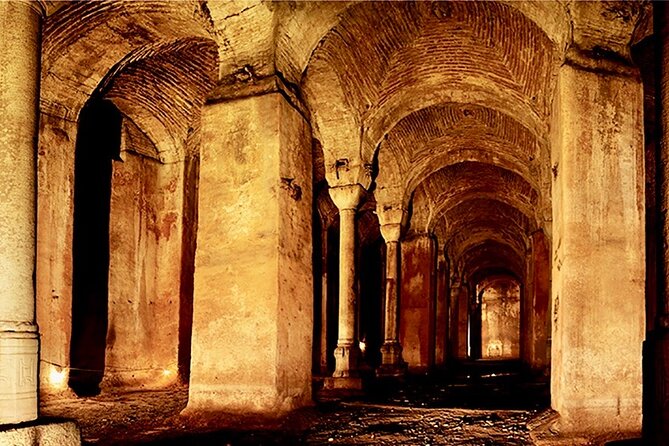
The big idea of San Clemente is that it contains multiple eras layered on top of each other:
- A 12th-century basilica built over a 4th-century church
- And that earlier church was built atop a Roman-era villa from the Republican period
That is the core reason this tour works. You do not just travel back in time once. You see how Rome repeatedly rebuilt in the same place, shaping the site for new needs and new beliefs.
For the private guided tour, your guide typically sets the timeline clearly so the underground levels do not feel like three random basements. For audio-only, the app content is built to help you follow those levels at your own speed.
Stop 2: Ludus Magnus, Domitian-era gladiator school
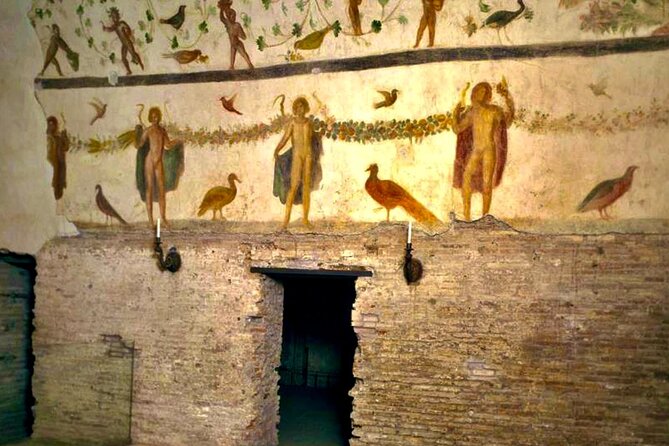
If you choose the guided tour, you add the Ludus Magnus, an ancient gladiator training school. This site sits on the northeast side of the Colosseum area, so it feels like “Colosseum history’s supporting actor,” not a separate planet.
Here is what makes Ludus Magnus meaningful: it was built by Emperor Domitian at the end of the 1st century A.D. It is made entirely in brick, and the building layout had a rectangular form, likely with multiple floors and a porticoed courtyard.
The courtyard is the star for training: it included a miniature amphitheater used for gladiator practice. That detail is the difference between a generic “gladiator site” and something more specific. You are seeing the training environment where skill was shaped.
You also get a sense of how Roman spectacle was not just about fighting in a public arena. It was preparation, discipline, and architecture built for training.
One note for your expectations: the itinerary wording for the included content describes a gladiator school visit that can be from outside as part of the package. In the guided version, the structure of the day is also set up so you can see the most important gym area, but your exact visual emphasis can vary by what your time slot allows.
Stop 3 and underground levels: the Mithraeum and the layers most people skip
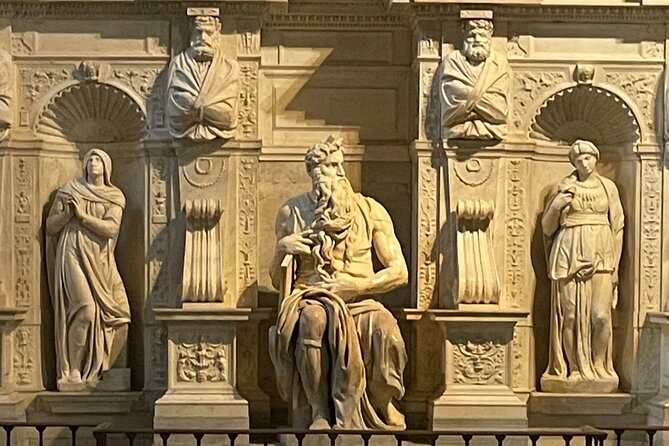
When you reach the underground levels at San Clemente, you are walking through the site’s long religious evolution. The tour is designed to show you how each layer connects to what came before it.
You are looking at:
- Early Christian and medieval layers under the basilica
- Plus a Mithraeum, which is a rare spiritual layer that helps explain the variety of belief systems present in Rome before later Christian dominance
This is where the value of the guide, or the quality of the audio track, really matters. Without guidance, you might see walls, arches, and excavated rooms and wonder what you are supposed to notice. With a guided tour, the narrative helps you recognize patterns: construction styles, repurposing, and how worship spaces were adapted.
With audio-only, you can move at your own pace through the levels. That can feel relaxing, especially if you prefer to read at your own speed. In one common positive experience, the audio setup can be easy to access, and the visit can feel calm when you are not being hurried.
If you are picky about audio quality, treat this as your one chance to control the sound. Some feedback points to an audio tone that can feel too digital for certain people, so bringing good headphones and checking volume before you go underground is smart.
Stop 4: San Pietro in Vincoli, St. Peter’s chains and Michelangelo’s Moses
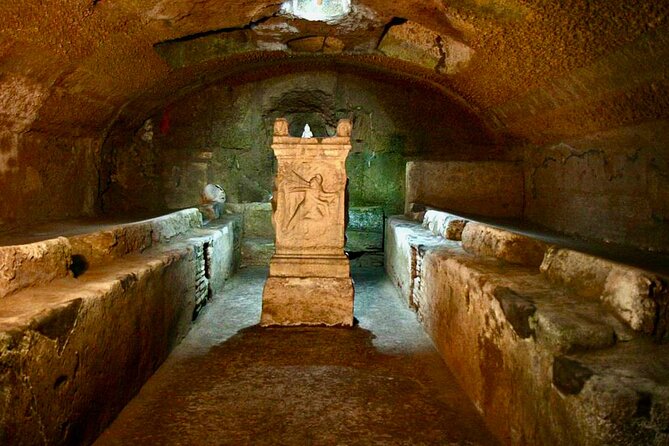
The guided tour adds San Pietro in Vincoli (St. Peter in Chains). Even if you do not consider yourself a church art person, this stop is worth it because it is anchored by two famous attractions.
First, there is the relic connection: the church houses two sets of chains associated with St. Peter’s imprisonment in Jerusalem and Rome. Second, and honestly the bigger draw for most visitors, is Michelangelo’s Moses, an unfinished masterpiece.
This sculpture was originally intended for the tomb of Pope Julius II, and the original plan for that tomb included an enormous funeral monument with many statues. Michelangelo’s other commissions prevented the full project from being completed, leaving Moses as a striking reminder of ambition stalled midstream.
If you are doing Rome in a tight time window, pairing San Clemente with St. Peter in Chains makes sense. You go from underground layered archaeology to one of the most famous Renaissance figures in Rome, tied to a saint’s story and a relic tradition.
How the guide experience changes everything
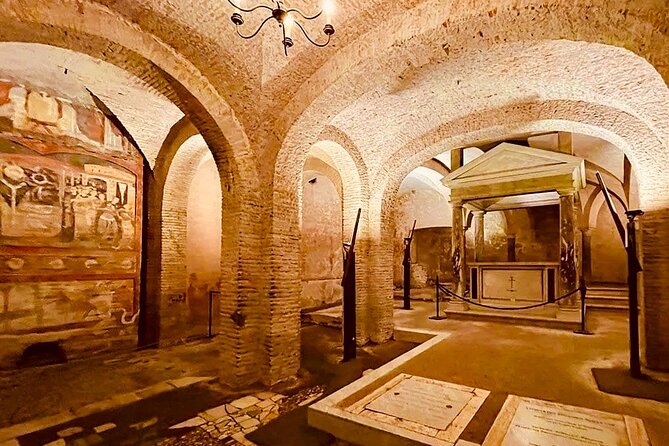
A good underground tour is mostly about clarity. Underground spaces compress your sense of scale and time. The walls do not come with labels that explain why any of it happened.
That is why people often praise guides like Sabrina and Martin for the way they connect details into a story. The most useful guides in this kind of tour explain not just what you see, but how the eras talk to each other. They also tend to keep the group moving at a human pace, so you can stop and actually look without feeling like you are late.
Even in a short day, this matters. You are doing multiple layers of sites, so you want someone to help you prioritize what to notice. When the guide is strong, the underground feels less like a basement and more like a timeline you can walk through.
If you are choosing audio-only, the good news is that the app approach can still work well because it supports a relaxed self-paced visit. The best move is to use your time underground by listening, pausing, and then looking for the feature the narration highlights.
Value check: is $33.64 worth it?
At $33.64 per person, this tour is priced like an entry-focused experience with multiple layers and included logistics. The real value comes from what is handled for you and what is included depending on your option.
For the San Clemente portion, you get:
- Skip-the-line entrance ticket and reservation fee to the Basilica of San Clemente
- Admission coverage for the included underground access in the audio-only format
- For the guided format, you also get entrance coverage tied to the additional sites on the schedule
You also get interpretive value. Even if you are an independent traveler, the San Clemente experience is not just about seeing a church and going downstairs. It is about understanding why three levels exist and what changes across them.
If you want only San Clemente, the audio-only option can be a smart way to save on guide cost and explore quietly. If you want the surrounding context like Ludus Magnus and Michelangelo’s Moses, the private guided version starts to feel like a bundle of high-impact Rome stops at a reasonable total time investment.
Who should book this, and who might rethink it
This is a strong fit if:
- You like archaeology and the mechanics of how buildings evolve
- You want Rome history that is not just standing around in sunlit squares
- You enjoy a structured tour but still want time to understand what you see
- You are okay with churches, including dress requirements for shoulders and knees
You might rethink it if:
- You hate audio apps and prefer everything live with a person
- You plan to visit with poor phone battery or without headphones
- You do not like enclosed, underground spaces, even if they are cooler and often quieter than streets
It is also a decent choice for first-time visitors who want something memorable beyond the usual Colosseum-photo circuit. And it is a great follow-up stop for repeat visitors who have already checked the big monuments and want archaeology with a narrative.
Practical FAQ
FAQ
How long does the Rome Underground San Clemente Basilica tour take?
It runs about 2 hours to 2 hours 30 minutes.
What is the price per person?
The price is listed as $33.64 per person.
What language options are available for the audio guide?
The audio guide app is listed as available in English, Italian, Spanish, French, and German.
Which sites are included with the private guided tour?
The private guided option includes San Clemente and its underground levels, plus San Pietro in Vincoli and Ludus Magnus, with entrance tickets included.
What is included with the self-guided audio tour option?
The self-guided audio option includes San Clemente Basilica and its underground levels only. A tour guide is not included for this option.
Where do I meet if I choose the audio-only option?
For the audio-only option, the meeting point is listed as Via Labicana, 96, where you can purchase tickets and download the audio guide app.
What should I wear to visit?
The dress code is smart casual, with shoulders and knees covered.
Do I need my own headphones?
Headphones are recommended for optimal audio quality, and you should bring your own if possible.
Is free cancellation available, and how far in advance?
Free cancellation is listed up to 24 hours in advance for a full refund.
Should you book this Rome Underground San Clemente tour?
I would book it if you want Rome history with clear layers and real context in a short chunk of time. The blend of San Clemente underground depth, Ludus Magnus training-history detail, and Michelangelo’s Moses at San Pietro in Vincoli makes this more than a single-site ticket.
Pick the private guided version if you want the explanation side and prefer someone to connect the dots while you walk. Pick audio-only if you like moving at your own pace and you are comfortable using your phone well down in the underground.
Either way, arrive early, plan for church dress rules, and bring headphones. Then focus on one thing: look for how the site tells the story of Rome changing its beliefs and its buildings, one layer at a time.
Latest additions from Rome
- Rome: Testaccio Market Food Tour with Street Food & Wine★ 5.0 · 8 reviews
- Exclusive Pasta & Tiramisu Class with Wine near by Colosseum★ 5.0 · 8 reviews
- Private Professional Photoshoot in Rome★ 5.0 · 8 reviews
- Loreto “Shrine of the Holy House of the Virgin Mary” Private Tour from Rome★ 5.0 · 8 reviews
- Rome Day to discover Florence and Pisa Hotel Pickup★ 4.5 · 8 reviews
- Rome: Christmas Nativities and Angels Tour★ 3.1 · 8 reviews
- Guided Tour of Vatican Museums and Sistine Chapel★ 5.0 · 8 reviews
- Rome: Cooking Class of fresh Pasta and Tiramisu Cake★ 5.0 · 8 reviews
Underground Rome Tours, compared.
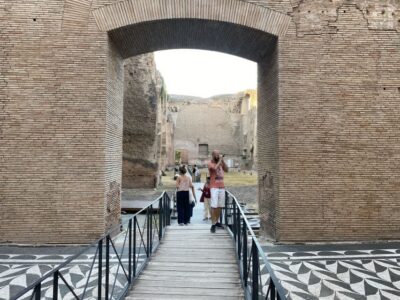
Caracalla Baths & Circus Maximus — Private or Shared
Read our review →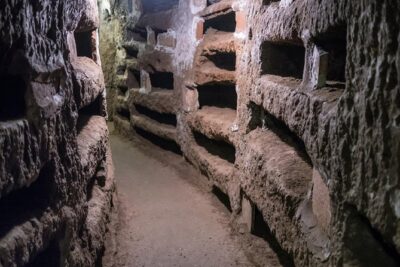
Catacombs and Hidden Underground Rome: Small Group Max 6 People
Read our review →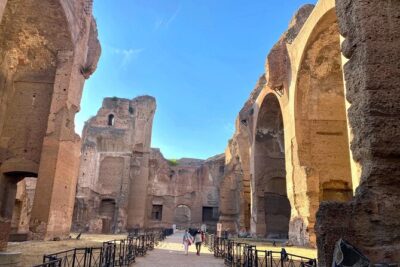
Small-Group Tour of Caracalla Baths and Circus Maximus
Read our review →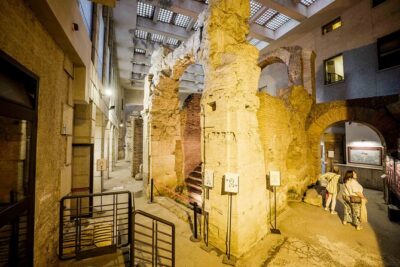
Rome underground: Piazza Navona, the Illusion Church and Pantheon
Read our review →
Ancient Rome: Archeological area Largo Argentina
Read our review →
Circus Maximus Virtual Reality Game near the Colosseum
Read our review →
Circus Maximus Virtual Reality Game near the Colosseum
Read our review →Browse the lists this tour appears in