
Reviewed · UNDERGROUND ROME TOURS
Rome Underground : Crypts and Catacomb tours with Transfers
Rome under your feet is where the city changes shape. This Rome Underground tour strings together two underground stops, with guided narration on the shift from pagan Rome to early Christianity, plus transfers that keep logistics from stealing your energy. I particularly like the mix of sites, catacombs first and then another layer of underground archaeology, and I also like that you get headsets for clearer guide audio in tight spaces. One thing to consider: the schedule is tight, and the catacombs are not for anyone with claustrophobia.
You’ll start from the Show Me Italy office near the Colosseum area, get help to the vehicle, and then go straight to the catacombs with an official guide. The catacomb portion includes early Christian art like frescoes and carvings, and you’ll also hear about specific martyrs connected to the underground, including the tombs of Nereus and Achilleus. Your second stop varies by day, so go in expecting Domus Romane or San Clemente rather than a single fixed plan.
In This Review
- Key highlights at a glance
- Underground Rome, the practical way: catacombs plus a second site
- Starting at Via dei Serpenti: transfers that keep you calm
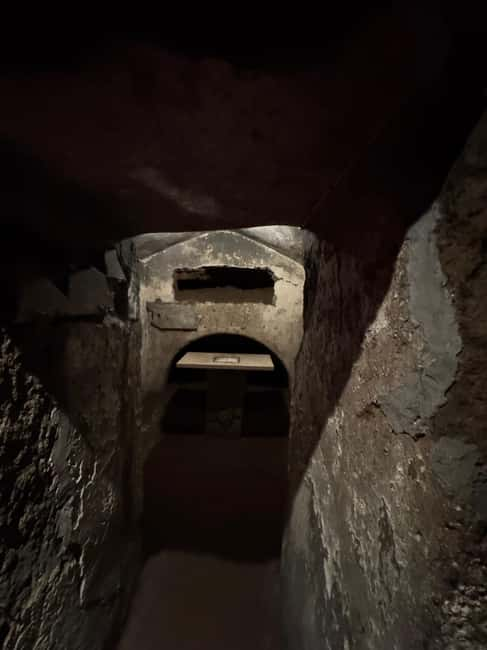
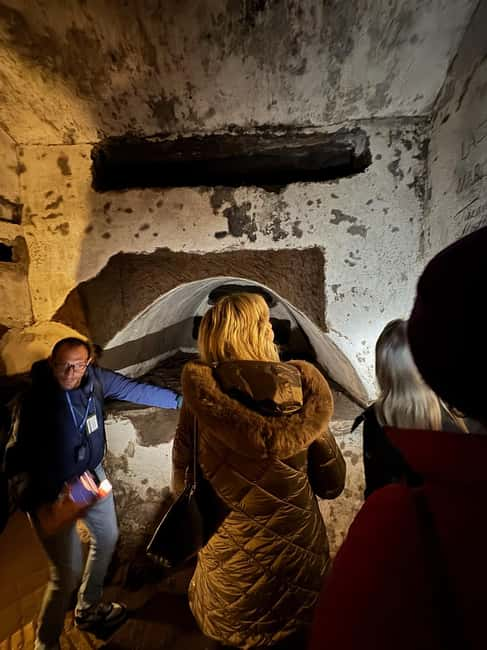
- Catacombs of Domitilla or San Callisto: what you’ll see first
- What makes the catacombs worth your time: art, tomb stories, and symbolism
- The guide factor: why expert storytelling changes everything
- Second underground stop: Le Domus Romane vs Basilica di San Clemente
- Le Domus Romane
- Basilica di San Clemente underground levels
- How the 2 hours works on the ground: timing, pacing, and headsets
- What to bring, what not to wear, and what to avoid
- Price and value: is $76 fair for two underground sites?
- Who this tour is best for (and who should skip it)
- Should you book the Rome Underground catacombs tour with transfers?
- FAQ
- Where is the meeting point for the tour?
- How long is the tour?
- Which catacombs will I visit?
- What is the second underground stop?
- Are transfers included?
- What should I bring, and what is not allowed?
- Is the tour suitable for wheelchair users or claustrophobia?
Key highlights at a glance
- Catacombs selection by availability: Domitilla or San Callisto, based on what’s open
- Expert-guided meaning, not just walking: you’ll connect symbols, burial practices, and beliefs
- Early Christian art you can actually see, with headsets to make the narration audible
- Named martyrs, including Nereus and Achilleus, tied to the tomb stories you’ll hear
- Round-trip transfers included, with staff helping you from the office to the car
- Second underground stop included, either Le Domus Romane or the underground levels at San Clemente
Underground Rome, the practical way: catacombs plus a second site
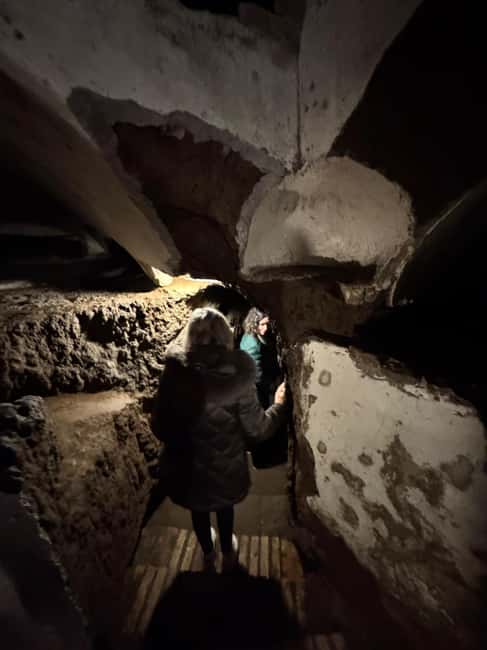
If you want Rome without the usual museum rush, you’re in the right place. Underground spaces force you to slow down, because there’s only so fast you can move when the corridors narrow and the air feels different. That’s why I like this format: it takes you beyond the surface city and gives you a story you can follow, burial space first, then another underground layer that shows different parts of Roman life and Christian worship.
The tour is also designed for comfort and smooth organization. You’re not left to figure out trains, taxi lines, and timed entries while you’re trying to read signs in Italian. Instead, you get round-trip transportation from the Show Me Italy office and staff support to help you board and stay on track. With a 2-hour overall duration including transfers, it’s a strong option if you want an underground hit without losing an entire day.
More levels of the city stacked below:
- Rome: Caracalla Baths & Circus Maximus — Private or Shared
★ 4.7 · 835 reviews - Catacombs and Hidden Underground Rome: Small Group Max 6 People
★ 5.0 · 293 reviews - Rome: Small-Group Tour of Caracalla Baths and Circus Maximus
★ 5.0 · 140 reviews - Rome underground: Piazza Navona, the Illusion Church and Pantheon
★ 5.0 · 67 reviews
Starting at Via dei Serpenti: transfers that keep you calm
Meet at Via dei Serpenti 114, the Show Me Italy office. This is a real advantage because it sets the tone for the whole experience. You check in, a staff member assists you, and they accompany you to the vehicle. That matters in Rome, where last-minute confusion can cost you your entry time.
Once you’re in the taxi or van, the ride to the catacombs is direct. The point is simple: you should spend your energy on the sites, not on traffic and navigation. One review also highlighted a driver who shared information as you passed areas on the way, which is a nice bonus when you’re sitting comfortably and waiting for your cue to start.
Tip: arrive a few minutes early. If your group starts late, underground sites are unforgiving. Doors close, corridors wait for nobody, and headsets do not fix missed timing.
Catacombs of Domitilla or San Callisto: what you’ll see first
Your first stop is one of Rome’s major catacomb complexes, picked based on availability: Catacombs of Domitilla or Catacombs of San Callisto. The order is the same either way, catacombs first, then a second underground site. That structure helps your brain do the right comparison while everything is fresh.
Here’s what you can count on, regardless of which catacomb you get:
- You’ll be guided through ancient tunnels and burial chambers.
- You’ll hear how burial practices and Christian symbolism fit together.
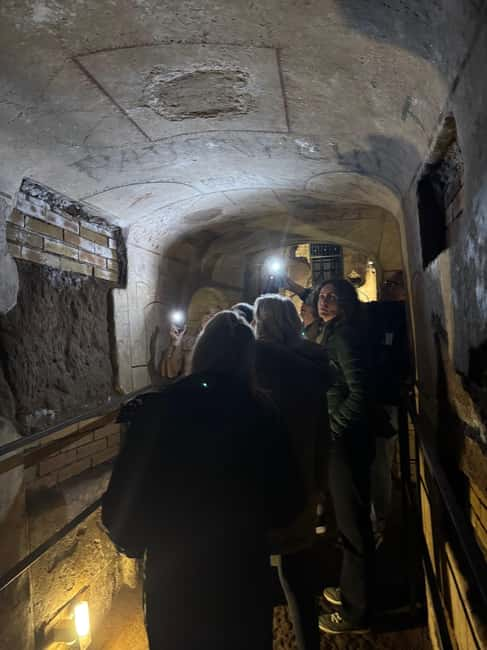
- You’ll look at some of the earliest Christian frescoes and carvings, with time to actually notice details.
The only variable is which complex you’ll enter. Since it’s chosen by availability, don’t anchor your expectations on one specific catacomb. If you have a strong preference, it’s worth checking what options are available when you book, because the tour can’t override access rules once you arrive.
What makes the catacombs worth your time: art, tomb stories, and symbolism
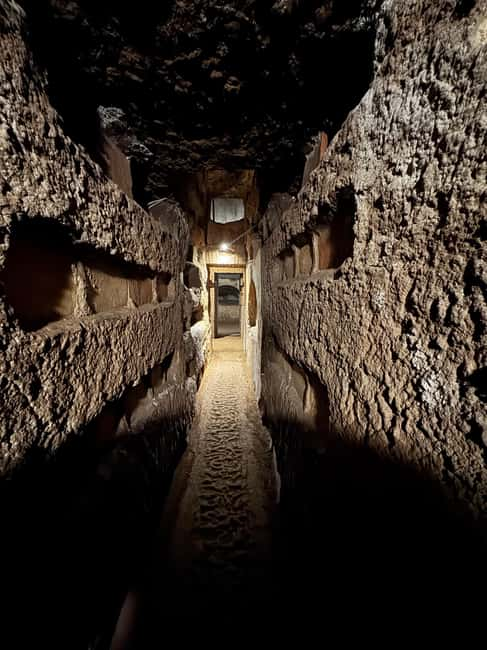
Catacombs can feel like a single long corridor if your guide only points at walls. What makes this tour work is the way the narration connects people to place.
I like that the tour is framed around Rome’s shift from paganism to Christianity. That theme isn’t just a lecture topic. It shapes what you notice when you see early Christian imagery: you start thinking in symbols, in how communities wanted to express faith and belonging even while living under threat.
Two specific “pay attention here” moments are built into the experience:
- Early Christian art such as frescoes and carvings, which you’ll actually be able to follow with the headsets
- Ancient tombs connected to early Christian martyrs, including the tombs of Nereus and Achilleus
These aren’t just names. In underground spaces, names help you imagine the human scale of burial and memorial. You’re not touring “empty rooms,” you’re touring recorded lives.
Real talk: the catacombs are not a loud environment by default. That’s why the headsets are a practical inclusion, not a nice-to-have. You’ll get clearer commentary without having to lean in uncomfortably.
The guide factor: why expert storytelling changes everything
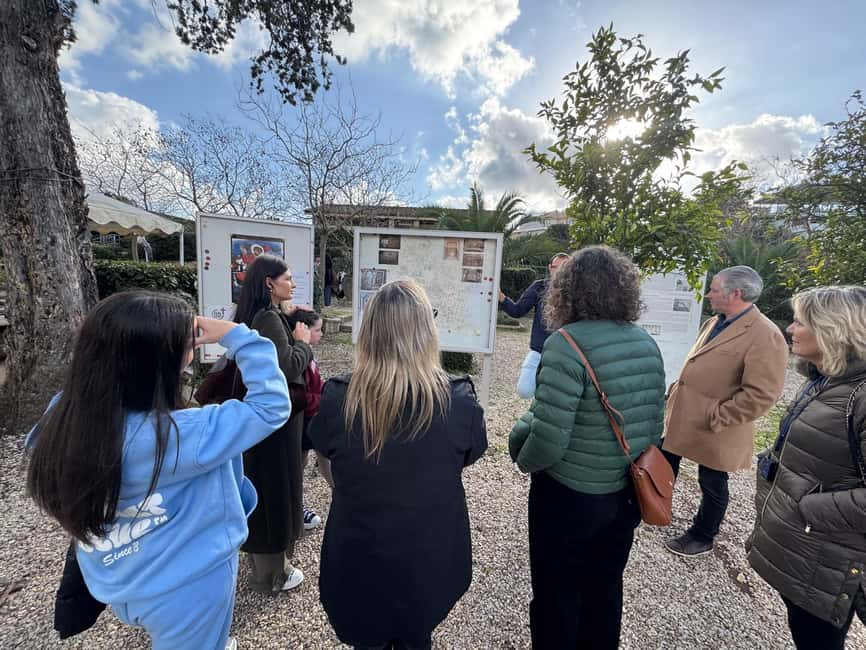
Underground tours succeed or fail based on the guide. In this case, the narration is a core part of the package, and it shows in how people describe their experience. Some guides were singled out for going above and beyond with logistics and care, and there were also mentions of guides like Michael and Hilaria who made the experience feel smooth and personal.
Even if your guide is different from those names, the goal should be the same. You want someone who can connect small details to the bigger cultural story, so you leave feeling like you understand why Rome looks the way it does underground.
What you should look for during the tour:
- moments when the guide explains how Christian identity showed up visually
- explanations that tie burial practices to beliefs
- directions that help you notice art before it becomes just “stone and dark”
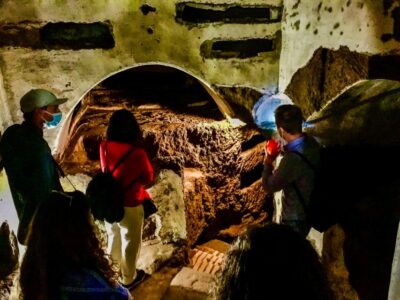
Other descents into the catacombs:
Second underground stop: Le Domus Romane vs Basilica di San Clemente
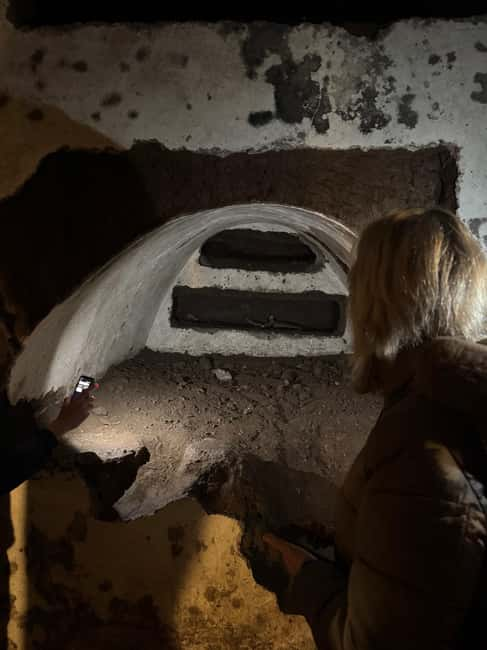
After the catacombs, you get a second underground experience, and this is where the day feels extra efficient. You’ll choose between two options depending on the day: Le Domus Romane or Basilica di San Clemente.
Le Domus Romane
Le Domus Romane is about the remains of an ancient Roman noble house. The experience includes audio-guided discovery, so you’ll get to move through the space while you listen. This second stop can feel like a palate cleanser after the catacombs, because you shift from burial spaces to everyday aristocratic Roman life and domestic architecture.
I like this pairing because it shows a different kind of “under Rome.” One area reflects how people died and remembered. The other reflects how people lived, displayed status, and organized daily space.
Basilica di San Clemente underground levels
If your second stop is Basilica di San Clemente, you’ll access the basilica and find its underground archaeological levels. This works well if you want the religious story to continue deeper, because San Clemente is known for layered sites that help you understand Rome as a city built over older structures.
There’s also a practical benefit here: you can enjoy it at your own pace since the basilica portion is independent. You’re not trapped in a single rigid script for every minute.
How the 2 hours works on the ground: timing, pacing, and headsets
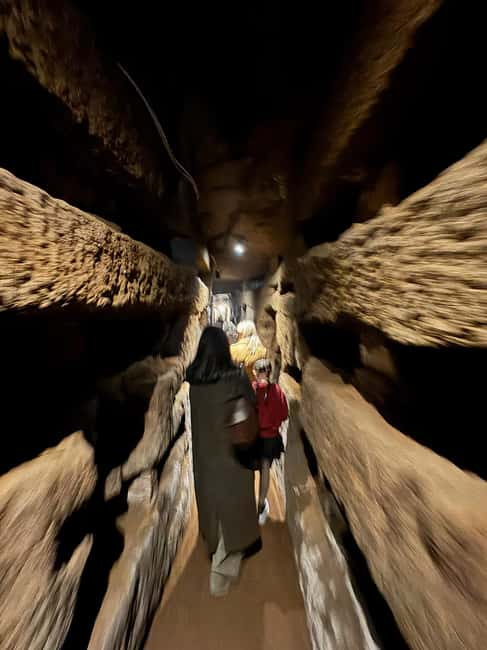
The tour is listed as 2 hours total, and that duration includes transfers. That tells you something important: you’re not getting a long meandering experience. You’re getting a focused one, designed for comfort and organized movement.
What that pacing means for you:
- You’ll have guided time where it counts most, in the catacombs and during the official explanations.
- You’ll still get enough time to look at features, but you won’t linger for hours.
- Comfortable shoes matter. The tour includes a moderate amount of walking, and underground floors can feel uneven.
This is also offered in a small-group or private format. Either way, you should expect a calmer experience than the big bus style tours. In a tight underground space, smaller groups generally translate into less crowding near the walls where you want to see frescoes.
What to bring, what not to wear, and what to avoid
This is one of those tours where a few practical choices make the experience smoother.
Bring:
- Comfortable shoes (your feet will thank you)
- A reusable water bottle
Avoid:
- Flash photography inside the catacombs
- Food and drinks during the experience
- Short skirts and sleeveless shirts (dress in a way that fits church-like spaces)
Also important: this tour is not suitable for people with claustrophobia or wheelchair users. Catacombs involve tight passageways and underground constraints that you should not plan to “tough out.” If that’s you, consider a different Rome underground option that has more accessible layouts.
Price and value: is $76 fair for two underground sites?
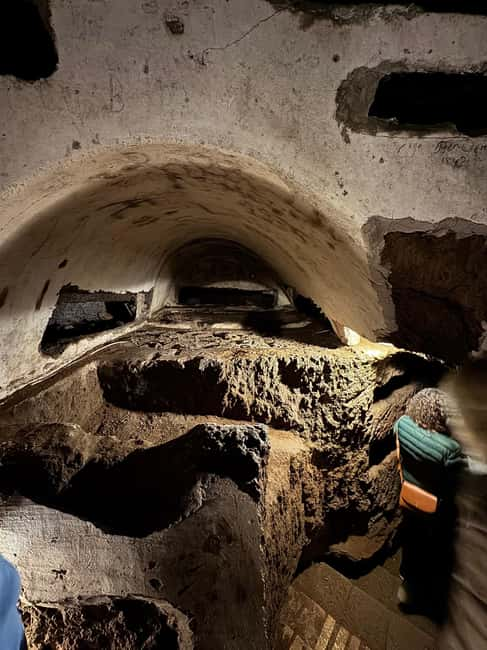
At $76 per person for a short, organized underground day, the key question is value, not just cost.
Here’s what’s included in the price:
- Entry tickets to all sites
- Guided tour with an expert guide
- Round-trip transportation from the Show Me Italy office near the Colosseum area, with staff support
- Exclusive access to the selected catacombs (San Domitilla or San Callisto)
- Headsets for clearer audio
- Exclusive access to the San Clemente or Le Domus Romane component
When you add it up, you’re paying for more than “a guide.” You’re paying for access, organization, and the practical transfer piece that saves you time. Underground sites often have strict entry systems, and delays are painful. This tour tries to reduce that risk by controlling the flow, and the headsets show they thought about how sound works in the tunnels.
In other words, if you want two underground experiences without turning the day into a DIY puzzle, this price is reasonable.
Who this tour is best for (and who should skip it)
This is a great fit if:
- you want a guided underground Rome experience with clear narration
- you like Christian art and symbolism, especially early Christian frescoes and carvings
- you want both burial history (catacombs) and another layer of underground archaeology or architecture
- you prefer small-group or private settings over crowd chaos
You might skip it if:
- you have claustrophobia, because catacombs involve tight corridors
- you use a wheelchair, since the tour is not suitable for wheelchair users
- you want a fully independent, unguided exploration with maximum time at each stop
One more note from real-world expectations: if you were hoping for a very specific underground attraction elsewhere in the city, make sure you’re choosing a tour that explicitly covers the catacombs plus the second site option offered here. This one is built around Domitilla or San Callisto and then Le Domus Romane or Basilica di San Clemente.
Should you book the Rome Underground catacombs tour with transfers?
Book it if you want an efficient, well-supported underground itinerary that goes beyond spooky basements and explains the meaning of what you’re seeing. The biggest strengths are the organized transfers, the headset-backed narration, and the fact that you get two underground experiences in a short window.
I’d also book it if you’re the kind of traveler who likes clear structure. You show up at Via dei Serpenti, the staff help you to the vehicle, and official guides handle the underground storytelling. That’s a comfortable way to experience Rome when you have limited time.
Skip it only if you know underground tight spaces will stress you out, or if you need wheelchair-friendly accessibility. Otherwise, this is an excellent way to see a side of Rome most people never experience, and to understand the city’s religious shift through real places, not just photos.
FAQ
Where is the meeting point for the tour?
You meet at the Show Me Italy office at Via dei Serpenti 114.
How long is the tour?
The tour duration is 2 hours, including transfers.
Which catacombs will I visit?
You will visit either the Catacombs of Domitilla or the Catacombs of San Callisto, selected based on availability.
What is the second underground stop?
Depending on the day, the second stop is either Le Domus Romane or the underground levels of the Basilica di San Clemente.
Are transfers included?
Yes. Round-trip transportation is included from the Show Me Italy office near the Colosseum, and staff assist you and accompany you to the vehicle.
What should I bring, and what is not allowed?
Bring comfortable shoes and a reusable water bottle. Flash photography is not allowed inside the catacombs, and food and drinks are not included/allowed.
Is the tour suitable for wheelchair users or claustrophobia?
No. The tour is not suitable for people with claustrophobia or for wheelchair users.
If you want, tell me your travel month and whether you prefer San Callisto or Domitilla, and I can help you plan around timing and what to prioritize at each stop.
Latest additions from Rome
- Rome: Testaccio Market Food Tour with Street Food & Wine★ 5.0 · 8 reviews
- Exclusive Pasta & Tiramisu Class with Wine near by Colosseum★ 5.0 · 8 reviews
- Private Professional Photoshoot in Rome★ 5.0 · 8 reviews
- Loreto “Shrine of the Holy House of the Virgin Mary” Private Tour from Rome★ 5.0 · 8 reviews
- Rome Day to discover Florence and Pisa Hotel Pickup★ 4.5 · 8 reviews
- Rome: Christmas Nativities and Angels Tour★ 3.1 · 8 reviews
- Guided Tour of Vatican Museums and Sistine Chapel★ 5.0 · 8 reviews
- Rome: Cooking Class of fresh Pasta and Tiramisu Cake★ 5.0 · 8 reviews
Underground Rome Tours, compared.
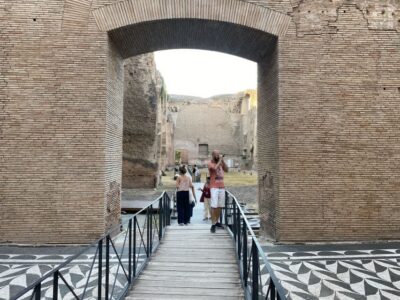
Caracalla Baths & Circus Maximus — Private or Shared
Read our review →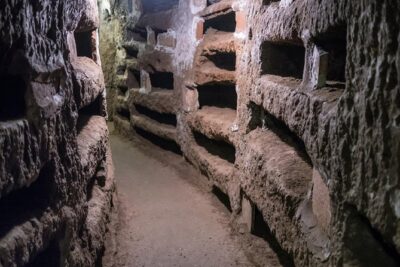
Catacombs and Hidden Underground Rome: Small Group Max 6 People
Read our review →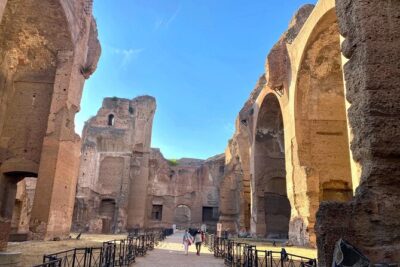
Small-Group Tour of Caracalla Baths and Circus Maximus
Read our review →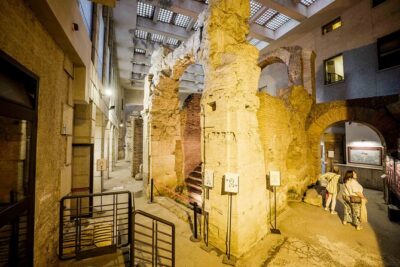
Rome underground: Piazza Navona, the Illusion Church and Pantheon
Read our review →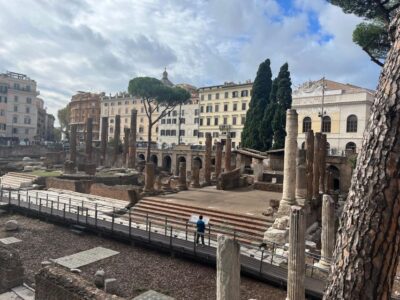
Ancient Rome: Archeological area Largo Argentina
Read our review →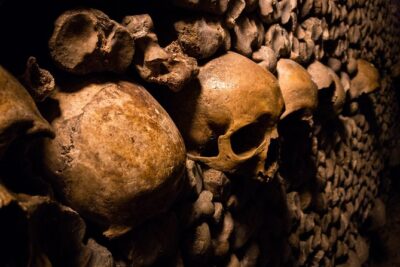
Circus Maximus Virtual Reality Game near the Colosseum
Read our review →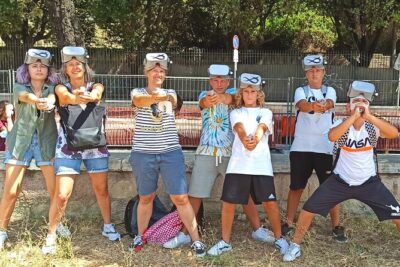
Circus Maximus Virtual Reality Game near the Colosseum
Read our review →Browse the lists this tour appears in