
Reviewed · CARAVAGGIO AND RENAISSANCE ART TOURS
Rome: Michelangelo’s Wonders at the Baths of Diocletian Tour
One place. Two Rome eras. You get the shock of walking from Michelangelo’s church back into the scale of ancient bath life. I love the meridian line and astronomy details in Santa Maria degli Angeli e dei Martiri, and I love how the Baths of Diocletian feel huge even without modern crowds. One catch: Rome heat can be real, and parts of this tour involve standing and walking in open spaces.
If you’re picky about guides, this one tends to deliver. Guides like Chiara, Francesca, and Rosy show up as upbeat and serious about explaining what you’re seeing, and the vibe can even feel close to private when group size stays small. The main drawback is timing, the visit order can swap between the basilica and the baths depending on the day.
And yes, it’s worth planning a little time for museum art after the Roman and Renaissance heavy hitters.
In This Review
- Quick hits: what makes this tour special
- The Michelangelo-to-Roman-baths switch is the whole point
- Piazza della Repubblica meet-up, plus what to wear
- Santa Maria degli Angeli e dei Martiri: meridian line, astronomy, and art
- Baths of Diocletian: scale, vaulted ceilings, and Roman hydraulics
- Michelangelo’s cloister calm: a quieter pocket inside the chaos
- Palazzo Massimo and Palazzo Altemps: where the story ends with art
- Guides, headsets, and the small-group advantage near Termini
- Price and value: where the $77 makes sense
- Timing and planning: 1.5 to 3 hours works, but be ready to swap order
- Who this tour suits best
- Should you book this Rome tour?
- FAQ
- How long is the tour?
- Where does the tour meet?
- What does the ticket include?
- Is the Palazzo Massimo museum guide included?
- What languages are the live guides offered in?
- Are there any clothing or item restrictions?
Quick hits: what makes this tour special
- Meridian line and astronomical clock ideas in Michelangelo’s basilica setting
- Ancient Rome’s largest public bath complex and the engineering behind it
- Michelangelo’s cloister calm inside the bath world, perfect for a breather
- Mosaics and sculptures at the museum stop, with extra highlights if you choose the added option
- Small-group or private style with live guide commentary and headsets for clarity
The Michelangelo-to-Roman-baths switch is the whole point
This tour works because it doesn’t treat the Baths of Diocletian as just ruins. You see how Michelangelo turned the bones of an ancient bath complex into a Renaissance spiritual space, then you walk back into the bath scale again.
Start with Santa Maria degli Angeli e dei Martiri, designed by Michelangelo, and you immediately notice how reuse can be smarter than rebuilding. Then move into the Baths of Diocletian, and the contrast clicks. It’s Rome doing what it does best: layering eras without asking you to pick a favorite.
Other Caravaggio and Renaissance trails:
- Caravaggio: Art on Footsteps-Masterpieces in Rome’s Churches
★ 4.8 · 336 reviews - Borghese Gallery Max 6 People Tour: Baroque & Renaissance in Rome
★ 5.0 · 185 reviews - Borghese Gallery Small-Group Tour with Canova’s Masterpieces
★ 4.5 · 166 reviews - Vatican Museums, Sistine Chapel & Raphael Rooms Guided Tour
★ 4.5 · 141 reviews
Piazza della Repubblica meet-up, plus what to wear
You start at Piazza della Repubblica, in front of the gate of the Basilica di Santa Maria degli Angeli e dei Martiri. Look for a staff member holding a yellow Touriks sign so you don’t lose time circling the wrong entrance.
Plan for practical walking time between stops. This is also not a shorts-and-sandals type of day: shorts, short skirts, and sleeveless shirts are not allowed, and luggage or large bags are also not allowed.
Bring your passport or ID, and keep it simple. You do not want last-minute stress when it’s time to enter.
Santa Maria degli Angeli e dei Martiri: meridian line, astronomy, and art
Your first guided stop is about 30 minutes in Santa Maria degli Angeli e dei Martiri. Michelangelo’s design is the hook, but the details are what make the basilica memorable.
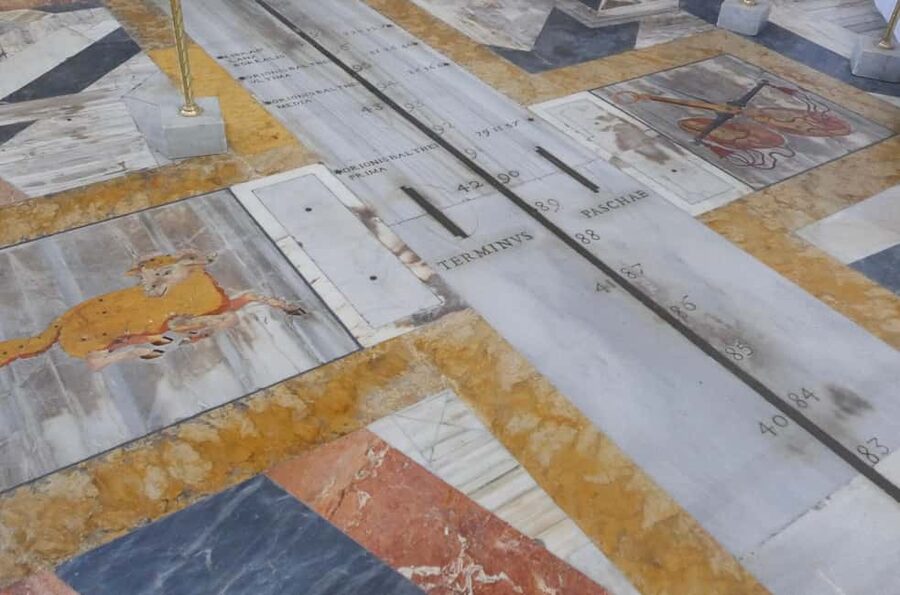
I like this stop because it explains the building like a system, not a selfie backdrop. The basilica includes an 18th-century meridian line, and the discussion connects it to how people once tracked the sun. If you like the overlap between art and science, this is the moment where the tour earns your attention.
You’ll also hear about the unique way the basilica’s features were used to measure time and solar movement, which sounds nerdy until you’re standing there. Even if you don’t remember the exact lesson, the feeling sticks: people really used architecture to observe the world.
One more reason this stop lands well is the guide format. You get headsets to hear clearly, which matters in a busy sacred space where sound can bounce.
Baths of Diocletian: scale, vaulted ceilings, and Roman hydraulics
Then comes the Baths of Diocletian, guided for about an hour. This is one of Rome’s largest bath complexes, and the tour frames it as a place where thousands of Romans came for daily life. The idea is not just “big building,” it’s big urban rhythm.
The tour focuses on Roman engineering and how the bath system worked. You’ll hear about heated floors and pools, and how Romans used an advanced hydraulic setup to keep water moving and temperatures controlled. When you stand inside, it helps to remember that this wasn’t a luxury spa for a few people, it was mass public culture.
The vaulted ceilings create that classic bath feeling, high and airy, with the room geometry helping you sense the former flow of the complex. You’ll also see mosaics, and the tour’s pacing encourages you to slow down long enough to notice details.
A practical note: this part can be warmer than you expect depending on the day. Bring water, and take short pauses when you need them. The tour moves fast enough to lose moments if you don’t.
Michelangelo’s cloister calm: a quieter pocket inside the chaos
One of the most praised elements of this experience is the cloister designed by Michelangelo. It’s not the loudest feature, but it’s the one you’ll appreciate most after you’ve taken in the scale of the baths and basilica.
I like this space because it gives your brain a reset. You get Renaissance elegance, but you’re still inside the bath-world setting that makes the whole tour unusual. If you tend to rush through big monuments, this is where you can breathe and actually look.
The guide’s enthusiasm here tends to matter. In the experience’s guide styles, you can sense it when they point out what you might otherwise miss. That matches what people praised most, the passion and commitment to explaining the place, not just reciting facts.
Another shape for the same afternoon in Rome:
Palazzo Massimo and Palazzo Altemps: where the story ends with art
After the Roman bath and the Michelangelo transformation, you head into museum territory. You have ticket access to both Palazzo Massimo and Palazzo Altemps, and the tour offers a guided museum experience at Palazzo Massimo only for the private option.
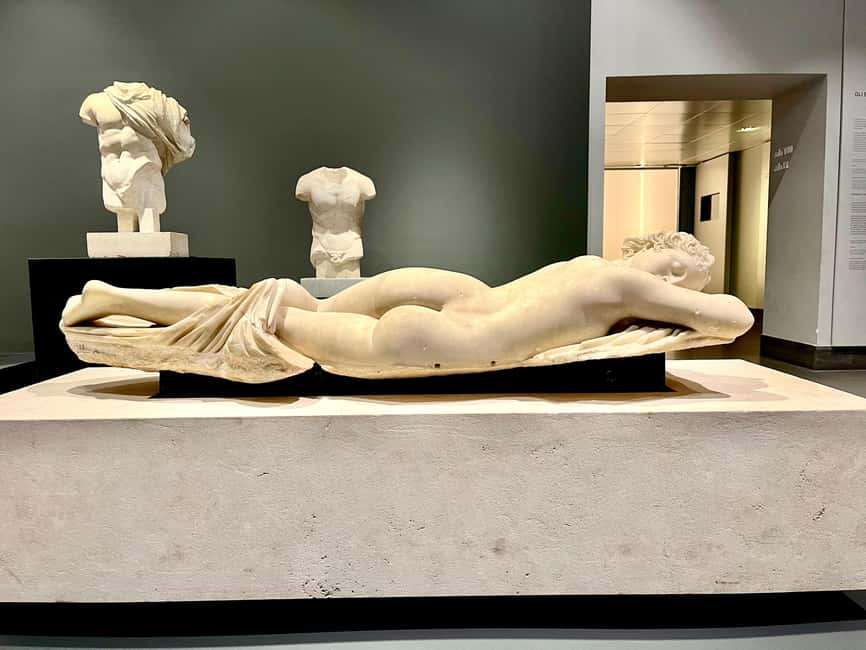
If you choose the private option, you add about 1.5 hours at Palazzo Massimo with a live guide. This museum stop is where you get a concentrated hit of mosaics and sculptures, and it’s a nice payoff if you want more objects after buildings.
Two specific highlights are built into the tour option: a copy of the Sleeping Hermaphrodite and frescoes from the Villa of Livia, with landscape scenes and idyllic imagery. Those aren’t just random famous items. They help you connect what Romans admired in everyday life with the scale of the baths and the visual thinking of later artists.
If you are in the non-private structure, you still get unguided access to Palazzo Massimo and Palazzo Altemps with your ticket. That’s useful if you prefer to browse at your own pace, but you’ll miss the guide’s pointing and context. For me, it’s the difference between reading a map and getting the route explained out loud.
Guides, headsets, and the small-group advantage near Termini
This tour stands or falls on guide quality. The good news is that the guides you might get, like Chiara, Francesca, and Rosy, show up with clear explanations and a friendly energy. People consistently praise the guides as professional, passionate, and informative.
I also like that you get headsets. In places like basilicas and museum rooms, sound can get messy fast. Headsets help you keep moving without having to lean in or guess what the guide said.
Group size matters too. You can choose a small group up to 10 people or go private. Small-group tours generally mean more time for the guide to slow down when you have questions, and the pacing feels less frantic than big-bus tours.
Price and value: where the $77 makes sense
At $77 per person, you’re paying for three things: live guiding at the basilica and baths, paid entry, and optional extra guidance at Palazzo Massimo depending on your choice.
This is good value if you want structure. The Baths of Diocletian alone could turn into “big rooms and nice ceilings” without interpretation. The basilica also makes more sense when someone explains why a meridian line matters in this specific space. With two guided stops, you’re paying to get the meaning, not just the wall.
The museum angle is the flexibility part. Even if the guided Palazzo Massimo time is only in the private option, your ticket still includes access to Palazzo Massimo and Palazzo Altemps. That means you’re not stuck with only buildings. You can look at objects after the guided core of the tour, at your own pace.
If you hate museums, you might feel the cost more than necessary. But if you enjoy seeing how Roman life shows up in both architecture and art, this pricing fits the experience.
Timing and planning: 1.5 to 3 hours works, but be ready to swap order
The duration ranges from 1.5 to 3 hours. That wide window is partly because the itinerary order can swap based on the day, either starting with the basilica then the baths, or the reverse.
For planning your day, I treat this as a mid-morning or late morning option, especially if you’re based near Termini. You’re also close enough to combine it with other nearby sights, because Piazza della Repubblica is central and practical.
One more scheduling reality: the basilica stop is shorter, then the baths are longer enough to absorb the space, and the museum time depends on which option you picked. So if you want the most museum content, consider the private option timing.
Who this tour suits best
This works especially well for you if:
- You like architecture with explanations, not just photos
- You enjoy art and science connections, like the meridian line concept
- You want a small-group experience with clear audio via headsets
- You want Roman baths plus Michelangelo transformation in a single run
It might be less ideal if:
- You want a totally passive walk with no standing time
- You prefer only one type of attraction, because you get both ancient bath scale and Renaissance design, then museum art
And if you’re a heat-season visitor, go smart with hydration and pacing. The places you’ll visit are worth it, but you’ll move enough that comfort matters.
Should you book this Rome tour?
I’d book it if you want a focused pairing that most Rome visitors miss. The combination of Michelangelo’s basilica details, especially the meridian line and astronomical angle, plus the Baths of Diocletian’s engineering and scale, makes the experience feel coherent.
Choose the private option if you want the most guided art time at Palazzo Massimo, including the Sleeping Hermaphrodite reference and the Villa of Livia frescoes focus. Choose the non-private structure if you’d rather control your museum pace and still get solid guided time where it counts.
Bottom line: if you like your Rome with meaning attached, this is a strong pick. You’ll leave with the sense that Michelangelo didn’t just decorate ruins, he reinterpreted a functioning ancient space into something new, and you saw both sides of that transformation.
FAQ
How long is the tour?
The duration is listed as 1.5 to 3 hours.
Where does the tour meet?
Meet in front of the gate of the Basilica di Santa Maria degli Angeli e dei Martiri on Piazza della Repubblica, and look for a staff member holding a yellow Touriks sign.
What does the ticket include?
Your ticket includes entry to the Baths of Diocletian, Palazzo Massimo, and Palazzo Altemps, plus live guided components at the basilica and Baths of Diocletian, and headsets to hear the guide clearly.
Is the Palazzo Massimo museum guide included?
A guided tour of Palazzo Massimo is not included unless you choose the option during purchase. Unguided access to Palazzo Massimo is included with your ticket.
What languages are the live guides offered in?
Live guides are offered in French, Portuguese, Spanish, English, Italian, and German.
Are there any clothing or item restrictions?
Yes. Shorts, short skirts, and sleeveless shirts are not allowed. Weapons or sharp objects are not allowed, and luggage or large bags are not allowed. Drones are also not allowed.
Latest additions from Rome
- Rome: Testaccio Market Food Tour with Street Food & Wine★ 5.0 · 8 reviews
- Exclusive Pasta & Tiramisu Class with Wine near by Colosseum★ 5.0 · 8 reviews
- Private Professional Photoshoot in Rome★ 5.0 · 8 reviews
- Loreto “Shrine of the Holy House of the Virgin Mary” Private Tour from Rome★ 5.0 · 8 reviews
- Rome Day to discover Florence and Pisa Hotel Pickup★ 4.5 · 8 reviews
- Rome: Christmas Nativities and Angels Tour★ 3.1 · 8 reviews
- Guided Tour of Vatican Museums and Sistine Chapel★ 5.0 · 8 reviews
- Rome: Cooking Class of fresh Pasta and Tiramisu Cake★ 5.0 · 8 reviews
Caravaggio and Renaissance Art Tours, compared.
Caravaggio: Art on Footsteps-Masterpieces in Rome’s Churches
Read our review →
Borghese Gallery Max 6 People Tour: Baroque & Renaissance in Rome
Read our review →
Borghese Gallery Small-Group Tour with Canova’s Masterpieces
Read our review →
Vatican Museums, Sistine Chapel & Raphael Rooms Guided Tour
Read our review →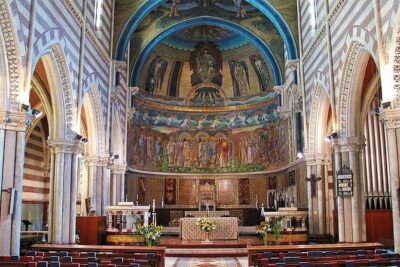
Vivaldi’s Four Seasons meets Bach’s Masterpieces
Read our review →
Private Vatican Experience with Sistine Chapel & Raphael’s Rooms
Read our review →
Renaissance Scarlet Ladies Tour: Caravaggio’s and Borgia’s Women
Read our review →
Browse the lists this tour appears in