
Reviewed · CARAVAGGIO AND RENAISSANCE ART TOURS
Rome Art Walking Tour Who Killed Caravaggio
Caravaggio’s past hits the pavement. This Rome art walking tour turns Baroque sightseeing into a real mystery you can follow through the city, with Caravaggio clues and a licensed local guide telling the story where you stand. I love how the tour frames everything as a centuries-old puzzle, and I love that you spend time at places tied to the artist, not just generic art stops. One thing to consider: the route is tight and the pauses are short, so you will want comfortable shoes and patience for quick transitions between sites.
You start in the late afternoon at Piazza della Minerva (5:00 pm) and the whole experience runs about 2 hours for a small group, capped at 25 people. It’s in English and you use a mobile ticket, which is handy when your Rome day is already full.
The payoff is big in a very practical way. You see Baroque art where it still hangs today, including Caravaggio works in major churches, plus street-level moments tied to the story, like the murder scene of Tomassoni and the houses linked to Caravaggio and his model Lena. It is also a tip-based tour, so plan to budget for a tip since that is how the guide earns their pay.
In This Review
- Key things that make this tour worth your evening
- Following the Who Killed Caravaggio plot through Rome
- Piazza della Minerva to the Pantheon: ancient engineering meets Baroque drama
- Palazzo Madama and the political side of Baroque Rome
- San Luigi dei Francesi: where St. Matthew’s life becomes Caravaggio’s canvas
- Sant’Agostino: Caravaggio and Raphael in one church moment
- Via di Pallacorda: the story turns into a street-level clue
- Vicolo del Divino Amore: Lena, Caravaggio, and the scandal-house feeling
- Palazzo Borghese and Il Circolo della Caccia: power, secrecy, and elite fun
- Price and value: what $4.83 really buys you (and what it does not)
- Group size, language, and how to get the most out of the 2-hour pace
- Who should book this Rome Art Walking Tour?
- Should you book Who Killed Caravaggio?
- FAQ
- What time does the tour start, and how long does it take?
- Where do I meet the guide, and where does the tour end?
- Is the tour offered in English?
- Do I get a mobile ticket?
- How large is the group?
- Are tips included in the price?
- Can I cancel for a full refund?
Key things that make this tour worth your evening
- A mystery structure that keeps you focused so you are not just collecting facts about Baroque Rome
- Caravaggio-linked church stops where you can look at major works in the spaces they still occupy today
- Storytelling tied to specific places including the Tomassoni murder scene and houses associated with Lena and Caravaggio
- A small group setting capped at 25 people, which helps the guide keep the pace conversational
- Strong guide feedback with named guides like Simone, Ivan, and Jacopo praised for enthusiasm and storytelling
Following the Who Killed Caravaggio plot through Rome
What I like about this style of tour is the mental shift. Instead of asking, What painting is this? you start asking, Why is this here, and what does it mean for the Caravaggio story your guide is building?
The route moves through a very Rome mix: ancient Rome engineering at the Pantheon, Baroque spectacle in churches, and power and politics in palaces. That variety matters because Caravaggio’s world did not exist in a museum. It lived inside religious spaces, elite families, and the kind of public life that could turn dramatic fast.
Timing also matters. Starting at 5:00 pm means you get cooler walking conditions and softer light for exterior views. The tradeoff is that churches can still be busy, so you will want to listen closely during the brief stops, then look carefully once you are actually inside or at the key viewing points.
More Walking Tours in Rome
- Rome: Guided Food Walking Tour with Wine in Trastevere
★ 4.9 · 3,105 reviews - Rome: Trastevere & Campo de Fiori Street Food Walking Tour
★ 4.9 · 2,768 reviews - Rome: Paranormal Night Walking Tour & Secret Backstreets
★ 4.9 · 1,921 reviews - Rome: Trastevere Street Food Walking Tour with Local Expert
★ 4.8 · 1,784 reviews
Piazza della Minerva to the Pantheon: ancient engineering meets Baroque drama
The tour begins at Piazza della Minerva, a compact square near the Pantheon. It is not a giant “tourist hub,” which I appreciate because it helps you get oriented. You will pass Bernini’s Elephant and Obelisk, then connect the square to Santa Maria sopra Minerva, a Gothic church built over an ancient temple devoted to Minerva.
Why this matters for the Caravaggio angle: even before you get to the artist’s works, you are learning how Rome keeps layering time on top of time. That makes later clues feel less random, because the city itself becomes part of the narrative.
Next comes the Pantheon, built around 126 AD, with its famous domed roof and central oculus that lights the interior. You will also hear the Pantheon connection to Raphael, since it is the resting place of the famed artist.
Practical tip: the Pantheon is a must-see, but it is also a “big wow” site where people tend to rush their photos. Use the guide’s story to slow down. If you spend the stop looking with intention, you will leave with more than just a picture of the dome.
Palazzo Madama and the political side of Baroque Rome
After the Pantheon, you shift to Palazzo Madama. This is a historic Baroque palace originally built in the 16th century, and it is now home to the Italian Senate. The guide uses it to frame the aristocratic, political architecture side of Rome, including the elegance of the design and the idea of grand spaces where power shows itself.
I like this stop because it adds context to the “mystery” tone. Caravaggio’s story is emotional and personal, but it also intersects with elite circles and public institutions. Even if you are not a history buff, you will feel why palaces like this belong in the same walking circuit as chapels and churches.
Consideration: this is a palace setting, and your viewing will depend on what areas are accessible at the time. For that reason, treat it as a listening stop as much as a looking stop. If you try to multitask (scrolling your phone, wandering off), you will miss the explanation that ties the larger story together.
San Luigi dei Francesi: where St. Matthew’s life becomes Caravaggio’s canvas
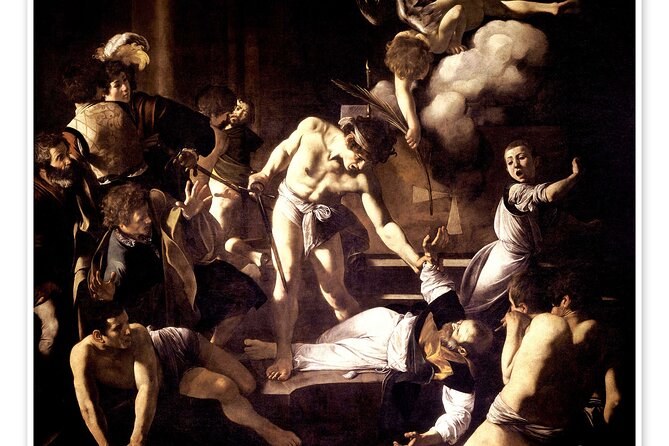
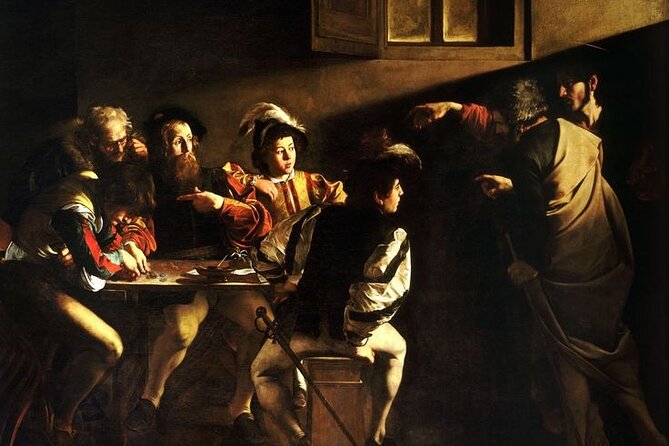
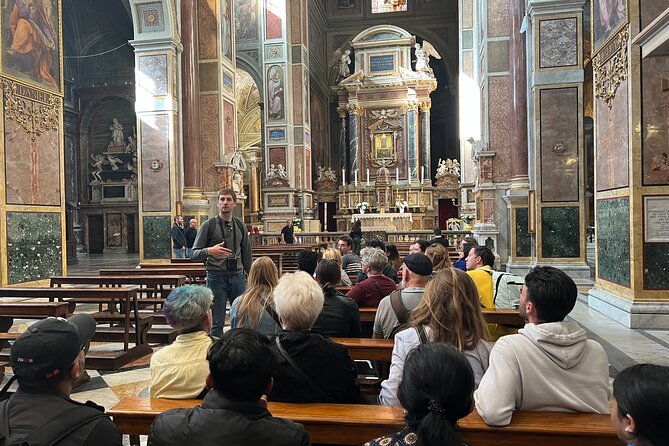
Your most “art-heavy” church moment begins at San Luigi dei Francesi, the Church of St. Louis of the French, near Piazza Navona. This is where the tour delivers a big Caravaggio payoff: the Contarelli Chapel, which contains three masterpieces by Caravaggio depicting the life of St. Matthew.
This stop is a big deal because it is not a casual roadside portrait. It is an entire chapel program tied to a specific religious narrative, and it is exactly the kind of setting that helps you understand how Caravaggio’s dramatic storytelling fit into what Rome wanted from art.
You will also get the French national church context, since San Luigi dei Francesi is associated with the French community in Rome. That detail helps explain why the church feels both Roman and international at the same time.
If you are sensitive to crowds, plan to listen harder than you usually would. When a church fills up, people naturally look outward instead of inward. Follow the guide’s pacing and spend your attention on the specific works they point out.
Sant’Agostino: Caravaggio and Raphael in one church moment
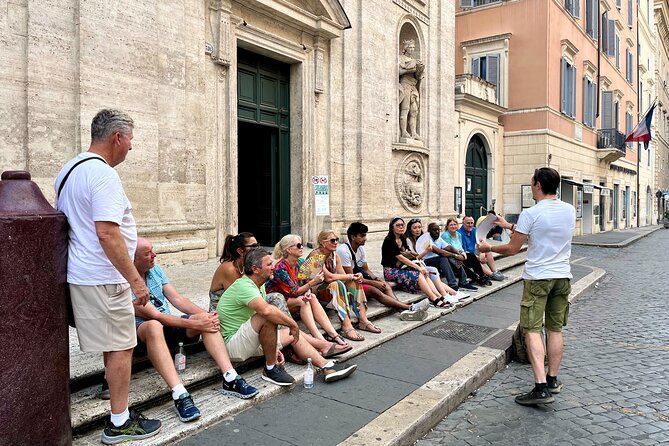
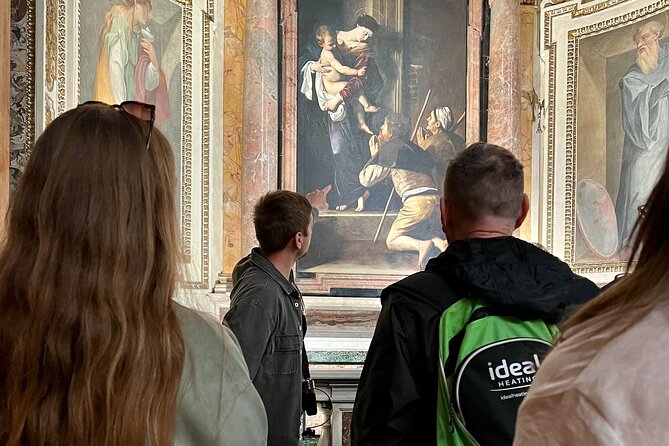
Next is Sant’Agostino, near Piazza Navona. Here you will see Caravaggio’s Madonna di Loreto, and you will also catch Raphael’s fresco of Isaiah in the same church environment.
I like pairing this with San Luigi dei Francesi because it sharpens the “interpreting art” part of the tour. Instead of thinking of Caravaggio as isolated, you see him living in a shared artistic space with Renaissance work, right where the churchgoers see it every day.
Sant’Agostino also keeps the pacing interesting. The tour is about solving a mystery, but it would be easy for it to become a straight march from one Caravaggio site to the next. This stop refreshes your mental picture by placing Caravaggio next to Raphael in the same visit.
Small practical note: because you have multiple church stops close together, your feet will take the hit before your brain does. Pace yourself. Look, listen, then take a breath. This tour works best when you are not rushing your senses.
Other Caravaggio and Renaissance trails:
Via di Pallacorda: the story turns into a street-level clue
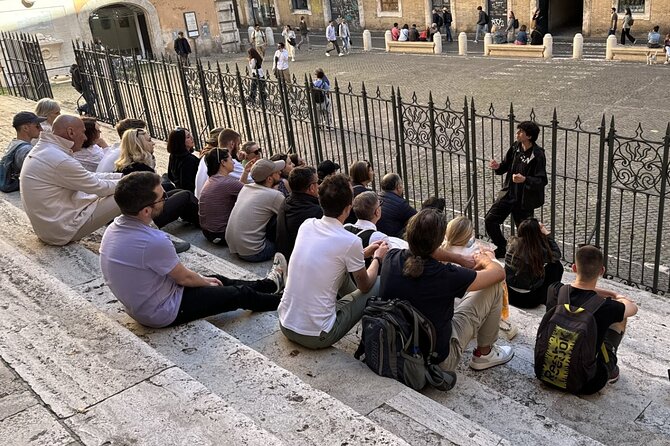
Then the tour pivots away from chapels and into the kind of place that feels more like a film set than an art museum. Via di Pallacorda is described as the murder scene of Tomassoni, Caravaggio’s victim.
This is one of the most memorable transitions on the route because it changes the tone. Up to this point, you are learning about artworks and sacred spaces. Now you are walking a physical location tied to the violent moment at the center of the mystery framing.
I find these street-level stops make the whole experience stick. You start associating names with addresses, and that is what helps you remember the story after the tour ends.
Because the stop is short, you will get the most out of it if you stand in the spot the guide indicates. Trying to “wander for a better angle” is how you lose the narrative thread.
Vicolo del Divino Amore: Lena, Caravaggio, and the scandal-house feeling
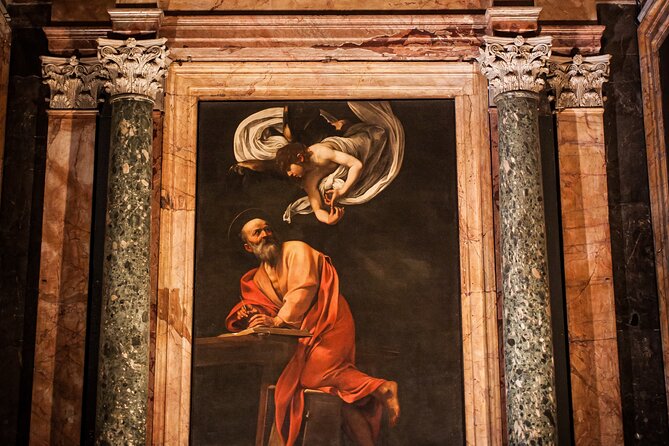
Two quick stops bring you into Vicolo del Divino Amore. First is the house of Caravaggio’s model Lena. Then you move to the house of Caravaggio himself, again in the same tiny alley area.
I love how the tour handles this portion. It does not just say Caravaggio had a complicated life and leave you there. It points you to specific locations tied to the model Lena and to the artist’s own home, so you can feel the “scandal” dimension as part of Rome’s everyday street geometry.
Consideration: these alley stops are brief by design. That is not a bad thing. It keeps the story moving. But it does mean you should avoid slow walking or lingering for long photos. Your best strategy is quick, attentive looking while the guide gives the context.
Palazzo Borghese and Il Circolo della Caccia: power, secrecy, and elite fun
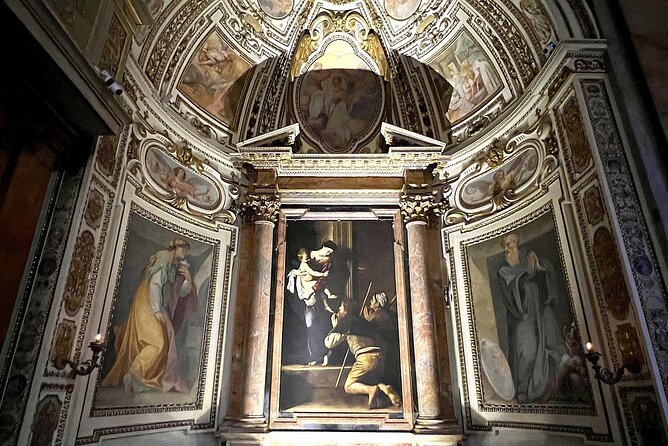
The tour ends at Palazzo Borghese, near the Spanish Steps area. It was home to the influential Borghese family, and the route uses it to explain a side of Roman elite life tied to Caravaggio’s era.
A key element here is Il Circolo della Caccia, described as a secretive elite club established in the 17th century by the Borghese family. It was centered at Palazzo Borghese, and it functioned as a gathering place for noblemen and intellectuals, with art discussions, exhibitions, and private hunting activities. The tour frames the club’s exclusivity and links it to the wider cultural and political elite.
Why I think this ending works: after chapels and alleys, you finally land in a “big architecture” space connected to power. It gives the mystery an atmosphere, not just a list of famous names.
Practical detail: because this is the finish point, it is also a good place to plan your next move. If you want dinner nearby, or you are hopping to another attraction, you are already in a logical end zone.
Price and value: what $4.83 really buys you (and what it does not)
At $4.83 per person for about 2 hours, this is priced like a budget entry point, not a full-price museum tour. That said, the tour is tip-based, and the guide works for tips alone, so your real cost includes what you choose to tip.
Where the value comes from is not just the low price tag. You are paying for:
- A licensed local guide to connect the dots between story and place
- A focused route with specific church works linked to Caravaggio
- A “how to interpret art” approach, not just walking past buildings
Also, multiple scheduled stops are marked as admission ticket free in the plan, which reduces the chance of surprise costs during the walk. The bigger risk is less about money and more about time and attention. If you show up tired, distracted, or late, you will feel the “short stop” pacing more than you would on a slower tour.
If you want a straightforward art history walk, this probably beats the usual generic format. If you want a long, slow gallery experience, it may feel brisk. But for an evening in Rome when you want story plus sights in a compact loop, it is a smart use of time.
Group size, language, and how to get the most out of the 2-hour pace
This is capped at a maximum of 25 people. That is large enough to feel lively, but small enough that you are not lost in a sea of coats. It also explains why guides can keep a conversational tone and why the storytelling gets praised so often.
The tour is offered in English. The writing and descriptions emphasize catchy, engaging storytelling, and the guide experience appears to be the main driver of satisfaction. Names that come up in feedback include Simone, Ivan, and Jacopo, each credited with strong enthusiasm and clear responses.
One practical way to help the guide help you: ask your questions during stops, not while walking. In a short, tight route, answers delivered on the move tend to get muffled if you are not right next to the guide. If you want your question answered fully, wait for the pause.
What to wear:
- Comfortable shoes for a compact city walk
- A light layer, since it is a 5:00 pm departure and Rome evenings can cool off
- A ready notebook habit, if you like remembering names by writing once at each stop
Who should book this Rome Art Walking Tour?
This tour is a good fit if:
- You want a mystery-driven way to learn about Caravaggio and Baroque Rome
- You like the idea of seeing church artworks where they still hang today
- You enjoy short explanations tied to exact locations, not long lectures
It might not be the best match if:
- You dislike walking in the city for about 2 hours at an evening pace
- You need long time inside museums or you prefer quiet, unstructured looking
- You want a route that feels like a relaxed stroll with lots of free time built in
If you are coming to Rome for the first time, this also works as a “connect the dots” evening. You hit major landmarks like the Pantheon, then you shift into the more personal Caravaggio story and the elite world around it.
Should you book Who Killed Caravaggio?
Book it if you want your Rome art day to feel like a story you can follow in real streets. The combination of Caravaggio-linked churches, very specific plot-location moments like the Tomassoni murder scene, and an ending at Palazzo Borghese makes this more than a standard sightseeing loop.
Skip it only if you strongly prefer slow, unhurried museum time, or if you know you get impatient with short stops. Also, be ready for a tip-based approach, and bring a mindset of listening. This tour rewards attention, and the best experiences come when you let the guide’s storytelling guide your eyes.
If you do book, arrive a few minutes early at Piazza della Minerva so you start calm, not rushed. Then keep your questions for the pauses. That simple move will help you catch every bit of the story.
FAQ
What time does the tour start, and how long does it take?
The tour starts at 5:00 pm and lasts about 2 hours.
Where do I meet the guide, and where does the tour end?
You meet at Piazza della Minerva, 00186 Roma RM, Italy, and the tour ends at Palazzo Borghese, Piazza Borghese, 00186 Roma RM, Italy.
Is the tour offered in English?
Yes, the tour is offered in English.
Do I get a mobile ticket?
Yes, you receive a mobile ticket.
How large is the group?
The tour has a maximum of 25 people.
Are tips included in the price?
No. Tips are not included, and it is a tip-based tour. The guides work for tips alone.
Can I cancel for a full refund?
Yes. You can cancel for a full refund if you cancel up to 24 hours before the experience starts. If you cancel less than 24 hours before, the amount paid is not refunded. If the tour is canceled because a minimum number of travelers is not met, you will be offered another date or a full refund.
Latest additions from Rome
- Guided Tour Vatican Museums & Sistine Chapel★ 4.1 · 30 reviews
- Exclusive Rome by Night Vespa Tour★ 5.0 · 30 reviews
- Transfer Rome to Airports★ 4.5 · 30 reviews
- Vatican: St.Peter’s Basilica & Dome – Reserved Entry & Tour★ 4.1 · 30 reviews
- Tivoli, Hadrians Villa and Villa d’Este, a charming day trip from Rome★ 4.5 · 30 reviews
- Rome street art tour: off the beaten path with a local guide★ 5.0 · 30 reviews
- Rome Food Tasting with Wine Pairing Italian Authentic Flavors★ 5.0 · 31 reviews
- Inspirational Cooking on the Roman Chef’s Panoramic Terrace★ 5.0 · 30 reviews
Caravaggio and Renaissance Art Tours, compared.
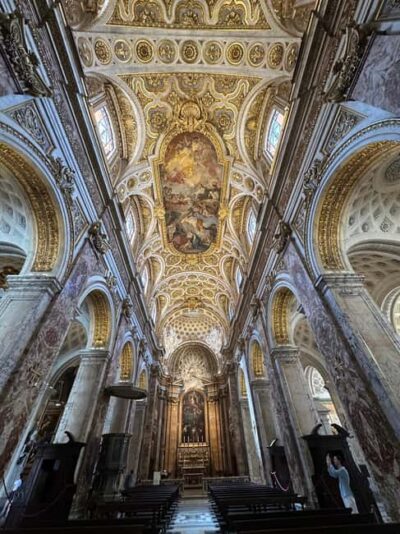
Caravaggio: Art on Footsteps-Masterpieces in Rome’s Churches
Read our review →
Borghese Gallery Max 6 People Tour: Baroque & Renaissance in Rome
Read our review →
Borghese Gallery Small-Group Tour with Canova’s Masterpieces
Read our review →
Vatican Museums, Sistine Chapel & Raphael Rooms Guided Tour
Read our review →
Vivaldi’s Four Seasons meets Bach’s Masterpieces
Read our review →
Private Vatican Experience with Sistine Chapel & Raphael’s Rooms
Read our review →
Renaissance Scarlet Ladies Tour: Caravaggio’s and Borgia’s Women
Read our review →
Borghese Gallery: Canova’s Masterpieces Small Group Guided Tour
Read our review →Browse the lists this tour appears in