
Reviewed · CARAVAGGIO AND RENAISSANCE ART TOURS
Renaissance Scarlet Ladies Tour: Caravaggio’s and Borgia’s Women
Women made Rome run. This 3-hour Scarlet Ladies walking tour uses Renaissance-era women as your guideposts, pairing overlooked churches and palaces with story-first history.
I love the on-the-street storytelling that turns famous names into people you can picture, not just dates and titles. I also love the art connection, especially how Caravaggio’s circle gets explained alongside the places you actually stand in.
One consideration: you do walk a fair amount and spend time going into (and around) major churches, so wear comfortable shoes and plan for an active afternoon.
In This Review
- Key highlights you should care about
- Renaissance Rome, told through women you rarely hear about
- Price and what you actually get for $47.07
- Timing and how the walk fits your afternoon
- Stop 1, Basilica San Marco Evangelista: the statue tied to Lady Lucrezia
- Stop 2, Villa Doria Pamphilj courtyard: Anna Bianchini and Caravaggio’s early link
- Stop 3, Santa Maria Sopra Minerva: where the church supports the courtesan story
- Stop 4, Basilica S. Agostino: Caravaggio’s Virgin Mary and the Pilgrims
- Stop 5, Via dei Coronari: watching history happen on a street with old addresses
- Stop 6, Campo de’ Fiori area: Vannozza Cattanei and the Borgia thread
- Stop 7, Piazza Farnese: Giulia Farnese and a moving finale
- Why the guide style matters more than the subject
- Who should book this Scarlet Ladies tour
- Tips to get the most from the 2:30 pm start
- Should you book the Renaissance Scarlet Ladies Tour?
- FAQ
- How long is the Renaissance Scarlet Ladies Tour?
- Where does the tour start and where does it end?
- What is the starting time?
- Is the tour in English?
- What is included in the price?
- Can I cancel if I change my plans?
Key highlights you should care about
- Small group, max 18 people keeps the pace human and gives time for questions.
- Massimo’s humor plus real context makes the women’s stories feel practical, not lecture-style.
- Seven stop story arc, from Lady Lucrezia to Giulia Farnese, keeps momentum.
- Caravaggio tie-ins connect paintings to models and settings, so the art makes more sense.
- Admission tickets are listed as free at the stops, so your cost is mainly for the guided experience.
Renaissance Rome, told through women you rarely hear about
If you already know Rome’s big sights, this tour gives you a different angle. Instead of treating Renaissance Rome like a museum of men, you follow the social power of women who shaped politics, art, and reputation.
The format is simple and effective: you walk from church to church, palaces to courtyards, and each location anchors a new woman in the story. The names may sound familiar, but the focus is on what it meant to live that life, not just the headlines.
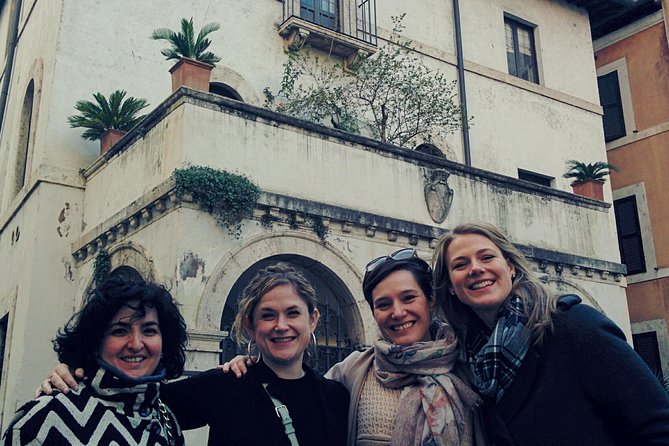
And yes, the group stays small. With a cap of 18 people, you’re not shouting over ten dozen other conversations. It feels like a smart walking chat that happens to pass some of Rome’s most interesting interiors and facades.
Other Caravaggio and Renaissance trails:
- Caravaggio: Art on Footsteps-Masterpieces in Rome’s Churches
★ 4.8 · 336 reviews - Borghese Gallery Max 6 People Tour: Baroque & Renaissance in Rome
★ 5.0 · 185 reviews - Borghese Gallery Small-Group Tour with Canova’s Masterpieces
★ 4.5 · 166 reviews - Vatican Museums, Sistine Chapel & Raphael Rooms Guided Tour
★ 4.5 · 141 reviews
Price and what you actually get for $47.07
At $47.07 per person for about 3 hours, you’re paying for a guided narrative plus a route through multiple major stops. The important detail is that the tour itself is the value: the storytelling, the connections between art and daily life, and the ability to ask questions.
You’re not paying separate attraction fees for the specific sites listed in the itinerary, since the entry is shown as admission ticket free at each stop. Snacks are the one obvious extra you might want along the way, and those are not included.
So the value equation looks like this: you’re covering guide time, a structured route, and interpretation, while the listed sites themselves do not add extra entry costs. If you enjoy learning while walking, this price makes sense.
Timing and how the walk fits your afternoon
The tour runs at 2:30 pm and lasts about 3 hours. That timing is great if you want to avoid the middle-of-the-day rush, but still have enough daylight for photos and for getting your bearings around the historic center.
The route ends at Piazza Farnese, which is extremely convenient. It puts you near Campo de’ Fiori and not far from Piazza Navona. There’s a taxi stand and many bus stops right nearby, so you can keep exploring without feeling stuck.
You’ll also likely appreciate the start location. It begins at the Basilica of St Mark Evangelist (near Palazzo Venezia) at Piazza di S. Marco 48. This is central, easy to reach with public transport, and it helps the tour feel like it’s moving through real neighborhoods instead of hopping across town.
Stop 1, Basilica San Marco Evangelista: the statue tied to Lady Lucrezia
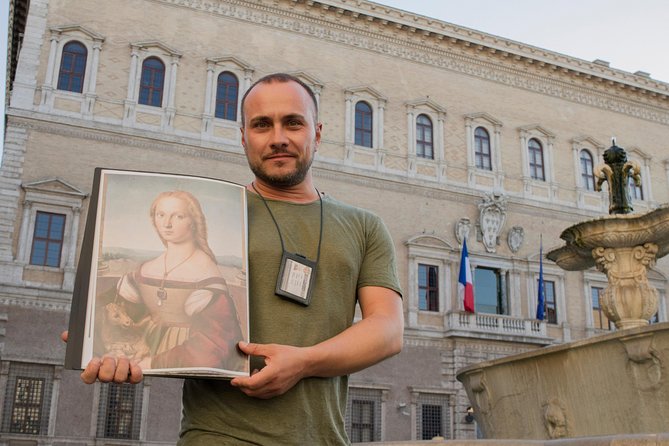
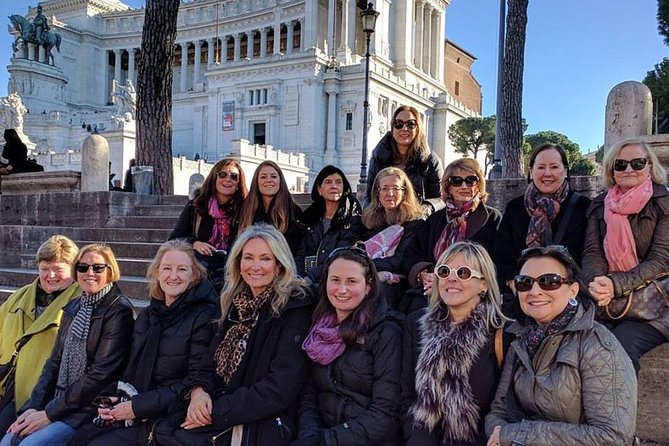
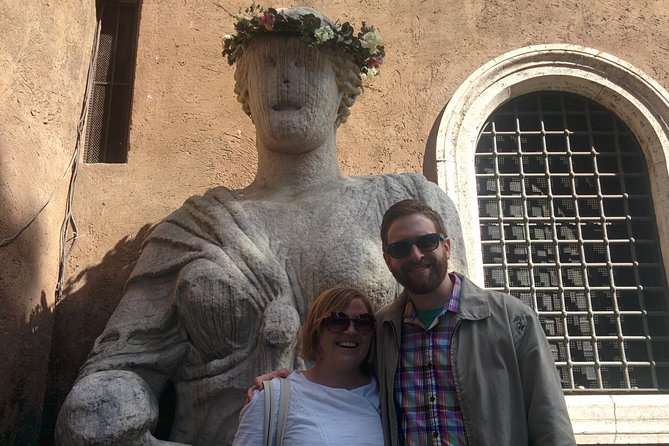
The tour opens with a massive statue known as Lady Lucrezia. The story begins in 1477, when the statue was named after a famous courtesan. That sets the tone immediately: this is not a generic “look at the church” stop.
What I like about this first beat is how it reorients your brain. You start by seeing a figure that’s literally monumental, then you hear what that meant for reputation, money, and survival in Renaissance Rome. The tour frames Lady Lucrezia as a woman with a colorful life, then uses her as your entry point into how these stories traveled through public space.
Practical note: this is a start-point stop, so it’s likely short and crisp. Use it to get oriented and ready for the walking that follows.
Stop 2, Villa Doria Pamphilj courtyard: Anna Bianchini and Caravaggio’s early link
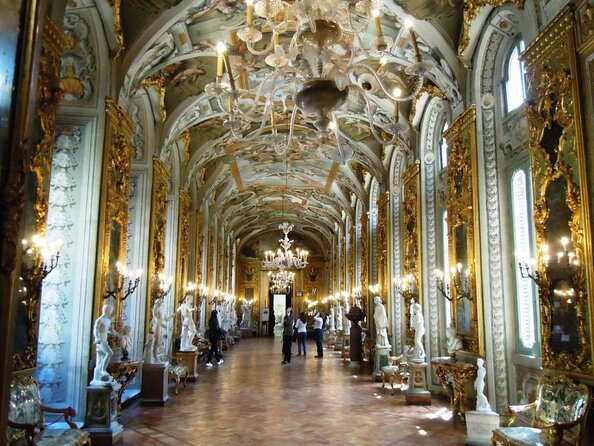
Next you step into the courtyard of the Doria Pamphilj complex to talk about Anna Bianchini. This is where the tour pulls you closer to art history, in a way that feels grounded.
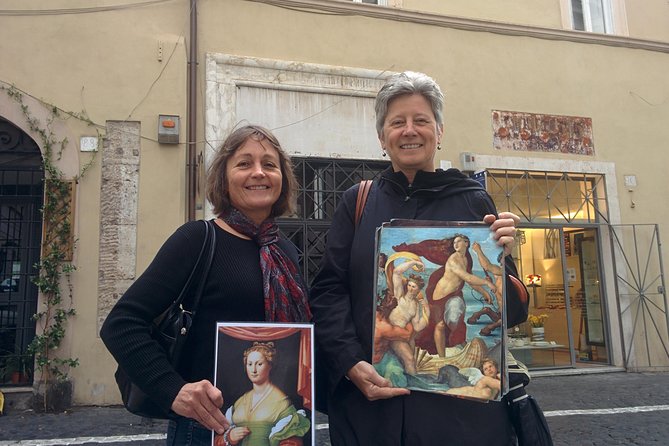
Anna Bianchini is described as Caravaggio’s first model, and the one who modeled for him the most. That’s a major hook because it turns “Caravaggio’s muse” from a vague phrase into a real person with repeat involvement.
If you’ve ever looked at a Caravaggio painting and wondered why the images feel so immediate, the tour’s approach helps. It implies that the relationship between painter and model mattered, and it places you in a place connected to that world rather than leaving you to guess from a distance.
Again, this stop is designed to be short. You get the story beat, then you move on.
Another shape for the same afternoon in Rome:
Stop 3, Santa Maria Sopra Minerva: where the church supports the courtesan story
Now you enter the Chiesa di Santa Maria Sopra Minerva, a magnificent church packed with important artworks. The tour uses the interior setting to tell the story of one of the most successful courtesans in Europe in the early 1500s.
This is one of the most interesting moves in the whole itinerary: the guide doesn’t separate art from social life. Instead, the church becomes a stage where you can understand why patronage, image, and influence all mattered. You’re not just learning that someone existed. You’re learning why a place like this would register in her story.
Potential drawback: you may be inside a church with people milling around and viewing artwork. If you’re the type who hates waiting your turn to see details, focus on what the guide points out first, then take your time afterward when the group moves.
Stop 4, Basilica S. Agostino: Caravaggio’s Virgin Mary and the Pilgrims
At the Basilica S. Agostino, the tour continues the theme that women show up in sacred art, too. The church is described as historically tied to women, with many stories connected to them.
This stop also includes a specific Caravaggio work: the original Virgin Mary and the Pilgrims canvas painted by Caravaggio. That detail matters. It anchors the story in a tangible artwork you can actually see in the place it’s meant to be seen.
So if you came for Caravaggio, this is likely the most art-focused moment. And if you came for the women’s stories, it still works, because the tour uses the painting as a portal into how women, devotion, and social identity could overlap.
Stop 5, Via dei Coronari: watching history happen on a street with old addresses
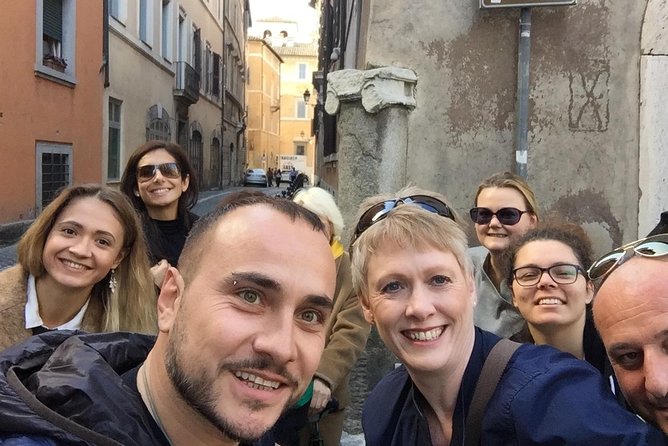
You then walk along Via dei Coronari, where the tour explains that the buildings in this area were once owned by courtesans. This is framed as a hands-on way to make the stories feel real.
Why this works: it’s harder to reduce someone’s life to a biography when you’re looking at the architecture tied to their daily reality. The street stops turn into a kind of outdoor museum, but with less dust and more walking.
One practical tip here: keep an eye on shoes and footing. Old streets can be uneven, and this tour is already active enough that you want to avoid spraining yourself mid-story.
Also, this is one of the lighter stops in time. You likely get a short segment of narrative rather than a long pause.
Stop 6, Campo de’ Fiori area: Vannozza Cattanei and the Borgia thread
Now the story shifts into family power politics through Vannozza Cattanei, the mother of Cesare and Lucrezia Borgia. If you’re a Borgia fan, this part is likely to land hard.
The tour describes Vannozza’s story as incredible and calls it a favorite for many people on this experience. That tracks, because her life sits at the intersection of court life and influence, with the kind of stakes that make Renaissance intrigue feel less abstract.
What I like about bringing her in here is how it stitches the tour’s theme together. You’ve been looking at courtesans, models, and patrons. Now you see that women could also be central operators in political dynasties, not just background characters.
Expect this stop to feel like a chapter turn. It changes the emotional tone and gives you a new way to interpret what you’ve been hearing.
Stop 7, Piazza Farnese: Giulia Farnese and a moving finale
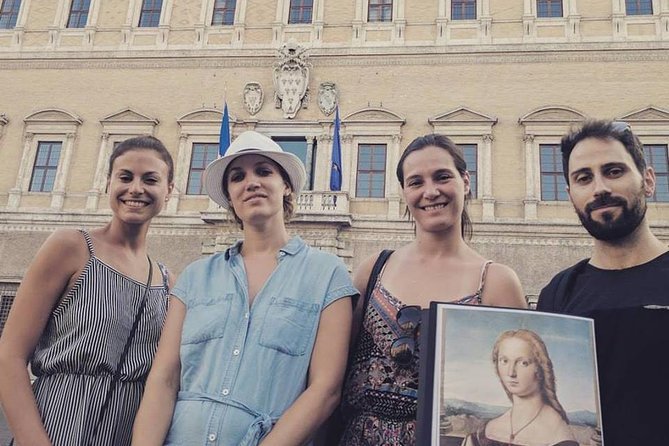
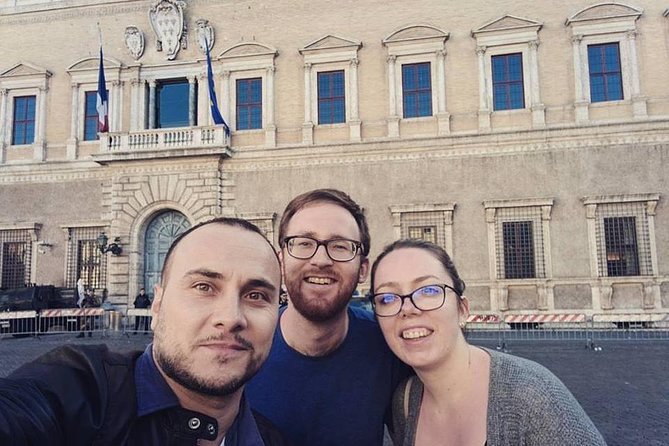
The tour ends at Piazza Farnese, right by the Palazzo designed by Michelangelo, which is now the French Embassy. That setting alone is visually satisfying, but the tour saves the emotional weight for the finale.
Here you hear the story of Giulia Farnese, and the ending is described as moving without giving everything away in advance. The takeaway is how the narrative closes the loop between power, reputation, and the way women’s stories got preserved or erased in public space.
The location also makes practical sense. You finish in a big square with transit options, which helps when the tour wraps. Instead of feeling stranded at the edge of nowhere, you’re dropped into a central hub where you can continue on your own.
Why the guide style matters more than the subject
A big reason this tour earns such strong ratings is the way Massimo tells the stories. The comments emphasize that he brings history alive using humor, with enough structure that the details stick without feeling like a heavy lecture.
That matters because this subject can go two ways: either it turns into gossip, or it becomes dry academic text. Here, the balance is the point. The stories connect to economic reality and social constraints, while still giving you vivid scenes to picture.
The guide’s approach also seems built for questions. When the group is capped at 18, you’re more likely to get answers that match your interests, whether you’re focused on the art, the politics, or the everyday side.
Who should book this Scarlet Ladies tour
This tour is a strong fit if:
- You like art history but want a human angle, not just names on a label.
- You’ve already seen Rome’s must-dos and want something more local and less predictable.
- You enjoy walking tours where the storytelling stays organized and flows from stop to stop.
- You want a small group experience with time to ask questions.
It might be less ideal if:
- You want a long sit-down museum visit. This one is active and route-based.
- You prefer strictly neutral interpretations of famous figures. The whole premise is lens-based storytelling.
Good news: most travelers can participate, and service animals are allowed. It’s also near public transportation, so you can reach it without needing a car.
Tips to get the most from the 2:30 pm start
A few practical moves will help you enjoy the tour more:
- Wear comfortable shoes. The route is a walking experience with church interiors and street segments.
- Go in with a loose game plan. Pick what you care about most: Caravaggio, the Borgias, or courtesan life. The guide weaves all three, but your focus helps you remember what matters to you.
- Ask one question early. If the group is small and the guide invites interaction, you’ll learn more when you start asking from the first major stop.
- Plan for a possible snack break. There’s a chance to stop at a snack bar halfway through, but it’s not included in the tour cost.
One more thing: because this tour is often booked in advance (about 41 days on average), reserving earlier is smart if your schedule is fixed.
Should you book the Renaissance Scarlet Ladies Tour?
If you want Rome to feel personal and story-driven, this tour is an easy yes. The price is reasonable for a 3-hour guided experience, and the route hits multiple standout sites tied to the theme. The big wins are the small-group setting and Massimo’s storytelling style, especially when it connects art and daily life through women like Lady Lucrezia, Anna Bianchini, Vannozza Cattanei, and Giulia Farnese.
Book it if you like being shown how to see, not just where to look. Skip it if you want a purely traditional sightseeing checklist, with minimal talking and minimal interpretation.
FAQ
How long is the Renaissance Scarlet Ladies Tour?
The tour lasts about 3 hours.
Where does the tour start and where does it end?
It starts at the Basilica of St Mark Evangelist at Campidoglio, near Palazzo Venezia, Piazza di S. Marco 48, 00186 Roma RM, Italy. It ends in Piazza Farnese at Piazza Farnese 44, 00186 Roma RM, Italy.
What is the starting time?
The start time is 2:30 pm.
Is the tour in English?
Yes, the tour is offered in English.
What is included in the price?
The guided tour is included. Snacks are not included, and there may be a chance to stop at a snack bar halfway through at your own cost.
Can I cancel if I change my plans?
You can cancel for a full refund up to 24 hours before the experience’s start time. Confirmation is received at booking, and the experience can be canceled if a minimum number of travelers is not met, with an alternate date or a full refund offered. Service animals are allowed, and the tour is near public transportation.
Latest additions from Rome
- Guided Tour Vatican Museums & Sistine Chapel★ 4.1 · 30 reviews
- Exclusive Rome by Night Vespa Tour★ 5.0 · 30 reviews
- Transfer Rome to Airports★ 4.5 · 30 reviews
- Vatican: St.Peter’s Basilica & Dome – Reserved Entry & Tour★ 4.1 · 30 reviews
- Rome street art tour: off the beaten path with a local guide★ 5.0 · 30 reviews
- Tivoli, Hadrians Villa and Villa d’Este, a charming day trip from Rome★ 4.5 · 30 reviews
- Rome Food Tasting with Wine Pairing Italian Authentic Flavors★ 5.0 · 31 reviews
- Inspirational Cooking on the Roman Chef’s Panoramic Terrace★ 5.0 · 30 reviews
Caravaggio and Renaissance Art Tours, compared.
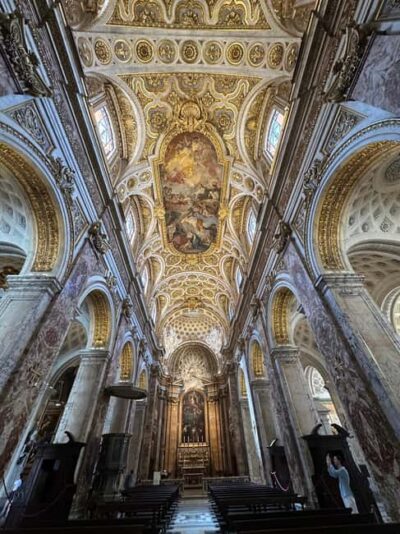
Caravaggio: Art on Footsteps-Masterpieces in Rome’s Churches
Read our review →
Borghese Gallery Max 6 People Tour: Baroque & Renaissance in Rome
Read our review →
Borghese Gallery Small-Group Tour with Canova’s Masterpieces
Read our review →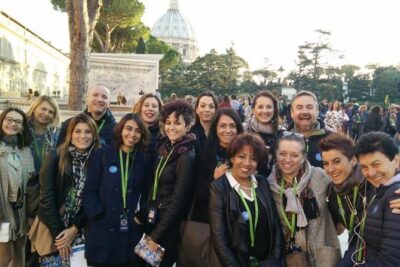
Vatican Museums, Sistine Chapel & Raphael Rooms Guided Tour
Read our review →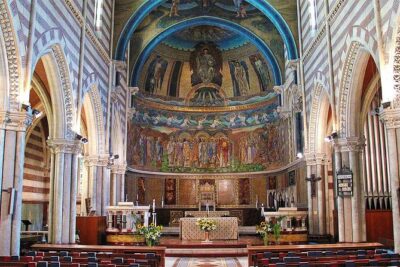
Vivaldi’s Four Seasons meets Bach’s Masterpieces
Read our review →
Private Vatican Experience with Sistine Chapel & Raphael’s Rooms
Read our review →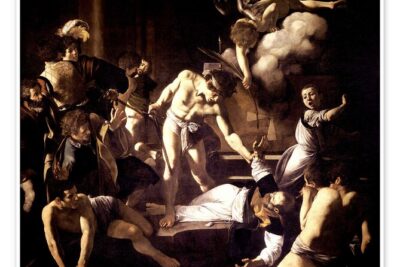
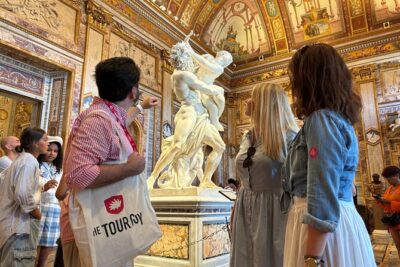
Borghese Gallery: Canova’s Masterpieces Small Group Guided Tour
Read our review →Browse the lists this tour appears in