
Fresh pasta beats any night out. In Rome, this 3-hour hands-on pasta class lets you knead and shape fresh fettuccine and delicate ravioli, then finish with tiramisu you made yourself. I like that the session is taught in English with step-by-step help, and I like that you eat the meal at the end instead of just touring your way out. One drawback: it is not suitable if you have food allergies.
If you want a class that feels small and personal, this one is often that way. In past sessions, chefs including Giuseppe guided groups as small as 4 people, and he shared practical tips like how to pick the right flour for great pasta texture.
In This Review
- Key highlights worth planning around
- Rome cooking class value: three dishes in 3 hours
- Entering the kitchen: what you get before you start
- From dough to fettuccine: kneading and rolling in real time
- Hand-stuffed ravioli: delicate shaping without the stress
- Tiramisu workflow: the Italian dessert you can master
- The end-of-class meal: what you actually eat
- Price and what $69 buys you in Rome
- Practical considerations: comfort, dietary needs, and the real setup
- Should you book this Rome fettuccine, ravioli, and tiramisu class?
- FAQ
- What dishes will I learn to make?
- How long is the cooking class?
- Do I need any prior cooking experience?
- Is the class vegetarian-friendly?
- Is the class safe for people with food allergies?
- What language is the instruction in?
- Is alcohol included?
- What should I wear?
- Is the cooking class wheelchair accessible?
Key highlights worth planning around
- You make three dishes from scratch: fettuccine, hand-stuffed ravioli, and tiramisu
- Hands-on technique, not just watching: kneading, rolling, shaping, and assembling
- Chef help in English: you can ask why each step matters and get clear answers
- A meal you cooked, served hot: it is the payoff, not an afterthought
- Bonus take-home: a secret cookie recipe PDF
- Small-group feel in practice: examples include around 4 people in the class
Rome cooking class value: three dishes in 3 hours
At $69 per person for a 3-hour workshop, you are paying for more than ingredients. You are paying for guidance, tools, and the time pressure that keeps a class focused. In other words, you show up, you learn the core technique fast, and you leave with pasta skills you can actually recreate.
This format matters in Rome. You can absolutely eat Italian food every day. The trick is getting the “how,” not only the “wow.” Here, you practice the actions that turn flour and eggs into pasta dough, and cream and coffee into tiramisu that sets properly.
The class also works for beginners. The materials include everything you need, and you are taught what to do even if you have never rolled dough before. You just need one thing from your side: comfortable clothes you do not mind getting a bit messy.
Other kitchens rolling pasta and folding tiramisu:
- 3 in 1 Cooking Class near Navona: Fettuccine, Ravioli & Tiramisu
★ 5.0 · 7,376 reviews - Rome: Pasta & Tiramisu Class with Fine Wine by the Vatican
★ 4.9 · 4,852 reviews - Rome: Pasta Making Class with Wine, Limoncello, and Dessert
★ 4.9 · 3,177 reviews - Rome Cooking Class: Make Pasta and 3 Spritz Cocktails
★ 5.0 · 2,937 reviews
Entering the kitchen: what you get before you start
Before you begin any shaping, you get the foundation. The class covers making fettuccine dough, filling and assembling ravioli, and building tiramisu. Since you are provided ingredients and get expert guidance, you are not hunting for obscure products or figuring out timing on your own.
A practical note: one part of the menu is prepared in advance by the chef. That is normal for efficient cooking. It means you focus on the hands-on pieces, the ones that teach you technique.
Also, the class is taught in English and is wheelchair accessible. Pets are not allowed, and smoking is not allowed. These are the kind of “kitchen rules” that keep things smooth and fair for everyone in the room.
From dough to fettuccine: kneading and rolling in real time
Fettuccine sounds simple. Flour, eggs, water, salt, done. In practice, the quality comes from texture. That is why this class starts with kneading and rolling.
Here is what you should expect during the fettuccine portion:
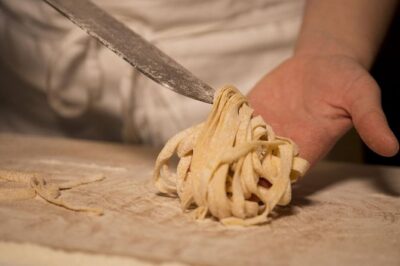
- Kneading the dough: you learn what the dough should feel like as it comes together
- Rolling to the right thickness: this is where your pasta either stays tender or turns chewy
- Cutting or forming fettuccine strands: the goal is consistency so the pasta cooks evenly
What makes this useful is that you are not just making food. You are learning the sensory cues that Italian cooks use. In at least one recent session, Giuseppe shared tips tied to flour choice for better pasta results. Even if you do not remember every detail, you will walk away understanding that flour affects dough behavior, not just taste.
Why this section is worth your time: most people in Rome can order pasta. Fewer people can make it properly at home. When you learn kneading and rolling here, you also learn how to troubleshoot. If your dough is too dry, too sticky, or too elastic, you start to know what to adjust.
Hand-stuffed ravioli: delicate shaping without the stress
Ravioli is the “pressure test” of handmade pasta. You can roll and cut fettuccine and still forgive yourself if the shape is imperfect. Ravioli asks for patience.
During this part of the class, you focus on:
- Preparing the ravioli dough and managing its elasticity
- Hand-stuffing with filling: portioning matters so ravioli cooks evenly
- Sealing and shaping: you want the edges closed cleanly so filling does not escape
- Cooking the ravioli properly: timing and heat influence texture
The charm here is that the class guides you through the steps in a way that keeps you from feeling lost. In some sessions, chefs were praised for patience and for explaining not only what to do, but why the process works. That kind of coaching helps you learn technique, not just copy a final product.
If you like tactile tasks, this is the moment. You are shaping little parcels of pasta, and it feels very different from ordering in a restaurant. It also gives you a practical skill: the ability to make stuffed pasta that actually looks like something you would brag about at dinner.
One caution: if you have food allergies, this class is not suitable. Even with careful cooking, you cannot count on the environment being designed for allergy safety, so it is better to skip it.
Tiramisu workflow: the Italian dessert you can master
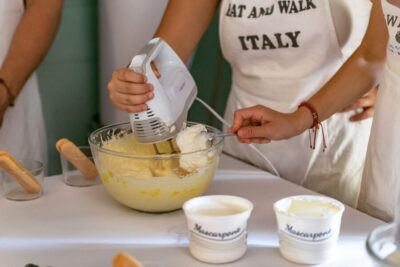
Tiramisu is the dessert everyone knows, and the one that can go wrong if you rush it. The class teaches you how to assemble it correctly under chef guidance, so you get the right balance and texture.
Expect to:
- Build the tiramisu layers: the order and method matter
- Handle ingredients correctly: coffee and cream need the right timing so the cookies do not become mush
- Finish with proper set: you learn how to assemble so it holds
Why I think tiramisu is a smart finale for a pasta class: it slows you down after dough work. Your hands are no longer wrestling with elasticity. You switch to assembly, and you get a dessert you can replicate at home with confidence.
In several reports, people highlighted how good the tiramisu was, and how fun the class felt overall. You end with something memorable, not just another plate of pasta.
Other Roman benches to work at for a morning:
The end-of-class meal: what you actually eat
The best classes do not just teach you, they let you enjoy. Here, you sit down and eat what you made.
Along with the meal, drinks may be part of the experience. Some people have reported a sequence that includes a glass of bubbly and wine, plus limoncello during the class, and then champagne with the meal and a choice of wine at the end. Since this is not spelled out in the basic highlights, treat it as something you might find included, but not guaranteed for every booking.
Either way, the meal is more than a reward. It is also the taste test for your skills. You can see if your ravioli sealed well. You can judge whether your pasta cooking time was right. You can tell if your tiramisu set properly.
Also, you get a small take-home bonus: a secret cookie recipe PDF. It is not a core part of the cooking lesson, but it is a fun extra for keeping your Italy momentum going after Rome.
Price and what $69 buys you in Rome
Let’s talk value honestly. $69 for a 3-hour class is reasonable when you factor in:
- Ingredients provided (you do not pay separately for dough components and fillings)
- Chef guidance (you get coaching instead of trial and error)
- Hands-on instruction (you cook, shape, and assemble)
- A meal included (you sit and eat what you made)
If you tried to recreate this on your own, you would likely spend more than $69 in both time and money. You would need ingredients, cookware, and the kind of troubleshooting a chef offers. And you would still be learning while working around your own schedule.
The other value lever is the class size. In at least one example, the group included 4 people total. Small groups tend to mean more attention, more chances to ask questions, and less waiting around while someone else gets help.
So if you like structured learning with a real payoff on the plate, this is a solid price.
Practical considerations: comfort, dietary needs, and the real setup
This class is designed for flexibility. You do not need prior cooking experience. You just need to show up wearing comfortable clothes that you do not mind getting messy.
A few practical points to consider:
- Dietary restrictions: it is suitable for vegetarians. If you have dietary restrictions, you should notify in advance.
- Allergies: it is not suitable for people with food allergies.
- Environment rules: pets are not allowed and smoking is not allowed.
- Meeting point: the meeting point can vary depending on the option you book, so confirm your exact spot ahead of time.
Wheelchair accessible is a big plus. If you use a wheelchair, it is worth checking how the space is set up for the specific venue, but the class is listed as wheelchair accessible.
Should you book this Rome fettuccine, ravioli, and tiramisu class?
Book it if you want a hands-on Rome experience that teaches real technique. This is especially worth it if you:
- like learning by doing, not only sightseeing
- want to make Italian food you can repeat at home
- enjoy pasta work like kneading, rolling, and shaping
- want a dessert finale that actually teaches you how tiramisu should be assembled
Skip it if you have food allergies, since the class is not suitable for allergy-safe participation. Also skip it if you want a totally hands-off experience. This is a cooking class, so you should be ready to get your sleeves involved.
If you are deciding between another food outing and something practical, this one gives you both: you leave Rome with a story, and you leave with skills.
FAQ
What dishes will I learn to make?
You will learn to make fettuccine, hand-stuffed ravioli, and tiramisu, and you will eat the meal you prepare.
How long is the cooking class?
The class lasts 3 hours.
Do I need any prior cooking experience?
No prior cooking experience is required.
Is the class vegetarian-friendly?
Yes, the class is suitable for vegetarians. If you have dietary restrictions, you should notify in advance.
Is the class safe for people with food allergies?
No. It is not suitable for people with food allergies.
What language is the instruction in?
The instructor teaches in English.
Is alcohol included?
The basic activity details do not list alcohol in the included items, but some participants report that drinks are served during the class and with the meal.
What should I wear?
Wear comfortable clothes that you do not mind getting a bit messy.
Is the cooking class wheelchair accessible?
Yes, it is listed as wheelchair accessible.
Roman Kitchens to Cook In
- Rome: Pasta & Tiramisu Cooking Class near the Spanish Steps
★ 4.8 · 1,395 reviews - Rome: Traditional Pizza Cooking Class near Piazza Navona
★ 4.7 · 1,241 reviews - Rome: Combo Pizza and Pasta Cooking Class with Wine
★ 4.6 · 1,180 reviews - Rome: Pasta Making with Wine Tasting and Dinner in Frascati
★ 4.9 · 979 reviews
Latest additions from Rome
- Rome: Testaccio Market Food Tour with Street Food & Wine★ 5.0 · 8 reviews
- Exclusive Pasta & Tiramisu Class with Wine near by Colosseum★ 5.0 · 8 reviews
- Private Professional Photoshoot in Rome★ 5.0 · 8 reviews
- Loreto “Shrine of the Holy House of the Virgin Mary” Private Tour from Rome★ 5.0 · 8 reviews
- Rome Day to discover Florence and Pisa Hotel Pickup★ 4.5 · 8 reviews
- Rome: Christmas Nativities and Angels Tour★ 3.1 · 8 reviews
- Guided Tour of Vatican Museums and Sistine Chapel★ 5.0 · 8 reviews
- Rome: Cooking Class of fresh Pasta and Tiramisu Cake★ 5.0 · 8 reviews
Pasta and Tiramisu Cooking Classes, compared.
3 in 1 Cooking Class near Navona: Fettuccine, Ravioli & Tiramisu
Read our review →
Pasta & Tiramisu Class with Fine Wine by the Vatican
Read our review →
Pasta Making Class with Wine, Limoncello, and Dessert
Read our review →
Rome Cooking Class: Make Pasta and 3 Spritz Cocktails
Read our review →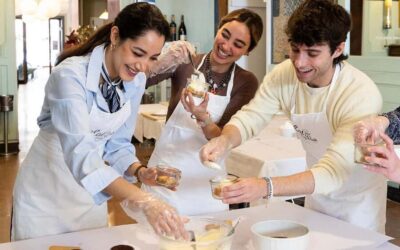
3-in-1 Fettuccine, Ravioli, and Tiramisu Cooking Class
Read our review →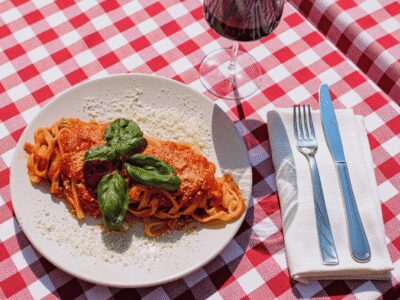
Fettuccine Pasta Cooking Class in Rome’s City Center
Read our review →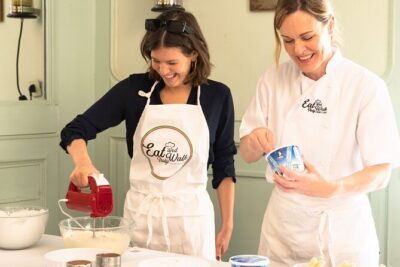
Learn to Make Pasta & Tiramisu with Wine and Limoncello Included
Read our review →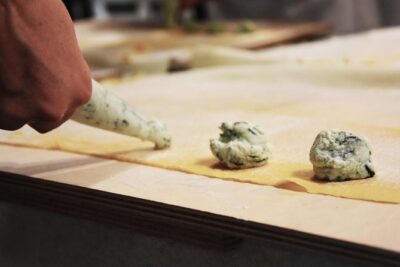
Become a Masterchef in Rome: Pasta, Ravioli and Tiramisù Class
Read our review →Browse the lists this tour appears in