
Reviewed · UNDERGROUND ROME TOURS
Private tour: Underground Rome
Rome gets better underground. This Private Underground Rome tour takes you beneath Trevi and Navona to see ancient spaces that most people miss. You get plenty of time to ask questions, not just a rushed walk between monuments.
I especially like the focus on two major themes Rome was built on: water and sport. Vicus Caprarius turns the idea of an aqueduct city into something you can actually stand inside, and the Stadio di Domiziano shows how crowds once gathered for competition.
One thing to consider: it is underground, and it is not recommended if you have claustrophobia or if you are not comfortable with moderate walking and tighter areas.
In This Review
- Key Things To Know Before You Go Underground
- Private Underground Rome for $192.25: Is It Good Value?
- The 4:00 pm Via del Corso Meet-Up, and What to Bring
- Stop 1: Vicus Caprarius, the City of Water Under Trevi
- Stop 2: Stadio di Domiziano Underground Near Navona
- Trevi Fountain: A Quick, Famous Wish Stop
- The Tour’s Best-Preserved Ancient Monument Stop
- Why This Underground Format Feels Different From Surface Tours
- Who Should Book Underground Rome, and Who Should Skip It
- Should You Book This Private Underground Rome Tour?
- FAQ
- How long is the Underground Rome tour?
- What stops are included, and are entrance tickets included?
- How much does the tour cost, and what’s included in the price?
- Where do we meet, and what time does it start?
- Is this tour suitable for children or people with claustrophobia?
- Is this experience refundable or changeable?
Key Things To Know Before You Go Underground
- Vicus Caprarius, the City of Water, is a full stop of its own, with admission included.
- Stadio di Domiziano beneath the Navona area is where you understand Roman crowds, with space sized for up to 30,000.
- Tickets are included for both underground archaeological sites, so you are paying for the experience, not just directions.
- A private format means your guide can slow down and answer your questions in real time.
- English is available, but guide communication quality matters, so confirm expectations if language is critical for you.
- Trevi Fountain is brief and scheduled well for photos and a quick visit, before the tour moves on.
Private Underground Rome for $192.25: Is It Good Value?
At $192.25 per person, this is not a bargain-basement sightseeing deal. You are paying for a true private guide experience plus paid entry to two underground archaeological sites. The tour also includes a bottle of water and tax, so your money goes toward on-site access and interpretation, not just standing in front of things.
The big value here is that you are not only seeing famous surfaces. You are stepping into places tied to how Rome functioned day to day, like water delivery and public events. That changes the whole feel of your Rome trip. Instead of collecting photos, you start connecting systems, like how infrastructure supports daily life.
Your price does not include tips, and an air-conditioned vehicle is also not included. So if you are sensitive to heat, plan to rely on your own timing, water, and shade while you are above ground.
Also worth noting: this tour runs in English, and it is popular enough that it is booked about 80 days in advance on average. If you have firm travel dates, you will save yourself stress by booking early.
More Private Tours in Rome
- Rome by Golf Cart Private Tour: Beyond the Landmarks
★ 5.0 · 4,361 reviews - Early Morning Vatican, Sistine, St. Peter’s Semi or Private Tour
★ 5.0 · 3,779 reviews - Rome on a Golf Cart Semi-Private Tour Max 6 with Private Option
★ 5.0 · 2,502 reviews - Rome Private Arrival Transfer: Fiumicino Airport to Hotel in Rome
★ 4.5 · 2,492 reviews
The 4:00 pm Via del Corso Meet-Up, and What to Bring
The tour starts at 4:00 pm at Via del Corso, 230, 00187 Roma RM. It ends back at the same meeting point, which makes the whole day plan easier. The meeting location is near public transportation, so you are not forced into a long taxi hunt.
Because you are going underground, you should dress for comfort more than style. Wear shoes that handle uneven stone and possibly slick surfaces. The tour also lists a moderate physical fitness level, so you should be ready for real walking and time on your feet.
If you are bringing kids, children under 12 are allowed only when accompanied. And there is no access with animals. If your group includes someone with claustrophobia, this is explicitly not recommended, since underground spaces can feel tight.
If you are doing this as part of a busy Rome itinerary, keep it simple before the 4 pm start. One smart approach is to schedule a light lunch and then let this be your main activity block. Underground stops often work best when you are not already exhausted.
Stop 1: Vicus Caprarius, the City of Water Under Trevi
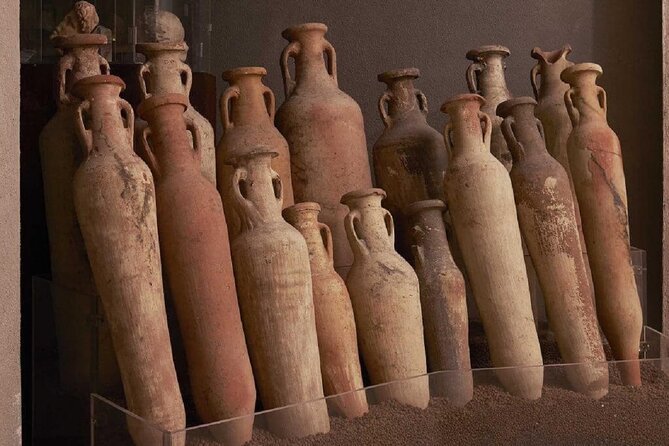
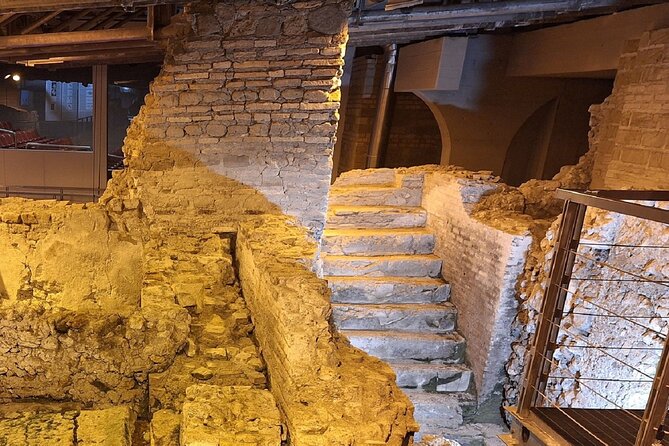
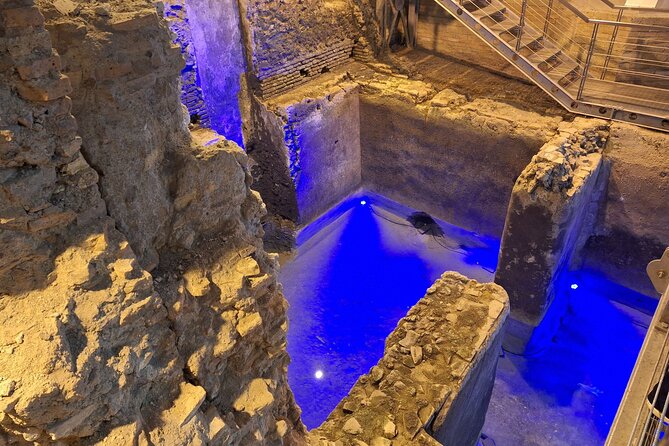
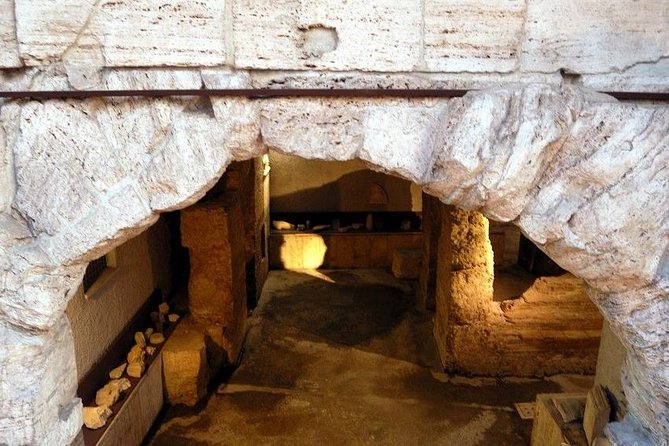
The first stop is Vicus Caprarius, described as the city of water. You spend about one hour in this underground archaeological zone, and the admission ticket is included.
What I like about this stop is the way it reframes Rome’s water story. Instead of hearing general facts about aqueducts, you see how this was an organized urban system, not a single monument. Water in ancient Rome was not just about drinking. It supported bathing, cleaning, fountains, and the overall rhythm of city life.
Expect a guided walkthrough through underground space where the walls and passages help you visualize how the area may have worked. Even if you already know the word aqueduct, this is the kind of visit that makes the idea feel physical. You can ask questions directly, which matters here because water infrastructure gets confusing if you are only looking at signs.
The drawback? Underground tours are usually more physical and more cramped than surface walks. If you do not like tight, enclosed areas, you will feel it more on this first stop than later on at a fountain. If claustrophobia is even mild, take that warning seriously.
Stop 2: Stadio di Domiziano Underground Near Navona
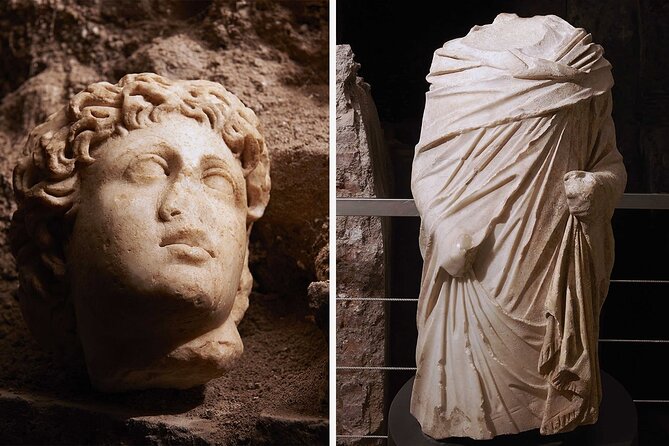
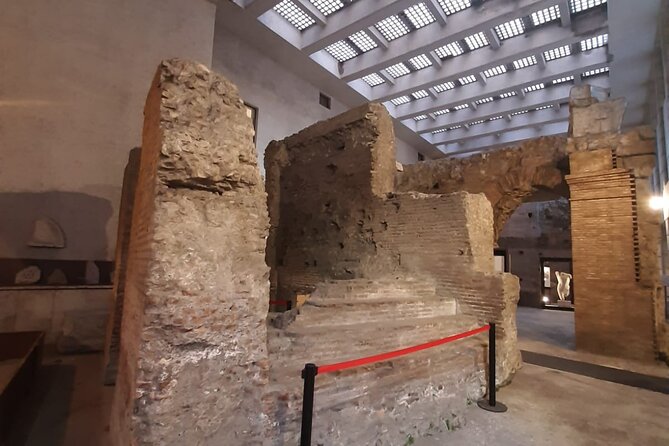
After Vicus Caprarius, you head to the Stadio di Domiziano stop, tied to the Navona Square underground area. This lasts about 1 hour 10 minutes, and admission is included.
Here the theme shifts from water to crowds. The stadium is described as a place that could receive up to 30,000 people, with sport at the center. That number alone helps you grasp the scale of Roman public life. These were not private games. They were major social events where thousands gathered to watch.
In practice, this stop is about imagining how people moved and gathered. The tour describes an underground world of archaeological areas and labyrinth-like pathways, so you are not just peeking in a room. You are being guided through a structured experience that helps you build a mental map.
This is also a moment where a great guide can make the difference. Strong interpretation helps you go beyond names and dates. You start seeing why a stadium location made sense, how it fit into the surrounding city, and how entertainment shaped everyday identity.
A realistic consideration: since the tour spends significant time underground at multiple stops, your comfort level needs to match the setting. If you are prone to feeling boxed in, you may want to choose a different Rome style tour that stays on the streets.
Trevi Fountain: A Quick, Famous Wish Stop
Next comes Trevi Fountain, where you have about 20 minutes. The tour notes it as free, so you are not paying admission again here.
Trevi is famous because it is tied to wishes, and the entire world has built routines around it. With only 20 minutes, you should use this time with intention. If you want photos, you will need to manage timing and angles. If you want to just soak in the sight and move on, this stop works well too, because the tour is not built to trap you in a long queue.
One smart way to get value from Trevi on a short schedule is to treat it as a contrast point. You just left underground archaeology. Now you get the famous surface icon, and it makes the underground material feel even more grounded.
More levels of the city stacked below:
The Tour’s Best-Preserved Ancient Monument Stop
After Trevi, the tour includes another stop described as the most preserved ancient Roman monument in the city. The name is not given in the details you provided, but the key idea is clear: you are visiting something that has survived in an unusually intact form.
Why this matters for your itinerary planning: a preserved structure gives you context fast. Underground ruins are amazing, but they can be abstract. A well-preserved monument helps your brain switch from reconstruction to reality, even if you do not know every detail. Your guide can usually bridge the gap, connecting what you learned underground to what you see above ground.
Time-wise, this is not a long museum-style stop. It is designed to keep momentum so you finish the tour still feeling energized, not wiped out. If your priority is maximum time inside a single major site, this tour may not be the best fit. If your priority is variety with interpretation, it works.
Why This Underground Format Feels Different From Surface Tours
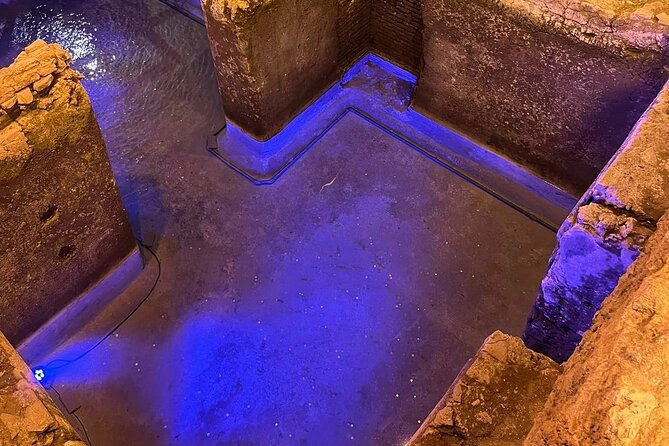
The biggest reason this tour earns repeat bookings is simple: it changes your Rome rhythm. When you go below ground, the city quiets down in a way the streets cannot match. You stop thinking only in landmarks and start thinking in systems, like water infrastructure and public entertainment.
You also get a private setup, which means your guide can slow down. That matters for underground sites because things like levels, routes, and functions can be confusing. Being able to ask questions on the spot keeps you from feeling lost.
Guide quality is repeatedly highlighted in the information you provided. Names that come up include Ricardo and Allasandra, both described as informative and accommodating. There is also mention of Alex as a senior guide specialized in underground tours. That combination suggests the tour often performs well when you get the right person explaining the spaces.
Now for the balanced part: there is one negative note about a guide’s English being hard to follow, with the experience described as not focused enough. You cannot control who you get, but you can manage expectations. If English clarity is essential for you, consider booking with enough lead time and asking for confirmation that your guide will be strong in English. At minimum, set aside the patience you would use for any language experience, especially underground where acoustics and pacing can be different.
Who Should Book Underground Rome, and Who Should Skip It
This tour fits best if you love Roman infrastructure, not just postcard sights. If you are curious about how Rome supplied water and organized massive public gatherings, you will get more out of this than a generic route through the main squares.
It also suits people who want fewer crowd vibes. Even though Rome is never totally quiet, underground sites naturally reduce the tourist crush compared to the busiest surfaces.
Choose this tour with confidence if:
- You are comfortable with moderate physical fitness and walking.
- You want two paid archaeological underground sites in one afternoon block.
- You prefer a private guide who can answer questions.
Skip or reconsider if:
- You have claustrophobia, since the tour is explicitly not recommended.
- Your group includes someone who cannot handle enclosed spaces or tight underground areas.
- Your priority is a long, deep museum visit instead of a guided sequence across multiple sites.
Families can consider it too, with the rule that children under 12 must be accompanied. Animals are not allowed, so plan accordingly if you usually travel with a pet.
Should You Book This Private Underground Rome Tour?
I think it is a smart book if you want a different side of Rome, one built around how the city worked and how Romans spent time. The price is high enough that you should expect it to include real value, and here the value is clear: a private guide plus admissions for Vicus Caprarius and the Stadio di Domiziano, with Trevi as a short add-on.
Book it if:
- You like interpretation that connects buildings to daily life.
- You want a 2.5-hour plan that balances underground and a famous surface stop.
- You are ready for underground comfort to be part of the package.
Hold off if:
- You hate enclosed spaces, even a little.
- You are expecting a huge, flexible schedule, because this is a set sequence built around timing at 4 pm.
- You rely on perfect English and cannot tolerate any potential language strain.
My practical tip: since it is on average booked about 80 days in advance, snag your spot early. Then show up with comfortable shoes, plan for a calm afternoon, and treat this as a guided lesson in Roman systems. That mindset helps you get more out of every underground wall.
FAQ
How long is the Underground Rome tour?
It lasts about 2 hours 30 minutes.
What stops are included, and are entrance tickets included?
The tour includes Vicus Caprarius, the Stadio di Domiziano (underground), and Trevi Fountain. Tickets are included for Vicus Caprarius and the Domitian Stadium, while Trevi is listed as free for the tour.
How much does the tour cost, and what’s included in the price?
The price is $192.25 per person. Included items are an official City of Rome guide, entrance tickets for the underground sites, bottle of water, and tax. Tips are not included.
Where do we meet, and what time does it start?
You meet at Via del Corso, 230, 00187 Roma RM, Italy, and the tour starts at 4:00 pm. The activity ends back at the meeting point.
Is this tour suitable for children or people with claustrophobia?
Children under 12 must be accompanied. The tour is not recommended for travelers with claustrophobia.
Is this experience refundable or changeable?
No. This experience is non-refundable and cannot be changed for any reason. If you cancel or ask for an amendment, the amount paid is not refunded.
Latest additions from Rome
- Rome: Testaccio Market Food Tour with Street Food & Wine★ 5.0 · 8 reviews
- Exclusive Pasta & Tiramisu Class with Wine near by Colosseum★ 5.0 · 8 reviews
- Private Professional Photoshoot in Rome★ 5.0 · 8 reviews
- Loreto “Shrine of the Holy House of the Virgin Mary” Private Tour from Rome★ 5.0 · 8 reviews
- Rome Day to discover Florence and Pisa Hotel Pickup★ 4.5 · 8 reviews
- Rome: Christmas Nativities and Angels Tour★ 3.1 · 8 reviews
- Guided Tour of Vatican Museums and Sistine Chapel★ 5.0 · 8 reviews
- Rome: Cooking Class of fresh Pasta and Tiramisu Cake★ 5.0 · 8 reviews
Underground Rome Tours, compared.
Caracalla Baths & Circus Maximus — Private or Shared
Read our review →
Catacombs and Hidden Underground Rome: Small Group Max 6 People
Read our review →
Small-Group Tour of Caracalla Baths and Circus Maximus
Read our review →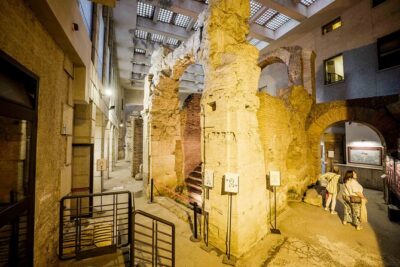
Rome underground: Piazza Navona, the Illusion Church and Pantheon
Read our review →
Ancient Rome: Archeological area Largo Argentina
Read our review →
Circus Maximus Virtual Reality Game near the Colosseum
Read our review →
Circus Maximus Virtual Reality Game near the Colosseum
Read our review →Browse the lists this tour appears in