
Reviewed · CARAVAGGIO AND RENAISSANCE ART TOURS
Palazzo Barberini (Bernini Exhibition Is Not Included)
Baroque drama is waiting. Palazzo Barberini in Rome is a showpiece of Baroque architecture and the kind of museum where a single room can feel like the main character, especially the central hall stretching up through the whole building.
I especially like the way the Galleria Nazionale d’Arte Antica lets you bounce between major artists, including Raphael, Bernini, Caravaggio, and Borromini, without feeling rushed. A small consideration: this experience is built around the audio guide APP, not a live guided tour, so plan to use your phone well (and download the audio before you go if your signal is spotty).
In This Review
- Key highlights you should care about
- Palazzo Barberini, where the building does half the talking
- The Barberini story, and why Urban VIII mattered
- Your 2-hour flow through Palazzo Barberini
- The Galleria Nazionale d’Arte Antica: over 1,400 reasons to look closer
- Raphael’s Fornarina and the other heavy hitters
- Pietro da Cortona’s ceiling fresco in the central hall
- Audio guide APP, skip the line, and how to use your phone without stress
- Corsini Gallery access: the smart add-on for a second day
- Price and what you really get for about $29
- Before you go: hours, photography rules, and what to pack
- Should you book Palazzo Barberini with this package?
- FAQ
- Is Bernini’s Exhibition included with this visit?
- How long is the Palazzo Barberini experience?
- What ticket do I get, a voucher or an entry ticket?
- Is an audio guide included, and which languages are available?
- Can I visit the Corsini Gallery with the same ticket?
- Is flash photography allowed?
- When is the gallery closed?
- What is the latest time I can enter?
- What should I bring to the visit?
- Is this suitable for wheelchair users or people with mobility impairments?
Key highlights you should care about
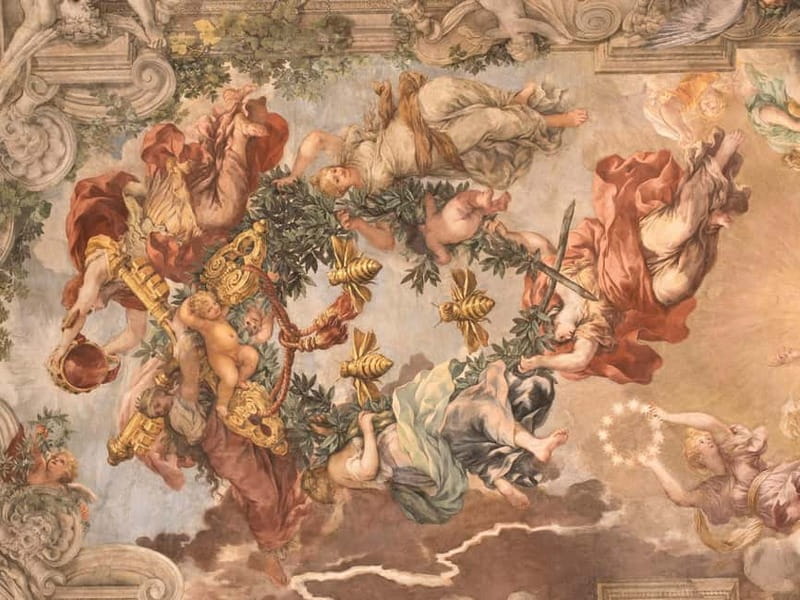
- Central hall with a ceiling fresco by Pietro da Cortona, made for Baroque illusion tricks
- 1,400-plus artworks from the 13th to the 18th century in the Galleria Nazionale d’Arte Antica
- Raphael’s Fornarina, one of the collection’s most talked-about works
- Skip-the-line style entry plus help at the Touristation Office
- Same ticket access to Palazzo Corsini on another day
Palazzo Barberini, where the building does half the talking
If you like art, you’ll come for the paintings. If you like spaces, you might come for the rooms. At Palazzo Barberini, it’s hard to separate the two, because the palace itself is part of the presentation. You walk in and the place starts acting like a stage, with big decorative moments that make even quiet galleries feel important.
I like that the building’s layout helps you understand what you’re looking at. The museum does not just throw artworks at you. It places them inside a coherent Baroque setting, so your eyes keep getting nudged toward the next “why does this look like this?” moment.
For planning, this matters: you can enjoy it even if you are not an art-history pro. The audio guide app does a lot of the explaining, and the rooms give you natural breaks, so you are not stuck staring at a wall for long stretches.
Other Caravaggio and Renaissance trails:
- Caravaggio: Art on Footsteps-Masterpieces in Rome’s Churches
★ 4.8 · 336 reviews - Borghese Gallery Max 6 People Tour: Baroque & Renaissance in Rome
★ 5.0 · 185 reviews - Borghese Gallery Small-Group Tour with Canova’s Masterpieces
★ 4.5 · 166 reviews - Vatican Museums, Sistine Chapel & Raphael Rooms Guided Tour
★ 4.5 · 141 reviews
The Barberini story, and why Urban VIII mattered
Palazzo Barberini is tied to one of the most influential families in Rome, and it also links directly to the Baroque push that changed how European art looked.
Here’s the simple chain. The palace, originally an urban villa, was purchased by Maffeo Barberini, who became Pope Urban VIII in 1623. The same Urban VIII who is often remembered for the XIII Jubilee, for nepotism, and for the condemnation of Galileo Galilei, also helped accelerate the spread of Baroque art. In other words, the politics and the patronage are baked into the walls.
What you get from this context is better museum viewing. When you know the building was commissioned to compete with the most luxurious Roman residences of its time, you start noticing the “persuasion” in the design. The palace is not neutral. It is meant to impress. And that attitude shapes the way the art is displayed and experienced.
Your 2-hour flow through Palazzo Barberini
The visit is designed to fit into about 2 hours, which is a sweet spot if you have a busy Rome day and still want something meaningful. You are not trapped in a rigid schedule, because the audio guide app is included and you can move at your own pace.
A practical way to think about the route is in three beats.
First, you enter and get your bearings. This is where assistance at the Touristation Office helps you get sorted. Your voucher is not the final entry ticket, so you will need the operator’s instructions to coordinate entry.
Second, you shift into the collection areas. The Galleria Nazionale d’Arte Antica covers more than 1,400 works, stretching from the 13th through the 18th century. That’s a wide time range, so the audio guide is a real help, especially for spotting what to prioritize.
Third, you reach the big statement room. The museum’s large central hall occupies the entire height of the building, and the ceiling fresco becomes your “finish strong” moment. If you want the Baroque illusion effect at its best, make sure you do not blow past this part.
A couple tips that keep the experience smooth:
- Wear comfortable shoes, because you will be standing and walking more than you expect.
- Bring water and a hat if it is hot, since you might start outside or be in sun before you settle in.
The Galleria Nazionale d’Arte Antica: over 1,400 reasons to look closer
The headline number is the point: more than 1,400 works. But what matters is what that number represents. This collection includes major names you actually recognize, including Raphael, Filippo Lippi, Bernini, Borromini, and Caravaggio, among many others.
I like that the museum gives you a blend, not just one style or one school. Even without memorizing dates, you can track how techniques and tastes evolve from century to century. The audio guide app helps you connect those dots without making it feel like homework.
One practical advantage of this set-up: if you only have a short time, you can still get a complete-feeling visit. You do not need to see every room to understand the collection’s identity, because the palace spaces guide your attention.
If you are the type who worries about “Am I going too slowly?” you’re fine here. Two hours is enough time to see the core highlights, especially if you use the audio guide to decide when to linger.
Raphael’s Fornarina and the other heavy hitters
The museum highlights include Raphael’s Fornarina, and that makes sense. It is one of the collection’s best-known works, largely because it’s so recognizable and so often discussed. The experience is not only about spotting the famous name, it’s about seeing how the painting sits inside the wider collection.
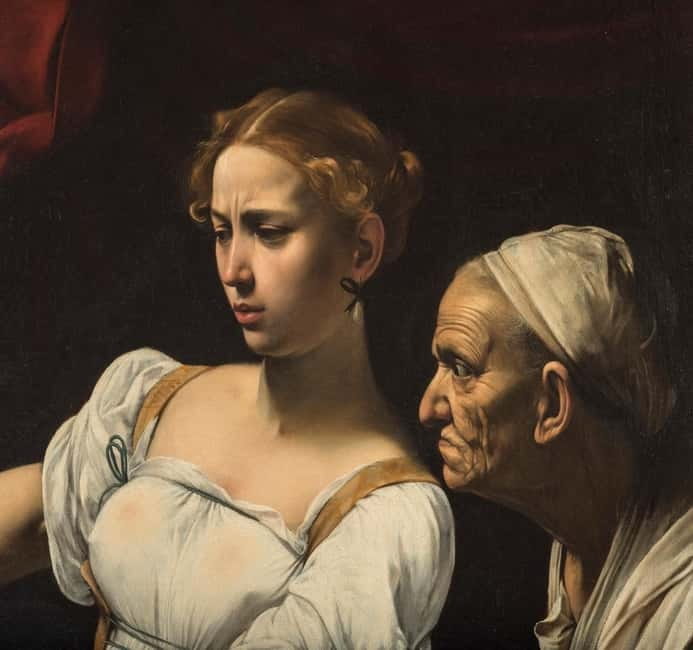
When you pair the Fornarina with the other big names you encounter, the museum starts to feel like a conversation between artists and eras. You might spot the dramatic emotional approaches that make Caravaggio so compelling. You might notice the architectural thinking linked to artists like Bernini and Borromini. Even if you just catch small cues, your eyes learn.
For me, the value is this: the museum does not force you into one lane. You can spend time on a painting because it grabs you, then switch to another corner of the collection because it teaches you something different. That kind of variety is what makes a short museum visit feel worthwhile.
Other Roman collections with a shorter wait:
Pietro da Cortona’s ceiling fresco in the central hall
Here’s the moment that most people remember: the large central hall, with its ceiling fresco by Pietro da Cortona. The hall takes up the entire height of the building, so you are not just looking at artwork. You’re looking upward in a space designed for theatrical impact.
Cortona’s fresco is famous for Baroque illusionism, and you can feel the point of the design quickly. The ceiling is treated like a visual trick, not just a decoration. If you take a minute to step back, tilt your head, and let your eyes adjust, the effect makes more sense.
This part is why Palazzo Barberini is worth your time even if you do not consider yourself a “masterpiece collector.” The hall works like a free design lesson in how Baroque artists used scale, perspective, and drama to shape a room.
Also, it’s one of the reasons the visit length works. You can plan to start your experience with the collection highlights, then save energy for the central hall so you get the best viewing.
Audio guide APP, skip the line, and how to use your phone without stress
You get an audio guide app as part of the experience, with English, German, French, and Italian. That’s a big deal for value, because you are paying for an experience that does not require a live guide to explain the collection.
There’s also a common trap. This is not a guided tour with a person leading you room to room. One of the easiest ways to avoid disappointment is to go in expecting to be your own guide, with the app providing the context.
Two practical things to keep the audio experience working:
- Make sure you know how to access the app on your smartphone before you enter, since ancient buildings can be awkward for connectivity.
- Avoid rushing, because the audio timing works best when you stop at the key works and let the explanations match what you are seeing.
Photography is allowed without flash, so you can capture what you want. Flash is not allowed, so keep your phone settings in check.
If you prefer low-tech museum time, you can still use the app for the major stops like Raphael’s Fornarina and the Cortona ceiling, then switch to a slower browsing pace.
Corsini Gallery access: the smart add-on for a second day

One of the best value perks is that, with the same ticket, you can also visit the Corsini Gallery on another day. That means Palazzo Barberini is not just a one-off experience in your schedule, it can anchor a longer mini art circuit.
The Corsini Gallery is described as having an elegant collection of Renaissance and Baroque masterpieces. So the pairing makes sense: you get Baroque drama at Palazzo Barberini, then you can extend the storyline with another palace gallery the next day.
If you are trying to make your limited Rome time count, this is the kind of “future-proofing” that helps. You can keep your itinerary flexible and still secure access to a second major site.
Price and what you really get for about $29
The price shown is $29 per person, and the included services matter here. Palazzo Barberini admission is included, and you also get:
- assistance at the Touristation Office
- the Palazzo Barberini audio guide app
- entrance to Palazzo Corsini
- skip-the-ticket-line style entry
So you are not just paying to walk into one museum. You are paying for a smoother entry experience plus a self-guided learning tool, and you are collecting access to a second gallery on another day.
One thing to be clear about: Bernini’s Exhibition is not included. If you are hoping the ticket covers that specific exhibit, you will need to book it separately. This matters because Bernini-related programming can pull people in with big expectations.
If you are budget-minded, this offer makes the most sense when you plan to use the audio guide and when you might realistically add Corsini Gallery later. If you know you will skip the second gallery and you dislike phone audio, you might decide the value is lower for you.
Before you go: hours, photography rules, and what to pack
Timing matters because museums love rules, and Rome is no exception. The gallery is closed on Mondays. Last admission is one hour before closing, so do not stroll in late expecting to squeeze in a full visit.
Photography is allowed without flash. So bring your camera, but keep flash off to avoid any issues.
Packing list, straight from what the visit recommends:
- comfortable shoes
- hat
- camera
- sunscreen
- water
You will thank yourself for the basics. Palazzo interiors can be comfortable, but Rome days still have heat, and the walking adds up.
One more note for planning: the experience is not suitable for people with mobility impairments or wheelchair users, so if that applies to you, it’s worth considering other options.
Should you book Palazzo Barberini with this package?
Yes, you should book this if you want a high-impact Roman palace visit with a built-in explanation tool. The combination of Palazzo Barberini admission, the audio guide app in multiple languages, and Corsini Gallery entry makes it more than a basic ticket.
I would also book it if you like arts big on atmosphere. The central hall and Cortona ceiling are the kind of moments that make a short visit feel memorable, not just “I saw a museum.”
Skip it or reconsider if you specifically want a Bernini Exhibition included, because that part is not included. And if you prefer a live guide leading you step by step, set your expectations now, since you are doing this self-guided with the app.
If you are flexible and you want your Rome art day to run smoothly, this is a solid value choice.
FAQ
Is Bernini’s Exhibition included with this visit?
No. Bernini’s Exhibition is not included.
How long is the Palazzo Barberini experience?
The duration is 2 hours.
What ticket do I get, a voucher or an entry ticket?
You receive a voucher, and it is not the entry ticket. An operator contacts you with instructions to coordinate your entry.
Is an audio guide included, and which languages are available?
Yes. A Palazzo Barberini Audio Guide APP is included, with English, German, French, and Italian.
Can I visit the Corsini Gallery with the same ticket?
Yes. Entrance to Palazzo Corsini is included, and you can visit it on another day during your stay in Rome.
Is flash photography allowed?
Flash photography is not allowed. Photography is allowed without flash.
When is the gallery closed?
The gallery is closed on Mondays.
What is the latest time I can enter?
Last admission is one hour before closing.
What should I bring to the visit?
Bring comfortable shoes, a hat, a camera, sunscreen, and water.
Is this suitable for wheelchair users or people with mobility impairments?
No. It is not suitable for people with mobility impairments or wheelchair users.
Latest additions from Rome
- Guided Tour Vatican Museums & Sistine Chapel★ 4.1 · 30 reviews
- Exclusive Rome by Night Vespa Tour★ 5.0 · 30 reviews
- Transfer Rome to Airports★ 4.5 · 30 reviews
- Vatican: St.Peter’s Basilica & Dome – Reserved Entry & Tour★ 4.1 · 30 reviews
- Rome street art tour: off the beaten path with a local guide★ 5.0 · 30 reviews
- Tivoli, Hadrians Villa and Villa d’Este, a charming day trip from Rome★ 4.5 · 30 reviews
- Rome Food Tasting with Wine Pairing Italian Authentic Flavors★ 5.0 · 31 reviews
- Inspirational Cooking on the Roman Chef’s Panoramic Terrace★ 5.0 · 30 reviews
Caravaggio and Renaissance Art Tours, compared.
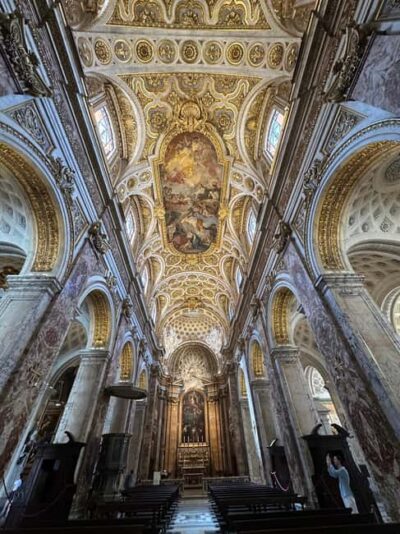
Caravaggio: Art on Footsteps-Masterpieces in Rome’s Churches
Read our review →
Borghese Gallery Max 6 People Tour: Baroque & Renaissance in Rome
Read our review →
Borghese Gallery Small-Group Tour with Canova’s Masterpieces
Read our review →
Vatican Museums, Sistine Chapel & Raphael Rooms Guided Tour
Read our review →
Vivaldi’s Four Seasons meets Bach’s Masterpieces
Read our review →
Private Vatican Experience with Sistine Chapel & Raphael’s Rooms
Read our review →
Renaissance Scarlet Ladies Tour: Caravaggio’s and Borgia’s Women
Read our review →
Browse the lists this tour appears in