
Reviewed · OSTIA ANTICA RUINS TOURS
Ostia Antica Archeological Park with Italian GELATO
Ostia Antica feels like Rome got smaller. This guided walk takes you through major ruins of the Roman Empire’s important harbor city, then closes in the medieval Borghetto with a classic Italian gelato stop. I especially like the small group size (up to 6) and the clear pacing that keeps a big site manageable. One thing to keep in mind is that the main archaeological park admission is not included, so you’ll pay it on site.
You get a mix that works for different interests: Roman everyday life in big, visible pieces, plus a turn to medieval and Renaissance Rome at the end. I also like that the tour is offered in English, with the guide style described as friendly and easy to follow. The only real drawback is logistics. You’ll want to arrive on time for the 9:30am start, and you’ll do some walking over uneven outdoor ground.
In This Review
- Key highlights you should care about
- Ostia Antica with gelato: why this day feels different from central Rome
- Meeting point, timing, and how to plan your route out of Rome
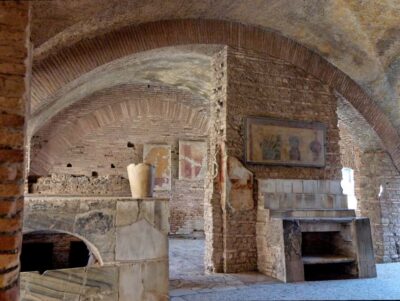
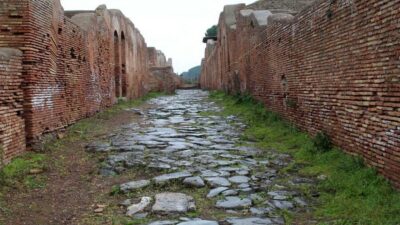
- Inside Parco Archeologico di Ostia Antica: the Roman harbor city on foot
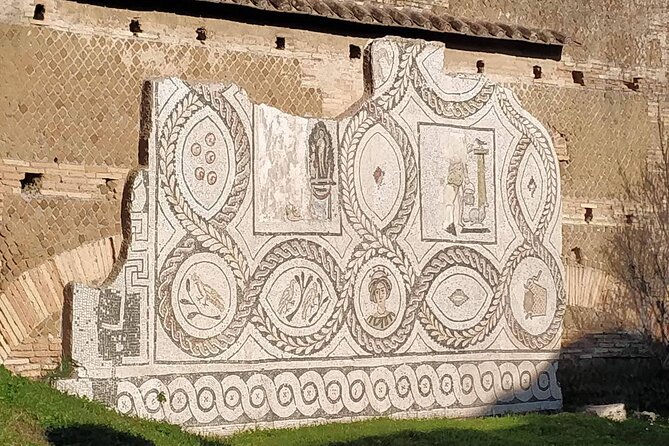
- Thermal baths with mosaics: where Roman daily life becomes visible
- The 1st-century Roman theatre: performance space and urban design
- Temple of a major cult and the grain mill: how Ostia worked
- Renaissance castle and the Tevere defense story you can actually see
- The medieval Borghetto finale: walls, Rocca of Pope Giulio II, and a gelato break
- Guides and pacing: how you get value from a 2.5-hour format
- Price and value: what costs extra, and what you get for your money
- Who this tour suits best, and who may want to adjust expectations
- Should you book Ostia Antica with Italian gelato?
Key highlights you should care about
- Small group, up to 6 people, so questions and pace stay realistic on a large site
- English-guided route, built around the biggest Ostia Antica sights
- Main park ticket is separate, and you pay it on site (about €18 for a seven-day pass)
- Roman thermal baths, theatre, temple, and a grain mill, so it’s not just pretty ruins
- A medieval Borghetto walk, then a gelato finish outside the medieval walls
Ostia Antica with gelato: why this day feels different from central Rome
Rome has a way of making every day trip compete with the same headline sights, Colosseum this, Vatican that. Ostia Antica offers a different angle. It’s a major archaeological park where you can see the city plan, the infrastructure, and the daily spaces that fed a huge empire.
This tour is designed for a practical Rome escape. It runs about 2 hours 30 minutes, starts at 9:30am, and ends in the medieval Borghetto area around Piazza Umberto I, 3. That time window matters. You still get real time among the ruins, but you’re not committing the whole day, which is helpful if you want something lighter than a full-day excursion.
The gelato stop is not an afterthought here. It’s a satisfying closing ritual after walking through baths, streets, and monumental spaces. It also gives you a built-in break so you can reset before the final walk and departure.
More time in the ruins at Ostia Antica:
- Ancient Ostia Antica Semi-Private Day Trip from Rome by Train with Guide
★ 4.5 · 579 reviews - From Rome: Ostia Antica Guided Half-Day Trip by Train
★ 4.8 · 486 reviews - Horse Sanctuary & Trail Ride in Ostia Antica
★ 4.5 · 276 reviews - Ostia Antica Semi Private Tour from Rome
★ 5.0 · 238 reviews
Meeting point, timing, and how to plan your route out of Rome
You meet at Via della Stazione di Ostia Antica, 2 (00119 Roma RM) and finish at Piazza Umberto I, 3 (00119 Roma RM). The location choice is smart because Ostia Antica is accessed from Rome by public transportation, and this tour is described as being near transit. In practice, that reduces friction for a day-trip plan.
Start time is 9:30am. That’s early enough to beat some of the crowds you might see later in the day, but not so early that you feel wrecked. Also, the tour uses a mobile ticket, which makes entry smoother once you’re there.
One practical tip: if you’re using transit, give yourself extra buffer before the meeting point. The rest of the day moves as a group, so if you’re late, you’ll feel it immediately.
Inside Parco Archeologico di Ostia Antica: the Roman harbor city on foot
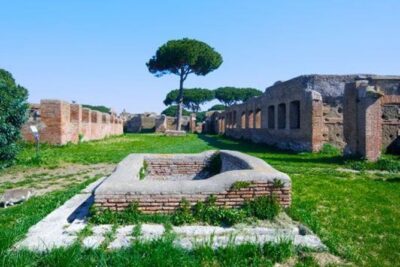
The core of the experience is the Parco Archeologico di Ostia Antica, where you explore some of the most important surviving structures of Ostia, Rome’s major harbor. Ostia mattered for centuries, from roughly the 4th century BCE to the 5th century AD. That long stretch is useful because it helps you understand why so many parts of the city are layered in function.
The park admission is not included. You pay on site. The useful part is that the ticket is valid for seven days, and it covers entry to the park, the nearby Castle of Giulio II, and the Archeosite of Portus (about a 10-minute drive). That’s a real value detail. Even if today’s tour feels time-limited, your ticket could help if you want to return or add another nearby site on a different day.
Plan around about 2 hours in the park. That’s enough time to see the most iconic pieces without sprinting. You’ll still walk, and the ground is outdoors, so comfortable shoes are your best friend. This is a “look up, look around, keep moving” kind of stop.
Thermal baths with mosaics: where Roman daily life becomes visible
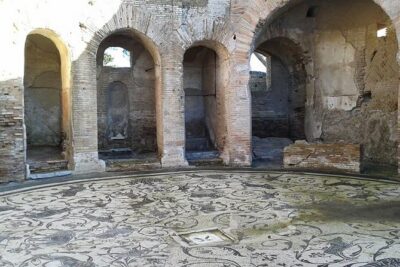
The tour includes a 1st-century AD thermal baths stop, and it’s one of those moments where the scale hits you fast. Baths were not just for hygiene. They were social space, exercise space, and a place to talk, relax, and do business in a Rome-sized routine.
Why this stop is worth your time: the mosaics and surviving architectural details help you understand what kind of city Ostia was, not just that it existed. You can often imagine foot traffic, schedules, and how people moved through rooms. It’s a strong anchor point because it turns “ancient” into “routine.”
Possible consideration: you may spend time looking at details like floor patterns and wall surfaces, which can mean you pause more than you expect. That’s not bad, just plan to slow down a bit and keep hydration in mind if the weather is warm.
The 1st-century Roman theatre: performance space and urban design
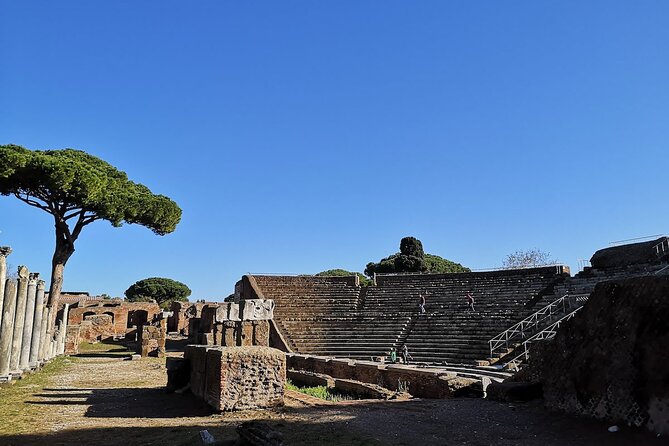
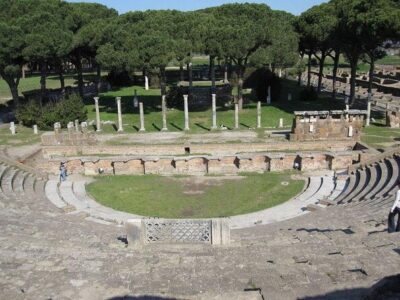
Next comes a perfectly preserved 1st-century AD theatre. The theatre stop gives you a different side of Roman urban life than the baths and streets do. It’s about assembly, entertainment, and public culture.
The practical value here is the theatre layout. When a space survives well, you can understand sightlines and the reason the city built structures in particular shapes. Even if you’re not a theatre person, you’ll likely appreciate the way the building organizes people in a crowd and how the city’s daily rhythm linked to public events.
This stop also helps with orientation. After walking through different kinds of ruins, you start to read the city better. The theatre works like a landmark that ties the tour route together in your head.
Another shape for the same afternoon in Rome:
Temple of a major cult and the grain mill: how Ostia worked
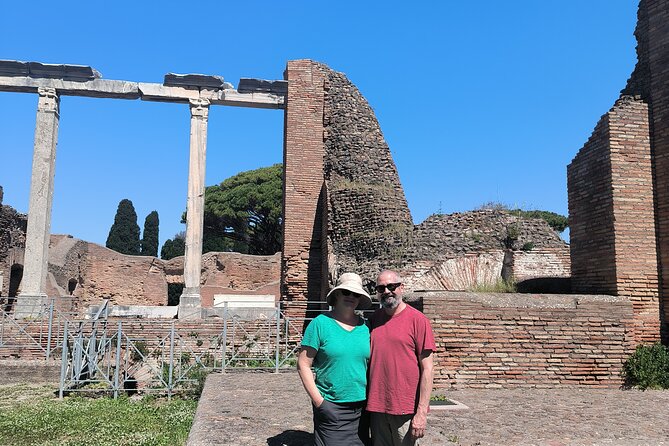
The tour doesn’t treat Ostia as only entertainment ruins. It also includes a temple dedicated to a major cult. That matters because it reminds you that religion was part of public life, not only private practice.
Then comes an especially interesting inclusion: an industrial mill from around the 2nd century BCE. This is where you get closer to the city’s engine. The mill transformed grain into dough and produced bread for marketing in Ostia and Rome. That one detail turns your understanding of Ostia from “harbor town” into “food production system.”
Why I like these two stops together: they show two sides of empire life. One is belief and ceremony, the other is logistics and supply. When you put them in the same day, the city feels less like scattered stones and more like a working network.
Possible drawback: these technical, functional ruins can feel less dramatic than the theatre or baths if you only like big monuments. If that’s your style, lean into the guide’s explanations. Ask how the mill related to the harbor economy, and you’ll likely find it clicks fast.
Renaissance castle and the Tevere defense story you can actually see
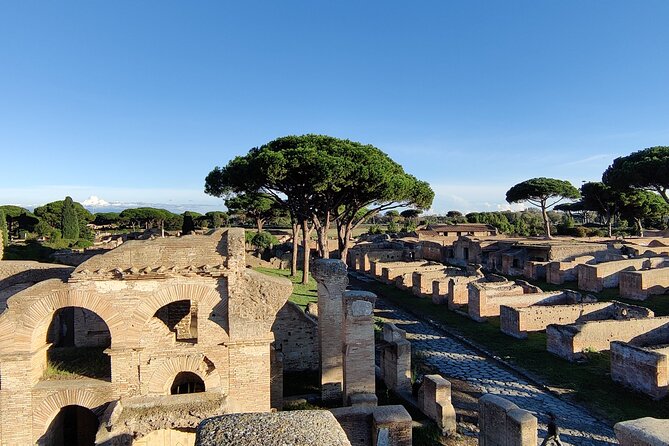
The tour includes a Renaissance castle commissioned by Pope Julius II. It was built in the 15th century to help defend the river Tevere. This stop shifts you from Roman Ostia to a later chapter of Rome’s survival and power.
What makes this part valuable for a day trip: you don’t just end in a pretty viewpoint. You see how the landscape kept mattering long after the Romans. The castle is part of why Borghetto is so memorable. It’s a physical reminder that the area stayed strategic.
There’s also a sweet contrast here. Roman ruins inside the park give you the empire scale. Then the castle and medieval walls take you into a slower, more enclosed feeling at the end.
The medieval Borghetto finale: walls, Rocca of Pope Giulio II, and a gelato break
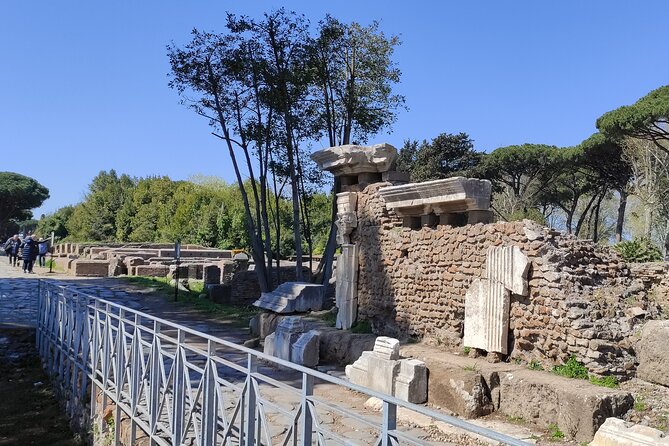
The tour walk continues into the Centro Storico di Ostia Antica, a medieval village dating back to the 8th century AD, enclosed by medieval walls. The visit also features the Rocca of Pope Giulio II, the Renaissance castle linked to the defensive system.
This is the part I think you’ll remember most clearly after the museum dust settles. The medieval walls create an easy, almost calm atmosphere. You get a break from looking at ruins. Instead of decoding architecture, you start soaking in the sense of a living, walled settlement.
The tour ends outside the medieval walls, at the meeting end area near Piazza Umberto I. Gelato is included as a snack, which is a great match for the pacing. You finish with something simple and very Italian, rather than sprinting toward the next attraction.
If you’re traveling with kids or teens, this ending matters. It gives them a storybook-feel zone without asking them to sit still for extra time. Couples often like it too, because it’s scenic and less intense than the park moments.
Guides and pacing: how you get value from a 2.5-hour format
This tour works because it stays practical. It’s about 2 hours in the archaeological park plus a short walk through the medieval area (around 20 minutes mentioned for the second part). That’s a workable ratio for Ostia Antica, which is large.
The guides are described as professional and friendly, with explanations that are easy to follow. One guide name that shows up in the praise is Chiara, and another is Federico. If your group includes either of them, you’re likely to get a clear, conversational approach, not lecture mode.
Small-group size (maximum 6) also matters more than it sounds. It reduces crowd friction. You can stop, ask something specific, and not feel like you’re holding up a bus of people.
Price and value: what costs extra, and what you get for your money
The tour price is $119.21 per person, and it’s marketed as including Italian gelato plus the guided walking portion. The big extra cost is the archaeological park entrance, which is not included.
On the park ticket side: the admission you pay on site is described as €18.00 per person, and that ticket lasts seven days. It also covers the park plus the Castle of Giulio II and the Archeosite of Portus (about a 10-minute drive). That’s a key value angle because you might use the ticket again later.
So is it worth it? For me, yes if you care about context. Ostia Antica is big and easy to treat as random stones if you’re just walking. A guided route helps you connect baths to religion to food production to the city’s urban shape. The small group and gelato also add comfort for a relatively short day.
If you’re the type who prefers to roam freely without a schedule, you might feel a tighter constraint with a guided route. But with Ostia Antica, the structure is often what helps the place click.
Who this tour suits best, and who may want to adjust expectations
This is a good match if you like Roman ruins but want something more human than the biggest, most crowded central sites. It’s also a strong choice for:
- Families with curious teens who can handle walking
- History lovers who like everyday city functions, not only monuments
- Couples who want a calm, atmospheric day near Rome, with an easy finish
It may be less ideal if you have limited mobility. The tour involves walking over outdoor surfaces in multiple areas. The data says most travelers can participate, and service animals are allowed, but no additional mobility details are provided.
Should you book Ostia Antica with Italian gelato?
I’d book this if you want a Rome day trip that feels like a real city, not just a highlight reel. The mix of thermal baths, theatre, a temple, and the grain mill gives you more than one kind of Roman story, and the medieval Borghetto finale is a satisfying way to land the plane. Add a classic gelato stop, and you get an ending that feels right, not rushed.
I’d think twice only if you strongly dislike planning around extra ticket costs or you want zero structure. Because the park admission is on site and separate, you’ll need to handle that payment before your full day can flow.
If the weather is good, this tour is the kind that makes Ostia Antica feel reachable, even when the site is actually huge.
Latest additions from Rome
- Rome: Testaccio Market Food Tour with Street Food & Wine★ 5.0 · 8 reviews
- Exclusive Pasta & Tiramisu Class with Wine near by Colosseum★ 5.0 · 8 reviews
- Private Professional Photoshoot in Rome★ 5.0 · 8 reviews
- Loreto “Shrine of the Holy House of the Virgin Mary” Private Tour from Rome★ 5.0 · 8 reviews
- Rome Day to discover Florence and Pisa Hotel Pickup★ 4.5 · 8 reviews
- Rome: Christmas Nativities and Angels Tour★ 3.1 · 8 reviews
- Guided Tour of Vatican Museums and Sistine Chapel★ 5.0 · 8 reviews
- Rome: Cooking Class of fresh Pasta and Tiramisu Cake★ 5.0 · 8 reviews
Ostia Antica Ruins Tours, compared.
Ancient Ostia Antica Semi-Private Day Trip from Rome by Train with Guide
Read our review →
Horse Sanctuary & Trail Ride in Ostia Antica
Read our review →
Browse the lists this tour appears in