
Reviewed · OSTIA ANTICA RUINS TOURS
Daily life in Ostia Antica (private tour)
Ostia Antica turns Rome into a walk you can feel. This private tour through the Parco Archeologico di Ostia Antica shows you Roman life as it happened, not just famous monuments, and I love that you get daily-life explanations tied to real buildings. You’ll also like the chance to see hands-on details such as bath areas, shops, and public spaces instead of standing back and guessing, and the only real caution is weather, because the experience depends on good conditions outdoors.
The guides can make a big difference here. I keep seeing names like Paola, Maria, and Maria Rita, with praise for guides who clearly love the site and explain what you’re looking at in plain language, including the meaning behind striking mosaics in baths and marketplace spaces. If you expect a high-energy tour nonstop, this one is more like a steady, thoughtful walk.
It also feels like good value for a private outing: a 3 hour visit with an admission ticket included and the option to adjust the route for ages and interests. The price is $187.06 per person, and it’s commonly booked about 45 days in advance, so I’d plan ahead rather than waiting for the last minute.
In This Review
- Key things to look forward to
- Why Ostia Antica feels different from Rome and Pompeii
- Price and value for a private 3 hour admission-included tour
- Getting there smoothly and keeping the day easy
- Entering Parco Archeologico di Ostia Antica: how the guide makes it click
- Necropolis: the quieter start that changes your perspective
- Therme di Nettuno and Terme del Foro: Roman baths as a daily hub
- Theater and Capitolium: public gatherings and big beliefs
- Piazzale delle Corporazioni and Tabernae: shops, guilds, and everyday commerce
- Why the guide matters most here: names you’ll hear often
- Who should book this private Ostia Antica tour
- A practical pacing note for your 3 hour walk
- Should you book this private tour of Ostia Antica?
- FAQ
- How long is the Ostia Antica private tour?
- Is the admission ticket included?
- Is this tour private or shared with other groups?
- What language is the tour offered in?
- Where does the tour start?
- What should I do if the weather is bad?
- Is there a minimum number of travelers?
- Are service animals allowed?
- What is the cancellation policy?
Key things to look forward to
- A private, group-only pace in Ostia Antica, not a big cattle-car crowd
- Admission ticket included for the 3 hour visit
- Everyday Roman life, explained room by room, with emphasis on how people actually lived
- Mosaics and their details, including bathhouse floors and marketplace tile designs linked to professional groups
- A calmer feel than Rome’s main sights, with fewer people and more time to think
- Itinerary customization based on your group’s ages and interests
Why Ostia Antica feels different from Rome and Pompeii
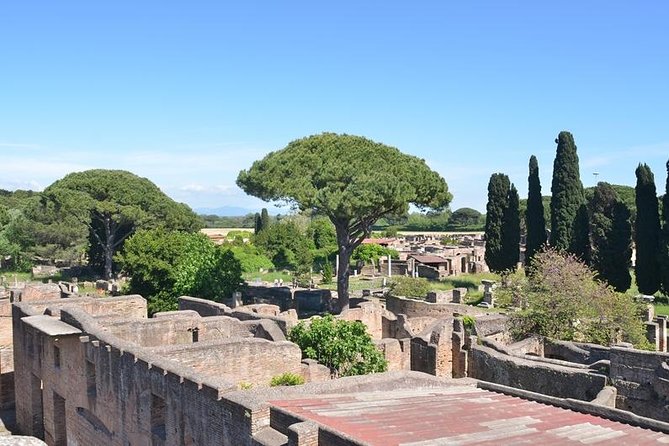
Ostia Antica is Rome’s port city, and the ruins show that life up close. Instead of only seeing temples or arenas from the outside, you walk through spaces tied to daily routines: work in commercial areas, meals and cleaning in bath complexes, public gatherings, and religion in major civic spots.
That matters because Roman history can sound abstract if you only study dates and emperors. With a guide, the site becomes practical. You start noticing how people moved through the city, where they shopped, where they met, and where they relaxed. The result is that Roman life stops being a textbook topic and turns into something you can picture while you stand in place.
This is also one reason the tour works so well for mixed ages. You can keep things anchored to what’s visible, and the route can be adjusted for what your group wants to focus on, whether that’s art, architecture, or everyday living conditions.
More Private Tours in Rome
- Rome by Golf Cart Private Tour: Beyond the Landmarks
★ 5.0 · 4,361 reviews - Early Morning Vatican, Sistine, St. Peter’s Semi or Private Tour
★ 5.0 · 3,779 reviews - Rome on a Golf Cart Semi-Private Tour Max 6 with Private Option
★ 5.0 · 2,502 reviews - Rome Private Arrival Transfer: Fiumicino Airport to Hotel in Rome
★ 4.5 · 2,492 reviews
Price and value for a private 3 hour admission-included tour
At $187.06 per person for about 3 hours, this is not an impulse buy. But for a private experience at a major archaeological park, the math can look fair fast.
Here’s why:
- You’re not just paying for a ticket. You’re paying for a guide who helps you interpret the ruins as a connected city, including public and private areas.
- The admission ticket is included, which saves you the hassle of adding it later.
- It’s private for your group only, which often feels more efficient than joining a shared group that may move at a pace not suited to your questions.
There are also group discounts available, and if you’re traveling with family or friends, that can improve value. The downside is simple: if you’re traveling solo or on a super tight budget, private tours can feel like a bigger spend than a standard group ticket.
If you’re deciding between this and other Rome highlights, consider what you really want your memory to be. If you want the feeling of walking through a functional Roman city, Ostia Antica is a strong choice. If you want only the biggest, world-famous monuments, you might feel less satisfied.
Getting there smoothly and keeping the day easy
The meeting point is listed as 00119 Ostia Antica RM, Italy, and the activity ends back at the starting point. That means you’re not left figuring out a long pickup or transfer plan at the end of your walk.
It’s also described as near public transportation, which is helpful if you’re trying to avoid private car logistics. One practical perk is that Ostia Antica can fit well into travel days, including airport timing, since it’s often used as a calmer stop around Rome’s outer areas.
Still, keep in mind the experience requires good weather. If rain or bad conditions hit, the tour can be canceled with an option for a different date or a full refund, so I’d avoid locking in an inflexible flight or train schedule that can’t bend.
Entering Parco Archeologico di Ostia Antica: how the guide makes it click
This visit is built around a focused walkthrough of key zones. You stay inside the Parco Archeologico di Ostia Antica and move from spaces connected to death and memorials, to baths, theaters, civic temples, and commercial streets.
A guide’s job here is not to recite trivia. It’s to help you read the site:
- what a building was for,
- how different areas related to daily routines,
- and what details like floor decoration or storefront layout suggest about art, craft, and work.
This is where the tour earns consistent praise. People highlight guides who bring the ruins to life with storytelling and context for how Romans lived, not just what was built. When the guide points out what to look for, you stop seeing disconnected ruins and start seeing a working city plan.
Necropolis: the quieter start that changes your perspective
Your route includes the Necropolis, a reminder that this was a real community, not a theme park. Tomb areas can feel emotionally heavy, but a good guide helps them connect to ordinary life in the port city.
What you’ll get from including the necropolis early is contrast. You see the city’s business and social places later, so the tombs act like a baseline for understanding the full rhythm of life, work, and remembrance. Even if you’re not into funerary archaeology, this stop helps you grasp that the ancient city held everything from daily routines to long-lasting memorials.
A practical tip: take a slow pace here. The site includes open areas and pathways, but the emotional tone is easier if you avoid rushing through.
More time in the ruins at Ostia Antica:
Therme di Nettuno and Terme del Foro: Roman baths as a daily hub
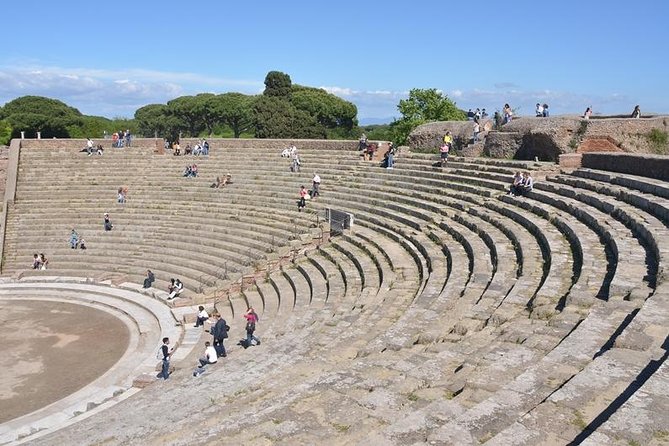
The tour highlights the Therme di Nettuno and the Terme del Foro, which are bath complexes and some of the most rewarding places to look closely.
Why baths matter for understanding daily life is simple. In Roman times, baths were not only about hygiene. They were social spaces where people gathered, cooled off, and spent time. That makes them perfect for a guide-led explanation, because you can see how relaxation, architecture, and design connect.
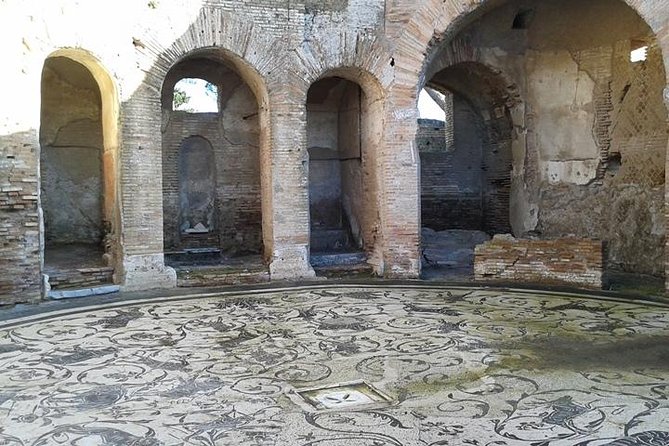
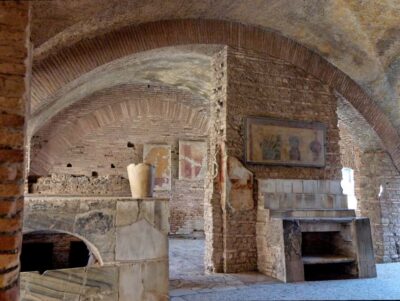
One of the most repeated high points is the mosaics. People talk about well-preserved mosaic floors, including black-and-white designs associated with bath areas and also more colorful patterns in public spaces. The best part is not just admiring decoration, it’s hearing how the guide reads the art, including symbolism and the craftsmanship behind it.
If you like visual details, plan to spend extra seconds looking at floors rather than just moving on. Even a few focused minutes can change your whole experience.
Theater and Capitolium: public gatherings and big beliefs
Next on the route are the Theater and the Capitolium. These stops broaden the story beyond everyday work and relaxation.
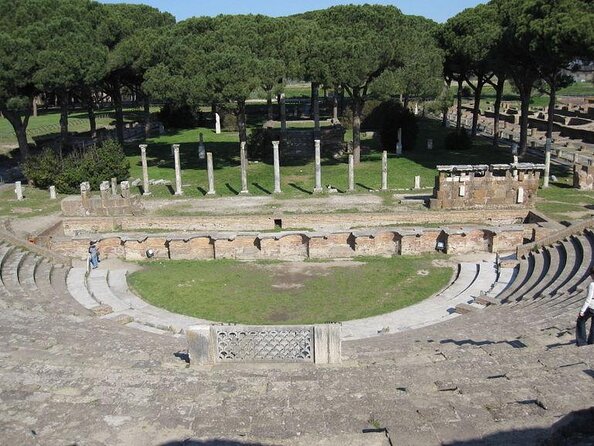
A theater points to public culture: people gathering for performances and shared events. The guide’s interpretation helps you understand how those spaces fit into the city’s schedule and identity. The Capitolium, tied to major civic religion, gives you another layer, showing how belief was embedded into prominent places.
This is also where a clear explanation helps you not get lost. Ruins can look similar from a distance, and it’s easy to miss what makes each structure important. When the guide connects the dots, you understand why these buildings weren’t optional extras. They mattered to how the city functioned.
Piazzale delle Corporazioni and Tabernae: shops, guilds, and everyday commerce
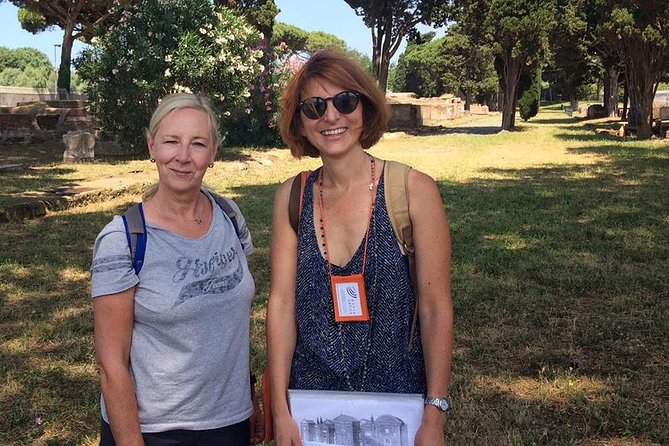
The itinerary includes Piazzale delle Corporazioni and Tabernae, which are key for seeing how commerce worked. This is where Ostia Antica often feels most like a living city, at least in your imagination.
Piazzale delle Corporazioni is strongly linked to professional groups and organized work, and one standout detail from past visits is the tile mosaics that label marketplace spaces with words and images. These designs can show specialized guilds tied to shipping and marine commerce, which is a nice match for Ostia’s identity as a port city.
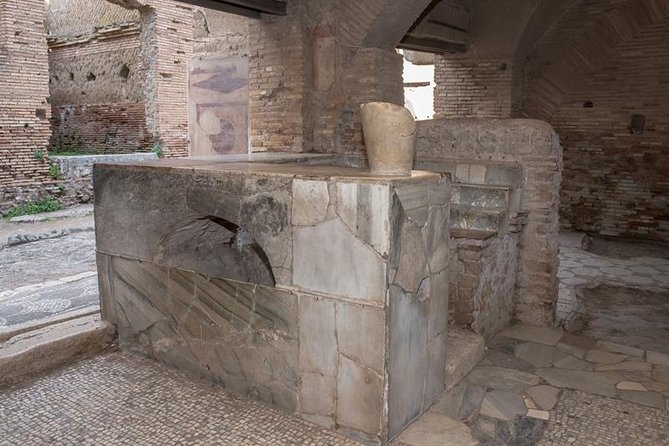
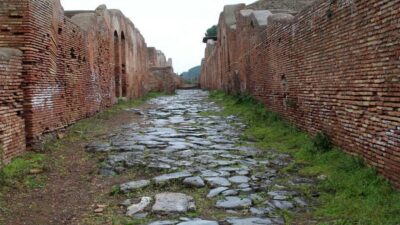
Then you move into Tabernae, the shopfront areas. Even when the storefronts are ruined, you can get a sense of how people interacted with goods and services on a daily basis. A guide helps by pointing out patterns of layout and the way streets and storefront spaces likely shaped movement.
If you love art and everyday craft, this segment is the sweet spot. It’s not just decoration. The mosaics can act like readable signage for the world that once filled the area.
Why the guide matters most here: names you’ll hear often
The experience is consistently praised for guide quality, and the names Paola, Maria, and Maria Rita show up repeatedly. People describe guides as passionate and educated, including one guide described as a trained archaeologist.
You should care about this because Ostia Antica is a big site, and “seeing ruins” can turn into “wandering ruins” without interpretation. The strongest tours are the ones where you leave with a mental map of what you saw, and why it fit together.
A good guide in this setting tends to do a few things well:
- explain how structures were made and used,
- point out what’s visible that you might miss alone,
- and connect religious, civic, and commercial spaces to daily life.
When that happens, you walk out feeling like you understand the city’s logic.
Who should book this private Ostia Antica tour
This tour is a great fit if you:
- want Roman daily life more than superstar monuments,
- enjoy architecture plus art details like mosaics,
- like guided context that makes ruins easier to read,
- and prefer a quieter setting with fewer people than central sites.
It also fits families because the itinerary can be customized based on ages and interests. That flexibility helps when you’re traveling with a mix of curiosity levels.
It may feel less ideal if you only want the most famous, headline attractions in Rome. Ostia Antica rewards curiosity, patience, and looking closely.
A practical pacing note for your 3 hour walk
You have about 3 hours, and the route covers multiple zones, including baths and civic and commercial areas. That’s enough time for a proper stroll with stops for explanation, but it’s not a full day.
To make the most of it:
- wear comfortable shoes, because you’ll be walking on uneven ground,
- bring water and protect from sun if the weather is good,
- and don’t treat it like a museum sprint. The value is in slowing down enough to follow the guide’s prompts.
Also, because it’s private, you can ask questions. If your group has different interests, speak up early so the guide can adjust the focus.
Should you book this private tour of Ostia Antica?
I’d book this if you want your Rome day to feel specific and personal. This is the kind of tour where a guide helps you turn ruins into a daily-life story, with a big emphasis on meaningful details like mosaics in bath areas and marketplace spaces tied to professional groups.
It may not be your best choice if you want a fast, famous-monuments route or if your schedule depends on perfect outdoor conditions with no flexibility. Since the experience requires good weather and can be rescheduled or refunded, it helps to build it into a flexible day.
For most people planning a Rome trip, this is a smart way to see a side of ancient life that doesn’t get as much attention. And with admission included in a private 3 hour format, it’s also one of those purchases that can feel worth it once you’re standing in the park.
FAQ
How long is the Ostia Antica private tour?
It lasts about 3 hours.
Is the admission ticket included?
Yes. Admission is included in the tour.
Is this tour private or shared with other groups?
This is a private tour/activity, so only your group participates.
What language is the tour offered in?
The tour is offered in English.
Where does the tour start?
The start point is 00119 Ostia Antica RM, Italy, and the tour ends back at the meeting point.
What should I do if the weather is bad?
The experience requires good weather. If it is canceled due to poor weather, you will be offered a different date or a full refund.
Is there a minimum number of travelers?
Yes. If it is canceled because the minimum number of travelers is not met, you will be offered a different date or a full refund.
Are service animals allowed?
Yes, service animals are allowed.
What is the cancellation policy?
You can cancel up to 24 hours in advance for a full refund. If you cancel less than 24 hours before the start time, the amount paid is not refunded.
Latest additions from Rome
- Guided Tour Vatican Museums & Sistine Chapel★ 4.1 · 30 reviews
- Exclusive Rome by Night Vespa Tour★ 5.0 · 30 reviews
- Transfer Rome to Airports★ 4.5 · 30 reviews
- Vatican: St.Peter’s Basilica & Dome – Reserved Entry & Tour★ 4.1 · 30 reviews
- Rome street art tour: off the beaten path with a local guide★ 5.0 · 30 reviews
- Tivoli, Hadrians Villa and Villa d’Este, a charming day trip from Rome★ 4.5 · 30 reviews
- Rome Food Tasting with Wine Pairing Italian Authentic Flavors★ 5.0 · 31 reviews
- Inspirational Cooking on the Roman Chef’s Panoramic Terrace★ 5.0 · 30 reviews
Ostia Antica Ruins Tours, compared.
Ancient Ostia Antica Semi-Private Day Trip from Rome by Train with Guide
Read our review →
Horse Sanctuary & Trail Ride in Ostia Antica
Read our review →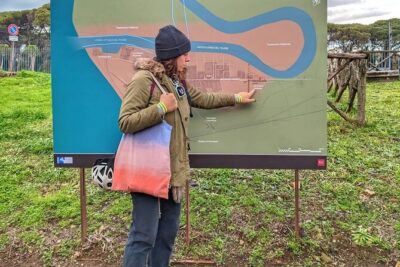
Private Ostia Antica Adventure tour from Rome
Read our review →Browse the lists this tour appears in