
Reviewed · COOKING CLASSES
Cooking & eating with Locals in their home kitchen in Rome
Cooking in a Roman home beats the food tour. I love the private home kitchen feel and the chance to get hands-on with Roman pasta, not just watch. One thing to consider, this experience follows a set cooking flow, so if you have allergies or special requests, send a message ahead so they can plan.
After you arrive, the evening turns into a friendly rhythm: prep, cook, taste as you go, then food lands on the dining table with wine (or non-alcoholic drinks) and simple dessert. It feels social in the best way, conversation included, even if your Italian is rusty.
You can also opt for pickup from your place at advantageous rates, and the whole thing is in English for an easier back-and-forth. Budget wise, it’s not a low-cost add-on, but you do get a full meal experience inside a family home rather than a quick tasting stop.
In This Review
- Key highlights to know before you book
- Why a Roman home kitchen beats the usual food stops
- Meeting point and how the evening logistics actually work
- Inside the family home: cooking with real rhythm
- The menu you cook: starter, traditional Roman pasta, and a main dish
- Starter: an Italian appetizer that sets the stage
- Main 1: Roman pasta, cooked the classic way
- Main 2: meat or fish, cooked traditionally
- The meal part: wine, non-alcoholic drinks, and dessert with coffee and bitters
- Conversation, translation, and making it work with your needs
- Allergies and special diets
- Price and value in Rome terms
- Who should book this cooking experience
- Should you book this Rome cooking evening?
- FAQ
- What is the duration of the cooking and eating experience?
- Is there pickup available from my accommodation?
- What language is the experience offered in?
- What food and drinks are included?
- Does the menu include pasta and a main course?
- Can the hosts accommodate allergies or different requests?
- How does cancellation work?
Key highlights to know before you book
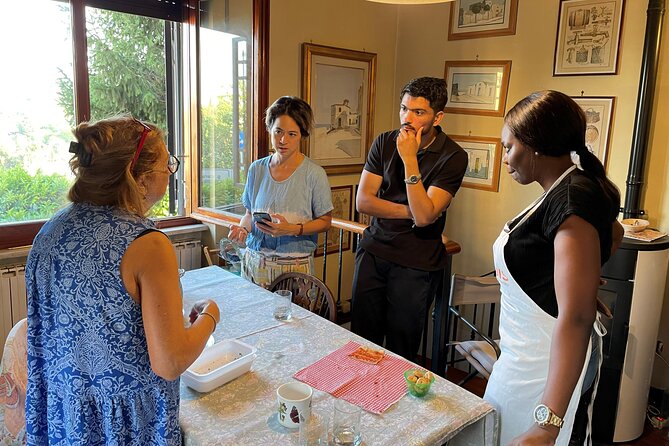
- A home kitchen, not a studio: you cook and eat in a real Roman household.
- Roman pasta focus: you learn the classic approach behind a traditional Roman dish.
- Wine plus non-alcoholic options: you can keep it simple with what works for you.
- Flexible menu for allergies: if you tell them your needs in advance, they try to adjust.
- 3 hours, private group: only your group participates, with pickup available.
Why a Roman home kitchen beats the usual food stops
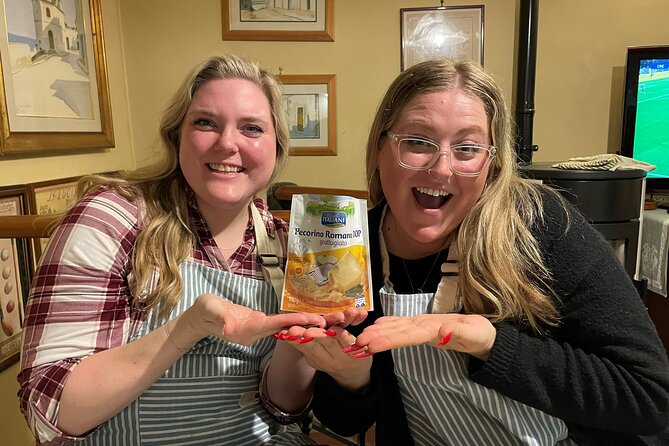
If you’re tired of standing around watching other people cook, this is your antidote. The heart of the experience is hands-on cooking in a real home, then actually eating the food together. That kitchen-to-table setup changes the whole vibe. You don’t just collect flavors, you pick up habits, timing, and small techniques that make Italian cooking click.
I also like the way the evening is structured around comfort food you can picture at home later. You’re not only learning one dish. You move through a starter, a Roman pasta, a traditional meat or fish main, and then dessert with coffee and bitters. Even if you never become a pasta-making wizard, you leave with a better sense of how Romans think about a meal.
The one drawback to plan for is the menu flow. It’s designed as a full experience, so you should not expect a free-for-all custom cooking class. If you want to cook something specific instead, you’ll need to coordinate that ahead of time.
More Roman kitchens to cook in:
- 3 in 1 Cooking Class near Navona: Fettuccine, Ravioli & Tiramisu
★ 5.0 · 7,376 reviews - Rome: Pasta Making Class with Wine, Limoncello, and Dessert
★ 4.9 · 3,177 reviews - Rome Cooking Class: Make Pasta and 3 Spritz Cocktails
★ 5.0 · 2,937 reviews - Rome: 3-in-1 Fettuccine, Ravioli, and Tiramisu Cooking Class
★ 4.9 · 2,704 reviews
Meeting point and how the evening logistics actually work
The tour starts at Via Giovanni Aretusi, 00188 Roma RM, Italy. It ends back at the meeting point, so you can plan your evening around that. If you’re staying nearby, you may find the location convenient since it’s near public transportation.
Pickup is available from your place at advantageous rates. For me, that matters because Rome travel can be slow when you’re calculating walks, hills, and time. Pickup also reduces the chance you’ll arrive flustered, hungry, and late. In a cooking class, calm beats rushing.
You should also expect confirmation at booking, plus a mobile ticket you can show when you meet. And since it’s a private tour/activity, you won’t be blended into a large group. That usually means better conversation and more attention when you have questions.
Timing-wise, think in terms of an afternoon or evening-length meal experience. The total duration is about 3 hours, so it’s long enough to cook and sit down, but not so long that it turns into a full day event.
Inside the family home: cooking with real rhythm
Here’s what you’ll experience once you’re in: the evening moves at household speed. You’re not in a rushed demo environment. You’ll help with the preparation, then cook as part of the group, and then settle in to eat.
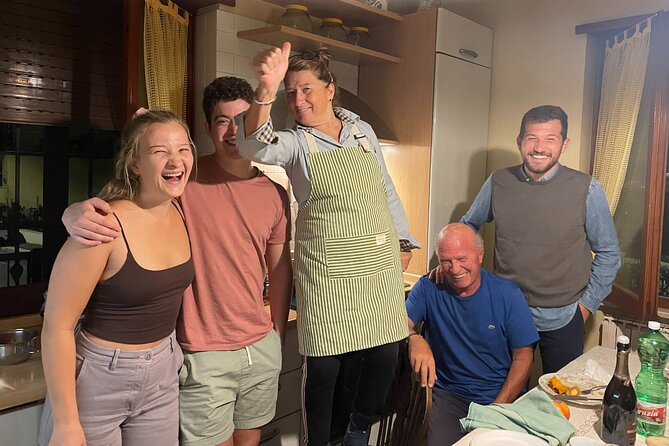
What I like is how the hosts keep the mood warm and casual. The hosts you’ll meet include Nicolò and his family: Daniela and Mario. You may have a language barrier at first, but the family tone is about making it easy for you to understand what’s happening. Nicolò often translates, so you’re not just guessing while someone points at ingredients.
Also, this doesn’t feel like a sterile classroom. It feels like dinner prep at home, with wine and relaxed conversation woven in. That matters because you’re paying for an experience, not only recipes.
If you’re the type of traveler who likes to ask practical questions while things are happening, you’ll do well here. You can ask about the ingredients, the order of cooking, and why one step matters. It’s a good setting for learning, because you’re doing it with people who actually cook this way at home.
The menu you cook: starter, traditional Roman pasta, and a main dish
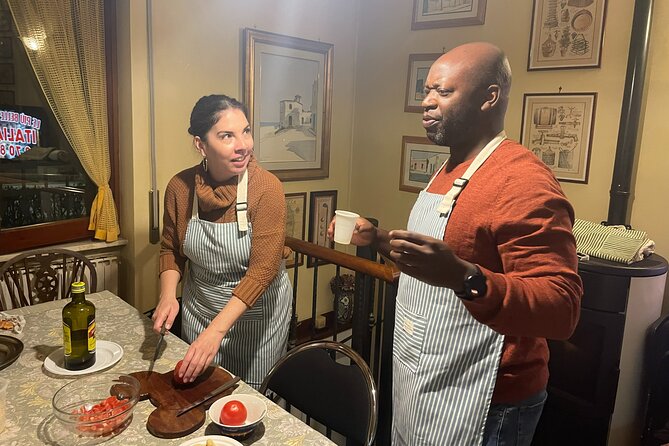
The experience is organized around a sample menu that can shift with the season. You can use this structure as your mental map.
Starter: an Italian appetizer that sets the stage
You’ll start with a traditional Italian appetizer. The exact choice can vary depending on the season. Even when the starter changes, the point stays the same: it introduces the flavors and cooking logic you’ll see again in the rest of the meal.
In practice, starters are a great warm-up because they teach you how the family balances flavor with simplicity. Italy often rewards less over-complication, and starters tend to show that fast.
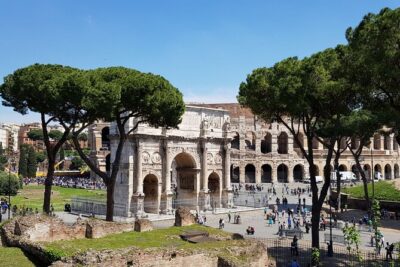
Another shape for the same afternoon in Rome:


Main 1: Roman pasta, cooked the classic way
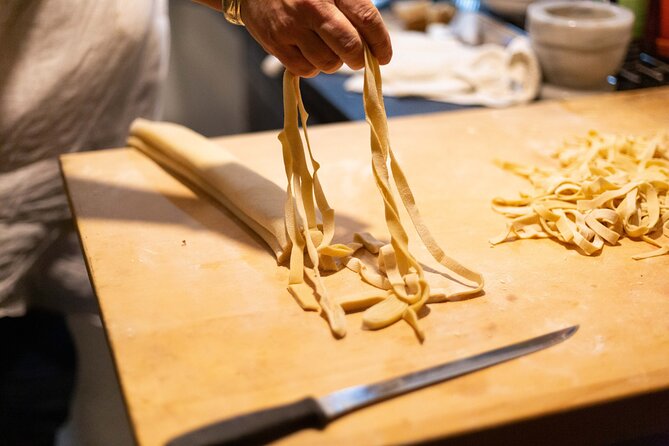
Then you move into pasta, following Italian traditions. The menu specifically mentions a traditional Roman pasta. This is a key selling point because Roman pasta isn’t just pasta, it’s style, sauce logic, and how the pasta and sauce become one.
This is also where you’ll probably learn the most. You’ll see the order of operations, how they handle seasoning, and how timing affects texture. Even if you don’t cook exactly the same ingredients at home, you’ll understand the method behind the dish.
Main 2: meat or fish, cooked traditionally
After pasta, you’ll cook a main dish that follows Italian traditions, either meat or fish depending on what fits that day’s plan. The important part is that you’re not just watching an ingredient hit a pan. You’re participating in the cooking approach.
If you’re planning a Rome trip with other food experiences, this second main helps because it balances carbs with something more substantial. It also broadens what you learn beyond one cooking category.
The meal part: wine, non-alcoholic drinks, and dessert with coffee and bitters
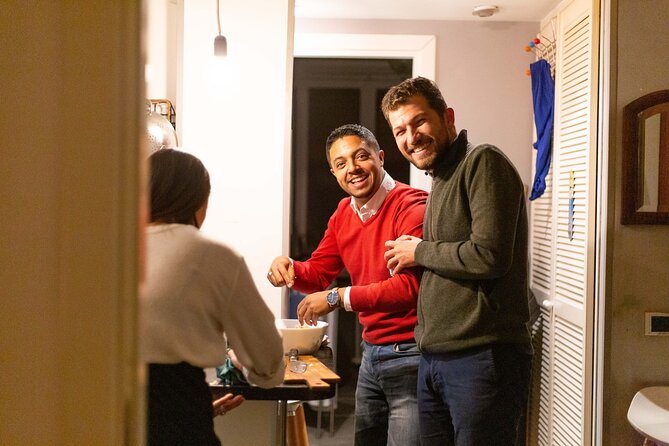
Cooking is only half the deal. The other half is the sitting down part, and this is where the experience really delivers.
After the meal is prepared, you bring the food to the dining table and eat together. Wine is included, and non-alcoholic beverages are available if you’d rather not drink alcohol. You’ll also have a simple dessert, plus coffee and bitters.
Why this matters: coffee and bitters are not just an afterthought in Italian dining. It’s part of the way Italians close a meal, and you get to experience that flow in a home setting rather than as a rushed add-on in a restaurant.
Also, wine inclusion keeps the conversation moving. People talk more. You ask more questions. The night feels like dinner with someone you actually know.
Conversation, translation, and making it work with your needs
One of the most praised parts of this kind of experience is the human side. In past evenings, guests have felt like they were eating with old friends. That’s not marketing fluff. When a family hosts you in their home, the mood is built from small gestures, not stage lighting.
If your Italian is limited, you’re still in good shape. Nicolò is there for English support and translation, so you can keep up with what you’re doing and why it’s done that way.
Allergies and special diets
The hosts state they’re open to adjusting the “menu” for allergies or if you’d rather learn how to cook something else. That means you should message before the day arrives, not on the spot. If you wait until the meeting time, their ability to adapt may be limited simply because the meal needs planning.
I’d treat this as a good opportunity to communicate clearly. Tell them what you must avoid, and what you can eat. The more specific you are, the more likely they can shape the meal around your needs.
Price and value in Rome terms
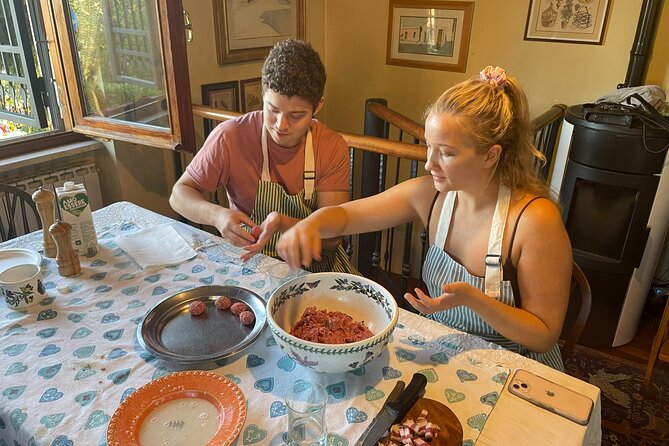
At $108.37 per person for about 3 hours, this isn’t a budget bargain. But it is a fair value when you look at what’s included: a full cooking-and-eating experience in a family home, wine or non-alcoholic drinks, and dessert with coffee and bitters.
If you compare this to paying for multiple restaurant meals plus a guided activity, the pricing starts to make more sense. You’re paying for a coordinated evening, plus someone’s time and kitchen. And you’re learning more than you would at a normal table, because you’re actively involved in the cooking process.
There’s also the private-group factor. You’re not competing for attention with other people. That improves the odds you’ll ask questions, learn steps you can repeat later, and feel comfortable in the home setting.
One practical note: because the experience requires a minimum number of travelers, availability can change. If you’re flexible on dates, it’s easier to snag a slot on a day that works for you.
Who should book this cooking experience
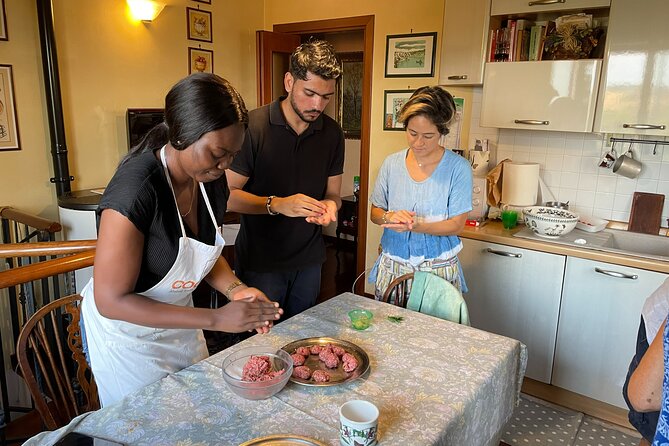
This is a strong match if you want:
- A home-style meal in Rome instead of another group tasting
- Hands-on learning about Italian comfort cooking, especially Roman pasta
- A social dinner where conversation matters as much as food
- A more personal setting for questions, even with limited Italian
It may not be the best fit if:
- You want a long, freestyle class where you pick every recipe
- You’re allergic or restricted and didn’t message ahead with details
- You prefer highly structured attractions and quick drop-in stops
If your ideal Rome day includes Colosseum-type sights by morning, then something calmer and human for the evening, this fits beautifully.
Should you book this Rome cooking evening?
I’d book it if you want a memorable “real Rome” dinner where you actually participate. The best part is the whole arc: prepping food together, then sitting down to eat what you made, with wine and dessert included. The family atmosphere, with Nicolò, Daniela, and Mario, is the kind of hospitality that makes Rome feel personal fast.
I would also book it if you care about value, because you’re paying for a complete meal experience, not just a small sample. For $108-ish per person, it’s expensive enough to feel like a true activity, but not so much that it replaces a major tour you planned in advance.
Your key decision point is your comfort with a set menu flow and your willingness to message about dietary needs early. If you do that, you’ll likely end up with exactly what you want from Rome: good food, real people, and an evening that feels like you were invited inside the city, not just around it.
FAQ
What is the duration of the cooking and eating experience?
It runs for about 3 hours.
Is there pickup available from my accommodation?
Yes, pickup is offered at advantageous rates.
What language is the experience offered in?
The experience is offered in English.
What food and drinks are included?
You’ll cook and then eat a full meal that includes wine (or non-alcoholic beverages) and a simple dessert with coffee and bitters.
Does the menu include pasta and a main course?
Yes. The sample menu includes traditional Roman pasta and then a main that is either meat or fish cooked following Italian traditions.
Can the hosts accommodate allergies or different requests?
They’re open to adjusting the menu for allergies or if you’d rather learn how to cook something else, as long as you message them in advance.
How does cancellation work?
You can cancel for a full refund up to 24 hours before the experience start time, and cancellation is free.
Latest additions from Rome
- Rome: Testaccio Market Food Tour with Street Food & Wine★ 5.0 · 8 reviews
- Exclusive Pasta & Tiramisu Class with Wine near by Colosseum★ 5.0 · 8 reviews
- Private Professional Photoshoot in Rome★ 5.0 · 8 reviews
- Rome Day to discover Florence and Pisa Hotel Pickup★ 4.5 · 8 reviews
- Loreto “Shrine of the Holy House of the Virgin Mary” Private Tour from Rome★ 5.0 · 8 reviews
- Rome: Christmas Nativities and Angels Tour★ 3.1 · 8 reviews
- Guided Tour of Vatican Museums and Sistine Chapel★ 5.0 · 8 reviews
- Rome: Cooking Class of fresh Pasta and Tiramisu Cake★ 5.0 · 8 reviews
Cooking Classes, compared.
3 in 1 Cooking Class near Navona: Fettuccine, Ravioli & Tiramisu
Read our review →
Pasta Making Class with Wine, Limoncello, and Dessert
Read our review →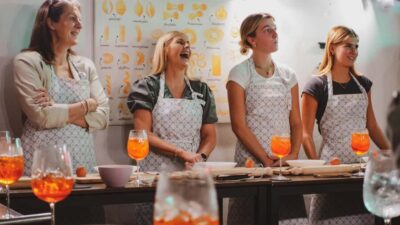
Rome Cooking Class: Make Pasta and 3 Spritz Cocktails
Read our review →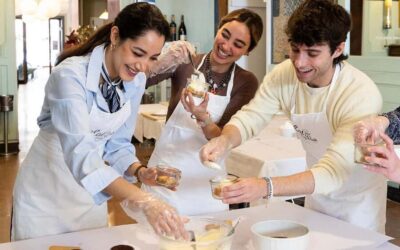
3-in-1 Fettuccine, Ravioli, and Tiramisu Cooking Class
Read our review →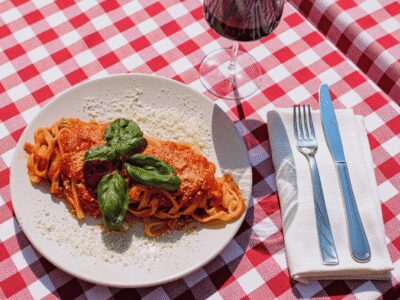
Fettuccine Pasta Cooking Class in Rome’s City Center
Read our review →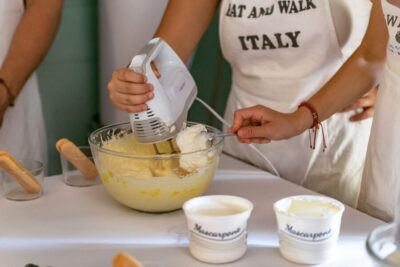
Fettuccine & Tiramisù: Cooking Class with Wine & Limoncello
Read our review →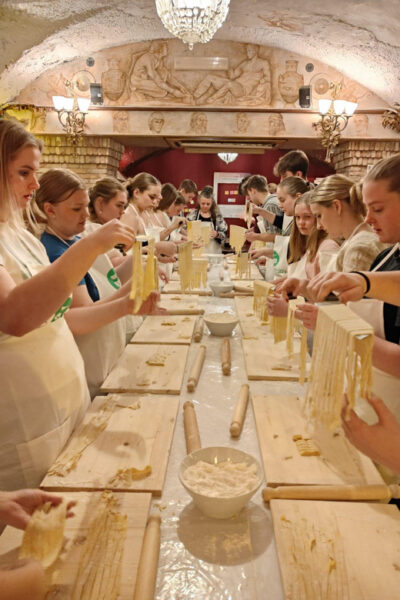
Pasta & Tiramisu Cooking Class near the Spanish Steps
Read our review →
Traditional Pizza Cooking Class near Piazza Navona
Read our review →Browse the lists this tour appears in