
Reviewed · WALKING TOURS IN ROME
Walking tour in the Heart of Rome and a Cooking Class in a Very Small Group
Rome smells like history and garlic. You get both on one tight 4-hour plan, starting at Piazza Barberini and ending near the Pantheon, with a guided architecture walk plus a very small-group cooking class. I love that you’re not just sightseeing, you’re also learning how to make fresh pasta from scratch in a local restaurant setting.
Two things I especially like: the walking portion focuses on big, recognizable sights with practical context, like the aqueduct story on the way to Trevi and Hadrian’s Temple near Piazza di Pietra. And the cooking side is hands-on, not a passive demo, with recipes included for what you make.
One drawback to consider is the pace. This is a compact route and a short cooking window, so if you want slow wandering and long photo stops, you might feel a little rushed.
In This Review
- Key highlights worth your time
- Rome’s best mix, architecture plus a real pasta lesson
- The morning start: Piazza Barberini to the Spanish Steps
- Trevi Fountain, plus the aqueduct ruins you might miss
- Piazza di Pietra and the temple connection
- Santa Maria Sopra Minerva and Bernini’s elephant detail
- Pantheon area: why it influenced Renaissance artists
- In the kitchen near the Pantheon: hands-on pasta from scratch
- What you learn (and why it sticks)
- The teaching style matters
- What’s included, and how it stacks up against the price
- Tips to get the most out of your half-day plan
- Who should book this Rome walk and pasta class
- Should you book this experience?
Key highlights worth your time
- Max 8 people means you actually get help during the pasta prep, not just a seat and a smile.
- Fresh pasta skills you can use at home, because recipes are provided for every dish you make.
- Iconic Rome in one afternoon, with a smart route covering Piazza Barberini, Spanish Steps, Trevi, the Pantheon area, and Piazza Navona.
- Architecture talk that connects dots, including Bernini’s elephant and the story behind the Pantheon’s influence.
- A full mini meal, typically built around an appetizer, a pasta dish, and dessert.
Rome’s best mix, architecture plus a real pasta lesson
If you like Rome, you already know the city can be a lot. It’s loud, busy, and full of famous monuments that can blur together if nobody gives you a framework. This experience gives you that framework fast. You start in the grand open-air world of central Rome, then you shift gears into a local restaurant where your hands get involved and you learn the secrets behind making fresh pasta.
The format is simple: a guided walk through some of the most photo-friendly corners of the historic center, then a cooking class that continues the experience close to the Pantheon. With a maximum group size of 8, it feels personal. You’re not shouting over a crowd to ask one question, and in the kitchen that matters. The class also includes recipes for all dishes you prepare, which is a big deal if you want the memory to become something you can repeat at home.
More Small-Group Tours in Rome
- Skip-the-Line Vatican, Sistine Chapel & St. Peter’s | Small Group
★ 5.0 · 7,060 reviews - Rome: Colosseum Underground Small Group Guided Tour
★ 4.7 · 4,844 reviews - Rome: Skip the Line Vatican, Sistine Chapel, St Peter Small Group
★ 5.0 · 3,847 reviews - Rome on a Golf Cart Semi-Private Tour Max 6 with Private Option
★ 5.0 · 2,502 reviews
The morning start: Piazza Barberini to the Spanish Steps
You kick off at Piazza Barberini, where the guide sets the tone and gives you a quick orientation. This matters because Rome’s center can look like one long postcard. A short intro helps you spot what you’re actually looking at, instead of just moving from famous stop to famous stop.
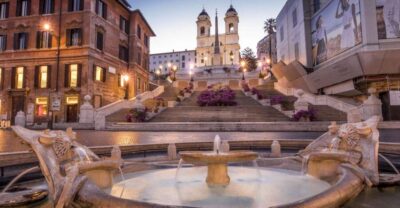
From there, you head toward the Spanish Steps. This stretch is where you’ll start picking up the tour’s style: not just dates and names, but curiosities and history tied to what you can see around you. The Spanish Steps area has plenty of visual drama, but the guide’s job is to make it make sense. You’ll get time near the square to take it in, and you’ll also learn what makes the area special beyond its fame.
What I like about this section is that it gives you momentum without exhausting you. The walking blocks are short. You’re not committing to a long hike, just an efficient route through classic Rome.
Trevi Fountain, plus the aqueduct ruins you might miss
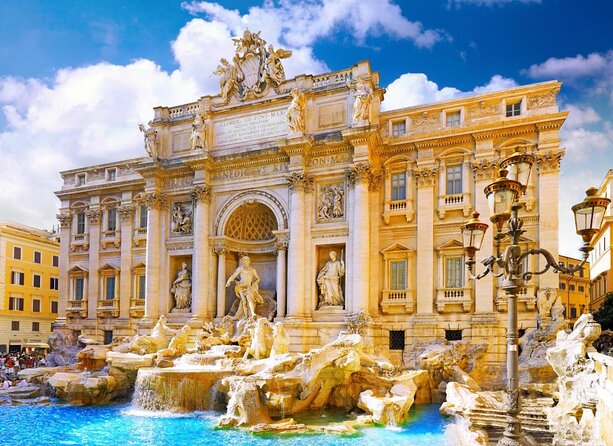
Then comes the walk to Fontana di Trevi. Trevi is crowded in most seasons, and that can flatten the experience if you arrive with zero context. Here, you get a historical explanation along the way, including the presence of ruins connected to an ancient aqueduct. That detail changes how you see the fountain. It stops being just a landmark and becomes part of a larger Roman story about water, engineering, and city life.
Once you reach Trevi, you get some time to wander, take photos, and do the classic coin-throw. Even with a busy place like this, having a planned window makes it feel less chaotic. The guide also helps you understand what you’re seeing while you’re there, so you’re not just watching other people take selfies.
Practical note: this is the part where you’ll want to be ready for crowds. Go with the flow, and keep your photos tight and quick.
Piazza di Pietra and the temple connection
After Trevi, you move toward Piazza di Pietra for a compact but meaningful stop. The focus here is Hadrian’s Temple. This is a nice example of how the tour uses short time well. In a few minutes, you get an explanation that turns a square into a scene with backstory.
You’ll notice the contrast between Roman remnants and the modern square life around them. Even if you’ve seen photos of these places before, hearing how the site fits into Rome’s larger narrative helps the shapes and materials stick in your mind. It’s one of those moments where the guide’s context pays off.
This section is brief, but it’s also one of the easiest places to appreciate what a great guide does. If you’re the type who likes a bit of architecture without a long lecture, you’ll probably feel satisfied here.
Santa Maria Sopra Minerva and Bernini’s elephant detail
Next up is Chiesa di Santa Maria Sopra Minerva, where you get an explanation tied to Bernini’s elephant. It’s the kind of detail that can be easy to walk past if you do Rome alone. Once someone points it out and explains why it’s there, it stops being random and starts being a clue about how art and meaning show up in religious spaces.
This stop also works because it breaks up the rhythm of the larger outdoor landmarks. You’re still in central Rome, still moving through the historic center, but the experience turns slightly more thoughtful and tactile. You’re looking at objects and iconography, not just big facades.
If you love moments where art history shows up in plain sight, this is a good one.
More Walking Tours in Rome
Pantheon area: why it influenced Renaissance artists
The Pantheon is next, and it gets one of the longer explanations on the walk. The guide talks through the historical facts of the site and why it inspired many Renaissance masters. That’s a crucial perspective. People see the Pantheon as a must-see, but it helps to understand why artists in later centuries cared so much about its design.
Even if you’ve studied Roman architecture before, hearing it in a live context helps. It connects the dots between Rome’s engineering confidence and the Renaissance obsession with classical forms. You’ll leave with a better sense of what makes the building special, beyond its fame.
Once the walking portion finishes close to Piazza Navona and the Pantheon area, the rest of the experience shifts indoors to the cooking class.
In the kitchen near the Pantheon: hands-on pasta from scratch
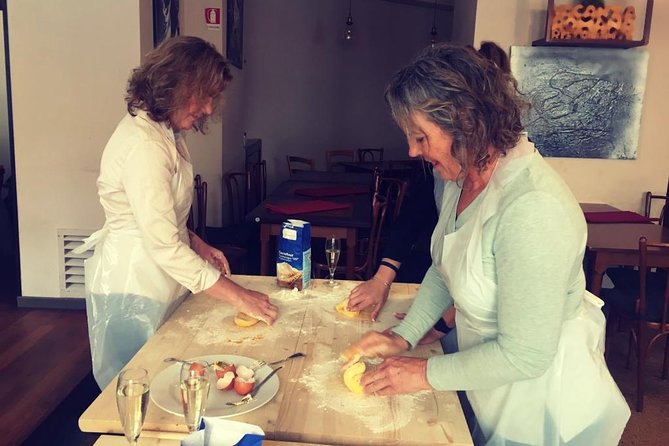
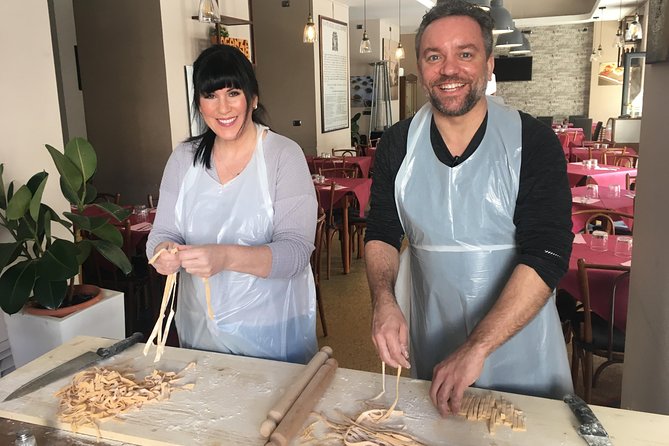
This is the heart of the day, and it’s where the small-group size really pays. The cooking happens in a local restaurant, and you make your own pasta from scratch. The class is designed around a mini meal, usually structured as an appetizer, a pasta dish, and dessert.
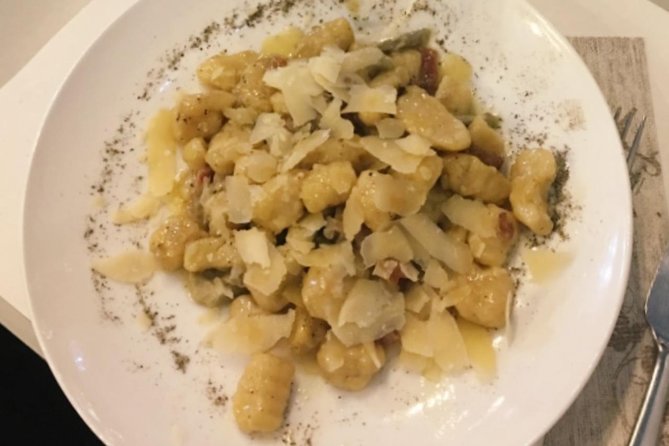
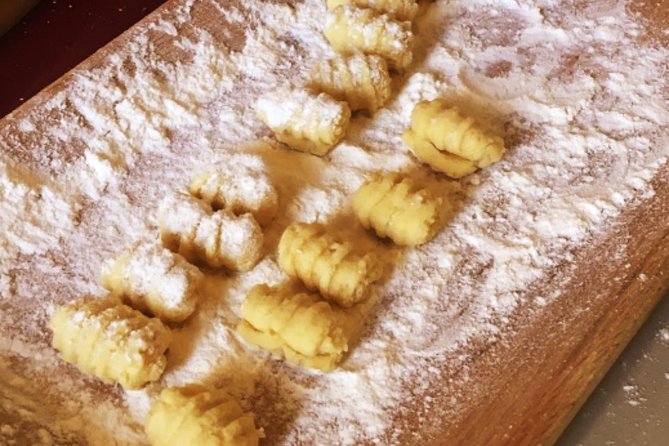
In past sessions, the menu has included artichokes, gnocchi work like mixing and rolling, and a crunchy licorice-flavored cookie called ciabelline. That combo is a strong mix of Roman-leaning flavors and classic pasta technique. You get to see how the pieces fit together as a real dining experience, not just separate cooking tasks.
What you learn (and why it sticks)
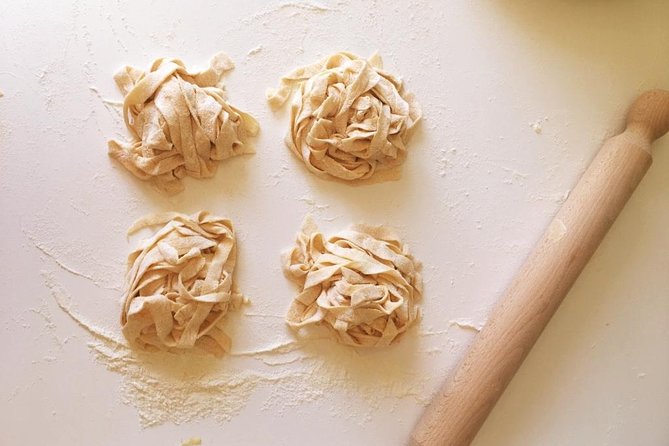
You learn the secrets to making fresh pasta, and because the class is hands-on, you’ll feel the difference between dry ingredients and workable dough, rolling techniques, and how pasta shapes behave once you start working.
Even better, you don’t just get a vague memory. You receive recipes for all the dishes you prepared. That means you can recreate the results, and you can also use the recipes to guide you through future attempts when you need a nudge.
The teaching style matters
Guides like Nina and Sara have been praised for being engaging, patient, and genuinely fun, and the cooking instruction is handled by Chef Paula. The value here is practical: you want a teacher who can explain without rushing you, especially when your hands are messy and your attention is split between listening and doing.
If you’re traveling as a couple, this is a great shared activity. If you’re traveling with family, it’s also a solid option because it stays structured and supportive.
What’s included, and how it stacks up against the price
At $142.98 per person for about 4 hours, this isn’t a cheap add-on. But it’s also not overpriced for what you actually get. You’re paying for three things that are hard to replicate on your own:
First, you get the guided architecture walk through central highlights, with a knowledgeable guide focused on Roman history and cuisine. Second, you get a hands-on cooking class in a local restaurant, with instruction and a real meal built around what you prepare. Third, you get recipes for all dishes made, so the experience doesn’t end when the tour ends.
If you’re the kind of traveler who would otherwise spend one afternoon bouncing between monuments and then pay separately for a cooking or food experience later, bundling them into one 4-hour block can feel like a smart use of time.
Tips to get the most out of your half-day plan
This is one of those experiences where a little prep makes it smoother.
Wear comfortable shoes. The walk is short in blocks, but it’s still a walking day through central Rome. Keep your phone ready for quick photos, but don’t let photos eat all your time at Trevi or Navona. Follow the guide’s rhythm. You’re getting just enough time at each highlight to absorb it without turning the day into a sprint.
Also, come hungry for the cooking part. The lesson comes with an appetizer, a pasta dish, and dessert, and once you’re working on dough, you’ll appreciate having a structured meal at the end.
Who should book this Rome walk and pasta class
This works best for you if:
- You want a compact Rome afternoon that still covers major sites.
- You enjoy learning history, but you prefer context tied to what you can see.
- You want a hands-on cooking experience where you actually make pasta, not just watch.
- You like small-group tours, since it makes the teaching more personal.
It’s also a nice choice if you’re short on days. In a half-day, you’ll hit major highlights like the Spanish Steps, Trevi Fountain, the Pantheon area, and Piazza Navona, then you’ll cap it with a meal that turns Rome into something you can recreate.
Should you book this experience?
Yes, if you want an efficient Rome plan that mixes iconic sights with a genuinely useful skill. The biggest strengths are the very small-group setup, the hands-on pasta from scratch lesson near the Pantheon, and the fact that you get recipes for everything you make. That combination turns the day from just sightseeing into a personal experience you can bring home.
Skip it if you’re looking for long, slow, independent wandering. The schedule is compact, and the best way to enjoy it is to go with the guided pace and let the teaching handle the details.
If your main goal is to do Rome in one afternoon, see the key architecture landmarks, and leave with pasta know-how, this is an easy yes.
Roman Kitchens to Cook In
- Rome: 3-in-1 Fettuccine, Ravioli, and Tiramisu Cooking Class
★ 4.9 · 2,704 reviews - Rome: Fettuccine Pasta Cooking Class in Rome’s City Center
★ 4.8 · 2,414 reviews - Fettuccine & Tiramisù: Cooking Class with Wine & Limoncello
★ 4.9 · 2,103 reviews - Rome: Pasta & Tiramisu Cooking Class near the Spanish Steps
★ 4.8 · 1,395 reviews
A Roman Bench for the Morning
- 3 in 1 Cooking Class near Navona: Fettuccine, Ravioli & Tiramisu
★ 5.0 · 7,376 reviews - Rome: Pasta & Tiramisu Class with Fine Wine by the Vatican
★ 4.9 · 4,852 reviews - Rome: Pasta Making Class with Wine, Limoncello, and Dessert
★ 4.9 · 3,177 reviews - Rome Cooking Class: Make Pasta and 3 Spritz Cocktails
★ 5.0 · 2,937 reviews
Latest additions from Rome
- Rome: Testaccio Market Food Tour with Street Food & Wine★ 5.0 · 8 reviews
- Exclusive Pasta & Tiramisu Class with Wine near by Colosseum★ 5.0 · 8 reviews
- Private Professional Photoshoot in Rome★ 5.0 · 8 reviews
- Loreto “Shrine of the Holy House of the Virgin Mary” Private Tour from Rome★ 5.0 · 8 reviews
- Rome Day to discover Florence and Pisa Hotel Pickup★ 4.5 · 8 reviews
- Rome: Christmas Nativities and Angels Tour★ 3.1 · 8 reviews
- Guided Tour of Vatican Museums and Sistine Chapel★ 5.0 · 8 reviews
- Rome: Cooking Class of fresh Pasta and Tiramisu Cake★ 5.0 · 8 reviews
Walking Tours in Rome, compared.

Guided Food Walking Tour with Wine in Trastevere
Read our review →
Trastevere & Campo de Fiori Street Food Walking Tour
Read our review →
Paranormal Night Walking Tour & Secret Backstreets
Read our review →
Trastevere Street Food Walking Tour with Local Expert
Read our review →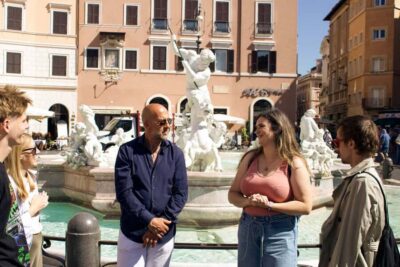
Guided City Center Evening Sightseeing Walking Tour
Read our review →
Small-Group City Highlights Moonlight Walking Tour
Read our review →
Best of Rome Walking Tour including Trevi Fountain
Read our review →Browse the lists this tour appears in