

Reviewed · JEWISH GHETTO WALKING TOURS
Trastevere and Jewish Ghetto Private Walking Tour
Rome tells better stories on quieter streets. This private Trastevere and Jewish Ghetto walk trades big crowds for a guided, street-level route through working Rome. I love that you get local focus instead of watching other people’s photos get shared. The big potential drawback is practical: some of the key sights are view-only from outside, and certain entrances are not included.
What I really liked is how the tour blends monuments with everyday life. You’ll move from Piazza Trilussa and the area’s famous turtle fountain, through the oldest corners of Trastevere, and into the Jewish Ghetto for context on faith, community, and survival. You also might meet a guide like Francesca, Paul, Sara, or Christian, and their personal passion shows in the way they connect buildings to people. Just be ready for dress-code rules at places of worship, and plan on covering shoulders and knees.
If you want full, paid entry into every stop, this may not fit your style. The tour includes time at major sites like the Tempio Maggiore di Roma and Teatro di Marcello, but it flags that admissions there are not included, so you may need to decide on the spot.
In This Review
- Key things to know before you go
- A Private 2-Hour Walk Through Trastevere and the Jewish Ghetto
- Piazza Trilussa: Your Start Point and Fast Orientation
- Santa Maria in Trastevere: When Art Looks Up at You
- Il Portico di Ottavia and the Ghost of an Ancient Market
- Ponte Sisto, Tiber Island, and the Fountain You Keep Seeing
- Porta Otavia and the Jewish Ghetto: Landmarks With Meaning
- Tempio Maggiore di Roma: The Largest Synagogue in Rome
- Teatro di Marcello: Watching an Ancient Stage From Outside
- Who This Tour Suits, and What to Wear
- Price and Value: Is $181.02 Worth It?
- Should You Book This Private Trastevere and Jewish Ghetto Tour?
- FAQ
- How long is the Trastevere and Jewish Ghetto Private Walking Tour?
- Is this tour private or shared?
- Where does the tour start?
- Does the tour end back at the meeting point?
- Is the tour in English?
- Are admission tickets included?
- Are there dress code requirements?
- Are mobile tickets used?
- What about cancellation?
- Is it near public transportation and can service animals join?
Key things to know before you go
- Private pacing: You do not get swallowed by a large group line, so you can ask questions without rushing.
- Santa Maria in Trastevere details: Expect time for the basilica’s 13th-century bronze mosaics and frescoes.
- Ottavia’s layered past: Il Portico di Ottavia traces back to a market story dating to 146 B.C.
- Jewish Ghetto context: You see the area’s landmarks and hear how the community lived, worshiped, and endured.
- Outdoor views plus optional tickets: Some major stops are outside viewing, with certain admissions not included.
A Private 2-Hour Walk Through Trastevere and the Jewish Ghetto
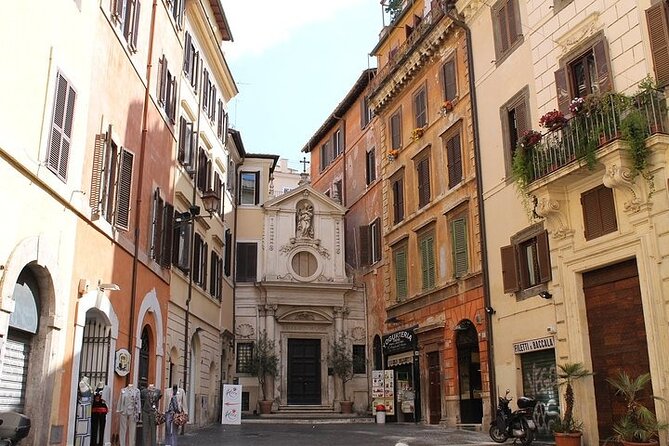
This is the kind of Roman walk I recommend when you want more than postcard stops. You are on foot for around two hours, and the route is built to connect neighborhoods, not just landmarks. Trastevere has always felt like the city’s lived-in side, and the Jewish Ghetto adds a different kind of meaning, shaped by rules, faith, and history.
The private format matters. In a big-group tour, you often spend time keeping up, or worse, waiting while someone asks a question you also care about. Here, you can slow down at the spots that click for you, and speed through the ones that do not.
This tour is also practical in timing. You can choose a start time throughout the day, so you can match your energy level and your other plans. It is offered in multiple languages, including English, and you can request another language in your booking notes. If you are booking from abroad, having a mobile ticket helps you get moving without paper scrambling.
One note up front: the guide you get for this tour may not be Jewish, even though you will cover Jewish places of worship. Still, the guide is expected to bring an insightful perspective on the neighborhood’s culture and history. If that matters to you, ask how they frame the story and what themes they focus on.
More Private Tours in Rome
- Rome by Golf Cart Private Tour: Beyond the Landmarks
★ 5.0 · 4,361 reviews - Early Morning Vatican, Sistine, St. Peter’s Semi or Private Tour
★ 5.0 · 3,779 reviews - Rome on a Golf Cart Semi-Private Tour Max 6 with Private Option
★ 5.0 · 2,502 reviews - Rome Private Arrival Transfer: Fiumicino Airport to Hotel in Rome
★ 4.5 · 2,492 reviews
Piazza Trilussa: Your Start Point and Fast Orientation
You begin at Piazza Trilussa, a local meeting place that feels far more like a neighborhood corner than a museum entrance. The tour starts here because the area gives you a gentle reset. You walk into Rome with eyes open, not with a checklist mindset.
Two details make this opening spot fun. First, it is close to the Fontana di Ponte Sisto, also known as the Fountain of the Hundred Priests. Second, the famous turtle fountain theme you see around this pocket of Rome is a reminder that the city’s “important” attractions still live side-by-side with everyday street life.
In plain terms, the start point helps you get oriented fast. You quickly learn what to notice as you walk: street scale, bridge views, how squares connect to churches, and why certain landmarks were placed where they were. That’s the kind of framing that makes the next stops land better.
Santa Maria in Trastevere: When Art Looks Up at You
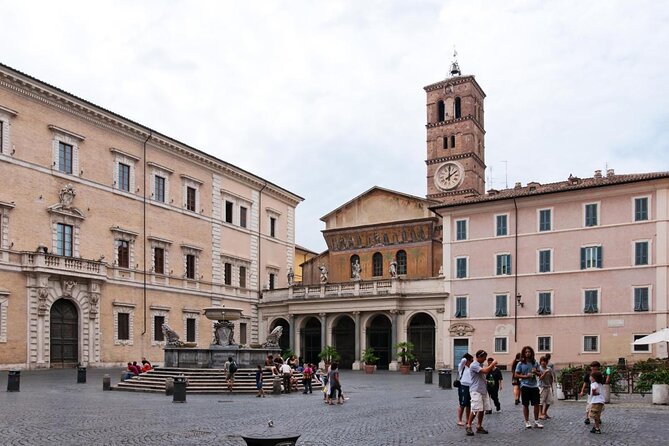
One of the best stops on this route is Piazza di Santa Maria v Trastevere and the nearby Basilica of Santa Maria. This is a standout not because it is Instagram-friendly, but because it is old in a way that still feels “in use.” It is described as one of the oldest churches of Rome, and you get time to appreciate the 13th-century bronze mosaics and frescoes.
Why this matters on a walking tour: you are not just passing by. You get around 20 minutes here, which is enough time to look closely rather than just glance. If you like religious art, pay attention to how the mosaics catch light differently as you change your angle. If you do not usually notice mosaics, this is still a great stop because you learn what you are seeing as you stand there.
Practical heads up: churches have a strict dress code. You need shoulders and knees covered. That means no tank tops and no short dresses. Rome in warmer months can be tricky, so bring a light layer you can use without turning your day into a juggling act.
Il Portico di Ottavia and the Ghost of an Ancient Market
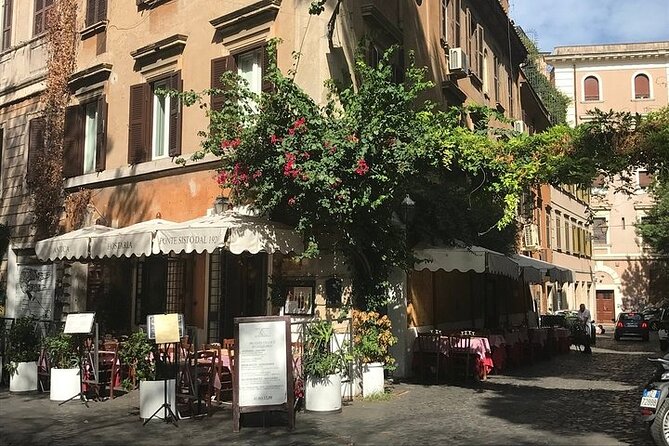
Next comes Il Portico di Ottavia, an open archaeological structure with serious backstory. This arcaded area once served as a fish market, and the story you are given traces back to 146 B.C. That date is an anchor, but the more useful takeaway is how markets shaped Rome.
A fish market is not an “extra” detail. It explains why certain buildings exist and why certain streets matter. When you stand in front of the Portico, you get a sense of movement and trade that predates today’s neighborhood vibe. Your guide shares stories and ties the space to how people lived, not just what the ruins are called.
This stop is short on the clock, around 10 minutes, so keep your focus. Look up, notice the open structure, then let the guide’s explanation put it into context. If you try to do deep art research yourself in that short window, you will miss the main point, which is the everyday function of the place.
Ponte Sisto, Tiber Island, and the Fountain You Keep Seeing
The tour includes Ponte Sisto and the route through Tiber Island, even though not every element is a full “stop.” That is a clever choice. Rome’s bridges act like stage sets. Crossing them shifts your view, and your guide can point out how the river shaped travel, commerce, and neighborhood boundaries.
Ponte Sisto is linked to that Fountain of the Hundred Priests theme, which gives this part of the tour a bit of narrative glue. Instead of seeing a bridge as a bridge, you start to notice it as a connector between worlds: Trastevere life on one side, the heavier historical core on the other, and the river as the working spine between.
If you like photography, this is where you get payoff without spending your whole time behind a phone. If you are more interested in history, the river angle helps you understand why communities clustered where they did. Rome was built to be walked, but it was also built around the water.
More Walking Tours in Rome



Porta Otavia and the Jewish Ghetto: Landmarks With Meaning
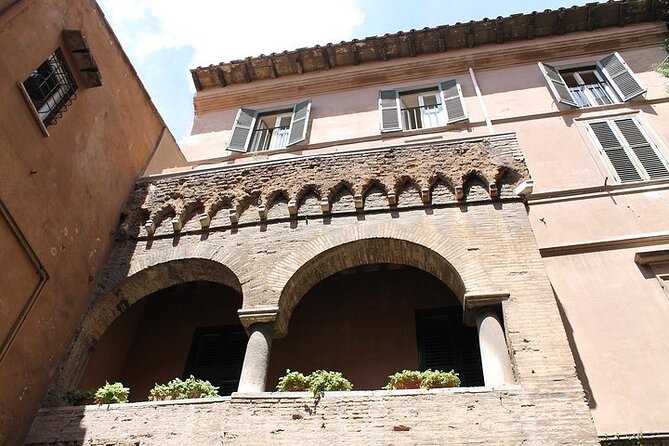
Then you work your way toward the Jewish Ghetto area, where the landmarks start carrying emotional weight. You visit Porta Otavia, and this segment is where the tour earns its name. The goal here is not just sightseeing. It is understanding how the neighborhood’s layout, walls, streets, and religious buildings connected to daily life.
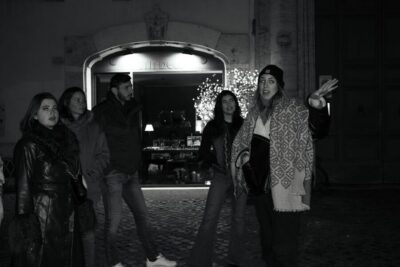
Your guide shares stories and anecdotes as you move through the streets. That matters because the Jewish Ghetto can feel like “just another old neighborhood” if you arrive with no context. With the guidance, you learn what to look for and why it mattered for Jewish Romans across generations.
This is also where the guide’s approach shows. Some people feel the subject most through architecture. Others connect through human stories. Either way, the tour gives you enough structure to make sense of what you are seeing.
Tempio Maggiore di Roma: The Largest Synagogue in Rome
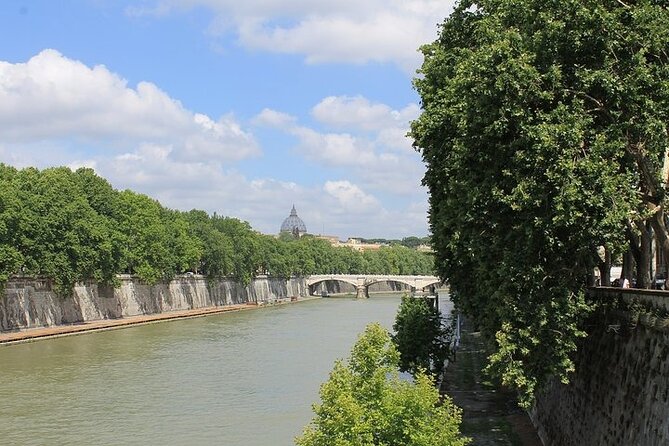
One of the major moments is Tempio Maggiore di Roma, the largest synagogue in Rome. You get the chance to view it and hear stories about its very ancient past, along with how it is still a beloved place of worship for Jewish Romans today.
This stop is brief, about 10 minutes, and you should treat it as a meaningful pause, not a long museum-style visit. Your guide’s job is to give you enough context to respect what you are looking at. Even if you are not visiting the interior, the exterior and setting still communicate a lot, especially when you understand the synagogue’s role in community life.
Admissions are not included here. So if you want interior access, plan to handle it separately. If you skip the ticket option, you can still have a powerful experience just from the guided explanation and the act of noticing the building’s presence in the street.
Dress code still applies because this is a place of worship. If you start the day under-dressed, fix it before you reach this part of the route.
Teatro di Marcello: Watching an Ancient Stage From Outside
The tour also stops by Teatro di Marcello, an ancient open-air theatre built in the 1st century. Again, you are mostly viewing from outside, with around 10 minutes to take it in. This is a great stop if you like architecture that feels “real,” because you get to stand in front of a massive structure that once held performances.
Why include it on a tour about Trastevere and the Jewish Ghetto? Because Rome’s layers overlap. You are moving through streets where multiple centuries run at the same time. The theatre gives you an anchor for understanding how entertainment, public life, and power shaped the city, even as communities like those in the Ghetto built their own world of worship and continuity.
Admissions for this stop are not included. If you are the type who always wants to go inside, you may need to plan extra time and tickets on your own. If you are happy with outside viewing, the guide’s anecdotes can still make it feel alive.
Who This Tour Suits, and What to Wear
This tour is a good fit if you want a private Rome day with a strong history and culture thread, but without a rigid museum pace. Most people can participate, and it is offered with accessibility in mind through general suitability and the ability to bring service animals.
It is especially ideal if you are:
- Visiting Rome for several days and want neighborhood context, not just big-ticket sights
- Traveling with someone who likes walking and talking, not rushing
- Looking for a guide-led way to connect churches, synagogues, squares, and streets into one story
You should also plan for the dress code. For churches and synagogues, shoulders and knees covered is required. Wear comfortable walking shoes. Rome cobblestones have a talent for turning “quick stop” into “oops, that hurts.”
Price and Value: Is $181.02 Worth It?
The price is $181.02 per person for about two hours. On a public group tour, that number would feel steep. On a private walking tour, it often feels different, because you are paying for:
- A local expert guide
- A private group format
- A route that connects Trastevere and the Jewish Ghetto with multiple key stops
- Time at places like Santa Maria in Trastevere, plus guided viewing at major sites
Where the value gets real is in the time you do not waste. You are not sorting out where to go, how long each stop should take, or how to frame what you are seeing. For many people, that is the difference between a “nice walk” and a walk you remember.
Also, this tour tends to get booked ahead. It averages 71 days in advance, so if your dates are fixed, do not wait until you land.
One more value lever: group discounts may apply. If you are traveling with friends or family, the per person feeling can improve because the private format does not require you to “share attention” with strangers.
Finally, tickets: some stops include admission and others do not. Since Tempio Maggiore di Roma and Teatro di Marcello note admissions as not included, budget for that possibility if you care about interior access.
Should You Book This Private Trastevere and Jewish Ghetto Tour?
I recommend booking if you want Rome that feels lived-in, not just crowded. The private pacing, the Santa Maria stop with time to look at mosaics and frescoes, and the focused Jewish Ghetto context make this a strong choice for a neighborhood day.
I would skip or rethink if you want every major site with guaranteed paid entry included. Because admissions are not included at some key stops, you might end up paying extra later, or you might feel slightly limited if your heart is set on interiors only.
If you do book, do one simple prep move: check your outfit for the shoulder-and-knee rule before you head out. It will save you stress at the moments that matter. And if you care about perspective on Jewish history and worship, ask your guide what themes they emphasize so you get the kind of story you came for.
FAQ
How long is the Trastevere and Jewish Ghetto Private Walking Tour?
It runs for approximately 2 hours.
Is this tour private or shared?
This is a private tour, and only your group participates.
Where does the tour start?
The meeting point is Piazza Trilussa, 00153 Roma RM, Italy.
Does the tour end back at the meeting point?
Yes. It ends back at the meeting point.
Is the tour in English?
Yes. It is offered in English (and also French, Spanish, Portuguese, and Italian by request).
Are admission tickets included?
Some parts are free and some are included, but admissions are not included for Tempio Maggiore di Roma and Teatro di Marcello.
Are there dress code requirements?
Yes. For places of worship, you need shoulders and knees covered, so no tank tops or short dresses.
Are mobile tickets used?
Yes. The tour uses a mobile ticket.
What about cancellation?
You can cancel for a full refund up to 24 hours before the experience starts. Confirmation is received at booking, and you can adjust plans up to the allowed cutoff.
Is it near public transportation and can service animals join?
It is near public transportation, and service animals are allowed.
Through the Old Jewish Ghetto
- Rome Food Tour: Campo de’ Fiori, Ghetto, Trastevere Winner 2024
★ 5.0 · 3,205 reviews - Rome: Eat Like a Roman Ghetto & Campo de’ Fiori Food Tour
★ 5.0 · 1,037 reviews - Jewish Ghetto and Synagogues with Jewish Roman Guide 3 Hours
★ 5.0 · 907 reviews - Jewish Ghetto & Piazza Navona: Food, Wine & Sightseeing Rome Tour
★ 5.0 · 460 reviews
Latest additions from Rome
- Guided Tour Vatican Museums & Sistine Chapel★ 4.1 · 30 reviews
- Exclusive Rome by Night Vespa Tour★ 5.0 · 30 reviews
- Transfer Rome to Airports★ 4.5 · 30 reviews
- Vatican: St.Peter’s Basilica & Dome – Reserved Entry & Tour★ 4.1 · 30 reviews
- Tivoli, Hadrians Villa and Villa d’Este, a charming day trip from Rome★ 4.5 · 30 reviews
- Rome street art tour: off the beaten path with a local guide★ 5.0 · 30 reviews
- Rome Food Tasting with Wine Pairing Italian Authentic Flavors★ 5.0 · 31 reviews
- Inspirational Cooking on the Roman Chef’s Panoramic Terrace★ 5.0 · 30 reviews
Jewish Ghetto Walking Tours, compared.

Rome Food Tour: Campo de’ Fiori, Ghetto, Trastevere Winner 2024
Read our review →
Eat Like a Roman Ghetto & Campo de’ Fiori Food Tour
Read our review →
Jewish Ghetto and Synagogues with Jewish Roman Guide 3 Hours
Read our review →
Jewish Ghetto & Piazza Navona: Food, Wine & Sightseeing Rome Tour
Read our review →
Food & Wine Tour of Campo de Fiori, Ghetto, Trastevere
Read our review →
Jewish Ghetto and Campo Dè Fiori By Night Food, Wine and Sightseeing Tour
Read our review →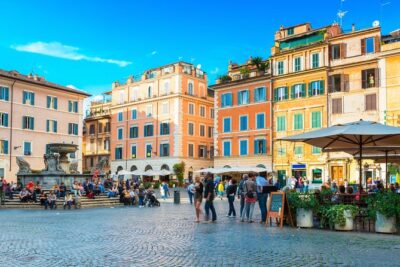
Trastevere and Rome’s Jewish Ghetto Half-Day Walking Tour
Read our review →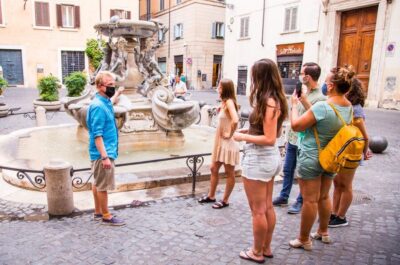
Browse the lists this tour appears in