
Reviewed · JEWISH GHETTO WALKING TOURS
Tiber Island & Ghetto Museum: A Tour of History and Identity
Tiber Island can feel like a secret pocket of Rome. This 3 hour walking tour links the island’s Roman past to the Jewish Ghetto’s stories of identity, faith, and community. I love the way it’s guided by a local, with real, human-scale stories that you simply do not get on the usual Rome sweep, and I especially like that the Great Synagogue of Rome and Jewish Museum are included so the visit has real weight. One possible drawback: the kosher tasting is listed as included, but if you are counting on it as your main food stop, keep in mind there has been at least one small mismatch reported.
You start on Tiber Island by Piazza S. Bartolomeo All’Isola, 22, and then you move through the area at a thoughtful pace. I also like that you get not just narration, but orientation through key spots like the Basilica of St. Bartholomew and the Ponte Fabricio, plus the Portico of Octavia at the end. Consider this if you expect a casual, purely sightseeing walk, because this tour leans into meaning, memory, and history, not just photos.
If you want Rome with fewer crowds and more context, this tour hits the mark. Guides named Paula and José have been praised for their commitment and for answering questions, even when the group is small. For the best experience, come ready to listen, and wear shoes for old streets and uneven ground.
In This Review
- Key things I’d focus on before you go
- Getting your bearings on Tiber Island, and why that start matters
- The Tiber Island to Jewish Ghetto shift, from stones to identity
- Going inside the Great Synagogue of Rome, and what you gain by not skipping it
- The kosher tasting stop: small, but it can be the most memorable moment
- Portico of Octavia wrap-up: why the ending feels like a bridge
- Guides and pacing: why the group dynamic can change the feel
- Value check: is $88 for 3 hours worth it?
- Who this tour fits best, and who might want a different option
- Quick booking decision: should you go?
- FAQ
- FAQ
- What is the duration of the tour?
- Where does the tour start?
- Where is the exact meeting point on the day of the tour?
- What is included in the ticket price?
- Is the tour only walking, or are there indoor stops?
- What languages are available?
- Is the tour wheelchair accessible?
- What is the price per person?
Key things I’d focus on before you go
- Tiber Island’s spine of Roman landmarks: Basilica of St. Bartholomew and Ponte Fabricio, the oldest bridge in Rome still in use
- The Jewish Ghetto as a lived story: cobbled alleys, resilience, heritage, and community life across the centuries
- Inside the Great Synagogue of Rome: a pride-and-identity stop, not just a look from outside
- Jewish Museum entry included: sacred objects, ancient manuscripts, and artworks that put names and eras into context
- A small kosher tasting: a practical food moment tied to the places you just walked through
- Portico of Octavia to wrap up: a Roman-era structure with artisan shops and lively street energy nearby
Getting your bearings on Tiber Island, and why that start matters

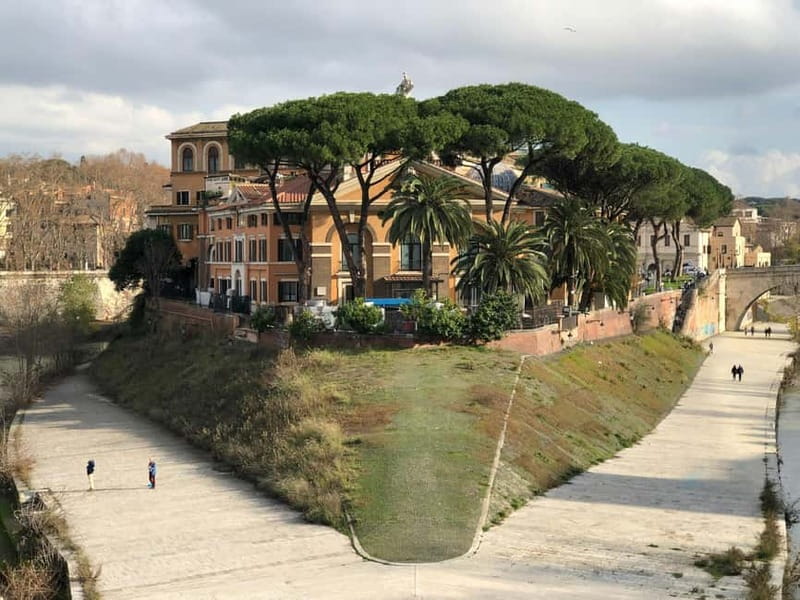
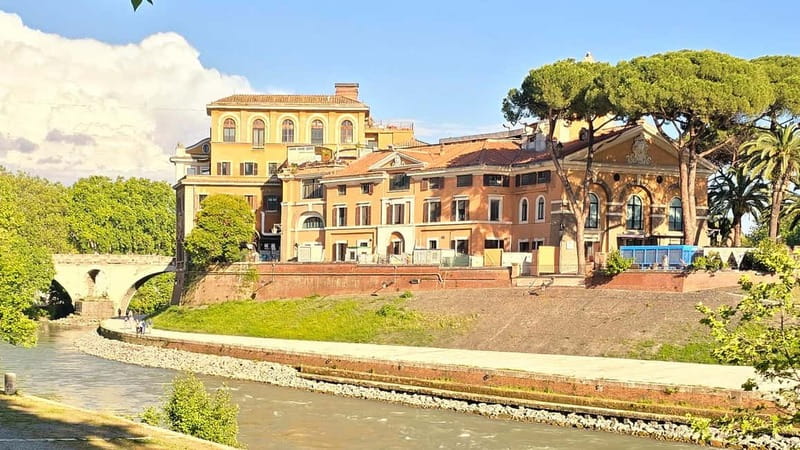
The tour starts at Piazza S. Bartolomeo All’Isola, 22, on the island itself. The meeting point is on Tiber Island in front of the church where the obelisk is located, and the guide will have a sign. This matters more than it sounds. Starting right on the island helps you avoid the time drain of a distant meetup, and it sets a calm pace early.
Tiber Island is small, but historically it has carried big roles. The tour frames the island in layers, first as a place tied to ancient religious life, including references to temples and healing sanctuaries. Then you move into what you see today: quiet lanes, small corners, and the kind of Rome that does not feel staged.
From there, the walk connects key wayfinding anchors. You will see the Basilica of St. Bartholomew, then head toward the Ponte Fabricio, described on the tour as the oldest bridge in Rome still in use. When a guide brings up a specific bridge like this, it is not just a trivia drop. It gives you a timeline you can feel under your feet, because the bridge is still doing its job in the modern city.
If you like historical cause and effect, this first section is a win. Roman Rome, Christian Rome, and modern Rome sit close together. You get to compare them within a single short walk.
Other walks through the old Jewish Ghetto:
- Rome Food Tour: Campo de’ Fiori, Ghetto, Trastevere Winner 2024
★ 5.0 · 3,205 reviews - Rome: Eat Like a Roman Ghetto & Campo de’ Fiori Food Tour
★ 5.0 · 1,037 reviews - Jewish Ghetto and Synagogues with Jewish Roman Guide 3 Hours
★ 5.0 · 907 reviews - Jewish Ghetto & Piazza Navona: Food, Wine & Sightseeing Rome Tour
★ 5.0 · 460 reviews
The Tiber Island to Jewish Ghetto shift, from stones to identity
After the island, the tour moves into the Jewish Quarter, also called the Jewish Ghetto, one of the oldest in the world. This is where the tone changes. The pacing stays relaxed, but the stories lean toward memory, identity, and survival. You are not just learning what happened. You are hearing why it mattered, and how community life held together through change.
The route is through cobbled alleys, so expect a slower walking rhythm. That is not a downside, it is part of the experience. Narrow streets naturally slow you down, which means you can read details the way a local would, not like someone scanning for the next big landmark.
A key point here is the framing. The tour positions the ghetto as a living neighborhood, not a museum set. That is why the guide’s storytelling matters so much. In guides such as José, the emphasis is on commitment and on connecting history with human rights themes, which can make the tour feel both educational and emotionally grounded.
If you are visiting Rome mainly for Instagram moments, this section might feel heavier than you expected. If you want to understand how identities persist in a city that constantly rebuilds itself, you will feel like you’re getting the real Rome, not just the postcard version.
Going inside the Great Synagogue of Rome, and what you gain by not skipping it

One of the most valuable parts of this tour is that it does not stop at the street view. You get entrance to the Great Synagogue of Rome, and the tour also includes the Jewish Museum visit.
This is the section that turns a good walking tour into a full, satisfying experience. External photos are fine, but entry gives you context: sacred space, objects with history, and a museum experience that connects Jewish-Roman history to physical items you can actually see.
The tour description calls out what you will find inside the museum: sacred objects, ancient manuscripts, and artworks. Even if you are not a museum person, these categories do useful work. They show how religion, culture, and memory were expressed through everyday materials, learning, and art.
It also means the tour is not purely chronological. You start with geography, then you get political and social context, and you finish with interpretation through artifacts. That sequence helps your brain hold onto what you learned.
Practical tip: you will spend time indoors here, so plan for a break from outdoor walking. Bring patience for a slower pace while the guide handles the entry and keeps the group together.
The kosher tasting stop: small, but it can be the most memorable moment
Food is often an afterthought on history tours. Here, there is a small kosher tasting at a bakery or local eatery. The tour description is clear that it is brief, meant as a simple taste of traditional Jewish-Roman flavors.
When a tour puts a short tasting into a historical itinerary, it signals something important: culture is not only documents and buildings. It is also what people ate, traded, celebrated, and prepared over time.
That said, there is a small inconsistency to be aware of. One reported issue noted that the tasting did not happen as indicated on the voucher. So if your top priority is a food-focused experience, treat the tasting as a bonus rather than a guarantee. If your priority is the synagogue and museum, you are still covered.
If you end up with the tasting, it is a smart moment to slow down and reset. Even a few bites make the rest of the tour feel more connected to real life, not just past events.
Portico of Octavia wrap-up: why the ending feels like a bridge
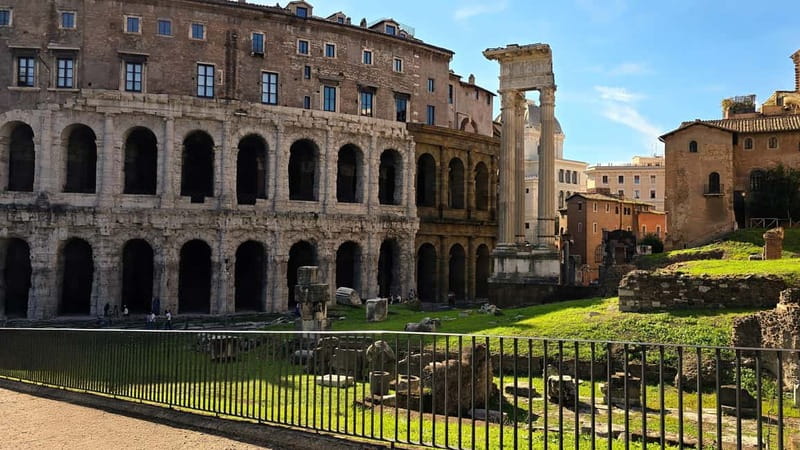
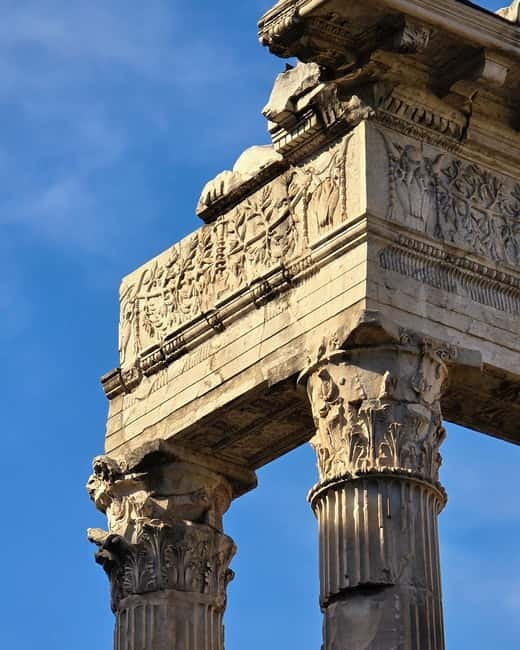
The tour ends with the Portico d’Ottavia area. This Roman-era structure sits in a neighborhood with artisan shops, galleries, and lively street atmosphere nearby. For me, the ending location matters because it gives you a clean, low-stress landing after a heavier emotional section.
Portico d’Ottavia also plays a neat role in the tour’s structure. The experience starts with a Roman anchor on Tiber Island, shifts into Jewish Ghetto streets and deep cultural context, then returns to a Roman setting at the end. You get a sense of how Rome’s layers keep overlapping, even when the stories are very different.
This ending stop also works well for planning. Once the guided part ends, you are in a walkable area where it is easier to choose your next meal or shop without having to travel across town immediately.
Other Roman collections with a shorter wait:



Guides and pacing: why the group dynamic can change the feel
The tour is conducted in English with a live guide, and there is also an audio guide included in English, Spanish, and French. That combo is practical. The live guide keeps the story flowing, while audio can help if you want to re-check a detail later or follow along at your own pace during stops.
The guide experience is a big deal here because the tour deals with identity and community life. Reviews highlighted guides such as Paula and José for their knowledge, their ability to answer questions, and their commitment to the tour’s goals. One standout theme is how well the tour is structured even when the group is small, with one participant describing it as perfectly paced.
So if you care about thoughtful explanations, bring questions. If you like asking why something was built or how a community survived, you will get more out of this tour than someone who is only passively watching.
Value check: is $88 for 3 hours worth it?
At $88 per person for a 3 hour tour, the question is not only price. It is what is included.
You are paying for:
- A guided walking tour through two major areas: Tiber Island and the Jewish Ghetto
- A visit with entrance to the Great Synagogue of Rome
- An included museum visit at the Jewish Museum
- A small kosher tasting
- English live guiding, plus audio guide options
That package is hard to beat if you specifically want both synagogue and museum entry without having to coordinate it yourself. If you were planning these stops independently, you would likely spend time figuring out timing, purchasing tickets, and finding context on site. Here, the context comes first, and the tickets are handled inside the tour flow.
Also, the tour rate is balanced by duration. Three hours is long enough to cover meaningful ground but short enough that you are not stuck for half a day. If you’re combining this with other central Rome sights, you can still keep the rest of your day flexible.
Who this tour fits best, and who might want a different option

This tour is a great fit if you:
- Want Rome with fewer crowds and more meaning
- Are interested in the intersection of Roman space and Jewish-Roman identity
- Like local guidance and clear story structure
- Care about understanding history through places, not just monuments
It may be less ideal if you:
- Want a purely relaxed, sightseeing-only walk with minimal context
- Are mainly chasing major photo icons
- Expect the tasting to be a guaranteed highlight of the day
The best strategy is to choose based on your mood. If you want something that makes you think, this delivers. If you want a simple walk for sunshine and photos, you might find the subject matter more intense than expected.
Quick booking decision: should you go?
I’d book this tour if you want a guided route that connects Tiber Island to the Jewish Ghetto and brings you inside the Great Synagogue and Jewish Museum. The inclusion of entry is the big selling point, and the guide-led storytelling is what makes it memorable, not just informative.
I’d think twice if you are food-first, because the kosher tasting is included but has had at least one reported inconsistency. If that matters to you, you can still book, but treat food as a bonus, not your main reason.
FAQ
FAQ
What is the duration of the tour?
The tour lasts 3 hours.
Where does the tour start?
It starts at Piazza S. Bartolomeo All’Isola, 22 on Tiber Island.
Where is the exact meeting point on the day of the tour?
The meeting point is on Tiber Island in front of the church where the obelisk is located. The guide will be there with a sign.
What is included in the ticket price?
The price includes a guided walking tour of Tiber Island and the Jewish Ghetto, an expert local guide, entrance to the Great Synagogue of Rome, and a small kosher tasting. An audio guide is also included in English, Spanish, and French.
Is the tour only walking, or are there indoor stops?
There are indoor stops, including entry to the Great Synagogue of Rome and the Jewish Museum.
What languages are available?
The live tour guide is English. The audio guide is available in English, Spanish, and French.
Is the tour wheelchair accessible?
Yes, the tour is wheelchair accessible.
What is the price per person?
The tour costs $88 per person.
More Historical Tours in Rome
- Rome: Forbidden History Walking Tour & Pub Crawl with Drinks
★ 4.9 · 688 reviews - Rome: Guided Bar Crawl with Drinks & Dark History
★ 4.9 · 444 reviews - Rome: Vespa Photo Tour with Historic City Highlights
★ 5.0 · 395 reviews - Twilight Treasures: An Evening Tour Through Rome’s Rich History
★ 4.5 · 263 reviews
Latest additions from Rome
- Rome: Testaccio Market Food Tour with Street Food & Wine★ 5.0 · 8 reviews
- Exclusive Pasta & Tiramisu Class with Wine near by Colosseum★ 5.0 · 8 reviews
- Private Professional Photoshoot in Rome★ 5.0 · 8 reviews
- Loreto “Shrine of the Holy House of the Virgin Mary” Private Tour from Rome★ 5.0 · 8 reviews
- Rome Day to discover Florence and Pisa Hotel Pickup★ 4.5 · 8 reviews
- Rome: Christmas Nativities and Angels Tour★ 3.1 · 8 reviews
- Guided Tour of Vatican Museums and Sistine Chapel★ 5.0 · 8 reviews
- Rome: Cooking Class of fresh Pasta and Tiramisu Cake★ 5.0 · 8 reviews
Jewish Ghetto Walking Tours, compared.

Rome Food Tour: Campo de’ Fiori, Ghetto, Trastevere Winner 2024
Read our review →
Eat Like a Roman Ghetto & Campo de’ Fiori Food Tour
Read our review →
Jewish Ghetto and Synagogues with Jewish Roman Guide 3 Hours
Read our review →
Jewish Ghetto & Piazza Navona: Food, Wine & Sightseeing Rome Tour
Read our review →
Food & Wine Tour of Campo de Fiori, Ghetto, Trastevere
Read our review →
Jewish Ghetto and Campo Dè Fiori By Night Food, Wine and Sightseeing Tour
Read our review →
Trastevere and Rome’s Jewish Ghetto Half-Day Walking Tour
Read our review →
Browse the lists this tour appears in