
Reviewed · JEWISH GHETTO WALKING TOURS
Small Group Rome’s Jewish Ghetto and Trastevere Tour
A walk that connects Rome’s layers fast. This small-group tour strings together Roman ruins, the Jewish Ghetto, and then the fun streets of Trastevere with an expert guide who keeps things human and clear. You also get the bonus of limited group size, so it feels like a real conversation, not a lecture.
I especially love how the pacing gives you time to actually notice what you see, especially in the Ghetto area. You get a guided walk through key spots, and the stories are handled with care, including the difficult parts of Jewish-Roman history. The Trastevere stretch is the other standout for me, with enough time to wander alleyways at a relaxed speed.
One drawback to flag: the tour views the synagogue from the outside only, so if you want to go inside, you’ll need to plan a separate visit.
In This Review
- Key highlights you will feel on the walk
- Where this Rome route starts and ends (and how to time it)
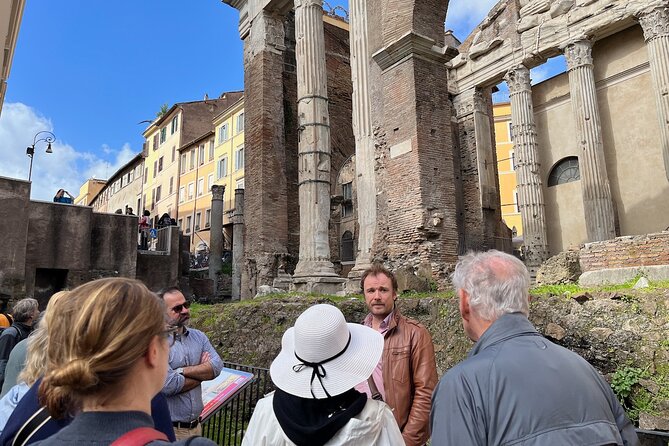
- Teatro di Marcello and Il Portico di Ottavia: Rome’s ancient stage set
- The Roman Ghetto stop: where the tour earns its meaning
- Fontana delle Tartarughe and Tempio Maggiore exterior: faith, beauty, and public space
- Trastevere in an hour: why this neighborhood walk feels different
- Isola Tiberina break for gelato or drinks, then Pont Fabricius to finish
- Price and value: what $36.05 gets you, in real terms
- Group size and guide style: why limited numbers matter here
- What to pack and how to prepare for this walk
- Who should book this Rome Jewish Ghetto and Trastevere tour
- Should you book it? My take
- FAQ
- How long is the Small Group Rome’s Jewish Ghetto and Trastevere Tour?
- How many people are in the group?
- Is the tour offered in English?
- Does the tour include going inside the synagogue?
- Where does the tour start and end?
- Are admissions included for the stops?
- Are snacks included?
- What is the cancellation policy?
Key highlights you will feel on the walk
- 15 travelers max, so you can ask questions and keep the energy up without sprinting
- Teatro di Marcello and Il Portico di Ottavia give you the ancient-Rome frame before the Ghetto stories begin
- Roman Ghetto stop is long enough (about 50 minutes) for real context, not quick photo stops
- Fontana delle Tartarughe and Tempio Maggiore exterior show how faith and art live in public Rome
- Trastevere has a full hour for side streets, textures, and neighborhood mood
- Isola Tiberina pause includes an optional break for gelato, coffee, or drinks before the finish at Pont Fabricius
Where this Rome route starts and ends (and how to time it)
This tour runs about 2 hours 30 minutes, in English, and it is set up as a straight walking loop. It starts at Saint Rita of Cascia in Campitelli, Via Montanara (00186 Roma) and ends at Piazza Trilussa in Trastevere (00153 Roma). That ending point is handy because it drops you right where you will likely want to keep exploring afterward.
Because it is built as a walk-heavy experience, I recommend wearing comfortable shoes and planning to stand at a few stops. The itinerary has short segments for several viewpoints, then longer time where it matters most, so you are not stuck in one long crowd scene the whole time.
Also, if you are booking for a busy season, I would not wait. This one is commonly booked about 30 days in advance, and the small-group cap means dates can disappear.
More Small-Group Tours in Rome
- Skip-the-Line Vatican, Sistine Chapel & St. Peter’s | Small Group
★ 5.0 · 7,060 reviews - Rome: Colosseum Underground Small Group Guided Tour
★ 4.7 · 4,844 reviews - Rome: Skip the Line Vatican, Sistine Chapel, St Peter Small Group
★ 5.0 · 3,847 reviews - Rome on a Golf Cart Semi-Private Tour Max 6 with Private Option
★ 5.0 · 2,502 reviews
Teatro di Marcello and Il Portico di Ottavia: Rome’s ancient stage set
You start with two famous ancient landmarks that work like a quick history “primer,” before you hit the Jewish Ghetto. Teatro di Marcello is a major Roman ruin, and your guide uses it to explain why it is special. Even with a short stop, it helps you understand that Rome was building, adapting, and reusing spaces for centuries.
Then comes Il Portico di Ottavia, where you learn that this spot is not just old, it has had a changing role for over 2000 years. The value here is the framework: you start to see Rome less as one static postcard and more as a city constantly layered over time.
Practical note: both stops are listed as short (about 5 minutes each). That is perfect for getting oriented, but it also means you should not come expecting deep self-guided exploration of every stone.
The Roman Ghetto stop: where the tour earns its meaning
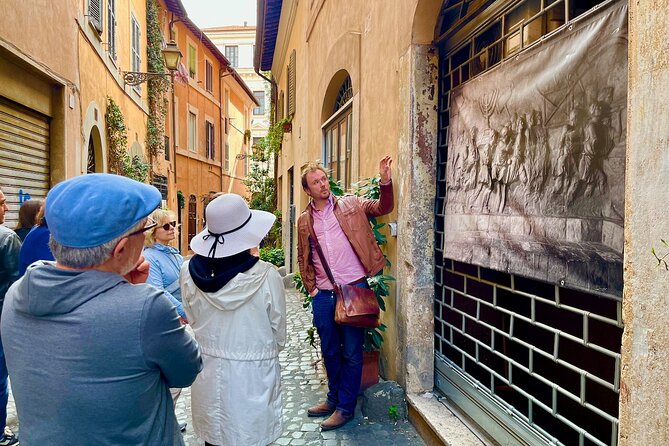
The heart of the experience is the Roman Ghetto segment, at about 50 minutes. This is the longest stretch of the tour, and it matters because the Ghetto is not just a location, it is a story with long timelines and real human impact.
What I like about how this section is handled is the balance. You get history and facts, but you also get the sense of how Jewish life interacted with major Roman power for centuries. In particular, guides like Ben are praised for telling the story in a way that is both respectful and engaging, with humor used lightly to keep things moving without making the topic casual.
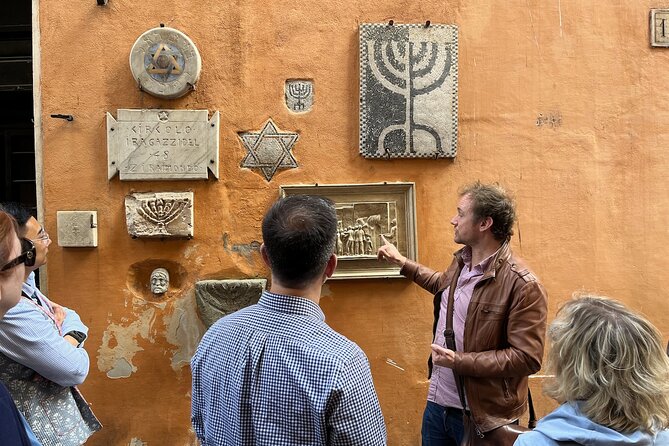
A good sign of a quality Ghetto tour is whether the guide connects the signs, streets, and buildings to the bigger picture. Here, that is exactly the point: your guide points out meaning behind what you are seeing and helps you understand why this area carries so much weight in Rome.
One more thing that really helps: this is not only about naming dates. The tour is also set up to answer questions as you walk, and people have commented on how skillfully guides handle those moments. If you care about understanding the why behind restrictions, reforms, and community life, this stop gives you a real starting point.
Fontana delle Tartarughe and Tempio Maggiore exterior: faith, beauty, and public space
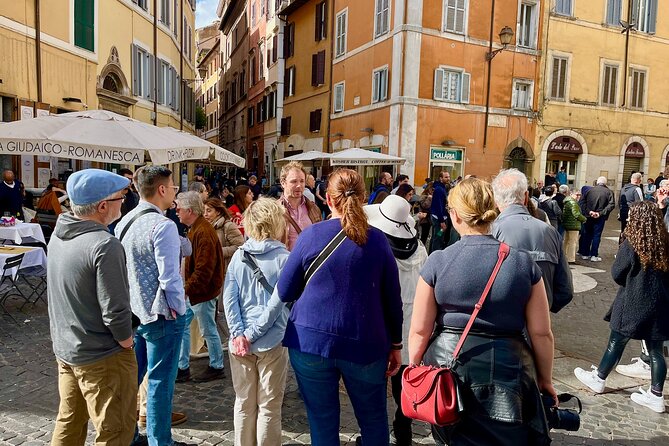
After the Ghetto, the tour shifts to two spots that help you see how religion and culture show up in everyday Rome.
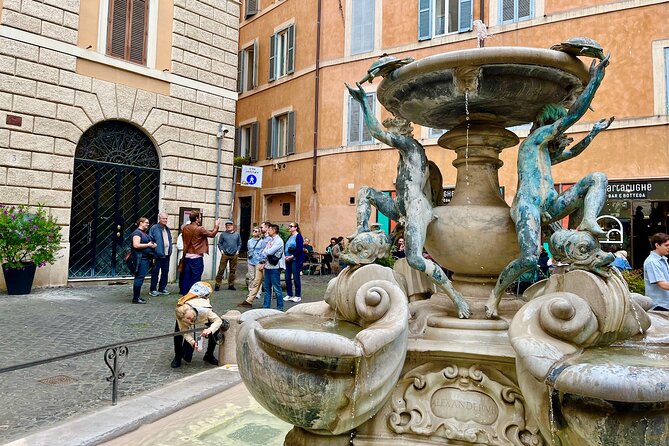
First is Fontana delle Tartarughe, one of the city’s most beautiful small fountains. Your guide tells the story behind it, which is a smart move because fountains are not just decoration in Rome, they are history you can see up close.
Then you look at Tempio Maggiore di Roma from the outside. The tour does not include the synagogue interior, but you still get explanations of the decoration and the subtle meanings behind the construction. This works well if your goal is context. You finish this segment understanding why the building looks the way it does and what symbols can mean in architecture.
If you want to go inside, set that expectation now. The tour is built as an exterior-focused experience here, so plan a separate time for an interior visit if that matters to you.
Trastevere in an hour: why this neighborhood walk feels different
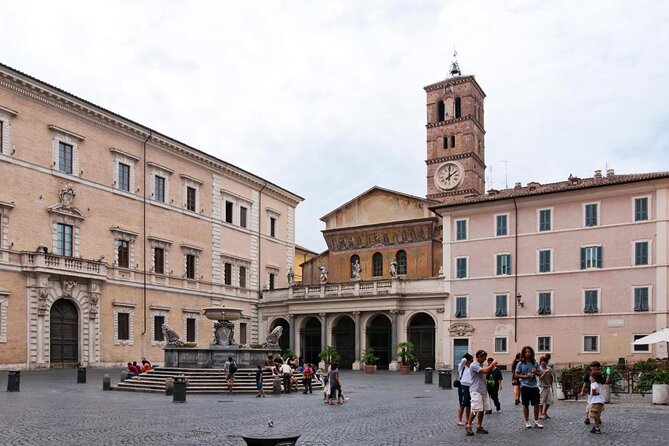
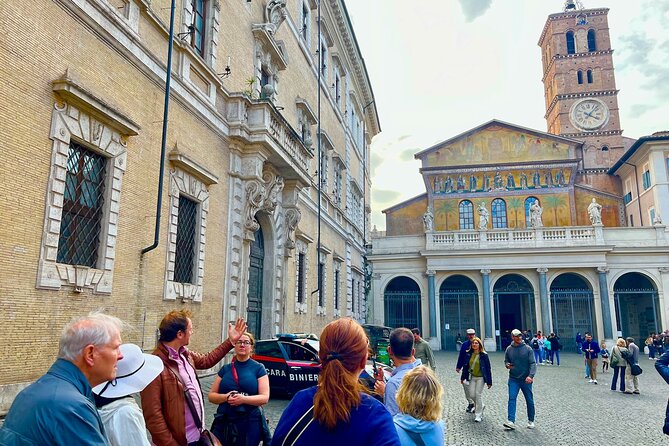
Then you turn the corner and spend about 1 hour in Trastevere, one of Rome’s most beloved neighborhoods. This is where the tour becomes less about monuments and more about atmosphere.
Trastevere is known for narrow streets and side alleys, and with a guide you avoid wandering randomly. You get the neighborhood history in an “on the street” way, tied to specific corners and signs rather than only through a textbook tone.
This is also where you tend to get useful practical tips. In examples from the guides, people have noted recommendations for where to eat and where to grab gelato. One person even called out good advice about dessert, like ricotta and cherry pie, after the tour. You should not treat that as guaranteed menu intel every time, but it is a sign that the guides pay attention to helping you enjoy your afternoon.
A personal tip if you like taking photos: Trastevere has lots of angles, so give yourself a few minutes at the start of this hour to slow down. If you try to shoot everything at the end, you will feel rushed.
Other walks through the old Jewish Ghetto:
Isola Tiberina break for gelato or drinks, then Pont Fabricius to finish
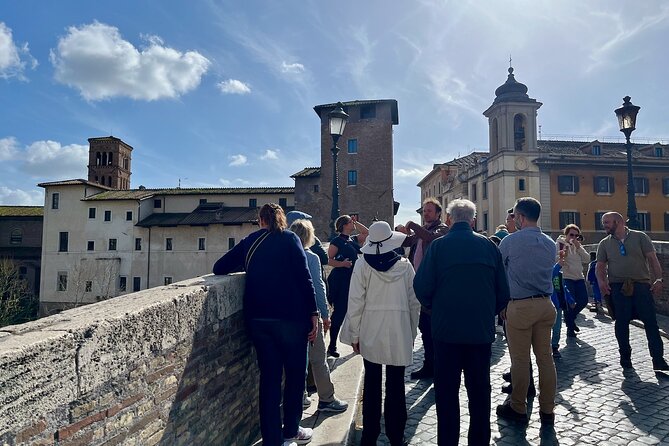
Next comes Isola Tiberina, Rome’s small island in the Tiber River. The itinerary gives you about 15 minutes, and this is your optional break for gelato or coffee or drinks. That pause is more than convenience. It also resets your brain after a topic-heavy Ghetto stop.
When you are ready, you finish with Pont Fabricius, one of Rome’s oldest bridges. It is a short stop, about 5 minutes, but it ties everything together. You end with a structure that shows how Rome used waterways, movement, and crossings to connect neighborhoods and power.
If you are thinking about what to do after the tour, the ending at Piazza Trilussa makes it easy to keep going on foot. You are already in Trastevere, which means you can turn your walk into a self-guided wandering session right away.
Price and value: what $36.05 gets you, in real terms
At $36.05 per person for about 2.5 hours, the value is mostly about three things: a strong guide, a small group cap, and a route that includes both history-heavy and neighborhood-time sections.
Admission is listed as free for the stops included, which helps keep the total cost from creeping up. You do not need to add individual ticket budgets for most points along the route.
The bigger value is the structure. You get ancient Rome, Ghetto context, then a neighborhood walk that actually gives you time to enjoy the streets. If you tried to DIY this route without a guide, you could see the same spots, but you would likely miss the “meaning” layer, especially in the Ghetto explanation and the exterior symbolism at Tempio Maggiore.
Where the price feels less perfect is also clear: there is no synagogue entrance included. If inside access is your top priority, you may want to combine this tour with a separate visit elsewhere.
Group size and guide style: why limited numbers matter here
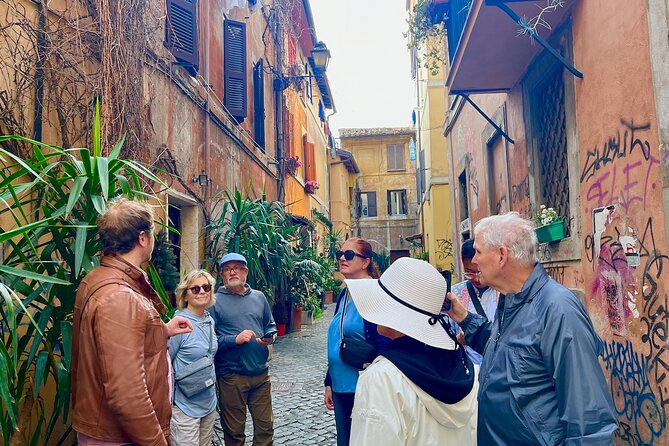
The tour max is 15 travelers, and that matters more than it does on a standard highlights walk. In the Ghetto area, you want time for questions and a guide who can pace the group without flattening the story into bullet points.
The feedback around guides like Ben and Alethia/Alethea points to something important: the tours do not treat sensitive history like a dry checklist. Instead, guides keep the tone respectful and engaging, with wit used to keep the group comfortable while still honoring the subject.
If you get anxious in big crowds, this setup usually feels easier. If you love asking “why” questions, the small size helps because you are not competing with 40 other people for the guide’s attention.
What to pack and how to prepare for this walk
Because you are moving between several stops with short timed segments, pack for comfort over fashion. Wear shoes you can stand in for stretches, and plan for typical Rome walking rhythms.
Bring water if you like it. The tour notes that snacks are not included, though the itinerary includes a break where you can get drinks or gelato.
Also, since the tour is in English and uses a mobile ticket, make sure your phone battery is healthy before you meet at Saint Rita of Cascia in Campitelli.
Who should book this Rome Jewish Ghetto and Trastevere tour
Book this if you want:
- A small-group, story-led introduction to the Roman Jewish community and the Ghetto area
- A guided walk that connects ancient Rome to later neighborhood life
- Time in Trastevere that feels like a real neighborhood walk, not a rushed pass-through
- A route that ends in a practical spot for continuing your day
Skip it or pair it with something else if:
- You specifically want to enter the synagogue during the tour
- You dislike topic-heavy walking tours and prefer only casual sightseeing
Should you book it? My take
I would book this tour if you want an efficient, thoughtful way to understand two key sides of Rome, the Ghetto and Trastevere, without getting lost or stuck in a museum-only day. The small group size and the way the guide handles the Ghetto topic make it feel more like guided understanding than just checkpoint tourism.
If synagogue interior access is a must for you, plan it separately and treat this as the excellent orientation and context-builder.
FAQ
How long is the Small Group Rome’s Jewish Ghetto and Trastevere Tour?
The tour runs about 2 hours 30 minutes.
How many people are in the group?
This experience has a maximum of 15 travelers, keeping it small-group sized.
Is the tour offered in English?
Yes, the tour is offered in English.
Does the tour include going inside the synagogue?
No. You will see the synagogue area, Tempio Maggiore di Roma, from the outside only.
Where does the tour start and end?
It starts at Saint Rita of Cascia in Campitelli, Via Montanara (00186 Roma) and ends at Piazza Trilussa in Trastevere (00153 Roma).
Are admissions included for the stops?
The tour lists admission as free for the stops included.
Are snacks included?
Snacks are not included. The tour notes there will be a break if you want water, drinks, or snacks.
What is the cancellation policy?
You can cancel for a full refund up to 24 hours before the experience starts. If you cancel less than 24 hours before, the amount paid is not refunded.
Latest additions from Rome
- Exclusive Pasta & Tiramisu Class with Wine near by Colosseum★ 5.0 · 8 reviews
- Private Professional Photoshoot in Rome★ 5.0 · 8 reviews
- Rome: Testaccio Market Food Tour with Street Food & Wine★ 5.0 · 8 reviews
- Loreto “Shrine of the Holy House of the Virgin Mary” Private Tour from Rome★ 5.0 · 8 reviews
- Rome Day to discover Florence and Pisa Hotel Pickup★ 4.5 · 8 reviews
- Rome: Christmas Nativities and Angels Tour★ 3.1 · 8 reviews
- Guided Tour of Vatican Museums and Sistine Chapel★ 5.0 · 8 reviews
- Rome: Cooking Class of fresh Pasta and Tiramisu Cake★ 5.0 · 8 reviews
Jewish Ghetto Walking Tours, compared.

Rome Food Tour: Campo de’ Fiori, Ghetto, Trastevere Winner 2024
Read our review →
Eat Like a Roman Ghetto & Campo de’ Fiori Food Tour
Read our review →
Jewish Ghetto and Synagogues with Jewish Roman Guide 3 Hours
Read our review →
Jewish Ghetto & Piazza Navona: Food, Wine & Sightseeing Rome Tour
Read our review →
Food & Wine Tour of Campo de Fiori, Ghetto, Trastevere
Read our review →
Jewish Ghetto and Campo Dè Fiori By Night Food, Wine and Sightseeing Tour
Read our review →
Trastevere and Rome’s Jewish Ghetto Half-Day Walking Tour
Read our review →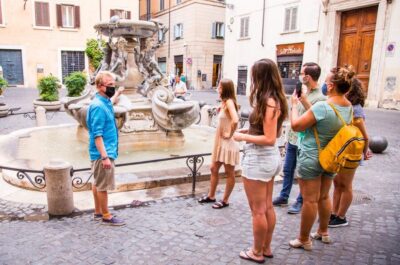
Browse the lists this tour appears in