
Reviewed · JEWISH GHETTO WALKING TOURS
Rome: Trastevere Hidden Gems and Jewish Ghetto Small Group Tour
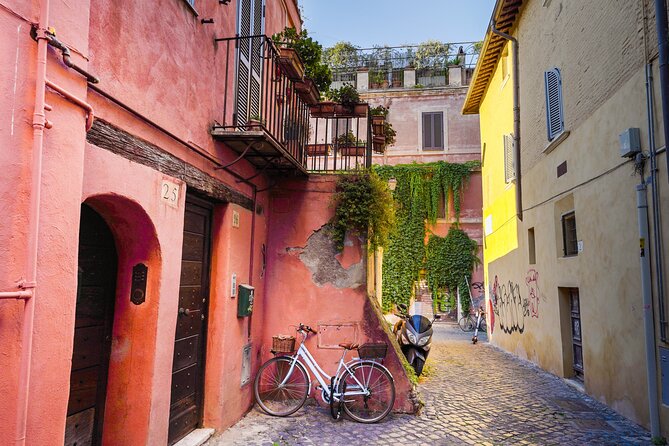
Rome can feel like a pile of monuments. This tour keeps the focus on stories and corners you usually miss, moving through Trastevere and the Jewish Ghetto with a small group. I like that it is designed as a calm walk, not a frantic checklist.
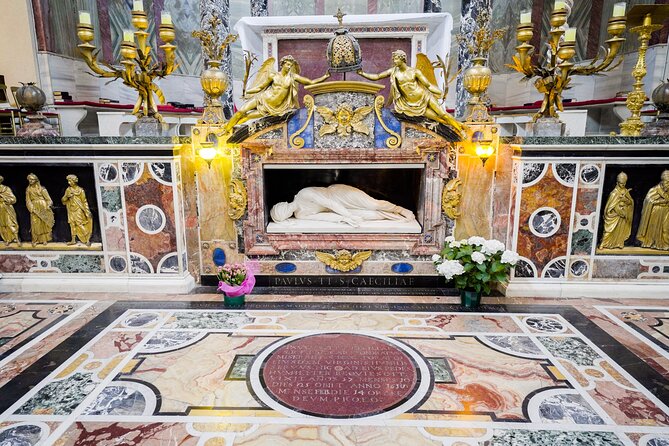
Two big reasons I think you will enjoy it. First, you get close to art you do not stumble across on your own, including Bernini’s Blessed Ludovica Albertoni. Second, you will visit churches with special access, including an underground look at Saint Cecilia.
One drawback to consider: it is a walking tour with church interiors and an underground crypt stop, so wear shoes you trust on uneven surfaces.
In This Review
- Key highlights to watch for
- Why This Trastevere and Ghetto Walk Works Better Than a Checklist
- Getting Oriented: Where the Tour Starts and Ends
- Stop 1: San Francesco a Ripa Grande and Bernini’s Blessed Ludovica Albertoni
- Stop 2: Santa Cecilia in Trastevere, Nuns’ Access, and the Underground Apartment
- Stop 3: Vicolo Dell’Atleta, a Quiet Lane, and Hidden References to Faith and Sport
- Stop 4: Isola Tiberina, Caesar Footsteps, and the Legend of True Romans
- Stop 5: Il Portico di Ottavia, the Ghetto, and the Colosseum Design Connection
- Price and Timing: Is It Worth $67.72 for 2.5 Hours?
- Guide Style: Why the Storytelling Lands (Even When You Think You Know Rome)
- What to Bring and How to Prepare for an Underground-Plus Walk
- Should You Book This Tour?
- FAQ
- How long is the Rome Trastevere and Jewish Ghetto tour?
- What is the group size?
- What language is the tour offered in?
- Is there hotel pickup?
- What is included regarding church access?
- Is there free cancellation?
Key highlights to watch for
- Bernini inside San Francesco a Ripa Grande, including Blessed Ludovica Albertoni
- Santa Cecilia in Trastevere with underground access, plus time to explore the ancient apartment site
- Vicolo Dell’Atleta, a quiet lane tied to synagogue and early sports lore
- Isola Tiberina moments, including the legend of where true Romans are born and Caesar links
- Il Portico di Ottavia and the Ghetto streets, with the Colosseum design connection and community storytelling
- Max 12 people, with a guide who keeps the group tight and the pace human
Why This Trastevere and Ghetto Walk Works Better Than a Checklist
This is the kind of Rome tour that feels like you are walking with someone who actually knows the neighborhood rhythm. You spend your time in places tied to specific people and beliefs, not just photo spots.
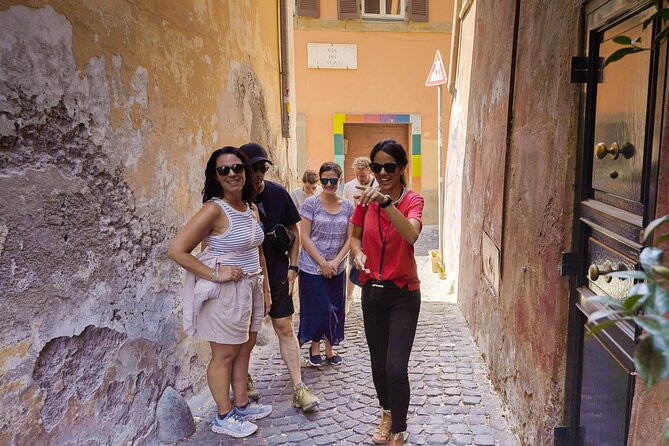
The small group size, capped at 12, matters more than it sounds. It keeps you close to the guide, so questions do not get lost in the shuffle. It also helps at quieter alleys and in churches where sound and crowding can change your experience fast.
You also get a strong mix of stops: one major art moment, one church with underground access, then several lesser-known streets and viewpoints along the river. That pattern makes the two and a half hours feel full, without turning into a sprint.
More Small-Group Tours in Rome
- Skip-the-Line Vatican, Sistine Chapel & St. Peter’s | Small Group
★ 5.0 · 7,060 reviews - Rome: Colosseum Underground Small Group Guided Tour
★ 4.7 · 4,844 reviews - Rome: Skip the Line Vatican, Sistine Chapel, St Peter Small Group
★ 5.0 · 3,847 reviews - Rome on a Golf Cart Semi-Private Tour Max 6 with Private Option
★ 5.0 · 2,502 reviews
Getting Oriented: Where the Tour Starts and Ends
The tour starts at Piazza di San Francesco d’Assisi & Via Jacopa de’ Settesoli. It ends at Piazza Mattei. Knowing both ends helps if you plan dinner or want to connect to another walk right afterward.
Expect an urban route that uses nearby public transportation as a practical fallback if you arrive late or want to bail out early. There is no hotel pickup, so build in time to reach the start point on foot or by transit.
Duration is about 2 hours 30 minutes, which is a good length for Rome’s smaller-group style. You get enough time to hear the stories and still have momentum left to explore on your own afterward.
Stop 1: San Francesco a Ripa Grande and Bernini’s Blessed Ludovica Albertoni
Your first stop is Chiesa di San Francesco a Ripa Grande, where the big draw is Bernini’s Blessed Ludovica Albertoni. This is the kind of moment that changes how you see a church, because the guide frames what you are looking at instead of leaving you to guess.
You are there for about 30 minutes, and the entrance is listed as free for this stop. That makes it a smart opener: you get a memorable art payoff early, while the group is still fresh and the route feels lighter.
Practical tip: churches can be cool and dim, and you will spend time looking upward and closer than you might expect. If you wear glasses, bring a lens cloth, and if you are sensitive to noise, note that people often speak softly here and you will still want to listen for the guide’s key points.
Stop 2: Santa Cecilia in Trastevere, Nuns’ Access, and the Underground Apartment
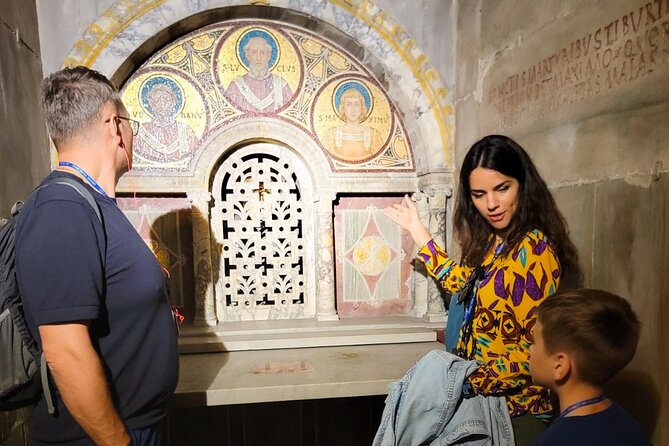
Next comes Santa Cecilia in Trastevere, one of the most compelling story-based visits on the route. The church was built where Saint Cecilia once lived, and the experience is built around the idea that Rome keeps stacking layers of time.
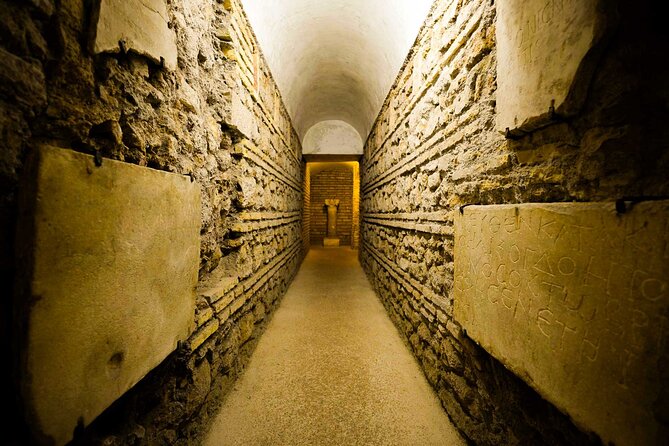
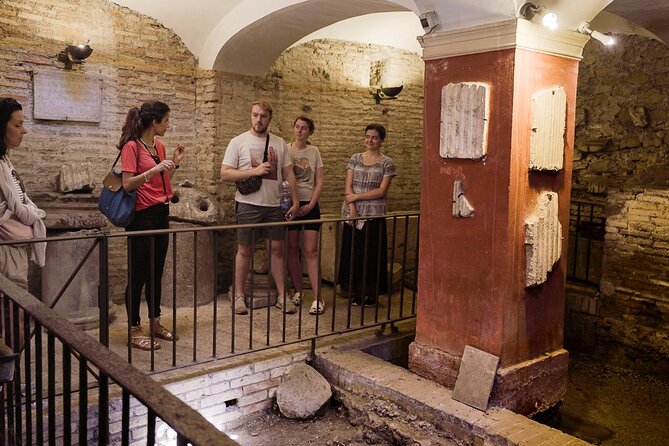
This is also where the tour becomes more than a street walk. With special access by the nuns, you get to explore the underground site connected to Cecilia’s ancient apartment. That added access is what makes the stop feel more personal and less like a standard church visit.
Time on site is about 1 hour, and the underground crypt entry is included. In practical terms, you should plan for extra attention here, because you will likely spend some time moving through passages and looking at the ways the underground space is presented.
One consideration: underground spaces can have cooler air and tighter circulation. If you are traveling with limited mobility, go slowly and consider whether you prefer surface-level viewing. The tour says most travelers can participate, but underground stops are still a reality check.
Stop 3: Vicolo Dell’Atleta, a Quiet Lane, and Hidden References to Faith and Sport
After Santa Cecilia, you move into the narrow and peaceful Vicolo Dell’Atleta. This is one of those places where the city seems to slow down, which is exactly why it works inside a guided program.
The story angle here is strong. You will learn about the most ancient synagogue of Rome, which today is associated with a restaurant, and you will also hear about an ancient athlete connection tied to the area. Even if the names are new to you, the point is that Rome’s “old” labels often show up in unexpected details like street corners and building reuse.
The stop is about 15 minutes, with no admission ticket listed for this part. That makes it ideal for a quick palate cleanser between the church and the river crossing moments.
Practical tip: narrow lanes can feel tight, especially if it is crowded. Keep your camera ready but not in the way, and let the guide call out what to focus on. This is the type of alley where one good vantage point matters more than taking photos from everywhere.
Other walks through the old Jewish Ghetto:
Stop 4: Isola Tiberina, Caesar Footsteps, and the Legend of True Romans
Now you head toward Isola Tiberina, the island in the middle of the river. This stop feels like a reset, because you get open sightlines and a different kind of Roman atmosphere than inside church doors.
The guide will point you to the bridge where Julius Caesar walked, described as the most ancient bridge in Rome. You will also hear the local belief that this is the place where only the true Romans are born. Even if you treat the wording as legend, it shows you how Romans use place names to create identity.
Time here is about 15 minutes, and admission is listed as free. For many visitors, this quick stop is the easiest “wow” moment, because the setting does a lot of work for you.
Practical tip: if your day is hot, this is a good moment to get some water and cool off for a minute. River-adjacent areas can feel breezy, but they can also be exposed if the sun is strong.
Stop 5: Il Portico di Ottavia, the Ghetto, and the Colosseum Design Connection
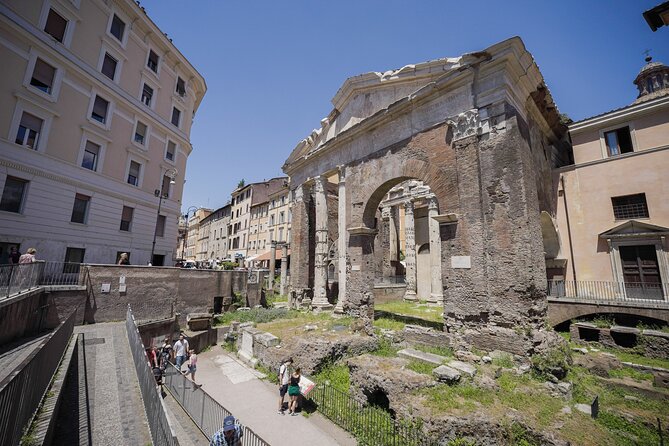
The final focus is the Jewish district, often called the Ghetto, including Il Portico di Ottavia. This is where the walk turns from “cool details” into “here is why this neighborhood matters.”
You will see and hear about a building said to have inspired the design of the Colosseum. You will also learn about food destinations in the area and get the community story behind why Rome’s Jewish community is described as one of the oldest in Europe.
This part gets about 30 minutes, and there are no tickets listed for this segment. It is long enough for context, short enough to keep you from losing energy before the route ends at Piazza Mattei.
One thing I like here is the balanced pacing. You are not just told facts. You are walked through the logic of place, which helps you understand why so many sites in Rome come in clusters, not isolated monuments.
Price and Timing: Is It Worth $67.72 for 2.5 Hours?
At $67.72 per person for about 2 hours 30 minutes, this sits in the mid-range for a guided walk that includes an indoor component with underground access. The value question is simple: are you paying for a regular street tour, or are you paying for something you cannot easily recreate?
Here, the included underground crypt entry at Santa Cecilia is the key. If you were planning those visits on your own, you would spend time figuring out access, timing, and what to prioritize. The guide also compresses that decision-making into one smooth route.
The tour also runs in English and uses a mobile ticket, which keeps things efficient once you arrive. It is offered as a small group with a maximum of 12, so you are not standing on top of strangers when you want to listen.
A final timing note: the tour is commonly booked around 63 days in advance on average. If your dates are fixed, I would not wait until the last minute, especially during busy weeks.
Guide Style: Why the Storytelling Lands (Even When You Think You Know Rome)
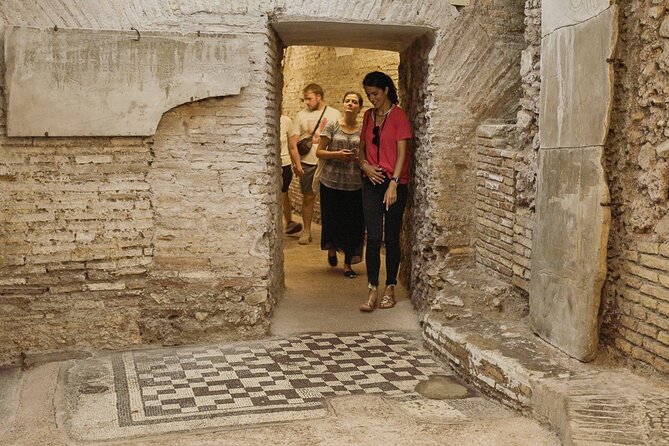
Several visitors highlight the guide quality, naming Frederica and Francesca as standouts. What comes through from their praise is not just facts, it is clarity and personality.
That matters because this route depends on explanation. Places like Vicolo Dell’Atleta and the Il Portico di Ottavia area make more sense when someone connects the dots between a street corner, an older community reference, and the way Rome repurposes buildings over time.
If you want to get the most from the tour, ask simple questions like:
- What should I look for in the art or architecture right now?
- How does this church connect to the story of Saint Cecilia?
- Why is this corner tied to the synagogue reference and the athlete mention?
The tour is described as friendly and intimate, and the included access element suggests the guide is not just reciting, but guiding you through moments that benefit from a human point of view.
What to Bring and How to Prepare for an Underground-Plus Walk
You do not need special gear, but you do need the basics that make church and underground visits easier.
Wear comfortable walking shoes. You will move between churches, narrow lanes, and the river area. If you have a camera or phone, bring it, but keep your hands free enough to navigate steps and tighter spaces.
Bring a layer. Even in warm months, churches and underground areas can feel cooler. Also, charge your phone, since you will likely use the mobile ticket right at the start.
This is listed as suitable for children, but the overall format still includes indoor and underground portions. If you are traveling with kids, consider bringing snacks and planning bathroom breaks before you start, since the tour is paced as a continuous walk.
Should You Book This Tour?
I recommend this when you want Rome that feels personal and story-driven. If you are tired of standing in crowds staring at stone, this gives you five stops with real narrative focus, and it includes an access moment at Santa Cecilia that is hard to copy on your own.
Book it if you like:
- art moments you can actually see and understand,
- neighborhood atmosphere in Trastevere,
- and the Jewish Ghetto context presented through places you can walk to.
Skip it if you prefer only major headline monuments, or if underground spaces are a deal-breaker for you.
If your goal is to learn the city in small, meaningful steps, this is a strong choice. You will finish with a much clearer sense of how different Rome layers connect, one alley and church at a time.
FAQ
How long is the Rome Trastevere and Jewish Ghetto tour?
It lasts about 2 hours 30 minutes.
What is the group size?
The group is limited to a maximum of 12 people.
What language is the tour offered in?
The tour is offered in English.
Is there hotel pickup?
No, pick-up from your hotel is not included.
What is included regarding church access?
Entry tickets to the underground crypt at Santa Cecilia are included, and that underground site is part of the tour.
Is there free cancellation?
Yes. You can cancel for a full refund up to 24 hours before the experience starts.
Latest additions from Rome
- Guided Tour Vatican Museums & Sistine Chapel★ 4.1 · 30 reviews
- Exclusive Rome by Night Vespa Tour★ 5.0 · 30 reviews
- Transfer Rome to Airports★ 4.5 · 30 reviews
- Vatican: St.Peter’s Basilica & Dome – Reserved Entry & Tour★ 4.1 · 30 reviews
- Rome street art tour: off the beaten path with a local guide★ 5.0 · 30 reviews
- Tivoli, Hadrians Villa and Villa d’Este, a charming day trip from Rome★ 4.5 · 30 reviews
- Rome Food Tasting with Wine Pairing Italian Authentic Flavors★ 5.0 · 31 reviews
- Inspirational Cooking on the Roman Chef’s Panoramic Terrace★ 5.0 · 30 reviews
Jewish Ghetto Walking Tours, compared.

Rome Food Tour: Campo de’ Fiori, Ghetto, Trastevere Winner 2024
Read our review →
Eat Like a Roman Ghetto & Campo de’ Fiori Food Tour
Read our review →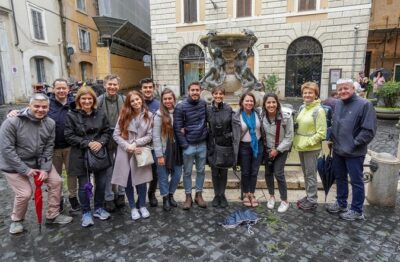
Jewish Ghetto and Synagogues with Jewish Roman Guide 3 Hours
Read our review →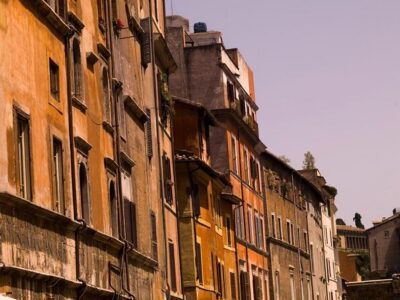
Jewish Ghetto & Piazza Navona: Food, Wine & Sightseeing Rome Tour
Read our review →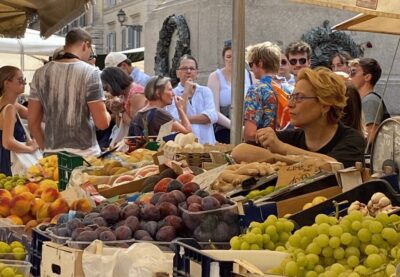
Food & Wine Tour of Campo de Fiori, Ghetto, Trastevere
Read our review →
Jewish Ghetto and Campo Dè Fiori By Night Food, Wine and Sightseeing Tour
Read our review →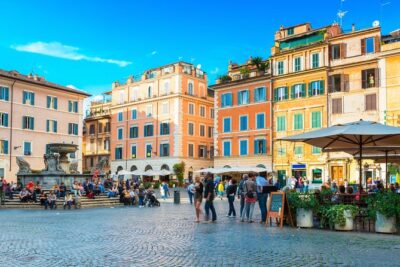
Trastevere and Rome’s Jewish Ghetto Half-Day Walking Tour
Read our review →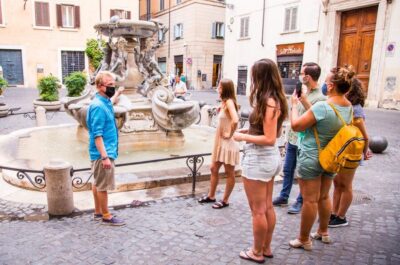
Browse the lists this tour appears in