
Reviewed · JEWISH GHETTO WALKING TOURS
Highlights of Jewish Ghetto and Trastevere Walking Tour
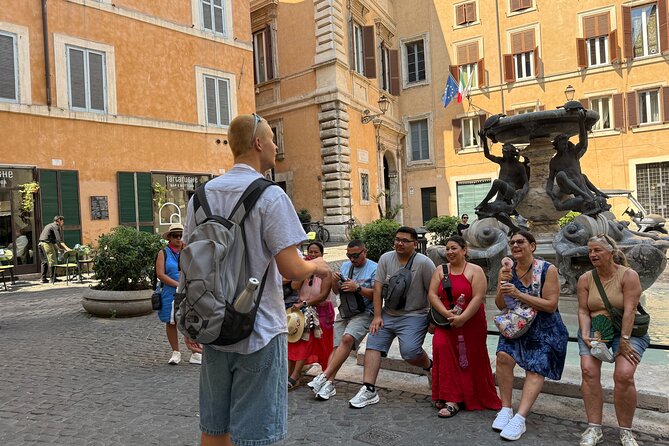
A history-heavy walk in two great neighborhoods. This tour links Jewish Ghetto sites and Trastevere street culture into one practical loop, with a guided pace that keeps the story moving. You start at Piazza Mattei, cross the Tiber with scenic pauses, and end in Trastevere at Piazza Trilussa.
I like how the route includes both ancient Rome and later Jewish and medieval landmarks, so you feel Rome’s time layers without needing a full day of planning. The main tradeoff is that it is tip-based, and the guide style includes dark humor, including politically incorrect jokes, so it is worth considering if you prefer a lighter tone.
In This Review
- Key Points You Should Know Before You Go
- From Piazza Mattei to Trastevere, a Rome loop that stays efficient
- Fontana delle Tartarughe at Piazza Mattei, your first time-marker
- Portico d’Ottavia, a monumental gateway to the Jewish Ghetto area
- Teatro di Marcello and the smaller Colosseum feeling
- Tempio Maggiore di Roma, Art Nouveau and Assyro-Babylonian mix
- Isola Tiberina, the only island in the Tiber
- Trastevere, medieval streets and dinner-ready vibes
- Basilica di Santa Maria in Trastevere and its 12th-century mosaics
- Piazza Trilussa, where the walk ties off in a good spot to wander
- Ponte Sisto and the crossing feel you can actually see
- Group size, pace, and why 1 hour 45 can work
- Price and value, including the tip-based reality
- What the guide experience feels like on the ground
- What the itinerary means, stop by stop
- Timing tips, morning or afternoon, and how to fit it in Rome
- Accessibility and getting there, what you should expect
- Should you book this Jewish Ghetto and Trastevere tour?
- FAQ
- How long is the Jewish Ghetto and Trastevere walking tour?
- What is the group size limit?
- Is the tour offered in English?
- Where does the tour start and where does it end?
- What landmarks are included on the route?
- Is there an admission cost for the stops?
- What is included in the price?
- Is tipping required?
- What happens if the weather is bad?
- Is the tour accessible and easy to reach by public transportation?
Key Points You Should Know Before You Go
- Small group, big access: up to 20 people, so it is not a factory tour
- Two neighborhoods in 1 hour 45: the Jewish Ghetto area plus Trastevere’s core sights
- Prime Tiber views: you cross the river and pause for riverside scenery on both banks
- Landmarks you can’t fake: Portico d’Ottavia, Tempio Maggiore, Isola Tiberina
- Guide-led restaurant ideas: you get food recommendations along the way
- English mobile ticket: offered in English with a mobile ticket for smooth check-in
From Piazza Mattei to Trastevere, a Rome loop that stays efficient
This is a short, high-impact walk designed for people who want “see it, understand it, then eat well” in under two hours. You are given a clear end point in Trastevere, which helps if you want dinner plans right after.
The group size caps at 20, so you can actually hear the guide and stay oriented as you move. You also get English-language guidance and a mobile ticket, which is one less thing to juggle in Rome.
More Walking Tours in Rome
- Rome: Guided Food Walking Tour with Wine in Trastevere
★ 4.9 · 3,105 reviews - Rome: Trastevere & Campo de Fiori Street Food Walking Tour
★ 4.9 · 2,768 reviews - Rome: Paranormal Night Walking Tour & Secret Backstreets
★ 4.9 · 1,921 reviews - Rome: Trastevere Street Food Walking Tour with Local Expert
★ 4.8 · 1,784 reviews
Fontana delle Tartarughe at Piazza Mattei, your first time-marker
The tour starts at Fontana delle Tartarughe in Piazza Mattei. It is a late Renaissance fountain, and the key detail is the bronze turtles added by Bernini, paired with delicate marble figures.
Why I think this is a smart start: it gives you a visual anchor before the route moves into more solemn historical territory. Also, Piazza Mattei is an easy place to find, and you are already in the right pocket of central Rome.
Expect a quick orientation stop, not a long museum moment. This tour is built for movement, with short pauses at each landmark.
Portico d’Ottavia, a monumental gateway to the Jewish Ghetto area
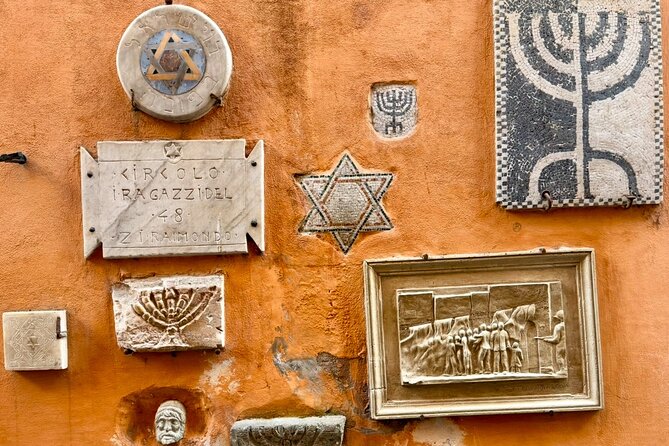
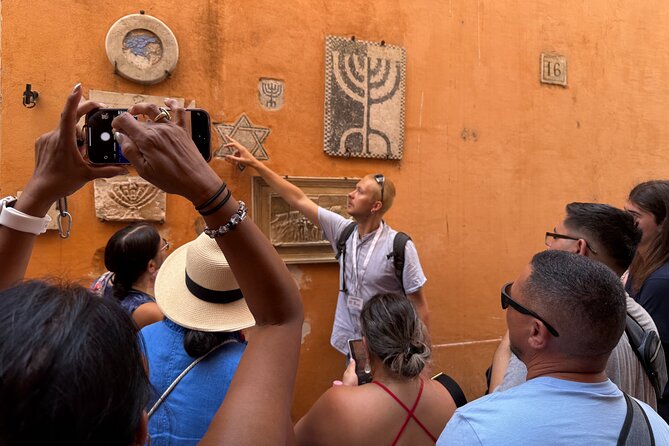
Next you head to Il Portico di Ottavia, a structure tied to Rome’s ancient Jewish presence. The portico dates back to the 2nd century BCE and was later restored by Augustus, so you are standing in a space that carries layers of Roman power and urban change.
It also works as a narrative gateway: the stop is short, but it sets up the rest of the walk by focusing your attention on how the city’s architecture framed community life. The Roman mindset here is practical, not vague, and you get context on what you are looking at.
You will not be stuck for long. The value is that you quickly connect stone, era, and meaning.
Teatro di Marcello and the smaller Colosseum feeling
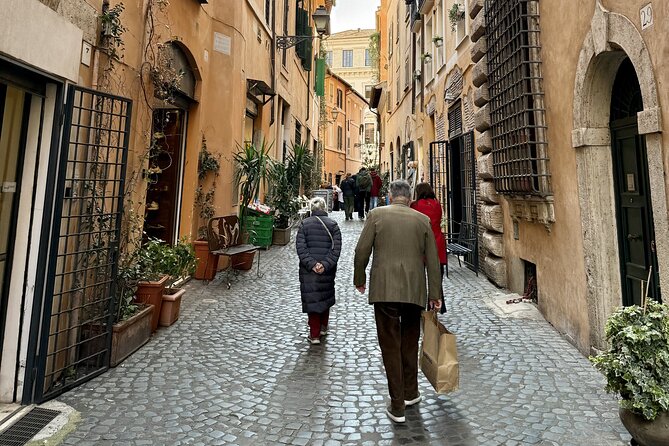
From the portico, the tour shifts you to Teatro di Marcello, an ancient Roman theater associated with Julius Caesar and completed by Augustus. It is often described as looking like a smaller Colosseum, and the connection is useful because it helps you visualize how Roman public entertainment and crowd space worked.
This stop is brief, about five minutes, but it is a good reset between heavier historical sites. You get a sense of Roman engineering and how public spaces shaped daily life, even as the tour moves into more specifically Jewish landmarks right after.
Tempio Maggiore di Roma, Art Nouveau and Assyro-Babylonian mix
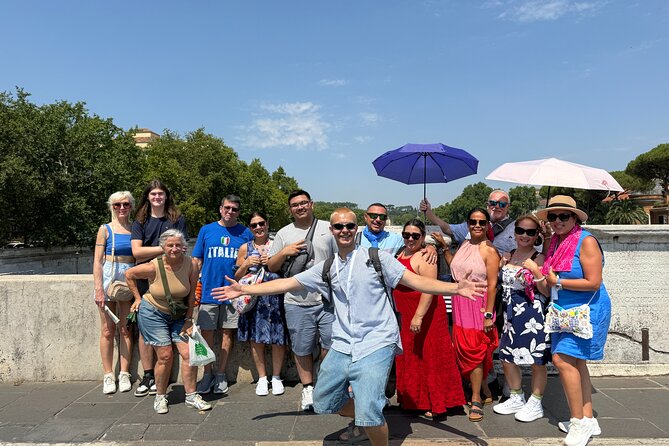
Then comes one of the most important stops on the walk: Tempio Maggiore di Roma, inaugurated in 1904 as Rome’s main synagogue. The style blend is a standout detail: Art Nouveau combined with Assyro-Babylonian elements.
For me, this is where the tour stops being only “ancient” and becomes “living story.” The synagogue symbolizes resilience, and the guide’s framing matters because it connects art, architecture, and community survival rather than treating the building like a photo op.
If you like your tours to have meaning, this is the moment. The stop is still short, but it tends to land.
Other walks through the old Jewish Ghetto:
Isola Tiberina, the only island in the Tiber
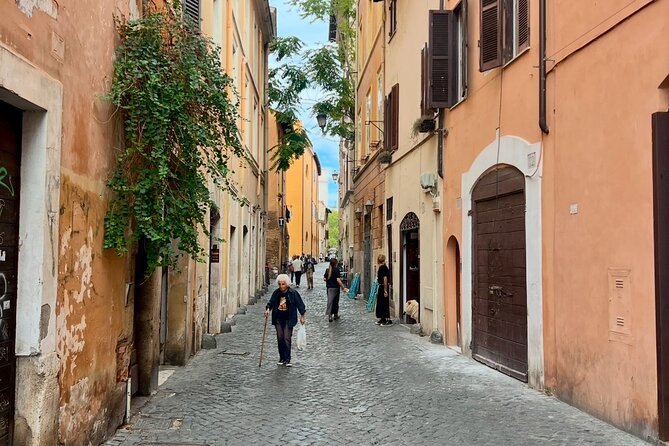
After the synagogue, the tour crosses into the river zone with Isola Tiberina, the only island in the Tiber River. You get a pause at Fatebenefratelli Hospital and the Temple of Aesculapius, and you hear the key idea that the island has been tied to healing since ancient times.
This is also where the tour earns points for scenery. You get riverside views on both banks as you move, and Isola Tiberina makes the crossing feel like more than a transit step.
I like this part because it slows you down just enough to look around, not just forward at the next stop.
Trastevere, medieval streets and dinner-ready vibes
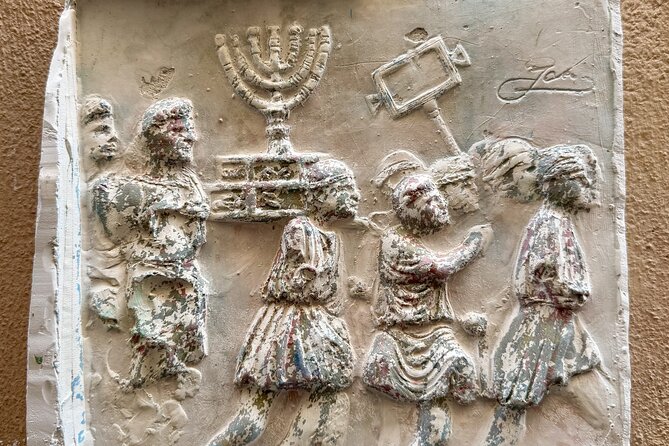
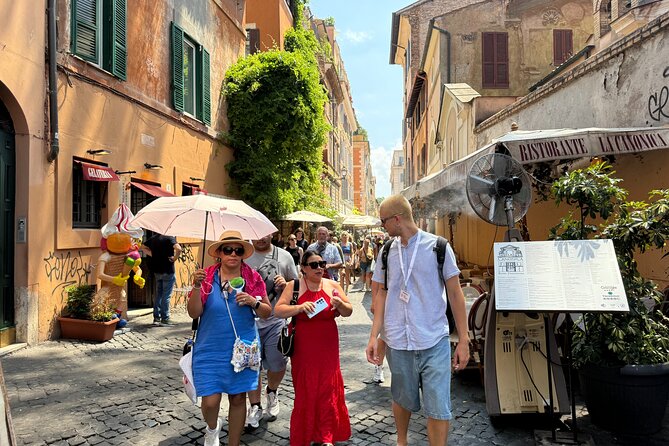
Then you arrive in Trastevere, Rome’s famous for medieval street lanes and great trattorias. This section is where the tour becomes more about place and atmosphere in the everyday sense, even though you are still moving with context.
The tour time here is longer than the earlier stops, and that matters. You are given enough minutes to actually take in the neighborhood feel instead of treating it like a hallway.
A practical plus: the guide includes food recommendations, so you can use your end-point position in Trastevere to make a quick decision for lunch or dinner.
Basilica di Santa Maria in Trastevere and its 12th-century mosaics
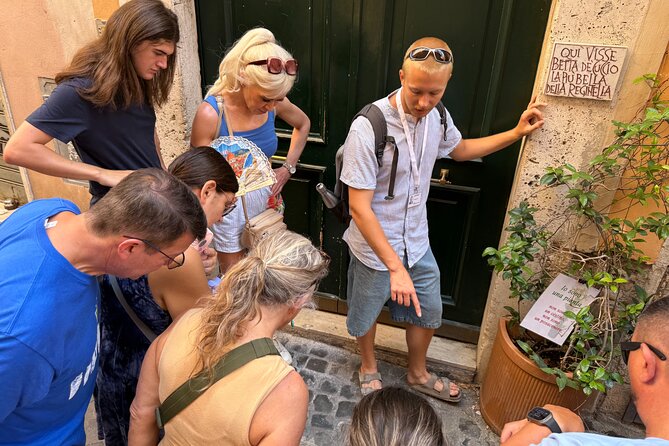
Next is Basilica di Santa Maria in Trastevere, one of Rome’s oldest churches. The highlight detail is the 12th-century mosaics, and even within a short stop, you should notice why this church is a go-to landmark for people who like art and sacred spaces.
I appreciate that this stop balances the urban energy of Trastevere with a calm moment. It is a simple reset before you finish at the final piazza.
Piazza Trilussa, where the walk ties off in a good spot to wander
The tour ends in Piazza Trilussa, a lively gathering place with the Fountain of Ponte Sisto and a statue of the poet Trilussa. From a planning standpoint, this is a very good ending: you are in the heart of Trastevere’s dining area, so you are not forced to teleport to another neighborhood for food.
It is also easy to keep wandering afterward because the streets nearby are built for foot traffic. If you want one more stop after the tour, you can do it naturally instead of planning a separate route.
Ponte Sisto and the crossing feel you can actually see
One of the route highlights is Ponte Sisto, a Renaissance bridge that spans the Tiber River. It is positioned as an easy visual link between Trastevere and the historic center, and you get scenic views simply because the bridge gives you a natural pause point.
This is not a long bridge segment. You walk up, look around, and move on, but the views make the whole “two neighborhoods” concept feel real.
Group size, pace, and why 1 hour 45 can work
This is about 1 hour 45 minutes, which is a sweet spot for people who want meaningful stops without losing the whole day. Because the route is mostly outdoors with short admissions-free moments, it tends to stay manageable even if you are juggling jet lag.
The group cap at 20 helps the guide keep moving without crowd control chaos. It also means questions can still happen, especially if you ask during the natural pause points.
Price and value, including the tip-based reality
The listed price is $3.87 per person, which is strikingly low compared to what people usually pay for a guided Roman walk. But the important detail is that this is tip-based, meaning guides work for tips alone.
So how do you judge value? In this case, the low base cost helps you take the tour as a low-risk start. If the guide’s storytelling and pacing click for you, tipping generously is the way to match the real value you received.
Also, the tour includes food recommendations, and that is not just “nice extra.” In Rome, one good meal can justify your decision fast.
What the guide experience feels like on the ground
The tour is led by a licensed guide, and the feedback pattern is consistent: people love the guide’s ability to turn facts into a story you can remember. Names that show up in the feedback include Iri, Ivan, and Max, and the common thread is a dynamic approach that keeps the group interested.
You will hear history with no filters, and the tone can include dark humor and politically incorrect jokes. That can be funny and memorable for some people, but not for everyone. If you are sensitive to that style, you might prefer a more traditional tour.
If you do enjoy lively guidance, this is a strong match. The guide also tends to synthesize the big picture so you are not just collecting names and dates.
What the itinerary means, stop by stop
Here is the itinerary, but with the “why it matters” angle:
- Fontana delle Tartarughe gives you an art-and-city entry point before the walk shifts into Jewish and historic sites.
- Portico d’Ottavia acts like a statement of context, connecting archaeology and later Roman restoration to the Jewish Ghetto area.
- Teatro di Marcello brings you back to Roman public life and helps you picture the scale of ancient gathering spaces.
- Tempio Maggiore di Roma is the cultural centerpiece, showing how a modern-era main synagogue uses striking architectural styles and carries community symbolism.
- Isola Tiberina breaks the pace with a healing-related island concept and gives you some of the best natural scenery moments.
- Trastevere is where you convert understanding into real-world mood, medieval streets, nightlife energy, and practical food guidance.
- Santa Maria in Trastevere slows things down with 12th-century mosaics and a quieter church interior focus.
- Piazza Trilussa and the finishing stretch give you an immediate place to linger, grab a drink, or plan dinner.
Timing tips, morning or afternoon, and how to fit it in Rome
You can choose between morning and afternoon timings. Either can work, but I usually like the afternoon option if you plan to enjoy Trastevere dinner nearby while it is still easy to move on foot.
Because the tour is 1 hour 45 and ends in a food district, you can treat it like a connector between sightseeing and eating. Wear comfortable shoes, since Rome sidewalks and cobblestones add up fast.
Accessibility and getting there, what you should expect
Service animals are allowed, and the meeting area is near public transportation. The tour is designed so most people can participate, but it is still a walking route with multiple stops, so plan accordingly if you have mobility limits.
If you are unsure, pick the timing that best fits your stamina. Short tours can be ideal because you get a lot of landmarks without spending hours on your feet.
Should you book this Jewish Ghetto and Trastevere tour?
Book it if you want a compact, guide-led way to see two key Rome areas back to back, and you like your history tied to real places, not just distant lectures. The combination of the Portico d’Ottavia, Tempio Maggiore, and the Isola Tiberina crossing makes the Jewish Ghetto side feel grounded in the city, not isolated.
Consider skipping it or choosing a different style if you strongly dislike dark humor or politically incorrect jokes. Also, if you expect a formal, hushed museum tone, this may feel too conversational.
FAQ
How long is the Jewish Ghetto and Trastevere walking tour?
It lasts about 1 hour 45 minutes.
What is the group size limit?
The tour has a maximum of 20 travelers.
Is the tour offered in English?
Yes, it is offered in English.
Where does the tour start and where does it end?
It starts at Piazza Mattei, 5 (Fontana delle Tartarughe) and ends at Piazza Trilussa in Trastevere.
What landmarks are included on the route?
Stops include Fontana delle Tartarughe, Il Portico di Ottavia, Teatro di Marcello, Tempio Maggiore di Roma, Isola Tiberina, Trastevere, Basilica di Santa Maria in Trastevere, Piazza Trilussa, and Ponte Sisto.
Is there an admission cost for the stops?
The tour information lists free admission tickets for the listed stops.
What is included in the price?
A licensed guide, history with no filters, dark humor and politically incorrect jokes, food recommendations, and highlights of both Trastevere and the Jewish Ghetto are included.
Is tipping required?
The tour is tip-based, and the guide works for tips alone.
What happens if the weather is bad?
The experience requires good weather. If it is canceled due to poor weather, you will be offered a different date or a full refund.
Is the tour accessible and easy to reach by public transportation?
Service animals are allowed, and the meeting point is near public transportation. Most travelers can participate.
Latest additions from Rome
- Guided Tour Vatican Museums & Sistine Chapel★ 4.1 · 30 reviews
- Exclusive Rome by Night Vespa Tour★ 5.0 · 30 reviews
- Transfer Rome to Airports★ 4.5 · 30 reviews
- Vatican: St.Peter’s Basilica & Dome – Reserved Entry & Tour★ 4.1 · 30 reviews
- Rome street art tour: off the beaten path with a local guide★ 5.0 · 30 reviews
- Tivoli, Hadrians Villa and Villa d’Este, a charming day trip from Rome★ 4.5 · 30 reviews
- Rome Food Tasting with Wine Pairing Italian Authentic Flavors★ 5.0 · 31 reviews
- Inspirational Cooking on the Roman Chef’s Panoramic Terrace★ 5.0 · 30 reviews
Jewish Ghetto Walking Tours, compared.
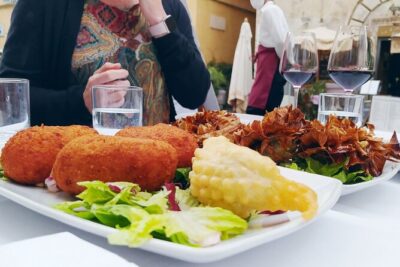
Rome Food Tour: Campo de’ Fiori, Ghetto, Trastevere Winner 2024
Read our review →
Eat Like a Roman Ghetto & Campo de’ Fiori Food Tour
Read our review →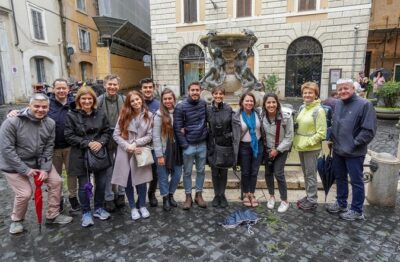
Jewish Ghetto and Synagogues with Jewish Roman Guide 3 Hours
Read our review →
Jewish Ghetto & Piazza Navona: Food, Wine & Sightseeing Rome Tour
Read our review →
Food & Wine Tour of Campo de Fiori, Ghetto, Trastevere
Read our review →
Jewish Ghetto and Campo Dè Fiori By Night Food, Wine and Sightseeing Tour
Read our review →
Trastevere and Rome’s Jewish Ghetto Half-Day Walking Tour
Read our review →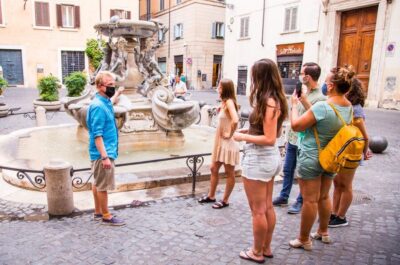
Browse the lists this tour appears in