
Reviewed · JEWISH GHETTO WALKING TOURS
Discover the Jewish Ghetto of Rome on a Small Group Walking Tour
Walk into Rome’s Jewish past, and it starts talking. This small-group route threads together major landmarks near the Forum and Capitoline Hill, then steers you into the oldest Jewish Ghetto area, with clear commentary as you go. You also get a break for authentic kosher gelato, and you finish in the lively Trastevere zone so you can keep eating and exploring right after.
I really like two parts of this format. First, the small group size (max 15) makes it easier to hear the guide and ask questions without feeling like you are shouting across a crowd. Second, the food stop is not an afterthought. The included kosher gelato or coffee gives you a real moment to reset before you head into heavier history.
One thing to plan for: the Tempio Maggiore di Roma stop includes a look, but admission is not included. If you want to go inside and see more, you should expect to pay separately.
In This Review
- Key Highlights Worth Your Time
- A 2-Hour Walk That Feels Like a Guided Conversation
- Starting at Foro Traiano: Trajan’s World, Michelangelo’s Viewpoints
- The Theatre of Marcellus: Rome’s Oldest Punchline and Its Real Story
- Fontana delle Tartarughe and the Included Break for Kosher Gelato
- Tempio Maggiore di Roma: The Oldest Ghetto Anchor
- Il Portico di Ottavia: The Fish Market Gateway Into the Ghetto
- Isola Tiberina Finish: Ancient Hospital Logic Meets Modern Convenience
- Food, Pace, and What to Wear on a Ghetto Walk
- Value Check: What You Get for Around $48
- Who This Tour Fits Best
- Should You Book This Jewish Ghetto Small-Group Walk?
- FAQ
- How long is the Jewish Ghetto of Rome small group walking tour?
- How much does the tour cost?
- Where does the tour start, and where does it end?
- What is included in the ticket price?
- Is the tour offered in English?
- Is admission included for the Tempio Maggiore di Roma?
- How big is the group?
- Is transportation included?
- Can I cancel and get a refund?
Key Highlights Worth Your Time
- Max 15 people keeps the pace steady and the explanations easy to follow
- Kosher gelato or coffee included, timed perfectly before the core ghetto streets
- Stops connect ancient Rome landmarks to the neighborhood you might otherwise miss
- You see the Portico di Ottavia area, a major gateway into the ghetto zone
- Finish on Isola Tiberina (Tiber Island), convenient for getting to Trastevere and the rest of Rome
A 2-Hour Walk That Feels Like a Guided Conversation
This is a 2-hour walking tour built around multiple short stops, not one long “march with no stops.” At just about two hours, it works well as an on-ramp to Rome history: you start with big ancient monuments, then the story narrows into the Jewish community in Rome and how it shaped daily life, culture, and survival.
The group size matters more than people think. With a maximum of 15 travelers, you get more direct attention and the guide’s talking point stays clear, even at busy corners. This is especially helpful because the route includes emotionally heavy context. Smaller groups make it easier to pause, absorb, and ask questions when something is unclear.
You’ll also appreciate the practical setup. You get a mobile ticket, the tour is offered in English, and the meeting point is in a central zone you can reach with public transport. You also get the added bonus of an included coffee or gelato, which is a nice “travel budget win” during a daytime walk.
More Small-Group Tours in Rome
- Skip-the-Line Vatican, Sistine Chapel & St. Peter’s | Small Group
★ 5.0 · 7,060 reviews - Rome: Colosseum Underground Small Group Guided Tour
★ 4.7 · 4,844 reviews - Rome: Skip the Line Vatican, Sistine Chapel, St Peter Small Group
★ 5.0 · 3,847 reviews - Rome on a Golf Cart Semi-Private Tour Max 6 with Private Option
★ 5.0 · 2,502 reviews
Starting at Foro Traiano: Trajan’s World, Michelangelo’s Viewpoints
You begin at Foro Traiano, 84 (00187 Rome), then the walk starts by tying together Rome’s imperial power with the angles you actually need to orient yourself in the city.
Stop 1 is Foro di Traiano near Trajan’s colonnade, then you work your way toward Piazza Venezia. From there, you climb a gently sloping set of steps up to Piazza del Campidoglio, one of the most satisfying viewpoints in central Rome because the square is designed as a whole theater of sightlines. You’ll also see the Campidoglio layout associated with Michelangelo’s imagination, and the area connects naturally to the nearby Capitoline Museums zone, even if you are not stopping inside.
Why this first stop is a smart choice: it sets the “big map” of Rome before you go into a smaller, more intimate neighborhood story. It’s like warming up your brain for the rest of the walk.
Practical note: this section includes some uphill steps. It is usually manageable, but if you hate stairs, bring patience for the start.
The Theatre of Marcellus: Rome’s Oldest Punchline and Its Real Story
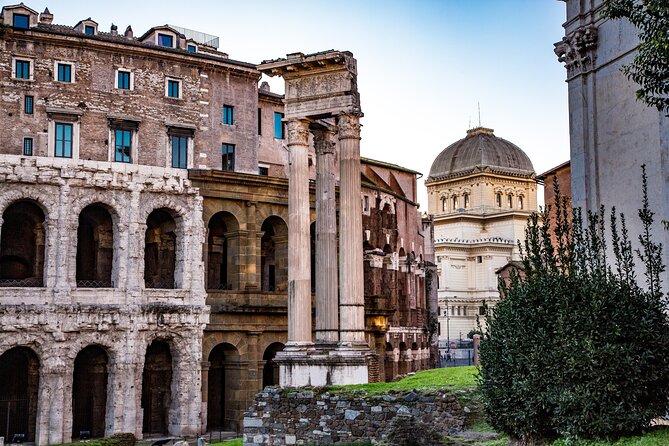
Next comes Teatro di Marcello, often nicknamed the little Colosseum. You get why people say that. The architecture shares the same amphitheater vibe, but the details help you see the differences: this theater dates back to around 12 BC, and it is not tied to the gladiatorial blood sports the way the Colosseum is.
There’s also a very “Rome” detail here that helps the story land. Portions of the theater structure today sit above apartments, so you are literally looking at ancient masonry integrated into modern living. It makes the point that cities do not freeze in time. They keep changing, and people keep reusing what came before.
This stop is brief, but it does a job. It reminds you you are not walking around museum walls. You are walking through a layered city, where old structures still define the street level you stand on.
Fontana delle Tartarughe and the Included Break for Kosher Gelato
After Marcello, you’ll head toward Fontana delle Tartarughe (Turtle Fountain). The walk links the neighborhood restaurant streets with the guide’s commentary, then you get a short pause built around included food.
This is where the tour gives you authentic kosher gelato or coffee, a rare thing to include in a history walk. It’s not just a snack. It is also a decompress moment, right before you move into the core ghetto area.
Then you reach Fontana delle Tartarughe, a late Italian Renaissance masterpiece. The most memorable part of this fountain is that it is famously associated with being constructed in just one day. You’ll also get context for why it sits where it does, and what the visual design signals about the neighborhood at the time.
If you are the type who normally skips fountains because you think you have seen too many, I would still stop here. The timing and the fountain’s story make it feel earned rather than decorative.
Tempio Maggiore di Roma: The Oldest Ghetto Anchor
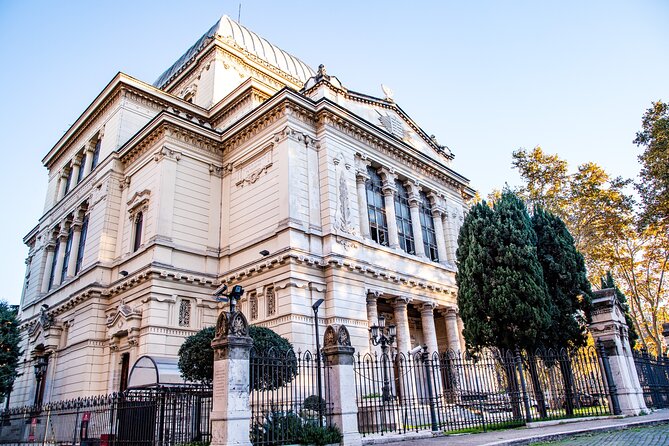
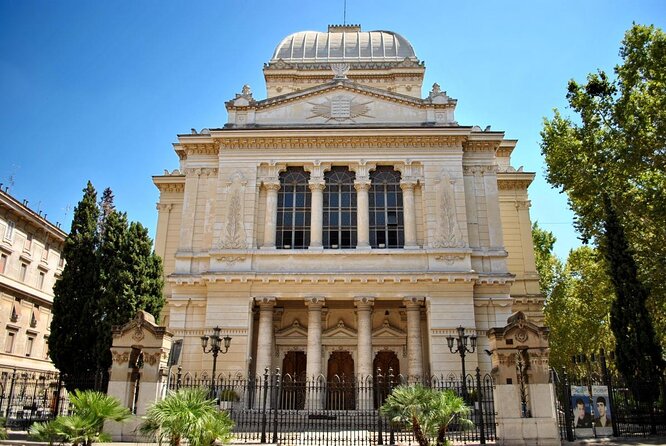
Stop 4 is Tempio Maggiore di Roma, constructed in 1555. This is described as the oldest Jewish ghetto, and it is a pivotal stop because it connects you to legal restrictions, forced isolation, and community resilience.
Here’s the context you’ll hear: the pope revoked rights granted to Roman Jews, and barred them from many forms of trade and from owning real estate. You also learn what did not stop. The community continued to thrive inside the walls through business and trade, and it developed a distinct cuisine and a local dialect of Italian. That’s a key detail for me, because it turns the ghetto story from pure dates and names into lived culture.
The guide also points you to the synagogue’s role today. The Great Synagogue still functions as a place of prayer and remains a major cultural reference point for the Jewish community in Rome. Even if you do not go inside on the tour itself, it helps to understand this is not only a historical set piece.
Important practical point: the synagogue admission is not included. You can still view it and get the context, but if your interest is strong enough to go further inside, budget extra time and money for that separate ticket.
This is also one of the stops where a small group shines. With fewer people, the commentary stays clearer, and the guide can slow down if you ask questions.
More Walking Tours in Rome

Il Portico di Ottavia: The Fish Market Gateway Into the Ghetto

Now you move to Il Portico di Ottavia, also spelled as Porticus Octaviae. This stop matters because it is described as a massive structure built by the emperor Augustus in honor of his sister, Octavia.
From the mid-1400s to the early 1900s, this area served as the home to Rome’s fish market. That market history gives you a grounded angle on why these streets and corridors mattered day to day, not just ceremonial times. Then comes the real narrative shift: it is from this area that you enter the ghetto itself.
If you like history that connects economics to identity, this is the stop you will remember. Even a short look can help you picture the flow of people and goods that shaped daily life.
This segment is also a good “transition” moment in the tour. It is still on your walking legs, but the story is now firmly in neighborhood territory.
Isola Tiberina Finish: Ancient Hospital Logic Meets Modern Convenience
The tour closes on Isola Tiberina (Tiber Island), where the old world and the current city feel unusually close together. The island has a strong medical past: in ancient Rome it was used as a hospital site, with the river functioning as a natural barrier against the spread of disease. Even today, you can see the legacy of that hospital tradition, and the area still hosts a major hospital.
Why I like finishing here: the views of the river and the way the island sits between neighborhoods make the ending feel calm rather than abrupt. You also get a practical advantage. This finish point is conveniently placed between the ghetto area and Trastevere, and it connects well to busses running along the Lungotevere.
And once you are done, you can keep the momentum. Trastevere is a great next step because it has the kind of dinner energy you can actually use after a walking tour. You do not have to immediately think about how to get back into your hotel. You can just keep moving.
Food, Pace, and What to Wear on a Ghetto Walk

This is a walking tour with multiple outdoor segments and short stops. That means your comfort matters more than usual.
Bring:
- Comfortable shoes you trust on uneven stone
- A light layer if the weather shifts, since you will be outside for the full experience
- Water if it is warm out
The included food is the included gelato or coffee stop, timed around Fontana delle Tartarughe. Since it is baked into the itinerary, you do not need to hunt for a café to stay on schedule.
Also, decide ahead of time how you want to handle the synagogue. If you feel curious about going inside, remember admission is not included, so you might plan to do it later the same day or on a separate visit.
Value Check: What You Get for Around $48
At $48.37 per person, you are paying for a focused, guided walk that blends major Rome landmarks with the Jewish Ghetto story. The value is in the combination:
- A professional local guide who can connect the sites into one narrative
- Kosher gelato or coffee included, so you avoid an extra expense during your walk
- Multiple major stopping points along the way, with several stops listed as free to view
- A small group size (max 15) that makes the commentary easier to hear
Here is the practical math that helps: if you normally spend about the cost of a coffee plus something sweet, the included stop offsets part of the ticket price. Then you still get the guided walking time plus the historical framing for the ghetto area.
The only potential “extra” is the Tempio Maggiore di Roma admission, if you want entry beyond the tour’s stop.
Who This Tour Fits Best
I think this tour works especially well for:
- First-time Rome visitors who want a story beyond the usual museum-only route
- Travelers who like walking tours with clear, structured stops
- People who want context for the Jewish community in Rome, including changes over centuries and the community’s continuity
- Anyone who values a break built into the schedule, thanks to the kosher gelato or coffee
It is also a good pick if you want a manageable commitment. At about two hours, you can fit it into your day without wrecking the rest of your sightseeing plans.
If you dislike stepping into emotionally heavy topics, you might find parts of the story challenging. The tour is designed to explain history respectfully, and the guide’s tone can matter a lot here.
Should You Book This Jewish Ghetto Small-Group Walk?
Yes, if you want Rome history with real human stakes. The route connects big-name ancient landmarks (Trajan’s world, Marcello’s theater) to the Jewish Ghetto area in a way that helps you understand how neighborhoods form and change over time. The small group size makes the story easier to follow, and the included kosher gelato or coffee is a smart, tasty way to keep the tour from feeling like a nonstop lecture.
I would say book it if:
- You care about getting the story straight, not just taking photos
- You like walking tours that end in a food-friendly area, here Trastevere
- You want a guide who can explain both the architecture and the community context
Skip or adjust your expectations if:
- You want synagogue entry included in the price, because the Tempio Maggiore admission is not included
- You have very limited mobility for steps at the start, since the route includes stair sections up to major viewpoints
FAQ
How long is the Jewish Ghetto of Rome small group walking tour?
It runs for about 2 hours.
How much does the tour cost?
The price is $48.37 per person.
Where does the tour start, and where does it end?
It starts at Foro Traiano, 84, 00187 Roma RM, Italy and ends on Tiber Island, 00186 Rome.
What is included in the ticket price?
You get an expert local guide and authentic kosher gelato or coffee.
Is the tour offered in English?
Yes, the tour is offered in English.
Is admission included for the Tempio Maggiore di Roma?
No. Admission for Tempio Maggiore di Roma is not included.
How big is the group?
The tour has a maximum of 15 travelers.
Is transportation included?
No, transportation to or from the meeting point is not included.
Can I cancel and get a refund?
Yes. You can cancel for free up to 24 hours in advance for a full refund.
Through the Old Jewish Ghetto
- Rome Food Tour: Campo de’ Fiori, Ghetto, Trastevere Winner 2024
★ 5.0 · 3,205 reviews - Rome: Eat Like a Roman Ghetto & Campo de’ Fiori Food Tour
★ 5.0 · 1,037 reviews - Jewish Ghetto and Synagogues with Jewish Roman Guide 3 Hours
★ 5.0 · 907 reviews - Jewish Ghetto & Piazza Navona: Food, Wine & Sightseeing Rome Tour
★ 5.0 · 460 reviews
Latest additions from Rome
- Guided Tour Vatican Museums & Sistine Chapel★ 4.1 · 30 reviews
- Exclusive Rome by Night Vespa Tour★ 5.0 · 30 reviews
- Transfer Rome to Airports★ 4.5 · 30 reviews
- Vatican: St.Peter’s Basilica & Dome – Reserved Entry & Tour★ 4.1 · 30 reviews
- Rome street art tour: off the beaten path with a local guide★ 5.0 · 30 reviews
- Tivoli, Hadrians Villa and Villa d’Este, a charming day trip from Rome★ 4.5 · 30 reviews
- Rome Food Tasting with Wine Pairing Italian Authentic Flavors★ 5.0 · 31 reviews
- Inspirational Cooking on the Roman Chef’s Panoramic Terrace★ 5.0 · 30 reviews
Jewish Ghetto Walking Tours, compared.
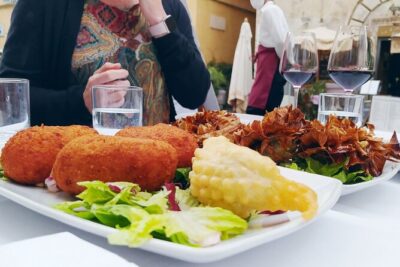
Rome Food Tour: Campo de’ Fiori, Ghetto, Trastevere Winner 2024
Read our review →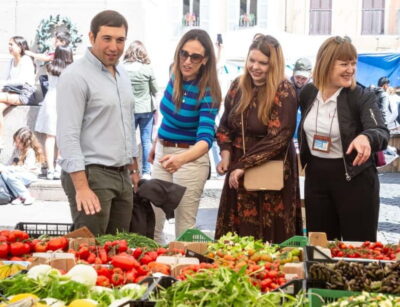
Eat Like a Roman Ghetto & Campo de’ Fiori Food Tour
Read our review →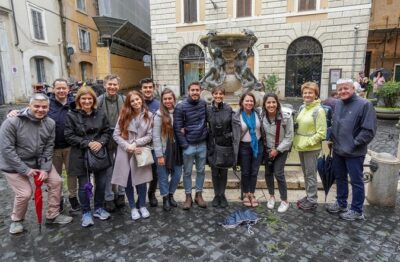
Jewish Ghetto and Synagogues with Jewish Roman Guide 3 Hours
Read our review →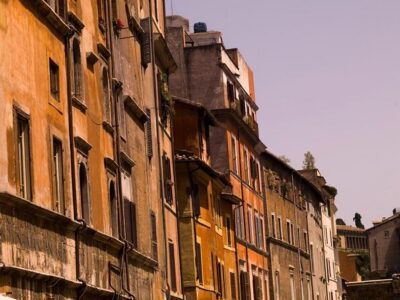
Jewish Ghetto & Piazza Navona: Food, Wine & Sightseeing Rome Tour
Read our review →
Food & Wine Tour of Campo de Fiori, Ghetto, Trastevere
Read our review →
Jewish Ghetto and Campo Dè Fiori By Night Food, Wine and Sightseeing Tour
Read our review →
Trastevere and Rome’s Jewish Ghetto Half-Day Walking Tour
Read our review →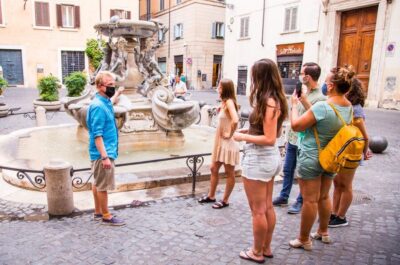
Browse the lists this tour appears in