
Carbonara skills, taught in Rome. This hands-on class puts authentic Roman pasta techniques front and center, and you actually make fresh dough and shape it. I also like that the teaching is set up for beginners, with small-group attention and real guidance, not just watching someone else cook.
You also get the payoff you want in Italy, the eating part. You prepare classic Roman sauces like Carbonara, Amatriciana, and Cacio e Pepe, then taste what you made with wine and soft drinks. The one drawback to consider is that this is a cooking-focused block, not a sightseeing tour, so plan your Rome exploring around it.
In This Review
- Key highlights I’d build my trip around
- Why this Roman pasta class feels different from a “tour”
- Pricing and what you actually get for $106.65
- Getting there at Piazza Margana, then settling in
- What the 3-hour flow looks like inside the class
- 1) Hands-on pasta prep and shaping
- 2) Classic Roman sauces you make yourself
- 3) Tasting what you made with included beverages
- The role of the chef-instructor: technique plus comfort
- The dishes: Carbonara, Amatriciana, and Cacio e Pepe (and why the set matters)
- Take-home recipes: your real souvenir
- Alcohol, beverages, and the midday decision
- Who this class is best for
- Price and value compared to dining out in Rome
- Should you book Classic Roman Pasta Making: Carbonara & More?
- FAQ
- How long is the Classic Roman Pasta Making: Carbonara & More class?
- Where does the class start and end?
- Is the class taught in English?
- Is a mobile ticket provided?
- What pasta dishes and sauces are included?
- Are beverages included in the price?
- Do I get recipes to take home?
- Is private transportation included?
- Is the class in a small group?
- What is the cancellation policy?
Key highlights I’d build my trip around
- Tonnarelli and classic Roman shapes you learn by doing, not by guessing at home
- Carbonara, Amatriciana, and Cacio e Pepe taught as a practical cooking sequence
- Small-class feel that leaves room for questions and personal coaching
- Wine plus soft drinks included, so the meal part is built in
- Take-home recipes so you can repeat the results after you return home
Why this Roman pasta class feels different from a “tour”
Rome is full of food experiences, but not all of them teach you how to recreate the food later. This one is built around technique. You start with the pasta itself, including typical Roman shapes like tonnarelli, and then you move into the sauces that make Roman cooking famous.
I like the way the class keeps things grounded. It is not a long lecture. It is a structured, step-by-step cooking format where you are meant to do the work. You leave with recipes you can actually follow, which matters if you want the skills, not just the meal.
Also, there is a strong comfort factor for first-timers. The class is designed for beginners, and the small group setup helps you get feedback while you cook, instead of after, when it is too late to fix mistakes.
Other kitchens rolling pasta and folding tiramisu:
- 3 in 1 Cooking Class near Navona: Fettuccine, Ravioli & Tiramisu
★ 5.0 · 7,376 reviews - Rome: Pasta & Tiramisu Class with Fine Wine by the Vatican
★ 4.9 · 4,852 reviews - Rome: Pasta Making Class with Wine, Limoncello, and Dessert
★ 4.9 · 3,177 reviews - Rome Cooking Class: Make Pasta and 3 Spritz Cocktails
★ 5.0 · 2,937 reviews
Pricing and what you actually get for $106.65
At about $106.65 per person for roughly 3 hours, you are paying for more than dinner. You are paying for ingredients, instruction, and the included wine and soft drinks during tastings.
That drinks-and-tasting piece is not a side detail. It changes the vibe. You are not just making pasta, you are eating it as part of the experience, with beverages included. For many people, that is a big part of the perceived value because it turns the class into a real meal at a time when Rome can be pricey for a good sit-down lunch.
If you are comparing this to cheaper cooking demos, the difference is that you learn hands-on, and you take recipes home. If you are hoping for a guided stroll through Rome, that is not what you are buying here. This is time inside the class, plus the food work.
Getting there at Piazza Margana, then settling in
The meeting point is Piazza Margana 21, 00187 Roma. The activity starts at the Italian cooking classes location in that area and ends back at the meeting point.
This is helpful because you do not have to plan complicated round-trip logistics. You do need to get there yourself, though, since private transportation is not included. The good news is the class area is close to public transportation, so you can arrive without stressing over parking or long transfers.
Bring your basic Rome day habits: show up a bit early, wear something comfortable for kitchen work, and plan to be hungry. Even with a tasting included, the class timing is short enough that you should treat it like your main food moment.
What the 3-hour flow looks like inside the class
The schedule is not listed as a minute-by-minute itinerary, but the experience is clearly structured into three phases: pasta making, sauce making, then tasting and eating.
1) Hands-on pasta prep and shaping
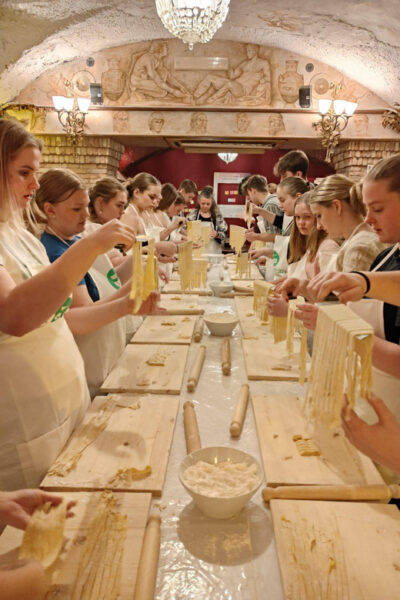
You begin with fresh handmade pasta preparation. You will also work with typical Roman shapes, including tonnarelli.
This part is where the class earns its keep. In Rome, it is easy to eat pasta. It is much harder to learn the actual process well enough to repeat at home. Having you shape pasta here means you can tell what the texture should feel like, and you can compare your results to the goal.
Small-group instruction also matters during this stage. If your dough is too firm or too sticky, it is useful to get quick feedback while you can still fix it.
More Roman kitchens to cook in:
2) Classic Roman sauces you make yourself
Next comes the sauces, all Roman classics: Carbonara, Amatriciana, and Cacio e Pepe. You cook them using high-quality local ingredients, with the chef guiding the steps.
This is where a lot of food classes fall short. They teach the pasta and then hand you something “close enough.” Here, the sauces are part of the core curriculum. That means when you take the recipes home, you are not stuck trying to recreate the sauce from memory. You have a real sequence for how it is meant to come together.
3) Tasting what you made with included beverages
Finally, you taste the dishes you prepared. The tasting is accompanied by selected wines and soft drinks included in the price, along with water.
In my view, this is one of the most important parts of a pasta class. You get immediate feedback on what you cooked. If something feels off, you can usually understand why as you taste, and that makes the recipe after-class much more usable.
The role of the chef-instructor: technique plus comfort
A great cooking class has two jobs. First, it teaches technique. Second, it keeps you from feeling clumsy in a hot kitchen.
The class is led by expert chefs and instructors who focus on traditional Italian cooking in Rome. In real terms, that shows up as clear step-by-step coaching and an inviting atmosphere. Names that come up often in these sessions include instructors like Francesca and Michela, both described as warm, funny, and very detailed in how they explain what you are doing and why.
You should expect that your questions will be welcomed. That is the practical difference between a hands-on class and an experience where you stay passive. When you can ask, you cook better, and you learn faster.
The dishes: Carbonara, Amatriciana, and Cacio e Pepe (and why the set matters)
The menu is built around three Roman staples, and the set makes sense if your goal is to learn a range rather than one trick.
- Carbonara gives you a benchmark for Roman-style sauce logic and timing
- Amatriciana teaches a different flavor profile and how the sauce behaves with pasta
- Cacio e Pepe focuses on the Roman approach to keeping things simple and building flavor through technique
You do not just eat these dishes. You make them, then taste them. That is the difference between a food memory and a cooking skill.
Also, the class is explicit about teaching Roman techniques and shapes. If you care about authenticity, that matters more than fancy add-ons. Rome has tourist-friendly pasta everywhere. This class aims at the real stuff you can cook again.
Take-home recipes: your real souvenir
The tastings are fun, but the best part for future-you is the take-home recipes. You are leaving with a system you can repeat, not just an Instagram-worthy plate.
Here is how to get the most out of the recipes when you get home:
- Read them once before cooking again, so you understand the order
- Recreate one dish first, so you do not mix up steps
- Pay attention to what your pasta dough felt like during the class, because texture matters
I like that the class also includes practical instruction while you cook. That makes the recipe easier to interpret later.
Alcohol, beverages, and the midday decision
Beverages are included. You get fine wines (red and white) plus soft drinks and water during the class.
If you do not drink wine, you still have other options in the included drinks lineup. If you do drink, just plan responsibly, because you are doing hands-on cooking. Think of it as a meal with wine, not a party night.
Who this class is best for
This class is a strong fit if you:
- Are a beginner who wants a guided start in Italian pasta cooking
- Want a small-group experience with attention and chances to ask questions
- Like the idea of making Roman classics and then eating them as part of the same session
- Care about authentic technique more than collecting restaurant stamps
It may feel less ideal if you:
- Want a sightseeing-heavy day instead of a kitchen-focused one
- Prefer a quick, low-effort meal rather than learning and hands-on shaping
- Have dietary needs that require tailoring, since the class menu is built around those Roman dishes
Price and value compared to dining out in Rome
In Rome, a decent meal can add up fast. This class costs more than a casual bowl of pasta, but it includes instruction, ingredients, and drinks included.
So the question is not just whether $106.65 feels high. It is whether you are getting the equivalent of a premium lunch plus a skill you can repeat later. If you are excited about cooking, the math usually works in favor of this class.
Should you book Classic Roman Pasta Making: Carbonara & More?
Book it if you want a real cooking lesson, not a food performance. You will likely enjoy this most if you like structured guidance, want to learn Roman pasta shapes like tonnarelli, and care about leaving with recipes you can actually use.
Skip it if you want an all-day Rome tour with lots of walking, because the time is devoted to cooking. Also skip it if hands-on cooking feels stressful, since the class expects participation from the start.
If you are somewhere in the middle, this is still a great choice. It is short at about 3 hours, it is in the central Rome zone near public transit, and the included wine plus tasting makes it a satisfying use of your time.
FAQ
How long is the Classic Roman Pasta Making: Carbonara & More class?
It runs for about 3 hours.
Where does the class start and end?
It starts at Italian cooking classes in Rome, Piazza Margana 21, 00187 Roma RM, Italy, and ends back at the meeting point.
Is the class taught in English?
Yes, it is offered in English.
Is a mobile ticket provided?
Yes, the tour offers a mobile ticket.
What pasta dishes and sauces are included?
You make fresh handmade pasta with typical Roman shapes (including tonnarelli) and learn classic Roman sauces such as Carbonara, Amatriciana, and Cacio e Pepe.
Are beverages included in the price?
Yes. The class includes bottled water, soda, and alcoholic beverages, including fine wines (red and white), plus soft drinks and water.
Do I get recipes to take home?
Yes. You receive recipes so you can recreate your pasta dishes after the class.
Is private transportation included?
No. Private transportation is not included.
Is the class in a small group?
The experience is described as small-group, and it also lists a maximum of 50 travelers.
What is the cancellation policy?
You can cancel for a full refund if you cancel up to 24 hours in advance of the experience start time. Confirmation is received at booking, and cancellation timing is based on local time.
Latest additions from Rome
- Guided Tour Vatican Museums & Sistine Chapel★ 4.1 · 30 reviews
- Exclusive Rome by Night Vespa Tour★ 5.0 · 30 reviews
- Transfer Rome to Airports★ 4.5 · 30 reviews
- Vatican: St.Peter’s Basilica & Dome – Reserved Entry & Tour★ 4.1 · 30 reviews
- Rome street art tour: off the beaten path with a local guide★ 5.0 · 30 reviews
- Tivoli, Hadrians Villa and Villa d’Este, a charming day trip from Rome★ 4.5 · 30 reviews
- Rome Food Tasting with Wine Pairing Italian Authentic Flavors★ 5.0 · 31 reviews
- Inspirational Cooking on the Roman Chef’s Panoramic Terrace★ 5.0 · 30 reviews
Pasta and Tiramisu Cooking Classes, compared.
3 in 1 Cooking Class near Navona: Fettuccine, Ravioli & Tiramisu
Read our review →
Pasta & Tiramisu Class with Fine Wine by the Vatican
Read our review →
Pasta Making Class with Wine, Limoncello, and Dessert
Read our review →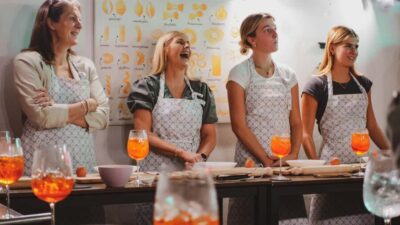
Rome Cooking Class: Make Pasta and 3 Spritz Cocktails
Read our review →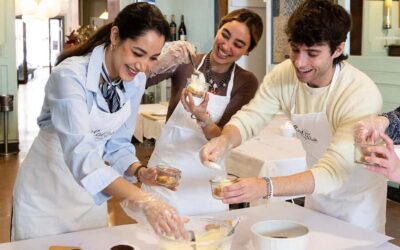
3-in-1 Fettuccine, Ravioli, and Tiramisu Cooking Class
Read our review →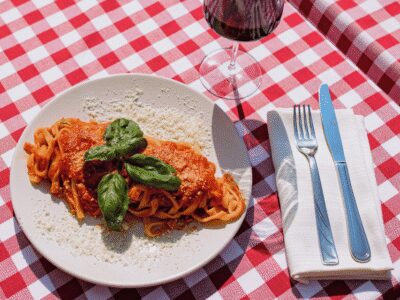
Fettuccine Pasta Cooking Class in Rome’s City Center
Read our review →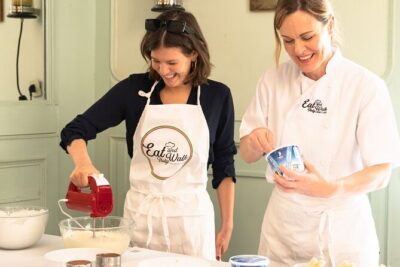
Learn to Make Pasta & Tiramisu with Wine and Limoncello Included
Read our review →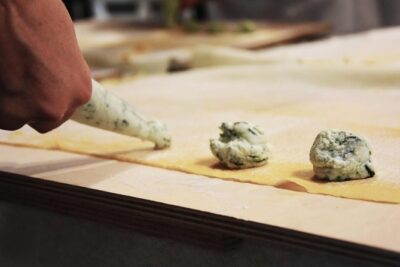
Become a Masterchef in Rome: Pasta, Ravioli and Tiramisù Class
Read our review →Browse the lists this tour appears in