
Reviewed · CASTEL SANT'ANGELO TICKETS
Castel Sant’ Angelo: The most famous Fortress of Rome
One fortress, two empires. Castel Sant’Angelo takes you from Hadrian’s tomb to a papal fortress you can explore in around two hours, at a pace that actually feels human. I love walking through the key rooms without rush, and I really mean it, the best views are saved for Angel’s Terrace.
The one drawback to plan for is the optional audio guide. You must have a smartphone and headphones, and if you’re using the audio option, you should download it before you start.
In This Review
- Key things to know before you go
- Castel Sant’Angelo: Rome’s Fortress That Explains Two Centuries of Power
- Hadrian’s Tomb to Papal Fortress: What Makes This Building So Interesting
- Your Walk Through Papal Rooms and the Spiral Staircase
- Prisons, Execution, and the Hall of Hadrian’s Ashes
- Angel’s Terrace: Where You Get the Best Rome Views
- Skip the Line and Self-Paced Timing in a 2-Hour Visit
- Audio Guide Option: How to Make It Work Smoothly
- Price and Ticket Value: What You Are Actually Paying For
- Who This 2-Hour Castel Sant’Angelo Visit Suits Best
- Simple Planning Notes That Avoid Common Headaches
- Should You Book Castel Sant’Angelo?
- FAQ
- How long does the Castel Sant’Angelo experience take?
- What is included with the ticket?
- Is a live guide included?
- Does this option help you avoid long lines?
- Do I need a smartphone for the audio guide?
- Can I use the audio guide without Wi-Fi?
- Do tickets require full names?
- What should I bring, and what is not allowed?
Key things to know before you go

- Skip-the-line entry through a separate entrance helps you start exploring fast.
- Terrace viewpoints are the payoff, especially from Angel’s Terrace.
- Self-paced route lets you linger in the Papal Rooms and stair sections.
- Hadrian to the Vatican connection explains why this fortress mattered in real emergencies.
- Audio guide works offline, but only after you download it on Wi-Fi.
Castel Sant’Angelo: Rome’s Fortress That Explains Two Centuries of Power
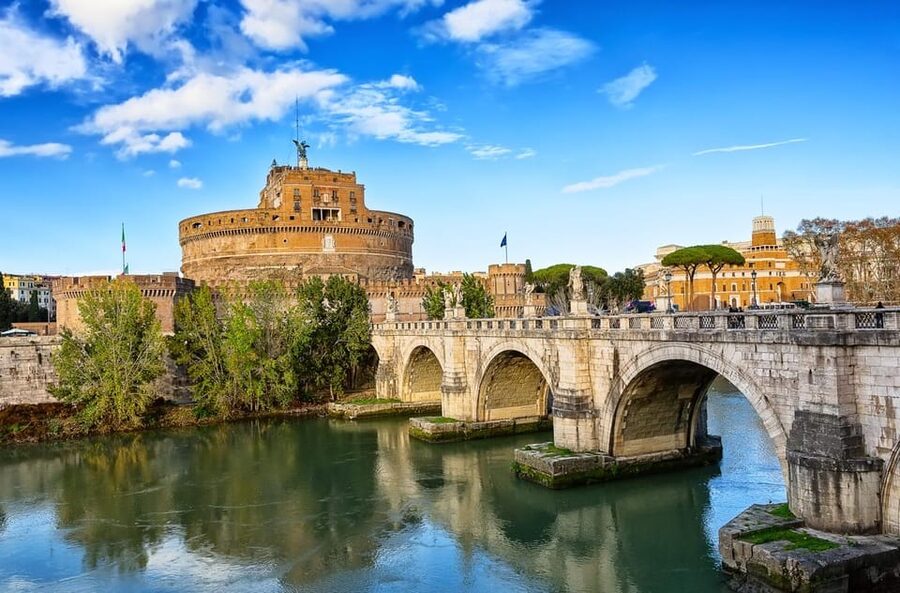
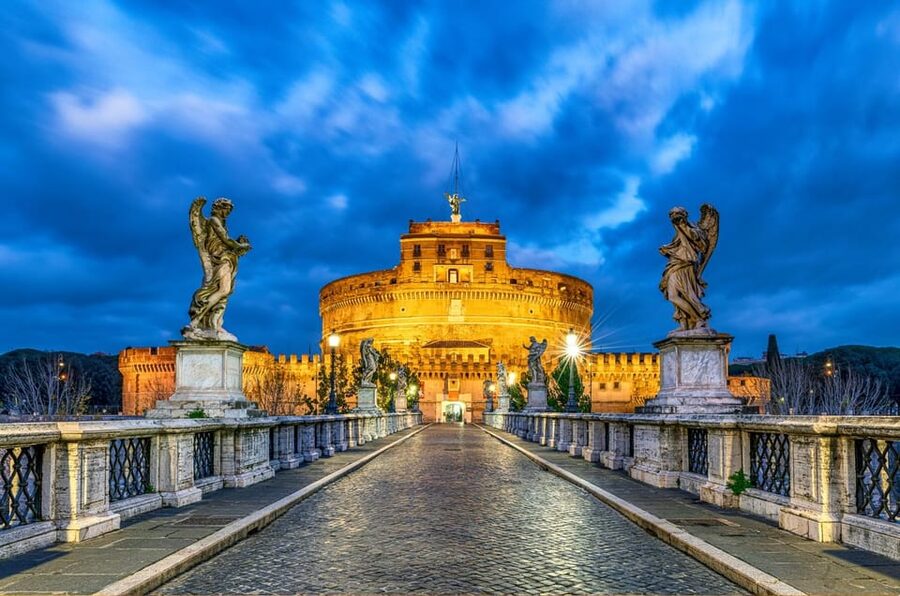
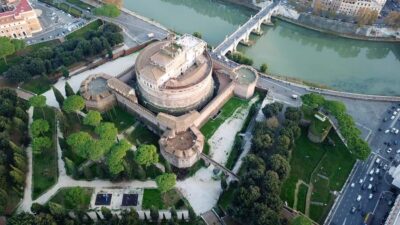
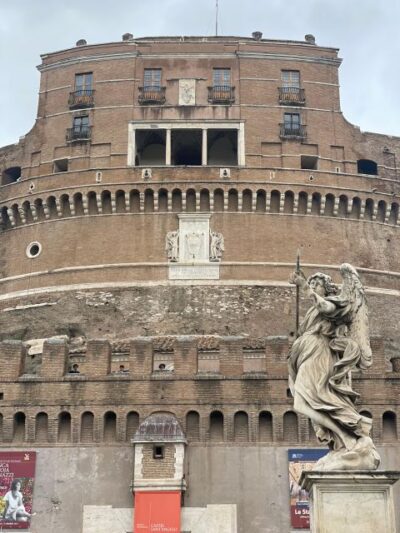
Castel Sant’Angelo is one of those Rome sites where the building itself is the story. It starts as the tomb of Emperor Hadrian in Roman times, then gets converted into a papal fortress in the early Renaissance. That shift, from imperial monument to papal stronghold, shapes everything you’ll see inside.
The visit is designed for comfort, about 2 hours. You are not locked into a constant stream of narration, and you are not forced to keep up with a big group. In practice, that means you can spend more time where you care most, like the spiral stair section or the views from the terrace.
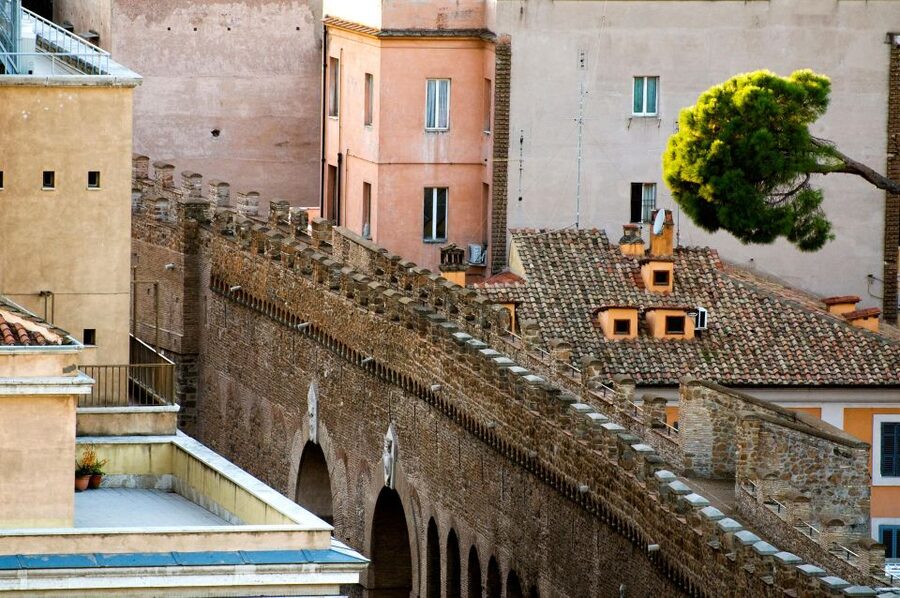
This is also a place where Rome’s top power centers overlap. Castel Sant’Angelo is connected to the Vatican Palace by an elevated walkway, and popes used it as an escape route if danger approached. So even if you just want great photos, you will still come away with a clearer sense of how the city was protected.
More visits to Castel Sant'Angelo:
- Rome: Castel Sant’Angelo Entry Ticket & Digital Audioguide
★ 4.7 · 5,347 reviews - Rome: Castel Sant’Angelo Entry Ticket & Audio App
★ 4.3 · 4,952 reviews - Rome: Castel Sant’Angelo Entry Ticket with Audio guide
★ 4.4 · 3,646 reviews - Castel Sant’Angelo: Ticket with optional Vatican or Pantheon
★ 4.4 · 3,088 reviews
Hadrian’s Tomb to Papal Fortress: What Makes This Building So Interesting
The core “aha” is how the site changes jobs over time. First, you have a Roman imperial tomb built for Hadrian. Then, as the Middle Ages and Renaissance rolled on, the structure took on military importance and became a papal fortress.
That transformation is what gives Castel Sant’Angelo its tone. It is not only solemn. It is defensive. Even when you are walking through rooms that feel museum-like, you are surrounded by the logic of a fortress: walls, control points, and spaces built for authority.
One of the most memorable pieces of context is the Vatican connection. That elevated walkway matters because it tells you why this was not just a pretty monument. It was part of an emergency plan, used by popes to escape when needed. If you like connecting dots, this site is excellent for that.
Your Walk Through Papal Rooms and the Spiral Staircase
Your internal route is built around a classic fortress-to-palace experience. You enter and then move through the Papal Rooms. These are the spaces that help you understand the fortress as more than a prison or battlement. They feel like a place where important people could live, manage, and function while under threat.
Next comes the Spiral Staircase. Stairs can be a time-waster in some attractions, but here the spiral structure gives you a sense of movement through layers of design and purpose. It is also a good moment to decide your rhythm. If you like photos, pause where the light hits. If you prefer speed, keep moving and let the terrace be your big reward.
What I like about this setup is how it breaks up the visit. You get interior rooms first, then a dramatic vertical element, then you transition into the areas that lean more directly into the fortress story.
Prisons, Execution, and the Hall of Hadrian’s Ashes

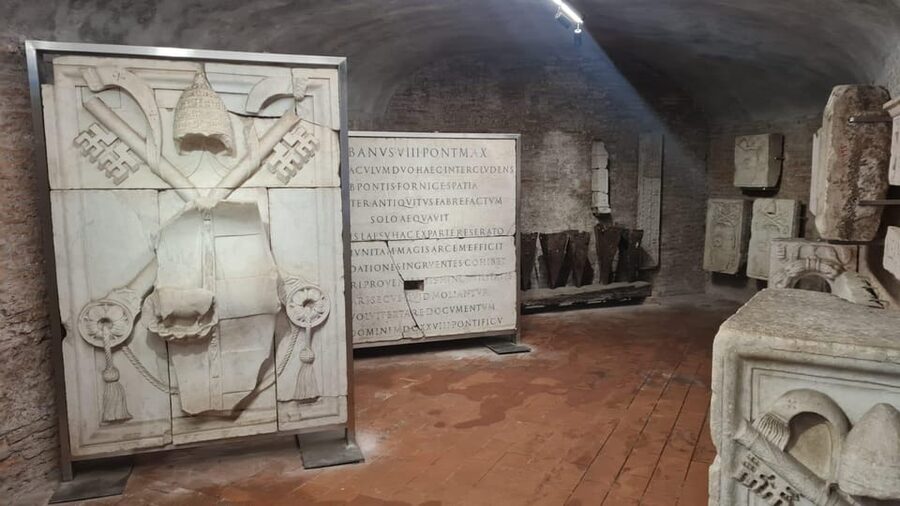
Castel Sant’Angelo does not shy away from hard history. It houses prisons and a place of execution, and that gives the visit weight. This is where the building stops being only architectural and starts being emotional in a different way.
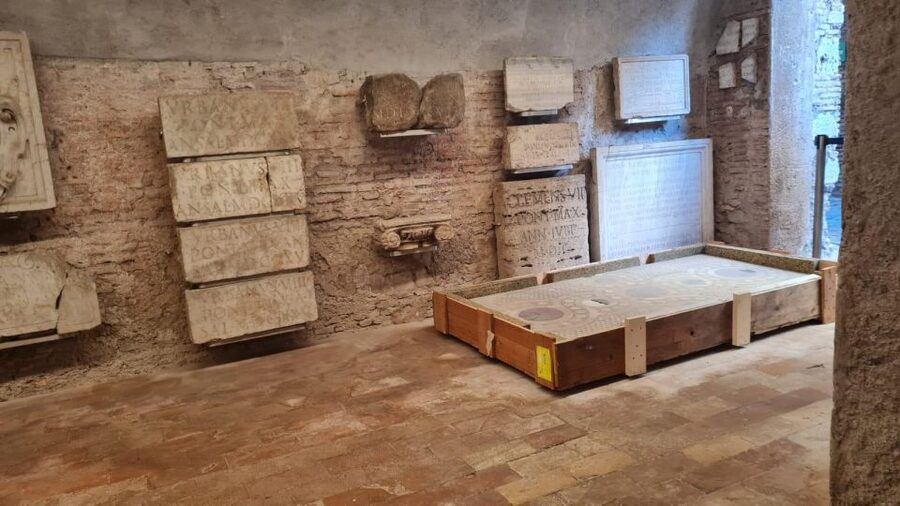
You will also see the Hall of Emperor Hadrian’s Ashes. That one matters because it brings you back to the site’s starting point. It is easy to forget that this place is fundamentally a tomb. Seeing this hall after walking through papal spaces creates a strong contrast: burial monument on one end, state power and detention on the other.
The site is also linked to famous captives, including the goldsmith Benvenuto Cellini and Cagliostro. Even if you only know them by reputation, it helps you picture the kinds of people who were held inside. The prison history is not presented as random gloom, it’s tied to the fortress role the building played over time.
If you get uncomfortable with darker themes, you can still enjoy the architecture and skip lingering too long in the most intense sections. The good news is that the visit is paced by you.
Angel’s Terrace: Where You Get the Best Rome Views
By the time you reach Angel’s Terrace, the fortress becomes a viewpoint. This is where you feel the payoff for the climb and the walk. The terrace gives you city views of Rome, and it also helps you understand the fortress’s strategic position.
Here is how I suggest you use the terrace time. Don’t treat it like a quick photo stop. Instead, use it to get your bearings. Look for landmarks you already know, then notice how the fortress sits in relation to the rest of the city.
This part of the experience is one reason Castel Sant’Angelo stays popular. You are leaving the interior, but you’re still inside the story because you can see why this fortress mattered. A great view is nice, but a view that clarifies geography and strategy is even better.
Another shape for the same afternoon in Rome:


Skip the Line and Self-Paced Timing in a 2-Hour Visit
The visit includes skip the line through a separate entrance. That is a big deal at Castel Sant’Angelo, because waiting outside can drain the whole day. Starting faster also makes it easier to actually finish in the planned 2 hours.
Timing matters because you have multiple elements in a short window: Papal Rooms, the spiral staircase, prison-related areas, and the terrace. If you show up late in the day without any plan, you may feel rushed at the exact moment you want to linger.
A smart approach is to plan for a steady pace. You want enough time for the terrace, and you also want time to move through the interior calmly, not as a sprint. The “valid 2 hours” format and starting times you can choose are helpful, because you can match your visit to your energy level.
Audio Guide Option: How to Make It Work Smoothly
You can add an audioguide option, and languages available include Spanish, French, Italian, English, German, and Chinese. If you select it, the audioguide is included with the ticket package.
Here is the practical part. You must have a smartphone and headphones. Also, if you are using the audio guide option, you should download it before you begin, ideally where you have Wi-Fi. Once downloaded, it works without Wi-Fi.
That makes a real difference because fortress interiors can mean weak signal. Offline audio means you can keep moving and not worry about buffering.
One more thing I recommend: before you start, double-check that you have access for each ticket you purchased. I’ve seen scenarios where someone ended up with only partial audio access compared to the number of admissions. A quick check at the start can save stress later.
Price and Ticket Value: What You Are Actually Paying For
The price is listed as $39 per person, and the entrance ticket alone costs €16 per person. Additional charges apply to cover service and processing fees. So, you are not just paying for the right to enter.
You are paying for the package that typically includes the entrance plus optional audio, and the “easy start” factor like the separate entrance that helps you skip the line. You are also buying time control, because the ticket is valid for 2 hours and you can check starting times.
So is it good value? For many people, yes, because Castel Sant’Angelo is popular and line time can eat your day. If you also plan to use the audio guide, that adds even more value since it is included when you select that option.
If you already know you will not use audio, then compare the added cost against your preferences. You will still get the core fortress experience, but the value swings based on whether you use the audioguide.
Who This 2-Hour Castel Sant’Angelo Visit Suits Best
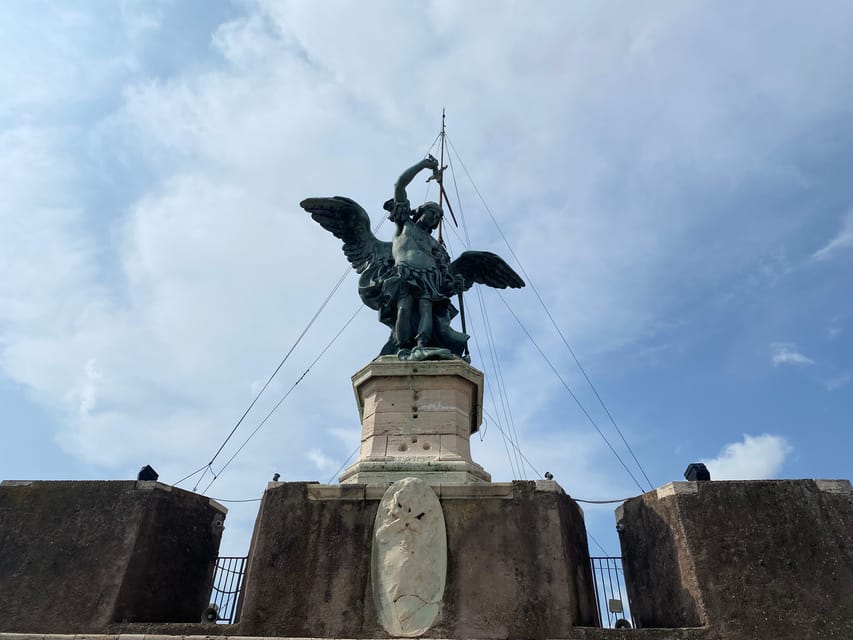
This experience is a great match if you like major Rome sites but do not want your whole visit controlled for you. The self-paced approach works well when you enjoy architecture and want to stop for photos whenever the light changes.
It is also ideal for first-timers who want context without needing a live guide. You will walk through the key spaces, learn why it changed hands historically, and end with views from the terrace.
I’d suggest it especially if:
- You want Hadrian’s tomb to papal fortress context in one loop
- You like audio you can control yourself, at your pace
- You care about the terrace viewpoint more than a long, guided lecture
If you are the type who always wants a live guide, this setup may feel slightly hands-off. The experience does not include a live guide.
Simple Planning Notes That Avoid Common Headaches
For entry, bring passport or ID card. The ticket is nominative, so you need to include all participants’ full names for the entrance purchase.
Inside, you cannot bring weapons or sharp objects. Baby strollers are not allowed, and luggage or large bags are not allowed either. Pets are not allowed, though assistance dogs are permitted. Alcohol and drugs are also not allowed.
If you are thinking about Fast Track tickets, keep in mind they must be booked at least one day before your visit. It’s one of those rules that is easy to miss until it’s too late, so plan ahead.
Should You Book Castel Sant’Angelo?
If you want a fast, satisfying Rome landmark visit with a strong payoff at the terrace, this is a smart pick. The skip-the-line entrance and the option for offline audio guide are the main practical advantages.
I would book it if you:
- Prefer self-paced sightseeing over a live guide
- Want to use the Angel’s Terrace views without losing time to lines
- Can do basic tech prep, meaning you have a smartphone, headphones, and you download the audio if you choose it
I would pause and reconsider if you dislike audio guides or you are not comfortable handling smartphone logistics. In that case, you might want a more traditional guided option instead.
FAQ
How long does the Castel Sant’Angelo experience take?
The duration is listed as 2 hours.
What is included with the ticket?
The ticket includes admission to Castel Sant’Angelo. An audioguide is included only if you select the audio guide option.
Is a live guide included?
No, a live guide is not included.
Does this option help you avoid long lines?
Yes, you skip the line through a separate entrance.
Do I need a smartphone for the audio guide?
Yes. You must have a smartphone and headphones to use the audio guide properly.
Can I use the audio guide without Wi-Fi?
Yes. If you download the audioguide before you start (where you have Wi-Fi), it will work without Wi-Fi afterward.
Do tickets require full names?
Yes. The ticket is nominative, so you need to include all participants’ full names.
What should I bring, and what is not allowed?
Bring a passport or ID card. Not allowed: weapons or sharp objects, baby strollers, luggage or large bags, pets (assistance dogs allowed), and alcohol or drugs.
Latest additions from Rome
- Rome: Testaccio Market Food Tour with Street Food & Wine★ 5.0 · 8 reviews
- Exclusive Pasta & Tiramisu Class with Wine near by Colosseum★ 5.0 · 8 reviews
- Private Professional Photoshoot in Rome★ 5.0 · 8 reviews
- Loreto “Shrine of the Holy House of the Virgin Mary” Private Tour from Rome★ 5.0 · 8 reviews
- Rome Day to discover Florence and Pisa Hotel Pickup★ 4.5 · 8 reviews
- Rome: Christmas Nativities and Angels Tour★ 3.1 · 8 reviews
- Guided Tour of Vatican Museums and Sistine Chapel★ 5.0 · 8 reviews
- Rome: Cooking Class of fresh Pasta and Tiramisu Cake★ 5.0 · 8 reviews
Castel Sant'Angelo Tickets, compared.
Castel Sant’Angelo Entry Ticket & Digital Audioguide
Read our review →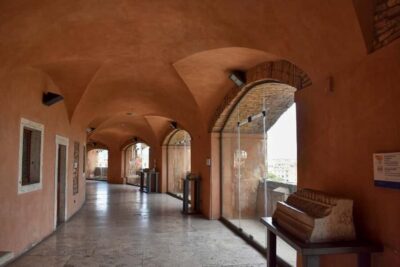
Castel Sant’Angelo Entry Ticket with Audio guide
Read our review →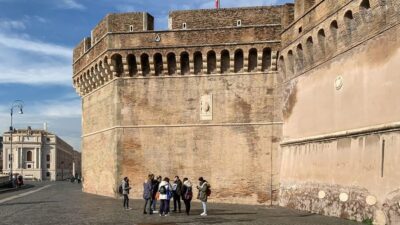
Castel Sant’Angelo: Ticket with optional Vatican or Pantheon
Read our review →



Browse the lists this tour appears in