
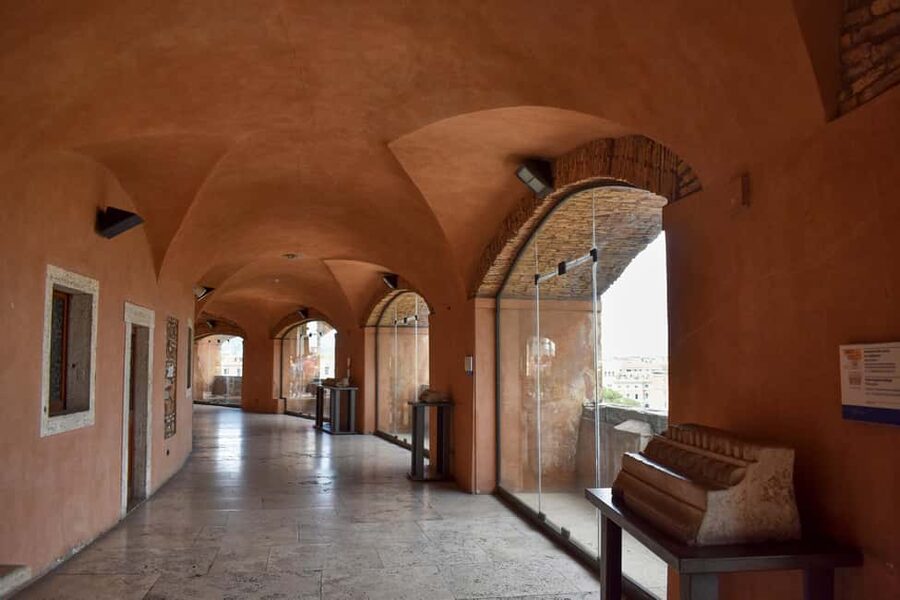
Reviewed · CASTEL SANT'ANGELO TICKETS
Rome: Castel Sant’Angelo Entry Ticket & Audio App
Castel Sant’Angelo is the kind of stop that changes your whole view of Rome. This self-guided visit takes you from Hadrian’s mausoleum to a Papal fortress you can explore at your own pace, with a smartphone audio guide to keep the story moving.
I especially like the mix of sights: the decorated upper papal rooms and the weapon displays that explain why this place mattered. My only caution is that the audio app can be a little confusing at first, so give yourself a few extra minutes to get oriented.
In This Review
- Key things to know before you go
- Castel Sant’Angelo changes Rome’s story (and your photos)
- The 5-floor route you should follow in your head
- Papal rooms, Renaissance frescoes, and the steam bath detail
- Weapons hall and prisoners: the castle’s darker side
- The terrace views over Rome, including sunset timing
- Using the smartphone audio guide without getting frustrated
- Ticket value: what you’re really paying for
- Timing tips: how long to plan, and when to arrive
- Getting there and finding the entrance at Lungotevere Castello
- Who should book this self-guided ticket?
- Should you book Castel Sant’Angelo with this entry ticket?
- FAQ
- What’s included with the Castel Sant’Angelo ticket and audio app?
- Where is the meeting point or entrance for this experience?
- How long is the ticket valid?
- How much does it cost?
- Is this a guided tour?
- Is Castel Sant’Angelo wheelchair accessible?
- Is the ticket refundable?
Key things to know before you go
- 5 floors, one evolving story, from Roman emperor to papal stronghold
- Weapons and defenses make the castle feel practical, not just pretty
- Papal rooms and frescoes on the upper levels reward slower walking
- Terrace views over Rome, with St. Peter’s Basilica on the skyline
- Skip-the-line entry helps you start exploring faster
- Phone audio needs planning, download or have good signal ready
Castel Sant’Angelo changes Rome’s story (and your photos)
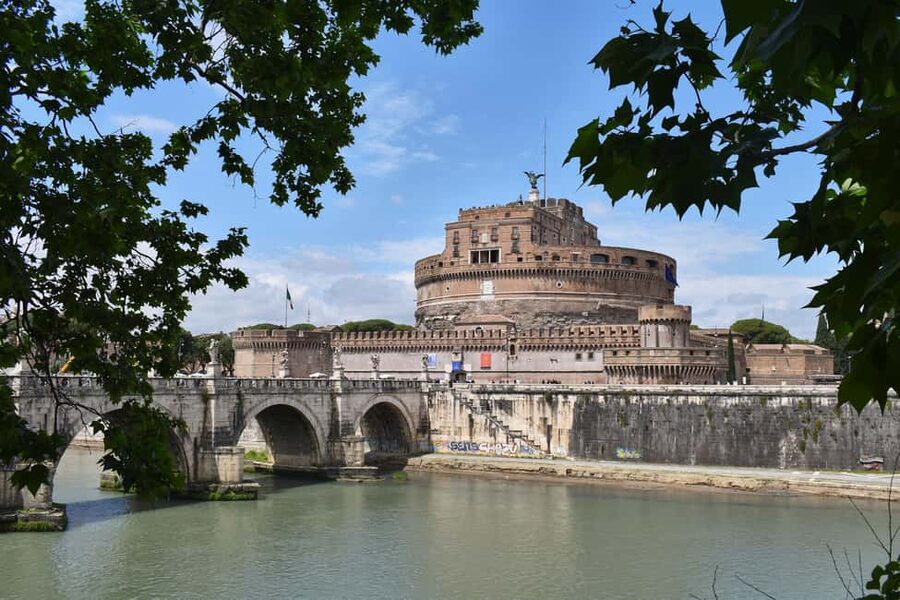
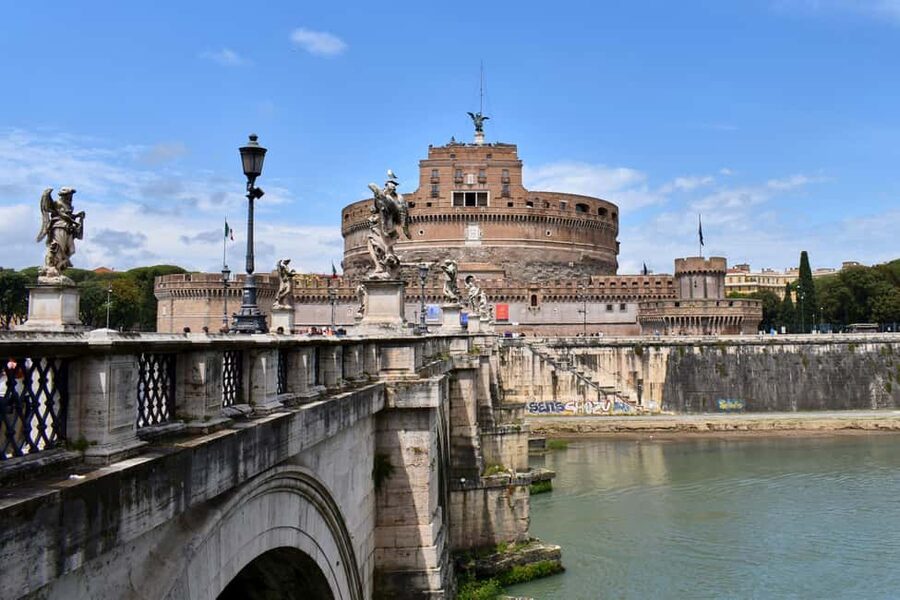
Castel Sant’Angelo, also called the Mausoleum of Hadrian, sits right along the Tiber in Rome. It’s close enough to feel like part of the city, but the castle walls make you feel like you’ve stepped into a different era. The best part is that you don’t just see ruins. You see a building that kept getting repurposed as Rome’s power shifted.
I like the way this place tells a timeline you can walk through. The site begins with Emperor Hadrian’s commission, built between 135 and 139 AD, and later gets transformed by the Papal state into an imposing defensive structure. That means you’ll notice how the castle’s purpose evolves as you move higher.
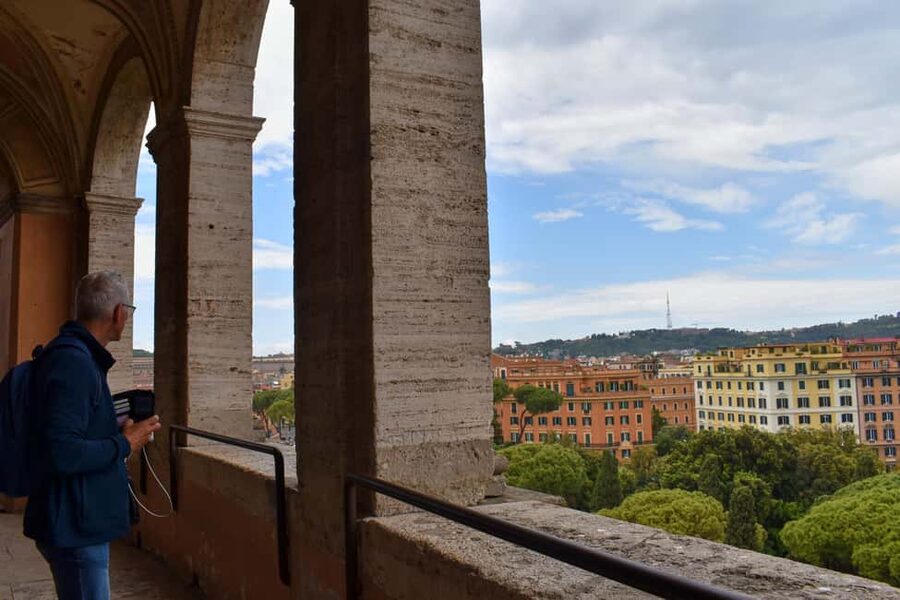
And yes, the views are a big deal. The terrace gives you Rome’s sprawl in one sweep, with St. Peter’s Basilica often stealing the show. If you time it right, you can catch light that turns the whole skyline into a postcard.
More visits to Castel Sant'Angelo:
- Rome: Castel Sant’Angelo Entry Ticket & Digital Audioguide
★ 4.7 · 5,347 reviews - Rome: Castel Sant’Angelo Entry Ticket with Audio guide
★ 4.4 · 3,646 reviews - Castel Sant’Angelo: Ticket with optional Vatican or Pantheon
★ 4.4 · 3,088 reviews - Rome: Castel Sant’Angelo Guided Tour
★ 4.7 · 1,779 reviews
The 5-floor route you should follow in your head
You’re exploring across 5 floors, so it helps to think of it like a movie in chapters. You start with the Roman foundation idea, then you gradually move into the medieval and papal uses. The castle layout rewards patience because the story changes as you rise.
Here’s the rhythm you can expect:
1) Roman beginnings: You’re looking at the original mausoleum concept, commissioned by Hadrian. Even if you don’t know your Roman emperors from your popes, the building’s scale makes the role obvious.
2) Defense and control: As the Papal state took over, the structure’s defensive importance becomes clearer. The castle isn’t an ornament. It’s a system built for protection.
3) Interior “how they lived” spaces: Upper areas include decorated papal rooms and frescoes from the Renaissance period, so you get art alongside fortification.
4) A blunt reminder: weapons: The collection of weapon displays is one of the most direct ways the castle explains its purpose.
5) The payoff: the terrace: The top-level views bring everything together. You see why controlling this point in Rome mattered.
A practical note: the castle involves walking and stairs. Plan comfortable shoes, and don’t schedule this back-to-back with something sprint-heavy.
Papal rooms, Renaissance frescoes, and the steam bath detail
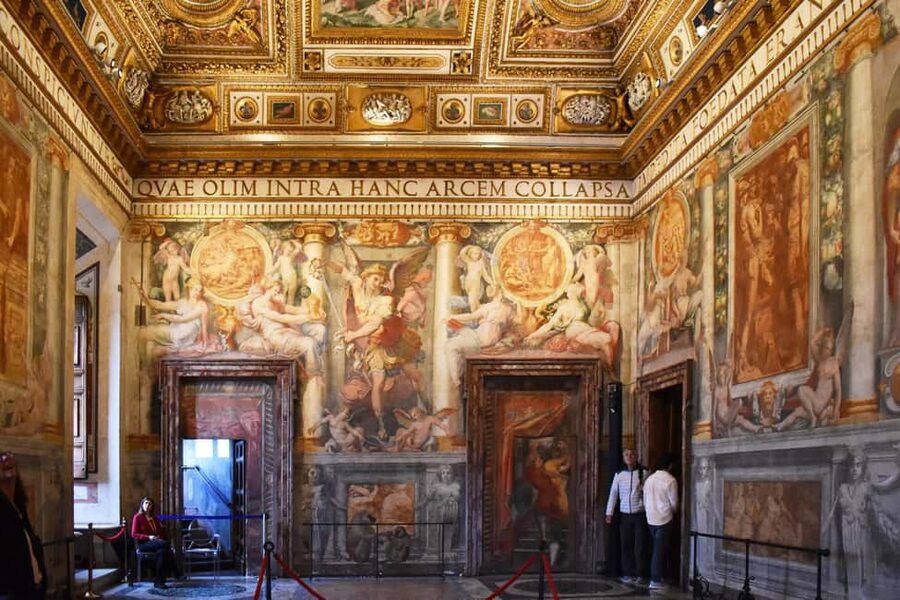
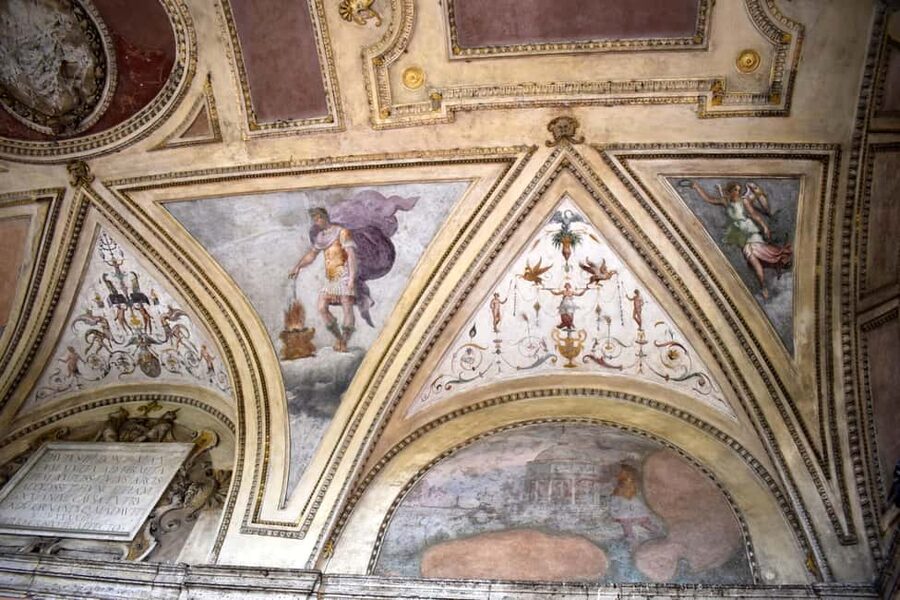
The upper floors are where the castle surprises people who expect only stone corridors. You’ll find beautifully decorated papal rooms with frescoes from the Renaissance period. Even when you’re not a museum person, you’ll likely notice how the decoration contrasts with the defensive nature of the building.
One standout subject is the steam papal baths connected with popes Leo X and Clemente VII. That’s such a specific, human detail. A fortress is about survival, but baths point to routine and comfort too. It’s the kind of detail that makes the castle feel less like a stop on a checklist and more like a lived-in place with real priorities.
The rooms also help you understand a key theme: this wasn’t just a place to defend popes during a crisis. From the 14th century onward, it served as protection for the various popes, so day-to-day life and security were tangled together.
Weapons hall and prisoners: the castle’s darker side

If you want the castle to feel like a real fortress, pay attention to the weapon displays. You’ll see a vast collection of arms that underscores how defensively important Castel Sant’Angelo was. It’s not abstract history. It’s the physical logic of defense.
You’ll also encounter the castle’s role as a place of imprisonment. The visit includes information about prisoners held within its walls and the tragic outcomes that often followed. This part can hit harder than the Roman or Renaissance sections, because it’s about what power can do to individuals.
For me, this is one reason the visit works well as a self-guided experience. You choose your pace. You can linger with the art, then slow down again when the story turns grim. The building supports that emotional shift.
The terrace views over Rome, including sunset timing
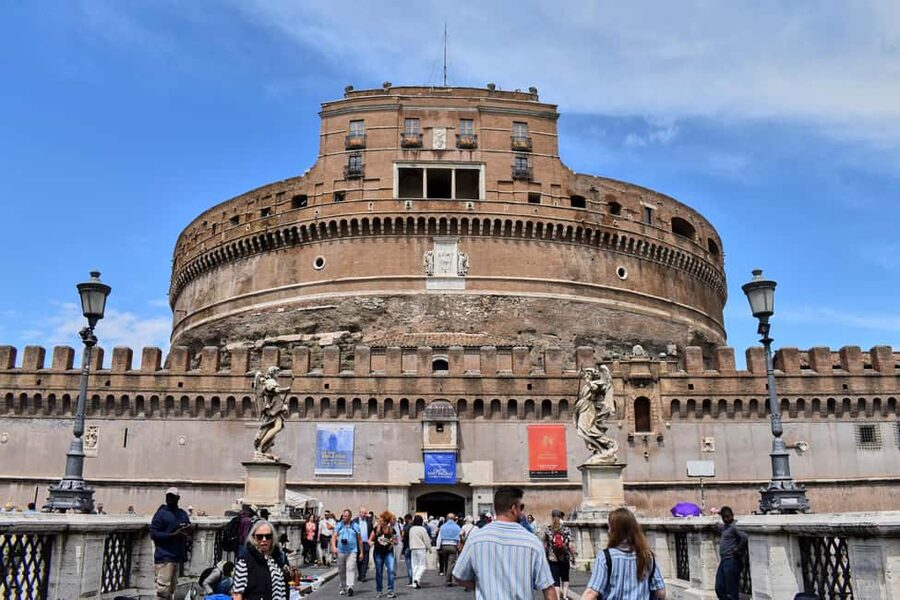
You finish with one of Rome’s classic rooftop payoffs. The terrace offers panoramic views, and it’s especially memorable when the light is soft. One of the clearest patterns in how people enjoy this visit is going later in the day. For example, a visit around 5pm can give you a sunset moment with St. Peter’s in the background.
If you like photographing skyline shapes, you’ll probably appreciate the sightlines that help you make sense of what you’re seeing. Some visitors also note rooftop maps that help point out key buildings around Rome. Even without a map, the visual ordering is satisfying, because the castle’s height makes the city feel readable.
Because the terrace is often the most popular stop, think about crowd strategy. Go when you’re at the right energy level. If you arrive early, you might see more people on the way up. If you arrive later, you might get calmer photos but a tighter visit schedule if you’re not careful.
More of Rome walked on your own clock:

Using the smartphone audio guide without getting frustrated
This ticket includes a digital audio guide on your smartphone, and you explore at your own pace. That’s a win for flexibility. It also means it’s on you to make the audio work.
Here’s what you should do to avoid common snags:
- Download or prepare the audio before you start, especially if signal inside is weak.
- Watch for room signage that matches the audio track so you don’t wander into the wrong chapter.
- If the audio feels off at any point, slow down and re-check where you are. Some people find the app less intuitive until they connect the audio to the physical layout.
You should also know that the audio experience isn’t always perfect. Some visitors report confusion about which audio is for which room, and on occasion some rooms may feel under-described compared with the amount of art on display. If you’re the type who wants every room covered, you might wish the audio was more tightly aligned. For most people, though, it’s still a big help.
Also keep in mind that there can be moments where you may prefer headphones or an alternative setup if phone audio doesn’t work smoothly. The good news is that the visit is still worthwhile even if you use the audio more lightly than planned.
Ticket value: what you’re really paying for
You’re looking at about $23 per person through this type of entry ticket offering, while the listed adult ticket price is €16. Value comes from what you avoid: waiting and ticket office friction.
The castle is popular, and lines can eat up your day. This kind of skip-the-line entry ticket helps you get moving quickly, which matters because the visit is stair-heavy. If you arrive hungry or short on time, saving minutes at the start lets you spend longer on the terrace, the papal rooms, and the weapon displays.
You also get control over pacing. There’s no guided group schedule included, so you can spend 2 hours and feel like you saw the essentials, or take 4 to 5 hours if you want a slower read through the story.
One consideration: this is non-refundable, so commit once you decide on your time slot. The good part is you can choose your preferred timeslot based on availability, and it’s valid for 1 day.
Timing tips: how long to plan, and when to arrive
The visit is easy to underestimate. The castle covers a lot of ground, and once you start paying attention to the story, time disappears.
A smart planning range is:
- About 2 to 3 hours if you want a confident highlights pass and don’t overthink the audio.
- 3 to 5 hours if you want to read more carefully through the history, take photos on multiple terraces, and stop for art and detail shots.
As for time of day, evening visits are popular for obvious reasons: the skyline light and the St. Peter’s backdrop. If you’re an early person, you can still enjoy the terrace without waiting for the crowd wave. Just remember that if you go late, you might feel the time pressure more.
If you want an easy win, arrive with enough margin to handle the first couple of minutes at the entrance. Even when entry is fast, you still need time to line up with the right entry method.
Getting there and finding the entrance at Lungotevere Castello
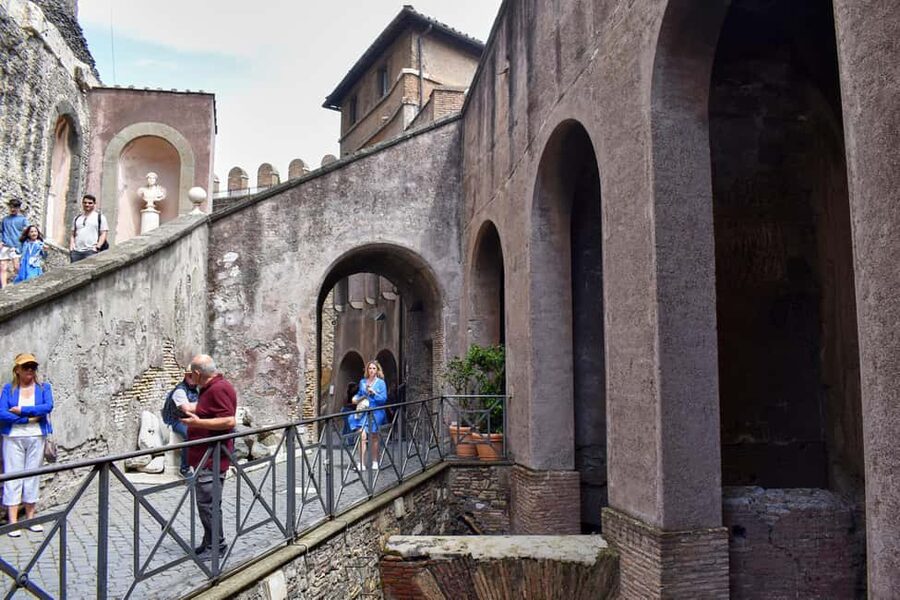
Your starting point is the main entrance of Castel Sant’Angelo, located at Lungotevere Castello, 50. After you book, you receive an official ticket to access the castle.
The practical friction point is the ticket check and QR steps at the entrance area. Some people find the instructions a bit bare-bones, and there may be moments with limited staff presence. That’s why I suggest arriving a few minutes early and double-checking you’re at the right entrance.
A related tip: watch how you follow any address directions. A small routing mistake can put you at the wrong side of the complex, which is annoying when you just want to get inside. Once you’re at the correct entrance, the flow usually moves quickly and you can start exploring right away.
Who should book this self-guided ticket?
This works best if you like Rome at your own pace. You want to wander, choose what to focus on, and use the audio guide as your adjustable volume knob.
It’s a strong fit for:
- History lovers who enjoy a timeline that mixes Roman, Renaissance, and papal themes
- People who want terrace views without the hassle of booking a longer guided day
- Families who prefer a flexible route rather than a group marching schedule
It might be less ideal if:
- You strongly prefer a full guided narration for every room, because the experience here is self-directed
- You get easily annoyed by audio apps that are slower to sync with the physical rooms
Should you book Castel Sant’Angelo with this entry ticket?
I think this is a good booking when your priorities are clear: skip-the-line entry, a self-guided route, and big terrace views. The price feels reasonable for what you avoid at the start, and the castle itself does the heavy lifting with its Roman origins, papal transformation, weapon displays, and Renaissance-era rooms.
If you’re already planning a Rome itinerary that includes Vatican sights, Castel Sant’Angelo fits naturally because the views tie the areas together visually. If you want to make the most of your ticket, go in with comfortable shoes, plan for some stairs, and treat the audio guide as a helpful companion rather than a perfect map.
And if you’re deciding between day and evening, lean evening if you can. That sunset backdrop is the kind of Rome moment you remember long after the museum fatigue kicks in.
FAQ
What’s included with the Castel Sant’Angelo ticket and audio app?
Your ticket includes entry to Castel Sant’Angelo plus a digital audio guide on your smartphone.
Where is the meeting point or entrance for this experience?
You’ll enter at the main entrance of Castel Sant’Angelo on Lungotevere Castello, 50.
How long is the ticket valid?
The ticket is valid for 1 day. You can choose a preferred timeslot based on availability.
How much does it cost?
Adult tickets are €16.00. Reduced tickets are €2.00 for EU citizens aged 18 to 25. Children under 18 and eligible persons are free.
Is this a guided tour?
No. A guided tour is not included. This is self-guided with the included smartphone audio.
Is Castel Sant’Angelo wheelchair accessible?
Yes, this activity is listed as wheelchair accessible.
Is the ticket refundable?
No. This activity is non-refundable.
Narrated As You Go
- Rome: Colosseum, Forum, & Palatine Hill with Audio Guide
★ 4.3 · 4,591 reviews - Rome: Colosseum Experience with Audio Guide and Arena Option
★ 4.2 · 2,200 reviews - St. Peter’s Basilica, Optional Dome Access & Rome Audio App
★ 3.8 · 2,052 reviews - Rome: Capuchin Crypts Guided Tour with Audio Guide Option
★ 4.6 · 1,462 reviews
Latest additions from Rome
- Exclusive Rome by Night Vespa Tour★ 5.0 · 30 reviews
- Guided Tour Vatican Museums & Sistine Chapel★ 4.1 · 30 reviews
- Transfer Rome to Airports★ 4.5 · 30 reviews
- Vatican: St.Peter’s Basilica & Dome – Reserved Entry & Tour★ 4.1 · 30 reviews
- Rome street art tour: off the beaten path with a local guide★ 5.0 · 30 reviews
- Tivoli, Hadrians Villa and Villa d’Este, a charming day trip from Rome★ 4.5 · 30 reviews
- Rome Food Tasting with Wine Pairing Italian Authentic Flavors★ 5.0 · 31 reviews
- Inspirational Cooking on the Roman Chef’s Panoramic Terrace★ 5.0 · 30 reviews
Castel Sant'Angelo Tickets, compared.

Castel Sant’Angelo Entry Ticket & Digital Audioguide
Read our review →
Castel Sant’Angelo Entry Ticket with Audio guide
Read our review →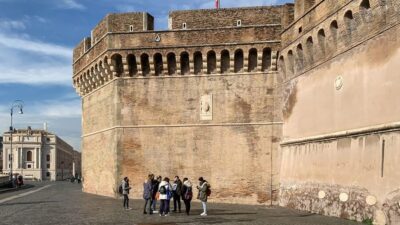
Castel Sant’Angelo: Ticket with optional Vatican or Pantheon
Read our review →



Browse the lists this tour appears in