
Reviewed · JEWISH GHETTO WALKING TOURS
3-Hour Trastevere and Jewish Ghetto Guided Walking Tour
Rome gets real in Trastevere and the Ghetto. This 3-hour walk focuses on Trastevere’s 2,500-year story and takes you to the site of Rome’s historic Jewish Ghetto, away from the busiest historic-center crush.
Two things I like a lot: you get a clear stop-by-stop feel for everyday Rome, and you also get the heavier context of the Jewish Ghetto and the synagogue area in the same route. You start at a real neighborhood crossroads and move on foot through narrow, cobbled streets where locals actually live, study, shop, and eat.
One consideration: this tour is not wheelchair accessible, and the old streets are not built for easy rolling mobility, so plan on solid walking and uneven pavement.
In This Review
- Key takeaways before you go
- A 3-hour Rome detour into Trastevere’s everyday life
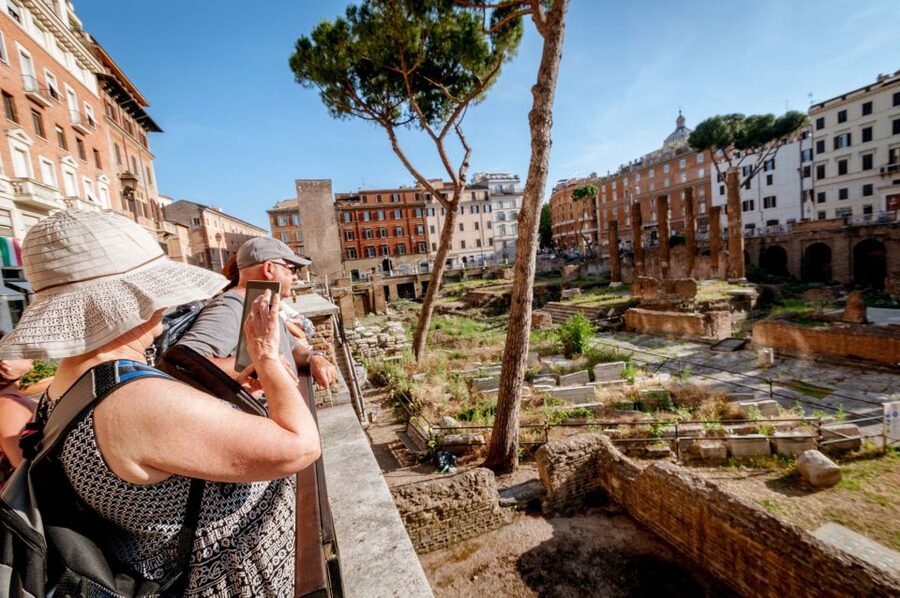
- Starting point at Largo di Torre Argentina and Via dei Cestari
- Trastevere’s story starts fast: beyond the Tiber
- Piazza Santa Maria, and why that square matters
- Santa Maria in Trastevere church stop: history with a human scale
- Walking Trastevere streets for local Rome, not tourist Rome
- Getting ready for the Jewish Ghetto area near the Tiber
- Exploring the ghetto site and the meaning of “enclosure”
- The synagogue of Rome area: views, not a stamp-collection approach
- Guides who make the neighborhood feel personal
- Price and value: is $82 worth it?
- Practical expectations for the walk
- Who should book this tour?
- Should you book 3-Hour Trastevere and Jewish Ghetto?
- FAQ
- How long is the walking tour?
- How much does the tour cost?
- Where is the meeting point?
- Do I need to arrive early?
- Is transportation included?
- Is there a guide, and what language is it in?
- Is the tour wheelchair accessible?
- Are pets allowed on this tour?
- Can I book and cancel without penalty?
Key takeaways before you go
- A focused 3-hour route that mixes old landmarks with real street life in Trastevere
- Santa Maria square and church in Piazza Santa Maria, one of Rome’s oldest churches
- Jewish Ghetto sightlines near Via del Portico d’Ottavia and the Lungotevere stretch
- Synagogue area views in a neighborhood known for restaurants and great meals
- Guides with personality, with guides like Claudio and Jeanette bringing the stories to life
- Not wheelchair friendly, since the route uses the neighborhood’s older streets and steps
A 3-hour Rome detour into Trastevere’s everyday life

This is the kind of tour that helps you understand Rome as a living city, not just a photo set. Trastevere sits just beyond the Tiber, and it has that “Roman neighborhood” rhythm, with narrow lanes, medieval-era buildings, and lots of students.
You also get a useful contrast. The historic center can feel like one long ticket line and one long museum queue. Here, you slow down and learn where people actually gather: squares, church fronts, street corners, and the food-and-coffee flow that keeps the area moving.
More Walking Tours in Rome
- Rome: Guided Food Walking Tour with Wine in Trastevere
★ 4.9 · 3,105 reviews - Rome: Trastevere & Campo de Fiori Street Food Walking Tour
★ 4.9 · 2,768 reviews - Rome: Paranormal Night Walking Tour & Secret Backstreets
★ 4.9 · 1,921 reviews - Rome: Trastevere Street Food Walking Tour with Local Expert
★ 4.8 · 1,784 reviews
Starting point at Largo di Torre Argentina and Via dei Cestari
Your meeting point is the junction of Largo di Torre Argentina and Via dei Cestari, between the newsstand and the shop Sermoneta. Plan to be there about 25 minutes early, because that buffer helps the group stay on schedule once everyone has checked in.
Because this is a walking tour with no transportation included, you do not want to be rushed at the start. Give yourself time to find the exact corner, then settle in with the guide so the first stories land while you still have fresh legs.
Trastevere’s story starts fast: beyond the Tiber
One of the first things you learn is what “Trastevere” means: beyond the Tiber. Long ago, the area connected to the main city by a tiny wooden bridge, which helps explain why Trastevere became a magnet for newcomers.
As the centuries turned, immigrants, mainly Jews and Syrians, settled in the area. That theme matters because it sets you up for what you’ll see later at the ghetto site, where the city’s power and prejudice shaped everyday life.
Piazza Santa Maria, and why that square matters
The tour centers on Piazza Santa Maria in Trastevere as the heart of neighborhood public life. You’re not just walking past pretty stones. You’re learning how the square works as a meeting point, and how the church anchors the identity of the area.
This square sits right outside the church of Santa Maria in Trastevere, one of Rome’s oldest churches and also one of the most visited churches in the city. In a short time, you’ll understand why it draws people in, even when the surrounding streets feel quiet and local.
Santa Maria in Trastevere church stop: history with a human scale
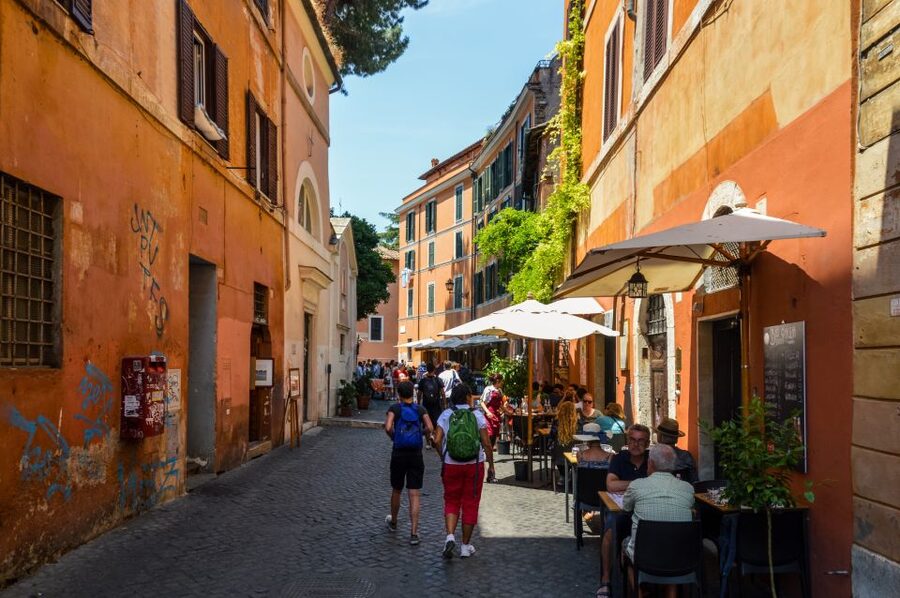
You visit the church area itself as part of the tour, which is a smart move. It’s one of those stops where the scale of time hits you, but the experience stays grounded because the neighborhood is still right there around you.
The guide uses this stop to connect big timelines to real streets. It also helps you get your bearings in Trastevere fast, because after the church and square, the streets you walk next feel less random.
Other walks through the old Jewish Ghetto:
Walking Trastevere streets for local Rome, not tourist Rome
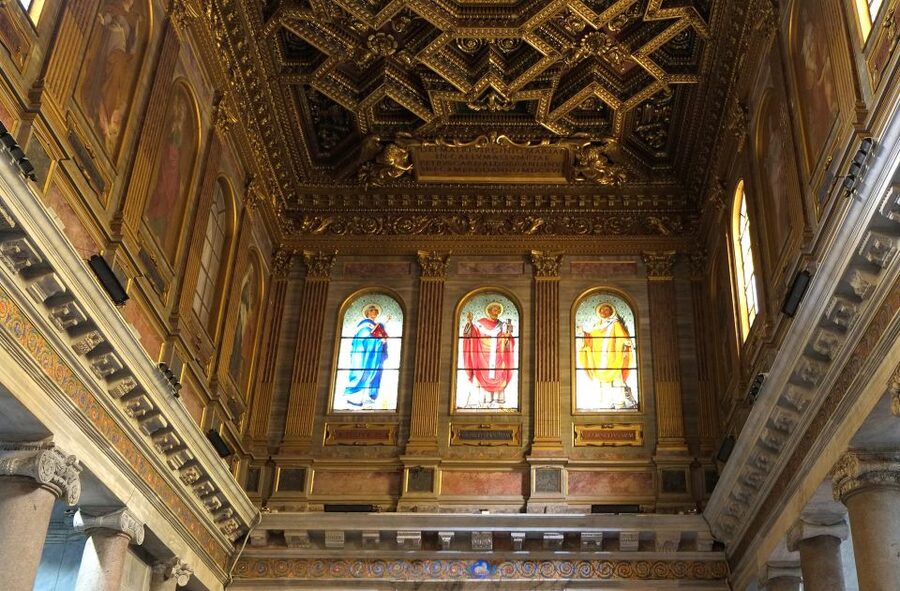
Trastevere is largely residential, which changes your perspective. As you walk, you’ll notice narrow cobbled lanes and medieval-style buildings, plus the student population that gives the area a constant, normal-life energy.
This is also where the tour earns its “off the main tourist beat” feel. Instead of only pointing at monuments, the guide steers you through streets with restaurants, bars, and cafés that people actually use. If you like to eat based on what locals do, this part can be practical, because you’ll learn what kinds of places are part of the everyday rhythm.
You also have time to look at boutiques and studios along the way. This is the kind of browsing you can do while still listening, especially if you like small gifts with a Rome story behind them.
Getting ready for the Jewish Ghetto area near the Tiber
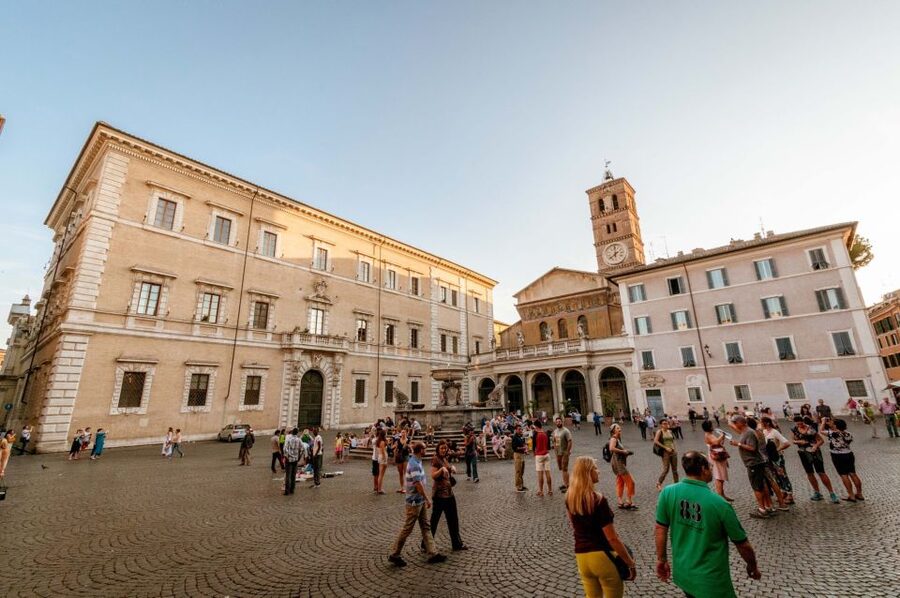
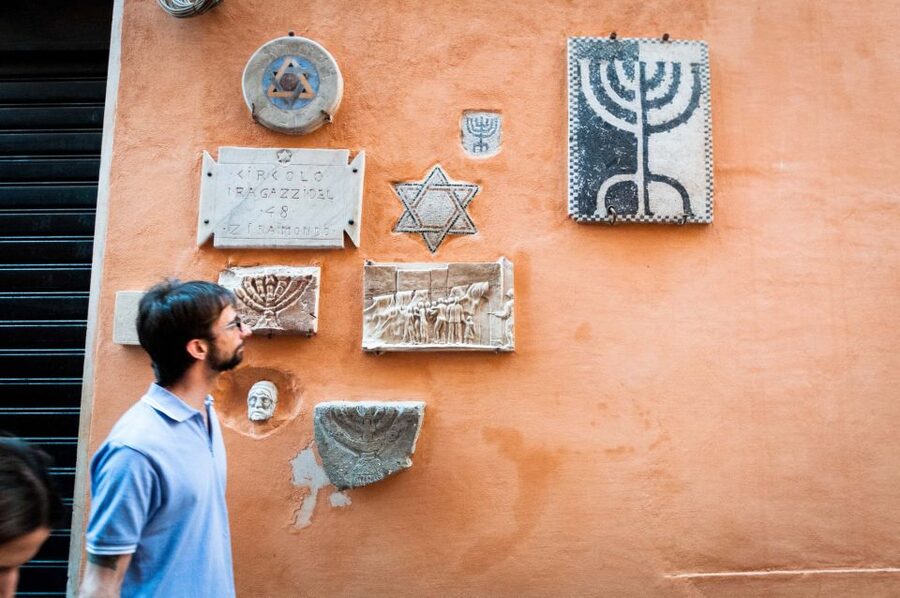
After Trastevere, the tour shifts in tone, and that’s the point. The Jewish Ghetto site is located near the Tiber, in an area surrounded by today’s Via del Portico d’Ottavia, Lungotevere dei Cenci, Via del Progresso, and Via di Santa Maria del Pianto.
You learn the Italian term Serraglio delli Ebrei, which means the enclosure of the Jews. That single phrase is heavy, but it helps explain the logic of how the city structured segregation. It’s not abstract. It’s geography.
The guide’s job here is to keep you oriented while the history gets emotional. If you pay attention to street names and the direction of the river, you’ll leave with a much clearer map of where this story happened.
Exploring the ghetto site and the meaning of “enclosure”
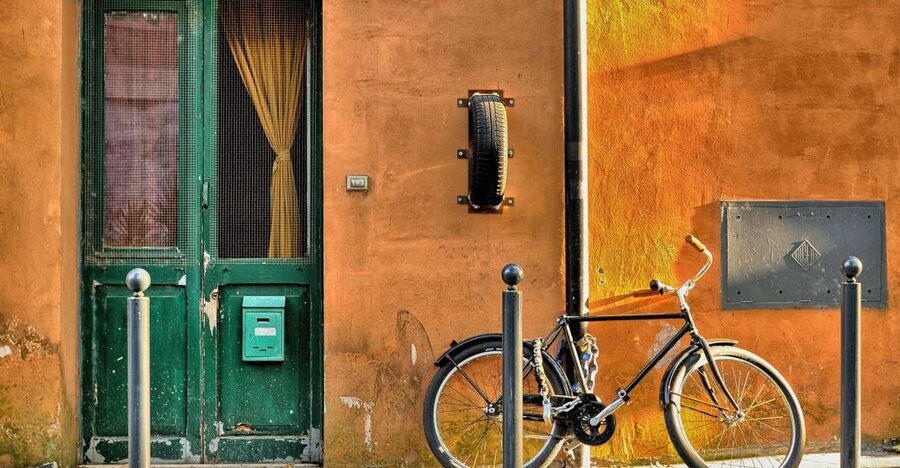
This is where the tour’s balance matters. You’re not just walking and reading plaques. You’re connecting how power worked in the city to how people had to live inside defined borders.
The route gives you a sense of the perimeter area without overwhelming you with stops. In 3 hours, you’re not trying to cover every building that played a role. Instead, you focus on the site context, then move toward the synagogue area where community life continued in new conditions.
If you want to ask questions, this is a good time. The guide’s English explanations can help you make sense of how the neighborhood evolved and why the city still remembers it.
The synagogue of Rome area: views, not a stamp-collection approach
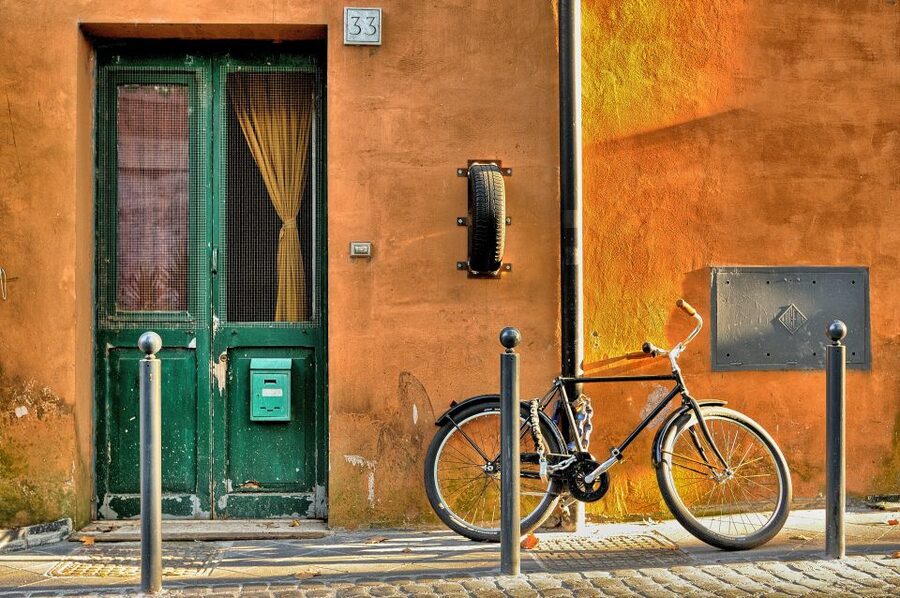
Near the ghetto route, you see the synagogue of Rome in what is today a charming area known for restaurants. That matters because Rome has a way of layering time, and this neighborhood shows that clearly.
A small caution based on past experiences from guides and guests: some people leave wishing they could see the front of the synagogue rather than only seeing the back. So if synagogue architecture angle matters a lot to you, consider arriving with realistic expectations for what the walk allows in the 3-hour format.
Still, even exterior views can be powerful when the guide has already placed the site into the larger story of the ghetto. The food streets you pass afterward can also feel like a reminder that community and daily life did not disappear just because borders existed.
Guides who make the neighborhood feel personal
What consistently elevates this tour is the guide’s delivery. The best moments come when the person leading you clearly loves Rome and uses small details to make the big points stick.
I especially like the way some guides, like Claudio and James, handle flexibility. Instead of forcing a rigid script, they adjust to the group and keep the walk feeling human. Other guides, like Jeanette and Inger, are praised for answering questions and mixing history with everyday life, including how people lived and what the streets were like beyond major landmarks.
You’ll likely feel this during the church and ghetto segments, because those are the places where context can either become dry or become vivid. With the right guide, the story stays understandable and even a little funny in the right places, without turning serious history into a joke.
Price and value: is $82 worth it?
At $82 per person for a 3-hour guided walk, this sits in the mid-range for Rome neighborhood tours. The value comes from two things: a real English guide for the full duration, and a route that ties together two big themes in one walk, Trastevere’s older roots and the Jewish Ghetto site context near the Tiber.
Also, you are not paying for transportation here. That can be good value if you are already in the area or plan to connect by foot or transit on your own. The downside is you must arrive at the start point ready to walk for 3 hours.
If your goal is to build a working mental map of Rome neighborhoods, this price can make sense. If you only want the biggest-ticket sites, you might feel you are paying for storytelling and streets more than for famous monuments. For many people, though, the payoff is leaving with a stronger sense of where history lived in daily space.
Practical expectations for the walk
This is a walking tour, and it is not wheelchair accessible. Plan for uneven, cobbled sidewalks and at least moderate walking time throughout the 3-hour window.
The good news is that the pace tends to feel relaxed. Past guests often mention a calm, conversational style and a guide who keeps things flowing without turning it into a race.
Also note the tour includes an English audio guide. That’s useful if you step a bit away to look at a shop window, or if you want to review a segment later as you keep exploring.
Who should book this tour?
This works best if you want more than a list of sights. You should book it if you like walking tours that connect history to the streets you can still see today, and if you care about understanding Rome’s neighborhood layers.
It’s also a good choice if you are tired of the busiest routes and you want an area with restaurants, cafés, and local browsing. And if you want a guide who will answer questions and connect older stories to how the neighborhood functions now, this tour format fits that goal well.
Should you book 3-Hour Trastevere and Jewish Ghetto?
If you want a compact, 3-hour route that blends Trastevere’s church-and-square center with the Jewish Ghetto site area near the Tiber, I think this is an easy yes.
I would skip or rethink it only if mobility is an issue, because the tour is not wheelchair accessible and the streets are the kind that require good footing. If you care deeply about seeing the synagogue from a specific angle, also set expectations that the walk may not give every view you imagine, especially in a short 3-hour plan.
FAQ
How long is the walking tour?
The tour lasts 3 hours.
How much does the tour cost?
The price is $82 per person.
Where is the meeting point?
Meet at the junction of Largo di Torre Argentina and Via dei Cestari, between the newsstand and the shop Sermoneta.
Do I need to arrive early?
Yes. Please be ready at the meeting point 25 minutes prior to tour departure.
Is transportation included?
No. Transportation is not included.
Is there a guide, and what language is it in?
There is a live tour guide in English, and an English audio guide is also included.
Is the tour wheelchair accessible?
No. The tour is not wheelchair accessible.
Are pets allowed on this tour?
No, pets are not allowed.
Can I book and cancel without penalty?
You can reserve now and pay later, and you can cancel up to 24 hours in advance for a full refund.
Latest additions from Rome
- Guided Tour Vatican Museums & Sistine Chapel★ 4.1 · 30 reviews
- Exclusive Rome by Night Vespa Tour★ 5.0 · 30 reviews
- Transfer Rome to Airports★ 4.5 · 30 reviews
- Vatican: St.Peter’s Basilica & Dome – Reserved Entry & Tour★ 4.1 · 30 reviews
- Rome street art tour: off the beaten path with a local guide★ 5.0 · 30 reviews
- Tivoli, Hadrians Villa and Villa d’Este, a charming day trip from Rome★ 4.5 · 30 reviews
- Rome Food Tasting with Wine Pairing Italian Authentic Flavors★ 5.0 · 31 reviews
- Inspirational Cooking on the Roman Chef’s Panoramic Terrace★ 5.0 · 30 reviews
Jewish Ghetto Walking Tours, compared.

Rome Food Tour: Campo de’ Fiori, Ghetto, Trastevere Winner 2024
Read our review →
Eat Like a Roman Ghetto & Campo de’ Fiori Food Tour
Read our review →
Jewish Ghetto and Synagogues with Jewish Roman Guide 3 Hours
Read our review →
Jewish Ghetto & Piazza Navona: Food, Wine & Sightseeing Rome Tour
Read our review →
Food & Wine Tour of Campo de Fiori, Ghetto, Trastevere
Read our review →
Jewish Ghetto and Campo Dè Fiori By Night Food, Wine and Sightseeing Tour
Read our review →
Trastevere and Rome’s Jewish Ghetto Half-Day Walking Tour
Read our review →
Browse the lists this tour appears in