
Reviewed · TRAIN EXPERIENCES
Venice Day Trip from Rome: Private Tour by High Speed Train
Venice in a single day feels serious. This private Venice day trip from Rome uses a fast train to drop you into the Grand Canal and the city’s landmark circuit, with a guide to keep you moving and make sense of what you’re seeing. You will also get that calm, scenic break of riding rails both ways.
I like the private guide setup, because you are not just following a crowd, you are getting help choosing what to look at first. I also love the built-in focus on big Venice sights, from the Rialto Bridge to St Mark’s area and the prison-side photo moments.
The main drawback is the tight timing: you are moving from stop to stop fast, and a few major interiors require separate tickets, like St Mark’s Basilica. If you want deep museum time or an unhurried lunch, this day trip can feel like a sprint.
In This Review
- Key things I found most useful
- Why a private Venice day trip from Rome works
- Price and value: what the $602.39 per person includes, and what it does not
- The Rome Termini departure plan, and how to protect your day
- The core Venice walk: Grand Canal, Greek church bell tower, and Strada Nova
- Stop 1: Canal Grande (Grand Canal)
- Stop 2: Chiesa di San Giorgio dei Greci (leaning clocktower area)
- Stop 3: Strada Nova
- Rialto Bridge: where Venice’s business life used to pulse
- Stop 4: Ponte di Rialto
- St Mark’s Basilica zone: the payoff, and the ticket decision
- Stop 5: St. Mark’s Basilica
- Practical timing thought
- The Bridge of Sighs: short time, big atmosphere
- Stop 6: Ponte dei Sospiri
- San Zaccaria and the Accademia area: a calmer shift
- Stop 7: Chiesa di San Zaccaria
- Stop 8: Ponte dell’Accademia
- Squero di San Trovaso: gondola craftsmanship, not just gondola photos
- Stop 9: Squero di San Trovaso
- Modern street art meets old stone: Campo San Pantalon and Santa Margherita
- Stop 10: Campo San Pantalon
- Stop 11: Campo Santa Margherita
- Piazzale Roma: where the city meets cars
- Stop 12: Piazzale Roma
- How to handle the rushed feeling in a 12-hour day
- Who this tour fits best, and who should skip it
- Should you book this private Venice day trip from Rome?
- FAQ
- How long is the Venice day trip from Rome?
- Where do we meet in Rome, and what time does it start?
- What is included in the price?
- Are attraction tickets included for St Mark’s Basilica or San Giorgio dei Greci?
- Does the tour include hotel pickup or drop-off?
- When are the train tickets purchased?
- Can I cancel for a full refund?
Key things I found most useful
- High speed train, private format: You do the Rome to Venice round trip without sharing the tour with strangers.
- Landmark route with real transitions: Grand Canal views, Rialto, St Mark’s zone, then out to quieter corners.
- Several stops are ticket-free, a few are not: St Mark’s Basilica and parts of San Giorgio dei Greci cost extra.
- Gondola rides are not included: If that matters to you, plan time and budget separately.
- Expect a long day: The train legs take up most of the day, so Venice time is limited.
Why a private Venice day trip from Rome works
If you only have a few days in Italy, this is one of the most efficient ways to get Venice without giving up your whole trip. The concept is simple: Rome first thing in the morning, fast train to Venice, guided walking circuit, then back on the train before evening fatigue kicks in.
What makes it practical is that it is designed around landmark clustering. Venice is weird in the best way, but walking from one “must see” to the next can cost you a lot of time. A good guide helps you stay oriented, keep your bearings, and avoid aimless wandering when your energy is already being drained by transit.
Also, the train ride does something you cannot recreate by road: it gives you a smooth start and a clear end to the day. You get views out the window, then you get a structured plan on foot.
More Private Tours in Rome
- Rome by Golf Cart Private Tour: Beyond the Landmarks
★ 5.0 · 4,361 reviews - Early Morning Vatican, Sistine, St. Peter’s Semi or Private Tour
★ 5.0 · 3,779 reviews - Rome on a Golf Cart Semi-Private Tour Max 6 with Private Option
★ 5.0 · 2,502 reviews - Rome Private Arrival Transfer: Fiumicino Airport to Hotel in Rome
★ 4.5 · 2,492 reviews
Price and value: what the $602.39 per person includes, and what it does not
At $602.39 per person, this is not a budget excursion. The value lives in three areas the itinerary cannot easily replace:
- Private guide service for the day
- Train transport by 2nd class
- Venice visitor fee included
But here is the honest part: a private Venice day trip can feel overpriced if you think it buys you everything. It does not include food and drinks. It also does not include admission tickets for several high-demand stops, like St Mark’s Basilica. Even where an overview stop is listed as ticket-free, the big attractions can still cost extra if you want inside access.
One more value check that affects your experience: train seats on 2nd class are not something you should count on being ideal. Seats can be randomly assigned by the railway company. If you are sensitive to comfort on longer rides, bring a travel mindset that says, I can work with average train seating, because Venice time is the point.
The Rome Termini departure plan, and how to protect your day
This tour starts early, with a start time of 6:30 am at Roma Termini, Via Giovanni Giolitti 40, 00185 Rome. The end of the activity is back at the meeting point, so you are not walking into Venice and then being left to guess how to get home.
Early departures matter because Rome train stations run on rhythm, not vibes. Trains board before the official departure time, so you should aim to be at your platform with a decent buffer. If your train runs late, your whole day shifts. The good news is that the tour model is designed around keeping you moving once you arrive.
Also, note this: pickup and drop-off are not listed as included for the tour itself. That means your cleanest experience usually comes from planning your own way to Termini and expecting to return there at the end.
The core Venice walk: Grand Canal, Greek church bell tower, and Strada Nova
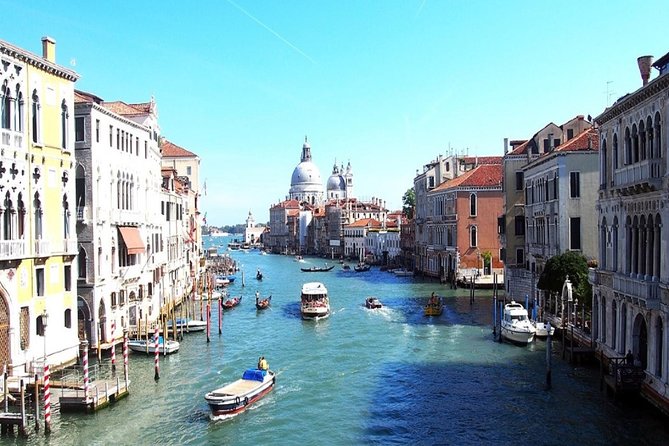
Once you step off the train, the route takes you into Venice’s visual DNA fast. You start with a Grand Canal look, then you work your way toward Rialto and St Mark’s zone, and later you shift toward the less tourist-peak parts of the city.
Stop 1: Canal Grande (Grand Canal)
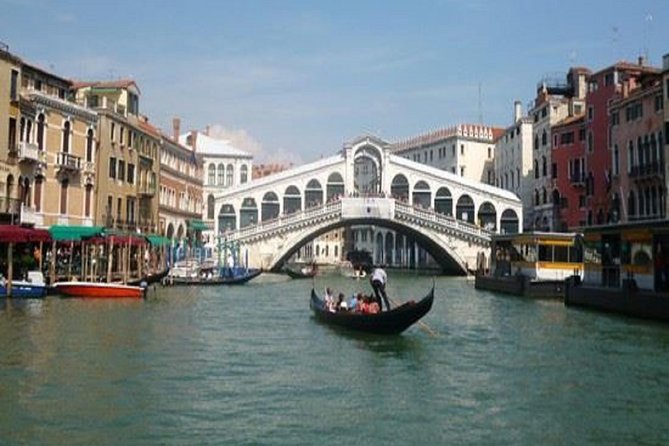
The Grand Canal is the big dividing feature in Venice, a roughly 4 km long waterway that slices the city into two halves. Even if you do not go inside anywhere, the scale of it hits you immediately. You get the sense that Venice streets are actually water streets, with buildings turned to face the canal like a permanent parade route.
This stop is listed as free. The best move here is to spend your hour not just taking pictures, but noticing which viewpoints feel natural for photos and where pedestrians funnel toward bridges.
A few more Rome options worth a look
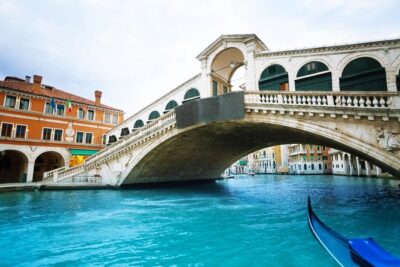
Stop 2: Chiesa di San Giorgio dei Greci (leaning clocktower area)
Next is the Chiesa di San Giorgio dei Greci, including the bell tower often called the leaning clocktower. The timing is built in: the tower was designed by Simone Sorella and completed in 1592, and it is known for having started tilting early.
This is also tied to the Greek community in Venice, especially sailors and merchants. You may also get a chance to see the Sanctuary of St. Lucy. Admission for this stop is not included, so you should decide upfront whether you want to pay to go in, or just take in the exterior setting and the general area.
A small caution: ticket stops can create time pressure if you want both interior access and photos. If you hate the “rush to make the clock” feeling, prioritize what you will actually enjoy inside versus outside.
Stop 3: Strada Nova
Then you hit Strada Nova, the widest street in Venice. What makes it interesting is the reason it exists: it was created in the 19th century to speed up pedestrian movement between Rialto and the railway station by replacing narrow, tortuous routes with wider connections and bridges.
This stop is free. It is a helpful breather in the route because it shows Venice as an evolving city, not just an old-city postcard.
Rialto Bridge: where Venice’s business life used to pulse
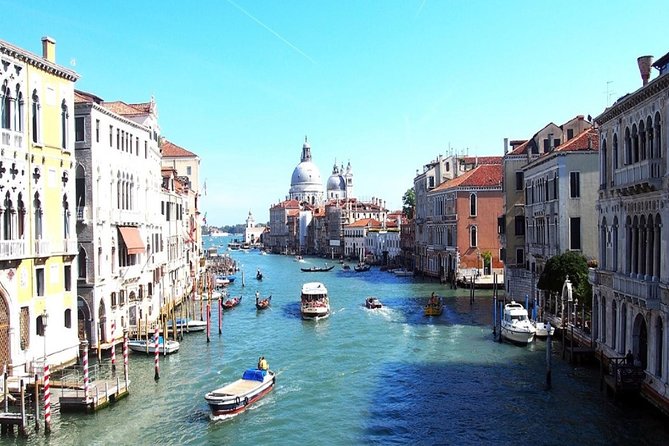
Stop 4: Ponte di Rialto
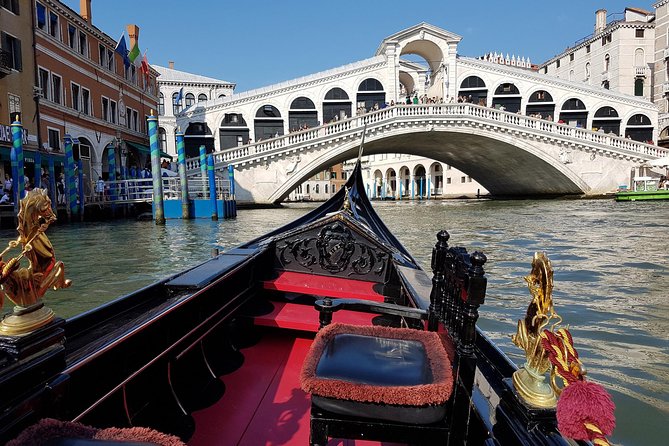
The Ponte di Rialto is the oldest of Venice’s four Grand Canal bridges. It was the long-time hub of Venice’s economy, so even if you only stand there for a short time, you are looking at a place where commerce shaped everyday life.
This stop is listed as free. When a bridge is this historic, the temptation is to treat it like a single photo moment. Instead, use your hour to do two things: walk to different angles and notice how the surrounding streets funnel toward the bridge. That helps your brain map Venice quickly, which is key on a day trip.
St Mark’s Basilica zone: the payoff, and the ticket decision
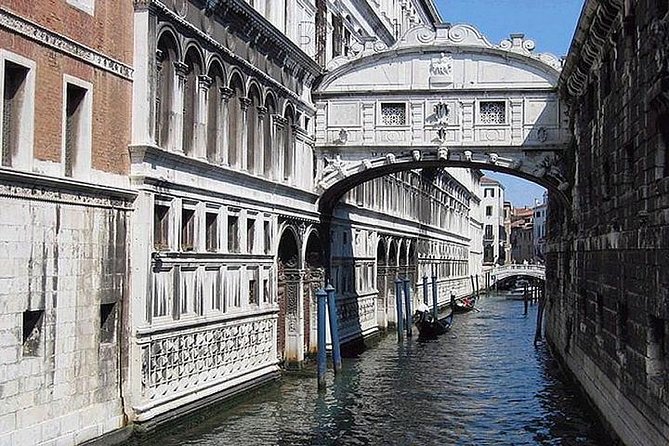
Stop 5: St. Mark’s Basilica
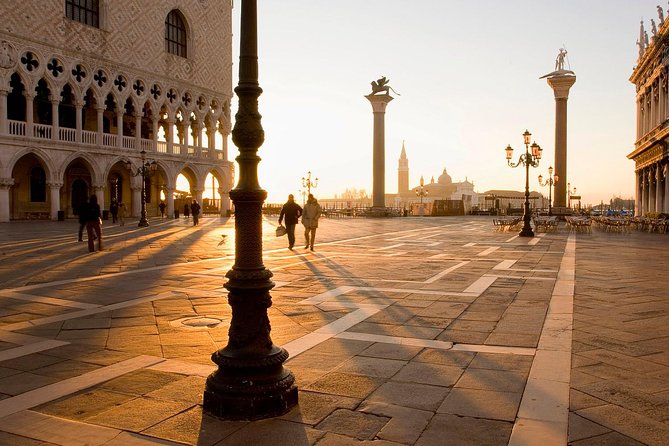
You end up in Venice’s most famous square orbit. St Mark’s Square is the principal public square in Venice, and it is associated with Napoleon Bonaparte’s comment calling it the most beautiful hall in Europe.
St Mark’s Basilica itself is defined by its gold-ground mosaics, covering domes, vaults, and upper walls with scenes of saints, prophets, and biblical stories.
Admission is not included, so you are paying extra if you want to see inside. This is the biggest decision point in the whole itinerary for many people. If you are the type who wants the interior, plan for it in your day budget. If you prefer keeping the pace and using photos and the exterior space as your experience, you can still get a lot out of the square area.
Practical timing thought
Because the day is structured into one-hour blocks at each stop, your St Mark’s choice affects what you can do later. If you go inside, you may want to be efficient with the surrounding square photos so you do not lose time for the next bridge moments.
The Bridge of Sighs: short time, big atmosphere
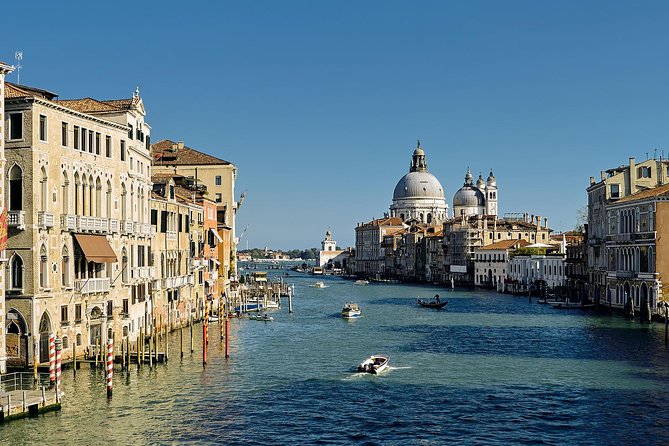
Stop 6: Ponte dei Sospiri
The Ponte dei Sospiri connects the Doge’s Palace with the prison on the other side of the canal. It is called the Bridge of Sighs by locals, with a tradition that prisoners sighed as they crossed, knowing they would not see the outside world again.
This stop is free. It is one of the best examples of Venice where story and architecture lock together instantly. Spend your time not just photographing, but looking at how the bridge lines sit between two landmarks. That makes it easier to understand why it became iconic.
San Zaccaria and the Accademia area: a calmer shift
Stop 7: Chiesa di San Zaccaria
San Zaccaria is a 15th-century former monastic church in central Venice. The present church was built between 1458 and 1515, and its facade blends late-Gothic and Renaissance styles.
Admission is not included. This stop is useful because it breaks the pattern of only Grand Canal and square landmarks. It helps you see Venice as a lived-in religious and community space, not just a scenic corridor.
Stop 8: Ponte dell’Accademia
Then you move to Ponte dell’Accademia, one of only four bridges spanning the Grand Canal. It crosses near the southern end of the canal and is named for the Accademia di Belle Arti di Venezia.
This stop is free. Bridges here work best as perspective breaks. If St Mark’s feels overwhelming, a quick shift to the Accademia side can make the day feel more balanced.
Squero di San Trovaso: gondola craftsmanship, not just gondola photos
Stop 9: Squero di San Trovaso
Now you reach something that feels very Venice and very specific. A squero is a classic Venetian shipyard where small boats like gondolas are repaired. The Squero di San Trovaso is described as one of the oldest and most famous squeros.
This stop is free, and it is a great time to look for how the gondola world actually works. If there is a chance to peek at how a gondola is made or repaired, take it. Even if you never ride in a gondola during the day trip, understanding the craft gives meaning to everything you have seen on canals so far.
And a key note: gondola ride tickets are not included. Some guides may help you line one up separately, but you should not assume it is part of the package.
Modern street art meets old stone: Campo San Pantalon and Santa Margherita
Stop 10: Campo San Pantalon
Next is Campo San Pantalon, where you can admire a Banksy painting commonly referred to as the shipwrecked or migrant child. This is a reminder that Venice is not frozen in amber. Even in a city built for tourists, new cultural layers keep landing on the streets.
This stop is free.
Stop 11: Campo Santa Margherita
Then you shift to Campo Santa Margherita, in the Dorsoduro area near university buildings. It is a gathering place for students at the end of the day, so the vibe can feel less like a staged attraction and more like real city life.
This stop is free. If you need a breath after churches and bridges, this is a good one to slow down, sit if you can, and just watch how the square works.
Piazzale Roma: where the city meets cars
Stop 12: Piazzale Roma
Your day ends at Piazzale Roma, the square at the entrance of Venice where the Ponte della Libertà meets the insular city core. Piazzale Roma and nearby Tronchetto island are the only places inside Venice’s urban core accessible to ground motor vehicles.
This stop is free. It is a fitting close because it gives you a clean mental picture of how Venice works spatially. When you head back to Rome, you will feel the difference between the car-access edge of the city and the foot-bridge-canal interior.
How to handle the rushed feeling in a 12-hour day
On paper, you might see lots of one-hour stops and assume you have plenty of time. In reality, the train legs take most of the day, leaving Venice time tight enough that you will likely walk quickly and move on schedule.
This is why the private guide matters most. A great guide can help you choose what to prioritize and keep the day from turning into a frantic list of checkmarks. Some guides are praised for being patient with questions and for stepping in when trains shift late.
So here is the advice that actually helps your day:
- If you want St Mark’s interior, commit to it early in the rhythm and accept that it may make later photo stops tighter.
- If a gondola ride is a top priority, treat it as a separate decision, not an automatic part of the day.
- Wear comfortable shoes, because Venice punishes rigid footwear on bridges and uneven streets.
Also, be realistic about what you can do. This trip is ideal for seeing the main pillars of Venice fast, not for absorbing every side chapel like you are conducting research.
Who this tour fits best, and who should skip it
This tour is a strong fit if you:
- Want a first-time Venice highlights route without planning train schedules
- Prefer a private guide approach, with less crowd energy
- Only have limited time in Italy and want a high-value day from Rome
- Are okay with some extra spending for major interiors, like St Mark’s Basilica
You might skip it if you:
- Are shopping for the lowest cost and want to do everything independently
- Need long time inside major sites, because the day is built for movement
- Expect the train experience to feel luxury, since it is 2nd class and seat assignment may be random
- Want hotel pickup and return transport as part of the package, since pickup and drop-off are not listed as included
Should you book this private Venice day trip from Rome?
I would book it if your top goal is to see the big Venice landmarks efficiently, and you like having a guide help you stay oriented through a city that can confuse even confident walkers. The private format and the landmark-focused route are the main reasons it works.
I would hesitate if you are chasing a slow, deep Venice day. The schedule is tight, some of the best-known interiors are not included, and gondola rides are not part of the ticket. If you know what you will pay extra for, and you want the rest handled for you, this tour can be a smart use of limited time.
FAQ
How long is the Venice day trip from Rome?
The duration is listed as approximately 12 hours.
Where do we meet in Rome, and what time does it start?
You meet at Roma Termini, Via Giovanni Giolitti 40, 00185 Rome, with a start time of 6:30 am.
What is included in the price?
It includes a professional guide, train transport by 2nd class, a private tour, and the Venice visitor fee.
Are attraction tickets included for St Mark’s Basilica or San Giorgio dei Greci?
No. St Mark’s Basilica and Chiesa di San Giorgio dei Greci have admission tickets marked as not included.
Does the tour include hotel pickup or drop-off?
Pickup and drop-off are not included. The tour ends back at the meeting point.
When are the train tickets purchased?
Train tickets are purchased 48 hours in advance. An email with tour information and train tickets is sent the day before.
Can I cancel for a full refund?
You can cancel for a full refund if you cancel at least 24 hours in advance of the experience start time.
Latest additions from Rome
- Guided Tour Vatican Museums & Sistine Chapel★ 4.1 · 30 reviews
- Exclusive Rome by Night Vespa Tour★ 5.0 · 30 reviews
- Transfer Rome to Airports★ 4.5 · 30 reviews
- Vatican: St.Peter’s Basilica & Dome – Reserved Entry & Tour★ 4.1 · 30 reviews
- Rome street art tour: off the beaten path with a local guide★ 5.0 · 30 reviews
- Tivoli, Hadrians Villa and Villa d’Este, a charming day trip from Rome★ 4.5 · 30 reviews
- Rome Food Tasting with Wine Pairing Italian Authentic Flavors★ 5.0 · 31 reviews
- Inspirational Cooking on the Roman Chef’s Panoramic Terrace★ 5.0 · 30 reviews
Train Experiences, compared.
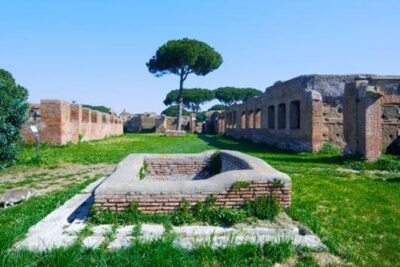
Ancient Ostia Antica Semi-Private Day Trip from Rome by Train with Guide
Read our review →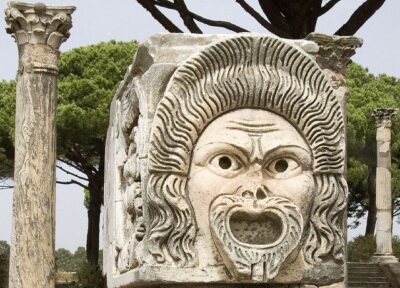
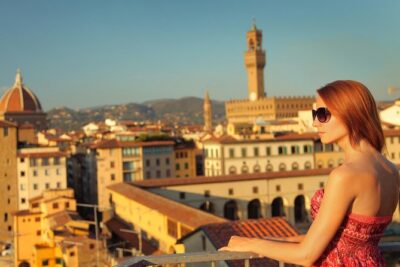
Rome to Florence: High-Speed Train Day Trip with Guided City Tour
Read our review →
Pompeii and Naples Tour from Rome by Train with Lunch
Read our review →
Amalfi Coast Day Trip from Rome by High-Speed Train
Read our review →
Private Arrival Transfer: Rome Train Station to Hotel
Read our review →
Pompeii & Herculaneum by Train from Rome with Pizza Lunch
Read our review →
Capri Island Small Group Boat Tour from Rome by Train
Read our review →Browse the lists this tour appears in