
Reviewed · TRAIN EXPERIENCES
Venice by Train from Rome: Enjoy a Private Day Tour Experience
Rails to Venice, done privately in one day. This tour is interesting because it pairs 1st-class train travel with a guided, walk-friendly hit list in Venice, so you do not burn hours figuring things out. I like the central Rome hotel pickup and drop-off, because it makes a long day feel manageable. My one caution: it is a full agenda, so expect lots of walking and a pace set by the tour schedule.
Once you arrive, the guide does the real work, from steering you toward the big sights to helping you navigate Venice’s crowd patterns. And because St. Mark’s Basilica is built into the plan, you get a clear reason to be there, not just to wander. One more thing to consider, based on real experiences: if you need time for heavy shopping or a very slow stroll, this may feel rushed.
In This Review
- Key highlights at a glance
- Price and logistics: what you are really paying for
- The train from Rome: comfort helps, but bring patience
- Venice arrival by water: the canal view sets the tone
- Stop 1: Canal Grande, the city divided in one famous curve
- Stop 2: Ponte di Rialto and the old market energy
- Stop 3: Piazza San Marco, where the city floods and shines
- Stop 4: St. Mark’s Basilica, included entry and your biggest payoff
- Stop 5: Palazzo Ducale, Doge’s Palace and the “power to prison” story
- Stop 6: Campanile di San Marco, the city’s big bell tower face
- Stop 7: Ponte dei Sospiri, Bridge of Sighs, the real legend versus the movie version
- Gondola rides, Murano glass, and the extras you might add
- Guides make or break the day, and the names show real variety
- Who this tour suits best, and who should think twice
- Should you book this Rome to Venice by Train tour?
- FAQ
- What is included in the tour?
- Is a gondola ride included?
- What tickets are included for the Venice sights?
- Do you get hotel pickup and drop-off in Rome?
- When do I confirm the pickup time?
- What language is the tour?
- What is the dress code?
- What is the cancellation policy?
- Is this a private tour?
Key highlights at a glance
- 1st-class round-trip train cuts down stress on a long day and keeps you comfortable for the ride
- Hotel pickup in Rome handles the first hurdle, getting you to the station without fuss
- Guided Venice walk with timed stops so you do not miss the big landmarks
- St. Mark’s Basilica included (or the Bell Tower if Basilica entry is not possible)
- Vaporetto and canal time included for a more Venice-like arrival and exit
- Private tour format means only your group, with a guide who can pace to your needs
Price and logistics: what you are really paying for
At $708.41 per person (for the private day tour), you are not just paying for a ticket to Venice. You are paying for the whole system.
This is built around four value points:
1) Round-trip fast train in 1st class.
2) Hotel pickup and drop-off in central Rome.
3) A professional tour assistant all day, with an emergency WhatsApp number.
4) Key Venice entries, including St. Mark’s Basilica.
That is why the cost can feel high if you compare it to a DIY train day. But if you compare it to what it takes to manage stations, crowds, ticket lines, and navigation, the price starts to make more sense. One review even called it stress-free because the plan handles the hardest parts.
Still, here is the fair warning. Several experiences describe a “we have to be at these places” feeling. One person said they were whisked around and had little time to shop. Another mentioned the day felt rushed. So if your ideal Venice day is slow, long lunches, and spontaneous detours, you may want to plan a longer stay instead.
More Private Tours in Rome
- Rome by Golf Cart Private Tour: Beyond the Landmarks
★ 5.0 · 4,361 reviews - Early Morning Vatican, Sistine, St. Peter’s Semi or Private Tour
★ 5.0 · 3,779 reviews - Rome on a Golf Cart Semi-Private Tour Max 6 with Private Option
★ 5.0 · 2,502 reviews - Rome Private Arrival Transfer: Fiumicino Airport to Hotel in Rome
★ 4.5 · 2,492 reviews
The train from Rome: comfort helps, but bring patience
The day is anchored by a train ride that is simply long. More than one review described it as about four hours each way, and that is the main reason this is a “one day in Venice” option, not a chill weekend.
What you get for that effort:
- 1st class for the round trip, which most people find more comfortable for a long sit.
- The tour assistant stays with you through transfers, so you do not just arrive and fend for yourself.
One helpful detail: your guide often uses the ride time to explain what you are seeing next. In a few reviews, guides answered questions on the train and shared practical Venice background, which makes the whole day feel less like a scramble.
One possible snag: at least one traveler reported no onboard service and even no bottled water. First class can improve the experience, but it is still smart to bring your own water and a snack if you get hangry after hours on the rails.
Venice arrival by water: the canal view sets the tone
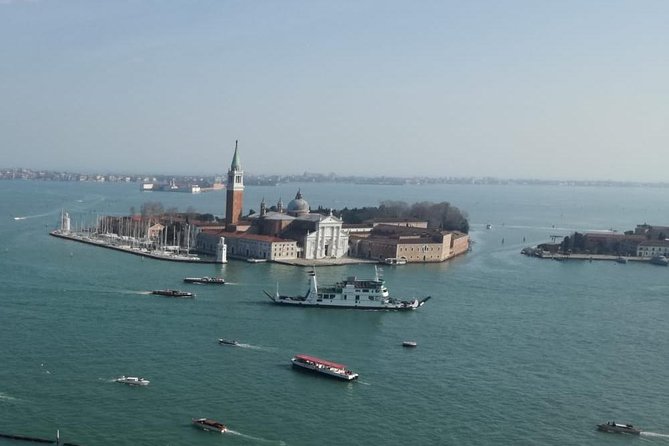
Venice is one of those cities where the first ten minutes matter. You are not just “getting to the city,” you are moving through it. This tour includes a one-way water bus with a return water bus ride (and some people specifically mention a longer canal ferry moment back toward the station).
That water transit is not filler. It is a fast way to see Venice as a real city made of waterways, not just a postcard backdrop. It also helps the schedule: instead of fighting one more bottleneck of streets, you shift to water.
Stop 1: Canal Grande, the city divided in one famous curve
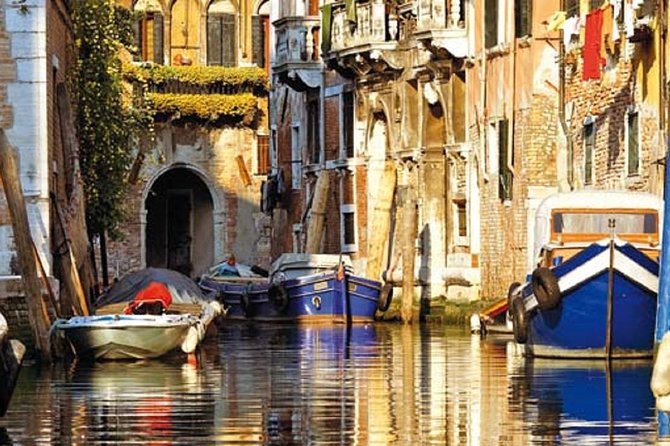
The Grand Canal is about four kilometers long and shaped like an inverted S, slicing Venice into two halves. That “divide” matters because it explains why Venice feels like multiple little worlds connected by boats and bridges.
This part of the stop is about orientation:
- You walk along the canal corridor and learn how the city is organized around it.
- You see how bridges connect districts, not just monuments.
The guide may also point out the width range and depth differences, like how it varies from around 30 to 70 meters wide, and how the canal is up to about five meters deep. If that sounds technical, it is actually useful. Venice water traffic and bridge placement make more sense once you understand this channel is big enough to function like a main avenue.
Look for bridge references as you go. The canal is crossed by four bridges:
- Rialto (the oldest, dating to 1591)
- Scalzi
- Accademia
- Constitution Bridge (designed by Calatrava, opened September 11, 2008)
Stop 2: Ponte di Rialto and the old market energy
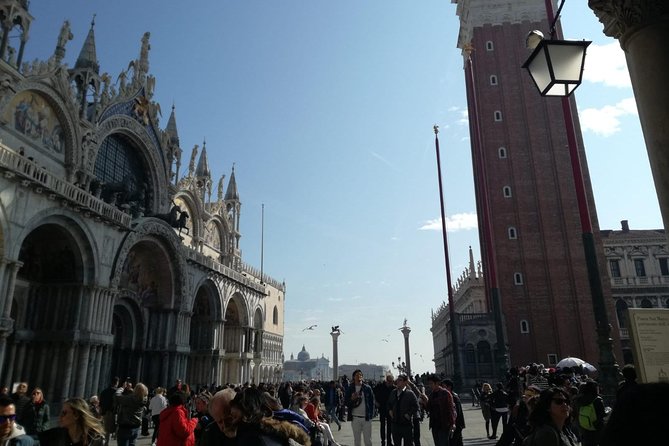
Next comes Rialto Bridge, described as the oldest of the canal’s four bridges. It mattered for years because it was a hinge point in Venice’s economy.
Crossing it is quick, but it is one of those moments where the structure is the story:
- The bridge’s design uses two inclined ramps joined by a central portico.
- It has been rebuilt after collapses and fires over time.
Then you reach the Rialto Market area. Even if you do not shop, it is worth stepping in for the atmosphere. This market has deep roots, held in this spot since 1097, with fruit and vegetable stalls that still give you that lived-in Venice feel.
A practical note: Rialto gets crowded fast. If you want photos without constant people in every frame, keep moving and pause in short bursts rather than planting yourself.
A few more Rome options worth a look
Stop 3: Piazza San Marco, where the city floods and shines
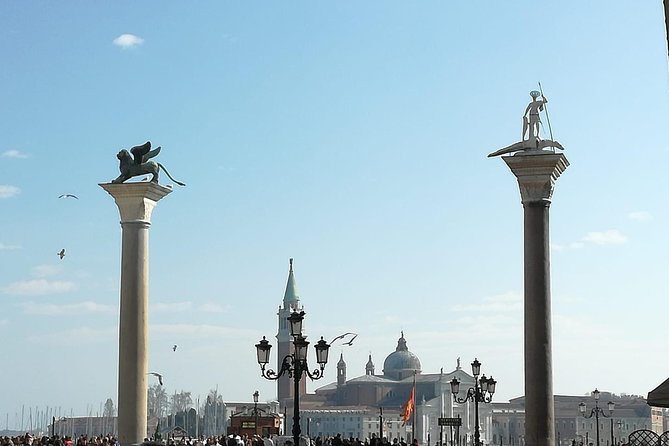
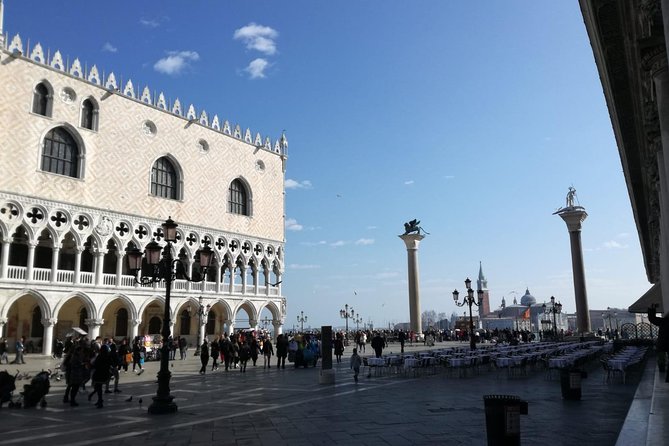
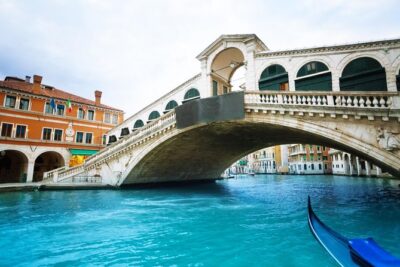
Piazza San Marco is often called the most important square in Venice, and you feel why as soon as you look around. It was built in the 9th century and paved in 1177, about 100 years after construction.
Two things make this stop particularly memorable:
- It is a grand stage with major buildings clustered around you.
- It is one of the first areas to flood when water levels rise.
When the square floods, the municipality installs walkways for pedestrian movement. One day you might see the normal stone expanse, and another day you might see partial water coverage and boardwalk paths. Either way, it makes you understand Venice is not frozen in time. It adapts.
Plan around the time you have here, about two hours in the itinerary. That is enough for photos, a slow look at the facades, and a short pause to understand the layout:
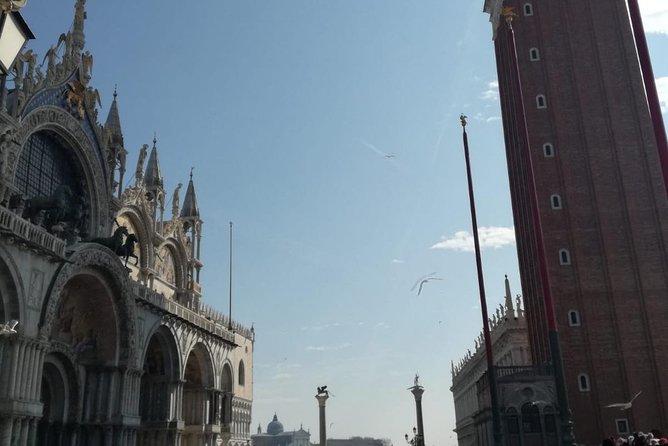
- Basilica di San Marco
- Palazzo Ducale
- Museo Correr
- Campanile
- Clock Tower
Stop 4: St. Mark’s Basilica, included entry and your biggest payoff
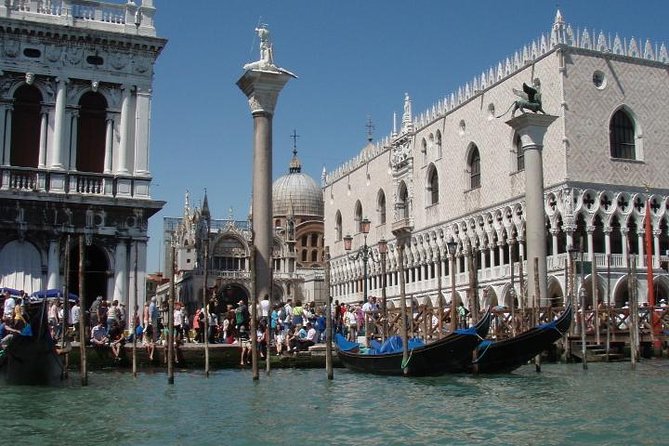
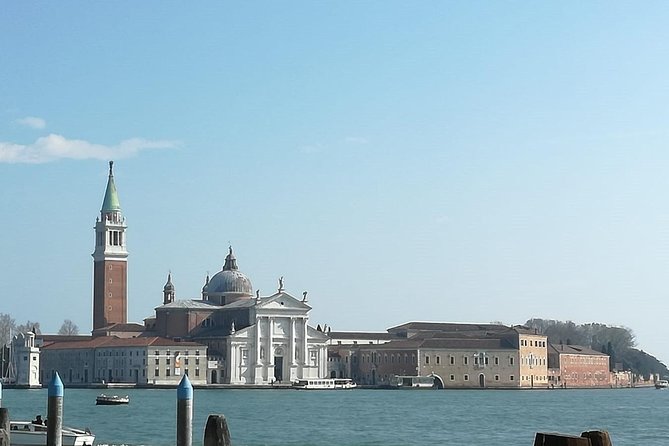
This is where the value often lands. Basilica di San Marco is in the itinerary with admission included (and if Basilica entry is not possible, the tour visits the Bell Tower instead).
The Basilica story is built into the building:
- Work began in the early 9th century to house the body of Saint Mark brought from Alexandria.
- The current Basilica began in 1063, designed in Byzantine style to reflect the power of the Venetian Republic.
What to watch for when you are inside:
- The mix of styles, with Greek-cross planning and domes.
- The sense that this is not just a church, it is a symbol of a city-state with real political muscle.
Also, reviews strongly support one key practical benefit: you usually avoid long waits. A few people mentioned getting into St. Mark’s without standing in line, thanks to pre-arranged access.
If you get nervous about crowds, this is a good place to wear your patience like armor. Go with smart casual dress, as required, and plan to keep your eyes up. The details reward calm attention.
Stop 5: Palazzo Ducale, Doge’s Palace and the “power to prison” story
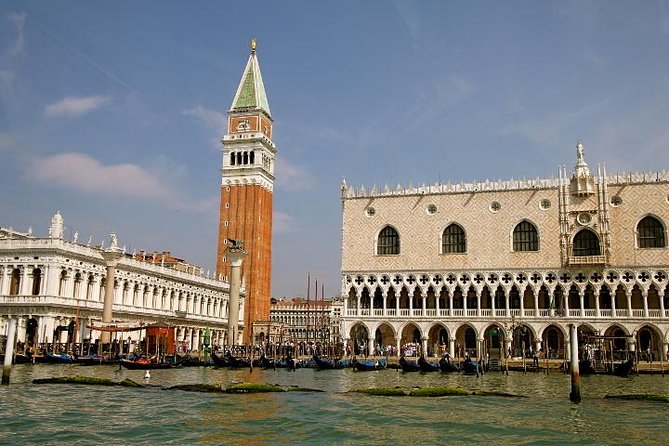
Next is Palazzo Ducale (Doge’s Palace). This stop is shorter in the schedule, but it is dense with meaning.
The palace’s shape evolved over centuries:
- A fortified nucleus in the 10th to 11th centuries.
- Transformations under Doge Sebastiano Ziani in the 12th century, turning it into a more elegant palace.
- Another major shift in the 14th century under Bartolomeo Gradenigo, then further expansion under Doge Francesco Foscari until it reached toward the Basilica.
Then comes a detail you should pay attention to because it changes how you see the place. In the early 17th century, architects added the New Prisons across the canal. That connection ran through the Bridge of Sighs, which leads right into the next stop.
This is why Doge’s Palace feels so dramatic. It is not a museum of vibes. It connects politics, law, and the reality of punishment in one compact story.
Stop 6: Campanile di San Marco, the city’s big bell tower face
The Campanile di San Marco is one of Venice’s symbols, and Venetians call it El parón de casa, meaning the master of the house.
In the itinerary, you get about 15 minutes, which is just enough to get your bearings and take a few photos.
Why it matters:
- It rises to around 98.6 meters, with brick and a fluted barrel shape.
- The top section includes the arched belfry.
- At the highest point is the golden statue of the archangel Gabriel, mounted on a rotating platform that functions as a weather vane.
This stop is not about reading every carving. It is about realizing this tower is a visual anchor for the entire square. Once you know what to look for, you start spotting how the tower and Basilica align from different angles across Venice.
Stop 7: Ponte dei Sospiri, Bridge of Sighs, the real legend versus the movie version
Finally, the Ponte dei Sospiri (Bridge of Sighs). It sits right behind Piazza San Marco and is unique because it is the only bridge in Venice that is completely closed.
The romantic legend says it is the lovers’ bridge. The practical history says it served as a security passage connecting the Palazzo Ducale and the prisons. Prisoners moved across this narrow route between court and confinement.
That contrast is why I like this stop at the end. After all the art and spectacle, you land on a darker, clearer truth: Venice ran on power systems, and this bridge was built for control, not romance.
You only need a short pause here. The best photos happen when you step back, find the angle, and move before the crowd thickens again.
Gondola rides, Murano glass, and the extras you might add
The tour plan is built around major walking stops and Basilica entry. A gondola ride is optional and not included.
You should assume you will decide on the gondola while you are there. Several reviews mention a gondola cost that comes out around 80 to 95 euros on the day, so budget for that if it is on your list.
Also, some guides arrange other Venice experiences beyond the core itinerary, like Murano glass factory visits. One review specifically called out a glass factory visit and a glass blowing presentation as amazing. Those extras are not stated as guaranteed in the itinerary you provided, so think of them as possible depending on timing and your guide, not as a sure thing.
For planning, do not treat this as a shopping tour. The schedule is tight. If you want bargains, you will need to keep a shopping mindset focused and quick.
Guides make or break the day, and the names show real variety
A huge pattern in the reviews is that the tour becomes better when the guide is sharp, patient, and proactive.
Examples from the experiences tied to this tour:
- Monika or Monica was praised for history, details, and navigating Venice’s big sites.
- Giuseppe and Lorenzo were praised for staying with the group all day, guiding you through train logistics, and even helping with gondola arrangements and lunch recommendations.
- Rashi and Irene were praised for helping people navigate crowds and long lines, with Irene specifically called out for handling a cold rainy day without letting the day collapse.
- Serevino was noted for being patient with an elderly mother who had trouble with stairs, including assistance when needed.
- Some guides, like Juliano and Claudio, were praised for showing sights people would not easily find and for arranging extra stops.
In other words, the private format matters. You are not just buying a route, you are buying a person who can read your pace and keep you moving in the right direction.
Who this tour suits best, and who should think twice
This is a strong fit if you:
- Have limited time and need a Venice hit in one day from Rome
- Want hotel pickup and rail planning taken off your plate
- Like a guided walk with clear priorities like St. Mark’s and Doge’s Palace
- Appreciate skip-line help, especially around St. Mark’s Basilica
Think twice if you:
- Want to linger in shops or on side streets for long stretches
- Get overwhelmed by crowds and prefer a slower, independent pace
- Are very sensitive to delays, since rail days can be vulnerable to accidents and schedule changes (one negative experience mentioned delays caused by an accident)
If your heart says Venice, but your time says “stay longer,” that is still a valid choice. A one-day Venice plan can feel exciting and intense at the same time, and that is the trade.
Should you book this Rome to Venice by Train tour?
Book it if you want the smart shortcut: fast rail in 1st class, central pickup in Rome, a guided Venice agenda, and Basilica entry handled for you. It is a practical way to get the highlights without turning your day into a logistics puzzle.
Skip it, or at least consider a different plan, if your main goal is a slow Venice day with lots of freedom to wander and shop. This itinerary is built to cover major sights and keep you on a timeline. Even with a great guide, that structure limits browsing.
My bottom line: if you are visiting Rome and Venice in a tight schedule, this private format is exactly the kind of help you will thank yourself for later. Just bring extra patience for crowds, and plan your gondola budget ahead so there are no surprise bills when you are already in love with Venice.
FAQ
What is included in the tour?
The tour includes a professional tour assistant, a water bus ride one way with return water bus, pickup and drop-off to city center hotels in Rome, a visit to St. Mark’s Basilica (or the Bell Tower if Basilica entry is not possible), and a round-trip fast train ticket in 1st class.
Is a gondola ride included?
No. Gondola rides are optional and not included.
What tickets are included for the Venice sights?
St. Mark’s Basilica admission is included. Other stops listed are marked free admission, while the Basilica has included admission.
Do you get hotel pickup and drop-off in Rome?
Yes, pickup and drop-off are offered for hotels, apartments, bed and breakfast, and other accommodations in the city center area. You provide the address at reservation.
When do I confirm the pickup time?
You need to contact customer services one day before the tour to confirm the pickup time. Pickup time must be confirmed between 10:00 am and 6:00 pm via the emergency phone or WhatsApp.
What language is the tour?
The tour is offered in English.
What is the dress code?
The dress code is smart casual.
What is the cancellation policy?
Free cancellation is available up to 24 hours in advance for a full refund.
Is this a private tour?
Yes. It is private, meaning only your group participates.
Latest additions from Rome
- Rome: Testaccio Market Food Tour with Street Food & Wine★ 5.0 · 8 reviews
- Exclusive Pasta & Tiramisu Class with Wine near by Colosseum★ 5.0 · 8 reviews
- Private Professional Photoshoot in Rome★ 5.0 · 8 reviews
- Loreto “Shrine of the Holy House of the Virgin Mary” Private Tour from Rome★ 5.0 · 8 reviews
- Rome Day to discover Florence and Pisa Hotel Pickup★ 4.5 · 8 reviews
- Rome: Christmas Nativities and Angels Tour★ 3.1 · 8 reviews
- Guided Tour of Vatican Museums and Sistine Chapel★ 5.0 · 8 reviews
- Rome: Cooking Class of fresh Pasta and Tiramisu Cake★ 5.0 · 8 reviews
Train Experiences, compared.
Ancient Ostia Antica Semi-Private Day Trip from Rome by Train with Guide
Read our review →
Rome to Florence: High-Speed Train Day Trip with Guided City Tour
Read our review →
Pompeii and Naples Tour from Rome by Train with Lunch
Read our review →
Amalfi Coast Day Trip from Rome by High-Speed Train
Read our review →
Private Arrival Transfer: Rome Train Station to Hotel
Read our review →
Pompeii & Herculaneum by Train from Rome with Pizza Lunch
Read our review →
Capri Island Small Group Boat Tour from Rome by Train
Read our review →Browse the lists this tour appears in