
Reviewed · SELF-GUIDED TOURS
Rome Self-Guided City Experience
A GPS-led Rome stroll keeps you moving. This self-guided VoxCity experience pairs a mobile app with recorded narration and offline navigation, so you can plan your day around iconic stops like the Pantheon and Trevi Fountain. I like the simple setup idea, plus the fact that you’re geo-tagged as you walk, with a built-in map that helps you avoid the classic Rome problem of, now where am I?
The main drawback is that the app experience can be fragile in the real world, including cases where it won’t load the map, freezes your phone, or fails to recognize a purchase already made. If you depend on the app working perfectly, bring a Plan B mindset.
In This Review
- Key takeaways before you use the VoxCity Rome app
- VoxCity Rome: offline audio, geo-tagging, and what you get for $11.58
- Setup matters: mobile ticket, offline use, and earphones you should bring
- How the 2 to 3 hour route fits together, and why pacing is your friend
- Pantheon and St. Peter’s Basilica: your fast intro to Rome icons
- Piazza Navona, Trevi, and Piazza di Spagna: the squares that keep the day fun
- Castel Sant’Angelo to Villa Borghese: adding variety without extra planning
- Abbazia di San Paolo Fuori Le Mura, Piazza Venezia, and Fori Imperiali: long-view sightseeing
- Circo Massimo to Bocca della Verita: finish strong with playful, memorable stops
- When the app freezes or the map won’t download: how to protect your day
- Price and logistics checklist: who this fits, and who should skip it
- Should you book this VoxCity Rome self-guided experience?
- FAQ
- How long is the Rome self-guided experience?
- Does this tour require a mobile ticket?
- Can I use the app offline in Rome?
- What’s included in the experience?
- Are entry tickets included for major attractions?
- What devices does the app work on?
Key takeaways before you use the VoxCity Rome app

- Offline navigation helps you avoid roaming while you walk between major sights
- Recorded narration gives you facts in your language, without booking a live guide
- Geo-tagging and a map are meant to keep you oriented throughout the route
- Admission is not included for attractions like Vatican Museums, so you still need tickets where required
- App stability is the risk, with reports of frozen screens and missing direction cues
VoxCity Rome: offline audio, geo-tagging, and what you get for $11.58

For $11.58 per person, the value here is not convenience alone. It’s the mix of guided narration plus navigation that works even without internet, which is exactly what you want in Rome when signals get spotty and walking routes are never straight.
The app is built around walking itineraries (with the option to use public transportation using built-in plans). You also get 130+ points of interest, not just a tiny route, so you can treat this as a starting spine for your day rather than a rigid “follow me exactly” tour.
Two things I especially like: first, the narration format. It’s recorded, so you can listen when you want, pause when you want, and skip ahead when your legs say no. Second, the concept of being geo-tagged. Even when you’re not staring at your phone, it’s reassuring to know the app is tracking your position instead of making you do constant map gymnastics.
The price makes sense if you’re the kind of traveler who wants info but not a meeting point drama. It may feel less worth it if you end up spending your time troubleshooting your phone instead of walking Rome.
More of Rome walked on your own clock:
- Rome: Colosseum & Forum with Audio Guide App -Optional Arena
★ 4.2 · 24,770 reviews - Colosseum, Roman Forum & Palatine Hill with Audioguide App
★ 4.4 · 6,291 reviews - Vatican & Sistine Chapel Ticket with Optional Audio Guide
★ 4.1 · 5,405 reviews - Rome: Pantheon Priority Entry Ticket & Interactive App
★ 4.1 · 5,114 reviews
Setup matters: mobile ticket, offline use, and earphones you should bring
This is a mobile ticket experience, and it relies on the app for the map and the narration. That means your best move is to get everything ready before you head out, not while you’re at your first landmark.
From the tour details, the app can operate offline. That’s huge for cost control and sanity. It also means your phone storage and battery planning matter more than you might expect. If you’re low on storage, your phone might struggle with downloads. If you’re low on battery, a frozen screen can turn into a stressful afternoon fast.
A practical heads-down: earphones are not included. So plan on using your phone speaker, or better, bring wired or Bluetooth earbuds. If you plan to listen at churches and museums, earbuds also help you avoid blasting audio into quiet spaces.
One more logistics note that people often miss: public transportation tickets are not included. So if your route includes transit segments, you’ll need to buy those separately through whatever system you use in Rome.
How the 2 to 3 hour route fits together, and why pacing is your friend
The itinerary is designed as a quick-hit loop, with each stop listed around 3 minutes. That does not mean you must spend only 3 minutes at each place. It means you should expect short orientation moments and then decide if you want to linger.
In practice, the best way to use a format like this is to treat the narration like a kickstart. You listen long enough to understand what you’re looking at, then you switch to “wander mode” and let your curiosity steer you.
You’ll also appreciate that the tour runs 12:00 AM to 11:59 PM. That flexible window matters because Rome days change. If you start late, or you decide to detour for coffee and photo breaks, you can still make the plan work.
The route includes a mix of stops that are likely accessible from outside (many are marked free for admission ticket). It also includes at least one big “know before you go” item: Vatican Museums, where the admission ticket is marked as not included.
And yes, there is a maximum of 30 travelers listed, even though this is self-guided. Think of it as a service limit, not a walking group you’ll be stuck with.
Pantheon and St. Peter’s Basilica: your fast intro to Rome icons
Your route starts with the Pantheon. The app flags admission ticket as free for this stop and gives you a short, narrated orientation. For a self-guided experience, this is a smart first choice. It’s an easy way to get your bearings early, and the navigation help sets you up for the rest of the day.
Next comes Vatican Museums. Admission ticket is not included here. That’s the biggest decision point in the whole plan, because if you want to go inside, you’ll need to handle entry separately. The app can still help you make sense of what you’re seeing around the area, but don’t count on this stop paying for itself.
Then you hit St. Peter’s Basilica, again marked free for admission ticket. Even with free entry, you should plan for time spent finding the right spot and moving through security areas if needed. The app’s job is to keep you informed while you do the slow human things, like looking up and walking with purpose.
If you’re someone who wants structure but hates strict timing, this trio works well. You get a major classic, a major ticketed complex, then another cornerstone basilica, all in a route that stays manageable.
Piazza Navona, Trevi, and Piazza di Spagna: the squares that keep the day fun
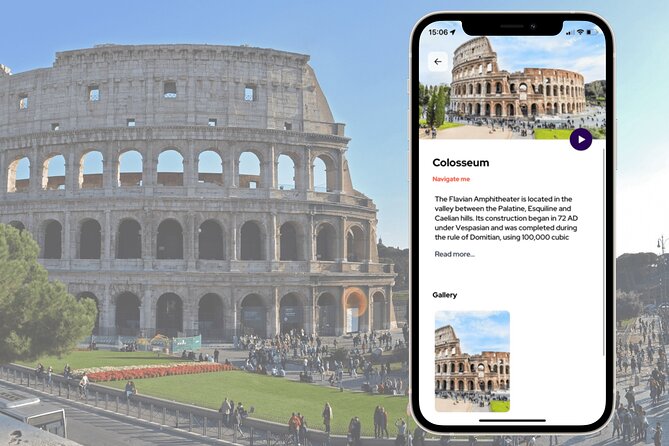
After the Vatican side, the route swings into the heart-of-central-Rome vibe. Piazza Navona is a free-marked stop, and the app gives you a quick story-style introduction. This kind of square stop is ideal for a self-guided format because you can look around at your own speed, then move on before the afternoon gets too hot or too crowded.
Then you get Piazza Di Spagna, also marked free. The payoff of listening to narration here is that you get a sense of the place beyond the postcard view. You’re not just taking photos, you’re learning why the area matters.
Next is Fontana di Trevi, marked free. This is one of those stops where the app narration can help you slow down, even if you’re tempted to rush. You’ll also appreciate that the itinerary keeps nudging you to keep walking, so you’re not stuck circling the same spot all day.
From there, the plan includes Piazza Cavour and Piazza del Popolo, both marked free for admission. These stops are useful because they break up your day. They also help you build a sense of Rome as connected neighborhoods, not isolated monuments.
The route then includes Via Della Conciliazione, a transfer-style stop. It’s a good reminder that self-guided tours are not just about icons. The “in-between” streets are part of the experience, and navigation help can reduce the mental load.
A few more Rome options worth a look




Castel Sant’Angelo to Villa Borghese: adding variety without extra planning

If you want variety, the itinerary doesn’t just recycle the most famous names. It includes Museo Nazionale di Castel Sant’Angelo (marked free for admission ticket). Even if you do not go in, the location matters, because it ties your day to a different feel than the tight central squares.
Then comes Villa Borghese, also marked free. This is another kind of Rome stop where the app narration can help you decide how to spend your time. Do you want a quick orientation and continue, or do you slow down and linger longer than the planned 3 minutes?
From there, you’re back into city-grid rhythm with Piazza della Repubblica and Via Nazionale, both marked free. Those are great for anyone who likes to mix monuments with real city life, because you can walk, look, and regroup without needing a paid admission moment.
This is also where the 130+ points of interest feel helpful. If the app suggests nearby extras, you can choose a side stop without disrupting the main route.
Abbazia di San Paolo Fuori Le Mura, Piazza Venezia, and Fori Imperiali: long-view sightseeing
The route continues outward with Abbazia di San Paolo Fuori Le Mura, marked free. A stop like this can be a nice mid-to-late-day reset. The planned duration is short, so it doesn’t lock you into a long visit unless you choose to extend.
Next is Piazza Venezia, marked free. The app’s narration can help you orient yourself here, especially when you’re juggling several major areas in one day.
Then you reach Via dei Fori Imperiali, marked free. This is a great example of how self-guided navigation is more than just “where to click next.” When you’re walking a long corridor between sights, having a guided map reduces the mental effort, and the audio helps keep the walk from feeling like empty transit.
The plan finishes this stretch with Via Del Corso, marked free. It’s a practical “walk it off” stop that fits naturally after bigger monuments and museum zones.
Circo Massimo to Bocca della Verita: finish strong with playful, memorable stops
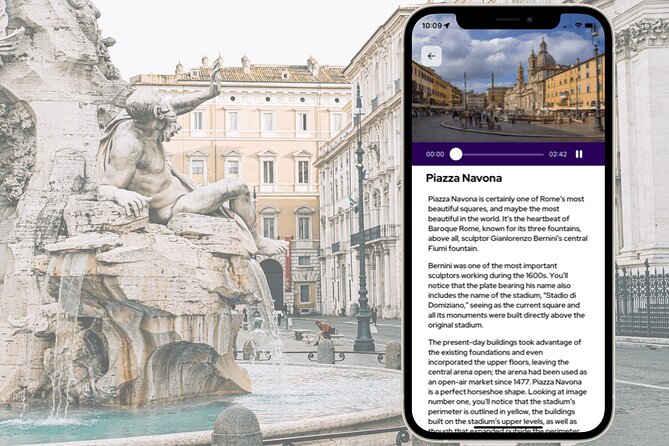
The final parts of the route keep the momentum going. Circo Massimo is marked free for admission ticket. Even if you only take in the view and move on, the self-guided format works well because you can read the space as you go, instead of waiting for someone to tell you where to stand.
Then comes Bocca della Verita, also marked free. Stops like this tend to be memorable because they’re specific. The app narration helps you connect the dots while you’re there, without you needing to look up trivia on the spot.
After that you finish with Insula dell’Ara Coeli, marked free. It’s a fitting capstone because the route feels like it covers a wide slice of Rome, not just the most Instagram-ready corners.
The itinerary overall is designed so you can keep moving, while the narration gives you structure. It’s a good fit for travelers who get restless when sightseeing becomes too rigid.
When the app freezes or the map won’t download: how to protect your day
This is the part you should take seriously, even if you’re excited to try it. The biggest complaints revolve around the app not behaving the way it’s supposed to.
Common issues include:
- The app refusing to load the map, leaving you without directions
- The app not recognizing an existing purchase, pushing you toward payment pages instead
- The app freezing your phone and forcing a restart
- Direction cues being unclear, leading to brief wrong turns
So here’s how you protect your day. Test the app before you leave your lodging. Make sure your ticket purchase is recognized, then try the map view and navigation to confirm you’re actually getting the content. If the app uses offline mode, download what you can while you have reliable Wi-Fi, then switch to offline and see if navigation still works.
Also, keep your phone charged. A frozen screen is not your fault, but it is your problem if your battery dies mid-walk. Bring a power bank and treat it like a must-pack item.
Finally, keep a Plan B. If the app fails, you can still enjoy Rome using your own sense of direction and public landmarks you already know. The route is helpful, but it’s not your only way to have a good day.
Price and logistics checklist: who this fits, and who should skip it
At $11.58 per person, you’re paying for narration plus navigation, not for paid entry tickets. That matters because some stops are marked free and one major stop, Vatican Museums, is explicitly not included for admission. If you plan to go inside, you need to budget for separate entry.
This is a smart pick if:
- You like self-guided sightseeing but still want an “on your shoulder” explanation
- You want offline capability to avoid expensive roaming and unstable data
- You’re visiting at least once and want a second pass with better context
- You’re comfortable using a phone for maps and timing
It may not be your best choice if:
- You rely on apps that must work flawlessly to navigate
- You hate phone-based tours and prefer printed maps or staff assistance
- You’re planning a strict schedule with no flexibility for delays
One more value angle: the app includes free Wi-Fi spots and many points of interest. If you love wandering, this can stretch beyond a single 2 to 3 hour window. You can reuse the same concept and keep adding small sights as you go.
Should you book this VoxCity Rome self-guided experience?
I’d book it if your priority is independent Rome with helpful narration, and you’re willing to do a short tech check before you set out. The offline promise and the geo-tagging idea make this a strong concept for a low-cost city day.
Skip it if your phone setup is unreliable, or if you know you get stuck when apps misbehave. In Rome, it’s not just about where you go, it’s about being able to keep moving when technology stumbles.
FAQ
How long is the Rome self-guided experience?
The experience runs about 2 to 3 hours.
Does this tour require a mobile ticket?
Yes. You use a mobile ticket on your device.
Can I use the app offline in Rome?
The app can operate offline, so you can avoid expensive roaming charges.
What’s included in the experience?
Included items are the mobile app, 130+ points of interest, walking itineraries, and free Wi-Fi spots.
Are entry tickets included for major attractions?
Entry to attractions is not included. In the itinerary, Vatican Museums are marked as not included for admission ticket, while many other stops are marked free for admission ticket.
What devices does the app work on?
The app can be used on Android and Apple mobile devices.
Latest additions from Rome
- Rome: Testaccio Market Food Tour with Street Food & Wine★ 5.0 · 8 reviews
- Exclusive Pasta & Tiramisu Class with Wine near by Colosseum★ 5.0 · 8 reviews
- Private Professional Photoshoot in Rome★ 5.0 · 8 reviews
- Loreto “Shrine of the Holy House of the Virgin Mary” Private Tour from Rome★ 5.0 · 8 reviews
- Rome Day to discover Florence and Pisa Hotel Pickup★ 4.5 · 8 reviews
- Rome: Christmas Nativities and Angels Tour★ 3.1 · 8 reviews
- Guided Tour of Vatican Museums and Sistine Chapel★ 5.0 · 8 reviews
- Rome: Cooking Class of fresh Pasta and Tiramisu Cake★ 5.0 · 8 reviews
Self-Guided Tours, compared.

Colosseum & Forum with Audio Guide App -Optional Arena
Read our review →
Colosseum, Roman Forum & Palatine Hill with Audioguide App
Read our review →
Vatican & Sistine Chapel Ticket with Optional Audio Guide
Read our review →
Pantheon Priority Entry Ticket & Interactive App
Read our review →

Colosseum, Forum, & Palatine Hill with Audio Guide
Read our review →
Pantheon Priority Entry Tickets with Interactive App
Read our review →