Reviewed · TOURS
Rome Roman Forum, Palatine Hill Tour Exclusive Full Pass
Stone propaganda, then calm ruins.
This pass makes the Roman Forum area easier to reach with skip-the-line entry and a self audio app that you can use at your own tempo. You get to move through some of Rome’s most recognizable archaeological zones without getting stuck in the worst waiting lines.
I like two things a lot. First, the included priority access covers Trajan’s Forum, the Roman Forum, and Palatine Hill, so you spend your time looking instead of standing in line. Second, the audio guide app gives you control, with 44 points of interest and multiple language options, so you can linger when something grabs you.
One possible drawback: it is not a full walk-and-talk guide from start to finish. You will spend time listening at stops, and the Roman Forum heat can turn your feet into sandpaper. Also, the audio routing needs you to pay attention to where you are, since some people find it harder to match pre-recorded points with the exact spot.
In This Review
- Key highlights you will actually feel
- Why this pass feels like good value at $54.81
- The included audio guide app: multiple languages, flexible pacing
- Meeting point in Via Labicana and how the route really moves
- Trajan’s Forum: conquest turned into marble architecture
- Trajan’s Column: learn the Dacia campaigns in one spiral
- Roman Forum: the monuments you recognize, plus the ones you might miss
- Palatine Hill: where emperors built above the city
- Arch of Constantine: the shortcut to understanding recycled Roman power
- Colosseum: you get the exterior look, not the ticketed entry
- Domus Tiberiana: when private space becomes imperial stage
- Time, weather, and Roman Forum rules you should follow
- Who should book this pass, and who should think twice
- Should you book this Rome Roman Forum and Palatine Hill pass?
- FAQ
- How long is the Rome Roman Forum, Palatine Hill Tour Exclusive Full Pass?
- What languages are available for the audio guide?
- Which sites have skip-the-line tickets included?
- Are Colosseum tickets included?
- Do I need a passport or ID to enter?
- What is the audio guide app, and do I need to download it?
- Can I bring a backpack or water into the Roman Forum?
- Is free cancellation available?
Key highlights you will actually feel
- Skip-the-line access for Trajan’s Forum, Roman Forum, Palatine Hill, and Imperial Forum areas
- Audio guide app with 44 points in multiple languages (including English, Spanish, Italian, and Chinese)
- Trajan’s big-ticket visuals: Trajan’s Column and its spiral-story frieze of Dacia
- A Roman Forum circuit that hits major surviving monuments and still leaves room to self-explore
- Palatine viewpoints for the sense of how elite Roman life sat above the city
Why this pass feels like good value at $54.81
At $54.81 per person for about 2 hours 40 minutes to 3 hours, you are paying mostly for the time-saving part: you get included skip-the-line tickets for the Forum and Palatine zone. In Rome, that matters, because those lines can be long enough to turn a quick outing into a half day.
The second value lever is the audio setup. Instead of one person trying to cover everything in one tight explanation, you choose your language and follow 44 marked moments with the app. That works well if you are the type who likes facts, but also likes breathing space to look at columns, reliefs, and the ground-level details you would otherwise miss.
The third value piece is the “more” around the core sites. You also get a stop at the Arch of Constantine and an exterior Colosseum segment, plus Domus Tiberiana, so your money is not spent only on the most famous names.
Not settled yet? These cover similar ground in Rome:
- Vatican Museums, Sistine Chapel & St. Peter’s Basilica Tour
★ 4.3 · 73,970 reviews - Vatican Museums, Sistine Chapel & St Peter’s Basilica Guided Tour
★ 4.5 · 39,149 reviews - Rome: Colosseum, Palatine Hill and Roman Forum Guided Tour
★ 4.8 · 32,814 reviews - Rome: Guided Tour of Colosseum, Roman Forum & Palatine Hill
★ 4.7 · 27,897 reviews
The included audio guide app: multiple languages, flexible pacing
This experience is built around a Self Audio Guided Tour APP, not a nonstop live script. You get unlimited access to the self-guided features for the duration of your stay, which is helpful if you want to replay a section later or take a slower route.
Language options include English, Chinese, Italian, Spanish, and also other languages listed with the audioguide system (German and French are included too). You get 44 points of interest, so you are not just walking with vague signage. Each stop is meant to connect the physical remains to a story.
Small practical tip: you need a smartphone that is no older than 2020 to download the app. If your phone is older, plan for this early, because you cannot solve it once you are at security and ready to enter. Also, keep your screen brightness up in the sun so you can actually read what you need.
Meeting point in Via Labicana and how the route really moves
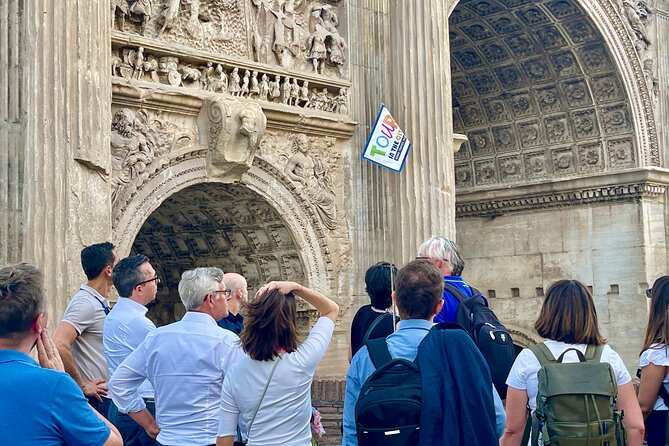
You meet at Via Labicana, 96, 00184 Roma RM, and the tour ends near Piazza del Colosseo, outside the Colosseum area. You are told to arrive 20 minutes before the scheduled departure time due to organization and site entry flow. This is one of those Rome rules where arriving late can mean losing your spot, because tickets are managed as one group ticket.
The experience runs with a maximum of 50 people, which is a reasonable size for a short circuit. It should feel lively but not chaotic.
One more thing to keep in mind: security screening is part of the process, and the sites can close or adjust access because of events, strikes, or heavy rain. If weather is brutal, you might get an alternative itinerary and a partial refund, so keep your day flexible.
Trajan’s Forum: conquest turned into marble architecture
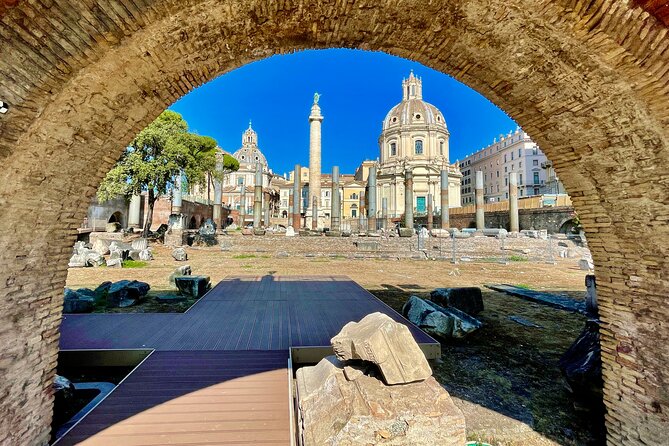
Trajan’s Forum is where the story starts to feel like Roman power on display. The space is tied to the idea of cutting through slopes and stitching together a complex plan, using the geography to create a grand statement. The undertaking was first started under Domitian and then continued by Trajan, and it was financed with spoils from the Dacian wars.
When you arrive, look at the layout logic. The plan is more complex than earlier forums, with a vast square lined by porticoes and exedras, and dominated by the Basilica Ulpia. Behind it, you can also orient yourself toward where the Trajan’s Column sits in the broader complex.
Why this stop works for most people: it gives you context before you hit the most iconic single monument. You get a feel for how Romans built “public space” that also acted like a scoreboard.
What might slow you down: this part is meaningful, but it is still a lot of information fast. If you like reading stone inscriptions and architectural details, you will enjoy it. If you prefer minimal explanation and maximum wandering, you may find the first segment a bit dense.
Trajan’s Column: learn the Dacia campaigns in one spiral
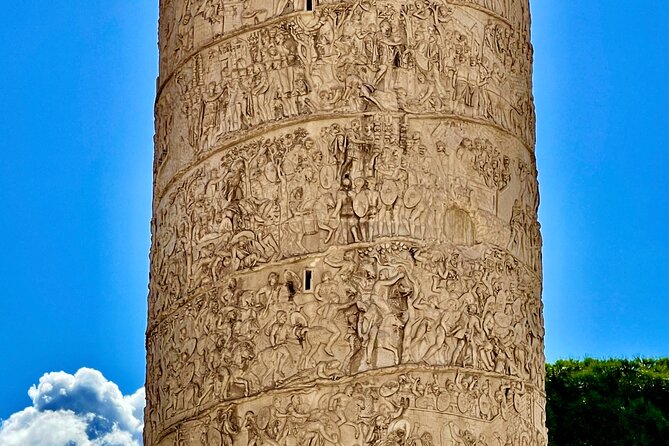
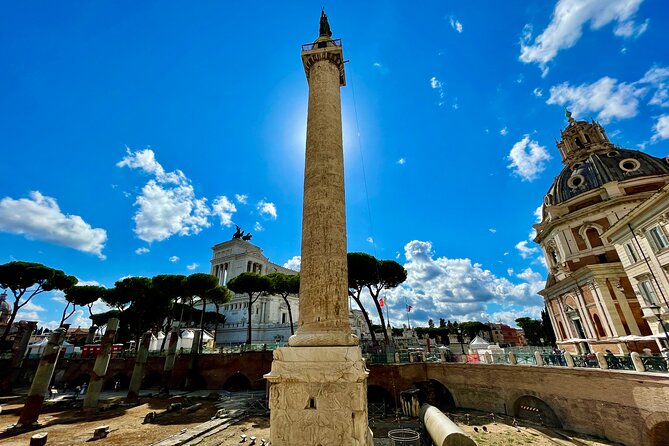
Trajan’s Column is one of those objects that feels small until you realize what it actually holds. The column tells the story of Trajan’s two campaigns against Dacia (101 to 102 and 105 to 106 AD). The frieze is arranged like a spiraling scroll and stretches about 200 meters long, with around 2,500 figures carved into it.
It is also a technical flex. The shaft is about 30 meters high, made from 17 colossal Carrara marble rocks, and inside there is a spiral staircase with 185 steps leading to the top. Even if you do not climb, you can still appreciate the scale of the design.
This is a great stop for people who like narrative. It is basically propaganda as instruction manual. Once you understand the column is a visual timeline of war and conquest, everything feels more readable.
The time is short, about 10 minutes in this flow. Use that time well by finding your bearings first, then scanning the relief bands for battle scenes and procession-style sequences.
Another shape for the same afternoon in Rome:
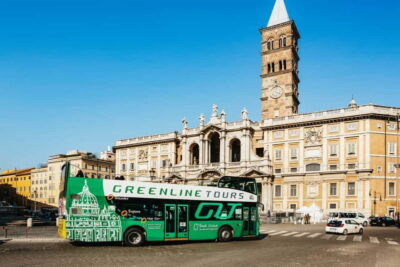
Roman Forum: the monuments you recognize, plus the ones you might miss
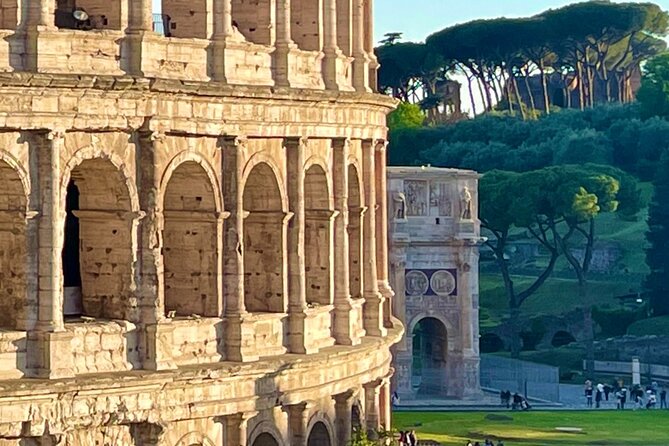
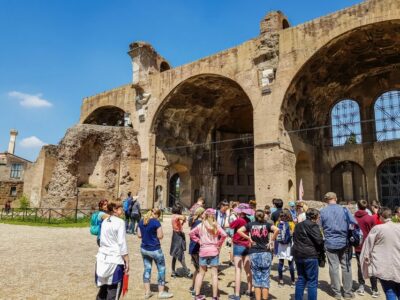
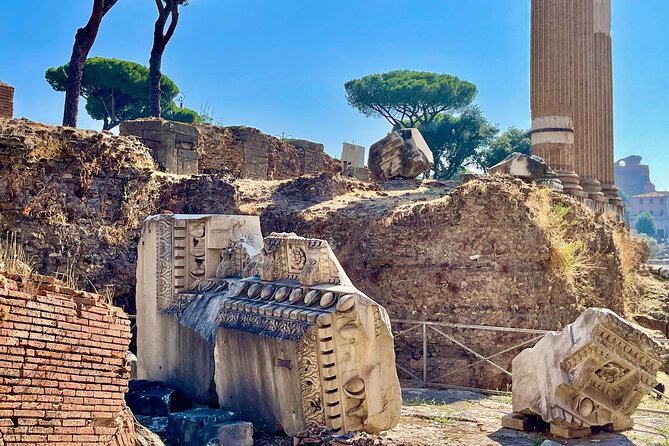
The Roman Forum is the heart of public life in ancient Rome, and it is also where the ground-level chaos of centuries becomes visible. Here you can see how the space worked as a meeting place, a legal center, and even entertainment ground in earlier republican times. Under the empire, it shifted into ceremonies, spectacles, and religious and civic display.
A key reason this stop feels worthwhile is the list of surviving monuments you get oriented to, including the Temple of Castor and Pollux, the Temple of the Deified Caesar, the Mamertine Prison, the Curia (senate house), the Temple of Saturn, the Temple of Vesta, the Temple of Romulus, and the Arch of Titus, plus the Arch of Septimius Severus and the Cloaca Maxima.
You do not just see famous names. You also get pointed at what those places meant in daily Roman life. That turns the ruins from “pretty rocks” into functional space.
The drawback is practical, not historical. The Roman Forum has strict entry rules for what you can bring inside: bottles and glass containers are forbidden, along with alcoholic beverages and aerosols, and you cannot bring backpacks or bulky bags. A medium or small shoulder backpack might be allowed but must be checked, opened, and inspected with the metal detectors.
Plan accordingly. If you show up with a bag that triggers inspection trouble, your experience time gets eaten.
Palatine Hill: where emperors built above the city
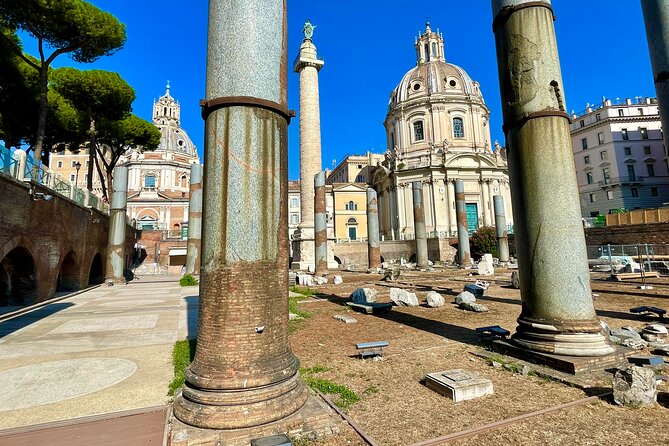
Palatine Hill is the “upper tier” view of Rome. It is the most central of the Seven Hills and is often described as the first nucleus of the Roman Empire. Today it functions as a large open-air museum, with the Palatine Museum housing finds from excavations here and from other Italian sites.
If you want a sense of power and social class, this is the place. Imperial palaces were built here starting with Augustus. Before that, it was mostly occupied by houses of the rich, so you can feel how the hill shifted from elite private space into imperial showpiece.
When you are up there, pay attention to the geography. The hill originally had two summits separated by a depression, with the higher part called Palatium and the other Germalus (also written Cermalus). The area enclosed by perimeter catalogs is large, so even in a short time window, you will get a strong sense of how big the elite footprint was.
Expect about 30 minutes here. It is enough for bearings and a couple of focused looks. If you want deep museum-style reading, you might want longer, but for a 3-hour circuit, the pacing is solid.
Arch of Constantine: the shortcut to understanding recycled Roman power
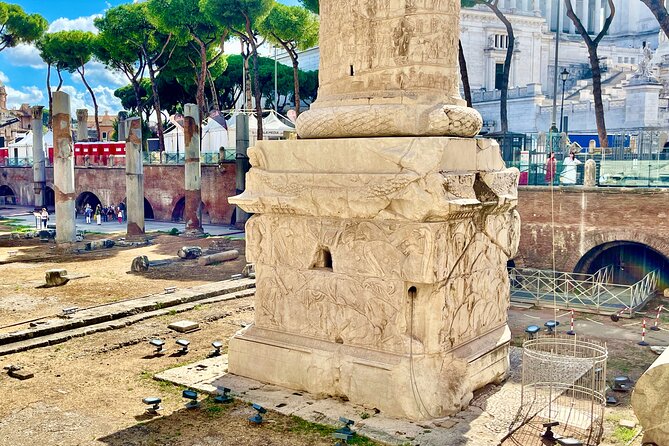
This stop is brief, around 10 minutes, but it gives you an important lesson about how Romans reused symbolic materials. The Arch of Constantine was commissioned to commemorate Constantine the Great’s victory over Maxentius at the Battle of Milvian Bridge in 312 AD.
It is the largest Roman triumphal arch, spanning Via Triumphalis, the route used by victorious leaders in triumphal processions. The overall dimensions are about 21 meters high, 25.9 meters wide, and 7.4 meters deep.
Here is the detail that makes the arch more interesting than a postcard: although it was dedicated to Constantine, a lot of its sculptural decoration uses reliefs and statues taken from earlier monuments dedicated to Trajan, Hadrian, and Marcus Aurelius. So the arch is not just celebrating a victory, it is borrowing legitimacy from the past.
If you like history that explains itself through objects, this stop lands well. If you only care about entering the biggest spaces, you may treat it as a quick visual break.
Colosseum: you get the exterior look, not the ticketed entry
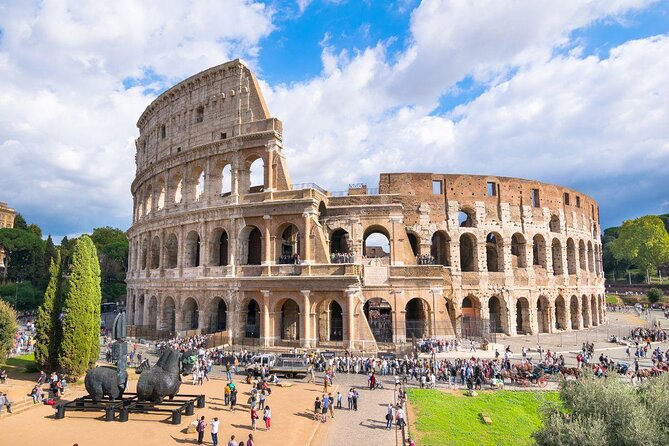
This part is where you need to be clear before you book. The included experience includes an exterior tour of the Colosseum, but Colosseum tickets are not included. So you will see it from the outside as part of the route, but you should not expect entry with this pass.
Still, it is worth using the moment well. The Colosseum is known as the Flavian Amphitheatre, and it is famous for why it became part of UNESCO World Heritage and also part of the New Seven Wonders. Even from outside, the scale hits you if you pause and look up.
The practical drawback: if your goal is to walk inside the arena and do the full Colosseum experience, this pass will not satisfy that by itself. You would need separate tickets for entry.
Domus Tiberiana: when private space becomes imperial stage
Domus Tiberiana is a strong final stop because it shifts the feel from public spectacle to power behind doors. It is described as the first true imperial residence. Under the Julio-Claudian consolidation in the 1st century AD, the private home of Tiberius Claudius Nero (father of Nero) developed into a genuine imperial palace.
After the devastating fire in 64 AD, the residence transformed further. Key members connected to this space include Germanicus, Claudius, and Caligula. Caligula’s fate is noted as being killed in a cryptoporticus of the domus in 41 AD.
This stop helps you connect the dots between forums and palaces. Rome was not just where crowds gathered. It was also where the people who controlled the crowds lived, planned, and staged power.
You will have about 20 minutes here, so focus on what the site is showing you, not on trying to memorize every figure. With the audio points, you will get the storyline, which helps a lot in a place that can otherwise feel like ruins among ruins.
Time, weather, and Roman Forum rules you should follow
This tour is short, so logistics matter. Wear shoes that can handle uneven stone and dust. Bring a hat and plan for heat or sun, since the Forum is exposed and you will pause at key points.
Roman Forum restrictions are strict. Forbidden items include bottles and glasses containers, alcoholic beverages and aerosols, backpacks, camping, bulky bags and luggage or trolley, knives, and selfie sticks. Medium and small size shoulder backpacks may be allowed, but they still must be checked with metal detectors and opened for inspection.
Also note: the sites may close parts of the Roman Forum without notice due to events, strikes, or heavy rain. If that happens, the operator offers an alternative itinerary and may issue a partial refund.
Finally, you need your ID details to match your booking. Security checks full name and date of birth, and you must present a valid passport or ID that matches the details submitted. If the information does not match, entry can be denied.
Who should book this pass, and who should think twice
Book this if you want a fast, smart way to cover the Roman Forum and Palatine Hill area with skip-the-line tickets, and you like learning through an audio guide. It is ideal for first-time Rome visitors who feel overwhelmed by too much information from a single live guide, or for anyone who likes to stop, look, and then read the next story at your own tempo.
Also consider it if you want architectural and political context, because the stops hit Trajan’s conquest propaganda, the public civic machine of the Forum, and the elite environment of Palatine Hill.
Think twice if you want a full guided experience where someone constantly walks with you and explains while you move. Since this is centered on an app, not a nonstop narration, you might end up standing while the audio catches up. It is also not the right choice if you want to enter the Colosseum, since Colosseum tickets are not included.
Should you book this Rome Roman Forum and Palatine Hill pass?
I think it is a good fit when you care about two things: saving time on entry and using an audio guide to learn at a human pace. The big advantage is the included access to the Forum and Palatine zone, plus a tight tour design that covers Trajan’s Forum, Trajan’s Column, major Forum monuments, Palatine Hill, Arch of Constantine, and Domus Tiberiana.
You should book if you can meet the practical requirements: valid ID matching your booking details, a smartphone new enough to run the app, and willingness to follow Roman Forum rules about what you can carry inside.
You might skip or pair it with another ticket if Colosseum entry is your top priority. This pass gives you the exterior experience, and the full inside visit is on you to arrange separately.
FAQ
How long is the Rome Roman Forum, Palatine Hill Tour Exclusive Full Pass?
It runs about 2 hours 40 minutes to 3 hours.
What languages are available for the audio guide?
The audio guide can be used in English, Chinese, Italian, Spanish, and the tour listing also includes other options such as German and French.
Which sites have skip-the-line tickets included?
Skip-the-line tickets are included for Trajan Forum, Roman Forum, Palatine Hill, and Imperial Forum.
Are Colosseum tickets included?
No. Colosseum tickets are not included, but the service includes an exterior tour of the Colosseum.
Do I need a passport or ID to enter?
Yes. You must present a valid passport or ID document that matches the full name and date of birth provided at booking for successful entry to the Colosseum and Roman Forum.
What is the audio guide app, and do I need to download it?
The experience includes a self audio guided tour app. You must download the app, and your smartphone needs to be no older than 2020.
Can I bring a backpack or water into the Roman Forum?
Bottles and glass containers are forbidden inside the Roman Forum. Backpacks and bulky bags are not allowed, but medium or small shoulder backpacks may be introduced and must be checked and inspected.
Is free cancellation available?
Yes. You can cancel up to 24 hours in advance for a full refund.
Latest additions from Rome
- Rome: Testaccio Market Food Tour with Street Food & Wine★ 5.0 · 8 reviews
- Exclusive Pasta & Tiramisu Class with Wine near by Colosseum★ 5.0 · 8 reviews
- Private Professional Photoshoot in Rome★ 5.0 · 8 reviews
- Rome Day to discover Florence and Pisa Hotel Pickup★ 4.5 · 8 reviews
- Loreto “Shrine of the Holy House of the Virgin Mary” Private Tour from Rome★ 5.0 · 8 reviews
- Rome: Christmas Nativities and Angels Tour★ 3.1 · 8 reviews
- Guided Tour of Vatican Museums and Sistine Chapel★ 5.0 · 8 reviews
- Rome: Cooking Class of fresh Pasta and Tiramisu Cake★ 5.0 · 8 reviews
Tours, compared.
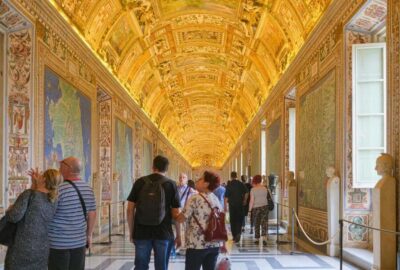
Vatican Museums, Sistine Chapel & St. Peter’s Basilica Tour
Read our review →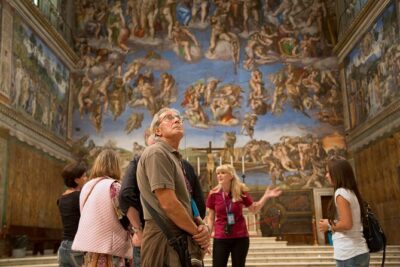
Vatican Museums, Sistine Chapel & St Peter’s Basilica Guided Tour
Read our review →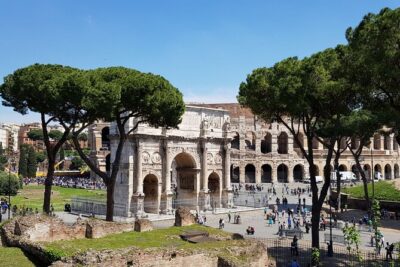
Colosseum, Palatine Hill and Roman Forum Guided Tour
Read our review →
Guided Tour of Colosseum, Roman Forum & Palatine Hill
Read our review →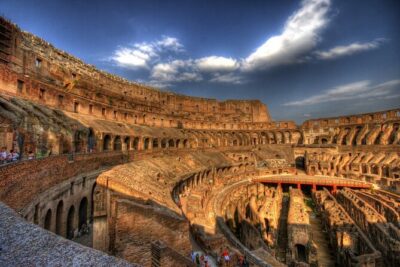
Colosseum, Roman Forum and Palatine Hill Guided Tour
Read our review →
Colosseum Arena Floor, Palatine & Forum Guided Tour
Read our review →
Vatican Museums, Sistine Chapel and Basilica Tour
Read our review →