
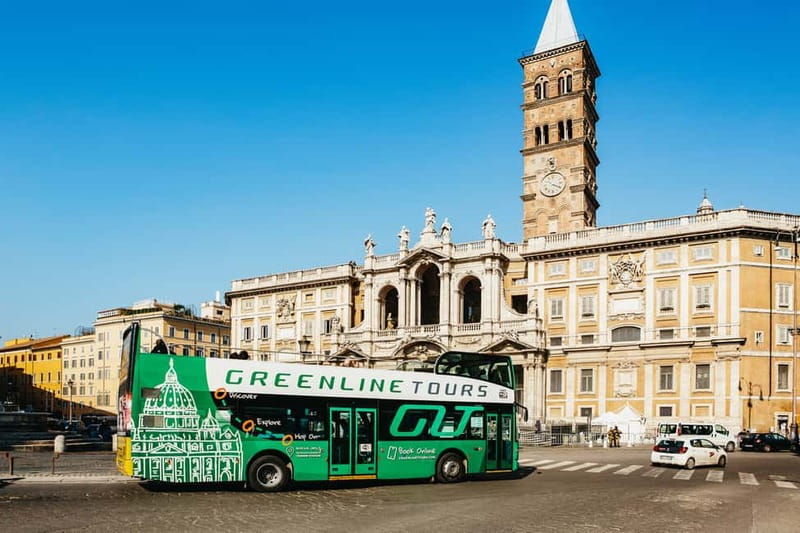
Reviewed · HOP-ON HOP-OFF BUS TOURS IN ROME
Rome: Hop-On Hop-Off Panoramic Bus Ticket – Access 3 Routes
Rome looks better from a bus. This hop-on hop-off ride stitches the classics and side streets together using 3 circuits and multilingual audio. I love how easy it is to hop off for a walk, then hop back on without having to “plan perfectly.” I also like that the commentary turns big sights into something you can understand quickly. The main drawback to consider is that locating the bus stops can feel a bit tricky at first, so give yourself a few extra minutes when you start.
Buses run about every 20 minutes, and your ticket works for a flexible window of 9 hours to 3 days depending on what you choose. If you like moving through Rome in a smart, low-stress way, this kind of ticket can save you time, sore feet, and decision fatigue.
In This Review
- Key things I’d bet on
- Why Rome works well with an open-top hop-on hop-off bus
- Getting started at Piazza dei Cinquecento, and finding your first ride
- The audio guide, and why 16 languages changes how you experience the city
- How long your ticket really gives you: 9 hours to 3 days
- Santa Maria Maggiore to the Colosseum: start with a “jumping-off” rhythm
- Colosseum and Forum area: how to maximize the hop-off time
- Circus Maximus and Piazza Venezia: big-scale Rome without the time squeeze
- St. Peter’s Square and St. Peter’s Basilica: Vatican stops that feel manageable
- Villa Borghese and Barberini Square: when Rome turns into neighborhoods and views
- Testaccio Quarter, Pyramid of Cestius, and Eataly: a Roman day that isn’t only monuments
- Bioparco, Villa Giulia, Auditorium Parco della Musica, and MAXXI for variety
- Onboard comfort: Wi-Fi, live tracking, and why the staff matter
- Tips to plan your route like a pro (without overthinking it)
- Is this ticket worth $19?
- Should you book this Rome hop-on hop-off bus ticket?
- FAQ
- How much does the Rome hop-on hop-off bus ticket cost?
- How long is the ticket valid for?
- How many routes do I get with one ticket?
- Where does the Green Line Tours bus route start?
- How often do the buses run?
- What’s included with the ticket?
- What is not included in the ticket price?
- Is the tour suitable for wheelchair users?
Key things I’d bet on
- 3 circuits with unlimited hop-on hop-off time: you control the pace, not the schedule.
- Multilingual audio in 16 languages: you can match your comfort level and still follow along.
- Stops built around major landmarks: Colosseum, Forum area, Circus Maximus, Vatican sights, plus Testaccio and museums.
- Onboard help and live bus tracking: less guessing, more riding.
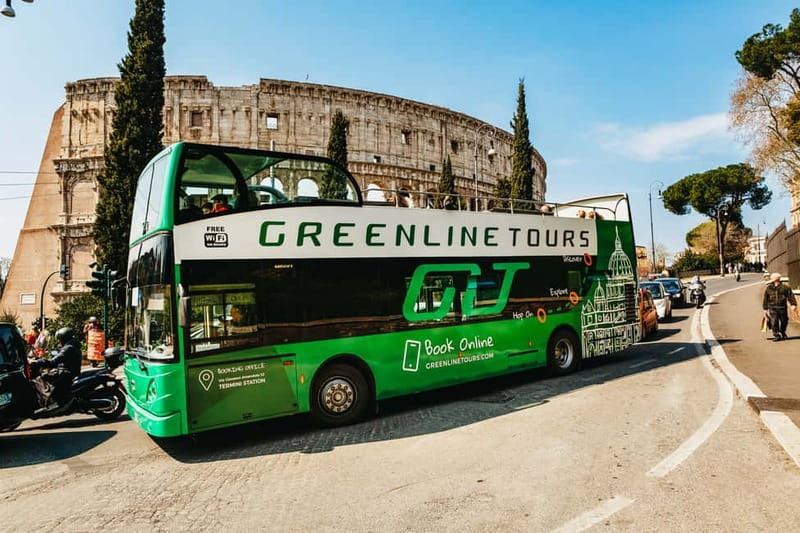
- Comfort perks for real-world Rome: open-top views, plus free Wi-Fi and Wi-Fi access.
Why Rome works well with an open-top hop-on hop-off bus

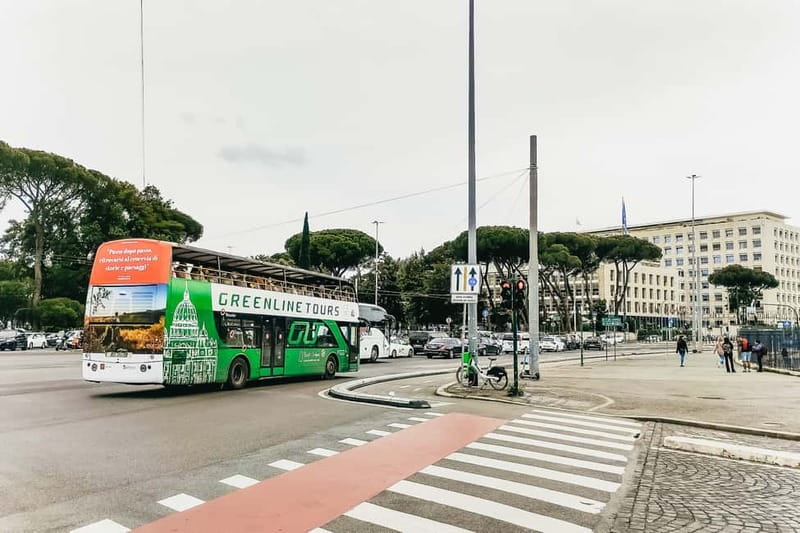
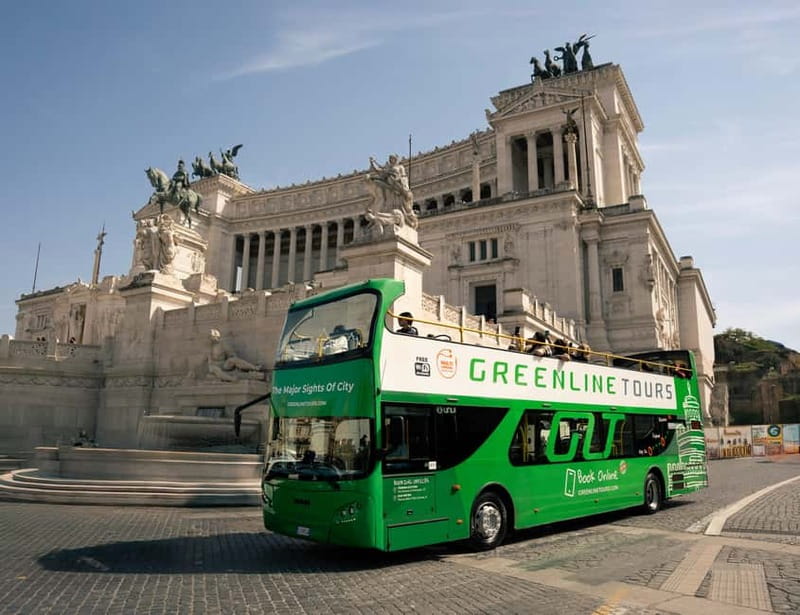
Rome can be a lot, fast. Streets twist, landmarks appear in fragments, and you can burn hours just moving between “must-sees.” This ticket is built for the way most people actually travel. You start at Piazza dei Cinquecento, corner Via Cavour, then you ride a set of routes that repeatedly bring you back near big sights and useful neighborhoods.
What I like most is that the experience is structured, without being controlling. The bus is a connector. You use it to get close, then you use your legs when you want photos, a snack, or time in a church or museum. The audio guide helps you feel oriented. You are not just looking at stone and statues, you’re picking up the story while you roll past.
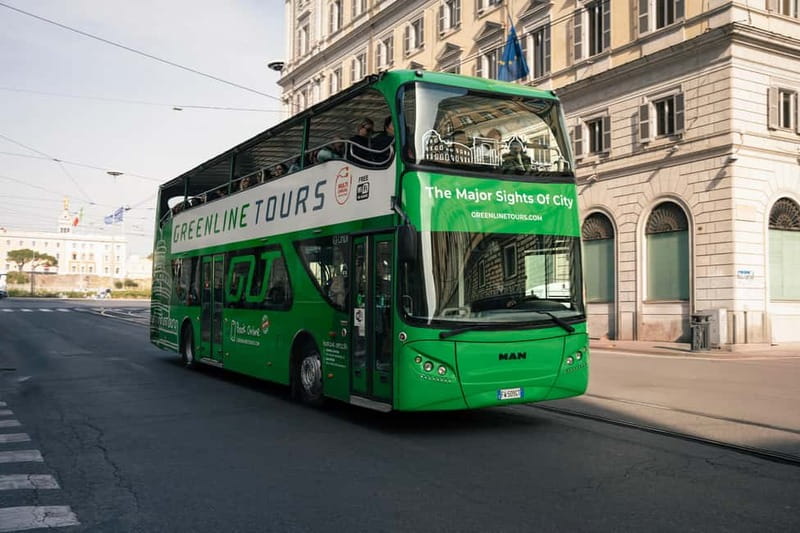
You also get real-world onboard comfort. The buses are open-top for views, but they include free Wi-Fi onboard, an assistant, and single-use earphones for the audio. That matters when the day is hot, rainy, or both, because you are not stuck only staring ahead. You can ride, listen, and decide your next stop with less stress.
More Hop-On Hop-Off Bus Tours in Rome
- Rome: City Sightseeing Hop-on Hop-off Bus with Audioguide
★ 4.0 · 16,045 reviews - Rome: Big Bus Hop-on, Hop-off Open-Top Sightseeing Tour
★ 4.1 · 9,537 reviews - City Sightseeing Rome Hop-On Hop-Off Bus Tour
★ 3.5 · 5,446 reviews - Rome: Hop-on Hop-off Sightseeing Bus Tour with Audioguide
★ 4.1 · 4,801 reviews
Getting started at Piazza dei Cinquecento, and finding your first ride
Your starting point is very specific: Piazza dei Cinquecento corner Via Cavour, Terminal 1/A. That’s good for logistics, but it does mean you should arrive with a plan, not guess with half a map.
Here’s how I’d do it in practical terms:
- Check where you are going before you get there. The corner detail matters.
- Once you find the terminal, look for the right stop area for the Green Line Tours buses tied to your ticket.
- Validate your ticket when you board, because your hop-on window runs from that first validation.
One reason this matters: the buses run roughly every 20 minutes, so missing one is not the end of the world. But wasting 20 minutes wandering the wrong corner in Rome is. The ticket is flexible, your first move still needs clarity.
Also note what you can’t bring. The experience does not allow pets and does not allow luggage or large bags. If you have a big suitcase, you will need a different plan for storage before you board. And if you need a wheelchair-accessible option, this one is not suitable for wheelchair users.
The audio guide, and why 16 languages changes how you experience the city
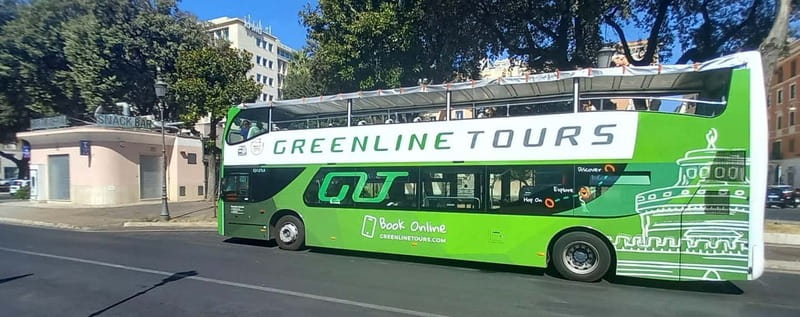
The audio guide is included, and it’s a big part of the value. You get 16 audio guide languages, and the languages listed include English, French, German, Italian, Spanish, Arabic, Chinese, Japanese, Korean, Dutch, Polish, Portuguese, Russian, Greek, Hebrew, and Hindi.
That means you can listen without trying to translate in your head. Rome moves fast, and the commentary helps you connect what you’re seeing to what it was used for. Even if you only catch a few stops’ worth of audio, it tends to sharpen your attention when you hop off.
A small detail that feels surprisingly helpful: single-use earphones are included. You do not have to hunt for adapters or batteries. It’s also easier if you have never used an audio system like this, because you can focus on getting oriented rather than figuring out the hardware.
The onboard staff also help. There’s an assistant on board, and you also get live bus tracking. That combination is what turns a bus tour from a simple ride into something closer to a managed route.
How long your ticket really gives you: 9 hours to 3 days
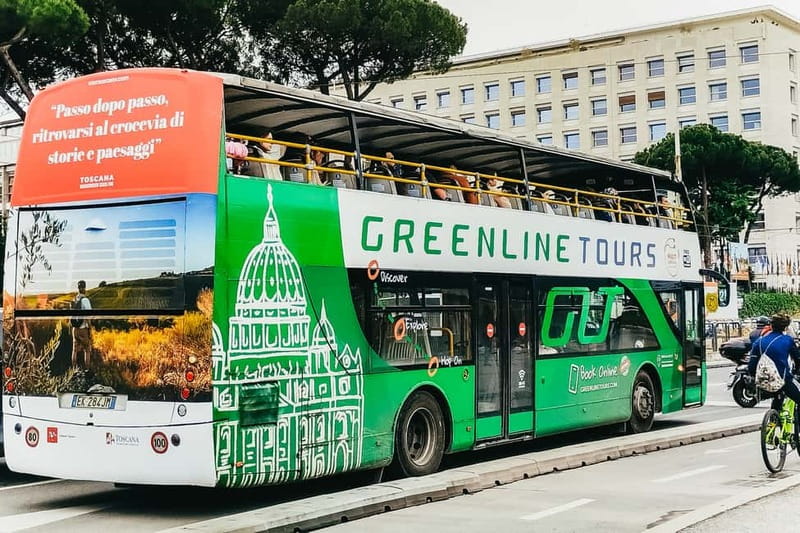
Your ticket gives you time on the buses from your first validation. The options are described as Daily, 24-hour, 48-hour, or 72-hour periods. The overall duration is listed as 9 hours to 3 days, so plan around what pace you want.
If you are doing Rome for the first time and want a safety net, I’d lean toward the longer window. It gives you the chance to:
- Start with the big classics early.
- Return later for a second pass at whatever you enjoyed most.
- Adjust if you lose time to rain, a line, or a longer-than-planned walk.
If you only have one day and you’re confident you will hit the major highlights, the shorter option can be enough. But the strength of this ticket is the ability to repeat. You can hop off multiple times during your time window, and that is what turns a checklist into a more human day.
Santa Maria Maggiore to the Colosseum: start with a “jumping-off” rhythm
One of the easiest ways to use a hop-on hop-off ticket is to build a rhythm: hop off, walk 20 to 40 minutes, then hop back on before you get tired or lost.
The early stops set you up for that rhythm. You’ll pass Santa Maria Maggiore, then continue by the Colosseum area. The Colosseum stop is described as being near the entrance of Palatine, via Via di San Gregorio, which is useful because it keeps you near the main approach instead of dumping you far away.
What makes this stretch work well is the mix of “I can see it from here” and “I need to get closer.” From the bus, you’re likely to get quick context. Then when you hop off near the Colosseum, you can actually spend time moving around the immediate area.
One consideration: if a stop is temporarily unavailable during your visit, you should expect to walk farther from neighboring stops. Rome is full of tight streets and uneven walking distances, so it’s smart to plan extra time if your day is tight.
A few more Rome options worth a look



Colosseum and Forum area: how to maximize the hop-off time
The big wins here are obvious: the experience is designed to show you iconic sites like the Colosseum and the Forum. What matters is how you use the bus stop once you’re there.
I’d treat the Colosseum stop as a “close and slow down” moment. That’s where you stop relying on the bus view and switch to walking and looking. Your audio helps, but you still want time on foot because the scale is hard to appreciate purely from above traffic.
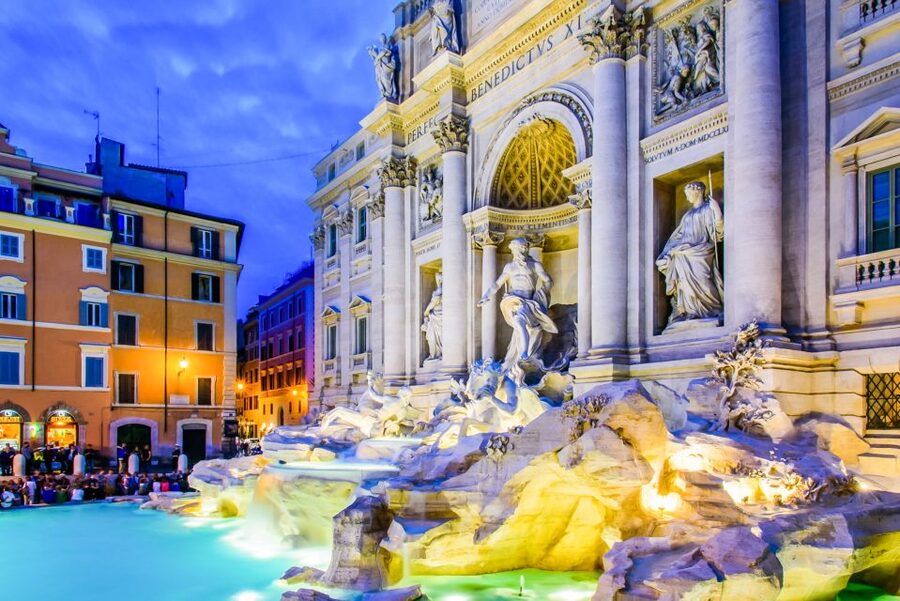
If your ticket includes a route that brings you near famous walking spots, use that too. The highlights mention you can walk up to the Spanish Steps and toss a coin into the Trevi Fountain from nearby stops. That’s where hop-on hop-off stops can add value beyond the bus itself. You are using the bus to access a walking plan, not replacing walking.
Practical tip: if you’re traveling in the rain, you can still use the bus for comfort, but you might lose the advantage of clear views and quick photo moments. On wet days, I find I prefer stepping off for fewer, better walks, rather than bouncing between stops.
Circus Maximus and Piazza Venezia: big-scale Rome without the time squeeze
After the Colosseum area, the route continues toward Circus Maximus. The bus stop is described as passing via Via del Circo Massimo, Belvedere Romolo e Remo. That setup is the kind that helps you see where you are headed, even if you do not know the streets by name.
Circus Maximus is one of those sights that benefits from being seen at a distance first. You get a sense of the structure and scale from the road angle, then you decide how much time you want to walk.
Next up is Piazza Venezia, with the stop reference given as Via del Teatro Marcello, in front of civic numbers 32 to 34. The value of a stop like this is simple: it puts you near an easy anchor point so you can navigate onward by foot if you want to.
This stretch is a good example of why the bus tour can work even if you are not a “history buff.” You’re not trying to do everything. You’re positioning yourself. Then you pick the moments that feel worth the time to explore on foot.
St. Peter’s Square and St. Peter’s Basilica: Vatican stops that feel manageable
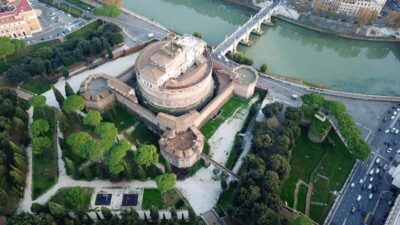
The route includes Vatican City, with a stop reference at Lungotevere Tor di Nona 7. From there, the experience highlights include St. Peter’s Square and St. Peter’s Basilica. This is a classic Rome pairing because it’s a top sight, and it can be physically draining without a plan.
I like having a bus stop close enough that you can decide your timing. You can also use the audio to keep the visit from being purely visual. The commentary is part of what turns Vatican time into something you can understand while you move between exterior viewpoints and inner spaces.
If you want your day to feel smoother, I suggest doing the Vatican area during a time block when you can handle a slower pace. Not because the bus makes it slow, but because big sights naturally demand attention. The hop-on hop-off format lets you set the pace around you, not the other way around.
Villa Borghese and Barberini Square: when Rome turns into neighborhoods and views
As the route continues, it reaches Villa Borghese, with the stop reference Via Ludovisi 48. It also includes Barberini Square, via Via Barberini 14. These stops are useful because they shift the experience from the most concentrated ancient landmarks to a mix of park-adjacent space and walkable city areas.
A key bonus here: the experience also connects you to destinations like the Borghese Gallery. If you plan to visit an art venue, using the hop-on hop-off system can reduce the stress of transportation and help you build a half-day that feels more intentional.
For this part of the day, I’d use the bus less like a sightseeing screen and more like a neighborhood transit tool. Hop off, walk until you feel ready to rest, then ride back for another angle or another destination.
Testaccio Quarter, Pyramid of Cestius, and Eataly: a Roman day that isn’t only monuments
Rome is not only monuments. This ticket acknowledges that with stops tied to the food-and-everyday side.
The route includes the Pyramid/Testaccio quarter, with specific references including the Pyramid of Cestius, the Non Catholic Cemetery, St. Paul City gate, and St. Paul out of Wall. Even if you are not focused on every named site, the value is that you get out of the ultra-touristy circuit and into a different part of the city’s fabric.
Then comes Eataly Rome. Eataly is referenced as part of the Garbatella Quarter plus street art, and it’s a great example of how the bus can help you swap a museum stop for something social. Food breaks work well after two or three major sightseeing segments because you get a reward that doesn’t require a ticket line and it keeps your energy up.
I like this section because it makes the day feel like Rome, not just a photo tour. You’ll also be able to use the bus to reposition quickly, instead of trying to guess how long it will take you to cross town on foot.
Bioparco, Villa Giulia, Auditorium Parco della Musica, and MAXXI for variety
One of the strongest uses of a hop-on hop-off ticket is to add variety. This route goes beyond classic monuments and includes museum and attraction stops that change the texture of your day.
Here’s what you can plan around based on the stops listed:
- Bioparco di Roma (Zoo) at Via Mercadante 34 to 36
- Villa Giulia at Piazza Thorvaldsen, connected to National Etruscan Museums and the National Gallery of Modern and Contemporary Art
- Auditorium Parco della Musica at Via de Coubertin
- MAXXI Museums at Via Guido Reni 4/a
These stops make the ticket feel less one-note. If you’ve been museum heavy already, you can skip them. If you want something different from the big stone landmarks, these are the points where Rome feels creative and modern.
Also consider MAXXI and Villa Giulia if you like art and design. The buses help you reach these places without committing to a single long, draining walk across town.
Onboard comfort: Wi-Fi, live tracking, and why the staff matter
The experience includes a lot of small operational details that can make or break a hop-on hop-off day.
You get:
- Assistant on board
- Live bus tracking
- Free Wi-Fi onboard
- Single-use earphones for the audio guide
I also appreciate that the bus frequency is described as about every 20 minutes. That steadiness reduces the stress of waiting, especially when you are hopping on and off multiple times.
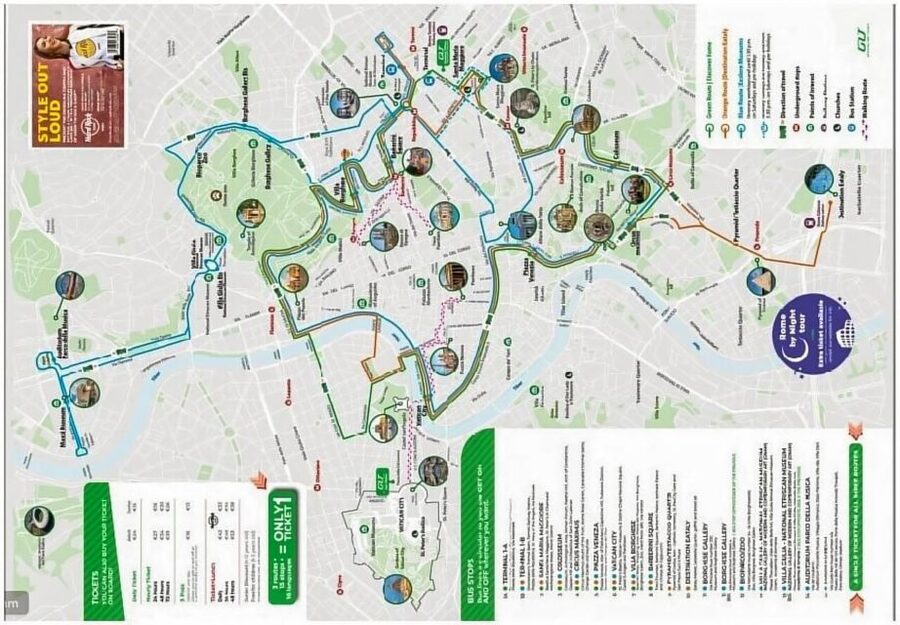
There’s one review detail I file away as useful: people sometimes struggle to find the stops because they only get the starting point map. If that sounds like you, do yourself a favor. Before you ride, check your stop list on your phone, and set a reminder for where you’re going next. Live tracking plus a little prep will make the day feel easier.
And if you meet an onboard guide with strong storytelling, like the example of a guide named Leo who compared explaining Rome to layers of lasagna, you’ll probably find the audio becomes less like a recording and more like a sense-making tool.
Tips to plan your route like a pro (without overthinking it)
This ticket gives you control, but you still need a plan to avoid zigzag chaos.
If you want the easiest approach:
- Pick one “anchor” area in the morning, like the Colosseum area.
- Add one big second moment later, like the Vatican City stop.
- Use the middle of the day for flexible options, like Eataly or a museum stop such as MAXXI or Villa Giulia.
Use comfortable shoes. The route is designed for walking at stops, and Rome’s sidewalks and distances can surprise you.
Also pack for weather. Sunglasses and a sun hat are listed as suggestions. And if rain shows up, treat the bus as your shelter. The open-top view is great when it’s dry, but you will still get value from getting out of the elements while you listen and move between stops.
Finally, remember that some stops may be affected. If your key stop is closed or unavailable, adjust calmly. You may need a longer walk from a nearby stop, and that’s not a failure, it’s just part of city touring.
Is this ticket worth $19?
At $19 per person, this ticket is priced like a smart transit add-on, not like a single attraction. The value depends on how you travel.
You’ll likely feel you got your money’s worth if you:
- Want to cover a lot of major sights over 9 hours to 3 days
- Plan to hop off and walk at multiple stops, not just ride for views
- Want the audio guide in your language so the city makes sense while you move
- Like having live tracking and an assistant when you’re navigating Rome’s streets
You might feel less thrilled if you want only one or two sights and you’re already confident navigating the city by yourself. In that case, you might not use the hop-on flexibility as much.
One more practical point: the ticket does not include entrance tickets or food and drinks. So think of it as transportation plus audio plus access to the best starting points for your own walking plan.
Should you book this Rome hop-on hop-off bus ticket?
Book it if you want a flexible way to hit the headline sights and still have room to wander. I like it most for first-timers who want to get their bearings fast, plus repeat visitors who want a smoother way to cover more neighborhoods in less time.
Pass on it if you need wheelchair accessibility, plan to bring large luggage, or you only have time for one single attraction. In that case, you might prefer a simpler, more targeted plan.
If you do book, start strong at Piazza dei Cinquecento corner Via Cavour. Give yourself a few extra minutes to find the terminal confidently. Then use the audio guide as your “translation layer,” hop off when you feel energized, and ride again before your feet tap out. That rhythm is where the $19 value really shows.
FAQ
How much does the Rome hop-on hop-off bus ticket cost?
The price is listed as $19 per person.
How long is the ticket valid for?
It’s valid from 9 hours up to 3 days, depending on the option you choose (Daily, 24-hour, 48-hour, or 72-hour after first validation).
How many routes do I get with one ticket?
You get unlimited access to 3 routes with a single ticket.
Where does the Green Line Tours bus route start?
The starting point is Piazza dei Cinquecento, corner Via Cavour, Terminal 1/A.
How often do the buses run?
Buses run approximately every 20 minutes.
What’s included with the ticket?
Included features are full access to all bus routes, multilingual audio commentary, single-use earphones, assistant on board, live bus tracking, and free Wi-Fi onboard.
What is not included in the ticket price?
Entrance tickets and food and drinks are not included.
Is the tour suitable for wheelchair users?
No, it is not suitable for wheelchair users.
Latest additions from Rome
- Guided Tour Vatican Museums & Sistine Chapel★ 4.1 · 30 reviews
- Exclusive Rome by Night Vespa Tour★ 5.0 · 30 reviews
- Transfer Rome to Airports★ 4.5 · 30 reviews
- Vatican: St.Peter’s Basilica & Dome – Reserved Entry & Tour★ 4.1 · 30 reviews
- Rome street art tour: off the beaten path with a local guide★ 5.0 · 30 reviews
- Tivoli, Hadrians Villa and Villa d’Este, a charming day trip from Rome★ 4.5 · 30 reviews
- Rome Food Tasting with Wine Pairing Italian Authentic Flavors★ 5.0 · 31 reviews
- Inspirational Cooking on the Roman Chef’s Panoramic Terrace★ 5.0 · 30 reviews
Hop-On Hop-Off Bus Tours in Rome, compared.
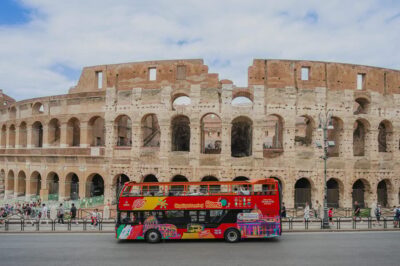
City Sightseeing Hop-on Hop-off Bus with Audioguide
Read our review →
Big Bus Hop-on, Hop-off Open-Top Sightseeing Tour
Read our review →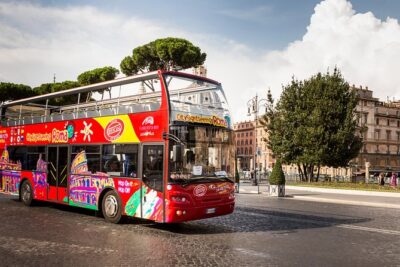
City Sightseeing Rome Hop-On Hop-Off Bus Tour
Read our review →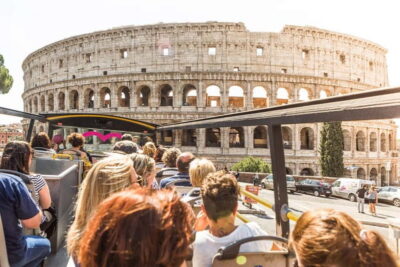
Hop-on Hop-off Sightseeing Bus Tour with Audioguide
Read our review →Big Bus Hop-on, Hop-off Open-Top Sightseeing Tour
Read our review →

Browse the lists this tour appears in