
Reviewed · ROME GHOST AND MYSTERY TOURS
Rome Jubilee Walking Tour of Churches, Bridges & Legends
Rome has a way of turning a stroll into a story. This 5:00 pm walk uses the Jubilee theme to make Vatican-area sites feel connected, like parts of the same pilgrim route. I like how the guide builds context for the bigger pilgrimage trail, and you get practical ideas for navigating Rome’s holy stops without getting lost in the crowd.
My favorite part is the small-group feel, capped at 15 people, plus the way art and religious legends are explained in plain, human language. I also love the pacing, short photo stops that still leave time to absorb details. One drawback to plan for, this is a mostly outside-view route, so if you want to go inside the Pantheon or St Peter’s Basilica, you’ll need your own tickets for that.
In This Review
- Key points at a glance
- The real win: a 5:00 pm Vatican-area walk that feels doable
- From Piazza di Pietra to Hadrian’s world in 15 minutes
- Sant’Ignazio di Loyola: Baroque church art with real explanations
- Basilica di Santa Maria Sopra Minerva: Michelangelo and Siena in one stop
- The Pantheon area view: Rome’s best-preserved Roman building, without tickets
- Piazza Navona and Borromini and Bernini’s church presence
- Via dei Coronari: the pilgrims’ street, and the less-than-holy side
- Ponte Sant’Angelo: angel statues and the pilgrim shortcut
- Castel Sant’Angelo mood: fortress, residence, prison, now museum
- Piazza Pia to St Peter’s Square: the final steps of the pilgrimage
- What the guides do that makes this worth $120.14
- Logistics and practical expectations: outside views, mobile tickets, and walking time
- Who should book, and who might skip
- Should you book this Rome Jubilee Walking Tour of Churches, Bridges & Legends?
- FAQ
- FAQ
- How long is the Rome Jubilee Walking Tour?
- What time does the tour start, and where does it end?
- Is the tour offered in English?
- How large is the group?
- Is admission included for the Pantheon and St Peter’s Basilica?
- Are the other stops included without paid tickets?
- What should I wear if I plan to visit St Peter’s Basilica or the Sistine Chapel?
- Can I get a full refund if I cancel?
- Is there a mobile ticket?
Key points at a glance
- Jubilee pilgrimage route, made understandable: you’ll connect bridges, squares, and churches into one story you can follow.
- Outside views of major icons: the Pantheon and St Peter’s Square are highlights from the street, not inside.
- Baroque art with meaning: Sant’Ignazio di Loyola’s ceiling and church details get explained, not just pointed at.
- Pilgrims and politics in one walk: Hadrian’s links, papal Rome, and the roads people used to reach St Peter’s all show up here.
- Guides that get strong praise: guides like Kasia, Alina, and Domenica get called out for being fluent in English, entertaining, and packed with context.
- Value for budget travelers: a small-group option is presented as exceptional value, while private upgrades may be available.
The real win: a 5:00 pm Vatican-area walk that feels doable
This tour starts at 5:00 pm, which is smart in Rome. The light tends to be kinder for photos, and the afternoon crush usually feels less intense than midday. With an approximate 2-hour duration, you can fit it into a first evening without turning the rest of your trip into a nap plan.
You also get a clear structure: the route moves through several stops, each around 15 minutes, so you’re not stuck staring at one building while the rest of Rome passes you by. It’s the kind of tour that helps you get your bearings fast, especially if Vatican-area streets feel like a maze at first.
Finally, the group size matters here. With a maximum of 15 travelers, you’re more likely to hear explanations clearly and ask quick questions when something sparks your curiosity.
More Walking Tours in Rome
- Rome: Guided Food Walking Tour with Wine in Trastevere
★ 4.9 · 3,105 reviews - Rome: Trastevere & Campo de Fiori Street Food Walking Tour
★ 4.9 · 2,768 reviews - Rome: Paranormal Night Walking Tour & Secret Backstreets
★ 4.9 · 1,921 reviews - Rome: Trastevere Street Food Walking Tour with Local Expert
★ 4.8 · 1,784 reviews
From Piazza di Pietra to Hadrian’s world in 15 minutes
You begin at Piazza di Pietra, 45 (00186 Roma RM). The starting point is peaceful, but the ancient context hits right away with a view of the Temple of Hadrian. Those columns are a good reminder that Rome did not become Rome overnight. You’re stepping into a city where pilgrimage, empire, and architecture all overlap.
This first stop is more than a pretty backdrop. It sets up the tour’s theme, because it shows you the ancient machinery underneath later religious Rome. If you like understanding how layers build on each other, this opening moment pays off.
Practical note: you’ll be standing and looking a lot early on, so it helps to wear comfortable shoes and keep your phone ready for quick photo framing.
Sant’Ignazio di Loyola: Baroque church art with real explanations
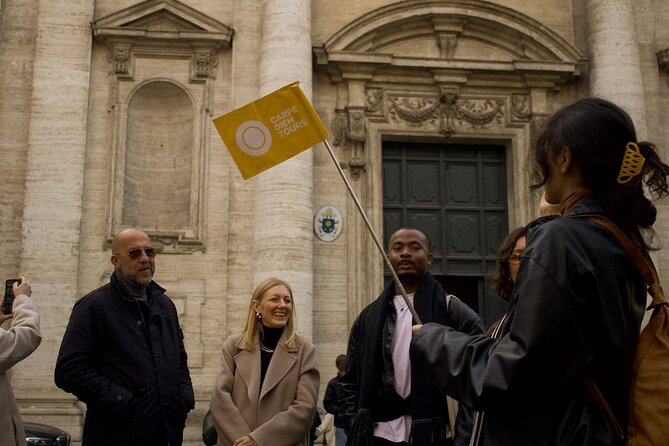
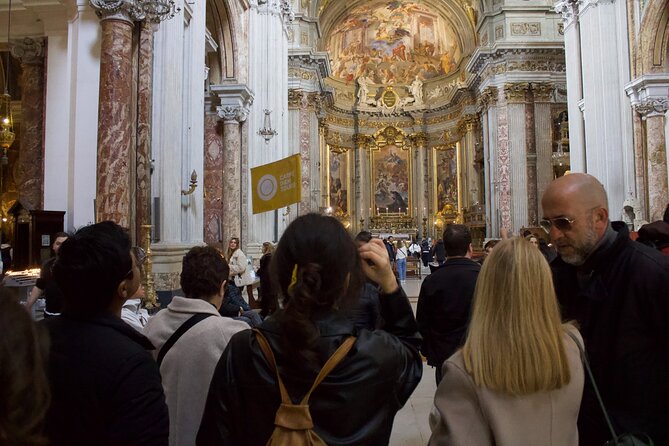
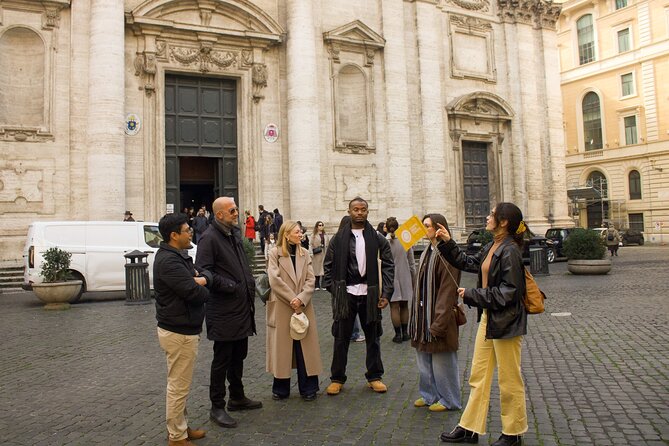
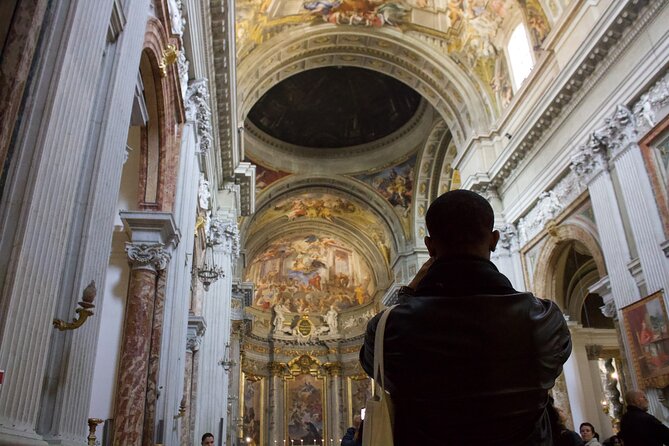
Next is Chiesa di Sant’Ignazio di Loyola. This is one of those churches that people rush through, but it’s famous for its unique ceiling and ornate interior. The guide’s job here is crucial, because Baroque details can feel like decoration until someone tells you what they’re doing and why.
What I like about this stop is the focus on meaning. Instead of treating the church like a museum room, the tour connects the art to 17th-century religious messaging and the way people were meant to experience awe.
You’ll also get a strong sense of how Rome’s holy places aren’t just about the building. They’re about atmosphere, symbols, and the stories people told themselves while looking up.
Basilica di Santa Maria Sopra Minerva: Michelangelo and Siena in one stop
Then it’s on to the Basilica of Saint Mary of Minerva, in the same calm, square-focused approach as earlier stops. Outside, the area feels quieter than the main Vatican surge points, which makes it a good moment to slow down.
Inside (or rather, as described on the tour route), you’re guided toward major treasures people often miss. The tour highlights artworks including Michelangelo’s Christ the Redeemer and the tomb of Saint Catherine of Siena. Even if you don’t go in yourself, learning what’s there changes how you picture the church.
This stop works well if you’ve ever thought, I’ve seen churches, but do I understand them? The tour helps you connect art, saints, and the idea of devotion that shaped what got built.
The Pantheon area view: Rome’s best-preserved Roman building, without tickets
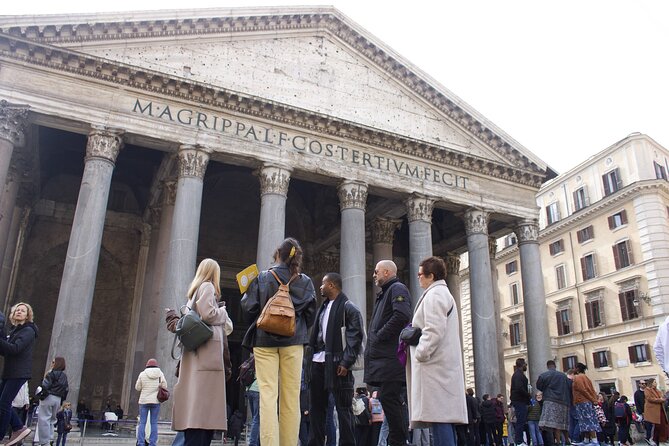
Some walks toss you toward the Vatican and call it a day. This one also pulls in a major Rome icon along the way, focusing on the Pantheon’s dome and portico. Here, you’re viewing from outside, not entering. That’s a key point for planning.
Why this matters for value: ticket lines and timed entry can make a city day feel like logistics homework. By keeping the Pantheon as an outside-focused moment, the tour keeps your schedule lighter and your energy for the rest of the route.
If you’re the type who hates last-minute ticket planning, this is a good compromise. You still get the wow factor from the street, and you can decide later if you want to do an add-on visit.
Other walks through Rome after dark:
Piazza Navona and Borromini and Bernini’s church presence
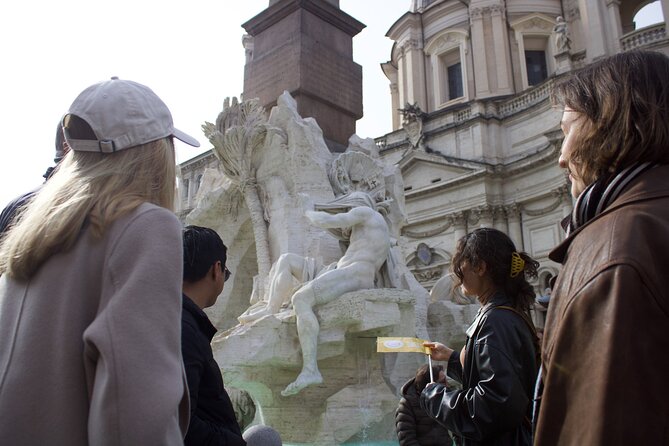
After that, you head to Piazza Navona. This square used to be an ancient Roman stadium, and that transformation is part of the story here. When you see the fountains and the dramatic Baroque layout, the old stadium idea makes the space feel more logical, like it evolved instead of being replaced.
You’ll also learn about the Church of Sant’Agnese in Agone, designed by Borromini and Bernini. Even from the outside, knowing the architects behind the vision helps you look with intention instead of just taking photos and moving on.
This stop is a sweet spot for first-time visitors. You get variety, architecture mixed with open space, and a major landmark that anchors your route.
Via dei Coronari: the pilgrims’ street, and the less-than-holy side
Then comes Via dei Coronari, a narrow cobblestone street with views of Renaissance-era buildings. The tour uses this street to talk about pilgrims who gathered here to head to Saint Peter’s Basilica, while also addressing the less-than-holy establishments that used to line the route.
That contrast is what makes the street interesting. Rome’s religious history isn’t sterilized. People traveled, waited, ate, shopped, and lived ordinary lives while chasing something spiritual. This stop gives you that reality check without killing the romance.
If you like travel that feels human and slightly messy, this is one of the more memorable stretches. It’s also a good place to pause, because the street creates built-in viewpoints for quick photos.
Ponte Sant’Angelo: angel statues and the pilgrim shortcut
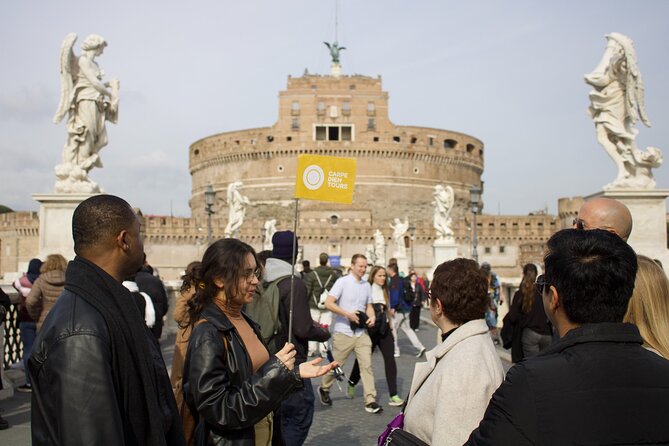
Next you cross the St. Angelo Bridge (Ponte Sant’Angelo). The statues of angels line the bridge, and the views over the Tiber River and toward Castel Sant’Angelo are a big payoff.
But the tour goes beyond scenery. You learn that the bridge was once part of the route linked to Emperor Hadrian’s mausoleum, and later it became a main route for pilgrims traveling to St. Peter’s Basilica. That historical link turns a bridge into a timeline you can walk across.
This is also one of the best stretches to slow your pace a bit. The river views make it easy to see why people kept coming back, generation after generation.
Castel Sant’Angelo mood: fortress, residence, prison, now museum
From the bridge area, you admire Castel Sant’Angelo. The tour frames it in layers: fortress, papal residence, and even a prison. Today it’s a museum, and the stop focuses on the building’s majestic cylindrical structure and the scenic outlook over Rome.
I like this approach because it prevents the site from feeling one-note. If you only see it as a postcard, you miss how it functioned as power, control, and authority in different eras. The tour helps you read the place like a chapter book.
Even as an outside-view moment, you walk away with a clearer mental image of why Castel Sant’Angelo sits where it does and why it mattered to both emperors and popes.
Piazza Pia to St Peter’s Square: the final steps of the pilgrimage
The tour’s next stop is Piazza Pia. This square is described as a key meeting point for visitors heading toward Saint Peter’s Basilica, a place where the journey felt close to spiritual completion. It’s an important transition stop, because it signals you’re about to arrive at Rome’s central stage.
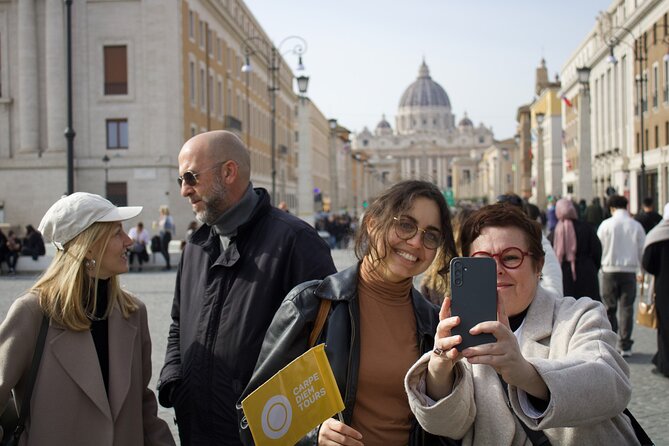
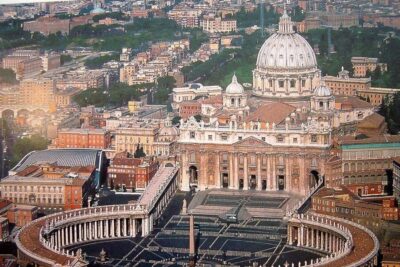
Then you reach Saint Peter’s Square. You’ll see Bernini’s grand colonnades, leading you visually toward the majestic façade of St. Peter’s Basilica, built over the tomb of Saint Peter. The tour ends here, but you’re encouraged to decide how long to stay afterward, since you can explore more at your own pace.
One planning point: the tour is positioned as outside viewing for big interiors like St Peter’s Basilica. If you want to go inside, you’ll need to handle entry separately.
Dress note if you plan to visit sites like St Peter’s Basilica or the Sistine Chapel either before or after: you should dress modestly, with knees and shoulders covered.
What the guides do that makes this worth $120.14
At this price point, the value lives or dies on the guide. The route is packed with architecture and religious art, and without context it can blur together into a list of buildings.
This tour is strongly praised for the way guides bring church legends and historical meaning into everyday language. Guides such as Alina, Kasia, and Domenica show up repeatedly in positive feedback for being fluent in English, entertaining, and full of stories that connect the dots between churches, bridges, and pilgrim roads.
What that means for you: you’re not just collecting landmarks. You’re learning why people walked these streets, what they expected to feel, and how the city designed experiences for them. That is the difference between seeing Rome and understanding what you’re seeing.
Also, because the group is capped at 15, the explanations feel more personal. You’re less likely to disappear into the back row with no chance to hear details clearly.
Logistics and practical expectations: outside views, mobile tickets, and walking time
Here’s the reality check for planning your day. This is a guided walking tour with a set route and short stops. Many of the listed sights are Admission Ticket Free for the experience as presented, and the Pantheon plus St Peter’s Basilica are viewed from outside, not entered.
If you want a museum day, this won’t replace that. If you want a smart orientation plus story-driven highlights, this is a strong choice.
You’ll start at 5:00 pm at Piazza di Pietra and finish at Piazza Pia, near Castel Sant’Angelo. The tour is near public transportation, which helps when you need a quick hop before dinner.
You’ll also get a mobile ticket, which cuts down on the last-minute scramble of paper confirmations.
Who should book, and who might skip
I’d point you toward this tour if:
- you’re visiting for the first time and want a coherent Vatican-area introduction
- you care about religious art and legends, not just architecture photos
- you like small-group walking tours and want a guide to make the story click
- you want an evening plan that feels different from hot midday museum routes
You might skip or add something else if:
- your top priority is entering the Pantheon or St Peter’s Basilica during this exact time window
- you prefer long stays inside churches instead of shorter outside viewing and walking
The good news is you can use the outside views here to decide what deserves a deeper ticketed visit afterward.
Should you book this Rome Jubilee Walking Tour of Churches, Bridges & Legends?
If you want a smart, story-heavy way to connect Rome’s holy sights into one pilgrim route, this is a solid pick. The small-group size, the strong praise for guides like Kasia, Alina, and Domenica, and the focus on meaning behind art and legends make it feel more than a sightseeing checklist.
Book it if you like evening walking, short stops, and learning how the city’s religious and ancient layers fit together. If your dream day is mostly ticketed interiors, plan to pair this with separate entry visits, since the Pantheon and St Peter’s Basilica are outside-view moments on this tour.
FAQ
FAQ
How long is the Rome Jubilee Walking Tour?
The tour lasts about 2 hours.
What time does the tour start, and where does it end?
It starts at 5:00 pm. It ends at Piazza Pia, next to Castel Sant’Angelo.
Is the tour offered in English?
Yes, it is offered in English.
How large is the group?
The tour has a maximum of 15 travelers.
Is admission included for the Pantheon and St Peter’s Basilica?
Entry to the Pantheon and St Peter’s Basilica is not included. You’ll view them from outside.
Are the other stops included without paid tickets?
The stops listed on the route show Admission Ticket Free, meaning you won’t be buying separate tickets for those viewing moments during the walk.
What should I wear if I plan to visit St Peter’s Basilica or the Sistine Chapel?
Dress modestly with knees and shoulders covered.
Can I get a full refund if I cancel?
Yes. You can cancel up to 24 hours in advance for a full refund.
Is there a mobile ticket?
Yes, a mobile ticket is provided.
Latest additions from Rome
- Guided Tour Vatican Museums & Sistine Chapel★ 4.1 · 30 reviews
- Exclusive Rome by Night Vespa Tour★ 5.0 · 30 reviews
- Transfer Rome to Airports★ 4.5 · 30 reviews
- Vatican: St.Peter’s Basilica & Dome – Reserved Entry & Tour★ 4.1 · 30 reviews
- Rome street art tour: off the beaten path with a local guide★ 5.0 · 30 reviews
- Tivoli, Hadrians Villa and Villa d’Este, a charming day trip from Rome★ 4.5 · 30 reviews
- Rome Food Tasting with Wine Pairing Italian Authentic Flavors★ 5.0 · 31 reviews
- Inspirational Cooking on the Roman Chef’s Panoramic Terrace★ 5.0 · 30 reviews
Rome Ghost and Mystery Tours, compared.
Small Group Rome’s Dark Side – Ghosts & Legends Tour
Read our review →
Dark Heart of Rome – Facts, Legend & Mystery Walking Tour
Read our review →
Ghosts, Legends & Mysteries of Rome Tip-Based Walking Tour
Read our review →
Ghosts Legends and Mysteries of Rome Walking Tour
Read our review →Browse the lists this tour appears in