
Rome on two wheels is the fast lane. In 2.5 hours, you glide past the Pantheon, Trevi Fountain, Colosseum, and more, with frequent photo stops and stories from a local guide.
I really like that it stays small-group sized (about 5 to 10 people). With guides like Mateo or Alexander, you get steady pacing, clear English, and plenty of chances to ask questions instead of rushing through Rome.
One thing to consider: you need to be able to ride a bike. If you do not feel confident, the classic bicycle option may feel harder in Rome’s hills and tight streets.
Small-group pace, 5 to 10 riders
Classic bicycle or electric bike options
Photo stops at major sights plus story time
Local guide narratives that connect the stops
Family-friendly setup with child seats on request
Start and end at Piazza Capranica for an easy meet-up
In This Review
- Why this Rome bike tour is a smart use of 2.5 hours
- Palazzo Capranica meet-up: what to expect before you ride
- Pantheon stop: seeing Rome’s icons from the street
- Sant’Ignazio di Loyola: baroque church energy without the line-wait
- Temple of Hadrian: quick views with story context
- Trevi Fountain: the photo magnet, handled the right way
- Trajan’s Column: passing by with enough time to absorb
- Piazza Venezia to Colosseum: big views, controlled pacing
- Arch of Constantine, Circus Maximus, and Theatre of Marcellus
- Jewish Ghetto: guided context in a meaningful part of Rome
- Largo di Torre Argentina and Campo de’ Fiori: quick classics, local street feel
- Piazza Navona and the return to Palazzo Capranica
- Classic bicycle or electric bike: choose based on your legs and the hills
- Safety on Roman streets: how the guide pacing changes everything
- What you get for about $32 per person, and why it can be good value
- Who should book this Rome bike and e-bike tour
- Should you book this Rome bike or e-bike tour?
- FAQ
- Where does the tour start and end?
- How long is the bike or e-bike tour?
- Can I choose between a classic bicycle and an electric bike?
- Is food included in the price?
- Are helmets and child seats available for families?
- What is the cancellation policy?
Why this Rome bike tour is a smart use of 2.5 hours
Rome is huge, and the center can feel like sensory overload if you try to do everything on foot. This tour solves that problem with a simple formula: you cover major landmarks quickly, then you pause for photos and guided context. Two and a half hours is long enough to get your bearings, yet short enough that you do not feel fried by the time you finish.
The value is also practical. At about $32 per person for a guided ride, you get more than “transport.” You get a route planned for sightseeing, a local guide to turn stone and streets into understandable stories, and small-group attention to keep things moving at a human pace. If you are in Rome for a first visit, this kind of overview can help you plan the rest of your days more intelligently.
Palazzo Capranica meet-up: what to expect before you ride
The tour starts and ends at Palazzo Capranica, at Piazza Capranica 97. That matters because you are not doing a complicated logistics dance across town. You roll out from the same place you return to, which makes it easier to grab gelato or a quick coffee afterward.
Before you move, you get a safety briefing. You also have helmets available, and the tour includes luggage storage so you do not have to haul bags around between stops. You get bottled water, which is a small detail that really helps once you are pedaling in Rome’s heat or under a gray sky.
Group size is capped at about 5 to 10 people. That small number changes the experience. You are not competing for attention at each stop, and your guide can keep an eye on traffic flow while you focus on the sights.
More E-Bike Tours in Rome
- Rome: Top Highlights & Hidden Gems Tour by Cannondale E-Bike
★ 4.9 · 1,760 reviews - Rome: Appian Way & Aqueducts E-Bike Tour (Catacombs & Food)
★ 4.9 · 1,498 reviews - Rome: Appian Way, Catacombs, & Roman Aqueducts E-bike Tour
★ 4.9 · 1,421 reviews - Rome by Night: E-bike Small Group Tour -Food & Wine (Option)
★ 4.9 · 1,233 reviews
Pantheon stop: seeing Rome’s icons from the street
The ride begins with a guided visit around the Pantheon area. This is one of those places where it helps to slow down just a little, even if you are on wheels. From a bike, you can angle your camera quickly, then stop long enough for the guide to share the legends and context that usually get lost when you only glance at buildings.
If you like photos, this stop is set up for it. You get time to take pictures and to hear the story behind the location, rather than just snapping a shot and moving on. The tradeoff is that you are still outside in the open, so bring sunscreen and a camera you can reach quickly.
Sant’Ignazio di Loyola: baroque church energy without the line-wait
Next you head to Sant’Ignazio di Loyola, where you get a photo stop and a bit of guided touring. Churches can be tricky on a bike tour because people often expect a long indoor visit. Here, you are not stuck waiting in a long queue. You get enough time to appreciate what is in front of you, then you keep rolling.
What makes this stop work is the rhythm. You get brief guided moments, then you move. That keeps the tour from turning into a stop-start march, and it keeps your legs from locking up. If you come during a busy period, the bike format can also help you see things in a different order than walking crowds.
Temple of Hadrian: quick views with story context
You stop for photos at the Temple of Hadrian area and then pass along nearby streets while your guide keeps the narrative moving. For many people, this is one of the surprises of the tour. It is not just the headline monuments. You also get to see Roman architecture and feel how history sits in the middle of everyday streets.
The benefit of doing this by bike is that you get broader sightlines and an easier path between major sites. The caution is simple: make sure your camera is ready before the stop. These moments are paced for sightseeing, not for museum-level lingering.
Trevi Fountain: the photo magnet, handled the right way
At Trevi Fountain, you get another photo stop. Trevi can feel chaotic when you approach on foot. In this tour format, you are not trying to fight for an angle in the densest crowd for long. You get organized time to take photos, then you move on.
This is also a good reminder of what makes the tour enjoyable: you are not only riding from one famous spot to the next. The guide’s stories turn the stops into mini landmarks of their own, which makes your photos feel connected instead of random.
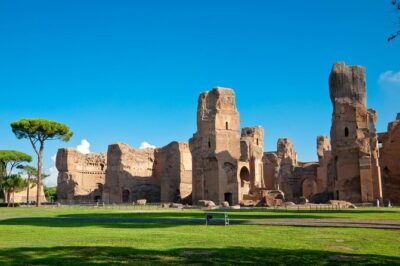
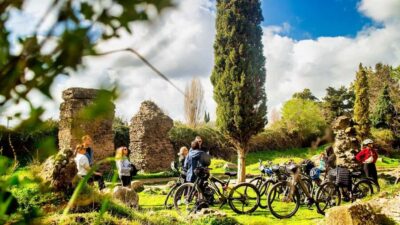
More of Rome taken on two wheels:
Trajan’s Column: passing by with enough time to absorb
Next comes Trajan’s Column, with a guided stop and photo time. Even if you have seen it in photos online, seeing it in person from the street can feel bigger and more real. Your guide uses these pauses to connect the idea of Roman power and public life to what you are seeing around you.
The drawback here is weather and surface. Rome’s center can include uneven pavement and occasional slick spots. Your guide and the group help you manage it, but it is still outdoors and still active, so wear shoes you trust.
Piazza Venezia to Colosseum: big views, controlled pacing
You move on to Piazza Venezia, then you roll toward the Colosseum for a dedicated photo stop and guided information. This is the moment most people come for, and the bike angle helps. You get multiple moments to see the monument without spending the whole time stuck at one exact viewing point.
The guide also gives you context as you pass by and stop. You are not trying to read history like a textbook. You are getting the story in a way that helps you remember what you are looking at. If you want a smooth experience, this is where choosing the right bike matters.
Arch of Constantine, Circus Maximus, and Theatre of Marcellus
After the Colosseum area, the tour continues with a photo stop at the Arch of Constantine, then on to Circus Maximus and Theatre of Marcellus. You also get short guided moments and pass-by segments while your guide points out what matters and helps you understand why these places mattered in their time.
These stops can feel different from the biggest-ticket sights. The vibe is more open-air and less about crowds. That can be great for photos and for feeling the scale of ancient Rome without the museum intensity.
One practical note: these areas can involve more open space and sun exposure. Wear sunscreen and keep that provided water handy, especially if you booked during hotter months.
Jewish Ghetto: guided context in a meaningful part of Rome
The ride enters the Jewish Ghetto area with a guided sightseeing segment. This is a stop where the guide’s narrative is especially important. Instead of treating it like just another photo stop, you get context that helps you connect the neighborhood to real human stories and the layers of Rome over time.
It is still a bike tour, so you are not sitting down for a long lecture. You are moving through the area at a pace that keeps the tour active while still giving you thoughtful context. If you prefer a more reflective travel style, this stop is a good anchor in the middle of the ride.
Largo di Torre Argentina and Campo de’ Fiori: quick classics, local street feel
Next you reach Largo di Torre Argentina for a photo stop and guided sightseeing, then you continue to Campo de’ Fiori for another photo stop. These are street-level Rome experiences. They can feel more like living city neighborhoods than only ancient monuments.
What I like about these stops on a bike tour is that you get variety. You are not stuck staring at one kind of building. You see monumental Rome, then you return to street Rome, and that contrast helps the whole trip feel more honest.
If it is raining or windy, bring a light layer. Even when the tour stays fun, getting wet can make the ride feel longer than the 2.5 hours on the clock.
Piazza Navona and the return to Palazzo Capranica
The tour finishes at Piazza Navona, with guided sightseeing and time for a stop to take in the square. This is a strong finale because you get a classic Rome atmosphere right as your legs are starting to wonder how much longer you might ride.
You then arrive back at Palazzo Capranica. Ending where you started is a simple convenience, but it helps you mentally close the loop. You are not hunting for your meetup point while tired and hungry.
Classic bicycle or electric bike: choose based on your legs and the hills
You can pick a classic bicycle or an electric bike. The biggest difference is effort. Rome has hills, and the electric option is a straightforward way to keep the ride comfortable while still getting the fun of cycling.
From actual ride experiences people described, the e-bike is a great decision if you want to feel less battered by climbs and dips across the city center. It is also a good option if you want the tour to feel like sightseeing rather than a workout.
That said, classic bikes are totally fine if you ride regularly and you are comfortable in traffic-adjacent street conditions. If you are unsure, I would lean e-bike. The tour is short enough that you can still explore on foot afterward, but you do not want the bike portion to be the thing that drains you.
Safety on Roman streets: how the guide pacing changes everything
A bike tour in Rome works best when someone is actively guiding your movement. This one starts with a safety briefing, and the group size helps. You are riding through lively historic-center streets, so confidence matters, but you do not have to figure everything out on your own.
Guides like Mateo and Alexander come up often for a reason: people mention safe riding and clear, calm communication. That practical guidance is the difference between feeling tense versus feeling free to enjoy the ride.
If you cannot ride a bike, this tour is not the right match. Similarly, if you have balance issues, you should think carefully. The ride is manageable for many people, but it is still a cycling experience.
What you get for about $32 per person, and why it can be good value
For roughly $32, you are buying time savings plus interpretation. You get:
- A local guide
- A regular or electric bike
- Helmets and child seats (on request)
- Luggage storage
- Bottled water
- Small-group size between 5 and 10
- Photo stops at iconic sights
- Guided sightseeing around the major locations
Food is not included, so plan to eat before or after. That is normal for a short city tour, and it is actually helpful because you can pick a spot that fits your cravings.
The main value is that the guide helps you see more in less time. Instead of spending half a day figuring out routes and waiting around to find good photo angles, you get a guided circuit built for sightseeing. It can also set you up well for the rest of your Rome days, because you return with a clearer sense of where things are.
Who should book this Rome bike and e-bike tour
This tour is a great fit if:
- You want an intro to Rome without exhausting yourself
- You like structure, photo stops, and short guided story moments
- You prefer small groups over big-bus crowds
- You want a fun, eco-friendly way to move fast through the historic center
It is also family-friendly. Children up to age 3 can join for free with a child seat on a parent’s bike (and helmets are available on request). If you are traveling with kids, this can be a practical way to get out and see a lot without long walks.
If you cannot ride a bike, skip it. If you want long museum-style time, this is not that kind of tour either. This is about motion, views, and guided context over a set route.
Should you book this Rome bike or e-bike tour?
Yes, I think you should book it if you want a high-impact first impression of central Rome. The small group size, the quick photo stops at top landmarks, and the option for an e-bike make it a smart way to spend 2.5 hours. It is also a solid plan on days when you are not in the mood to do long walking loops.
If you are very sensitive to uneven surfaces, bike riding stress, or you are not comfortable on two wheels, you should skip the bike format entirely. Otherwise, this tour is one of the easiest ways to see many of Rome’s biggest sights while still understanding what you are looking at.
FAQ
Where does the tour start and end?
The tour starts and ends at Palazzo Capranica, Piazza Capranica 97.
How long is the bike or e-bike tour?
The tour lasts 2.5 hours.
Can I choose between a classic bicycle and an electric bike?
Yes. You can select either a regular bicycle or an electric bike.
Is food included in the price?
No, food is not included.
Are helmets and child seats available for families?
Helmets and child seats are available on request. Children up to 3 years old can join for free and ride safely in a child seat on a parent’s bike.
What is the cancellation policy?
You can cancel up to 24 hours in advance for a full refund.
Latest additions from Rome
- Guided Tour Vatican Museums & Sistine Chapel★ 4.1 · 30 reviews
- Exclusive Rome by Night Vespa Tour★ 5.0 · 30 reviews
- Transfer Rome to Airports★ 4.5 · 30 reviews
- Vatican: St.Peter’s Basilica & Dome – Reserved Entry & Tour★ 4.1 · 30 reviews
- Rome street art tour: off the beaten path with a local guide★ 5.0 · 30 reviews
- Tivoli, Hadrians Villa and Villa d’Este, a charming day trip from Rome★ 4.5 · 30 reviews
- Rome Food Tasting with Wine Pairing Italian Authentic Flavors★ 5.0 · 31 reviews
- Inspirational Cooking on the Roman Chef’s Panoramic Terrace★ 5.0 · 30 reviews
E-Bike Tours in Rome, compared.
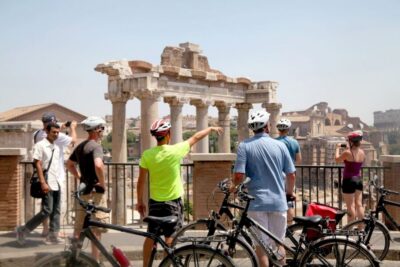
Top Highlights & Hidden Gems Tour by Cannondale E-Bike
Read our review →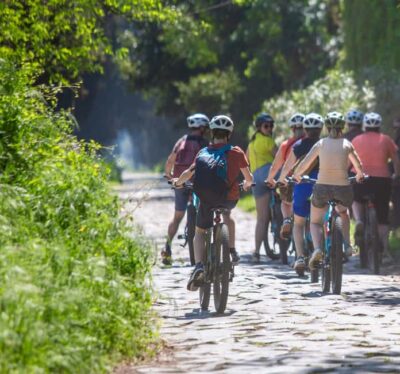
Appian Way & Aqueducts E-Bike Tour (Catacombs & Food)
Read our review →
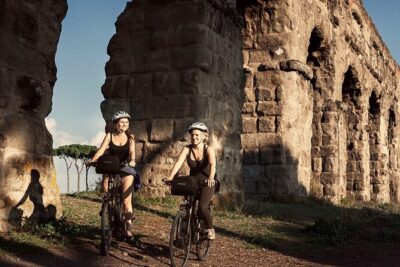
Appian Way, Catacombs, & Roman Aqueducts E-bike Tour
Read our review →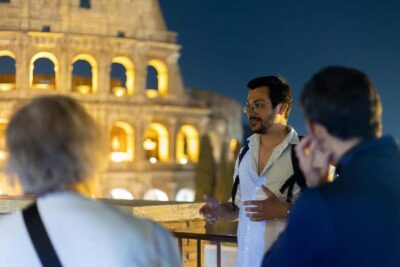
Rome by Night: E-bike Small Group Tour -Food & Wine (Option)
Read our review →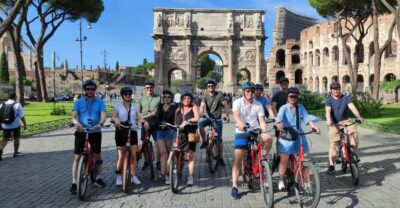
Appian Way, Catacombs and Aqueducts Park Tour with Top E-Bike
Read our review →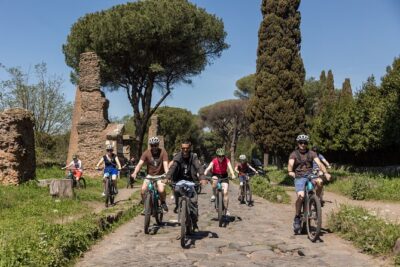
Appian Way & Aqueducts small group e-bike tour(catacombs & food)
Read our review →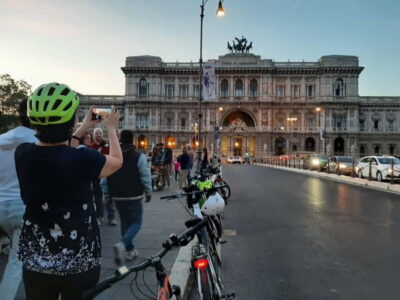
Browse the lists this tour appears in