
Reviewed · CATACOMBS OF ROME TOURS
Rome: Catacombs of Domitilla Entry Ticket & Guided Tour
Rome has a quiet side.
Descend into the Catacombs of Domitilla, one of Rome’s biggest underground cemeteries, and you’ll get cold stone, old symbols, and a guide who puts the place into context fast. I especially like the way the tour connects family ties, imperial politics, and burial customs, and the way the mix of pagan and Christian frescoes makes this site feel like a turning point rather than just dark corridors.
One thing to consider: photography is not allowed inside. If you rely on pictures to remember places, bring a small notebook and plan to write quick notes, because the memories have to come from your eyes and your head down there.
In This Review
- Key things you will notice on the Domitilla catacomb tour
- What the Catacombs of Domitilla are really about
- Where the tour starts: via delle Sette Chiese and the ticket office rule
- Going down: what the 30 minutes feels like underground
- Hypogeum of the Flavians: where family history turns into Christian archaeology
- Pagan hypogeum to Christian catacombs: the timeline you’ll understand
- Nereus and Achilleus, Pope Damasus, and the basilica that grew
- The frescoes: pagan and Christian artwork, plus what restoration means
- What makes the guided part matter (and why the guides get praise)
- Practical tips: comfortable clothes, no photos, and mobility limits
- Price and value: is $16 for 30 minutes a good deal?
- Who should book this Domitilla catacomb tour
- Should you book the Catacombs of Domitilla tour?
- FAQ
- How long is the Catacombs of Domitilla guided tour?
- What languages are available for the guided tour?
- Where do I meet for the tour?
- Is photography allowed inside the catacombs?
- Is this tour suitable for wheelchair users or people with mobility impairments?
- What should I wear or bring?
Key things you will notice on the Domitilla catacomb tour
- Flavians backstory: you hear how Flavia Domitilla’s family and freedmen shaped what became an underground burial ground
- Two main levels: the Hypogeum of the Flavians and older pagan areas later expanded into Christian use
- Pope Damasus and Pope Siricius: the story of how a martyr crypt became a small basilica that grew over time
- Nereus and Achilleus crypt: a specific, time-stamped moment in the catacombs’ transformation
- Restoration in plain language: you learn why preserving fragile surfaces is slow and delicate
- Small group format: limited to 10 participants, so you can actually ask questions
What the Catacombs of Domitilla are really about
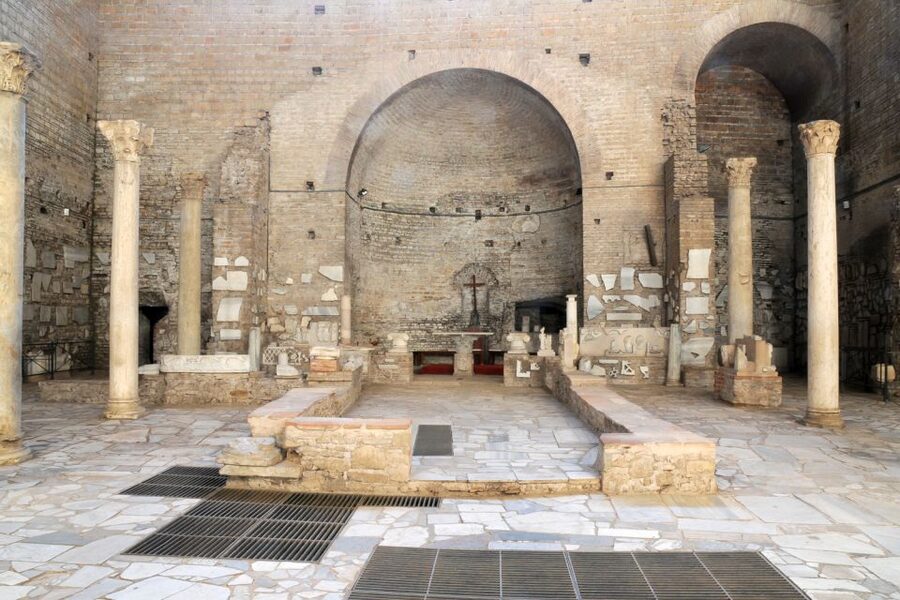
The Catacombs of Domitilla are not just “old tunnels.” They’re an underground record of who had the right to bury people, who had money and status, and how Christian communities took shape inside existing Roman burial traditions.
The story starts with Flavia Domitilla. This family land became burial ground for her freedmen, and Domitilla herself was tied to the imperial circle through relationships dating back to Flavio Clemente, consul in 95 AD. As a Christian, she was exiled by Domitian to Ponza, where she died. That personal detail matters because it explains why this place feels both elite and communal at the same time.
You can also feel a time shift here. Some areas began as pagan hypogea and later became Christian, with expansion happening across the 2nd and 3rd centuries. The result is a site where “before and after” coexist on the walls.
Other descents into the catacombs:
- Rome: Capuchin Crypts and Catacombs Tour with Transfers
★ 4.6 · 6,456 reviews - The Original Roman Crypts and Catacombs Tour with Transfers
★ 4.5 · 4,896 reviews - Rome: Catacombs of St. Callixtus Entry Ticket & Guided Tour
★ 4.6 · 3,037 reviews - Rome: Guided Roman Catacombs Tour with Transfers
★ 4.6 · 1,830 reviews
Where the tour starts: via delle Sette Chiese and the ticket office rule
This catacomb visit is based on a guided entry, and it moves on a schedule. Go directly to the catacomb ticket office and show your reservation at least 10 minutes before your scheduled tour start. This matters because the experience is time-limited, and you do not want to arrive while the group is already descending.
The meeting point is straightforward, but it’s still smart to leave a buffer. Rome can be slow, and underground tours do not wait around. If you are hopping between sights in a tight day plan, treat this like a “must be on time” appointment.
Going down: what the 30 minutes feels like underground
You’re looking at a 30-minute guided experience. That sounds short, but catacomb sites are dense with details, and the guide has to pace what you can safely and comfortably see.
When you descend, the first impression is temperature and silence. The stone cools you quickly, and the space changes your sense of time. It’s one of those places where you notice how people once moved through darkness and stone with purpose, not as tourists.
And because this is a small group, the guide can slow down enough for the key moments. That’s a big deal in underground spaces, where it’s easy to miss context if you’re rushing.
Hypogeum of the Flavians: where family history turns into Christian archaeology
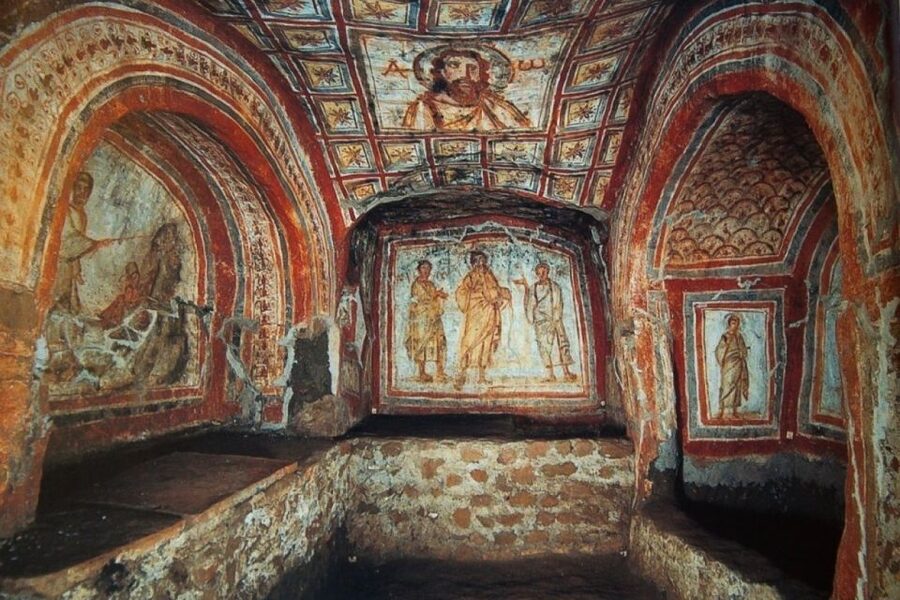
One of the main areas is the Hypogeum of the Flavians. This is where the site’s story becomes specific and personal instead of general.
Giovanni Battista de Rossi believed he could identify tombs connected to Christian members of the Flavia Domitilla family. Even if you do not know his name going in, it helps you understand that archaeology here is not only about art. It’s also about locating people, families, and relationships in a place built to last.
The Hypogeum concept matters because it explains the layout. You’re not walking through one uniform cemetery. You’re entering a multi-layered world where different rooms correspond to different periods and different burial communities.
Pagan hypogeum to Christian catacombs: the timeline you’ll understand
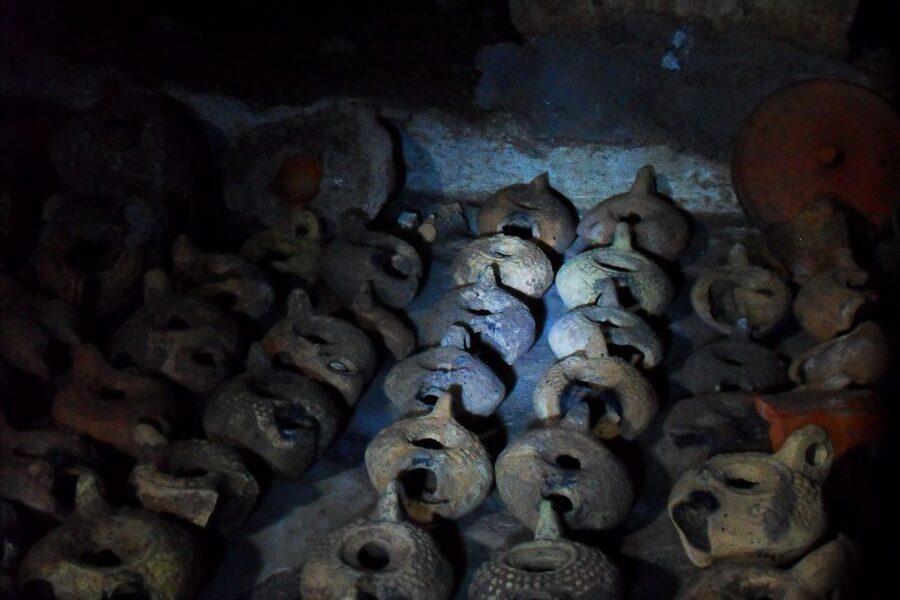
A key part of why this visit is worth your time is the transformation story. The catacombs include a pagan hypogeum dating from the end of the 2nd century into the beginning of the 3rd century. Later, it became Christian and was enlarged in the mid 3rd century.
That is a meaningful shift. It tells you Christianity was not born in a vacuum. It also shows that burial practices could change without erasing the earlier structures. When you see frescoes and spaces used across changing beliefs, you stop thinking of the catacombs as a single “one-size-fits-all” site.
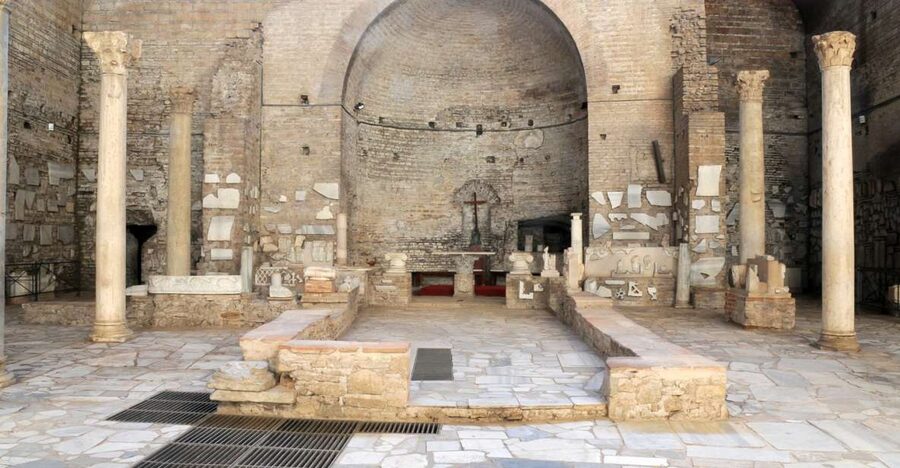
Toward the end of the third century, something else happens. The bodies of the martyrs Nereus and Achilleus are placed in a crypt on the second floor. That crypt is then transformed by later church leaders into a small basilica and later expanded again.
A few more Rome options worth a look



Nereus and Achilleus, Pope Damasus, and the basilica that grew
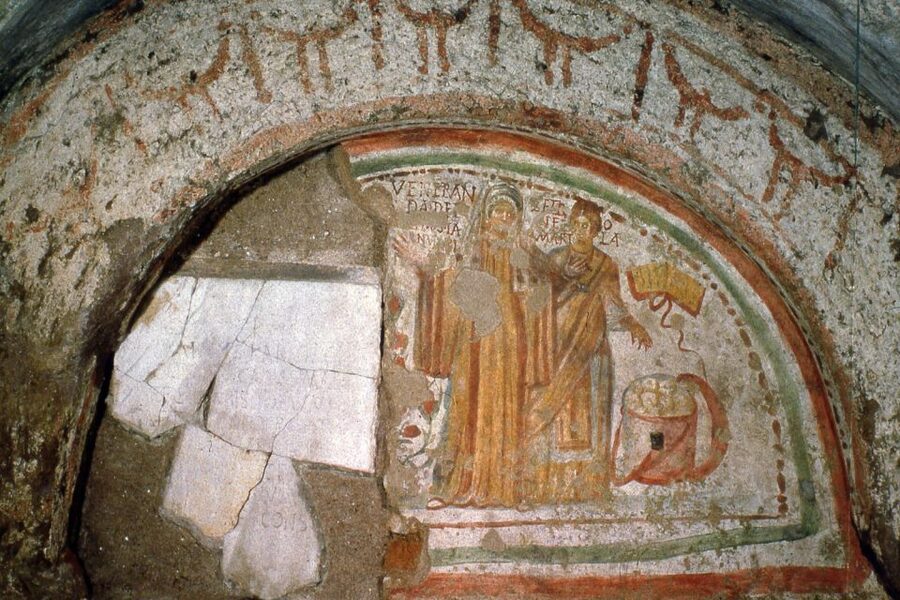
This portion of the story gives your visit a clear storyline with dates attached.
After the martyr crypt is established, Pope Damasus (366-384) transforms it into a small basilica. Later, Pope Siricius enlarges it between 390 and 395, reaching something closer to the basilica size visitors can see today.
This is the kind of detail that makes the underground feel less like scenery and more like history you can track. You’ll likely hear how the site’s meaning shifted as Christianity grew more organized and visible, and how buildings could be expanded when devotion increased.
The frescoes: pagan and Christian artwork, plus what restoration means
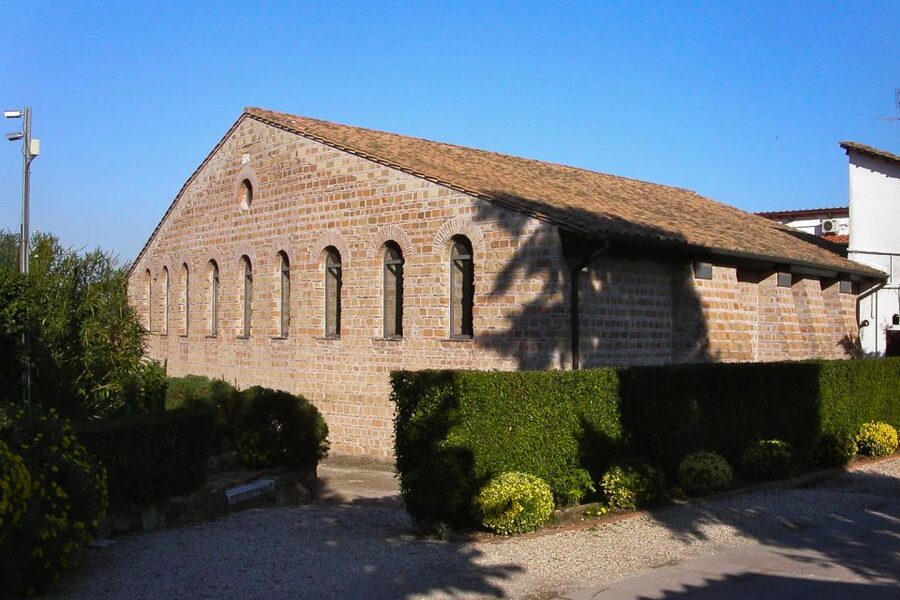
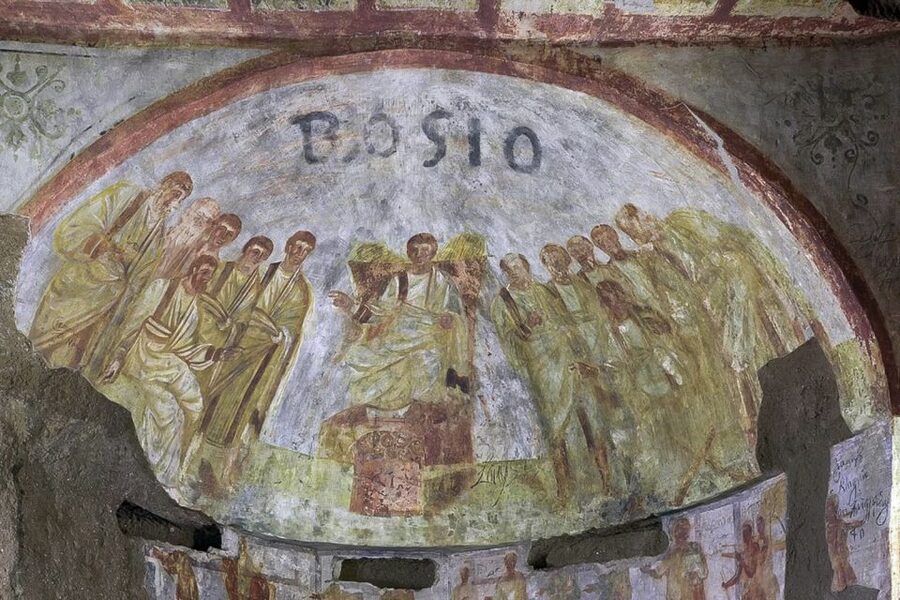
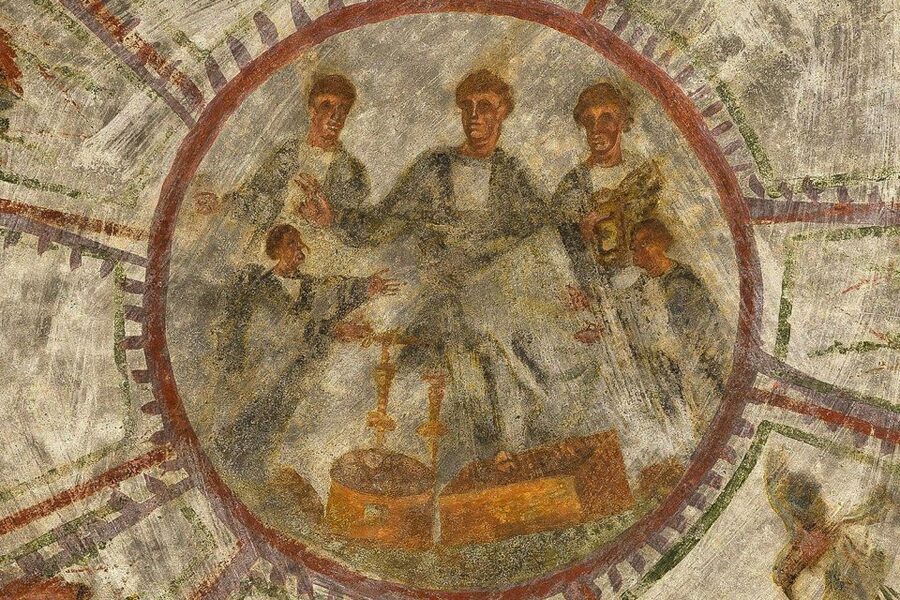
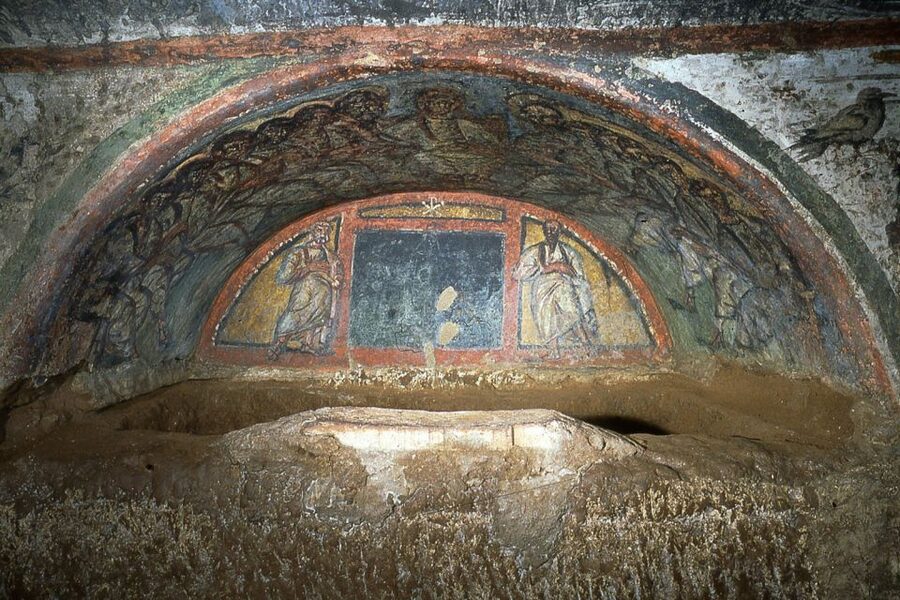
One of the tour’s highlights is the mixture of pagan and Christian frescoes. Seeing both in the same underground world is one of those small moments that changes how you read the walls.
You’ll also get an explanation of how restoration works here. The guides emphasize that the process is delicate, because the surfaces and painted layers are fragile and need controlled care. This is important for you as a visitor because it changes how you look at what you see. You realize what’s being protected, not just what’s being displayed.
Note also that not every corner of the catacombs is open to visitors. Part of the network is accessible, and the rest stays off-limits, which helps preserve what remains. If you expect a full maze experience, you might be surprised by how curated the visitor route is, even though it still feels expansive.
What makes the guided part matter (and why the guides get praise)
The tour includes a live guide and entrance fees, and that’s the simplest way to get value. Underground sites can be hard to understand on your own because the history is layered and the visual clues are subtle.
In the feedback, one guide named Andrea earned strong praise for being professional, friendly, and passionate about history and art. That matches what you want from a catacombs guide: clear explanations, and time for questions.
I also like that the tour is designed as a small-group experience, limited to 10 participants. In a space where you naturally slow down, a smaller group means the guide is more likely to keep everyone together and answer what you actually want to know.
Practical tips: comfortable clothes, no photos, and mobility limits
A catacombs visit is not a “dress up” event. Wear comfortable clothes, and plan for cooler air underground. Closed-toe shoes are a smart move even though they are not explicitly required, because you’ll be moving through stone corridors.
Photography is not allowed inside, so do not plan on a photo-first experience. Instead, use your senses. If you’re the type who wants proof, think of this as a “notes and memories” stop, not a photo gallery.
Mobility is another real factor. This tour is not suitable for people with mobility impairments or wheelchair users, so if that applies to you, you’ll want to choose an alternative Rome option that matches your needs.
Price and value: is $16 for 30 minutes a good deal?
At $16 per person with entrance fees and a guide included, you’re paying for interpretation as much as access. In Rome, the difference between a self-guided ticket and a guided entry is not just convenience. It’s context.
Because this is 30 minutes, the guide is doing the heavy lifting, connecting the Flavians story, the pagan-to-Christian timeline, and the martyr basilica transformations into something you can actually remember. If you like religious history, art history, or Roman family politics, that guide work is the value you’re buying.
If you hate structured visits or want to wander freely with no schedule, you might feel the time is brief. But if you want a focused “right amount” experience in the underground, this price and duration hit a workable middle ground.
Who should book this Domitilla catacomb tour
This tour fits best if you like Roman history that is specific, not just “ancient equals interesting.” You’ll probably enjoy it more if you care about how Christian sites grew out of older Roman patterns, and if you want to see the way art and architecture track changing beliefs.
It’s also a good pick if you’re balancing Rome heavy-hitters like the Colosseum and Vatican with something quieter and stranger. Catacombs give you a different kind of atmosphere than above-ground ruins.
If you are traveling with limited time, 30 minutes is manageable. If you are traveling with mobility constraints or need photography for memory, then you should reconsider based on the tour rules and suitability.
Should you book the Catacombs of Domitilla tour?
I’d book it if you want a guided underground visit that explains the timeline clearly, highlights the fresco mix, and connects Flavia Domitilla, the Flavians hypogeum, and the later basilica expansion. The small group size and the inclusion of entrance fees and a live guide make it feel efficient for what you’ll learn.
Skip it if you need photography inside, or if underground access is a challenge for you. And if you prefer very long free-form exploring, the 30-minute structure might feel too tight.
If you like walking away with names, dates, and a real sense of how this cemetery changed over time, the Catacombs of Domitilla are a strong choice.
FAQ
How long is the Catacombs of Domitilla guided tour?
The tour lasts about 30 minutes.
What languages are available for the guided tour?
The live guide is available in Italian and English.
Where do I meet for the tour?
Go directly to the Catacomb ticket office and show your reservation at least 10 minutes before the scheduled tour.
Is photography allowed inside the catacombs?
No, photography is not allowed inside.
Is this tour suitable for wheelchair users or people with mobility impairments?
No, it is not suitable for people with mobility impairments or wheelchair users.
What should I wear or bring?
Wear comfortable clothes.
Latest additions from Rome
- Guided Tour Vatican Museums & Sistine Chapel★ 4.1 · 30 reviews
- Exclusive Rome by Night Vespa Tour★ 5.0 · 30 reviews
- Transfer Rome to Airports★ 4.5 · 30 reviews
- Vatican: St.Peter’s Basilica & Dome – Reserved Entry & Tour★ 4.1 · 30 reviews
- Rome street art tour: off the beaten path with a local guide★ 5.0 · 30 reviews
- Tivoli, Hadrians Villa and Villa d’Este, a charming day trip from Rome★ 4.5 · 30 reviews
- Rome Food Tasting with Wine Pairing Italian Authentic Flavors★ 5.0 · 31 reviews
- Inspirational Cooking on the Roman Chef’s Panoramic Terrace★ 5.0 · 30 reviews
Catacombs of Rome Tours, compared.
Capuchin Crypts and Catacombs Tour with Transfers
Read our review →
The Original Roman Crypts and Catacombs Tour with Transfers
Read our review →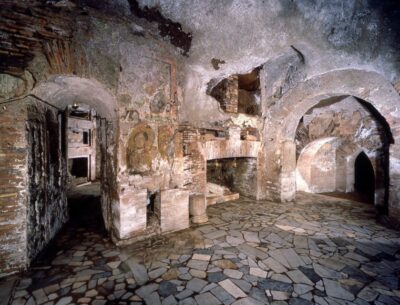
Catacombs of St. Callixtus Entry Ticket & Guided Tour
Read our review →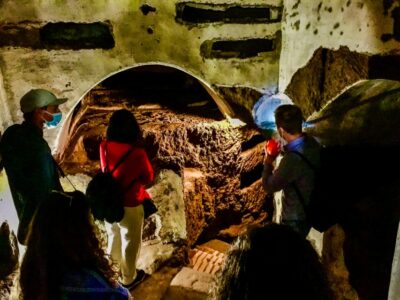

Catacombs and Capuchin Crypt Guided Tour with Transfer
Read our review →
Appian Way & Aqueducts E-Bike Tour (Catacombs & Food)
Read our review →
Appian Way, Catacombs, & Roman Aqueducts E-bike Tour
Read our review →Browse the lists this tour appears in