Reviewed · TOURS
Rome: Basilica of St Mary Major Catholic Pilgrim Tour
Holy Doors and relics, in one focused hour. This St Mary Major Catholic pilgrim tour helps you read the basilica like a storybook, from the ancient mosaics to the objects pilgrims come to venerate. You also get a close look at the Salus Populi Romani icon tradition and the crib relic, which most quick Rome stops totally miss.
I like how the tour turns the building into meaning, not just sightseeing. The biblical symbolism in the mosaics, plus the time spent on details like the crib of the baby Jesus wood and the display case with the glass sarcophagus, makes the place feel personal and clear. One drawback to plan for: you cannot wear shorts or short skirts, so dress with that in mind.
In This Review
- Key things that make this tour worth your time
- St Mary Major as Your Rome “Meaning Stop”
- Meeting at the fountain, and how the first minutes set the tone
- The Holy Door and Jubilee Year meaning, without the guesswork
- Getting oriented fast with the basilica’s five names
- Inside the mosaics, how symbolism turns art into lessons
- The crib wood relic and what to do with that moment
- Salus Populi Romani by St Luke, plus St Pius V’s glass sarcophagus
- Your guide experience, from Wen to Tom and beyond
- Timing, pacing, and how 60 to 90 minutes really plays out
- Price and value at $65, where the money actually goes
- Who should book, and who might want a different plan
- Should you book this St Mary Major Catholic Pilgrim Tour?
- FAQ
- Where do I meet for the St Mary Major tour?
- How long is the tour?
- What can I see during the tour?
- Is there a skip-the-line option?
- How big is the group?
- Are radio headsets included?
- What languages are available?
- What should I wear?
- What else is included besides the guided visit?
Key things that make this tour worth your time
- Holy Door pre-view at the entrance, tied to Jubilee Year tradition
- Relic access, including wood associated with the crib of the baby Jesus
- Icon focus, with Salus Populi Romani attributed in Catholic tradition to St Luke
- Mosaics with explanation, especially catechesis-style symbolism behind the altar area
- Small group size up to 10, for an actually guided experience
- Time efficiency, with express security so you spend less time waiting
St Mary Major as Your Rome “Meaning Stop”
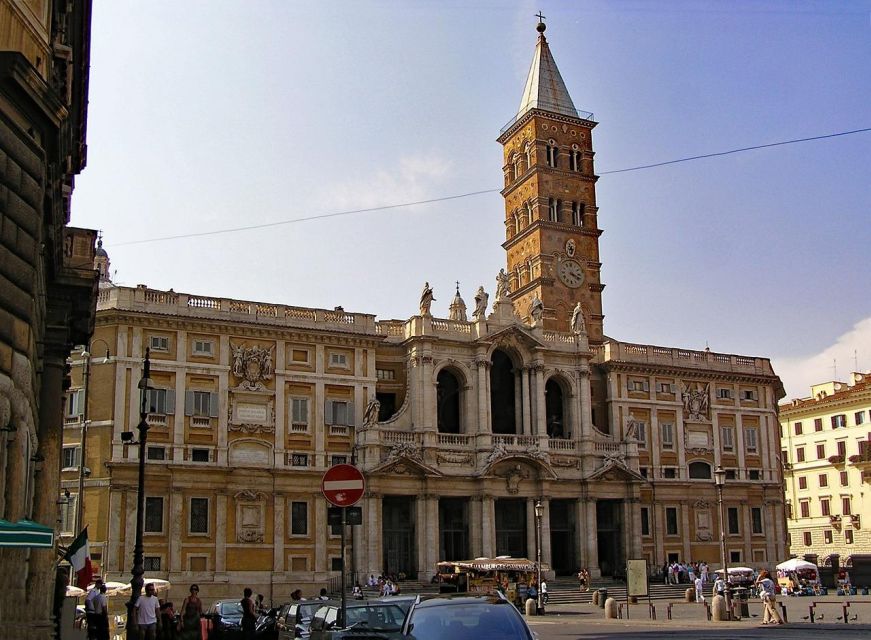
Rome has plenty of big-name churches, but St Mary Major, locally Santa Maria Maggiore, is a different kind of stop. It is one of Rome’s four Major Papal Basilicas, and it matters in Catholic life in a way that is easy to miss if you only glance at the building.
What I like most is that this tour is not trying to cram in everything. Instead, you get a tight guided walk that teaches you how to “see” the basilica, especially through the mosaics and the featured relics. If you’ve ever stood in a church and thought, I’m just watching people stare, this format fixes that.
One more reason I think it is a strong choice: this is the kind of place where details change how you feel about the whole visit. When you understand the symbolism and the devotional objects on display, the basilica becomes less about decoration and more about memory.
Not settled yet? These cover similar ground in Rome:
- Vatican Museums, Sistine Chapel & St. Peter’s Basilica Tour
★ 4.3 · 73,970 reviews - Vatican Museums, Sistine Chapel & St Peter’s Basilica Guided Tour
★ 4.5 · 39,149 reviews - Rome: Colosseum, Palatine Hill and Roman Forum Guided Tour
★ 4.8 · 32,814 reviews - Rome: Guided Tour of Colosseum, Roman Forum & Palatine Hill
★ 4.7 · 27,897 reviews
Meeting at the fountain, and how the first minutes set the tone
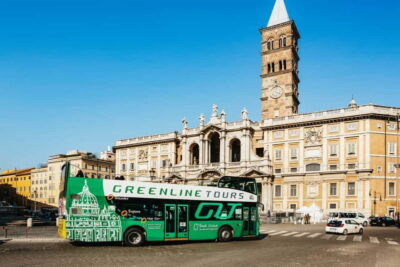
You meet right at the fountain in front of the main entrance to St Mary Major. The key practical detail here is that the basilica’s front faces Piazza Santa Maria Maggiore, not Via Cavour, so don’t navigate to the wrong street and arrive stressed.
You are also told to download WhatsApp so you can stay in real time contact if anything goes sideways. That small step matters in Rome, where a tiny change in where you stand can cost you time, especially with groups.
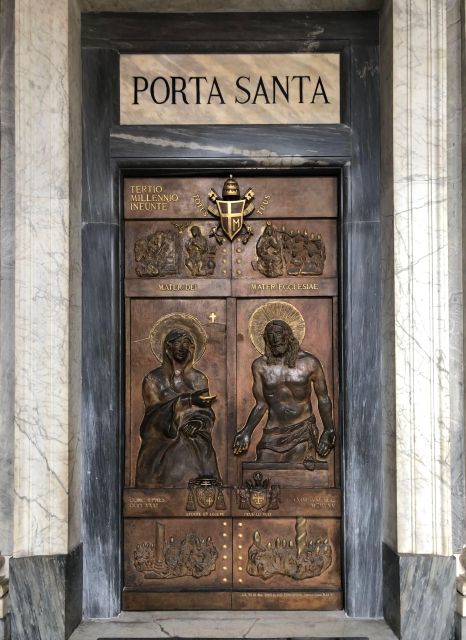
From there, you enter together, and that group moment matters because the guide uses the first views to set expectations. Before you even get fully inside, you look at the Holy Door, which frames the rest of the visit. It’s a good way to start, because it gives you the “why” before you get the “what.”
Finally, the tour includes a skip-the-line express security check, which helps you avoid the most time-wasting bottleneck inside the church complex. With just about an hour, those minutes saved are real value.
The Holy Door and Jubilee Year meaning, without the guesswork
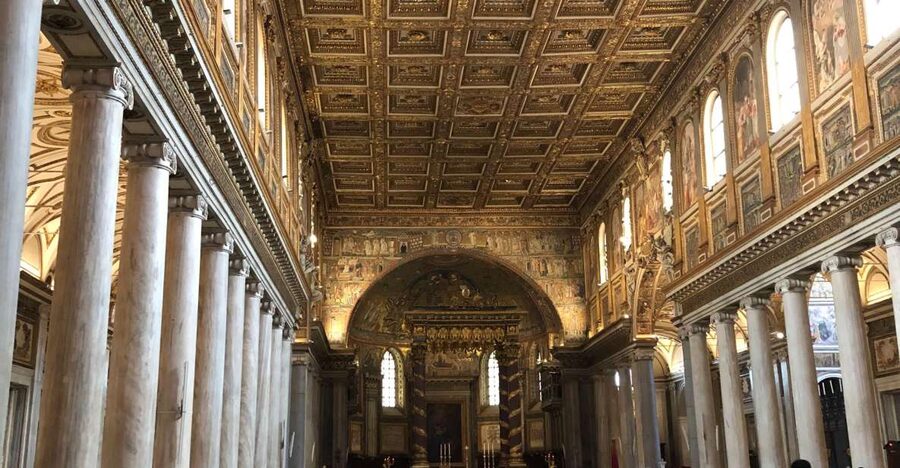
If you are visiting during a Jubilee Year, the Holy Door tradition is a major deal. The tour explains that this basilica is one of four major sites in Rome where those doors open in Jubilee time, so pilgrims can gain a Plenary Indulgence.
Even if you are not there in Jubilee season, this stop still helps. You learn what the door symbolizes, and you understand why Catholics treat this entrance as more than architecture. A lot of people see doors in churches, then move on. Here, the guide gives you a reason to slow down and notice.
What makes this portion feel “real” is how it connects the building to lived faith. It is not performative, and it is not vague. You get the concrete idea that Rome’s sacred journey has physical stops, and St Mary Major is one of them.
And because the tour starts with that look before you go deeper inside, you avoid the common issue of reading the basilica out of order. The guide basically gives you a roadmap first.
Getting oriented fast with the basilica’s five names
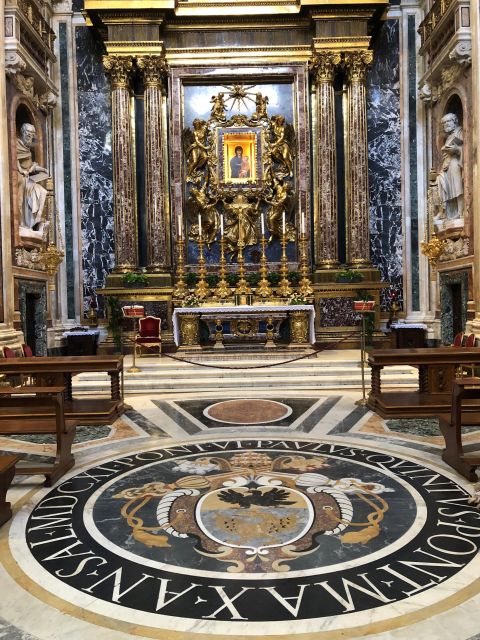
One of the smartest parts of the tour is the orientation before you go fully in. You get told about the basilica’s five different names, shaped by its eventful past. That might sound like trivia, but it actually helps you follow what you see.
In a church like this, it is easy to hear people use different titles for the same place. Knowing the different names helps you connect signage, traditions, and devotional language without feeling lost. You also get a better sense of why the basilica is treated with such seriousness.
This early context also makes the rest of the tour smoother. As you move into the interior and the mosaic area comes into view, the guide’s explanations land better because you already understand that the building carries layers of meaning.
If you like tours that help you connect the dots instead of just listing objects, this is a strong section.
Inside the mosaics, how symbolism turns art into lessons
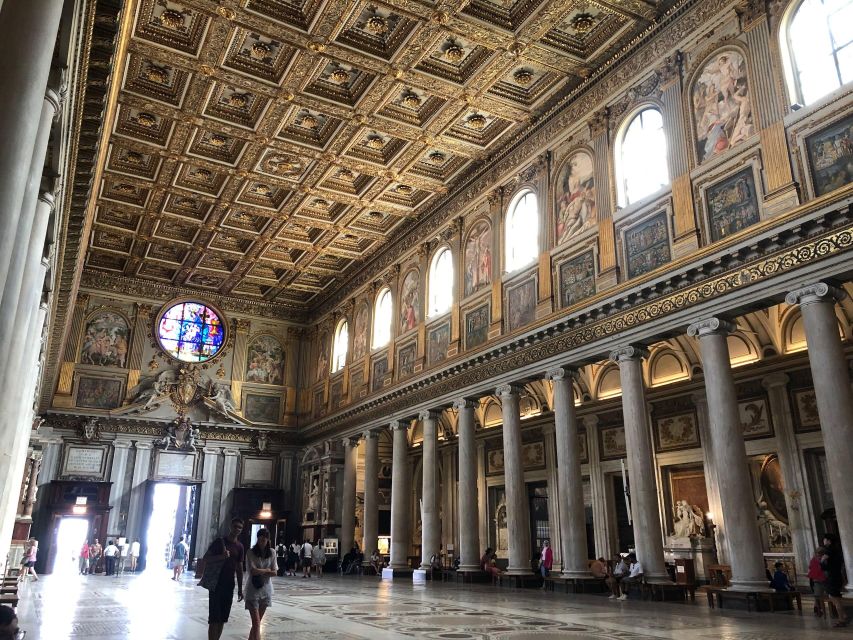
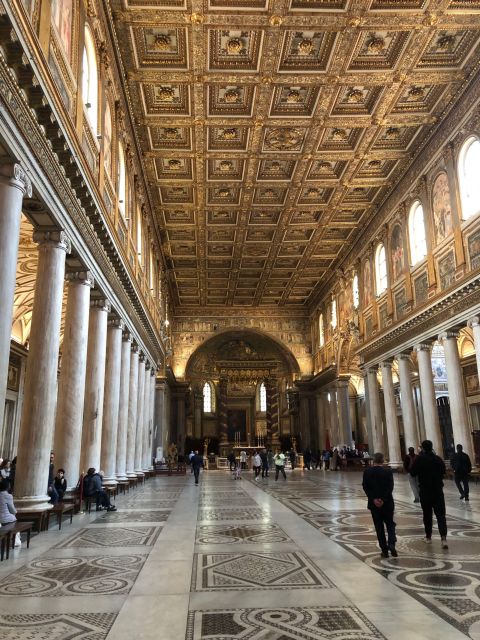
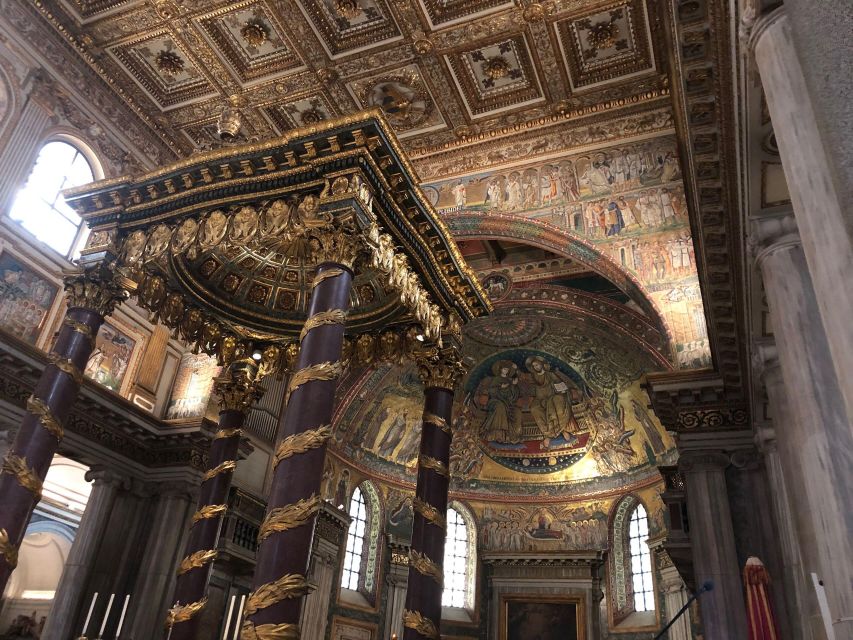
The big star inside St Mary Major is the mosaics, and this tour spends time on them in a way that regular sightseeing often skips. The guide points out that the mosaics contain biblical symbolism and catechesis, meaning teaching through visual storytelling.
You do not need a theology degree to enjoy this, but you do benefit from having someone explain what you are looking at. The tour’s focus is on how mosaics communicate ideas from both the Old and New Testament. That matters because the basilica does not present itself as a single-theme church. It presents a long arc.
A practical benefit: if you are the type who gets distracted by size and detail, the guide keeps your attention on the “readable” parts. You learn what to look for rather than trying to decode everything on your own while groups drift past.
If you only had time for one “art plus meaning” church experience in Rome, this is a strong candidate, especially because the guide helps you see the mosaics as a structured message.
Another shape for the same afternoon in Rome:
The crib wood relic and what to do with that moment
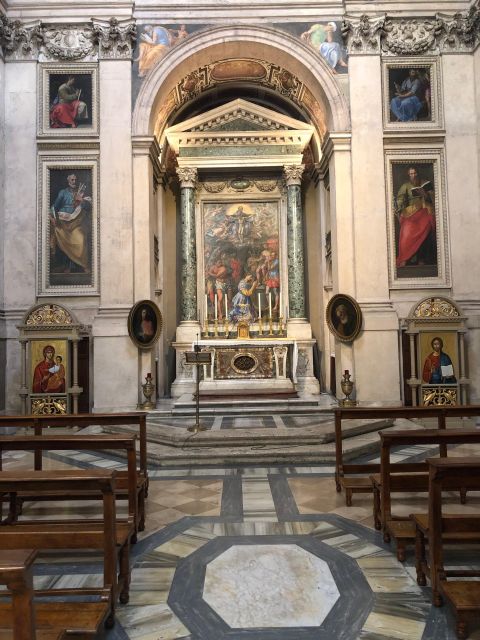
One of the standout inclusions is the relic connected with the crib of the baby Jesus. The tour explains that wood from the crib associated with the baby Jesus is on display, and that relics from holy places in the east were brought to Rome for pilgrims to venerate.
Now, here’s the useful part for your visit: if you think relics are just objects behind glass, you’ll get a lot more out of the experience when you understand that pilgrims came for a reason. The guide’s tone is devout and direct, and it helps you approach the viewing with the right mindset.
This stop is also a reminder that this basilica is not only about history. It is about devotion, continuity, and prayer across centuries. Even if you are visiting as a tourist, you can sense that people come here with intention.
You should also expect that this kind of viewing takes patience. You are seeing something sacred and personally meaningful to many people, so keep your voice low and your movements gentle.
Salus Populi Romani by St Luke, plus St Pius V’s glass sarcophagus
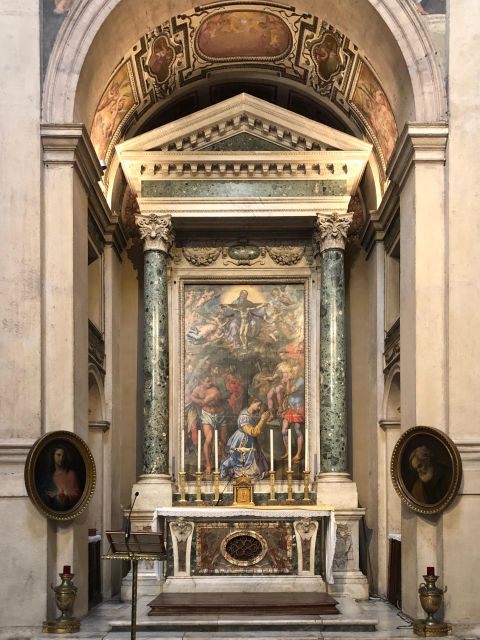
Another key moment is the Salus Populi Romani icon. Catholic tradition holds it was painted by St Luke the Evangelist, and the tour highlights that tradition while you view the icon.
This is a great example of why the tour matters. You would probably recognize the name as something important from church talk, but without guidance you might not connect what makes it significant. With the guide’s explanation, it becomes easier to understand why pilgrims make a point of coming here.
You also see a glass sarcophagus of Pope St Pius V. This adds another layer to the “why” of the basilica, because it shows the place is also a focal point for later saints and papal legacy.
Together, the icon and the sarcophagus help you see St Mary Major as a layered spiritual site, not a one-era monument.
Your guide experience, from Wen to Tom and beyond
The tour’s quality is strongly tied to the guide. In past bookings, guides like Wen and Tom have been praised for being both professional and clear, with explanations that actually hold attention.
What I’d watch for, if you care about how tours feel in real life: the best guides here don’t just lecture. They guide a conversation. One booking specifically liked Tom’s approach as a dialogue with the group and his habit of answering questions and offering thought-provoking insight.
That style can be a big deal if you are the kind of traveler who wants to ask something simple like, What am I looking at, and why does this matter? You are more likely to get answers than just passively watch a timeline.
Also, since the tour supports English and Chinese, it is built for clarity across languages. Combine that with radio headsets for groups of 7 or more, and you can usually hear the guide without craning your neck or relying on sheer volume.
Timing, pacing, and how 60 to 90 minutes really plays out
The tour is set for about 60 to 90 minutes, with many people finishing right after the basilica visit on the steps in front of the main entrance. That makes it practical for a Rome day where you have other sites planned.
The pacing is usually what you want for this type of church. You are not rushed through the sacred objects like they are checklist items, but you also are not stuck for hours losing focus. If you enjoy short, guided stops with good context, this fits well.
There is also an option for people who want the bigger program. If you continue with the larger Via Crucis Pilgrim Tour, you leave with the guide to see additional relics tied to the Passion of Christ, along with the Major Basilica of St John Lateran among other things.
So you have flexibility. You can do a focused St Mary Major experience, or you can stack it into a longer devotional route.
One last practical note: the tour ends on the steps in front of the entrance, so plan your next transport and your next church visit with that in mind.
Price and value at $65, where the money actually goes
The listed price is $65 per person for about an hour. That’s not cheap, but it is also not the most expensive way to do a church guided visit in central Rome.
Here is how I see the value working for you:
- You get a guided explanation of key devotional and artistic elements, not just access.
- You get skip-the-line express security, which can be the difference between enjoying your time and feeling annoyed.
- You get radio headsets when the group is 7 or more, which is a comfort and clarity boost.
- You’re in a small group limited to 10, which usually means your questions and attention actually matter.
Add in the fact that the tour includes all taxes and fees, and you are not hit later with extra small add-ons for the basics.
The biggest “value test” is your interest level in what makes this basilica distinctive. If you want the mosaics explained, the Holy Door tradition framed, and the relics identified with clear meaning, the price starts to feel reasonable fast.
If you mostly want quiet time and you are comfortable reading church art on your own, you might decide to self-guide. But if you want context, this tour is built for that.
Who should book, and who might want a different plan
This tour is a good match if you:
- want a devout Catholic guided experience with clear explanations
- care about religious art like the mosaics, not just photos
- like small-group guidance, with chances to ask questions
- are visiting on a tight schedule and want a high-value use of time
It may be less ideal if you:
- plan to wear shorts or short skirts, since those are not allowed
- dislike tours that focus on faith and devotional context more than general sightseeing
- want a long, slow wander with no structure, because this visit is deliberately paced
Also, if you are the type who loves reading about symbolism but you hate any “before you enter” briefing, you might find the orientation segments feel slightly formal. Still, the payoff is that you understand what you are looking at when the mosaics and relics come into view.
Should you book this St Mary Major Catholic Pilgrim Tour?
If you like church tours that explain meaning, not just names, I’d book it. The combination of Holy Door tradition, the focused look at relics like the crib wood, and the time spent on mosaic symbolism makes this one of the more purposeful “one hour in Rome” experiences.
Book it especially if you want a guide who can translate the place into understandable spiritual and visual language, and if you value small-group comfort with radios and express security.
Skip it if your plan is purely casual photo stops and you plan to show up in clothing that breaks the basilica rules. Otherwise, this tour is a strong way to see St Mary Major the way pilgrims and the faithful experience it, with just enough structure to make the visit satisfying.
FAQ
Where do I meet for the St Mary Major tour?
Meet at the fountain in front of the main entrance to the Basilica Papale di Santa Maria Maggiore (Santa Maria Maggiore). The front faces Piazza Santa Maria Maggiore.
How long is the tour?
The tour lasts about 1 hour, with a typical visit time stated between 60 and 90 minutes.
What can I see during the tour?
You will see the Holy Door, the mosaics with symbolism, the relic of the crib of the baby Jesus (wood), the icon Salus Populi Romani attributed in tradition to St Luke, and the glass sarcophagus of Pope St Pius V.
Is there a skip-the-line option?
Yes. The tour includes express security and helps you skip the line through that security check.
How big is the group?
It is a small group limited to 10 participants.
Are radio headsets included?
Radio headsets are included for groups of 7 or more.
What languages are available?
The live guide is available in English and Chinese.
What should I wear?
Shorts and short skirts are not allowed.
What else is included besides the guided visit?
The price includes all taxes and fees. A homily is available on request. Guide tip and transport to and from the meeting point are not included.
Latest additions from Rome
- Rome: Testaccio Market Food Tour with Street Food & Wine★ 5.0 · 8 reviews
- Exclusive Pasta & Tiramisu Class with Wine near by Colosseum★ 5.0 · 8 reviews
- Private Professional Photoshoot in Rome★ 5.0 · 8 reviews
- Loreto “Shrine of the Holy House of the Virgin Mary” Private Tour from Rome★ 5.0 · 8 reviews
- Rome Day to discover Florence and Pisa Hotel Pickup★ 4.5 · 8 reviews
- Rome: Christmas Nativities and Angels Tour★ 3.1 · 8 reviews
- Guided Tour of Vatican Museums and Sistine Chapel★ 5.0 · 8 reviews
- Rome: Cooking Class of fresh Pasta and Tiramisu Cake★ 5.0 · 8 reviews
Tours, compared.
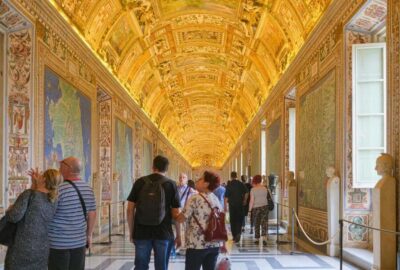
Vatican Museums, Sistine Chapel & St. Peter’s Basilica Tour
Read our review →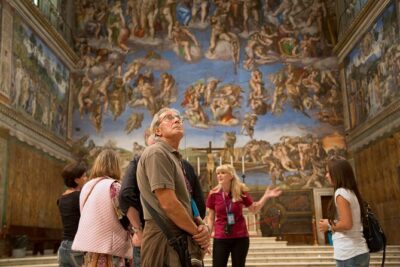
Vatican Museums, Sistine Chapel & St Peter’s Basilica Guided Tour
Read our review →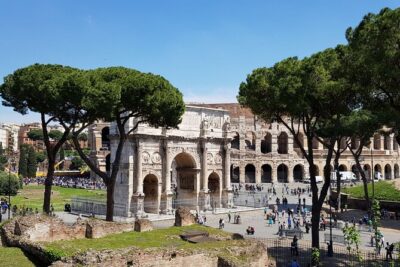
Colosseum, Palatine Hill and Roman Forum Guided Tour
Read our review →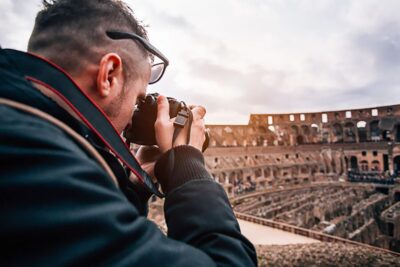
Guided Tour of Colosseum, Roman Forum & Palatine Hill
Read our review →
Colosseum, Roman Forum and Palatine Hill Guided Tour
Read our review →
Colosseum Arena Floor, Palatine & Forum Guided Tour
Read our review →
Vatican Museums, Sistine Chapel and Basilica Tour
Read our review →