
Reviewed · WORKSHOPS
Micromosaic Jewelry Workshop in Rome, Italy
Micromosaic is tiny art, made for your hands. This Rome workshop turns Roman mosaic know-how into a wearable souvenir, with a small group and a guided design process in the fashionably local Monti neighborhood. You’ll learn the mosaic story and then use that understanding to build a real piece of jewelry you can take home.
I especially like that the class is structured around both craft and context, starting with Roman mosaic technique and history before you cut and place micromosaic glass. You’re not just copying a pattern, you’re learning why the craft matters, including how the Cassio family developed micromosaic practice in their studio connected to Trajan’s Market. One consideration: micromosaic work is genuinely fiddly, so you should come ready to slow down and focus, even if you’re not “crafty.”
Because the group is limited to seven people, you get lots of help when your pieces get tricky, and you’re offered bottled water plus coffee and tea while you work. Still, keep your expectations realistic: the workshop is hands-on, and the end result needs to stay secure and well packed in the jewelry setting.
In This Review
- Key points to know before you go
- A small Monti workshop where mosaics become jewelry
- Welcome to Studio Cassio, set among Roman layers
- The history lesson: Roman mosaic craft to micromosaic luxury
- Hands-on micromosaic making, step by step
- Choose your pendant, materials, and the finished keepsake
- How to get the most out of 2.5 hours (and Monti time)
- Price, value, and who this class is really for
- Should you book Micromosaic Jewelry Workshop in Rome?
- FAQ
- How long is the Micromosaic Jewelry Workshop?
- Where do I meet for the workshop?
- What is included in the price?
- Is the workshop offered in English?
- What is the minimum age?
- Can I get a full refund if I cancel?
Key points to know before you go
- Monti location means you can pair the class with an easy stroll and good local food before or after.
- Max 7 people keeps the pace calm and gives you real instructor attention.
- History first, jewelry second so your souvenir comes with context you can actually use while sightseeing.
- Everything for the craft is included, plus a jewelry box, so you walk out with a finished keepsake.
- Micromosaic takes patience, but that’s also why the results look so precise up close.
- You choose your frame and chain, turning the technique into something personal you’ll wear.
A small Monti workshop where mosaics become jewelry
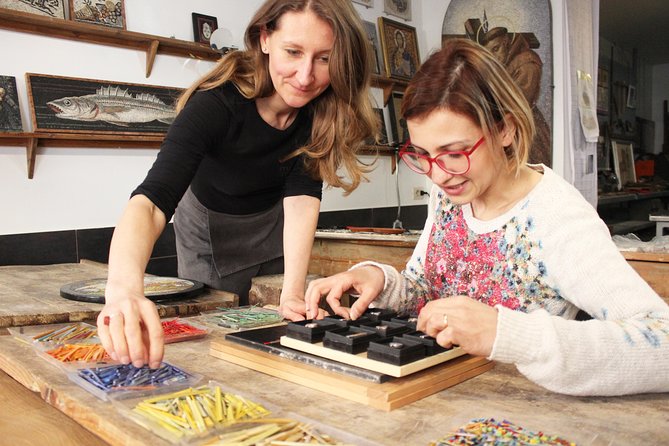
Rome has a million souvenirs, but micromosaic feels different the moment you see the scale. The materials are small, the pieces are precise, and the result ends up looking like miniature mosaic tilework turned into something wearable. That transformation is the point, and you feel it as soon as the session begins.
The setting also matters. The workshop runs in the heart of Monti, a neighborhood with an artsy side that’s far more everyday than museum-heavy areas. If you like starting your day with something hands-on and then moving to street life and gelato, this fits.
Another thing I like: you’re not stuck in a huge class room. With a maximum of seven participants, the room stays quiet enough that you can actually hear the explanation, then get guidance when your hands need it. This is the kind of activity where help makes a real difference, not just friendly encouragement.
Still, micromosaic is not a quick craft you can half-watch. You’ll spend the majority of the 2 hours 30 minutes working with detailed glass pieces, so you need to be comfortable with slow, careful steps.
Other Roman benches to work at for a morning:
- 3 in 1 Cooking Class near Navona: Fettuccine, Ravioli & Tiramisu
★ 5.0 · 7,376 reviews - Rome: Pasta & Tiramisu Class with Fine Wine by the Vatican
★ 4.9 · 4,852 reviews - Rome: Pasta Making Class with Wine, Limoncello, and Dessert
★ 4.9 · 3,177 reviews - Rome Cooking Class: Make Pasta and 3 Spritz Cocktails
★ 5.0 · 2,937 reviews
Welcome to Studio Cassio, set among Roman layers
Your meeting point is Studio Cassio – Arte del Mosaico, at Via Urbana, 98, in Rome (near public transportation). The workshop starts at 10:00 am, and the experience ends back at the same location.
This studio has a family legacy behind it, and that’s not just a marketing line. The Cassio family’s practice began in connection with Trajan’s Market, where their micromosaic studio work was established in the 19th century. In other words, the class isn’t presented as a random craft lesson, it’s framed as technique with roots in Rome.
The workshop itself supports that idea. You’ll have a workspace and all the tools you need for the micromosaic glass cutting and assembly steps. You’re also provided with drinks like bottled water, coffee, and tea, which sounds minor until you realize how long you’ll hold small pieces with your hands.
If you tend to get impatient with crafts, you’ll want to arrive with a calm mindset. This is the type of work where taking a minute to line things up pays off, and rushing can make pieces harder to fit correctly in the setting.
The history lesson: Roman mosaic craft to micromosaic luxury
The workshop begins with an introduction to Roman mosaic technique and history. You’ll learn enough to understand what you’re making, not just how to make it.
A big part of the value here is that the instruction connects micromosaic to Roman tradition and the long-lasting appeal of mosaic art. The Cassio story is part of that connection, including the family’s 19th-century establishment of micromosaic practice in their studio tied to Trajan’s Market. That gives your pendant a deeper “why,” especially if you plan to look at mosaic work during museum time later.
The class also helps you recognize that micromosaics were not casual trinkets. They were luxury-style objects made by skilled craftsmen, with a sensibility shaped by the time period and the audience. When you hear this context before you touch the materials, the technique feels more intentional.
Several participants also talk about the restoration expertise tied to famous works and how the workshop explains the craft’s precision. Even when you’re not visiting a museum right after, this is a great primer for noticing mosaic details in Rome.
Practical tip: bring your focus. The history portion sets the tone, and then the technique instructions make more sense when you’ve already heard how and why mosaics are built the way they are.
Hands-on micromosaic making, step by step
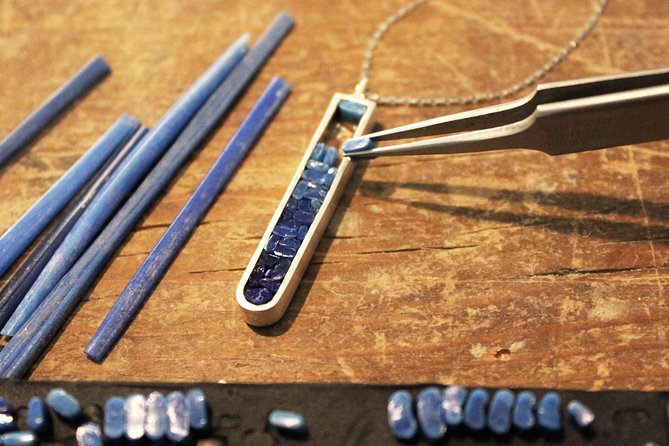
Once the background is set, the class moves into the part you came for: micromosaic glass cutting methods and assembly.
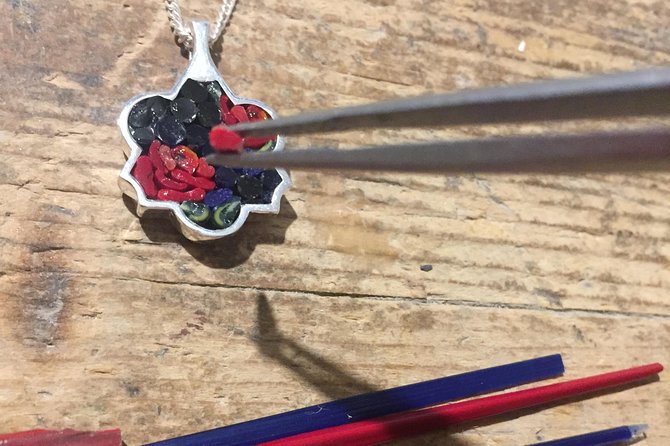
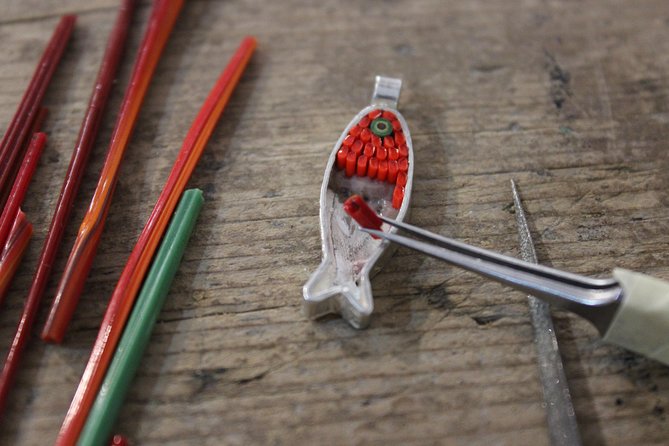
Here’s what matters for your expectations. You will be working with tiny glass pieces that have to be cut, then placed into a carefully arranged pattern. The “fiddly” feeling is real, and the work can challenge your fine motor skills at first. But with guidance, it clicks.
The workshop runs in an intimate group, and instructors and assistants circulate to help when you get stuck. Multiple people highlight that the staff was kind and supportive, stepping in when tricky steps appeared. That’s key with micromosaic, because a tiny adjustment can change how well pieces fit and how balanced the final look stays.
You’ll also learn how the process differs from larger mosaic formats. Micromosaic work is not just “mosaic, but smaller.” It’s about control at a miniature scale, placement discipline, and careful packing so your pieces stay secure in the setting.
One real caution comes from a less-than-perfect experience reported by a participant: if you want a very specific design outcome, it helps to communicate early and stay collaborative rather than silently frustrated. In micromosaic, guidance may become hands-on if the instructor thinks a placement needs adjustment to keep the result stable and wearable.
The best mindset is simple: you’re making a finished piece you can trust, so accept help when it comes.
Choose your pendant, materials, and the finished keepsake
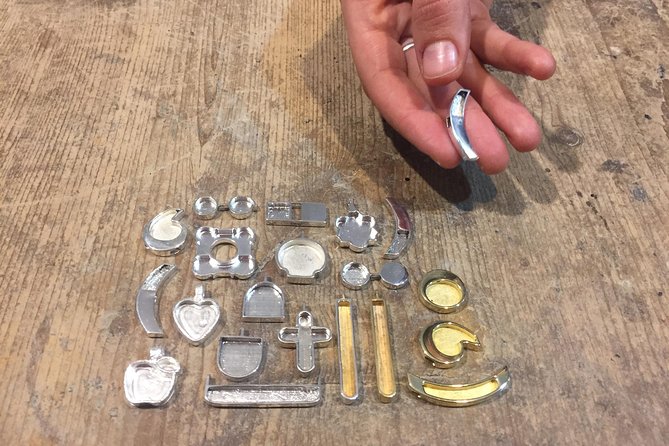
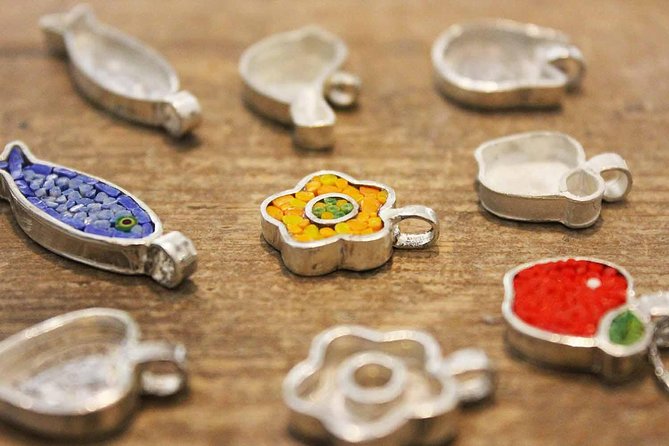
Your final product is a wearable micromosaic jewelry souvenir. You choose a high-quality silver pendant frame with a chain included, and you build your design using premium micromosaic glass materials and tools.
You’re also not leaving empty-handed in the practical sense. The class includes your finished product, and you’ll get a sturdy jewelry box for storage. That matters more than people expect, because micromosaic pieces deserve proper care, and having a box ready is one less thing to worry about after the workshop.
Options are part of the fun. Several participants describe choosing different pendant or necklace styles, and some mention ring or shape choices depending on what was offered in the session. The key point for you is that you’re not making a generic souvenir. You’re selecting a frame and then filling it with your own glass mosaic work.
Drinks are included while you work, and the coffee and tea setup can feel like a nice reset during a concentrated craft session. One person even mentions cappuccino from a nearby cafe across the walkway, which gives you a sense of how the studio treats the breaks as part of the experience rather than an afterthought.
Before you start, pause and think about color balance and overall placement. Small changes early can keep your final pendant looking even, not lopsided. If you struggle, ask for help fast rather than trying to brute-force tiny angles.
Another shape for the same afternoon in Rome:

How to get the most out of 2.5 hours (and Monti time)
This workshop is about 2 hours 30 minutes, and that timing is one of its strengths. It’s long enough to learn the technique, create a real piece, and get meaningful guidance. It’s short enough that you can still enjoy the rest of your day in Rome without feeling like you scheduled your entire itinerary around a workshop.
The location in Monti helps you build a great half-day. You can treat the class as your main plan, then walk off the pressure afterward. Monti is full of shops and restaurants, so you’ll likely find a relaxed place for lunch or aperitivo that doesn’t feel like you’re eating in a tourist funnel.
If you’re heading to the Vatican or another place with mosaic artwork later, the history and technique portion adds a useful lens. Even if you are not rushing there the same day, you’ll notice mosaic details more clearly because you now understand how micro-level placement affects the final appearance.
What to bring mentally, not physically:
- Patience. The early minutes can feel slow.
- Good glasses if you need them. Tiny details are the job.
- A willingness to accept adjustments. The goal is a wearable, secure pendant, not a fragile art project.
If you’re with teens or family, this is also the kind of activity where everyone can participate. The minimum age is 12, children must be accompanied by an adult, and the studio permits service animals.
Price, value, and who this class is really for
The price is $142.97 per person for about 2.5 hours. On paper, that can look steep compared to a “souvenir shop with a demo.” But the value here is the finished wearable jewelry and the support behind it.
You’re paying for:
- a silver pendant frame and chain
- premium micromosaic glass materials and tools
- guided technique using historical practice
- a completed piece you can take home
- a jewelry box
- bottled water plus coffee and/or tea
That package adds up because micromosaic isn’t casual. It takes skilled instruction and time, and the materials are specialized. The small group size also matters. A class limited to seven people usually means more personal attention when your piece becomes complicated.
Who it suits best:
- You want a personal souvenir you’ll wear, not just a photograph.
- You like detailed crafts and don’t mind working slowly.
- You’re the type of traveler who enjoys learning the “how” and “why” before you shop or see sights.
- You’re visiting Rome with a mix of ages and want an activity that works as a shared experience.
Who should reconsider:
- If you hate fine-detail work or get frustrated when something must be corrected by an instructor, you might find the hands-on part stressful.
- If you want full control over every placement with no instructor intervention, know that the studio’s priority is the finished wearable piece staying secure.
Based on the overall feedback, the class quality is high, with strong recommendations and a rating around 4.9. The one lower rating points to an issue with tool fit and how guidance affected the participant’s control over the design. That kind of mismatch sounds uncommon, but it’s a good reminder to clarify your preferred approach early.
Should you book Micromosaic Jewelry Workshop in Rome?
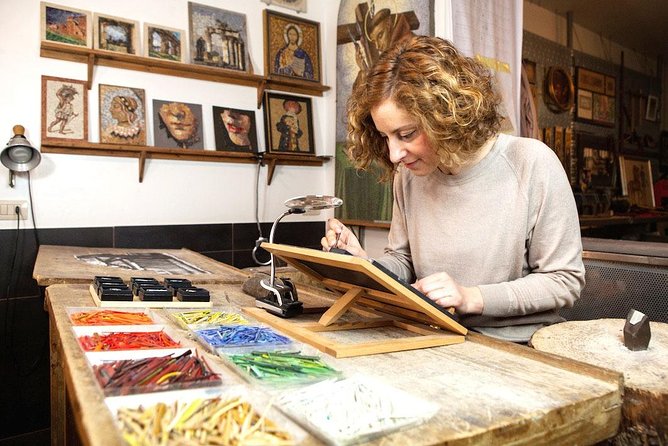
I’d book this if you want one standout Rome memory that is both hands-on and historically grounded. The craft is rewarding, the studio is in a pleasant neighborhood for continuing your day, and the final pendant is exactly the sort of souvenir that becomes a story you actually tell later.
I would not book it if your ideal day is fast and effortless with zero concentration. Micromosaic asks you to slow down. It also asks you to accept guidance for the sake of durability and balance.
If you’re the patient type, this is a smart use of time and money, especially because you leave with a finished wearable piece, not just a “lesson experience.”
FAQ
How long is the Micromosaic Jewelry Workshop?
The workshop runs about 2 hours 30 minutes.
Where do I meet for the workshop?
You meet at Studio Cassio – Arte del Mosaico, Via Urbana, 98, 00184 Roma RM, Italy. The activity ends back at the meeting point.
What is included in the price?
You get a silver pendant frame with a chain, access to premium micromosaic glass materials and tools, help creating your finished product, a sturdy jewelry box, and bottled water, coffee and/or tea.
Is the workshop offered in English?
Yes. The workshop is offered in English.
What is the minimum age?
The minimum age is 12, and children must be accompanied by an adult.
Can I get a full refund if I cancel?
Yes, cancellation is free. You can cancel up to 24 hours in advance for a full refund.
Latest additions from Rome
- Guided Tour Vatican Museums & Sistine Chapel★ 4.1 · 30 reviews
- Exclusive Rome by Night Vespa Tour★ 5.0 · 30 reviews
- Vatican: St.Peter’s Basilica & Dome – Reserved Entry & Tour★ 4.1 · 30 reviews
- Transfer Rome to Airports★ 4.5 · 30 reviews
- Rome street art tour: off the beaten path with a local guide★ 5.0 · 30 reviews
- Tivoli, Hadrians Villa and Villa d’Este, a charming day trip from Rome★ 4.5 · 30 reviews
- Rome Food Tasting with Wine Pairing Italian Authentic Flavors★ 5.0 · 31 reviews
- Inspirational Cooking on the Roman Chef’s Panoramic Terrace★ 5.0 · 30 reviews
Workshops, compared.
3 in 1 Cooking Class near Navona: Fettuccine, Ravioli & Tiramisu
Read our review →
Pasta & Tiramisu Class with Fine Wine by the Vatican
Read our review →
Pasta Making Class with Wine, Limoncello, and Dessert
Read our review →
Rome Cooking Class: Make Pasta and 3 Spritz Cocktails
Read our review →
3-in-1 Fettuccine, Ravioli, and Tiramisu Cooking Class
Read our review →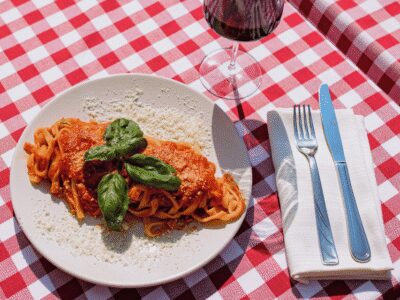
Fettuccine Pasta Cooking Class in Rome’s City Center
Read our review →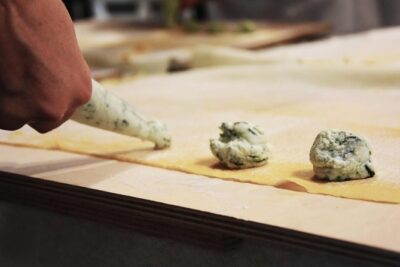
Become a Masterchef in Rome: Pasta, Ravioli and Tiramisù Class
Read our review →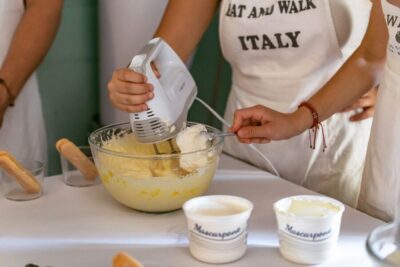
Fettuccine & Tiramisù: Cooking Class with Wine & Limoncello
Read our review →Browse the lists this tour appears in