
Reviewed · ROME IN A DAY TOURS
Highlights of Rome Bike Tour (Including Jubilee Sights)
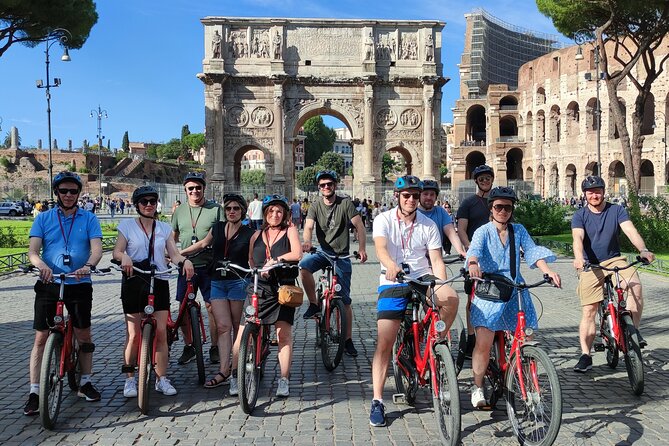
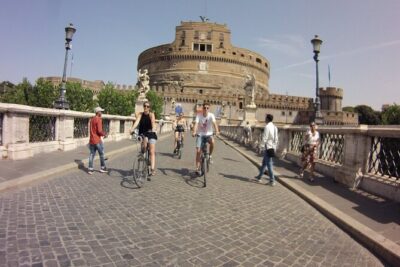
Rome has a way of overwhelming you fast. This bike tour gives you a guided, highlights-first route through central Rome, with lots of quick story stops instead of one long museum day. I especially like how guides such as Daniele, Nico, and Marika keep the tone fun while still explaining what you are actually looking at, and you pedal at an easy pace across the city’s flatter stretches.
The ride setup is also well thought out: you get a helmet, a bike bag for keeping your stuff handy, and a front pouch plus back rack so you can stay organized without carrying everything in a backpack. One thing to plan for is Rome’s cobblestones and crowded streets, which can feel slick or chaotic in certain moments, so it is not the best fit for everyone.
If you want an efficient first look at Rome, this is a strong pick. With a maximum of 14 people, it stays small enough for the guide to monitor the group, and you get short viewing times at big-ticket sites like Trevi Fountain and the Arch of Constantine. The route also reaches beyond just classic postcard stops by threading in areas like the Jewish Ghetto and the Forum district, so you leave with more of a mental map than you would from a bus loop. Still, if you prefer lots of deep, slow-paced history, you may wish for more time inside a few key places, since some stops are primarily views from the outside.
In This Review
- Key highlights at a glance
- A 3-hour Rome overview that starts by getting you oriented
- Price and what you really get for $54.44
- Who should book this bike tour, and who should skip it
- Getting set up: bikes, helmets, and the valuables bag
- Riding in Rome: safety, group control, and the reality of cobblestones
- The route: stop-by-stop highlights you can expect
- Stop 1: Antico Quartiere Ebraico, the Jewish Ghetto of Rome
- Stop 2: Navona, Pantheon area, and Campo de’ Fiori
- Stop 3: Piazza Navona
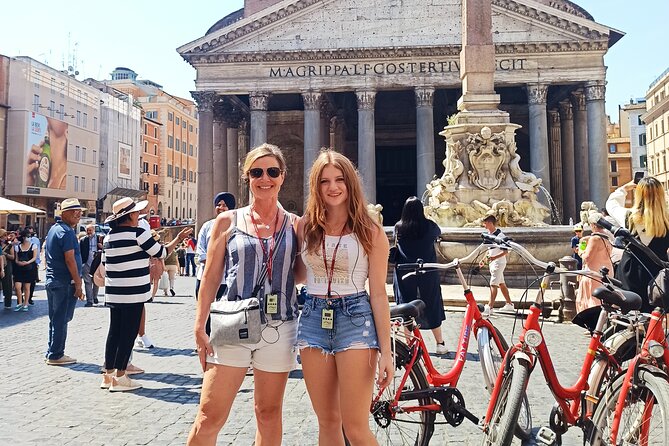
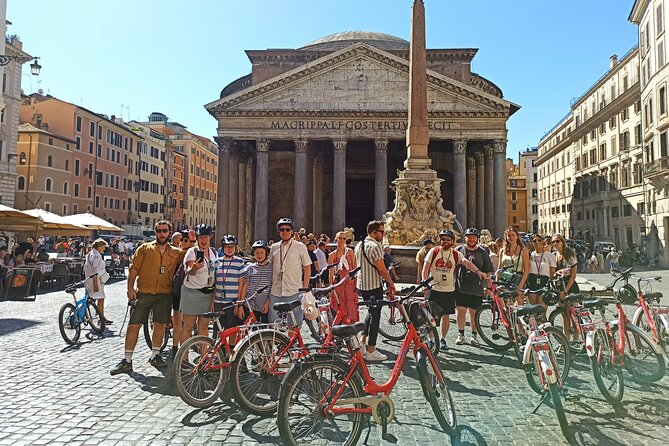
- Stop 4: The Pantheon
- Stop 5: Chiesa di Sant’Ignazio di Loyola
- Stop 6: Tempio di Adriano
- Stop 7: Trevi Fountain
- Stop 8: Trajan’s Forum
- Stop 9: Piazza Venezia and the Ancient City
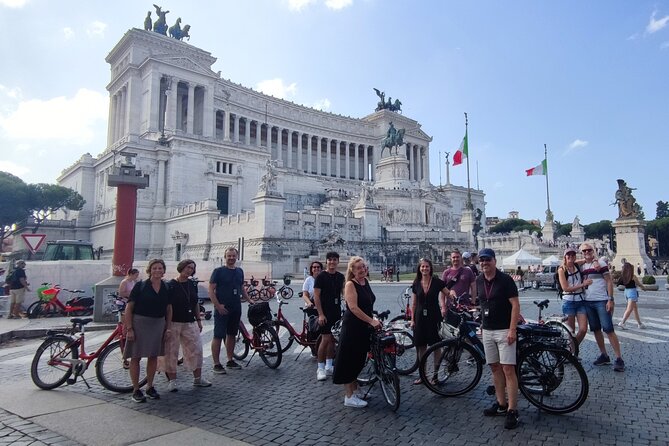
- Stop 10: Arch of Constantine
- Stop 11: Circus Maximus
- How the timing works: why the short stops can still feel satisfying
- Easians to know: crowding, hearing the guide, and bike condition
- What to pack so you enjoy the ride more
- Best time to go and practical pacing tips
- So, should you book this Rome bike tour?
- FAQ
- How long is the Rome Bike Tour?
- How much does the tour cost?
- What language is the tour offered in?
- What is included in the price?
- Where does the tour start?
- Do I need tickets for the Pantheon?
- Is the tour good for kids?
- Is riding difficult because of Rome streets?
- What should I bring for comfort?
- What is the cancellation policy?
Key highlights at a glance
- Small-group pace with frequent regrouping so you do not feel left behind
- Helmet plus a practical valuables setup using the front pouch and back rack
- A smart mix of major sights and lesser-seen corners, including the Antico Quartiere Ebraico (Jewish Ghetto)
- Short stop times that keep momentum while still giving you time for photos and quick walks
- Great value for first-timers because bike rental and a local guide are included
- Family-friendly conditions, with one important catch: kids need bike control and comfort on different surfaces
A 3-hour Rome overview that starts by getting you oriented
Rome is big, and on your first day you can burn hours just figuring out where you are. This tour is built to solve that problem fast. In about three hours, you ride through a tight, central circuit that hits the monuments most people come to see, then adds context so those monuments make more sense.
I like the format because it is not one of those tours where you stare from a window. You actually stop, look, and get just enough background to connect the dots. Guides like Nico and Daniele show up with storytelling energy, while still pointing out what to notice, like the geometry of major architecture or why a square looks the way it does today.
More Rome in a Day Tours
- Rome in a Day Group Tour with Vatican Museums and Colosseum
★ 4.5 · 2,450 reviews - Rome Highlights by Golf Cart Private Tour
★ 5.0 · 2,379 reviews - Best of Rome Walking Tour including Trevi Fountain
★ 4.5 · 923 reviews - Golf Cart Small-Group Guided Tour: Rome City Highlights
★ 5.0 · 907 reviews
Price and what you really get for $54.44
At $54.44 per person, the headline value is that your ticket covers the guide, bike rental, and safety gear, not just a walking lecture. You also get a bike setup designed for city riding, including a helmet and a front pouch plus back rack for your items.
For first-timers, that matters. If you tried to DIY this route, you would still need to solve bikes, helmets, route planning, and where to pause. Here, you get all of that handled, and you can focus on seeing.
This is also one of the few ways to tick off a lot of Rome in a half-day slot. A few people in their trip reviews called it their favorite activity because it gave them a compact snapshot, then they could return later to the places that truly hooked them.
Who should book this bike tour, and who should skip it
This tour is marked for most travelers, and the ride is generally treated as doable for a wide range of people. Rome is flat for riding, and you spend most of your effort pedaling lightly, not climbing.
That said, there are a few real-world fit notes you should take seriously:
- Pregnancy is strongly discouraged due to cobbled streets. If that applies to you, it is safer to choose a different format.
- Kids are welcome, but they need to have been riding for a while, feel comfortable in a group, and be able to handle uneven surfaces. If you are bringing children, include their height so the right bike size can be reserved.
- Slick cobbles and crowds can make the ride feel harder, especially around busy evenings. If you are risk-averse, pick a calmer time.
If you want an easy way to get your bearings, see the famous core, and understand what you are looking at, this fits well.
Getting set up: bikes, helmets, and the valuables bag
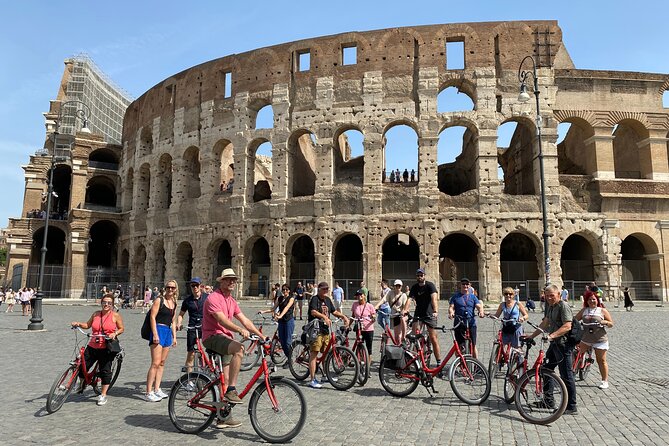
Your pre-ride setup is part of why this tour feels smooth. You get bike rental and a helmet, plus a front bike pouch and back rack for your belongings. That means you can keep your essentials with you instead of doing the backpack dance through busy streets.
The tour also gives you an option to choose a bike to match your pace and budget, which matters because different riders handle gears and comfort differently. Even if you are an experienced cyclist, having the right bike size and fit makes a difference when you are spending hours in a city saddle.
Riding in Rome: safety, group control, and the reality of cobblestones
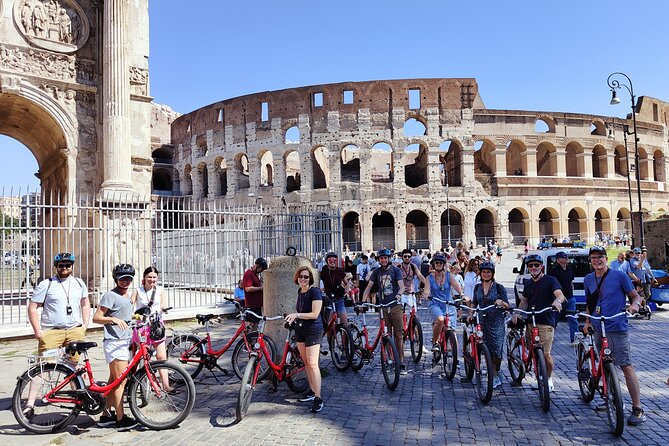
Rome’s streets are not the smooth “bike path” version of Italy. You will deal with uneven pavement, lots of people, and vehicles mixed into the same lanes. The good news is that the tour is run with a small-group size (up to 14), which makes it easier for the guide to manage the flow.
In reviews, many people said they felt safe even while riding in traffic. They also praised guides for keeping the group together with regular check-ins, not just speeding off into the distance.
Still, you should expect:
- Short rides between stops and frequent regrouping
- Some difficulty hearing the guide when you are riding, especially if there is road noise
- Uneven cobblestones that can be slick depending on conditions
One review note that stood out to me: Friday evening crowds can get chaotic, and slick cobbles contributed to a fall. If you have a choice, I would steer toward a morning slot for the calmer vibe.
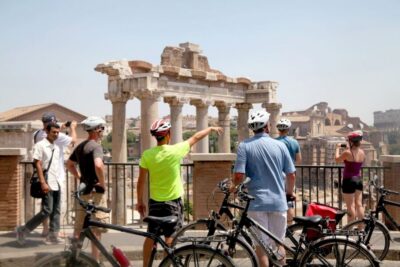
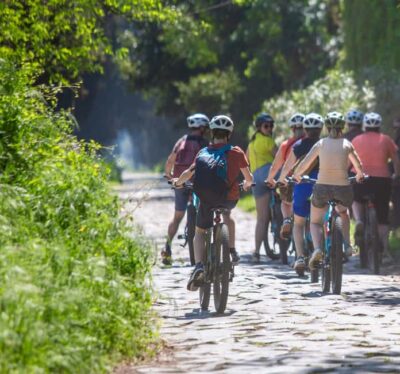
More of Rome taken on two wheels:

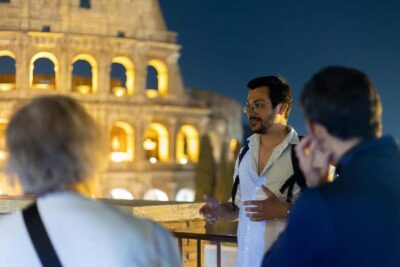
The route: stop-by-stop highlights you can expect
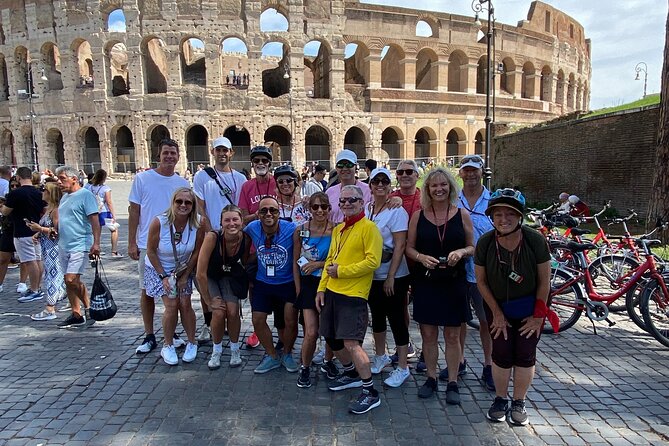
This tour is basically a greatest-hits circuit of central Rome, with a few extra layers added. Each stop is short enough to keep momentum, but long enough to look around, take photos, and ask your guide questions.
Stop 1: Antico Quartiere Ebraico, the Jewish Ghetto of Rome
You start in the Antico Quartiere Ebraico, the Jewish Ghetto of Rome. This neighborhood is one of the city’s most layered areas, combining archaeology, cultural life, and religious significance.
You get a quick historical frame: the ghetto was created in 1555 by order of Pope Paul IV. People inside were required to live there and carry a distinctive sign of belonging to the Jewish community. The ghetto is considered among the oldest in the world, second only to Venice.
Why I like starting here: it instantly shifts your perspective from “Rome as monuments” to “Rome as lived history.”
Stop 2: Navona, Pantheon area, and Campo de’ Fiori
From there, you head toward the lively heart of central Rome: Campo de’ Fiori. By day it is known for markets, including flower and produce sellers. By night, the area fills with people on terraces.
This stop is less about one building and more about getting your bearings in Rome’s social center. It also helps you understand the spacing of major sights you will see right after.
Stop 3: Piazza Navona
Next is Piazza Navona, one of Baroque Rome’s signature squares. The key idea is that it sits on top of the ancient Stadium of Domitian, built in 86 AD for athletics and horse racing.
You get a short orientation so you can “read” the square as a modern shape laid over ancient lines. Many visitors just see the fountains and façades, but this stop gives you the why behind the layout.
Stop 4: The Pantheon
Then comes the big one: Pantheon. This is a stop that focuses on the building’s exterior and the logic behind its design, since entry is not included.
You get context on a foundation story tied to 27 BC, when Marcus Vipsanius Agrippa commissioned a temple in the area dedicated to “all the gods,” during the early Augustus era.
If you want to go inside, you will need to handle that on your own. But even from outside, the focus on line, geometry, and harmony helps you see why architects for centuries have treated this as a model.
Stop 5: Chiesa di Sant’Ignazio di Loyola
At Chiesa di Sant’Ignazio di Loyola, the plan is straightforward: view from outside, plus explanation and pictures. That makes it a good reset moment, because you get to stand, listen, and regroup without rushing toward an interior visit.
Stop 6: Tempio di Adriano
You then pause at the Tempio di Adriano. The story here is tied to Hadrian and the deification of his wife, Vibia Sabina. Construction was likely commissioned by Emperor Hadrian, works finishing around 145 A.C., with dedication connected to the deified emperor Hadrian by his successor, Antoninus Pius.
This is one of those stops where the guide’s explanation helps you notice details you would otherwise miss, especially how Roman commemorative buildings carried political and personal messages.
Stop 7: Trevi Fountain
Next: Trevi Fountain. It is the best-known Roman fountain, and the tour frames it with a useful fact: Trevi uses the terminal part of the Vergine aqueduct, which is still in continuous use.
You get the chance to see it up close and take your photos, but be ready for crowds. This is one of the most photographed corners in Rome, so plan to enjoy the spectacle rather than expect elbow room.
Stop 8: Trajan’s Forum
Now you move into the Imperial era with Trajan’s Forum and the surrounding Imperial Forum area. The stop is view and explanation, and it is a great moment to connect what you learned earlier about Roman power, architecture, and public space.
Even if you only see parts of the site, it helps you understand why the area feels like the center of gravity for ancient Rome.
Stop 9: Piazza Venezia and the Ancient City
You then reach Piazza Venezia, with its position between Via del Corso and Via dei Fori Imperiali. The square’s current form traces back to 19th and 20th century renovations tied to the construction of the Monumento a Vittorio Emanuele II.
This is a practical stop, because it ties the modern Rome layout back to the ancient city shape. If you want to understand your next steps, this one helps.
Stop 10: Arch of Constantine
Your next monument is the Arch of Constantine, a large honorary arch associated with triumph processions. The guide’s framing is ideological, not just decorative, and it connects the arch to the Constantinian era propaganda.
You hear the historic anchor: Constantine’s triumph over Maxentius took place on 28 October 312 A.D.
Stop 11: Circus Maximus
Finally, you finish at Circo Massimo, the Circus Maximus. The tour highlights scale, because it was the largest public entertainment building in antiquity, about 600 meters long and 140 meters wide.
You also get a legend connection to the origin story of Rome, including the Rape of the Sabine Women taking place here. It is a fitting finale because the space feels like Rome’s past stretching out.
How the timing works: why the short stops can still feel satisfying
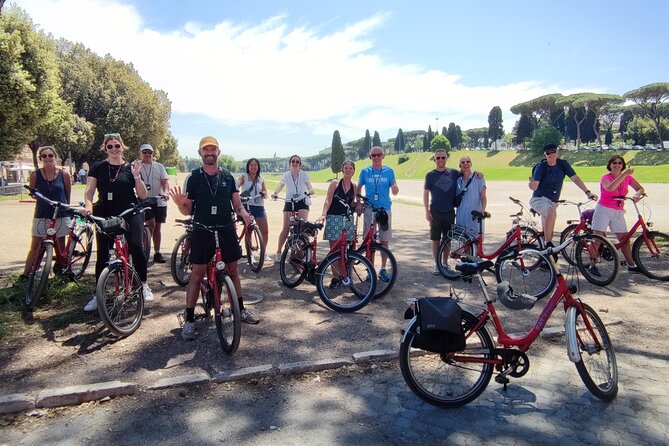
The tour uses a rhythm: quick rides, then short holds at key points. Times in the schedule range from about 5 to 15 minutes per stop, with many moments under 10 minutes.
That might sound rushed, but it is actually the point. In three hours, the tour hits a wide range of eras without turning into a full-day endurance event.
One practical upside: you leave with a short list of places to return to on your own. If you fall in love with Pantheon, Trajan’s Forum, or a fountain corner, you now know where to go and what to look for.
Easians to know: crowding, hearing the guide, and bike condition
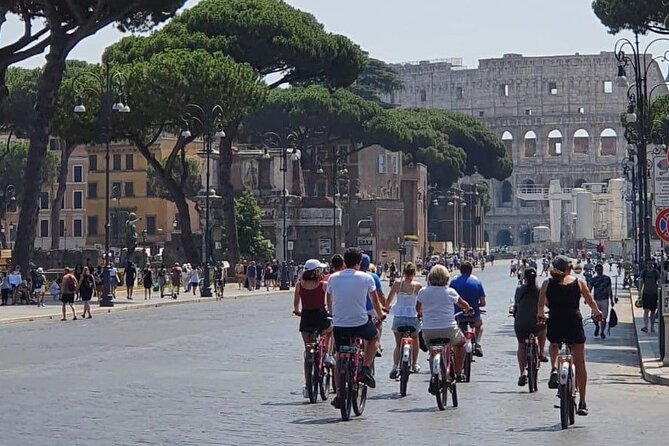
A few recurring themes show up in real-world experience, and you should plan around them.
- Crowds matter. If you go at a busy time, expect harder maneuvering and more noise. One review flagged a crowded Friday evening and mentioned slick cobbles.
- Headsets can be slightly tricky while riding. If you find it hard to hear, look at the guide at stops and move closer for explanations.
- Bike condition can vary by model. Most people praised the bikes, but one review noted older bikes in decent shape. If you have strong preferences about ride feel, arrive early so you can test comfortably before you launch.
What to pack so you enjoy the ride more
Because you are outside and moving, you will feel the weather quickly. The tour suggests dressing for the conditions, and I agree with that approach:
- Sunny days: hat and sunscreen
- Cooler days: warm layers, plus gloves and scarf
- Rain: bring waterproof clothing
Also, drinks are not included. Even if the tour provides time at stops, water is on you. If you tend to get thirsty fast, bring a water bottle and refill when you can.
Best time to go and practical pacing tips
If your goal is the classic highlights with fewer headaches, I would pick a morning departure when possible. One review specifically suggested mornings are better than afternoons due to crowds.
A few more tips that help:
- Arrive 15 minutes early at the meeting point on Via dei Delfini, 35 (00186 Roma RM). That cushion makes gear checks and route briefing smoother.
- If you are traveling with kids, manage expectations. The tour is short per stop, so children need to be able to ride and stay engaged.
- For any stop where entry is not included (like the Pantheon), decide ahead of time whether you want to pay extra during your free moments elsewhere in your trip.
So, should you book this Rome bike tour?
If you are a first-timer, want to see a lot fast, and like learning stories as you go, I think this is a smart booking. The combo of small-group size, bike rental included, and a route that covers everything from the Jewish Ghetto to monuments like Trevi Fountain and the Arch of Constantine makes it a high-value way to get oriented.
I would skip it or choose a different format if you:
- are pregnant and want to avoid cobblestone exposure,
- have very limited comfort riding in traffic,
- or expect a slow, in-depth history seminar with long time inside buildings.
If you match the vibe, you get what most people are really after in Rome: momentum, context, and a clearer map in your head for the rest of your days.
FAQ
How long is the Rome Bike Tour?
It runs for about 3 hours.
How much does the tour cost?
The price is $54.44 per person.
What language is the tour offered in?
The tour is offered in English.
What is included in the price?
You get a local tour guide, bike rental, and helmet plus a front bike pouch and back rack. Drinks are not included.
Where does the tour start?
The meeting point is Via dei Delfini, 35, 00186 Roma RM, Italy.
Do I need tickets for the Pantheon?
No Pantheon admission is included on the tour, so if you want to go inside, you will need to handle that separately.
Is the tour good for kids?
Kids are welcome if they have been riding for a while, feel comfortable riding in a group, and can handle various surfaces. Include the child’s height so the correct bike size can be reserved. It is not recommended for children aged 1 and under.
Is riding difficult because of Rome streets?
Rome has cobbled streets, and the tour notes that pregnant women are strongly discouraged due to cobblestones. For most riders, the experience is manageable, but you should expect uneven surfaces.
What should I bring for comfort?
Dress for the weather. The tour suggests hats and sunscreen for sunny days, warm layers plus gloves and scarves for winter, and waterproof clothing if rain is expected. Also, bring water since drinks are not included.
What is the cancellation policy?
You can cancel for free up to 24 hours in advance for a full refund. If you cancel less than 24 hours before, the amount paid is not refunded.
Latest additions from Rome
- Guided Tour Vatican Museums & Sistine Chapel★ 4.1 · 30 reviews
- Exclusive Rome by Night Vespa Tour★ 5.0 · 30 reviews
- Transfer Rome to Airports★ 4.5 · 30 reviews
- Vatican: St.Peter’s Basilica & Dome – Reserved Entry & Tour★ 4.1 · 30 reviews
- Rome street art tour: off the beaten path with a local guide★ 5.0 · 30 reviews
- Tivoli, Hadrians Villa and Villa d’Este, a charming day trip from Rome★ 4.5 · 30 reviews
- Rome Food Tasting with Wine Pairing Italian Authentic Flavors★ 5.0 · 31 reviews
- Inspirational Cooking on the Roman Chef’s Panoramic Terrace★ 5.0 · 30 reviews
Rome in a Day Tours, compared.
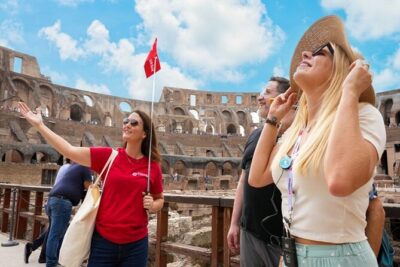
Rome in a Day Group Tour with Vatican Museums and Colosseum
Read our review →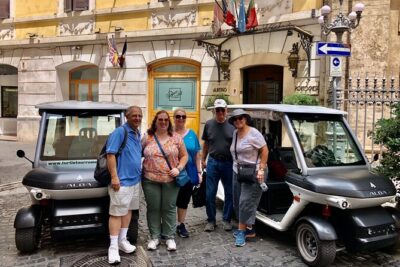
Rome Highlights by Golf Cart Private Tour
Read our review →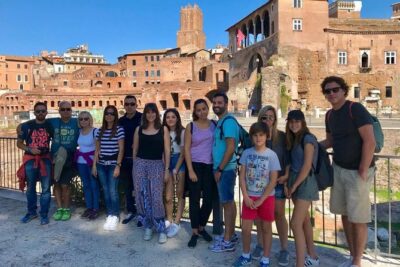
Best of Rome Walking Tour including Trevi Fountain
Read our review →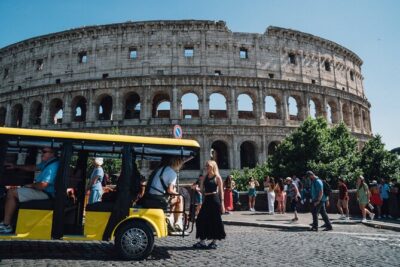
Golf Cart Small-Group Guided Tour: Rome City Highlights
Read our review →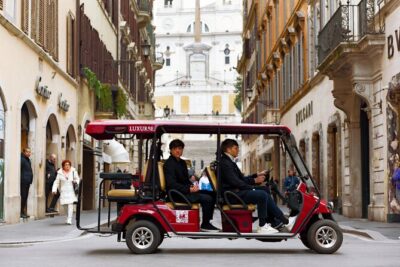
Rome Highlights & Hidden Gems Guided Walking Tour
Read our review →Browse the lists this tour appears in