
Reviewed · ROME GHOST AND MYSTERY TOURS
Haunted Rome: Eternal City Night Walking Tour
Night in Rome feels spooky for real. This 2-hour walking tour pairs dark history stories with the classic centro storico route, from Campo de’ Fiori to Castel Sant’Angelo.
I love that the evening timing helps you dodge some crowds and heat, while the guides bring the scenes to life with lively, clear storytelling (I heard names like Simon, Ana, and Domenica come up often). The main drawback to consider is timing and sound, some departures may feel a bit shorter than advertised, and street noise can make you work a little to catch every word.
In This Review
- Key things that make this Haunted Rome walk work
- Why this “Haunted Rome” night walk is worth your attention
- Meeting at Campo de’ Fiori, where the stories begin
- Piazza Farnese and the price tag on power
- Via del Mascherone and Vicolo dei Venti, tiny statues with big jobs
- Ponte Sisto, Rome’s oldest bridge and a darker past
- Fontana del Mascherone, the fountain you should not test
- Chiesa di Santa Maria dell’Orazione e Morte, when death becomes décor
- Via di Monserrato and the “most haunted” apartment story
- Chiesa di Santa Maria in Monserrato degli Spagnoli, scandal in a church setting
- Via Giulia and the cosmetics that can kill
- Via dell’Arco dei Banchi and Mastro Titta, Rome’s infamous executioner
- Castel Sant’Angelo, from warning display to angel statues
- Timing, pace, and what to wear for a comfortable night
- Price, group size, and the value you actually get
- Who this tour suits best, and who should rethink it
- Should you book Haunted Rome: Eternal City Night Walking Tour?
- FAQ
- How much does the Haunted Rome night walking tour cost?
- How long is the tour?
- Where do I meet the guide and where does the tour end?
- Is the tour offered in English?
- What is the maximum group size?
- Is this tour very ghost scary?
- Are service animals allowed?
- What if the weather is poor, or I need to cancel?
Key things that make this Haunted Rome walk work
- Max 20 people, so you are not stuck shoulder to shoulder
- Start at Campo de’ Fiori, then drift through lantern-lit streets toward Castel Sant’Angelo
- Dark stories, not just ghosts, with crime, punishment, and eerie legends at every turn
- A route packed with landmarks, including Ponte Sisto and Chiesa di Santa Maria dell’Orazione e Morte
- Guides who handle questions, and tend to keep the group engaged
Why this “Haunted Rome” night walk is worth your attention
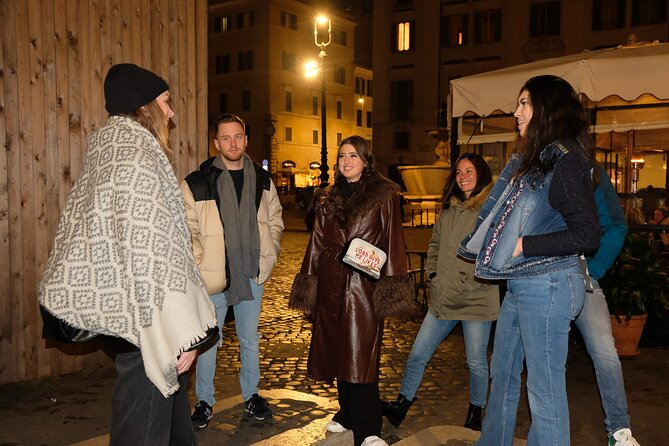
Rome looks dramatic at night. This tour leans into that feeling, but it is not just spooky atmosphere for show. You get a walking route through the centro storico, with stops chosen for how close they are to real Roman myths, punishments, and public spectacles.
You are also paying for something practical: a guided way to connect the dots. Rome can feel like a pile of monuments if you visit solo. Here, the stories act like street-level captions, so you remember what you saw and why it mattered.
Finally, the value is hard to ignore. At $17.97 per person for about two hours of walking, this is one of the more budget-friendly ways to cover major sights in one evening.
More Walking Tours in Rome
- Rome: Guided Food Walking Tour with Wine in Trastevere
★ 4.9 · 3,105 reviews - Rome: Trastevere & Campo de Fiori Street Food Walking Tour
★ 4.9 · 2,768 reviews - Rome: Paranormal Night Walking Tour & Secret Backstreets
★ 4.9 · 1,921 reviews - Rome: Trastevere Street Food Walking Tour with Local Expert
★ 4.8 · 1,784 reviews
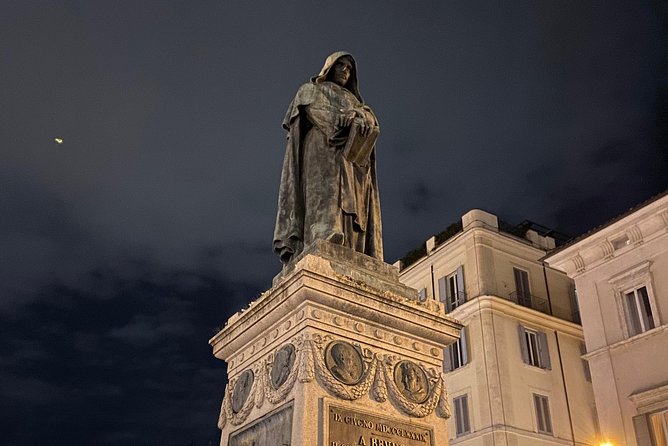
Meeting at Campo de’ Fiori, where the stories begin
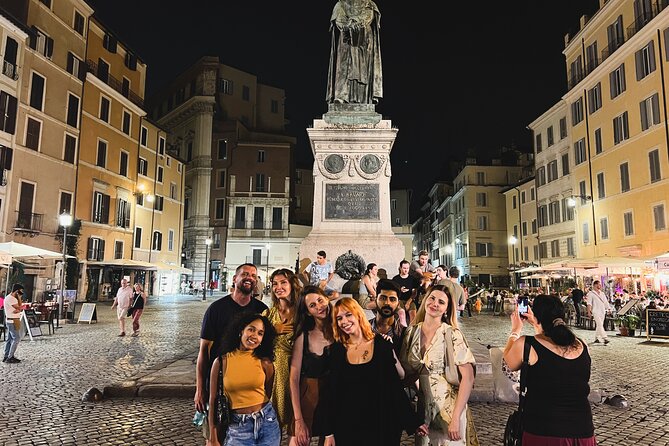
You start in Campo de’ Fiori, one of Rome’s most famous piazzas. In daylight it is all cafés and chatter. At night, it feels like a stage set, because it sits in the exact sort of space where history leaves its fingerprints.
The tour frames the piazza as a place where people have died, and that single idea shifts how you look at everything around you. The square stops being just a photo spot and turns into a moral geography of Rome, where public space has consequences.
This is a good first stop for another reason. Your guide can set the tone quickly, and you get your bearings fast before you move into narrower streets.
Piazza Farnese and the price tag on power
Next up is Piazza Farnese. The vibe changes here, more palace-adjacent, more “big decisions were made nearby.” The story theme is wealth and consequences, with the spotlight on how lavish parties and elite status can come with a darker ending.
If you have ever wondered why Rome’s grand squares feel so theatrical, this kind of framing helps. You learn to read architecture as behavior: who lived near what, who had access, and why that access mattered.
It is also a short stop, which I like. You get the plot point, then you move on, so the pace stays snappy.
Via del Mascherone and Vicolo dei Venti, tiny statues with big jobs
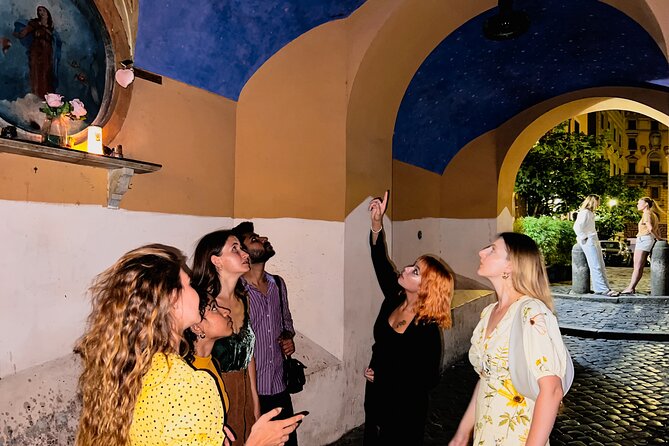
Then you hit Via del Mascherone and Vicolo dei Venti. This section is where the tour gets especially Roman. You hear about madonelles, often described as little madonnas, and how these small religious statues were tied to everyday safety and crime prevention.
What I like about this stop is the grounded feeling. You are not dealing only with ghosts floating around in the imagination. You are seeing how communities tried to protect themselves, in the same streets you would otherwise walk past without noticing.
Look for how the guide points out these items. Once you start seeing them, you notice them everywhere.
Ponte Sisto, Rome’s oldest bridge and a darker past
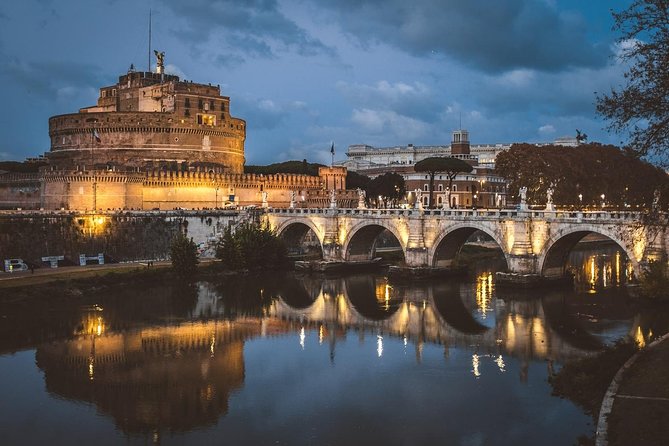
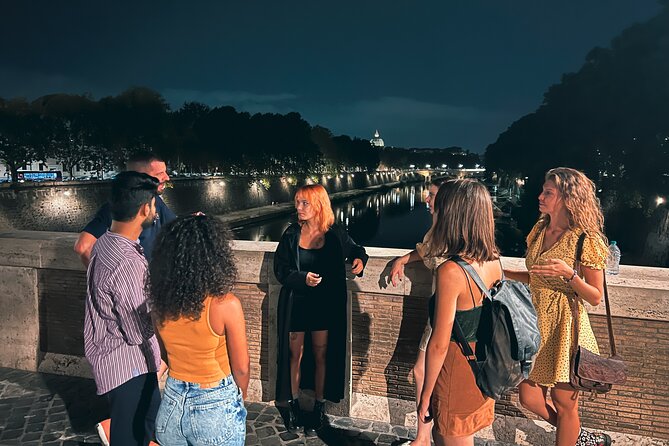
Now you cross to Ponte Sisto, described as Rome’s oldest bridge. Bridges are already creepy at night, because they pull the eye and create a sense of exposure. Here, the tour adds the gruesome layer: tragic accidents, power struggles, theft, and suspicious deaths.
This stop is useful even if you are not into spooky stories. It teaches you what a city corridor means. A bridge is not just a connection point. It becomes part of the life and death story of the neighborhood.
Also, the walk keeps you moving along water and open sightlines, which can be a welcome break after narrower lanes.
Other walks through Rome after dark:
Fontana del Mascherone, the fountain you should not test
After the bridge comes Fontana del Mascherone. The guide’s warning is simple: do not drink from Rome’s deadliest fountain.
That line might sound like pure fun, but it points to the real lesson of this tour. In Rome, even a fountain can carry an old warning, a rumor, or a moral tale. The city loves symbolism, and this route keeps showing you how symbols live in ordinary street corners.
If you like history that feels like a story told by someone who actually cares, this is where you start hearing that tone. Several guides have been praised for speaking clearly and keeping the pace lively.
Chiesa di Santa Maria dell’Orazione e Morte, when death becomes décor
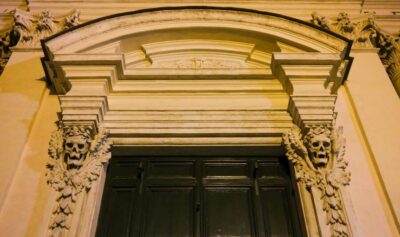
One of the most striking stops is Chiesa di Santa Maria dell’Orazione e Morte. This 17th-century church is decorated with human remains, and the guide uses it as a reminder that death is not some distant concept in Rome.
I do not usually love tours that get overly sensational, but this one handles the theme with restraint. You are not just chasing shock value. The stop feels like a cultural stop, a place where people once understood mortality differently, and where the church became a public message.
If you are sensitive, plan your mindset. This is not a jump-scare stop. It is a real place tied to real human remains.
Via di Monserrato and the “most haunted” apartment story
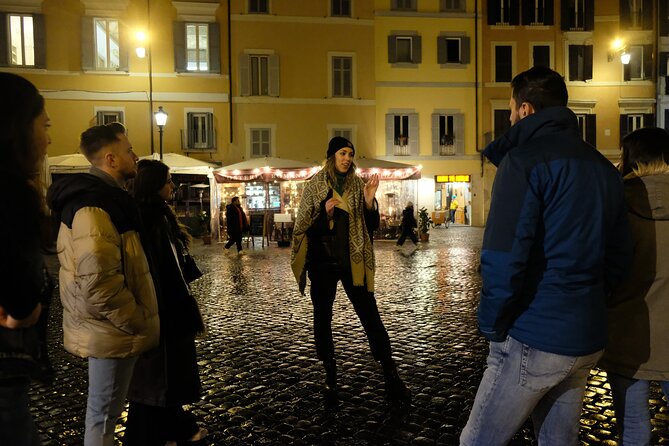
Then you head through Via di Monserrato, where you are told why this apartment block is among the most haunted places in Rome.
Apartment blocks in Rome are not just housing. They are vertical neighborhoods with long memories. At night, with your guide connecting the name to the legend, the buildings feel like characters instead of backgrounds.
The tour does a smart thing here. It switches between big landmark drama and small, street-level fear. That mix keeps it from feeling repetitive.
Chiesa di Santa Maria in Monserrato degli Spagnoli, scandal in a church setting
You finish this cluster at Chiesa di Santa Maria in Monserrato degli Spagnoli, a Spanish church with scandalous stories the guide frames as dramatic, almost like a soap opera.
This is a great stop if you like story structure. Scandals have characters, motives, and consequences. You are walking through a city where names and institutions overlap, and the guide connects those threads.
The church setting also helps the group listen. It is easier to hear the guide when you slow down in a calmer spot.
Via Giulia and the cosmetics that can kill
Next is Via Giulia, one of the iconic streets in the centro storico. The tour focuses on a former beauty shop and the idea that cosmetics can kill.
If you have ever heard whispers about poisoning myths in Rome, this is where those ideas get turned into a guided narrative. The route makes it clear why Rome’s legends stick around: people tell them because they explain real fear in a human way.
This is also a smart stop for anyone who wants the tour to feel like more than just crime tales. It brings in fashion, beauty, and household items, then ties them into cautionary legends.
Via dell’Arco dei Banchi and Mastro Titta, Rome’s infamous executioner
Then you go to Via dell’Arco dei Banchi, where a charming house on an unsuspecting street holds the story of Mastro Titta, Rome’s infamous executioner.
This is one of those stops that makes you look at streets differently. Executioner stories are dark, but the guide’s job is to locate the story in the real physical city, so it feels less like a cartoon villain and more like a historical role.
I also like that this kind of stop gives you context for how Rome used public punishment as messaging. It was not hidden. It was displayed.
Castel Sant’Angelo, from warning display to angel statues
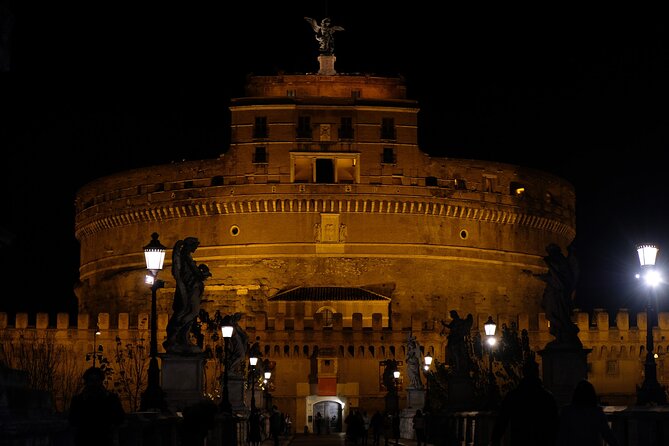
Your walk ends at Castel Sant’Angelo. The tour explains how the bridge area used to expose bodies of the executed as a warning, and how that changed over time into a setting with statues of angels and the story of the Cenci family and their fatal end.
This is a strong ending because you get both atmosphere and payoff. You started in a piazza tied to deaths in public view, and you end at a monument that once played a role in the same public fear system.
Even if you are not into the haunted angle, Castel Sant’Angelo is a place where you can feel history pushing against the present. The tour simply points that out for you.
Timing, pace, and what to wear for a comfortable night
The tour is advertised at about two hours, but a real-world note matters: it may run shorter than that depending on the group and pacing. You might also get longer breaks, like toilet stops, which can shift the ending time.
Plan for walking. This is a walking route through the centro storico. Shoes matter. If you are wearing trendy sandals, you will regret it by the second hour.
Also, bring your ears. A few people have flagged that street noise can drown out audio, even when guides speak clearly. If you can, position yourself so you are not stuck far back in the group.
Finally, the tour needs good weather. If conditions are poor, you should expect the operator to shift dates or offer a refund.
Price, group size, and the value you actually get
At $17.97, you are not buying a museum ticket. You are buying a guided evening through key Roman landmarks, with storytelling designed to connect dots.
The value shows up in three places:
- You cover multiple major sights in one outing, so you do not have to plan a day around each place.
- The route uses local legends as wayfinding, which helps you remember more than you would on your own.
- Small group size, max 20, makes it easier to hear and ask questions than big bus-style tours.
There is also a practical piece that matters in Rome: this is an evening option, which can help you avoid the worst crowding and heat.
If you are traveling with kids, this style can work well. One review mentioned booking with a 12-year-old, and the tour landed as dark stories plus real history, not just jumpy scares.
Who this tour suits best, and who should rethink it
This tour is a strong fit if you:
- Want a night activity that feels different from another museum visit
- Like crime and legend stories, with facts tied to real places
- Prefer walking routes with short stops and constant movement
It might be less ideal if you:
- Hate darker themes or you are very sensitive to death-related topics (one church stop uses human remains)
- Need super quiet streets for audio clarity, because the city can be noisy
Also, if you want a purely ghost-focused supernatural experience, this tour may feel more like a dark-history walk than a haunted house. The storytelling style is praised, but the emphasis stays on historical themes and eerie legends tied to real locations.
Should you book Haunted Rome: Eternal City Night Walking Tour?
Yes, if you want a cost-effective way to see major centro storico sights while getting stories that make Rome feel personal and specific. This is not the kind of tour where you glance at a monument and move on. You leave with better context, and you start noticing details like madonelles and the way Rome treats public space.
I would book it especially for your first few days in town, because it gives you a narrative map. And I would bring good walking shoes and patience for occasional street noise.
If you are uncertain, think of it like this: you are paying for an evening guide who turns famous places into scenes, with enough humor and energy to keep it fun, and enough dark detail to make it memorable.
FAQ
How much does the Haunted Rome night walking tour cost?
It costs $17.97 per person.
How long is the tour?
The tour lasts about 2 hours.
Where do I meet the guide and where does the tour end?
You start at Piazza Campo de’ Fiori (P.za Campo de’ Fiori, 00186 Roma RM, Italy) and the tour ends at Castel Sant’Angelo (Lungotevere Castello, 50, 00193 Roma RM, Italy).
Is the tour offered in English?
Yes, it is offered in English.
What is the maximum group size?
The tour has a maximum of 20 travelers.
Is this tour very ghost scary?
It is billed as haunted, but it is described more as dark stories and history around Rome than just a scary ghost experience.
Are service animals allowed?
Yes, service animals are allowed.
What if the weather is poor, or I need to cancel?
The tour requires good weather. If it is canceled due to poor weather, you will be offered a different date or a full refund. You can cancel for free up to 24 hours in advance for a full refund, and cancellations within 24 hours are not refunded.
Once the Piazzas Fill
- Rome: Guided City Center Evening Sightseeing Walking Tour
★ 4.4 · 953 reviews - Colosseum by Evening Guided Tour with Optional Arena Floor Access
★ 4.0 · 867 reviews - Night Tour of Rome with Local Pizza Dinner and Gelato Experience
★ 4.5 · 780 reviews - Rome Bar Crawl: Interactive Night Tour with Games and Karaoke
★ 5.0 · 769 reviews
Rome After the Lights Come On
- Rome: City Highlights Open-Top Bus Night Tour
★ 4.1 · 2,038 reviews - Rome by Night: E-bike Small Group Tour -Food & Wine (Option)
★ 4.9 · 1,233 reviews - Colosseum Sunset Tour with Entry
★ 4.5 · 1,230 reviews - Rome: Small-Group Guided Day or Night Walking Tour
★ 4.8 · 1,009 reviews
Latest additions from Rome
- Guided Tour Vatican Museums & Sistine Chapel★ 4.1 · 30 reviews
- Exclusive Rome by Night Vespa Tour★ 5.0 · 30 reviews
- Transfer Rome to Airports★ 4.5 · 30 reviews
- Vatican: St.Peter’s Basilica & Dome – Reserved Entry & Tour★ 4.1 · 30 reviews
- Rome street art tour: off the beaten path with a local guide★ 5.0 · 30 reviews
- Tivoli, Hadrians Villa and Villa d’Este, a charming day trip from Rome★ 4.5 · 30 reviews
- Rome Food Tasting with Wine Pairing Italian Authentic Flavors★ 5.0 · 31 reviews
- Inspirational Cooking on the Roman Chef’s Panoramic Terrace★ 5.0 · 30 reviews
Rome Ghost and Mystery Tours, compared.
Small Group Rome’s Dark Side – Ghosts & Legends Tour
Read our review →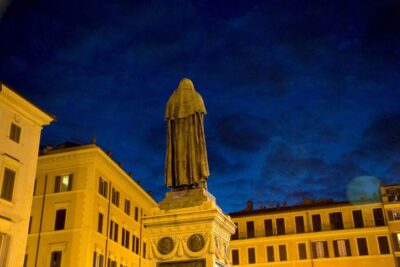
Dark Heart of Rome – Facts, Legend & Mystery Walking Tour
Read our review →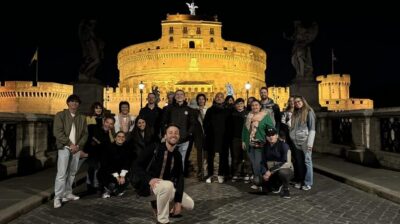
Ghosts, Legends & Mysteries of Rome Tip-Based Walking Tour
Read our review →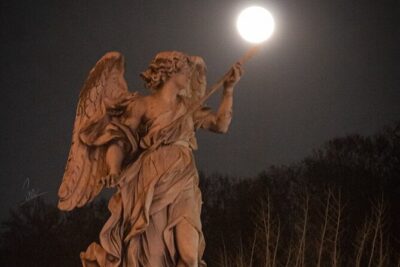
Ghosts Legends and Mysteries of Rome Walking Tour
Read our review →Browse the lists this tour appears in