Reviewed · TICKETS
Circo Maximo entrance ticket + virtual experience
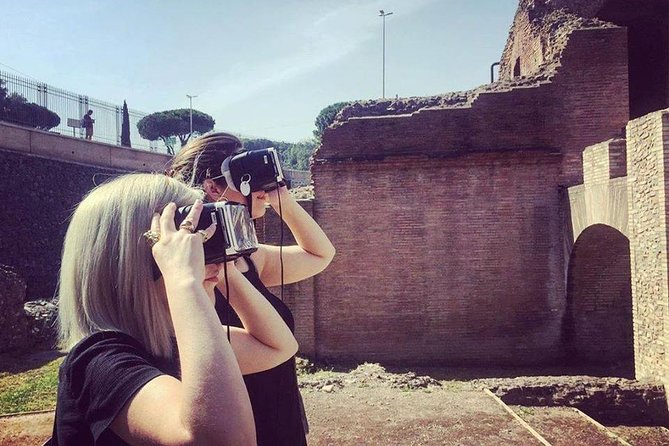
Rome’s biggest racecourse still has a pulse. This ticket pairs Zeiss VR with virtual and augmented scenes so you can see Circus Maximus in motion, not just as stone. I especially like how fast it is to get results, because the whole walk is about 40 minutes, and the timeline feels clear. I also like the way the experience tracks the stadium’s changes over time, from the archaic layout through the Middle Ages. One real consideration: some people find the VR visuals less crisp than they expect, and the viewpoint can feel limited if you do not look the right way.
You’ll meet at Aventino-Circo Massimo (Mb) and the activity ends back there, so it fits neatly between other Roman stops. This is a private tour, so it’s just your group, but you still need to plan around weather since rain and extreme heat can stop the experience. For the headset, you’ll leave an ID deposit (card or passport in the original), and that step is part of the flow, not a minor detail.
In This Review
- Key things to know
- Circus Maximus in 40 Minutes, the real appeal
- Zeiss VR headset: how to get the most (and feel okay)
- Meeting at Aventino-Circo Massimo, and what to watch for
- The eight stops: what each moment is for
- 1) Archaic period, the valley floor setting
- 2) 1st century BC to 1st century AD, the core evolution
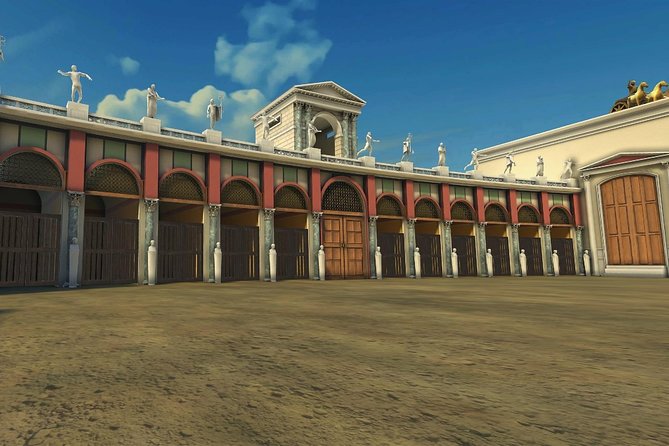
- 3) Imperial period, the stadium as a statement
- 4) Seating tiers (cavea), where the crowd sat
- 5) Arch of Titus, the monumental side of spectacle
- 6) Shops (tabernae), commerce around the action
- 7) Middle Ages and modern times, what changed after Rome
- 8) A Day at the Circus, and the seated VR moment
- What the VR and augmented layers actually do for you
- Price and value, what you’re really paying for
- Weather, access, and keeping your day on track
- Who should book this Circus Maximus VR tour
- Should you book this?
- FAQ
- How long is the Circus Maximus entrance ticket plus virtual experience?
- Where does the tour start and where does it end?
- What is included with my ticket?
- Do I get a Zeiss VR headset?
- Are children allowed to wear the headsets?
- Do I need to leave a deposit to rent the headset?
- What happens if it rains or it gets extremely hot?
- Can I use the virtual reality part while standing?
- Can I cancel or change my booking after purchase?
Key things to know
- Zeiss VR headset + multimedia guide + admission are bundled, so you are not piecing together extra items on site.
- 40 minutes total means you can pair this with other nearby Roman sights the same day.
- A timed timeline: you follow the Circus from the 1st century BC through the imperial period, then onward to the Middle Ages and modern times.
- The final VR moment is seated: the virtual reality function at stop 8 must be used only while you are seated.
- Bring the right ID: reduced-price tickets require you to carry the ID that matches the reduced admission.
Circus Maximus in 40 Minutes, the real appeal
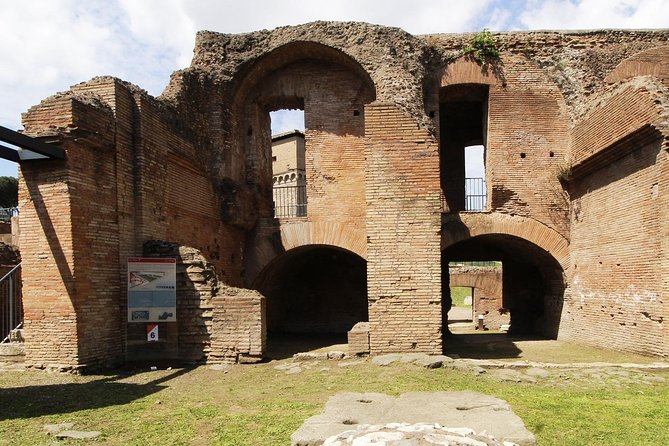
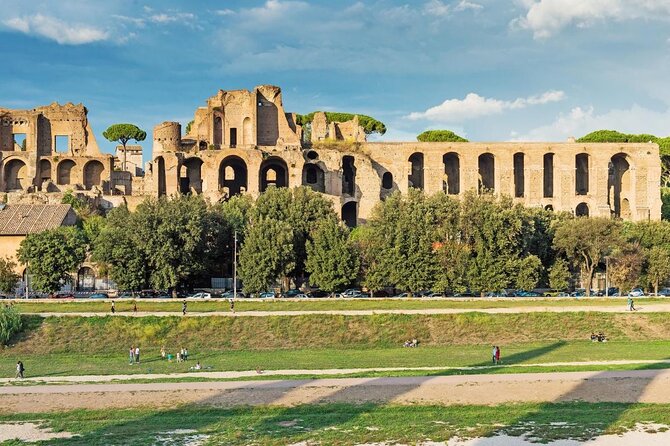
If your day in Rome is packed, this kind of short, high-impact experience makes sense. Circus Maximus today is mostly ruins and open space, so it can be hard for your brain to picture how huge it once was. The VR and augmented layers act like mental scaffolding. You see the stadium as a working public space, and then you get a guided pass through the main parts you would otherwise miss.
The best part is that the tour does not ask you to be an expert. It gives you a clear sequence and a quick sense of scale, then you leave with images that stick. That is a big value for people who want an ancient landmark experience without committing to a long guided day.
The flip side is that it is brief. If you are the type who wants to linger with inscriptions, photos, and slow walking details, you might feel rushed. The upside is that you are not stuck in one place all afternoon.
A few more Rome options worth a look
- Rome: Hop-On Hop-Off Panoramic Bus Ticket – Access 3 Routes
★ 4.0 · 18,145 reviews - Vatican Museums & Sistine Chapel Skip-the-Line Entry Ticket
★ 4.4 · 13,838 reviews - Rome: Vatican Museums & Sistine Chapel Skip-the-Line Ticket
★ 4.3 · 8,103 reviews - Vatican & Sistine Chapel Ticket with Optional Audio Guide
★ 4.1 · 5,405 reviews
Zeiss VR headset: how to get the most (and feel okay)
This experience uses a VR headset (listed as Zeiss) along with virtual and augmented reality scenes. That raises two practical questions for you: will it feel comfortable, and will the visuals meet your expectations?
First, expect the experience to be tied to where you look. One downside that can happen with VR-based tours is “restricted viewpoint” moments, meaning you may have to keep your head oriented correctly to see what the scene is showing. If you naturally scan around, stop and align yourself before the key VR parts begin.
Second, plan for motion comfort. There is explicit medical guidance provided, including advice to consult a doctor before using headsets again if you experience dizziness, motion sickness, nausea, impaired vision, disorientation, neck pain, or involuntary muscle symptoms. Even if you have never reacted before, you should treat this as real gear on your body and not something casual.
Third, the headset rental requires an ID deposit. That means you should have a valid passport or card ready, and you should not arrive at the start time already stressed. In tight Rome schedules, that one step can make or break your mood for the whole tour.
Finally, there is a strict rule: the virtual reality function at stop 8 must be used only while seated. That is important for comfort and for the flow of the experience, so do not assume you can stand during the final VR segment.
Meeting at Aventino-Circo Massimo, and what to watch for
The tour starts at Aventino-Circo Massimo (Mb) and ends back at the same meeting point. That is helpful. You do not have to figure out a separate drop-off area, and you can plan your next stop without backtracking.
Because it is near public transportation, it is easier to slot into your day. Still, Rome can be unpredictable at street level. One thing to be ready for is barriers and construction-style access around major ancient sites. If you arrive and the area looks fenced off, do not panic. Give it a few extra minutes, check you are at the right meeting spot, and be prepared to follow staff direction rather than assuming you can walk straight in.
Also, consider timing. The experience is about 40 minutes, so you do not want a big delay early on. If your tour is weather-sensitive, the earlier you arrive, the better your odds that you get in before any weather decision.
The eight stops: what each moment is for
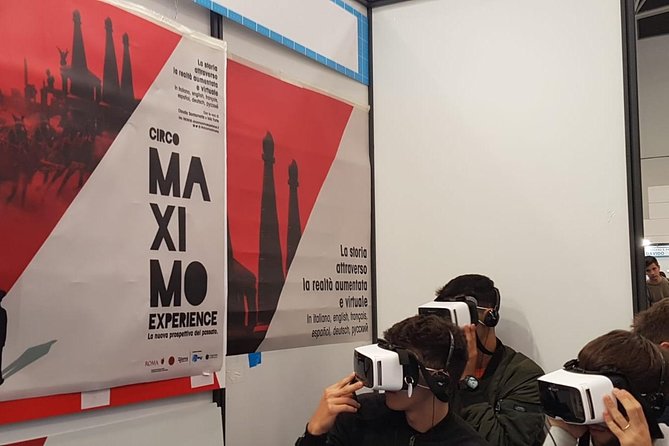
This walkthrough is built as an eight-stop sequence, and each part is there to solve a specific “What am I looking at?” problem. Here is how it plays out, and what you gain from each segment.
1) Archaic period, the valley floor setting
The first stop gives you the physical baseline: the valley floor of the Circus in its archaic period. This matters because Circus Maximus is not just a stadium in the abstract. It is tied to the terrain shape. Once you understand the valley form, the later seating tiers and racecourse make more sense.
A potential drawback: if you are hoping for big, flashy VR right away, this part can feel like groundwork. But that groundwork is what makes the later reconstructions feel convincing.
Another shape for the same afternoon in Rome:
2) 1st century BC to 1st century AD, the core evolution
Next you step through the Circus from the 1st century BC into the 1st century AD. This is where the experience starts to feel like a guided time-lapse. You are not only seeing ruins, you are seeing how a public entertainment venue grows and becomes more structured.
Look for how the tour helps you connect what you see in stone with what you know about Roman public life. Circus Maximus was a political and social stage as much as a sports site.
3) Imperial period, the stadium as a statement
The imperial period stop is your scale check. In practical terms, it helps you grasp that the Circus was a centerpiece for big crowds, not a casual local event space. It also sets you up to appreciate the decorations and organization that made the venue iconic.
If you like architecture but get bored by long lectures, this is a good middle ground. The sequence is fast, but it aims to be legible.
4) Seating tiers (cavea), where the crowd sat
Then you focus on the seating tiers, called the cavea. This is a key stop because “Circus Maximus” is easy to picture wrongly. People often think of a flat field. The cavea concept reminds you that the spectacle depended on vertical sightlines.
This is also where VR adds value: you can better imagine how packed the stands would feel, even if the modern remains are incomplete.
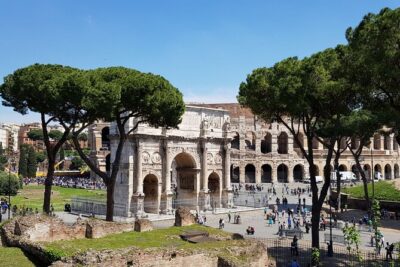
5) Arch of Titus, the monumental side of spectacle
The stop at the Arch of Titus brings a different flavor to the experience. Instead of only focusing on the racing arena, you also see how triumphal monuments and large public spaces sit inside the Roman worldview.
A consideration here is that if you are only in Rome for one or two major sites, you may already be seeing a lot of arches and monumental sculpture style. Still, it helps connect Circus Maximus to the broader language of Roman power.
6) Shops (tabernae), commerce around the action
The tabernae stop is the one that often surprises people. A stadium is not just an event. It is a marketplace ecosystem. In this segment, you get the idea of shops that once lined the stadium and supported the crowd’s day.
If you like everyday-life details, this is one of your payoff stops. It turns the Circus from a sports question into a city-life question.
7) Middle Ages and modern times, what changed after Rome
Now the experience shifts to the Middle Ages and then modern times. This is valuable because it explains the “why is it ruined?” question in a structured way. The Circus did not stop being important overnight, but its role and built form evolved.
This part can feel more muted than the race scenes. Yet it is the stop that turns your VR from entertainment into understanding.
8) A Day at the Circus, and the seated VR moment
The final stop is A Day at the Circus. It is designed as a summary scene, tied to the tour’s storytelling arc. Importantly, it is also where the VR function under stop 8 must be used only while seated.
This is the moment to slow down your expectations a bit and focus on comfort. Sit properly, set your eyes level, and follow any staff direction on where to face. If you have ever struggled with VR, this final segment is still usually the best place to try, because the tour is already giving you context.
What the VR and augmented layers actually do for you
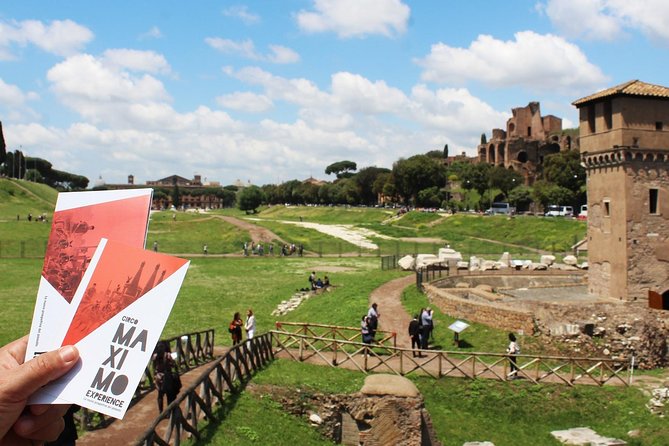
VR can be a gimmick if it does not connect to the real place. Here, the concept is practical: you see the stadium as a layered reconstruction, and then you walk through the remaining structures in the same route.
When it works well, you get two benefits:
1) Instant scale. Circus Maximus was designed for huge crowds and long lines of sight. You cannot get that from ruins alone.
2) A timeline you can picture. You are not reading a book chapter. You are moving through stages, so your brain stores it as a route.
When it does not work as well, the problems can be specific and predictable: lower-than-modern image quality and scenes that feel limited to one position, so you lose the view if you look the wrong direction. That does not mean the idea is bad. It just means you should go in with realistic expectations and be ready to adjust how you move your head.
Price and value, what you’re really paying for
At $46.07 per person, the real question is what you get for that money. You are not just buying admission to the site. You are getting:
- Admission ticket included
- A multimedia guide
- A VR headset (with an ID deposit step)
For a 40-minute experience, that package can feel like good value if you like tech-enhanced interpretation and you want a fast “Rome in the past” payoff. It is also easier to justify if you are visiting other big sites nearby and need something that does not eat half your day.
Where value can slip is if you are very sensitive to VR quality. If you expected crisp, modern graphics, and you end up feeling disappointed, you may feel the price is too high for a short session.
One more value tip: if you are buying a reduced-price ticket online, bring the ID that qualifies you for that reduced admission. Carrying it matters. It can prevent a last-minute headache.
Weather, access, and keeping your day on track
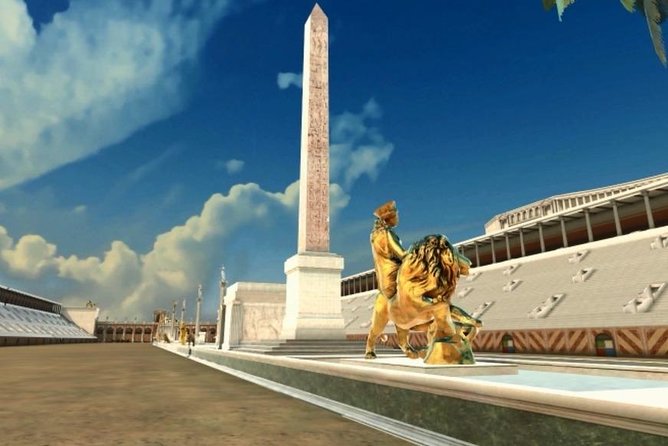
This experience requires good weather. Rain and extreme heat can stop the activity, and if that happens you should expect your booking to be handled with a different date or a full refund. In Rome, that is smart planning. It also means you should keep some flexibility on your schedule if possible.
Also, be alert to the site environment. Circus Maximus is a big outdoor area, and the entrance can be affected by ground conditions or temporary barriers. If you show up and everything looks blocked, treat it as a access issue, not a sign you did something wrong. Give the instructions a minute and follow the team’s direction.
Who should book this Circus Maximus VR tour
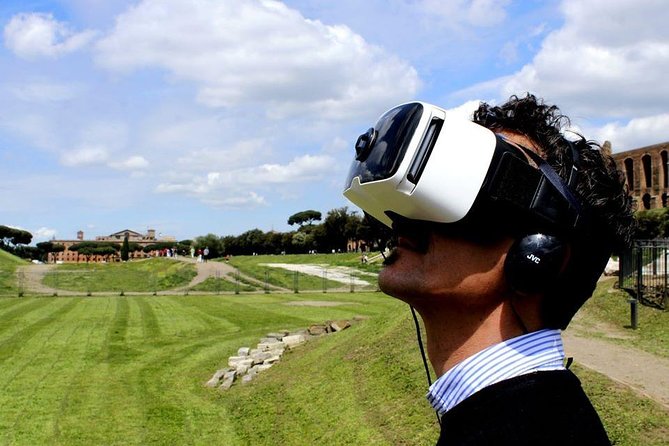
This tour fits best if you match a few profiles.
- You like Roman ruins, but you need help building the full picture in your head.
- You want a quick, high-impact experience that you can combine with other stops.
- You are traveling with kids old enough to handle the headset experience with supervision, since children under 14 can wear the headsets only if accompanied by an adult who signs the disclaimer available at the ticket office.
- You enjoy guided structure, since the walk follows an eight-stop timeline instead of a free-form wander.
You may want to reconsider if you have strong sensitivity to motion or VR discomfort. The medical warning list is specific, and it is there for a reason. You might also choose a more traditional guide format if you care more about slow looking at details than about reconstructions.
Should you book this?
Book it if you want a short, practical way to understand why Circus Maximus mattered, and you are comfortable using a VR headset for a staged sequence. The best-case experience helps you see the space as it once functioned, and the quick timeline makes it easier to remember than a typical stand-and-stare ruins visit.
Skip or adjust expectations if you are highly picky about VR image quality, or if you know you react poorly to headset use. Also, arrive with a bit of patience. Access can be affected by barriers and construction-style conditions near major sites, and the tour depends on starting on time.
If you want a fast “see it like the ancient Romans did” add-on to your Rome day, this is a smart purchase. If you want a long, scholarly walk through stone and text, this ticket will probably feel too short.
FAQ
How long is the Circus Maximus entrance ticket plus virtual experience?
The tour takes about 40 minutes.
Where does the tour start and where does it end?
It starts at Aventino-Circo Massimo (Mb) and ends back at the same meeting point.
What is included with my ticket?
Your ticket includes admission to the site, a VR headset, and a multimedia guide.
Do I get a Zeiss VR headset?
Yes, the experience includes a Zeiss VR headset.
Are children allowed to wear the headsets?
Children under 14 can wear the headsets only if they are accompanied by an adult, and the adult must sign a disclaimer at the ticket office.
Do I need to leave a deposit to rent the headset?
Yes. You must leave an ID deposit, either a card or passport, in the original.
What happens if it rains or it gets extremely hot?
The experience requires good weather, and rain or extreme heat can prevent the experience. If it is canceled due to poor weather, you are offered a different date or a full refund.
Can I use the virtual reality part while standing?
No. The virtual reality function at stop 8 must only be used while seated.
Can I cancel or change my booking after purchase?
This experience is non-refundable and cannot be changed for any reason. If it is canceled due to poor weather or if the minimum number of travelers is not met, you will be offered a different date or a full refund.
Latest additions from Rome
- Rome: Testaccio Market Food Tour with Street Food & Wine★ 5.0 · 8 reviews
- Exclusive Pasta & Tiramisu Class with Wine near by Colosseum★ 5.0 · 8 reviews
- Private Professional Photoshoot in Rome★ 5.0 · 8 reviews
- Loreto “Shrine of the Holy House of the Virgin Mary” Private Tour from Rome★ 5.0 · 8 reviews
- Rome Day to discover Florence and Pisa Hotel Pickup★ 4.5 · 8 reviews
- Rome: Christmas Nativities and Angels Tour★ 3.1 · 8 reviews
- Guided Tour of Vatican Museums and Sistine Chapel★ 5.0 · 8 reviews
- Rome: Cooking Class of fresh Pasta and Tiramisu Cake★ 5.0 · 8 reviews
Tickets, compared.
Hop-On Hop-Off Panoramic Bus Ticket – Access 3 Routes
Read our review →
Vatican Museums & Sistine Chapel Skip-the-Line Entry Ticket
Read our review →
Vatican Museums & Sistine Chapel Skip-The-Line Ticket
Read our review →Vatican Museums & Sistine Chapel Skip-the-Line Ticket
Read our review →
Vatican & Sistine Chapel Ticket with Optional Audio Guide
Read our review →
Castel Sant’Angelo Entry Ticket & Digital Audioguide
Read our review →