
Reviewed · SEGWAY TOURS IN ROME
Ancient Rome Half-Day Segway Tour
Gliding through Imperial Rome feels futuristic. This Ancient Rome half-day Segway tour lets you start with a short training session, then coast through Imperial Rome’s big hits, including the Colosseum and Palatine Hill, with an English guide who keeps the history easy to follow. I especially like how the route mixes famous monuments with Roman-side stories, and the pacing feels made for actually seeing the city instead of rushing between stops. One key consideration: you do need to get comfortable riding a self-balancing Segway right from the start, even though the training is designed to help first-timers.
The best part is the way the guide turns each hill and landmark into a quick, clear picture, from Romulus and Remus at Palatine to Michelangelo’s work on Capitoline Hill. I also like the small-group setup, limited to 8 participants, which means more attention while you ride and more chances to ask questions. The eco-friendly, futuristic transport adds a fun factor, but it also means you’ll stay on a set route and timing, so it’s not the kind of experience where you wander off whenever you want.
In This Review
- Key things I’d plan around
- Arriving at Piazza del Gesù, 47, and getting comfortable fast
- Training on the Segway, without turning it into a chore
- Palatine Hill viewpoints and the legend of Romulus and Remus
- Circus Maximus to Aventine Hill and the Orange Grove
- Santa Maria in Cosmedin, San Valentino, and the Mouth of Truth
- Capitoline Hill and Michelangelo’s Renaissance redesign
- Through the Imperial Forum to the Colosseum
- How this Segway format changes your Rome day
- Price, value, and who this fits best
- Guides you can count on, and the small comforts that matter
- When to go, and what to expect on the ground
- Should you book the Ancient Rome Half-Day Segway Tour?
- FAQ
- Where does the tour start?
- How long is the Ancient Rome Segway tour?
- How many people are in the group?
- What language is the tour guide?
- Is there Segway training before you start sightseeing?
- What’s included in the tour price?
- What sights will I see?
- How much does the tour cost?
- Can I get a refund if I cancel?
- Is pay later available?
Key things I’d plan around
- Small group, limited to 8, so you get real guidance while you learn and ride
- Segway training session first, aimed at helping you feel steady before the sightseeing part
- Palatine Hill viewpoints, with the guide pointing out the legend of Romulus and Remus
- Mouth of Truth stops, including Santa Maria in Cosmedin and nearby Valentine-related relics
- Capitoline Hill and Michelangelo, where Renaissance redesign meets Imperial Rome
- Imperial Forum plus the Colosseum, a strong one-two punch for first-time Roman visitors
Arriving at Piazza del Gesù, 47, and getting comfortable fast
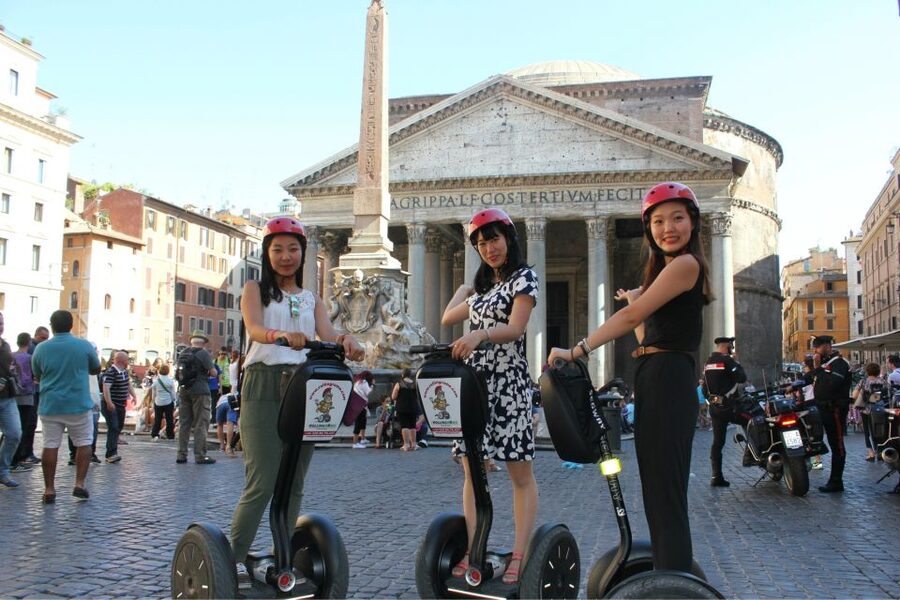
You start at Piazza del Gesù, 47, which is a convenient launch point for the kind of compact, sight-heavy day Rome does best. From there, you begin with a short Segway training session before you set off. This matters because the tour works only if everyone feels safe and steady on the self-balancing vehicles.
In practice, the training is the make-or-break moment. If you can follow simple instructions and you’re willing to practice a bit in the beginning, the rest tends to feel smooth. Guides like Nico are specifically noted for patience with first-time riders, so it’s worth relaxing into the process rather than worrying you’ll be the slow one.
More Segway Tours in Rome
- Rome: Sights by Segway Tour
★ 4.9 · 536 reviews - Rome at Night Segway Small Group Tour
★ 5.0 · 220 reviews - Rome: Night Segway Tour
★ 4.8 · 178 reviews - Rome Highlights by Segway Tour with Local Guide
★ 5.0 · 80 reviews
Training on the Segway, without turning it into a chore
This is a guided Segway tour, so the goal isn’t just transportation. The training session is built to help you get your bearings fast: how to start, turn, and stop without overthinking it. That quick confidence boost is a huge part of why this half-day format works so well.
What you’ll like is that once you’re moving, you spend more time looking at monuments and less time stuck walking long distances. That balance is perfect in Rome, where you can burn energy fast on steep terrain and crowded sidewalks. Still, be honest with yourself: if you feel anxious on balance-based devices, you might find the first portion more stressful than sightseeing. The tour team’s job is safety, not turning the Segway into a magic trick.
Palatine Hill viewpoints and the legend of Romulus and Remus
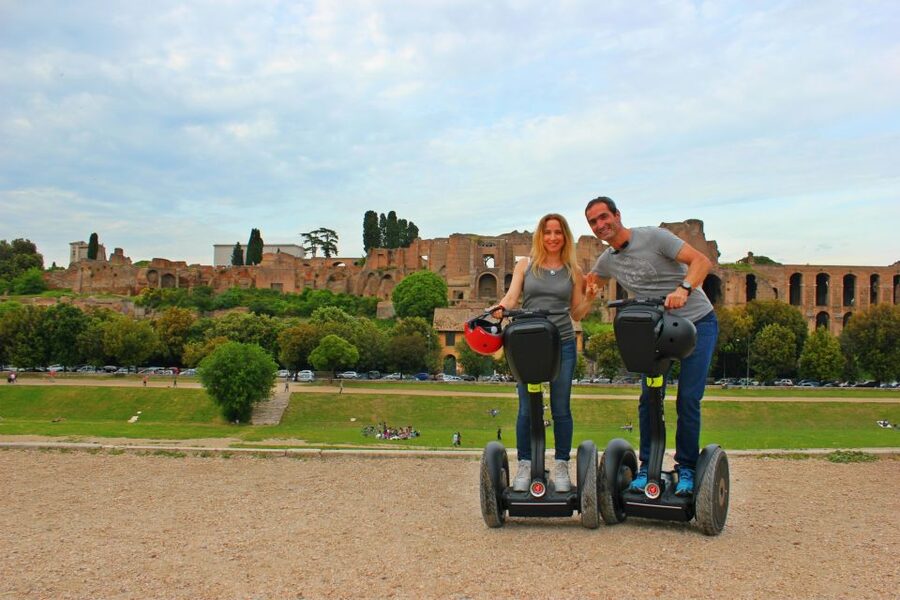
The route takes you across the “seven hills” area of Rome, and Palatine Hill is where the tour really flexes its storytelling. You get panoramic views as the guide explains the legend of Romulus and Remus, giving context for why Palatine mattered so much in the Roman imagination.
This is one of the stops where the Segway actually helps. Palatine Hill viewpoints are best when you can angle your body toward the view, pause, and take in what’s in front of you. Riding slowly and safely makes it easier to enjoy the scenery instead of rushing through it like a checklist item.
The practical win: you get the viewpoint and the story in the same flow. That makes it easier for you to connect what you’re seeing with what it meant, instead of having history float around in your head with no anchor.
Circus Maximus to Aventine Hill and the Orange Grove
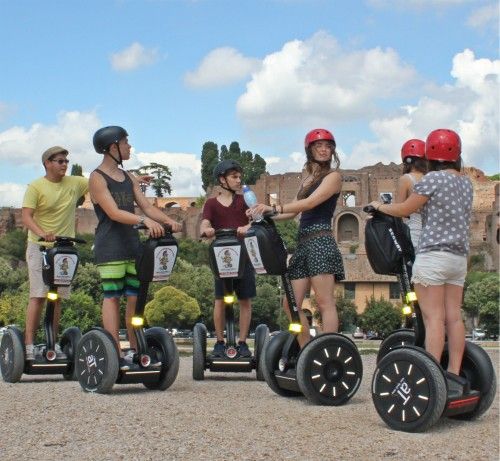
As you move onward, you pass Circus Maximus, one of the big ancient venues that shaped public life in Rome. From there, the tour heads toward Aventine Hill and the Orange Grove, which is a nice tonal shift from the loudest Imperial names.
Aventine Hill tends to feel less like a single landmark and more like a whole mood. On a Segway, you can keep a steady pace without losing the chance to look at what’s around you. You’ll likely appreciate this segment if you enjoy seeing the “in-between” parts of Rome, not only the most famous photos.
This section also helps you understand how Rome is built. It’s not just big monuments. It’s a city of hills, sightlines, and neighborhoods stacked on top of each other over time. The Segway format keeps you moving through that geography without turning every step into a detour.
Santa Maria in Cosmedin, San Valentino, and the Mouth of Truth
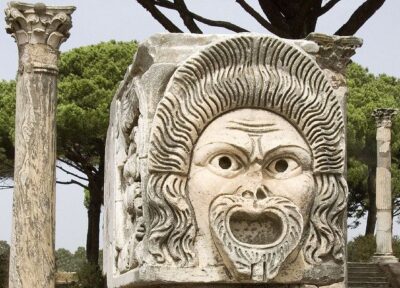
One of the more memorable parts of the tour is the stop at Santa Maria in Cosmedin, where you’ll see remains related to San Valentino and the marble mask associated with the Mouth of Truth. This is exactly the kind of site that’s hard to find on your own unless you already know what you’re looking for.
The value here is the combination: a real church stop plus a famous artifact people recognize even if they don’t know the full context. The guide’s explanations give you something to connect, not just something to photograph.
If you’re the type who likes a mix of famous and quirky, this is a highlight. If you prefer strictly monumental ruins, you might think of it as a detour. Either way, it adds variety to a tour that otherwise centers on the big Imperial storyline.
A few more Rome options worth a look


Capitoline Hill and Michelangelo’s Renaissance redesign
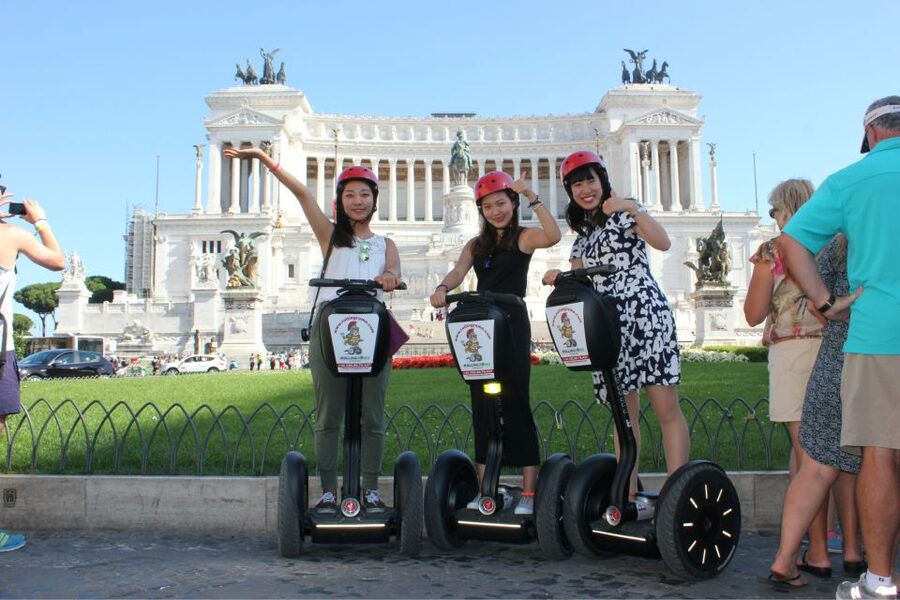
Then you reach Capitoline Hill, described as the most important of the imperial hills. This is where the tour links ancient Rome to what later rulers did with the ancient world.
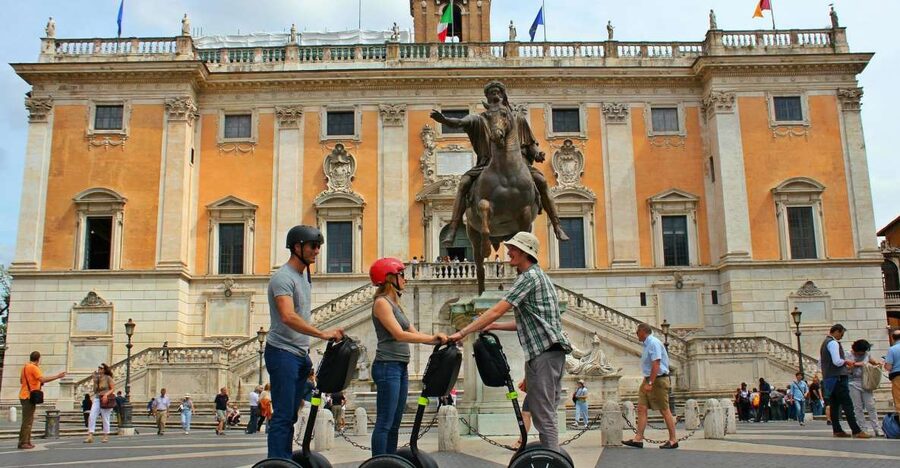
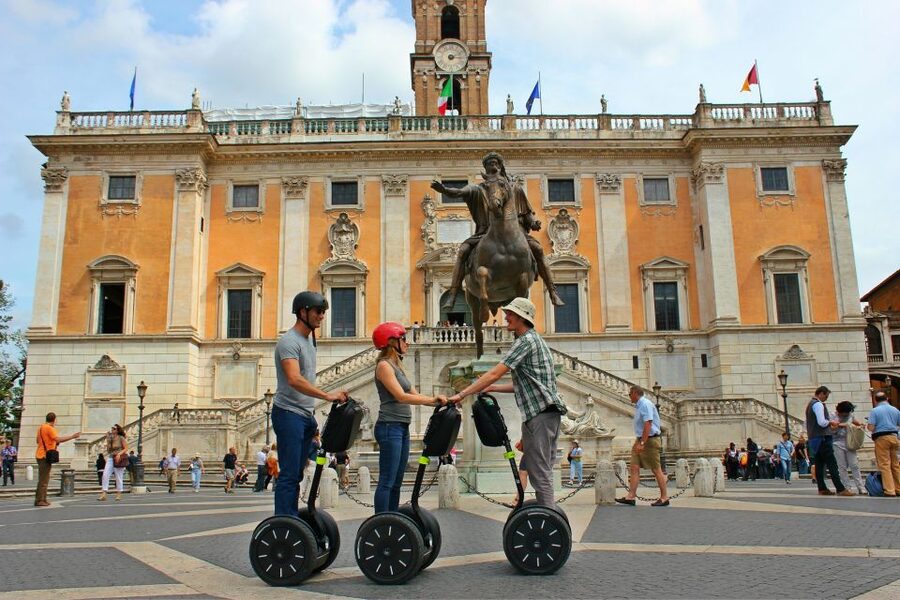
The standout idea is that Capitoline Hill was redesigned by Michelangelo during the Renaissance. On a Segway tour, that kind of “layered time” moment clicks because you’re not stuck in one place. You can take in the architecture while the guide explains why the design matters, and you can keep riding without losing the thread.
This is also a good stop for questions. Since your guide is with you and you’re not breaking apart into individual lines, it’s easier to ask what to notice next. People often want help reading Rome’s architecture quickly, and this is one of the best moments for it.
Through the Imperial Forum to the Colosseum
Next comes the Imperial Forum, where the guide walks you along the footsteps of emperors and the political center of Rome. Then you roll toward one of the world’s most famous monuments, the Colosseum.
If you’ve only seen the Colosseum from afar, this tour helps you “locate it” mentally. The Forum approach gives you context for why the Colosseum sat where it did, and why it dominated Roman public life. You’re not just standing in front of a single structure, you’re moving through the larger system that made it meaningful.
Also, this is where the timing of the Segway format works in your favor. You get a focused visit window, and you’re not stuck in hour-long wandering. That makes it a strong choice if you’re short on time but want more than a quick photo.
How this Segway format changes your Rome day
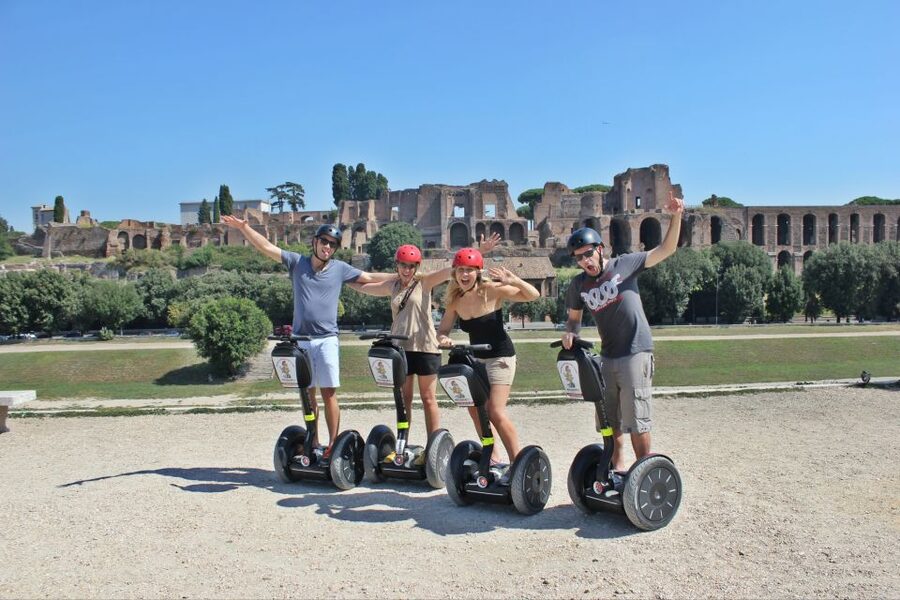
A normal walking tour in Rome is tough on two fronts: distance and pacing. Rome’s sights are spread out, and the terrain can be uneven. This tour uses futuristic, eco-friendly transportation to solve the “distance problem” while keeping you close enough to see what’s happening around you.
I like that you’re not just “driving to stops.” You’re gliding, then pausing long enough for the guide to tell you what to look for. That makes the tour feel like a guided route with real sightseeing, not an attraction bus with talking.
The small-group size, limited to 8 participants, is also a quiet advantage. Fewer people means the guide can manage slower riders and first-time Segway practice without losing the rest of the group. It’s a practical way to keep the experience from feeling crowded or chaotic.
Price, value, and who this fits best
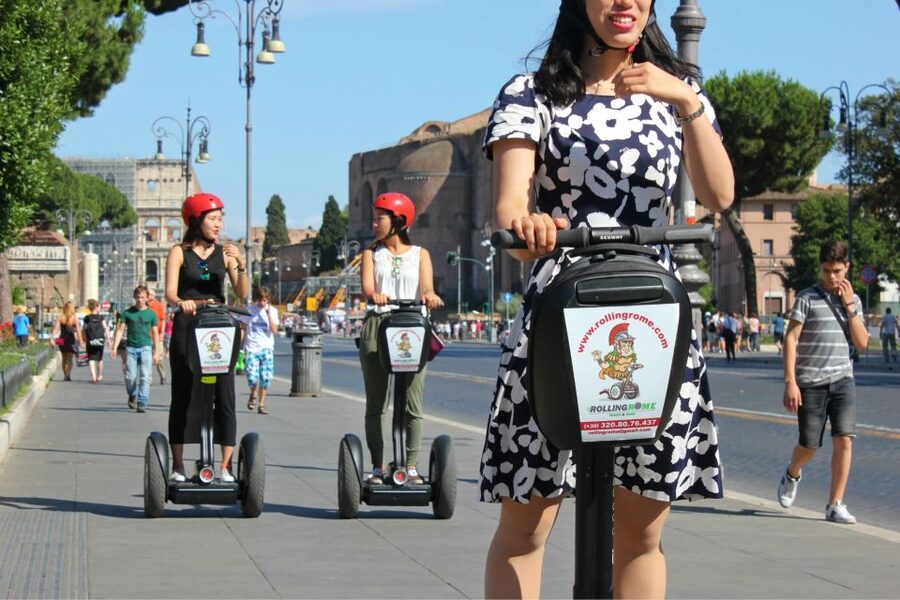
At $100 per person for about 3 hours, this is not the cheapest way to see Rome. But it can be strong value if you care about time and clarity.
Here’s the practical math in plain terms. You’re paying for three things: the Segway itself, the guide’s route planning, and the training session that helps you enjoy the ride safely. If you’ve only got a half day and you want Imperial Rome highlights plus hill views plus Mouth of Truth fun, $100 can start to look reasonable.
Who it suits:
- First-timers who want the main sights without spending the whole day walking
- People who like guided history but don’t want lectures that last all morning
- Anyone who enjoys hands-on, modern transport paired with ancient landmarks
Who might skip it:
- If you strongly prefer to wander at your own pace between stops
- If you know you dislike balance-based rides and will feel tense during the training
- If you want a very deep archaeological experience without any riding-time constraints
Guides you can count on, and the small comforts that matter
A big theme in the tour experience is the guide. Nico shows up repeatedly in positive feedback for clear, easy-to-follow explanations and for keeping safety front and center. Another guide mentioned is Julio, praised for architecture and history storytelling. There’s also Jean Paul noted for being polite and welcoming, and Alex noted for pivoting when route changes happened.
Those details matter because Rome rarely runs perfectly. You may hit changes from closures or busy periods, and having a guide who can adjust without panic makes the whole half-day work better.
There’s also a comfort factor people appreciate: shade. In a city that can feel intense in the sun, shade breaks are not trivial. It’s the kind of small, real-life detail that makes the difference between a tour that feels fun and one that feels like work.
When to go, and what to expect on the ground
Rome can throw curveballs. During busy weeks, streets might be closed, and your route could shift. That doesn’t automatically ruin the experience, but it does mean you should come in flexible and not treat every minute like a strict appointment.
Also remember that this is a city tour on wheels. Even though you’re using eco-friendly transport, you’re still outside, so plan like you’re sightseeing: bring a water bottle, wear comfortable shoes in case you need to walk short stretches, and dress for sun or sudden cool weather.
Finally, think about your energy level. Three hours is enough time to see a lot, but it’s not enough time to slow down into long museum-style pacing. If you want to read every inscription and linger for hours, you may feel rushed. If you want a well-paced hit list with strong context, this format delivers.
Should you book the Ancient Rome Half-Day Segway Tour?
I’d book it if you want a smart way to cover Imperial Rome in a short window while still getting guided history at each major stop. The combination of Segway training, small group size, and a route that includes Palatine Hill views, Capitoline Hill with Michelangelo, the Imperial Forum, and the Colosseum is a very efficient use of your time in Rome.
I’d hesitate if you’re not comfortable with riding from the start. Even with patient guidance, the first minutes matter, and the experience assumes you’ll participate.
If you’re deciding between a quick walk-through and a guided ride, this is the one that feels most like you’re actually moving through Rome as a living city, not just collecting stops. And if you want a half-day plan that leaves you energized rather than exhausted, this Segway tour is an excellent fit.
FAQ
Where does the tour start?
Tours start at Piazza del Gesù, 47.
How long is the Ancient Rome Segway tour?
The duration is listed as 3 hours (the overview describes it as about a 3.5-hour experience).
How many people are in the group?
The group is small, limited to 8 participants.
What language is the tour guide?
The live tour guide offers English commentary.
Is there Segway training before you start sightseeing?
Yes. The experience includes a Segway training session before the tour starts.
What’s included in the tour price?
Included items are the guide, the Segway training session, and the Segway tour.
What sights will I see?
You’ll see Palatine Hill, Circus Maximus, Aventine Hill, Orange Grove, Santa Maria in Cosmedin (with the Mouth of Truth mask), Capitoline Hill (Michelangelo redesign), the Imperial Forum, and the Colosseum.
How much does the tour cost?
The price is $100 per person.
Can I get a refund if I cancel?
Yes. There is free cancellation up to 24 hours in advance for a full refund.
Is pay later available?
Yes. You can reserve now & pay later, keeping plans flexible.
Latest additions from Rome
- Rome: Testaccio Market Food Tour with Street Food & Wine★ 5.0 · 8 reviews
- Exclusive Pasta & Tiramisu Class with Wine near by Colosseum★ 5.0 · 8 reviews
- Private Professional Photoshoot in Rome★ 5.0 · 8 reviews
- Loreto “Shrine of the Holy House of the Virgin Mary” Private Tour from Rome★ 5.0 · 8 reviews
- Rome Day to discover Florence and Pisa Hotel Pickup★ 4.5 · 8 reviews
- Rome: Christmas Nativities and Angels Tour★ 3.1 · 8 reviews
- Guided Tour of Vatican Museums and Sistine Chapel★ 5.0 · 8 reviews
- Rome: Cooking Class of fresh Pasta and Tiramisu Cake★ 5.0 · 8 reviews
Segway Tours in Rome, compared.


Rome Highlights by Segway Tour with Local Guide
Read our review →

Browse the lists this tour appears in