
Reviewed · WORKSHOPS
Ancient Art Workshop: Fresco
Paint the way you just learned.
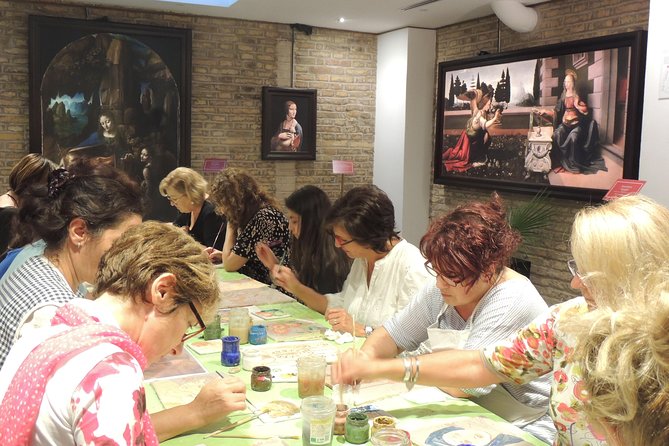
This ancient art workshop on Rome’s Appian Way turns art history into a hands-on session where you reproduce a classic subject, from a Sistine Chapel detail to a Roman floor pattern. I love that the process uses natural pigments and period-style materials, and I also love that you finish with something you can take home immediately. The only real drawback to keep in mind is the class is about two hours, so you are learning technique fast, not becoming a master artist overnight.
You’ll be working in a studio setting with Italian artists, and the format is flexible enough for many ages, including kids. It is set up as a private group for up to 2 people, and English is available. Plan on arriving a little relaxed, because the most important thing here is focus and time at the work surface, not rushing between sights.
In This Review
- Key Highlights You’ll Care About
- Finding the Studio on the Appian Way (and Why It Matters)
- What You’ll Create: Sistine Chapel Details and Roman Floor Patterns
- How Fresco Actually Works, in Plain Terms
- Mosaic Time, Too: Colored Marble and the Joy of Texture
- What the Two-Hour Format Really Means for Skill and Fun
- Materials Are Included, and That Changes the Value Math
- A Day Plan That Works: Pairing With Major Sights
- Practical Tips for Getting the Best Outcome
- Should You Book Ancient Art Workshop: Fresco?
- FAQ
- How long does the Ancient Art Workshop: Fresco take?
- Is this a private class, and how many people can join?
- What is included in the price?
- Can I take my work home the same day?
- Where do we meet for the workshop?
- What languages are available?
- Is it suitable for children or beginners?
- When is the workshop open?
- Is there free cancellation?
Key Highlights You’ll Care About
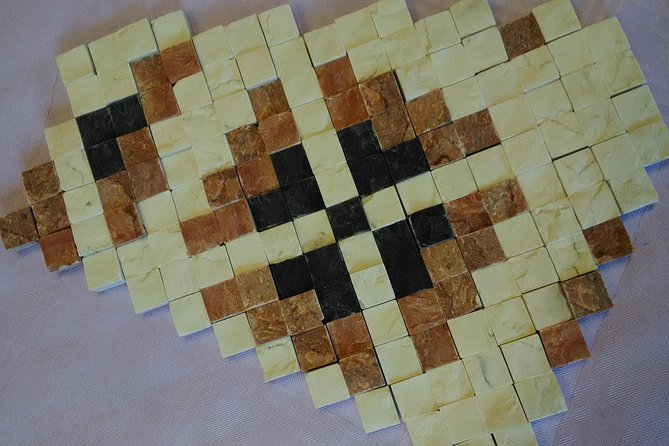
- Natural pigments and marble materials: the look and feel are part of the lesson, not an afterthought.
- Take-home result: you leave with your finished fresco or mosaic reproduction right away.
- Choice of iconic subjects: pick a reference like Michelangelo’s Sistine Chapel or a Roman floor detail.
- Instructor support: guides such as Cecelia or Nina are described as patient and step-by-step clear.
- Family-friendly pace: the workshop works well for adults and kids, including beginners.
Finding the Studio on the Appian Way (and Why It Matters)
If your idea of Rome is constant walking, nonstop crowds, and more stairs than you planned, this class is a nice change. It runs from a studio on the Appian Way, and the meeting point is Bsocial, Via del Commercio 12 G, 00154 Roma RM. The area is also described as easily reachable by Metro A, which is exactly the kind of detail that saves time on a day when you already have plans.
This location also explains the mood of the experience. You are not bouncing between photo stops. You sit down, get your bearings, and concentrate on one craft for a couple hours. That is especially helpful if you are doing heavier sightseeing nearby, like a Vatican day. One of the most common ways people pair this workshop is as a follow-up after seeing frescoes in major churches, because you get to translate what you saw into how it is made.
One practical note: the workshop is listed as English-friendly and offered in multiple languages (Italian, English, French, German, Spanish). If your group includes mixed-language comfort levels, this matters. You can still follow along, and you should feel comfortable asking basic questions.
Other Roman benches to work at for a morning:
- 3 in 1 Cooking Class near Navona: Fettuccine, Ravioli & Tiramisu
★ 5.0 · 7,376 reviews - Rome: Pasta & Tiramisu Class with Fine Wine by the Vatican
★ 4.9 · 4,852 reviews - Rome: Pasta Making Class with Wine, Limoncello, and Dessert
★ 4.9 · 3,177 reviews - Rome Cooking Class: Make Pasta and 3 Spritz Cocktails
★ 5.0 · 2,937 reviews
What You’ll Create: Sistine Chapel Details and Roman Floor Patterns
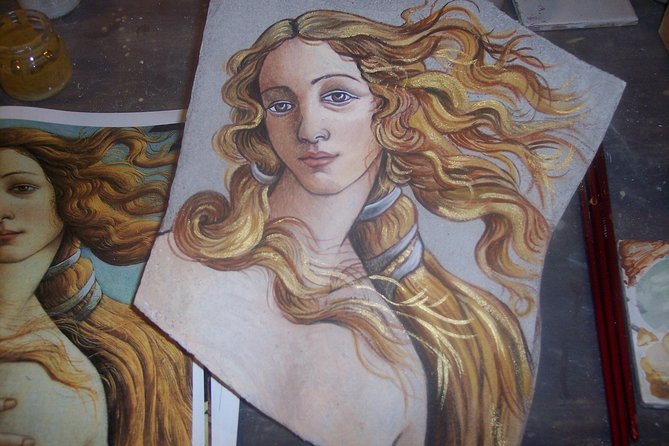
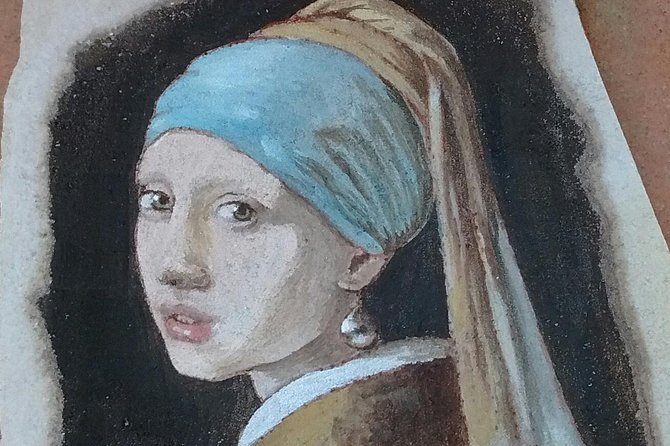
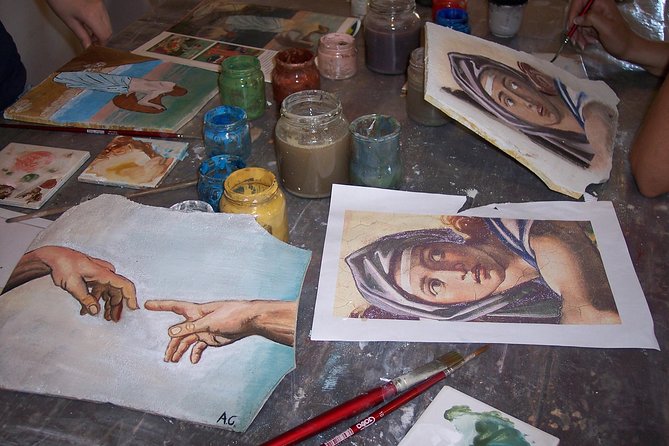
The workshop centers on reproducing an ancient subject you can take home. The reference options include a detail inspired by Michelangelo’s Sistine Chapel and a Roman floor detail. That choice is more than decorative. It changes what you pay attention to during the lesson.
A Sistine Chapel-type reference pushes you toward thinking about fresco style: how lines and tones build up the image, and how the paint behaves on plaster. A Roman floor detail puts you closer to pattern thinking, proportion, and the geometry that makes mosaics feel so solid and believable.
What makes this especially appealing for beginners is that you are not just doing a generic craft. You are reproducing a specific kind of artwork with real technique. And because the workshop uses period materials, your final piece has a more authentic look than typical classroom art projects.
How Fresco Actually Works, in Plain Terms
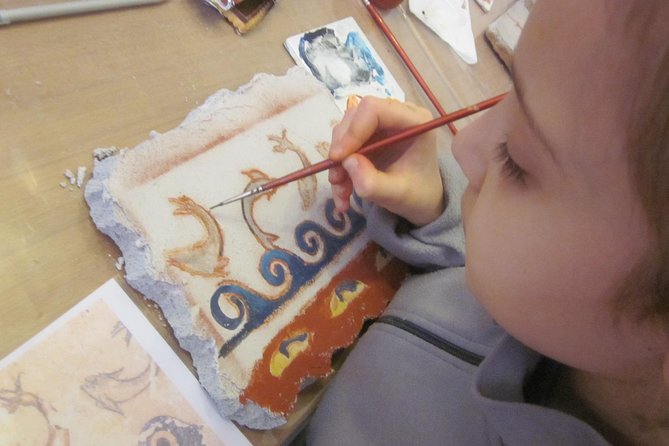
Fresco sounds mysterious until someone explains the mechanics in everyday language. The key concept is that the painting process is tied to the wall or plaster surface. You are working with plaster and pigments so that the paint bonds to the base, instead of sitting only on top like many modern paints.
In sessions like this, the instructor typically walks you through what happens when pigment meets plaster, and why the result can be long lasting. One of the most useful ideas you can carry with you is the reason frescoes have that sense of permanence. A strong bonding layer helps make the artwork behave more like part of the surface than like a removable coating.
If you are the type who likes to understand what you are seeing in churches, this is the payoff. After, you look at frescoes and you can picture the workflow, the pressure points, and why certain colors and textures look the way they do. It also makes that Sistine Chapel moment feel less like a distant museum miracle and more like a craft someone learned step by step.
Mosaic Time, Too: Colored Marble and the Joy of Texture
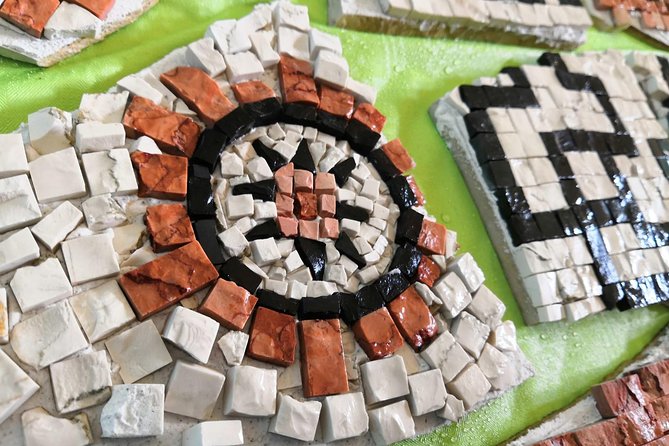
Even though the title is Ancient Art Workshop: Fresco, the experience is described as including a fresco painting and mosaic workshop element. In practical terms, that means you are likely working with more than just paint. The workshop uses colored marble tiles for the mosaic, made to match how mosaics were traditionally produced.
Why does this matter? Because mosaics teach you a different kind of observation. You stop thinking in only terms of brush strokes. You start noticing spacing, edges, and how color breaks into small pieces. When you piece colored marble tiles together, the image becomes almost sculptural. Even if you are a total beginner, you can see your progress quickly because the work develops visually as pieces lock into place.
One of the best parts of a combined fresco and mosaic approach is balance. Paint can be calming. Tiles can feel satisfying because they are concrete. Together, they keep kids and adults engaged without turning the day into a lecture.
What the Two-Hour Format Really Means for Skill and Fun
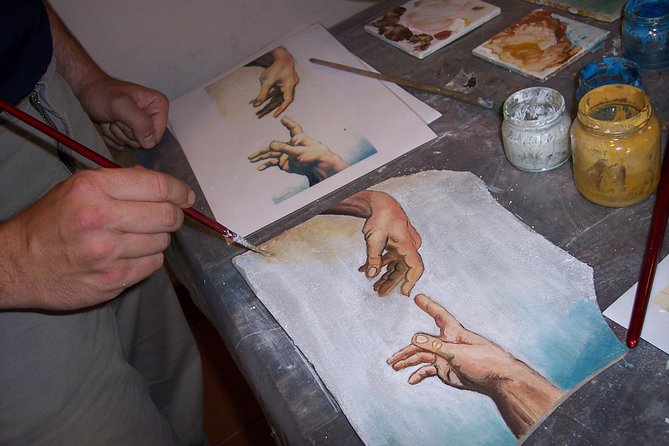
The workshop runs for about two hours. That timing is short enough to fit into a busy Rome day, but long enough for meaningful technique and a real finished result. The session is also private, meaning only your group participates. With a group size of up to 2, you get more attention and fewer awkward moments when you are unsure what to do next.
The pacing tends to work well for people who think they are not artists. Multiple instructors in examples like this are described as patient, step-by-step focused, and good at helping each person choose a project. Cecelia is specifically mentioned for being attentive and fun, and Nina is praised for being patient and giving clear guidance. That kind of instruction is what turns a short workshop into a memorable one.
Still, keep expectations grounded. This is not a multi-day apprenticeship. You are learning technique and completing a take-home artwork, not mastering fresco painting in depth. If you want to go beyond the basics, you’ll probably want to look for an additional class or practice later. But for a first taste, the time is a sweet spot.
Another shape for the same afternoon in Rome:
Materials Are Included, and That Changes the Value Math
At $246.90 per group (up to 2), this is not the cheapest activity in Rome. The value comes from what is included: all the materials you need, such as colors, brushes, and marble tiles for mosaics. You are paying for supplies and for guided instruction tied to technique, not a paint-and-go worksheet.
To put that into everyday terms: you’re paying for the ability to make a serious souvenir with real materials. If you are the type who wants one or two high-impact experiences rather than buying lots of small items, this is the kind of class that can replace a chunk of souvenir spending.
Also, because the result is immediate, you avoid the common disappointment of traveling with half-finished crafts that never make it home. You will already have the piece in hand at the end of the lesson.
One more practical value note: the materials and methods connect directly to what you see in Rome. When you visit fresco-heavy churches or ruins, this workshop gives your brain a working model for what those surfaces and pigments are doing.
A Day Plan That Works: Pairing With Major Sights
This experience is a smart fit when you want a break from long sightseeing loops. Many people schedule it when the day is hot and walking gets harder. It also pairs well right after seeing frescoes in big-name contexts, because you can switch from viewing to doing while the ideas are still fresh in your head.
A simple approach is:
- Do one big fresco or church visit earlier in your trip.
- Then schedule the workshop as a hands-on follow-up.
- Use the workshop as your technique day, so the rest of your sightseeing feels less like memorizing and more like understanding.
The studio also ends back at the meeting point, which keeps your schedule tidy. You can plan for lunch or another activity without a complicated return journey.
Practical Tips for Getting the Best Outcome
This class is described as suitable for most travelers, and it is offered in English (with additional language options available). Even if you are not fluent, you should be fine because the instruction is built around doing.
Here are practical habits that help:
- Wear comfortable clothes you do not mind getting a little paint-adjacent.
- Bring water, since food and drinks are not included.
- If you have kids, treat it as a craft session with a clear goal: one finished piece to take home.
Your best results will come from following the instructor at each step, especially during the stages that involve transferring marks and working with plaster and pigments. These are the parts that make fresco technique feel real.
Should You Book Ancient Art Workshop: Fresco?
I think you should book this if you want a memorable Rome experience that is hands-on, not just observational. The biggest wins are clear: natural materials, an authentic process tied to fresco technique, and a finished take-home artwork after about two hours. It is also a strong choice for families, and it feels especially rewarding when you just saw frescoes in major churches.
You might skip it if you only want to roam outside and avoid studio time, or if you are expecting a full-scale museum experience of Roman art. This is a workshop, not a guided gallery tour.
If your goal is to leave Rome with a piece that looks like ancient craft, and you want to understand how frescoes work from the inside, this class is an easy yes.
FAQ
How long does the Ancient Art Workshop: Fresco take?
The workshop lasts about two hours.
Is this a private class, and how many people can join?
Yes, it is a private tour or activity, and the group size is up to 2 people.
What is included in the price?
All materials needed for each workshop are included, such as colors, brushes, and marble tiles.
Can I take my work home the same day?
Yes. At the end of the lesson, everyone can immediately take their work away.
Where do we meet for the workshop?
The meeting point is Bsocial, Via del Commercio 12 G, 00154 Roma RM, Italy.
What languages are available?
The workshop can be carried out in Italian, English, French, German, and Spanish, and it is offered in English.
Is it suitable for children or beginners?
Yes. The experience is suitable for everyone, including adults and children, and it works well for families and people with any experience level.
When is the workshop open?
Within the period 05/01/2025 to 01/07/2027, it runs Monday through Friday from 10:00 AM to 6:00 PM.
Is there free cancellation?
Yes. You can cancel up to 24 hours in advance for a full refund.
Latest additions from Rome
- Guided Tour Vatican Museums & Sistine Chapel★ 4.1 · 30 reviews
- Exclusive Rome by Night Vespa Tour★ 5.0 · 30 reviews
- Transfer Rome to Airports★ 4.5 · 30 reviews
- Vatican: St.Peter’s Basilica & Dome – Reserved Entry & Tour★ 4.1 · 30 reviews
- Rome street art tour: off the beaten path with a local guide★ 5.0 · 30 reviews
- Tivoli, Hadrians Villa and Villa d’Este, a charming day trip from Rome★ 4.5 · 30 reviews
- Rome Food Tasting with Wine Pairing Italian Authentic Flavors★ 5.0 · 31 reviews
- Inspirational Cooking on the Roman Chef’s Panoramic Terrace★ 5.0 · 30 reviews
Workshops, compared.
3 in 1 Cooking Class near Navona: Fettuccine, Ravioli & Tiramisu
Read our review →
Pasta & Tiramisu Class with Fine Wine by the Vatican
Read our review →
Pasta Making Class with Wine, Limoncello, and Dessert
Read our review →
Rome Cooking Class: Make Pasta and 3 Spritz Cocktails
Read our review →
3-in-1 Fettuccine, Ravioli, and Tiramisu Cooking Class
Read our review →
Fettuccine Pasta Cooking Class in Rome’s City Center
Read our review →
Become a Masterchef in Rome: Pasta, Ravioli and Tiramisù Class
Read our review →
Fettuccine & Tiramisù: Cooking Class with Wine & Limoncello
Read our review →Browse the lists this tour appears in