
Reviewed · WALKING TOURS IN ROME
Via Crucis Catholic Pilgrim Walking Tour in Rome
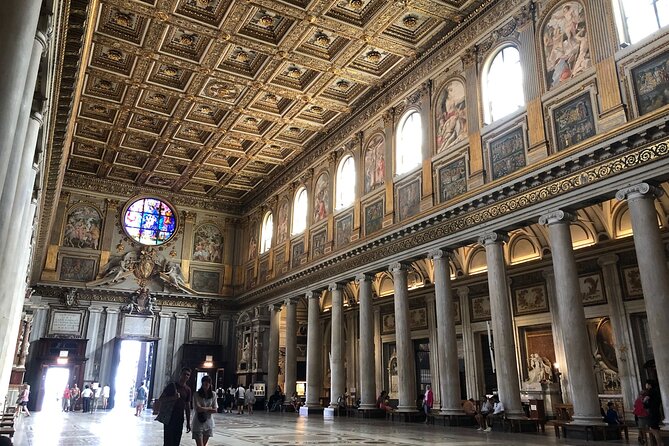
A Via Crucis walk changes the tone of Rome. This 3 to 4 hour Catholic pilgrim experience strings together some of the holiest sites outside the Vatican, with a guide who connects what you see to scripture, theology, and Church history. I especially like the small group size (max 5), because you get real attention, not a rushed line through marble. You also get a practical, pilgrim-minded route that makes you slow down, read the details, and pay attention.
My main caution is the walking. This is not a casual stroll, and the tour notes it can be particularly difficult in summer, with a recommendation not to book if you cannot walk more than 2 kilometers.
In This Review
- Key highlights worth getting excited about
- A Rome Tour That Feels Like Pilgrimage, Not Sightseeing
- The 8:45 AM Start Near Santa Maria Maggiore, and How to Prepare
- St John Lateran and the Holy Door Moment You Should Not Rush
- Santa Prassede: Quiet Peace, Ancient Mosaics, and a Pillar From Jerusalem
- St Alphonsus Maria de Liguori: Neo-Gothic Outside, Devotion Inside
- The Scala Sancta and the Holy Stairs: Steps You See, Then a Deeper Look
- Santa Croce in Gerusalemme: The Passion Relics Finale
- Price and Value: What $114.45 Buys You in Rome
- Who This Tour Fits Best, and Who Might Prefer Another Plan
- Should You Book the Via Crucis Catholic Pilgrim Walking Tour?
- FAQ
- How long is the Via Crucis Catholic Pilgrim Walking Tour in Rome?
- What time does the tour start?
- Where do I meet and where does the tour end?
- How much does it cost per person?
- What language is the tour offered in?
- What is the group size?
- Are admissions included?
- Does the tour include climbing the Holy Steps on your knees?
- What should I wear?
- Is this tour hard to walk?
- Can I get a refund if I cancel?
Key highlights worth getting excited about
- Small-group pacing (max 5 travelers) for questions and personal attention
- Passion relics finale at Santa Croce in Gerusalemme, with relics tied to the True Cross
- Scala Sancta focus, plus a look into the Holy Stairs inner area
- Early Christian art moments at Santa Prassede, including ancient mosaic work
- Marian devotion anchor at St Alphonsus Maria de Liguori, featuring the original Our Lady of Perpetual Help icon
A Rome Tour That Feels Like Pilgrimage, Not Sightseeing
Rome is crowded with churches. The trick is figuring out which ones reward your time, not just your camera roll. This tour is built for people who want the spiritual and historical meaning, not only the architecture.
I like that the guide’s job here is interpretation. You see basilicas and relic spaces, but you also hear why Catholics connect these places to the Bible, the saints, and the life of the Church. In the descriptions and the way the route is designed, the point is clear: you are walking the Via Crucis story in Rome’s key Catholic locations.
And because the group is capped at 5, the tone stays personal. If you have questions about what you are looking at, you are more likely to get a direct answer instead of watching the guide’s back as you shuffle forward.
More Walking Tours in Rome
- Rome: Guided Food Walking Tour with Wine in Trastevere
★ 4.9 · 3,105 reviews - Rome: Trastevere & Campo de Fiori Street Food Walking Tour
★ 4.9 · 2,768 reviews - Rome: Paranormal Night Walking Tour & Secret Backstreets
★ 4.9 · 1,921 reviews - Rome: Trastevere Street Food Walking Tour with Local Expert
★ 4.8 · 1,784 reviews
The 8:45 AM Start Near Santa Maria Maggiore, and How to Prepare
You meet at Piazza di Santa Maria Maggiore, 33 at 8:45 am, then walk between six major stops. Starting in the morning matters in Rome. It helps you beat some of the heat and crush, and it keeps the day from turning into a scramble.
Dress matters. The tour asks you to cover shoulders and knees, so plan accordingly. If you show up in shorts or a tank top, you may be turned away or feel stressed about fixing it.
Also plan for real walking. The tour says moderate physical fitness is needed and it is not recommended if you cannot walk more than 2 kilometers. Even if you are used to city travel, this route can feel more demanding because you are stopping often and entering places that require attention and quiet.
St John Lateran and the Holy Door Moment You Should Not Rush
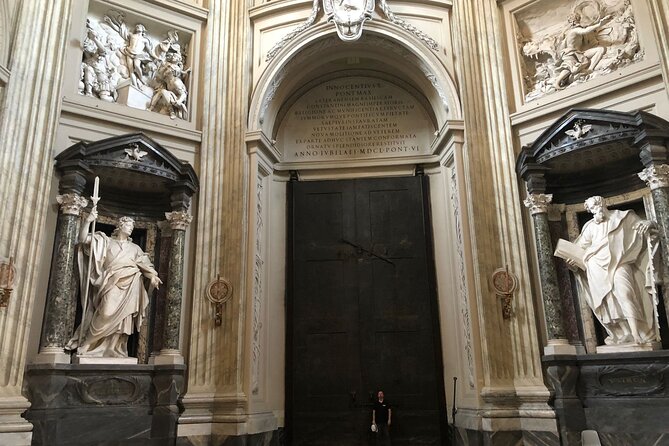
St John Lateran is the kind of place that makes you understand why Rome matters to Catholics. It is described as the Mother Church of the World and the seat of the Bishop of Rome, meaning the Pope. Even if you do not come for relics, that title sets the emotional stakes.
This stop includes the idea of the Holy Doors connected to the Jubilee year and a reference to a Partial Indulgence for pilgrims who pass through during that season. The guide’s framing helps here. You are not only hearing “there is a door,” you are learning how a symbolic threshold fits Catholic pilgrimage.
Inside, the highlights listed for this stop are major and specific. You can expect mention of the Holy Sponge, papal tombs, and skulls attributed to Saints Peter and Paul, along with what are described as the pillars of the Church. That combination is why this stop is so often the anchor for Catholic Rome experiences.
Practical note: the time given at the first Lateran-related visit is longer than most other stops (about 1 hour). Still, it is not long enough to read everything slowly on your own. Let the guide set your priorities so you do not spend the best minutes hunting for what matters.
Santa Prassede: Quiet Peace, Ancient Mosaics, and a Pillar From Jerusalem
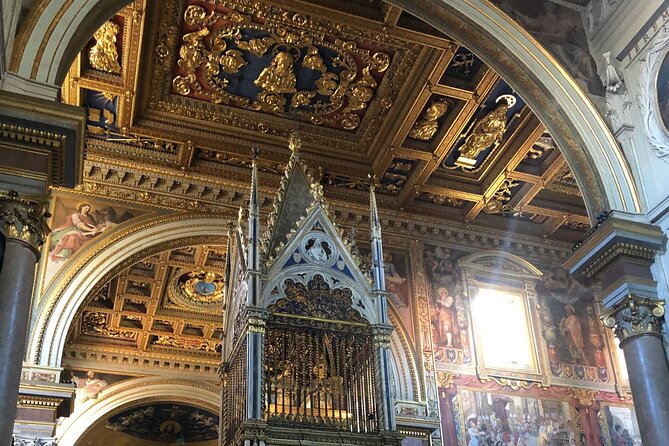
If Rome feels loud, Santa Prassede is the kind of contrast that makes you exhale. It is described as peaceful and close to St Mary Major, and it is named after St Praxedes, a 1st century martyr associated with caring for persecuted Christians.
Here is the detail that makes this stop memorable: the basilica is connected to a column said to be the pillar against which Christ was scourged. The text you get is also specific about how that pillar reached Rome. It was brought from Jerusalem in the 13th century as a donation in gratitude for the Fourth Crusade.
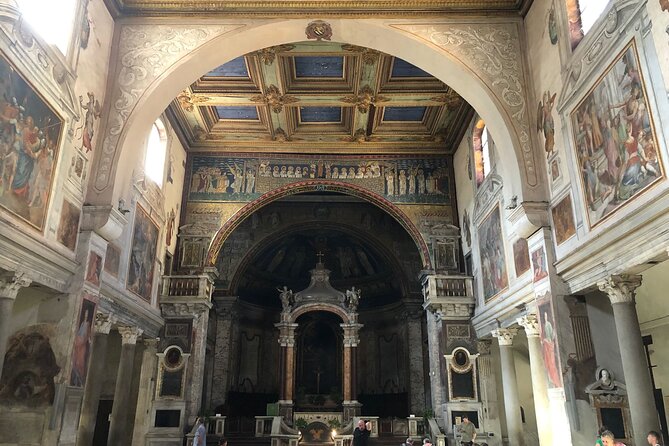
You also get an art-history payoff. Santa Prassede is noted for some of the earliest examples of Christian mosaic art. Even if you are not a visual art person, mosaics can be easier to “read” when someone explains what you are seeing and why it was used.
The time is brief (about 15 minutes). My advice is to treat this like a focused detour, not a second main attraction. Let the guide show you the relic connection, then enjoy the mosaics in small, intentional glimpses.
St Alphonsus Maria de Liguori: Neo-Gothic Outside, Devotion Inside
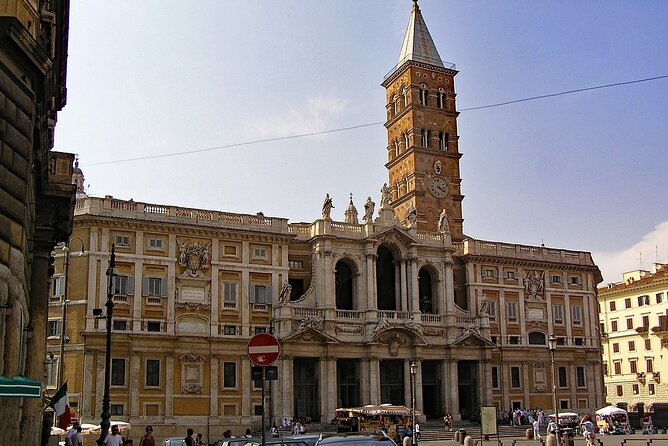
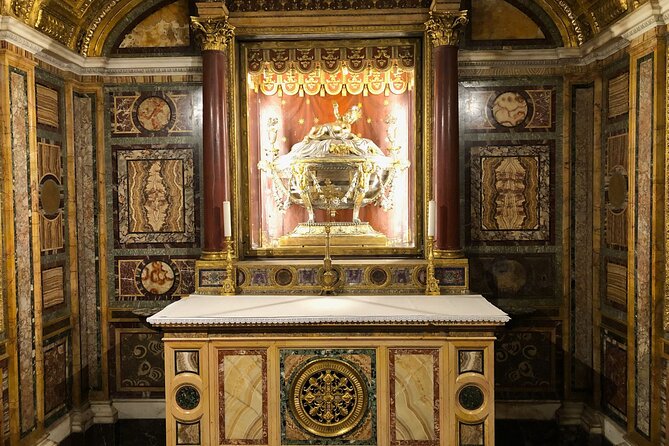
This church is described as comparatively unremarkable from the outside, even with its unique neo-Gothic architecture. Then you step inside and get something very targeted for traditional Catholic pilgrims: the original icon of Our Lady of Perpetual Help (also called Our Lady of Perpetual Succour).
Icons are more than decoration in Catholic life. They carry a devotional function, a visual shorthand for prayer, and a link between tradition and lived faith. When the tour centers this icon, you feel the purpose immediately.
The stop is short (about 15 minutes), but that can work in your favor. If you show up for the spiritual heart of the place, you do not need hours to feel the “why.” You just need a guide to point you to the right details and give you enough context to pray or reflect.
Another shape for the same afternoon in Rome:
The Scala Sancta and the Holy Stairs: Steps You See, Then a Deeper Look
Scala Sancta, the Holy Steps, is the emotional peak for a lot of Catholic travelers. These are described as steps Jesus climbed at the praetorium in Jerusalem, where Pontius Pilate condemned Him. The tradition says they were brought to Rome in the 4th century by St Helena.
Then comes the pilgrim practice. You are told about the tradition of climbing the steps on your knees, as part of following in Christ’s footsteps. But here is the practical catch: the tour is clear that while you will see the Holy Steps, you will not have time to do the full tradition. If kneeling the whole way is central to your personal devotion, plan a separate visit.
What you do get during the tour is still powerful. You also visit the Holy of Holies at the Church of the Holy Stairs. The tour description notes a tiny chapel and an icon tradition described as an acheiropoieta of the Lord Jesus, an icon begun by St Luke and finished by angels.
The time here is about 30 minutes. That is enough time to see what you came for without feeling like you are trapped in a long waiting loop. Just remember: this stop demands a respectful, slower pace, so keep your expectations aligned with quiet reverence rather than tourist speed.
Santa Croce in Gerusalemme: The Passion Relics Finale
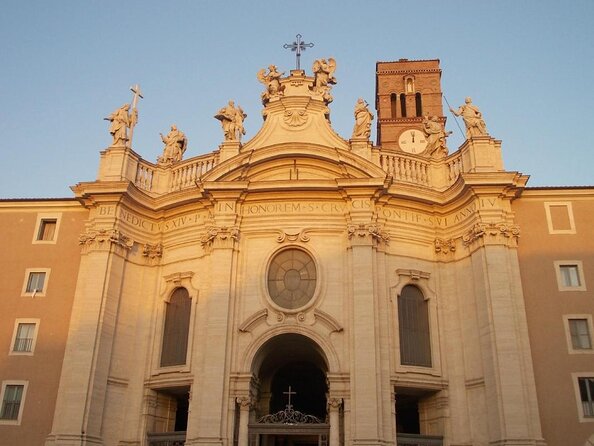
Ending at Santa Croce in Gerusalemme is a strong choice because it gives you closure around the theme of the Passion. This basilica is described as the climax of the tour and a location of some of the most important relics tied to Christ’s suffering and death.
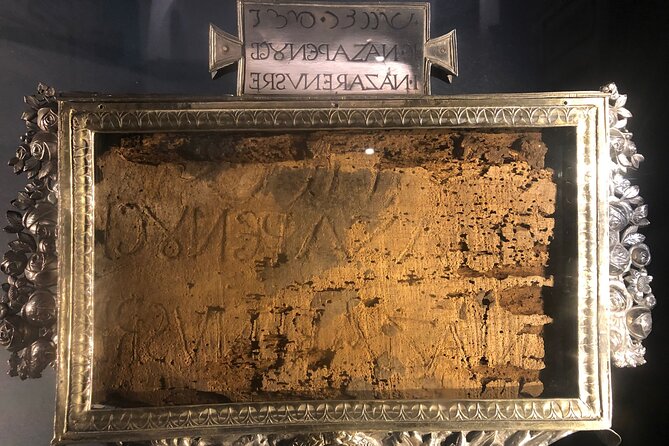
The tour highlights what St Helena is associated with after Christianity became legal. It says she made pilgrimage to Jerusalem and, with Church blessing, brought back relics including a section of wood from the True Cross, Holy Nails, thorns from the Crown of Thorns, and the board hung above Jesus on the cross with the inscription Jesus the Nazarene, King of the Jews.
And it does not stop there. You can also expect mention of the finger of St Thomas, fragments connected to the cave of the Nativity, and relics associated with the Holy Sepulchre. That is a lot of Passion-linked material to take in at the end of a walk, so it helps that the tour frames it as veneration and reflection, not a checklist.
The time is about 30 minutes and the description notes that crowds are rare even though the city outside stays busy. For many people, that calmer interior atmosphere becomes the perfect final chapter.
Price and Value: What $114.45 Buys You in Rome
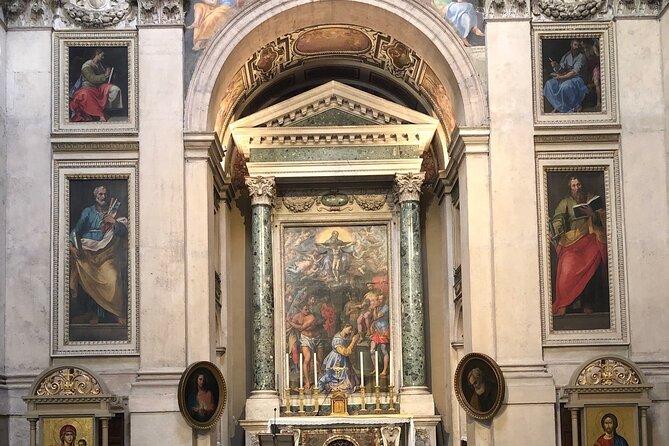
At $114.45 per person, this is not an impulse buy. So the key question is value: what do you get for that price that you cannot get by simply entering churches on your own?
You get a guided story line through six sites tied to Catholic devotion. That matters. Without a guide, you might see relic displays and religious art, but you might miss what makes them theologically and historically significant. With a guide, the same rooms become explanations you can carry home.
The cost also reflects logistics that can be hard to piece together solo. You get a mobile ticket, all fees and taxes are included, and you have a structured route at a specific start time. You also avoid the planning headache of figuring out what is open and what is worth your attention.
Admission is free at most stops based on the tour details, and the Holy Stairs inner area is included. Guide tips are not included, so you should budget for that if you plan to tip.
It is also worth noting the tour is booked about 53 days in advance on average. That often signals demand for this kind of niche experience. If you are traveling during a liturgical season, earlier planning is smart.
Who This Tour Fits Best, and Who Might Prefer Another Plan
This tour fits best if you want the Catholic lens. If you care about scripture connections, Church history context, and relic traditions, you will probably feel like the tour is speaking your language.
I also think it works for people who appreciate religious art and Rome’s Christian layers, even if they are not traveling as a devout Catholic. The way the experience is described suggests there is room to learn architecture, symbolism, and Roman Church history without turning the visit into an awkward lecture.
A strong bonus for families is that the guide style is described as patient and engaging, including with kids. If you have younger travelers who can handle church rules and short stops, the pacing can actually help.
Who should skip it? If walking more than 2 kilometers is hard for you, or if summer heat makes you feel limited, this might not be a good match. The tour itself flags summer difficulty. Also, if you want long time at the Holy Steps for kneeling, this schedule will not satisfy that goal.
Should You Book the Via Crucis Catholic Pilgrim Walking Tour?
If you are the kind of traveler who wants Rome to mean something, not just look impressive, I think this is an easy yes. The combination of major Catholic sites outside the Vatican, a small group size, and focused stops like Santa Prassede and the Holy Steps creates a route that feels intentional.
Book it if you want to leave with both spiritual and historical clarity, especially around relic traditions and devotion practices. It is also a good choice if you love learning in a structured way, because the guide’s role is front and center.
Skip it if your priority is slow wandering, big sightseeing flexibility, or you cannot handle more than a couple kilometers of walking, especially in summer. And if kneeling the full Holy Steps tradition is your must-do, plan to pair this tour with a separate visit instead of expecting time for the full practice.
FAQ
How long is the Via Crucis Catholic Pilgrim Walking Tour in Rome?
It runs about 3 to 4 hours.
What time does the tour start?
The start time is 8:45 am.
Where do I meet and where does the tour end?
You meet at P.za di Santa Maria Maggiore, 33, 00185 Roma RM, Italy. The tour ends at Basilica di Santa Croce in Gerusalemme, Piazza di S. Croce in Gerusalemme, 10, 00185 Roma RM, Italy.
How much does it cost per person?
The price is $114.45 per person.
What language is the tour offered in?
The tour is offered in English.
What is the group size?
The tour has a maximum of 5 travelers.
Are admissions included?
Admission tickets are free for the basilicas and churches listed, and the Holy Stairs area included in the tour is also included. The tour details also note No booking is necessary and entrance is free for the Holy Steps tradition outside the included time.
Does the tour include climbing the Holy Steps on your knees?
No. The tour says you will see the Holy Steps, but there is not time to partake in the tradition during the tour. You would need to organize a separate visit.
What should I wear?
You must cover shoulders and knees and dress respectfully.
Is this tour hard to walk?
It requires moderate physical fitness. It is also noted as particularly difficult in summer, and it is not recommended if you cannot walk more than 2 kilometers.
Can I get a refund if I cancel?
Yes. Free cancellation is available up to 24 hours in advance for a full refund.
Latest additions from Rome
- Rome: Testaccio Market Food Tour with Street Food & Wine★ 5.0 · 8 reviews
- Exclusive Pasta & Tiramisu Class with Wine near by Colosseum★ 5.0 · 8 reviews
- Private Professional Photoshoot in Rome★ 5.0 · 8 reviews
- Loreto “Shrine of the Holy House of the Virgin Mary” Private Tour from Rome★ 5.0 · 8 reviews
- Rome Day to discover Florence and Pisa Hotel Pickup★ 4.5 · 8 reviews
- Rome: Christmas Nativities and Angels Tour★ 3.1 · 8 reviews
- Guided Tour of Vatican Museums and Sistine Chapel★ 5.0 · 8 reviews
- Rome: Cooking Class of fresh Pasta and Tiramisu Cake★ 5.0 · 8 reviews
Walking Tours in Rome, compared.

Guided Food Walking Tour with Wine in Trastevere
Read our review →
Trastevere & Campo de Fiori Street Food Walking Tour
Read our review →
Paranormal Night Walking Tour & Secret Backstreets
Read our review →
Trastevere Street Food Walking Tour with Local Expert
Read our review →
Guided City Center Evening Sightseeing Walking Tour
Read our review →
Small-Group City Highlights Moonlight Walking Tour
Read our review →
Best of Rome Walking Tour including Trevi Fountain
Read our review →Browse the lists this tour appears in