
Reviewed · VATICAN MUSEUMS AND SISTINE CHAPEL TOURS
Vatican Museums, Sistine Chapel Tour and Basilica Access
Three hours in the Vatican feels impossibly fast. This small-group tour pairs skip-the-line entry with a guided route through the most famous stops, so you are not stuck waiting while the clock keeps ticking.
I especially like two things: the Gallery of Maps style highlights that help you see what matters most, and the headsets that keep your guide’s voice clear in the busiest galleries.
One thing to plan around is that the Vatican can change access fast. St. Peter’s Basilica involves security screening and can close or restrict entry, and strict timed entry rules mean being late is risky.
In This Review
- Key things you should know before you go
- Why this skip-the-line tour feels practical in Vatican crowds
- Meeting at Via Vespasiano, then gearing up for security and style rules
- Vatican City in 10 minutes, the tiny state that runs on big symbolism
- Vatican Museums highlights you can actually absorb, Pine Court to major classics
- Cortile della Pigna and the Candelabra Gallery, where sculpture fills the air
- Gallery of Maps and the Raphael Rooms, learning to read the Vatican’s ideas
- Sistine Chapel ceiling time, Michelangelo versus the stories that sharpen the art
- St. Peter’s Basilica upgrade: skip the entry lines, not the security system
- Pace, comfort, and which guide style works best for you
- Should you book this Vatican Museums, Sistine Chapel, and Basilica Access tour?
- FAQ
- How long is the Vatican Museums, Sistine Chapel tour?
- What does the skip-the-line access cover?
- Is St. Peter’s Basilica included?
- What are the key dress code rules?
- Do I need a photo ID?
- Is St. Peter’s Basilica open every day?
- What happens if I arrive late?
Key things you should know before you go
- Skip-the-ticket-line for Vatican Museums and the Sistine Chapel, so you spend more time inside.
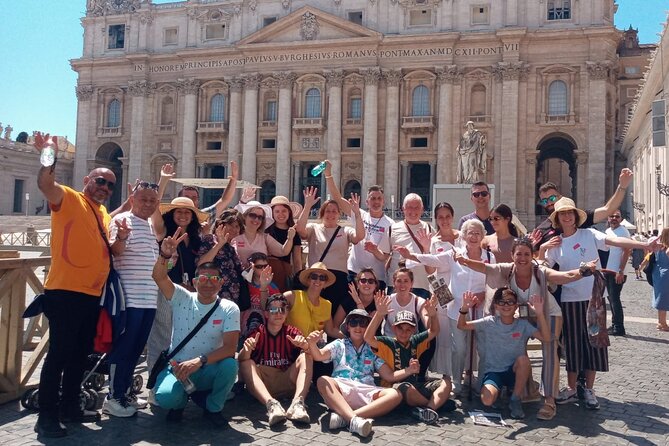
- Max 20 travelers in a small group, with licensed guidance and headsets to hear well.
- A focused route through major museum areas like the Pine Court and Cortile della Pigna, plus big-name galleries.
- Sistine Chapel time is scheduled, and it can close without notice, with a guide-led adjustment if it happens.
- Basilica upgrade is optional and depends on Vatican access rules, including possible closures and restrictions.
Why this skip-the-line tour feels practical in Vatican crowds
Let’s be honest, the Vatican can swallow time. This tour is built around a simple idea, get you past the slow parts first, then use your moments well inside the Museums and the Sistine Chapel.
The price, $74.70 per person, makes sense most when you value time. If you arrive on your own, you still face security and queues, and you also have to figure out the flow of the Vatican. Here, you pay for an organized route, with a guide and headsets, plus skip-the-ticket-line entry for the Vatican Museums and the Sistine Chapel.
Also, this is not a walk-in, first-come situation. It is booked about 47 days in advance on average, so the demand is real. If you wait until the last minute, you may find fewer options.
The biggest value comes from the match between your time limit and the Vatican’s scale. In about 3 hours, you cover the Museums highlights, then you reach the Sistine Chapel without losing hours to standing around.
Other routes through the Vatican Museums:
- Vatican Museums, Sistine Chapel & St. Peter’s Basilica Tour
★ 4.3 · 73,970 reviews - Vatican Museums, Sistine Chapel & St Peter’s Basilica Guided Tour
★ 4.5 · 39,149 reviews - Rome: Vatican Museums, Sistine Chapel and Basilica Tour
★ 4.3 · 16,039 reviews - Vatican Museums & Sistine Chapel Skip-the-Line Entry Ticket
★ 4.4 · 13,838 reviews
Meeting at Via Vespasiano, then gearing up for security and style rules
Your tour starts at Via Vespasiano, 26, 28 Roma RM. You end at the Sistine Chapel, 00120 Vatican City, which is helpful because it keeps the flow logical at the end of your visit.
There is no hotel pickup. You meet near public transportation, and a team member helps with a smooth start. At the meeting point, there is free Wi-Fi, and you get practical support before you enter the system.
Read the rules before you get there, because they can slow you down if you show up wrong. You must bring a photo ID for the security check. Dress code is strict too: shoulders and knees must be covered, so no sleeveless tops, no shorts, no miniskirts, and no low-cut outfits.
One extra reality check from high-season days: you might wait longer than you expect to pass security and to collect the Vatican headsets that are compulsory. If your day is packed with other timed plans, build in buffer time around this tour start.
Vatican City in 10 minutes, the tiny state that runs on big symbolism
Even if the Vatican City portion sounds small on paper, it helps you frame what you are about to see. You get about 10 minutes to understand the state itself, including that it became independent from Italy via the Lateran Treaty in 1929.
The Vatican is a separate sovereign territory under the Holy See, and it is tiny, about 49 hectares with a population around 825. Knowing that context makes the Museums and Basilica feel less like one random attraction, and more like a distinct world with its own rules, history, and meaning.
You also get this portion with free admission, and it works like a warm-up. It primes you to notice how art, faith, and power all show up together.
Vatican Museums highlights you can actually absorb, Pine Court to major classics
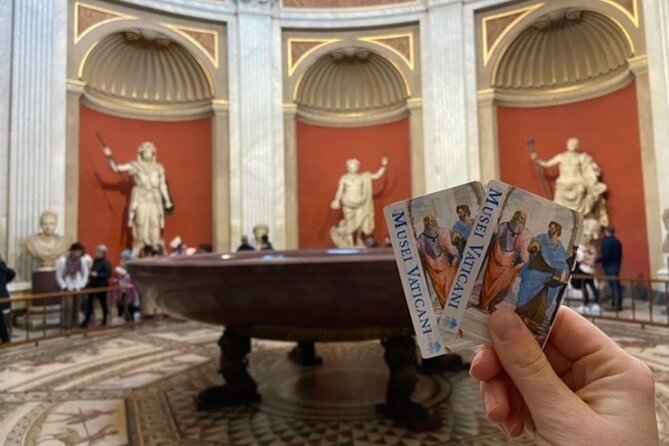
The Vatican Museums stop is the heart of the tour, about 2 hours of included time. The route is designed to show you famous works and recognizable areas, without trying to cover everything under the Vatican sun.
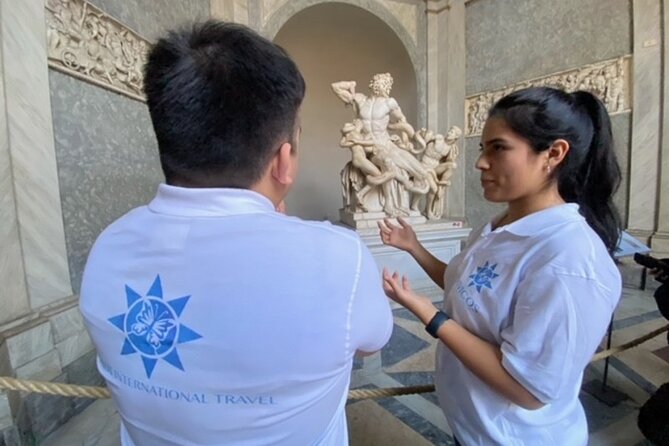
You will move through signature museum spaces such as the Pine Court courtyard and other standout galleries. Along the way, you are set up to see major collections and names like the Apollo of Belvedere and works associated with rooms that include sculpture highlights such as the Laocoon and even details like Nero’s bathtub.
Here is the real advantage of this format. Instead of getting lost in a maze of rooms, you get guided selection. That is what helps most first-timers avoid the feeling of being surrounded by art but not knowing where to focus.
The downside is also honest. A highlights route in a packed building can feel fast. One practical note from real-world pacing, the group size can be up to 20, and you may need moderate fitness because there is a lot of walking and some stair climbing. If you prefer to stand and stare for long stretches, you will want to treat this as a powerful sampler, not a slow museum day.
Cortile della Pigna and the Candelabra Gallery, where sculpture fills the air
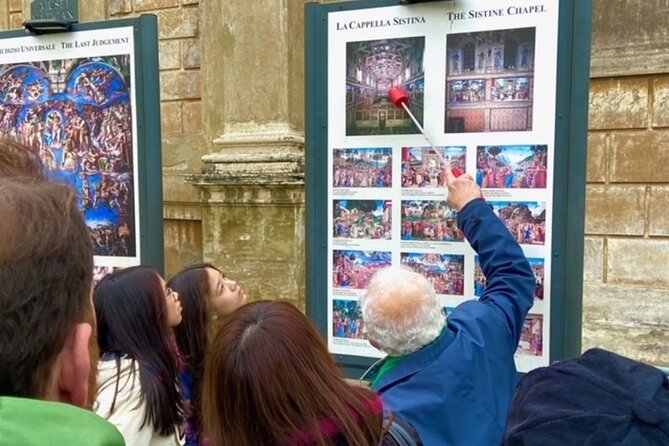
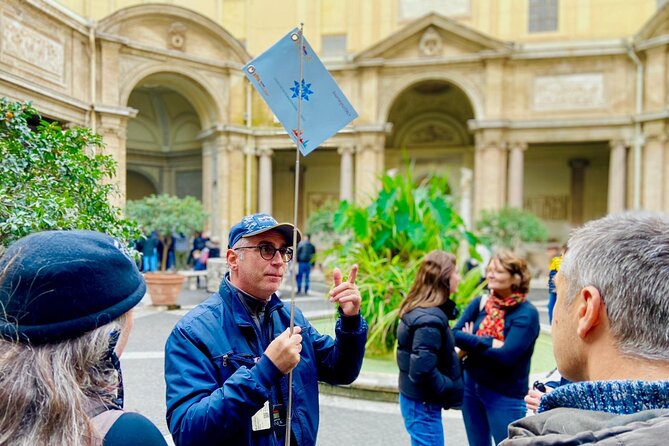
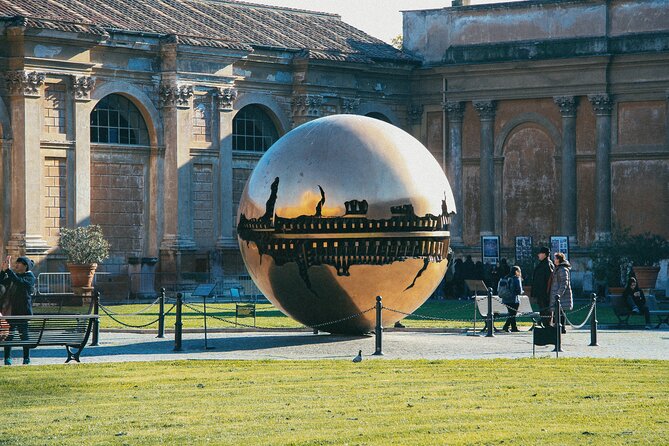
One of the more memorable breaks in the flow is the courtyard moment. You get a short stop at Cortile della Pigna, the Pineyard Courtyard, a calmer pocket where classic architecture meets greenery. At the center is Bramante’s bronze Pigna statue, which is worth a pause because it gives you a chance to reset before the crowds pull you onward.
Then the tour channels you into the Galleria dei Candelabri, the corridor lined with massive marble candelabras and ancient sculpture. Painted vaulted ceilings and classical columns frame the corridor, and you also see sarcophagi along the way.
This is where a guide can make a difference. In a space like this, you could walk by gorgeous objects and miss the stories that explain why they were placed here. With headsets, you can keep listening even as you move.
Other Roman collections with a shorter wait:
Gallery of Maps and the Raphael Rooms, learning to read the Vatican’s ideas
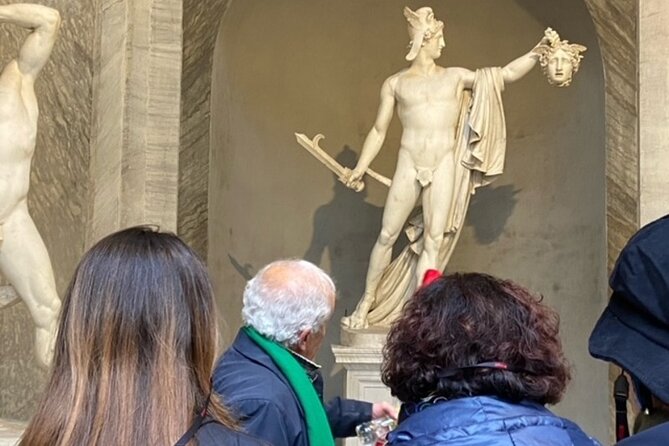
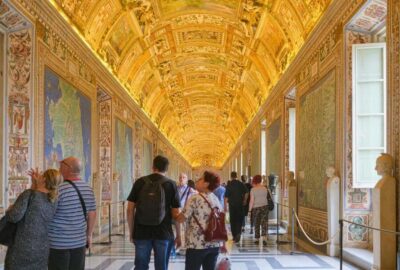
Next comes the Galleria delle Carte Geografiche, the Gallery of Maps. You are shown hand-painted maps across Italy, which sounds simple until you realize these are art plus politics plus design. It is not just geography, it is a visual statement about how knowledge gets displayed.
Then you move toward the Raphael Rooms, where Raphael’s work helps you connect the dots between Renaissance art and the Vatican’s tastes. You spend time there looking at the artist’s style and creativity, and it sets you up well for what comes right after.
This pairing, Maps and Raphael, works because it shifts your focus. Before, you were looking at objects. Now you are looking at themes: power shown through imagery, and ideas expressed through painting style.
Sistine Chapel ceiling time, Michelangelo versus the stories that sharpen the art
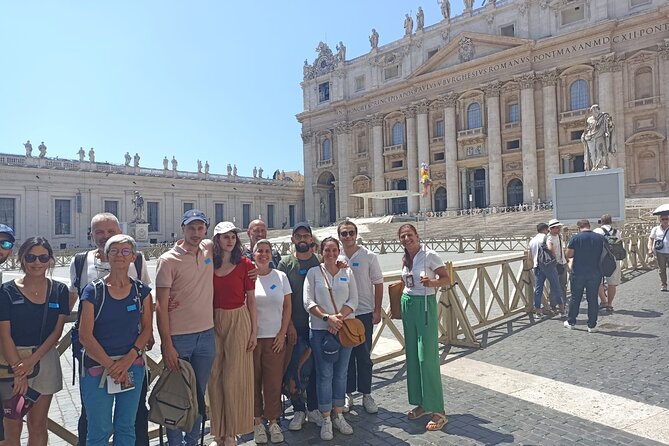
You reach the Sistine Chapel with a scheduled stop, and you are there for fresco focus time. The tour centers on Michelangelo’s Sistine ceiling, and you get guide context that makes the ceiling easier to understand.
One thing I like about this approach is that it turns the chapel from a single photo moment into a structured looking experience. You learn about the intense rivalry between Michelangelo and Raphael, which adds a layer of drama to what you see on the ceiling.
Be realistic about the time window. The chapel portion is not long. If you try to process everything at once, you will feel overwhelmed. Instead, pick a couple of ceiling areas to focus on, and let the guide’s points guide where your eyes go.
There is also an important contingency. The Sistine Chapel may close without prior notice on rare occasions. If that happens, your guide will provide a tour of other sections of the Vatican Museums.
And yes, closures can happen even when you are trying to do everything right. That is one reason this tour is best when you value flexible guidance over guaranteed, minute-perfect timing.
St. Peter’s Basilica upgrade: skip the entry lines, not the security system
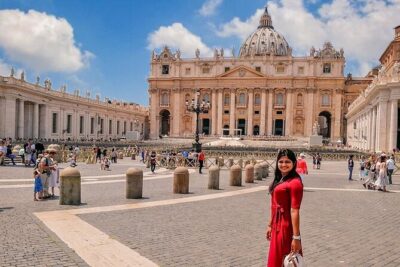
If you choose the Basilica option, you get access to St. Peter’s Basilica. This is the part of the day where expectations need to match reality.
Skip-the-ticket-line access is offered for the Vatican Museums and the Sistine Chapel. It does not mean you bypass Basilica security screening. In practice, Basilica entry always depends on mandatory Vatican security checks, so you might still spend a lot of time waiting, especially during peak crowds.
This access can also be restricted without notice due to ceremonies or events. St. Peter’s Basilica is closed on Wednesdays and during religious holidays.
There is another detail that matters for planning: the door that connects the Basilica and the Vatican Museum is closed in the afternoon and on Wednesdays. If that affects your visit, you still can go to the Basilica on your own by entering from the main square.
Also, Basilica entry is not described as a guided tour. Your assistance focuses on helping you reach entry access, while waiting and movement in the Basilica area follow Vatican rules.
So who should consider the upgrade? If you want to see St. Peter’s Basilica on the same day as the Museums, it is convenient. If you want unhurried time inside the Basilica itself, you may be happier with a separate Basilica outing scheduled at a different time of day.
Pace, comfort, and which guide style works best for you
This is a small-group tour, up to 20 people, and it is designed to keep the line-moving. That makes it efficient, but it also means you will be part of a system. You may need to keep up, especially in crowded sections and when changing locations.
You should have a moderate physical fitness level. Expect lots of walking, and expect stairs. One note that showed up in real experiences is that the climb to the top is not included, but you might still encounter stair effort within the overall Basilica area.
The headsets are a big deal here. Multiple guide-led experiences praised the way headsets help you hear clearly in dense areas. If you struggle with audio, this is your built-in fix.
The guide personality can also shift the feel. Some groups have been led by guides such as Antonio, Lora, Laura, Paola M, Patrick, and Patricio, and they are often praised for clear explanations and for connecting art to the bigger story. If you like your art with context, it is worth treating this as a guided learning stop, not just a photo chase.
One more practical piece of advice. Stay close to the group around the Sistine Chapel and during any transitions toward the Basilica. In tight crowd flow, it is easy to get separated by accident, and you can lose time when you are trying to reconnect at the wrong moment.
If you have a mobility concern, note it at booking. The information provided says disabled visitors should note this at the time of booking to receive free entry and appropriate assistance.
Should you book this Vatican Museums, Sistine Chapel, and Basilica Access tour?
Book it if you have limited time and you want a smart route that hits the big masterpieces in about 3 hours. This is especially good for first-timers who want guidance and a plan, plus skip-the-ticket-line entry for the Vatican Museums and the Sistine Chapel.
Skip it or switch strategy if you want a slow, deeply unhurried museum day. This tour focuses on key highlights, and some people find the pace a bit compressed. Also, if St. Peter’s Basilica is a non-negotiable must-do on a Wednesday or during a holiday, recognize access rules can shut you down. You are not buying control over Vatican schedules.
My practical checklist before you go:
- Bring your photo ID for security.
- Wear clothes that meet the shoulder and knee rule.
- Wear walking shoes, and plan for stairs.
- Arrive early enough to handle security and headsets in peak times.
- If you upgrade to the Basilica, treat waiting as possible, because security screening is not skipped.
If your schedule is flexible, you can cancel up to 24 hours in advance for a full refund, which gives you some breathing room if your plans change.
If you want an efficient, guided Vatican day that prioritizes the most famous art, this is a solid choice. Just go in with clear expectations about timing, crowds, and what skip-the-line does, and does not cover.
FAQ
How long is the Vatican Museums, Sistine Chapel tour?
It runs about 3 hours on average.
What does the skip-the-line access cover?
Skip-the-ticket-line access is included for the Vatican Museums and for the Sistine Chapel.
Is St. Peter’s Basilica included?
Access to St. Peter’s Basilica is included if you select the upgrade option. Entry is subject to Vatican security screening.
What are the key dress code rules?
You need shoulders and knees covered. Sleeveless tops, shorts, miniskirts, and low-cut outfits are not allowed.
Do I need a photo ID?
Yes. All guests must bring a photo ID for the security check.
Is St. Peter’s Basilica open every day?
No. St. Peter’s Basilica is closed on Wednesdays and during religious holidays, and access can be restricted due to ceremonies or events.
What happens if I arrive late?
The Vatican Museums enforce strict timed entry. Late arrivals or no-shows may not be admitted, and no refunds are provided for late arrivals or no-shows.
Latest additions from Rome
- Guided Tour Vatican Museums & Sistine Chapel★ 4.1 · 30 reviews
- Exclusive Rome by Night Vespa Tour★ 5.0 · 30 reviews
- Transfer Rome to Airports★ 4.5 · 30 reviews
- Vatican: St.Peter’s Basilica & Dome – Reserved Entry & Tour★ 4.1 · 30 reviews
- Rome street art tour: off the beaten path with a local guide★ 5.0 · 30 reviews
- Tivoli, Hadrians Villa and Villa d’Este, a charming day trip from Rome★ 4.5 · 30 reviews
- Rome Food Tasting with Wine Pairing Italian Authentic Flavors★ 5.0 · 31 reviews
- Inspirational Cooking on the Roman Chef’s Panoramic Terrace★ 5.0 · 30 reviews
Vatican Museums and Sistine Chapel Tours, compared.
Vatican Museums, Sistine Chapel & St. Peter’s Basilica Tour
Read our review →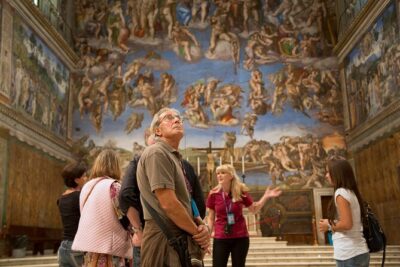
Vatican Museums, Sistine Chapel & St Peter’s Basilica Guided Tour
Read our review →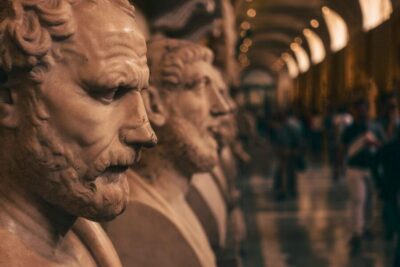
Vatican Museums, Sistine Chapel and Basilica Tour
Read our review →
Vatican Museums & Sistine Chapel Skip-the-Line Entry Ticket
Read our review →
Vatican Museums, Sistine Chapel & Basilica Tour
Read our review →
Skip-the-Line Group Tour of the Vatican, Sistine Chapel & St. Peter’s Basilica
Read our review →
Vatican Museums & Sistine Chapel Skip-The-Line Ticket
Read our review →Browse the lists this tour appears in