
Reviewed · ROME PHOTOSHOOT SESSIONS
Unique Photo Tour and Workshop in Rome Dusk to Dawn
Rome at night, with a camera plan. This Dusk to Dawn workshop in Rome is built for shooting iconic landmarks when the streets are quieter, while a professional photographer guide helps you work from manual settings instead of auto mode. You get private transportation plus a tight group size (max four), so you spend time learning and shooting, not waiting your turn.
What I like most is the chance to photograph Rome across the whole light story, from night through blue hour to sunrise, including the kind of moonlit views that are hard to catch during normal sightseeing. I also like the way the guide supports you on the spot, with real-time feedback on things like tripod setup and how to execute the shot. One consideration: you start at 10:00 pm and the experience depends on good weather, so you have to be ready for a late-night schedule.
In This Review
- Key things that make this workshop special
- Dusk to Dawn in Rome: the light shift you can actually photograph
- From Castel Sant’Angelo meeting point to nighttime rhythm
- Piazza del Campidoglio: where symmetry meets moonlit framing
- Pantheon and Piazza Navona: managing exposure across bright points
- Museo Nazionale di Castel Sant’Angelo and the riverfront mood
- St. Peter’s Square and Teatro di Marcello: shooting big spaces without getting lost
- Piazza Venezia, Isola Tiberina, and Tempio di Vesta: foreground interest and strong geometry
- Rione Parione and Terme di Caracalla: the real test of low light discipline
- Fontana di Trevi at night: turning motion and light into a photo
- How the guide teaches: manual mode, real-time feedback, and practical composition
- Gear, rentals, and who should bring a camera
- Value check: $420.08 for a max of four people
- Should you book this Rome Dusk to Dawn workshop?
- FAQ
- What time does the tour start?
- How long is the experience?
- Where do we meet?
- Is hotel pickup available?
- How many people are in the group?
- Is the tour offered in English?
- Do I need to bring my own camera?
- What photography skills will we practice?
- Will we review the photos after the tour?
- What if the weather is bad?
- What is the cancellation window?
Key things that make this workshop special
- Max of four people, so coaching stays personal and practical
- Night-to-sunrise timing, with instruction on light balance and white balance changes
- On-the-spot feedback, including help with manual mode and tripod setup
- A route that covers major Roman photo zones, moving on foot and by car for efficiency
- Optional photo review afterward, where you can submit images for critique and improvement tips
Dusk to Dawn in Rome: the light shift you can actually photograph
Rome is a city of “same subject, different mood.” This workshop is designed around that fact. You practice shooting through the full transition, not just one pretty moment. That means you learn how to handle long exposures at night, then how the scene changes as the city moves into blue hour and the first real color of morning.
You’re not only learning settings in theory. The real skill is knowing what changes when light changes. That is where the workshop’s focus on light balance, white balance, and controlling ISO becomes more useful than you might expect. When you shoot later at night, you often lean on different exposure decisions than you do as the sky brightens. You’ll practice that progression as you work your way around Rome.
And yes, you’re also building composition skills that apply everywhere. You’ll practice framing with leading lines, symmetry, foreground interest, and layering. Think of this as training your eye for “what makes this photo work,” not just “how do I press the shutter.”
Other photographers working the Roman light:
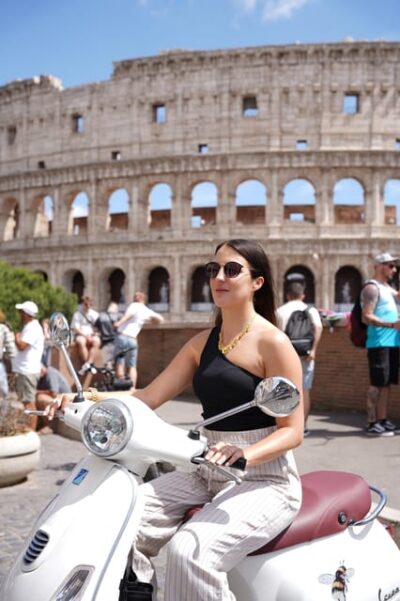
- Rome: Explore the City by Vespa with an Optional Photoshoot
★ 5.0 · 1,103 reviews - Rome Vespa Scooter Tour with Professional Photographer
★ 5.0 · 857 reviews - Rome: Vespa Ride with Pictures and Sweet Tastings
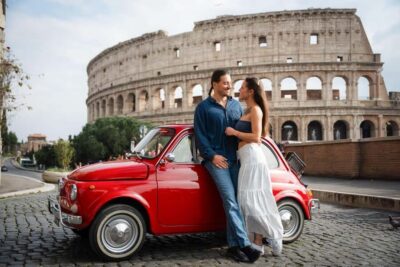
★ 5.0 · 723 reviews - Rome: Photoshoot Service with Vintage Fiat 500
★ 5.0 · 611 reviews
From Castel Sant’Angelo meeting point to nighttime rhythm
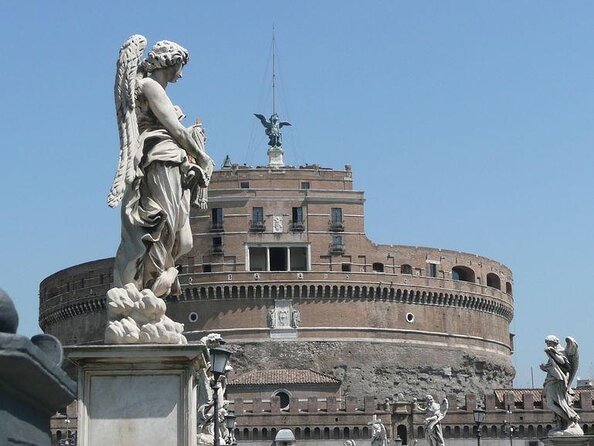
The tour starts at Castel Sant’Angelo Lungotevere Castello 50, right by the Bridge of Angels area. The meeting point is set at the entrance of Castel Sant’Angelo opposite the Bridge of Angels, unless pickup is requested. Pickup is available from your hotel, Airbnb, or home, so you can arrive without wrestling Rome streets after dark.
The schedule is built for efficiency. You’ll move partly on foot and partly by car, which matters in Rome at night. Distances add up fast, and the workshop is only about seven hours total, so transport helps you spend more time on actual shooting and less time in transit.
Also note the group size. Max four people means the guide can actually watch your tripod setup, your framing, and your exposure choices while you work. That is a big part of why this experience tends to get such strong ratings.
Piazza del Campidoglio: where symmetry meets moonlit framing
Piazza del Campidoglio is one of those Roman scenes where composition basics start paying off immediately. It’s a place that rewards symmetry and careful alignment. For night photography, that matters because you want your frame to look intentional even when the light is low and the camera is doing more work.
This is also a good zone for practicing what the workshop emphasizes: leading lines and the idea of “layering.” You can work with foreground elements, then build toward the main subject. When you get it right, the viewer feels direction, not just darkness.
The potential drawback here is practical, not creative. At night, your framing can drift if your tripod is not solid or if you rush the setup. The guide’s coaching on tripod setup is exactly the kind of help you want in a square like this, where small positioning choices show up in the final image.
Pantheon and Piazza Navona: managing exposure across bright points
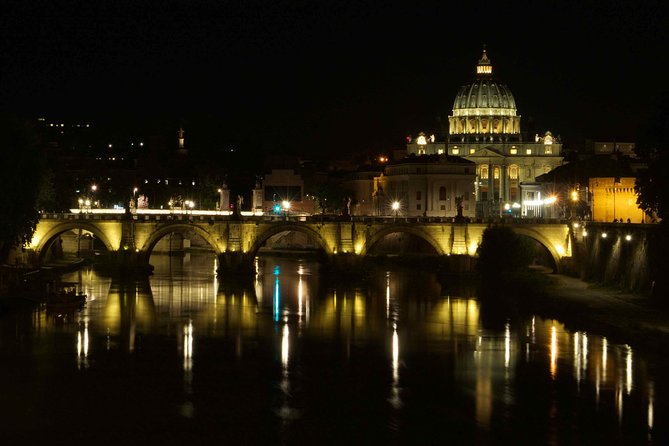
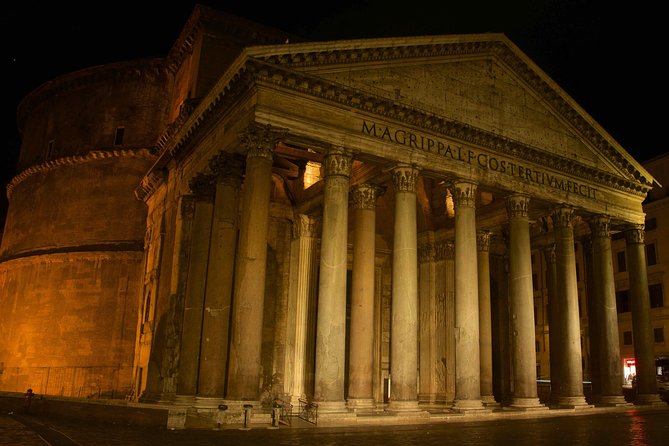
You’ll move to the Pantheon next, and then onward to Piazza Navona. These are prime areas for night photography because they contain strong shapes and often have bright light sources that can confuse your camera exposure.
This workshop teaches you to handle those problems using manual mode control: ISO, white balance, aperture, and shutter speed. In real-world terms, it means you learn to stop letting the camera guess. When there are bright highlights and darker areas in the same frame, auto mode can produce inconsistent results from shot to shot.
Piazza Navona is also a practical classroom for composition. You can practice layering and foreground interest, then refine your framing so it feels structured. If you’re aiming for clean architectural shots, this stop is useful because it forces you to think like a photographer, not a tourist.
Museo Nazionale di Castel Sant’Angelo and the riverfront mood
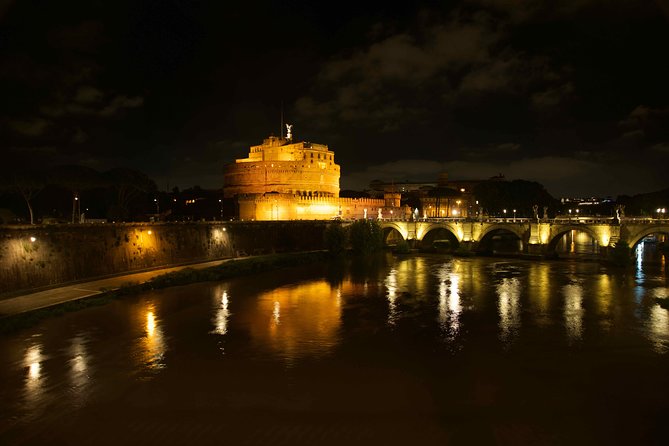
Castel Sant’Angelo is a natural anchor for this whole workshop. You start near it, and you’ll also spend time at the Museo Nazionale di Castel Sant’Angelo area. The real value here is mood. The river and the surrounding illumination help you practice how different light types interact: natural darkness, architectural glow, and any reflections you find.
The workshop’s focus on light balance becomes tangible in scenes like these. You learn to account for how artificial lighting affects your color in the frame. That is exactly where white balance practice matters, because the same streetlight can shift your image tone depending on your camera decisions.
One more reason this stop works well for learning: it’s a place where you can repeat a composition. In night photography, repeating is how you improve fast. The guide can help you tweak one element at a time, like exposure time or aperture, instead of changing everything between shots.
Other Roman benches to work at for a morning:
St. Peter’s Square and Teatro di Marcello: shooting big spaces without getting lost
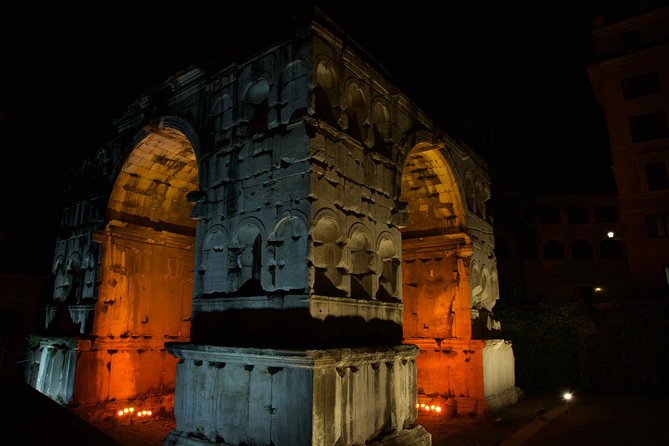
St. Peter’s Square and Teatro di Marcello are both dramatic settings for wide compositions. You’ll likely want to use your camera to capture scale, but at night that’s tricky. Wide scenes can look flat if your exposure is off, and they can look chaotic if you don’t control your composition choices.
This is where the workshop’s emphasis on framing with leading lines and layering becomes more than a checklist. In big spaces, leading lines help the eye travel through the scene. Layering helps you avoid the “everything is the same distance” problem that often happens in wide night shots.
Also, the guide is there to help you with timing choices. One thing that comes through strongly in the guide’s approach is paying attention to time and local conditions so your shots stay clean. That can mean working around movement and positioning so your photos don’t get swallowed by distractions.
Piazza Venezia, Isola Tiberina, and Tempio di Vesta: foreground interest and strong geometry
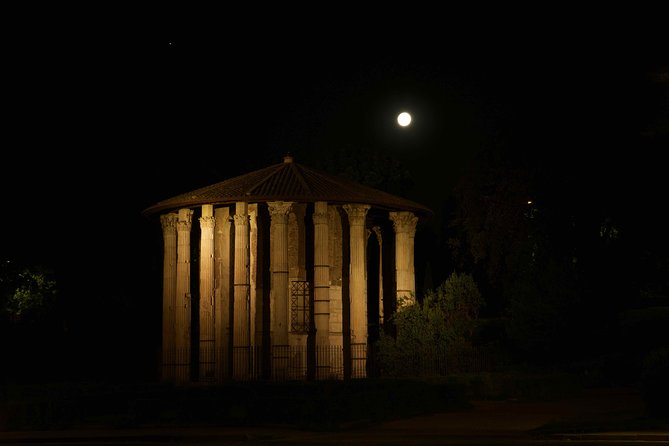
This stretch is ideal for practicing your “foreground, middle, background” habit. Piazza Venezia, Isola Tiberina, and Tempio di Vesta all offer chances to build layered compositions where the foreground adds depth and the main subject stays clear.
You’ll get instruction for composition principles like foreground interest and layering, and you can put them to use immediately. A small change in where your camera sits can transform how the frame reads at night. For example, adding a foreground shape can give the photo a clear structure even when the background has lots of tonal variation.
These stops also help you learn how to work with both natural and artificial lighting. Roman architecture can look very different depending on where the strongest light sources are in your frame. The workshop’s focus on light balance and white balance gives you a method for keeping your images consistent.
A practical note: with multiple stops in a row like this, you’ll get the most out of it if you keep track of what you changed between shots. If you can remember how you adjusted ISO or shutter speed, you learn faster.
Rione Parione and Terme di Caracalla: the real test of low light discipline
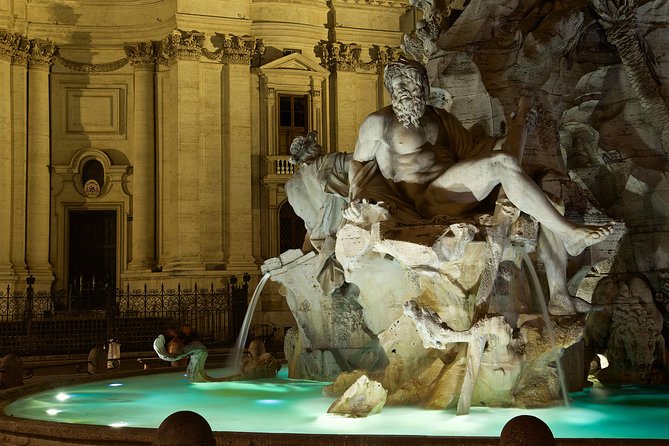
Rione Parione shifts the mood toward smaller streets and denser urban texture. That makes it a good place to practice creativity and control at the same time. You can look for patterns, use street lighting, and frame scenes where the shadows do some of the storytelling work.
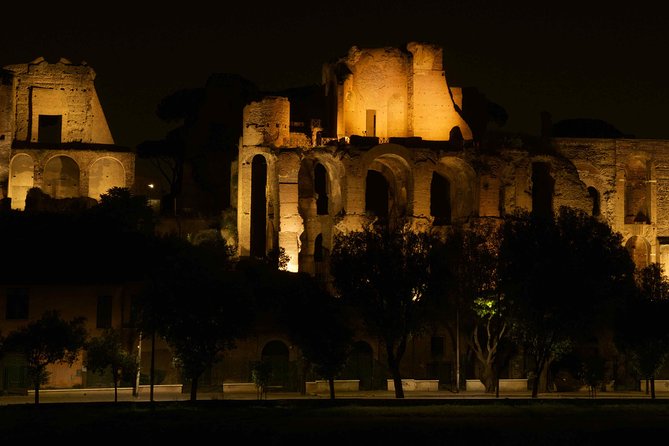
Then you move to Terme di Caracalla, which is where night photography can become especially satisfying. Big stone ruins and architectural forms often turn into graphic shapes under night lighting. This stop is a chance to practice long exposures with more confidence because your composition can benefit from the structure of the site.
The workshop’s teaching focus stays consistent: manual mode, ISO control, white balance, and the relationship between shutter speed and what you want to show. Long exposures can smooth out or reveal movement, and that can change the character of your Rome images quickly.
If you struggle with night shots, this is the part that helps most. It’s where you stop treating night photography like a technical problem and start treating it like a creative decision.
Fontana di Trevi at night: turning motion and light into a photo
Fontana di Trevi is the stop where a lot of photographers want to create their “final statement” image. It’s also where night challenges show up: bright highlights, dark surroundings, and the constant presence of water and reflective surfaces.
The workshop gives you the tools to control the camera instead of letting the scene control your settings. You’ll work with exposure choices using shutter speed and aperture while keeping ISO under control. You’ll also practice white balance so the color of your highlights looks intentional.
Even if you’ve shot Rome before, this is likely where you learn something you can use elsewhere. Water and bright lighting can make night photos look overdone if you’re not careful. Learning to manage that in one of the most famous fountains in Rome gives you a transferable skill set.
How the guide teaches: manual mode, real-time feedback, and practical composition
The heart of this workshop is the professional photographer guide and the coaching style. You’re not just told what to do. You get real-time feedback as you shoot, including help with tripod setup and shot execution.
The instruction topics are clear and useful:
- Manual mode and how to set exposure intentionally
- ISO control to balance noise and brightness
- White balance so your colors match your vision
- Aperture and shutter speed so you can control sharpness, depth, and exposure time
- Composition basics like leading lines, symmetry, foreground interest, and layering
- The practical skill of tracking light changes from night to blue hour to sunrise
If you want one measurable result from a workshop like this, it’s better control. Auto mode is convenient, but it also removes your ability to repeat what works. By practicing manual decisions during a real night-to-morning Rome schedule, you build a system you can take home.
There’s also an optional photo review afterward. You can submit your images for detailed critique and improvement tips. That extra step is valuable if you like learning through specifics rather than guessing what you did wrong.
Gear, rentals, and who should bring a camera
This workshop is offered in English, and it works best if you already have some comfort with photography basics. It’s described as ideal for intermediate enthusiasts and passionate beginners ready to move beyond auto mode.
If you don’t have a camera, rental is possible: Nikon gears plus tripods are available for 50 euros per kit, payable in cash. That means you can still participate even if you’re starting from scratch, as long as you’re ready to learn from the guide’s settings approach.
The workshop also includes tripod coaching, so a tripod is a helpful tool. If you rent the kit, you’ll get tripod support included in that rental option.
Value check: $420.08 for a max of four people
At $420.08 per person for about seven hours, this is not a budget activity. But the math changes when you factor in the group size and what’s included.
You get:
- A professional photographer guide
- Private transportation
- A max group size of four, which keeps attention focused
So you’re paying for instruction time. Not just a route. Not just access. A private guide who can troubleshoot your exposure decisions and help you keep your composition working in low light.
Also, the average booking window is about 89 days in advance. That suggests this is a popular niche experience, which makes sense. A dusk-to-dawn photography workshop is harder to sell if it’s generic. This one is built around teaching and timing.
If your goal is better photos and a real understanding of night settings, this can feel like good value. If your goal is only casual sightseeing, you might prefer a standard night walk.
Should you book this Rome Dusk to Dawn workshop?
Book it if you want Rome photos few people get, and you’re serious about learning night techniques. It’s a strong match if you’re ready to work in manual mode, control ISO and white balance, and use composition skills like leading lines and layering. The small group size and real-time coaching are the big reasons to choose this over a larger tour.
Skip it if you hate late nights, if weather conditions are a problem for you, or if you only want a low-effort scenic tour. Also, check your comfort level with basic camera controls before you commit.
FAQ
What time does the tour start?
The start time is 10:00 pm.
How long is the experience?
The duration is listed as about 7 hours.
Where do we meet?
You meet at Castel Sant’Angelo Lungotevere Castello, 50, 00193 Roma RM, Italy, at the entrance of Castel Sant’Angelo opposite the Bridge of Angels.
Is hotel pickup available?
Pickup is offered upon request from your hotel, Airbnb, or home. If you do not request pickup, you meet at the meeting point.
How many people are in the group?
The maximum group size is four travelers.
Is the tour offered in English?
Yes, it is offered in English.
Do I need to bring my own camera?
You do need a camera to participate, but if you have no camera you can rent Nikon gear plus tripods for 50 euros per kit, paid in cash.
What photography skills will we practice?
You’ll practice night photography challenges including long exposures, light balance, and using natural and artificial light. You’ll also get guidance on manual mode, ISO control, white balance, aperture, and shutter speed, plus composition.
Will we review the photos after the tour?
There is an optional photo review where you can submit your images afterward for detailed critique and tips.
What if the weather is bad?
The experience requires good weather. If it is canceled due to poor weather, you’ll be offered a different date or a full refund.
What is the cancellation window?
You can cancel for free up to 24 hours in advance for a full refund. If you cancel less than 24 hours before the start time, the amount paid is not refunded.
Latest additions from Rome
- Rome: Testaccio Market Food Tour with Street Food & Wine★ 5.0 · 8 reviews
- Exclusive Pasta & Tiramisu Class with Wine near by Colosseum★ 5.0 · 8 reviews
- Private Professional Photoshoot in Rome★ 5.0 · 8 reviews
- Loreto “Shrine of the Holy House of the Virgin Mary” Private Tour from Rome★ 5.0 · 8 reviews
- Rome Day to discover Florence and Pisa Hotel Pickup★ 4.5 · 8 reviews
- Rome: Christmas Nativities and Angels Tour★ 3.1 · 8 reviews
- Guided Tour of Vatican Museums and Sistine Chapel★ 5.0 · 8 reviews
- Rome: Cooking Class of fresh Pasta and Tiramisu Cake★ 5.0 · 8 reviews
Rome Photoshoot Sessions, compared.
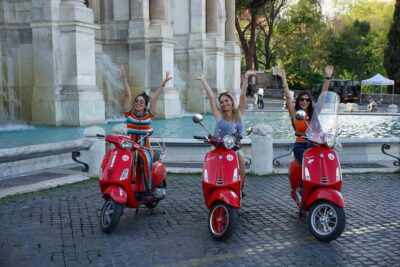
Explore the City by Vespa with an Optional Photoshoot
Read our review →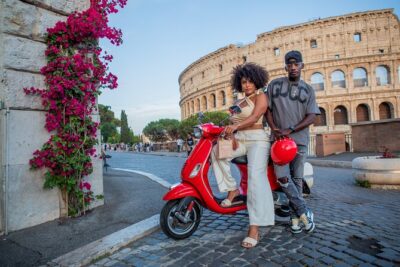
Rome Vespa Scooter Tour with Professional Photographer
Read our review →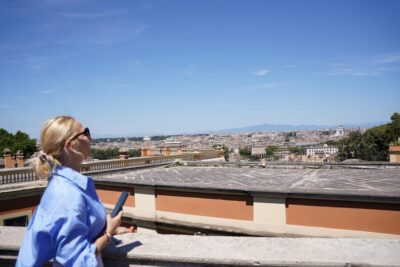
Pro Photoshoot include free transport with VESPA
Read our review →
Browse the lists this tour appears in