
Reviewed · APPIAN WAY AND AQUEDUCTS TOURS
Trevi Fountain Underground Aqueduct and Spanish Steps Tour
A strange but satisfying theme runs through this tour, water in Rome. You start at the Spanish Steps, then trace how modern Rome grew around ancient infrastructure, with a big payoff underground. I like that the route is built for a relaxed feel, and you get lots of context instead of just photo stops.
What I really like is the chance to see Rome’s water story in layers, not just the famous landmarks above ground. The highlight is the underground visit connected to the aqueduct system, including time at Vicus Caprarius, where you learn how far down the water network went.
One possible drawback: the experience can feel story-heavy at times, with waiting around between stops. Also, English clarity can vary by guide, and one review noted an accent issue, so if you are picky about listening, keep that in mind.
In This Review
- Key highlights to know before you go
- A 2-hour plan for Rome’s water network
- Piazza di Spagna: not just a pretty square
- La Barcaccia and the “first chapter” of Rome’s aqueducts
- Colonna Dell’Immacolata: a short cultural stop at Christmas time
- Acquedotto Vergine: seeing where the aqueduct breaks the surface
- Rinascente Roma Tritone: the aqueduct under the department store
- Trevi Fountain: stories with engineering behind them
- Vicus Caprarius: the underground city of water
- Price and value: why $62.75 for about 2 hours can work
- Pace, walking comfort, and listening tips
- Should you book this Trevi Underground Aqueduct and Spanish Steps Tour?
- FAQ
- Where does the tour start?
- How long is the tour?
- How much does the tour cost?
- Is the tour in English?
- How big is the group?
- Is there an underground stop?
- Do I get a mobile ticket?
- Can I cancel for a full refund?
Key highlights to know before you go
- Small-group size (max 12) for a calmer pace and more human interaction
- Spanish Steps to Trevi Fountain in about 2 hours, so it fits even on packed days
- Aqueduct focus, including the “water tanks” area tied to Vicus Caprarius
- Above-ground meets underground, with visible aqueduct sections and then the deeper ruins
- Guides with strong English, with multiple named guides praised for engaging explanations (including Sabrina, Federica, and Riccardo)
A 2-hour plan for Rome’s water network
Rome can feel like a blur of monuments. This tour slows it down by giving you one clear thread: how water moved through the city and shaped where buildings ended up. It’s the kind of route that helps you connect dots fast, so Trevi Fountain stops feeling random and starts feeling like the visible tip of a much bigger system.
You’re moving at a comfortable walking pace, with the route lasting about 2 hours and designed for easy wandering plus some steps. The small-group size, up to 12 people, matters here. You are not getting steamrolled through a checklist, and questions feel more natural.
The best part is that you get a blend of “why it’s famous” and “how it works.” You’ll hear how places like Piazza di Spagna and Trevi connect to Roman engineering, then you’ll step into the underground portion where the city’s older layers are literally under your feet.
If your Rome style is history with real-world connections, this is a strong match.
More of the Appian Way and the aqueducts:
- Rome: Appian Way & Aqueducts E-Bike Tour (Catacombs & Food)
★ 4.9 · 1,498 reviews - Rome: Appian Way, Catacombs, & Roman Aqueducts E-bike Tour
★ 4.9 · 1,421 reviews - Appian Way Aqueducts Bike Tour (Catacombs & Lunch Option)
★ 5.0 · 975 reviews - Rome: Appian Way, Aqueducts, and Catacombs Tour
★ 4.7 · 942 reviews
Piazza di Spagna: not just a pretty square
You begin at the Spanish Steps, meeting right in Piazza di Spagna. This stop is your orientation point. The guide frames what the square is for Romans today, then walks you through how it became the way it looks now, including the lasting glamour of the area.
You also get a fun correction to file away for later. The Spanish Steps are not truly Spanish in the straightforward way people assume, and the tour explains why that nickname stuck. It’s a small detail, but it changes how you look at the place, because it ties the monument to real cultural history instead of letting it float as pure postcard scenery.
Then the tour eases you toward the fountain theme. You learn about la Barcaccia, which is still fed by an ancient Roman aqueduct that is over 2,000 years old. That matters, because it makes the next stretch feel like a continuity, not a sequence of unrelated stops.
If you like arriving in Rome and getting your bearings fast, starting here helps. This is also where the tour builds momentum toward water, so you’ll understand the logic before you reach Trevi.
La Barcaccia and the “first chapter” of Rome’s aqueducts
La Barcaccia is famous, but this tour treats it like evidence. You’re not just told it’s historic, you’re told it is connected to infrastructure still tied to ancient water supply.
That’s where I’d say this experience earns its place. Many Rome tours hit a fountain and move on. Here, the fountain becomes a clue. You’re learning what is visible now and what used to be hidden, and the guide shows how those two worlds overlap.
This stop is also a good warm-up for the underground portions later. If you pay attention early, the aqueduct references you hear at subsequent stops will start clicking into a clearer map.
One practical note: this is in an active tourist area. The tour keeps things moving, but you still want to be ready to share space and take photos when the timing works.
Colonna Dell’Immacolata: a short cultural stop at Christmas time
Next you visit Colonna Dell’Immacolata, tied to local Christmas traditions. The time here is brief, but the purpose is smart: it’s a reminder that Rome’s ancient sites aren’t isolated museum pieces. They overlap with living customs.
This stop works best as a palate cleanser between heavier history moments. It also adds variety to the route, so the tour doesn’t feel like it is only about stones and water.
Don’t expect this to be the main “wow” moment. It’s more about context and texture, giving you a fuller picture of how Romans use their city.
If you are the type of traveler who enjoys cultural details, you’ll appreciate the way this tour layers in seasonal traditions without dragging on.
Acquedotto Vergine: seeing where the aqueduct breaks the surface
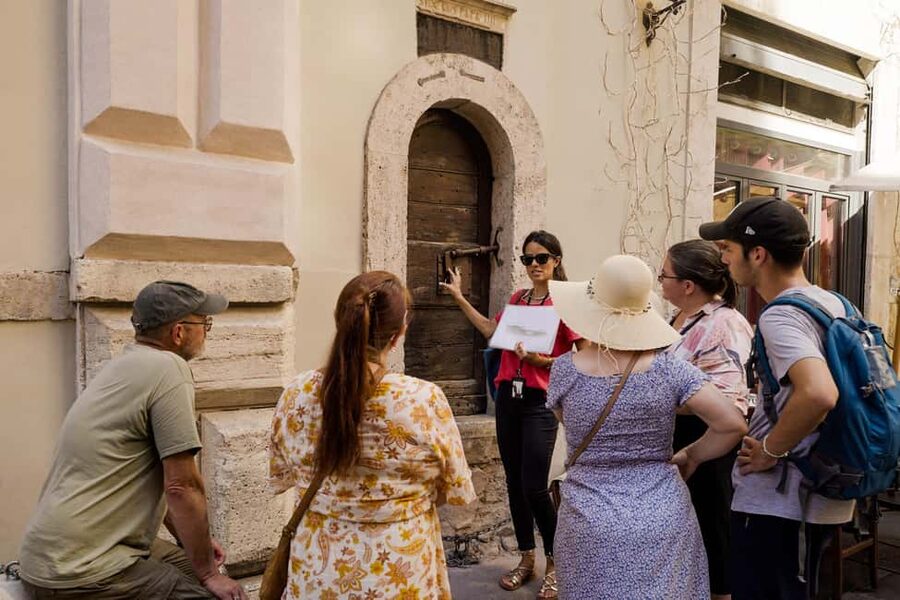
At Acquedotto Vergine, you start seeing parts of the aqueduct that are visible overground. That change in visibility is important. It gives you a tangible sense of how ancient engineering sat in the city, not hidden miles away.
You’ll also notice a mysterious door right next to it. The tour uses this kind of detail to make the site feel less like a random structure you pass by. You learn how to read what you’re looking at, so you understand that doors, walls, and small features in Rome often connect to systems beneath.
This stop is also only about 15 minutes, so it won’t feel like a lecture marathon. It’s a quick boost to your “water network” understanding, setting you up for the underground portion later at a stronger level.
If you like architecture-as-story, this is the kind of place where one short explanation can completely change your perception.
Another shape for the same afternoon in Rome:


Rinascente Roma Tritone: the aqueduct under the department store
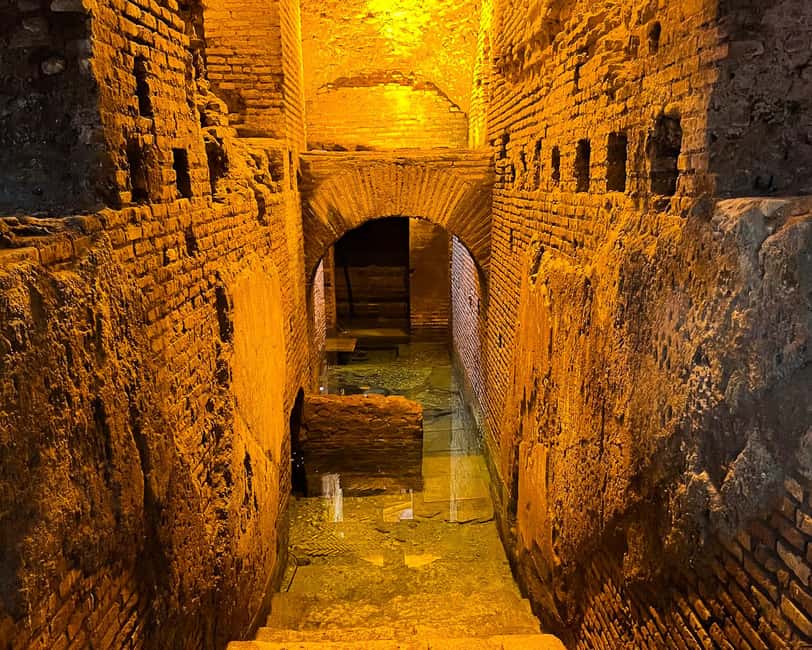
Then comes one of the tour’s best “wait, really?” moments. Rinascente Roma Tritone is a department store, but the tour takes you into an underground area where you can see ruins of an ancient Roman aqueduct, described as the only ancient Roman aqueduct still functioning.
Even if you don’t remember every technical detail, the experience is still worth it because it teaches you a Rome truth: the modern city sits on top of older systems. In many places, the underground is not a separate world. It’s just the older layer.
This stop also explains something you’ll feel during the rest of your trip. Rome is full of contradictions that make sense once you know the pattern. Streets rise, buildings sit above ancient flows, and daily life continues over centuries of infrastructure.
This is also the kind of stop where small-group size pays off. You get time to look without getting shoved along too fast, and you can ask questions without feeling like you’re holding up 40 people.
Plan to be alert with your photos. Lighting underground can be tricky, and your best shot might come from being patient for the right angle.
Trevi Fountain: stories with engineering behind them
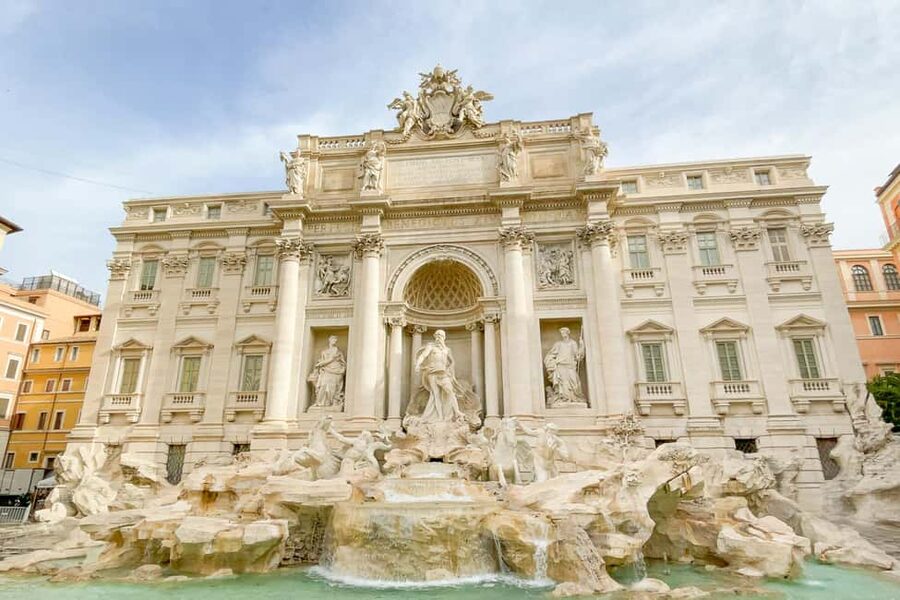
Of course you reach the Trevi Fountain, one of the most photographed spots in Rome. But the tour’s goal is not just to show you the classic scene. You learn the legends and stories tied to Trevi from ancient times up to the present.
This is where the tour does something subtle but valuable. By connecting Trevi to the aqueduct network, it turns the fountain from a legend display into part of a real system. You can enjoy the myths and still understand why the water mattered.
Trevi is also an excellent place for the tour’s pacing. It’s big enough that you get the energy of Rome, but the explanation helps you slow down mentally, so you actually absorb what you’re seeing.
The time here is about 15 minutes. That’s not much if you only want scenic time, but it’s enough if you want meaning more than lingering.
If you plan to come back later for photos, this tour helps you know what to look for when you return. You’ll notice details you would have skipped on a first pass.
Vicus Caprarius: the underground city of water
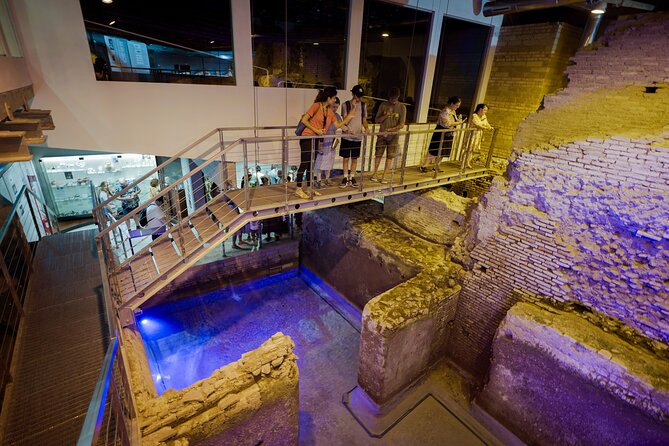
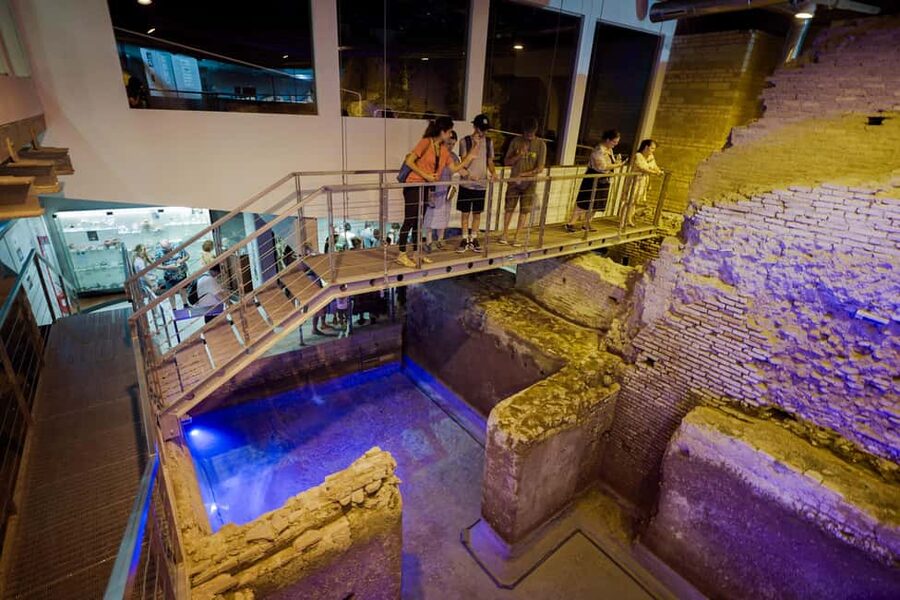
Now for the heart of the experience. You visit Vicus Caprarius, often framed as the city of water. Here, you walk underground to explore an ancient water tank connected to an aqueduct system built in 19 BC.
This is the stop that most strongly justifies the tour for history-focused travelers. You get to experience the idea of layers in a physical way. Buildings and homes have lived above and around these structures for centuries, and the tour presents it like a lasagna of time, stacked and overlapping.
Reviews highlight exactly this feeling: going underground to see how far down the water was. When you stand in that space, the stories you heard above ground stop being abstract. You can feel the scale of the system and how central water supply was to Roman life.
The underground portion is about 30 minutes, and it includes admission. That added time is well used because it’s where you’re not just looking at history, you are learning to interpret it.
One honest consideration: if you wish you saw more underground areas, this tour may leave you wanting extra time in the deeper spaces. Still, for a short tour that fits into a busy day, it strikes a solid balance.
Price and value: why $62.75 for about 2 hours can work
At $62.75 per person for about 2 hours, you should judge value by what’s included, not just the price tag. The tour delivers:
- Multiple major stops in central Rome, starting at the Spanish Steps and finishing at Trevi
- An aqueduct-centered explanation that connects those sites instead of treating them like separate islands
- A paid underground experience at Vicus Caprarius, included in the tour
Many Rome tours charge similar money for a shorter “walk and point” style. Here, the structure is built to teach you the logic behind what you see, especially the water network. That’s where the value comes from: you leave with a mental map.
Also, the maximum group size of 12 supports the experience quality. If you’ve done big-group tours elsewhere, you know the difference between hearing stories and actually being able to follow them.
If your priority is only seeing the Trevi Fountain from the best angle for photos, this might feel more educational than necessary. But if you want a more meaningful visit, the price makes sense.
Pace, walking comfort, and listening tips
The pacing is designed to be light, with easy walking and a few steps. That makes it a good fit for many people who can handle short strolls and occasional stairs.
That said, one review felt the tour moved slowly, with time spent standing while the guide spoke. If you get restless waiting in place, you may want to mentally prepare for story moments. Rome sites often create natural pauses, and this tour uses those pauses to explain.
English is listed as the language, and multiple guides have been praised for being engaging and fluent in English. Still, one negative comment mentioned heavy accent clarity issues. If that would bother you, I suggest going in with patience, and if you struggle, focus on the key phrases the guide repeats about water and Rome’s layers.
Finally, dress for standing and outdoor movement. Even a short tour can involve sun, shade changes, and crowd noise around the Spanish Steps and Trevi.
Should you book this Trevi Underground Aqueduct and Spanish Steps Tour?
I’d book it if you like Rome where the famous sights have a backstory tied to how the city actually functioned. The aqueduct theme is not just trivia, it’s a way to understand the city’s layout and why Trevi and Piazza di Spagna mean more than what you see in a photo.
It’s especially worth it if you want something that fits your schedule. Two hours is a practical length, and the route runs through the center without demanding a half-day commitment.
I’d skip or consider another option if you strongly dislike guided storytelling and prefer a more self-paced sightseeing plan. The underground portion is compelling, but this is still a guided tour with pauses and explanations.
If you want a high-impact mix of above-ground landmarks and underground water history, this is a strong choice.
FAQ
Where does the tour start?
The tour starts at the Spanish Steps in Rome, where you meet and begin.
How long is the tour?
It runs for about 2 hours.
How much does the tour cost?
The price is $62.75 per person.
Is the tour in English?
Yes, it is offered in English.
How big is the group?
The tour has a maximum of 12 travelers, keeping it a small-group experience.
Is there an underground stop?
Yes. You visit Vicus Caprarius underground, and the aqueduct water tank admission is included.
Do I get a mobile ticket?
Yes, the tour uses a mobile ticket.
Can I cancel for a full refund?
You can cancel for a full refund if you cancel at least 24 hours in advance of the experience start time.
Latest additions from Rome
- Guided Tour Vatican Museums & Sistine Chapel★ 4.1 · 30 reviews
- Exclusive Rome by Night Vespa Tour★ 5.0 · 30 reviews
- Transfer Rome to Airports★ 4.5 · 30 reviews
- Vatican: St.Peter’s Basilica & Dome – Reserved Entry & Tour★ 4.1 · 30 reviews
- Rome street art tour: off the beaten path with a local guide★ 5.0 · 30 reviews
- Tivoli, Hadrians Villa and Villa d’Este, a charming day trip from Rome★ 4.5 · 30 reviews
- Rome Food Tasting with Wine Pairing Italian Authentic Flavors★ 5.0 · 31 reviews
- Inspirational Cooking on the Roman Chef’s Panoramic Terrace★ 5.0 · 30 reviews
Appian Way and Aqueducts Tours, compared.

Appian Way & Aqueducts E-Bike Tour (Catacombs & Food)
Read our review →
Appian Way, Catacombs, & Roman Aqueducts E-bike Tour
Read our review →
Appian Way Aqueducts Bike Tour (Catacombs & Lunch Option)
Read our review →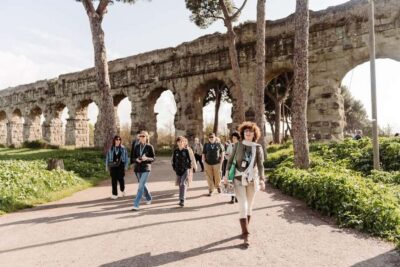

Appian Way, Catacombs and Aqueducts Park Tour with Top E-Bike
Read our review →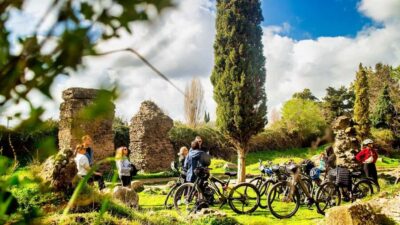
Appian Way Aqueducts Bike Tour (UPG Catacombs & Lunch)
Read our review →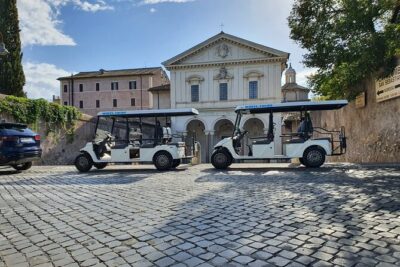
Rome Catacomb & Appian Way Small-Group Tour by Golf Cart
Read our review →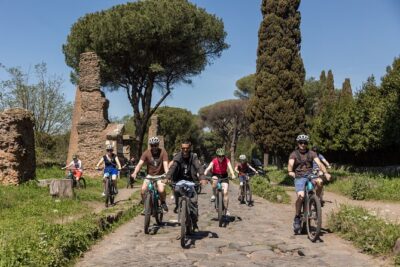
Appian Way & Aqueducts small group e-bike tour(catacombs & food)
Read our review →Browse the lists this tour appears in