
Four basilicas in one focused morning. This tour is built around the Jubilee-era Holy Door pilgrimage, so you are not just sightseeing, you are moving through sites that carry serious spiritual and artistic weight. I like the minivan transport between the Vatican and Rome’s major basilicas because it keeps the day smooth. I also love that admission tickets are included, so you spend time looking at art and architecture, not chasing paperwork. One thing to plan for: you might not always be able to pass through every Holy Door, since closures can happen if the Vatican changes access at the last minute.
You start at Via della Conciliazione, Rome, and the pacing is practical: about five hours total, with roughly 45 minutes at each basilica. The group stays small (up to 20), and you get a driver plus a guide for the full experience, which is a big deal in Rome where distances and security lines can eat your time fast. The only real catch is timing. If a basilica or a specific access point is restricted, your Holy Door count can drop, even when everything is reserved properly.
In This Review
- Key Points You Should Know Before You Go
- The Jubilee Holy Doors Angle, and Why It Matters
- From Via della Conciliazione, How the Day Stays Practical
- Stop 1, St. Peter’s Basilica: Dome Power and the Holy Door Moment
- Stop 2, Santa Maria Maggiore: The Mosaic Ceiling and the Snow Legend
- Stop 3, San Giovanni in Laterano: Rome’s Cathedral and Papal Throne Symbolism
- Stop 4, St. Paul Outside the Walls: The Vast Nave and Pope Medallions
- Guides and Drivers: What You Want From a Small Group
- Price and Value: Is $168.20 a Good Deal?
- What Might Go Wrong, and How to Handle It Gracefully
- Who This Tour Suits Best
- Should You Book This Tour?
- FAQ
- How long is the Tour of the Papal Basilicas of Rome?
- What time does the tour start?
- Where is the meeting point?
- Which basilicas are included?
- Is transportation included between the basilicas?
- Are entrance tickets included?
- What language is the tour offered in?
- What is the group size limit?
- Are tips included in the price?
- Can I cancel for a full refund?
Key Points You Should Know Before You Go
- Jubilee Holy Door focus: The tour is designed for walking through the Holy Doors associated with these four papal basilicas.
- Minivan between sites: Less wandering, more time inside where the art and meaning are.
- Tickets included: Entrance to the Papal Basilicas is part of the price.
- Small group size: Maximum 20 travelers helps keep questions and movement under control.
- Time-managed visits: About 45 minutes per basilica gives you a real look without turning it into a rush job.
The Jubilee Holy Doors Angle, and Why It Matters
If you come to Rome for history, you will get it. If you come for faith, you will feel it. What makes this tour different is that it is organized around the Holy Door pilgrimage experience connected to the Jubilee year, not just a checklist of churches.
That changes how you experience each basilica. Instead of treating every stop like a museum hour, you are moving with a goal and a rhythm. You still get the architecture and the famous names, but the guide frames what you are seeing in a way that makes the symbolism land faster.
Also, Jubilee-era access can be a bit unpredictable. The Vatican makes call-by-call decisions, and those decisions can affect entry to specific doorways. The tour provider notes that closures are outside their control, which is worth keeping in your mental plan. If you are emotionally attached to walking through all four Holy Doors, it is smart to stay flexible.
Other trails between the great basilicas:
- Santa Maria Maggiore: Pope Francis Entry Ticket, Audio Guide
★ 3.9 · 688 reviews - Cloister of St John in Lateran Basilica Ticket
★ 3.9 · 399 reviews - Rome: Santa Maria Maggiore Upper Areas Skip-the-Line Ticket
★ 3.8 · 223 reviews - Pope Francis Tomb and Papal Basilicas Tour
★ 4.5 · 165 reviews
From Via della Conciliazione, How the Day Stays Practical
The day starts at Via della Conciliazione, 4 at 9:00 am, and it ends back at the same meeting point. That matters because Rome loves to scatter meeting points all over the map, and you end up spending your best energy on transit. Here, you begin and end in a convenient spot, and you do the heavy movement by minivan.
The schedule is also built around sanity. You get about five hours total, with roughly 45 minutes at each basilica. That is enough time to:
- see the main visual highlights,
- pause for photos,
- and still have moments where the guide’s explanations click.
You will be in a group capped at 20, and you also have assistance during the visit, plus a driver who handles the back-and-forth of getting in and out smoothly. In reviews, people repeatedly praised drivers for being attentive and helpful at each stop, even opening doors and keeping things comfortable inside the vehicle. That kind of small care matters when you are stepping in and out of secure, crowded spaces.
Stop 1, St. Peter’s Basilica: Dome Power and the Holy Door Moment
St. Peter’s Basilica is the big gravitational center of Catholic Rome. It sits in Vatican City and is traditionally linked to the burial of the Apostle Peter. The building story alone is a masterpiece of European art in motion, with major work tied to architects and artists like Bramante, Michelangelo, Raphael, and Bernini.
When you first see the space, it is the scale. When you really clock the details, it is how controlled that scale feels. Michelangelo’s dome is the landmark that dominates the skyline, and inside, everything is designed to funnel your eye toward the most important liturgical areas.
For this tour, St. Peter’s is also the high-stakes stop because of Jubilee Holy Door access. If everything is open as scheduled, you get the spiritual highlight of walking through the Holy Door here. If it is restricted, you might lose that doorway visit. One response from the provider made the point clearly: St. Peter’s Holy Door access can be changed by the Vatican, and those closure decisions are not communicated in advance in a way the operator can predict.
Practical tip: at St. Peter’s, be ready for security procedures and potential crowding. Keep your time flexible and follow your guide closely. The guide’s job is not only explanations, it is steering the group through the day without losing the thread.
Stop 2, Santa Maria Maggiore: The Mosaic Ceiling and the Snow Legend
Basilica di Santa Maria Maggiore is one of the four papal basilicas and the key Roman basilica devoted to the Virgin Mary. This is the one that often surprises people because it feels both early and layered, like a church that kept getting new artistic chapters added without erasing the old ones.
Founded in the fifth century, Santa Maria Maggiore is famous for early Christian mosaics and a gilded coffered ceiling that catches the light in a way that makes the interior feel almost jewel-like. The central nave is majestic, and the blend of styles gives you something to notice even if you are not a hardcore architecture nerd.
Then there is the tradition that makes this basilica feel like a story you can step inside. According to tradition, the church was built after a miraculous apparition in which Our Lady indicated the location with a summer snowfall on the Esquiline Hill. Whether you treat the story literally or as devotion turned into legend, it helps you understand why the basilica matters to pilgrims.
What you will love here is the mix of visual payoff and meaning. You get major art without needing to know every Latin name first. And the time slot is short enough that you can focus on the highlights your guide points out, instead of wandering aimlessly and losing the best parts.
Stop 3, San Giovanni in Laterano: Rome’s Cathedral and Papal Throne Symbolism
Arcibasilica di San Giovanni in Laterano is often described as the cathedral of Rome, and it has the title weight to back it up. It is also the oldest of the four papal basilicas, founded in the fourth century by Emperor Constantine.
This basilica is sometimes called the mother of all the churches in the world, and historically it served as a residence for the popes for centuries. That long papal connection is part of why the space feels like authority made physical.
Look for the imposing Baroque facade first. Then step inside and pay attention to the rich decoration and the monumental statues of the apostles. The basilica also houses the papal throne, which is not just furniture. It is a symbol of the Pope’s authority as Bishop of Rome.
In other words, this stop explains something big about Rome’s Catholic identity. You are not just seeing beauty. You are seeing how the church built and displayed its structure, power, and continuity over time.
A practical consideration: this is a top stop for visitors, so keep your expectations for crowd flow realistic. Your guide is key here, helping you see what matters within the allotted time.
Another shape for the same afternoon in Rome:
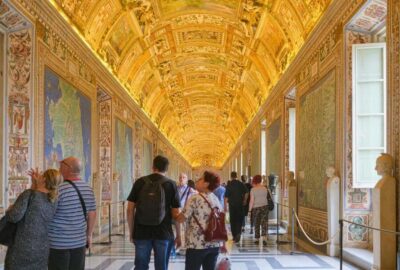
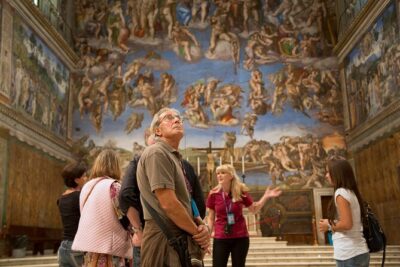
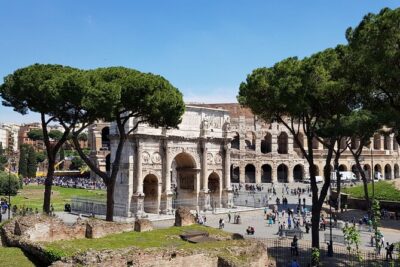
Stop 4, St. Paul Outside the Walls: The Vast Nave and Pope Medallions
Basilica Papale di San Paolo Fuori le Mura sits along the Via Ostiense and marks the traditional burial site of the Apostle Paul. Like the other three, it is one of Rome’s four papal basilicas, and it carries major pilgrimage energy.
It was founded in the fourth century by Emperor Constantine, but after a fire in 1823, it was rebuilt while keeping the grand early Christian style. One of the most striking features is the vast nave, lined with imposing colonnades. The apse mosaics are a highlight too, giving you that layered, shimmering effect that mosaics do so well.
A unique detail here is the series of medallions featuring portraits of all the popes, from St. Peter to the current pontiff. This is not just decoration. It is like a visual chain of continuity, making the basilica feel like a timeline you can walk through with your eyes.
If you are doing the Jubilee Holy Door element, this is the stop where the pilgrimage mood often peaks for people. The tour design keeps your attention moving from meaning to art to meaning again, without turning the day into a lecture.
Guides and Drivers: What You Want From a Small Group
This tour works best when your guide is good at two things at once, explaining clearly and keeping the group moving. In the feedback I saw, guides like Dina, Marcela, Carola, and Claudia were repeatedly praised for clear English and the ability to connect historical facts to what you are standing in.
You will also feel the difference in the driver. People called out drivers such as Max and Walter for being attentive, safe, and genuinely helpful when it is time to get in and out at each basilica. That matters more than you might think. Rome’s street layout and steps can turn a “simple transfer” into a slow drain on energy. With a driver handling the vehicle side, you can focus on the experience.
Also, the tour caps at 20 people. That is big enough to feel social, small enough that questions do not get lost.
Price and Value: Is $168.20 a Good Deal?
At $168.20 per person, you are paying for more than a guide. You are paying for:
- a guided visit timed across four major basilicas,
- entrance to the Papal Basilicas,
- and round-trip minivan transport between the sites,
- plus help from start to finish.
If you try to DIY this on your own, the biggest hidden cost is your time. Rome basilicas are not just far apart, they also come with different access rules and crowd conditions. Even if you can manage logistics, you may still lose the emotional and practical payoff that comes from having someone coordinate the order and the pacing.
Is it the cheapest way to see four churches? Probably not. But value here is about paying to save your energy and get the meanings explained while you are still in the rooms where those meanings are embodied. If you want a managed day that feels purposeful, this price can make sense.
What Might Go Wrong, and How to Handle It Gracefully
The main wrinkle is Holy Door access at St. Peter’s. The provider’s response to a visitor made it clear that basilica closures happen based on Vatican decisions and cannot be guaranteed in advance.
So your best strategy is simple:
- Focus on what you can control, arrive on time, follow your guide, dress for churches.
- Keep the Holy Doors mindset, but do not treat it like a guaranteed “all four or nothing” event.
- Trust that you will still get the four basilica visits with entrance included.
Rome rewards flexibility. This tour is built for that reality.
Who This Tour Suits Best
This is a great match if:
- you want a half-day overview of the four papal basilicas without dealing with transit fatigue,
- you care about the Jubilee Holy Door experience,
- and you prefer having your questions answered in real time.
It may be less ideal if you love spending long hours in one church and hate moving on. Each stop is about 45 minutes, so you will get highlights and key explanations, not the kind of slow, hours-long wandering that some visitors love.
Still, for most people, that balanced tempo is exactly what makes the day work.
Should You Book This Tour?
I think you should book this tour if you want four papal basilicas with guided context and easy logistics, and you specifically want the Jubilee Holy Door pilgrimage approach. The combination of small group size, minivan transport, included admissions, and a guide who can connect art and symbolism is the winning formula.
If you are the kind of traveler who needs total certainty that you will pass through every Holy Door regardless of Vatican decisions, then temper expectations. Closures can happen, especially at St. Peter’s. But even with that risk, you are still coming for four major basilicas that are unforgettable on their own.
If you want a smooth, meaningful day that respects your time, this one is a strong choice.
FAQ
How long is the Tour of the Papal Basilicas of Rome?
The tour lasts about 5 hours.
What time does the tour start?
It starts at 9:00 am.
Where is the meeting point?
The tour starts at Via della Conciliazione, 4, 00193 Rome, Italy.
Which basilicas are included?
The tour includes St. Peter’s Basilica, Basilica di Santa Maria Maggiore, Arcibasilica di San Giovanni in Laterano, and Basilica Papale di San Paolo Fuori le Mura.
Is transportation included between the basilicas?
Yes. You are transported by minivan with a driver to reach the four basilicas.
Are entrance tickets included?
Yes. Entrance to the Papal Basilicas is included.
What language is the tour offered in?
The tour is offered in English.
What is the group size limit?
The maximum group size is 20 travelers.
Are tips included in the price?
No. Tips are not included.
Can I cancel for a full refund?
Yes, you can cancel for free up to 24 hours in advance of the experience start time for a full refund.
Latest additions from Rome
- Guided Tour Vatican Museums & Sistine Chapel★ 4.1 · 30 reviews
- Exclusive Rome by Night Vespa Tour★ 5.0 · 30 reviews
- Transfer Rome to Airports★ 4.5 · 30 reviews
- Vatican: St.Peter’s Basilica & Dome – Reserved Entry & Tour★ 4.1 · 30 reviews
- Rome street art tour: off the beaten path with a local guide★ 5.0 · 30 reviews
- Tivoli, Hadrians Villa and Villa d’Este, a charming day trip from Rome★ 4.5 · 30 reviews
- Rome Food Tasting with Wine Pairing Italian Authentic Flavors★ 5.0 · 31 reviews
- Inspirational Cooking on the Roman Chef’s Panoramic Terrace★ 5.0 · 30 reviews
Major Basilicas of Rome Tours, compared.
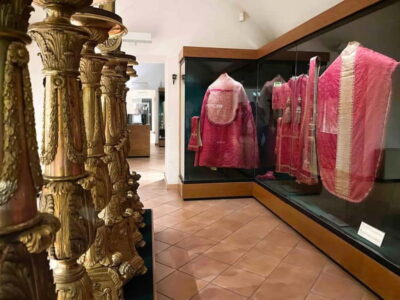
Santa Maria Maggiore: Pope Francis Entry Ticket, Audio Guide
Read our review →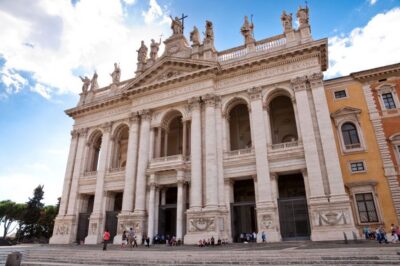
Santa Maria Maggiore Upper Areas Skip-the-Line Ticket
Read our review →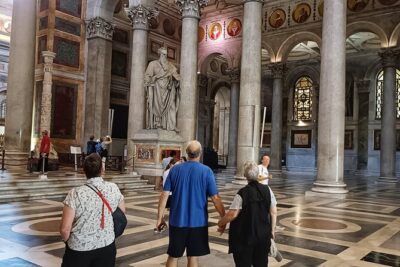
San Clemente Underground & Basilica Small Group Tour
Read our review →
San Clemente Underground and Basilica Guided Tour
Read our review →
Basilica of St John Lateran & Holy Steps 1-Hour Tour
Read our review →
Rome Catacombs Night Tour with Santa Maria Maggiore After Hours
Read our review →Browse the lists this tour appears in