
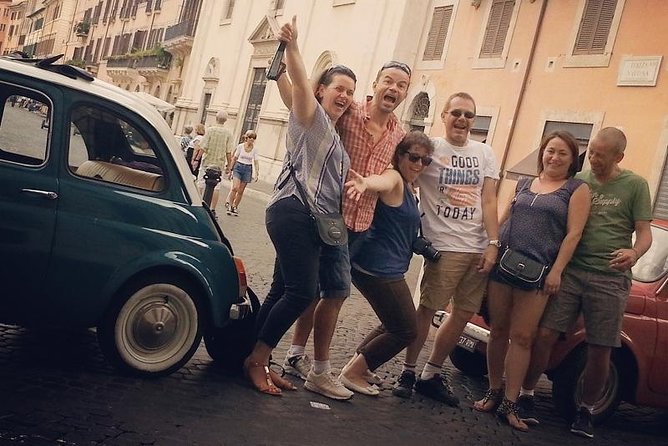
Reviewed · VINTAGE CAR AND FIAT 500 TOURS
The ORIGINAL Fiat 500 Tour of Rome’s 7 Hidden Gems
A tiny Fiat car, Rome on fast-forward. In about 3 hours, you zip from Caracalla ruins to keyhole views, Roman panoramas, and a Colosseum stop, all while your driver and guide explain what you are seeing.
I especially love the photo help. Your driver and guide will help you get shots using your phone or camera, so the car time feels productive instead of just sightseeing. I also like the small-group feel, with a maximum of 20 people, which makes it easier to ask questions and actually hear the stories.
One consideration: the vintage car is cozy and there are no safety belts in the back seats and no air bags. There is also a weight limit of over 100 Kg, so check before you book if that affects you.
In This Review
- Quick highlights
- Meet Via Labicana and the Fiat 500 convoy, up close
- Caracalla, Rome’s mega bath complex and how it was used
- Piazza dei Cavalieri di Malta and the keyhole view trick
- Parco Savello, oranges, lovers, and that St. Peter optical illusion
- Trastevere by Fiat 500, narrow lanes that buses can’t touch
- Piazzale Giuseppe Garibaldi and the view that hits almost everything
- Circus Maximus, 250,000 spectators, and why it mattered
- Porta San Paolo, the Pyramid of an oddball Roman, and Via Galvani’s vase hill
- Colosseum time, what to expect in a short stop
- Price and value: what $205.67 buys you in real terms
- Who should book this Rome Fiat 500 tour
- Should you book this vintage Fiat 500 Rome tour?
- FAQ
- How long is the Fiat 500 tour?
- Where does the tour start and end?
- Is the tour in English?
- How many people are in the group?
- Are there any weight or safety limitations?
- Can I cancel for a full refund?
Quick highlights
- Chauffeured vintage Fiat 500 convoy: The driving is part of the experience, not just transport.
- 20-minute stops that keep the pace fun: You get to see more without feeling stuck for hours.
- Free photo shooting included: Your driver and guide help you capture the moments.
- Big-sight payoff plus off-the-main-road corners: From major landmarks to quieter viewpoints.
- Morning or afternoon departure options: Pick timing based on your day and light.
Meet Via Labicana and the Fiat 500 convoy, up close
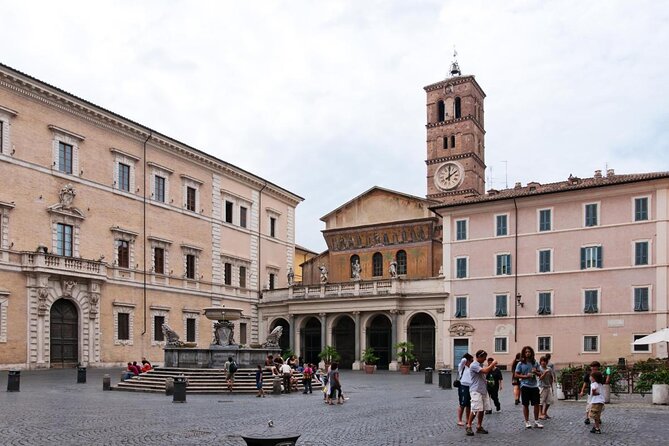
Your Rome starts at Via Labicana, 125, where the tour ends back at the same meeting point. This is not a hop-on, hop-off situation. You show up, get briefed, and then roll out together in a shared group.
What makes this work so well is the car size. A classic Fiat 500 can slip into tight lanes that feel off-limits on big buses. That means you spend more time looking at streets and viewpoints, and less time watching Rome from behind glass at a distance.
You are also booking a shared ride, not a private tour, so you will be with other people (up to 20). The upside is energy. The slightly more relaxed downside is that your questions may come in waves, depending on timing. Still, the guide-driver combo tends to keep things moving.
A lot of people love the photo aspect, and it is built in. This is not the awkward moment where you stop for 30 seconds and hope someone gets the shot. The guide and driver actively help you frame pictures using your phone or camera, and the car itself becomes part of the photo.
Other rides in a vintage Fiat:
- Rome Afternoon Sightseeing Vespa Sidecar Tour with Gourmet Gelato
★ 5.0 · 692 reviews - Rome: Photoshoot Service with Vintage Fiat 500
★ 5.0 · 611 reviews - Vespa Sidecar Tour In Rome with Pickup, Drop-off, Gelato included
★ 5.0 · 472 reviews - Rome: Fiat 500 Vintage Photography Service in Rome
★ 4.9 · 308 reviews
Caracalla, Rome’s mega bath complex and how it was used
Caracalla is one of the best places to catch Rome doing scale. This was an enormous ancient bath and health complex, described as huge, about the size of 15 football pitches. And that is the key idea: this was not just a place to get clean. It was entertainment, exercise, social life, and learning space, all in one.
At this stop, you get time to look around and absorb what made Caracalla such a big deal. You can connect the dots between cold and hot bathing areas, plus the presence of Greek and Roman libraries, gyms, theater spaces, seminar rooms, gardens, and fountains. In other words, it is a Roman idea of a whole lifestyle, not a single-purpose building.
Practical note: ruins can be visually impressive but also uneven underfoot. If you are taking photos, stand where you get both perspective and clean background. You will also get more out of it if you let the guide explain what you are looking at before you start snapping.
Piazza dei Cavalieri di Malta and the keyhole view trick
This stop is for people who like the kind of Rome moments that feel like a secret you can actually prove. You are going to the Piazza dei Cavalieri di Malta and then lining up for the famous keyhole sight.
The story is simple and clever: why would St. Peter’s Church be framed in a keyhole? The payoff is that you can see multiple countries lined up through that opening. It is a quick stop, but it is one of those “wait, how is that even possible?” views that makes the whole tour feel special.
You are also in perfect photo territory. The car is small, the viewpoint is dramatic, and the keyhole alignment gives you an easy way to create a shot that looks intentional, not accidental. If you care about selfies or posed photos, this is one of your best bets on the route.
Tip for photos: turn your phone to landscape for the keyhole alignment and then take one wider shot of you in the Fiat 500 before you zoom in. That way you get both a memory image and a proof image.
Parco Savello, oranges, lovers, and that St. Peter optical illusion
Parco Savello is where the tour leans romantic, and it also leans smart. This is the Garden of the Oranges, and it is known as the Garden of the Lovers. Even if you are traveling with friends or family, the vibe is still great because the views are made for lingering.
The highlight here is an optical illusion linked to St. Peter’s Church. You look at the sight and it changes the way you perceive what you are seeing, which is the whole fun of the garden viewpoint. It is also a great place to practice “slow looking” for a few minutes, rather than trying to sprint to the next photo spot.
This is one of those stops that can feel small on a map, but feels bigger once you are there. It gives your eyes a break after ruins and viewpoints, and it helps you remember Rome not just as monuments, but as perspective.
Trastevere by Fiat 500, narrow lanes that buses can’t touch
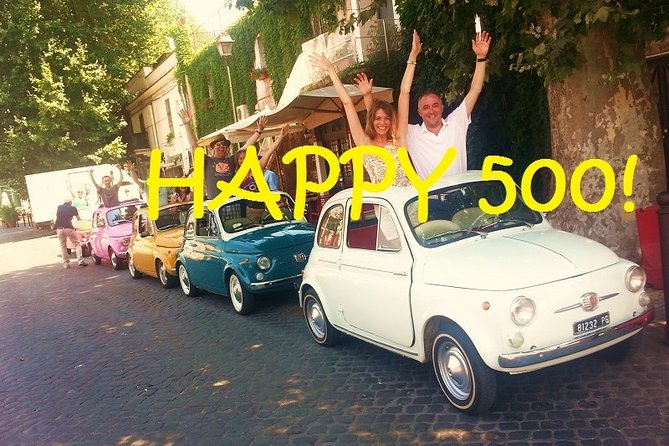
Then you slip into Trastevere. This is the side of Rome that makes you understand why people fall for the city. The streets are tiny. The streets are old. And they feel made for wandering, even if you are only spending a short window here.
From a car perspective, Trastevere is especially fun because a classic Fiat 500 fits the neighborhood character. You are not stuck behind a big vehicle that blocks your line of sight. You can actually see small storefronts, side streets, and the kind of street rhythm that disappears when the group is too large.
It also helps that your driver is part of the entertainment. You get that “look up and around” feeling, and the car becomes a rolling viewpoint.
A practical suggestion: wear shoes you can move in. Even a 20-minute stop can include a quick walk, and Trastevere streets can be uneven.
Another shape for the same afternoon in Rome:
Piazzale Giuseppe Garibaldi and the view that hits almost everything
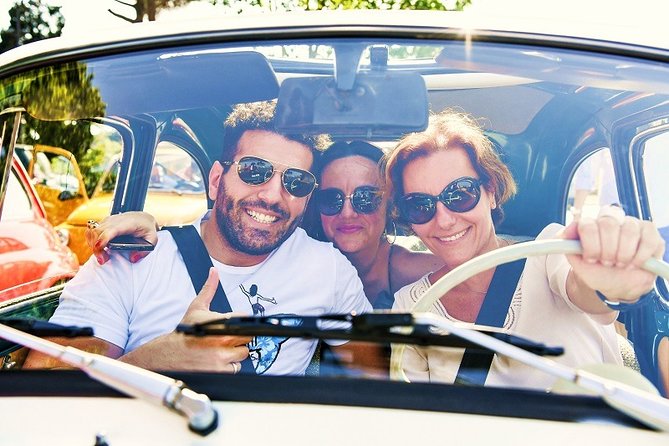
Piazzale Giuseppe Garibaldi is your terrace moment. If you like panoramas, this is a top stop on the loop.
From here you can see a bundle of major sights in one sweep: the Colosseum, the Pantheon, Altare della Patria, and the many domes across Rome. It is not just pretty. It is useful. This view helps you mentally map the city, so when you later look at photos or streets, you get your bearings faster.
This is also a photo-friendly stop because terraces give you space to step back and still frame the city. Your driver-guide style fits here too, since they can help you pick the best angle before you start taking pictures.
If you are booking for afternoon, consider that the light can change fast in a terrace viewpoint. If you are booking morning, you often get clearer light for photos. Either way, the view is the reason you are there.
Circus Maximus, 250,000 spectators, and why it mattered
Circus Maximus is the kind of place where Rome’s scale hits you again, but in a different way than bath ruins. You are at the Circus Maximus and you get the story behind Roman spectacle, including the idea that it once held 250,000 excited people for the chariot races.
This is a “feel the echo” stop. Built hundreds of years before the Colosseum, Circus Maximus was the big, fast, high-attention race venue of its time. The tour framing makes it come alive by connecting it to later uses too, including modern concerts in the space.
Even in a short stop, it is memorable because you can picture motion. It is one of the best places on the route to understand that Rome loved crowds and drama, not only monuments.
Practical tip: take one photo for the present, then listen for the story and take your second photo after your brain is in the right place. The second set will feel more meaningful.
Porta San Paolo, the Pyramid of an oddball Roman, and Via Galvani’s vase hill
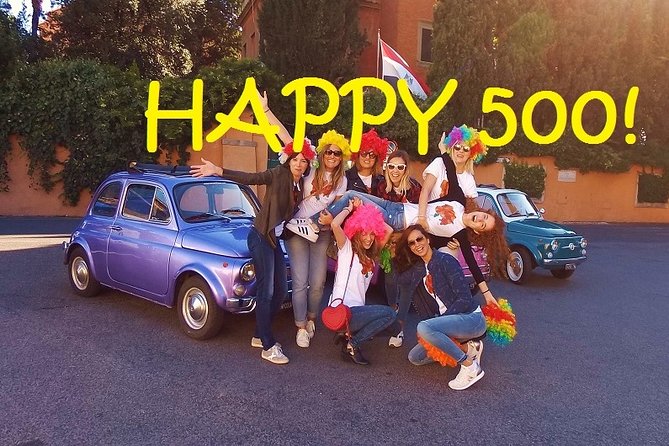
This part of the ride is where you get the kind of detail that makes Rome feel weird in the best way.
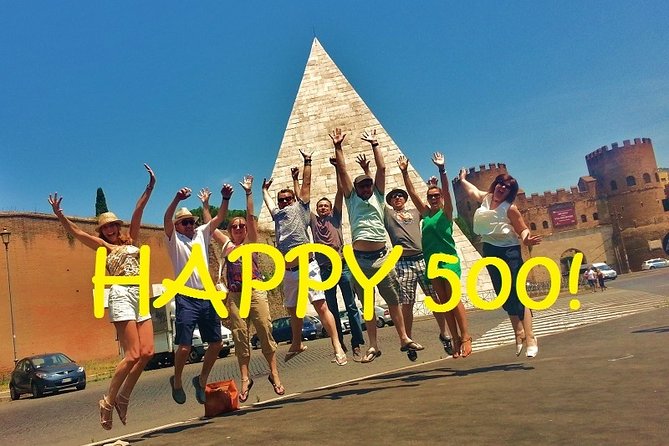
At Porta San Paolo, you can see an Egyptian pyramid-like monument in Rome, described as the fourth biggest ancient Egyptian pyramid in the city. It was built around 18 BCE and tied to the tomb of Gaius Cestius, a wealthy and eccentric Roman. That blend is the point: Rome was never just one culture at a time. It stitched things together.
Then you move to Via Galvani, the hill of broken vases. The story is wild but also logical when you think about construction materials. Romans created an artificial hill from broken pieces of vessels used to transport items like olive oil, fish sauce, and wine. Over time, what started as a dump of fragments became a hill roughly 40 meters high and 700 meters around.
The detail that makes this stop stick is the rough scale of the making: terracotta fragments estimated to come from around 50 million vases. Whether the exact number is what you remember, the point is that Rome literally built geography from the everyday.
Both stops are short, but they are the kind that make you say, “Wait, I’ve never heard that story before.” That is the value of this ride.
Colosseum time, what to expect in a short stop
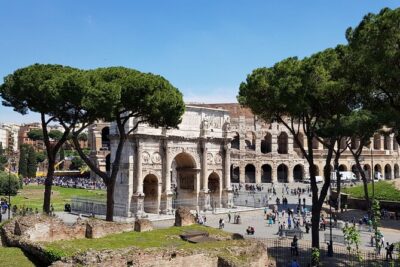
The Colosseum stop is the iconic payoff. Built around 80 CE, it is the place for gladiators, executions, and even staged naval combats in Roman storytelling. It is also a reminder of how enormous Roman public entertainment could be, including the grim idea of hundreds of thousands of deaths over centuries of use.
Because your total time on the ground across the whole loop is limited, your experience at the Colosseum is not the same as a long, ticketed deep visit. You should treat it as a highlight stop: enough time to get oriented, take key photos, and soak in the main story.
One more thing to watch: time at specific stops may vary during the ride. If Colosseum time matters most to you, plan your expectations around a guided highlight rather than a full, unhurried exploration.
Price and value: what $205.67 buys you in real terms
At $205.67 per person for about three hours, this is not a budget activity. Still, the value can make sense if you want three things at once.
First, you are paying for access to a highly story-driven guide plus the cover of a chauffeured Fiat 500. That is the difference between passing landmarks on your own and understanding what you are looking at.
Second, you get structure. With stops timed around 20 minutes each, you cover a lot of Rome in a short window. This is especially useful in a first visit when your biggest problem is not finding attractions, it is figuring out where everything fits in your day.
Third, you are paying for the photo help. Light refreshments are included, and free photo shooting with your phone or camera removes one of the hidden hassles of sightseeing solo or in a group.
Now the caution side. This experience is clearly designed around comfort and mobility. The tour notes that there are no safety belts in the back seats and no air bags, plus the weight limit above 100 Kg. If you are sensitive to car safety setups or physical constraints, you need to factor that into your decision.
I think the price is fair when you treat this as guided orientation and photo-friendly storytelling, not as a replacement for full museum tickets and long, independent wandering.
Who should book this Rome Fiat 500 tour
This is a great fit if you want a tight Rome loop without feeling stuck in a mega-group. It is also ideal if you like street-level Rome: terrace views, keyhole tricks, narrow neighborhoods, and those “how did they build that” stories.
If you travel with teenagers, this kind of car-centered sightseeing tends to land well. It turns Rome into a moving photo set with real explanations, so it does not feel like sitting through lectures.
I would also recommend it for solo travelers who want company and conversation. A shared group with a lively guide style can be a smart way to meet other visitors while still getting personal attention.
If you want long, quiet time inside major monuments, you will likely need to add separate visits. This one is designed to move, connect the dots, and get you seeing Rome from angles you might miss on your own.
Should you book this vintage Fiat 500 Rome tour?
Book it if you value short, guided access to multiple Rome perspectives, especially if you care about photography and want a ride that fits the streets instead of fighting them. The combination of Caracalla scale, the keyhole alignment, Parco Savello views, Trastevere lanes, and those Porta San Paolo and Via Galvani stories creates a route that feels varied without feeling chaotic.
Skip it or rethink it if car safety and seat design are dealbreakers for you. Also, if your only goal is maximum time at one monument, you might be happier building a custom day around the Colosseum first, then adding smaller viewpoint stops later.
If you can handle a vintage car experience and you like guided stories that make landmarks and side streets make sense, this is the kind of Rome activity that tends to feel memorable long after the ride ends.
FAQ
How long is the Fiat 500 tour?
It runs for about 3 hours.
Where does the tour start and end?
The tour starts at Via Labicana, 125, 00184 Roma RM, Italy, and it ends back at the same meeting point.
Is the tour in English?
It is offered in English, and it may be operated by a multi-lingual guide.
How many people are in the group?
The tour has a maximum of 20 travelers.
Are there any weight or safety limitations?
Passengers weighing more than 100 Kg are not suitable. The car has no safety belts in the back seats and no air bags.
Can I cancel for a full refund?
Yes. You can cancel up to 24 hours in advance for a full refund. If you cancel less than 24 hours before the start time, the amount paid is not refunded.
Latest additions from Rome
- Guided Tour Vatican Museums & Sistine Chapel★ 4.1 · 30 reviews
- Exclusive Rome by Night Vespa Tour★ 5.0 · 30 reviews
- Vatican: St.Peter’s Basilica & Dome – Reserved Entry & Tour★ 4.1 · 30 reviews
- Transfer Rome to Airports★ 4.5 · 30 reviews
- Rome street art tour: off the beaten path with a local guide★ 5.0 · 30 reviews
- Tivoli, Hadrians Villa and Villa d’Este, a charming day trip from Rome★ 4.5 · 30 reviews
- Rome Food Tasting with Wine Pairing Italian Authentic Flavors★ 5.0 · 31 reviews
- Inspirational Cooking on the Roman Chef’s Panoramic Terrace★ 5.0 · 30 reviews
Vintage Car and Fiat 500 Tours, compared.
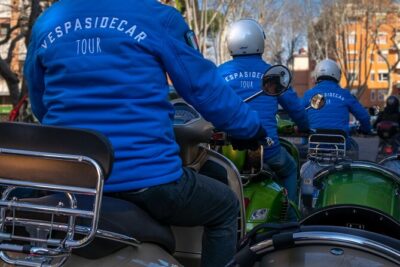
Rome Afternoon Sightseeing Vespa Sidecar Tour with Gourmet Gelato
Read our review →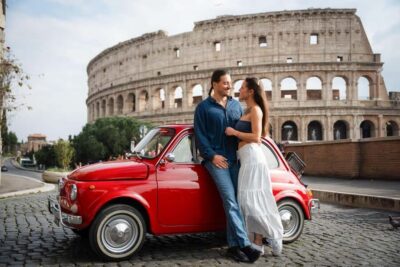
Vespa Sidecar Tour In Rome with Pickup, Drop-off, Gelato included
Read our review →
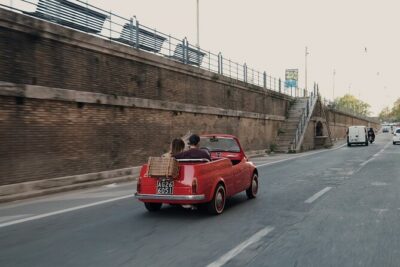
Vintage Fiat 500 Cabriolet: Rome’s Highlight Semi Private Tour
Read our review →
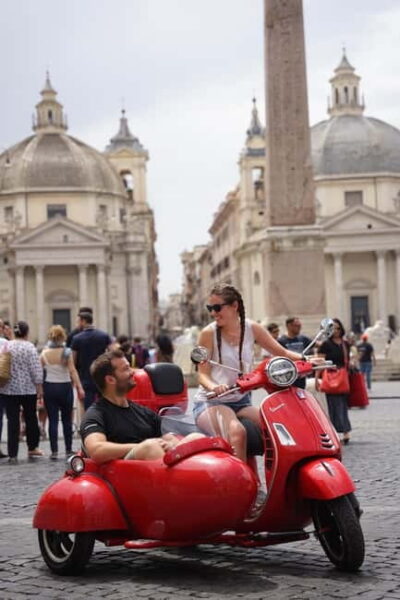
Rome Vespa Sidecar Tour: 90-Minute Panoramic Experience
Read our review →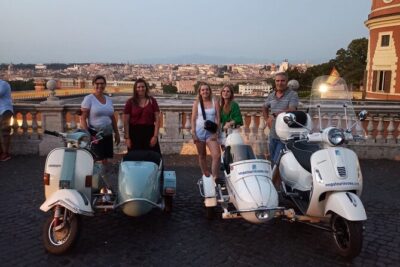
Vespa Sidecar Tour at Day/Night with Pickup
Read our review →Browse the lists this tour appears in