
Reviewed · CATACOMBS OF ROME TOURS
The Labyrinth of Rome between catacombs and ancient quarries
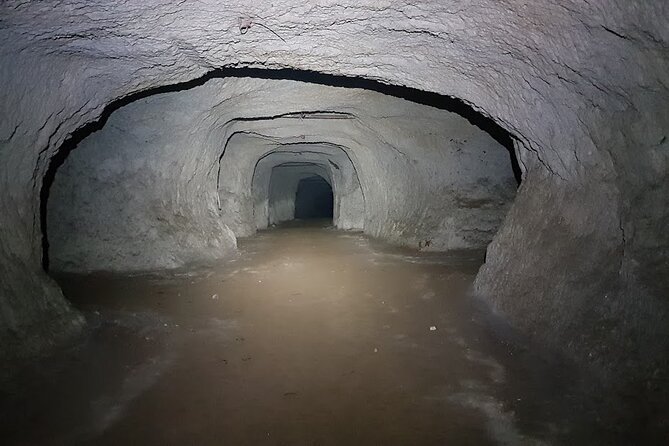
Rome gets cooler underground, and the city starts whispering. You cross the quiet Caffarella Park first, then drop into miles of Roman tunnels where quarry labor, early Christian burials, and later re-use all overlap in one underground maze.
I love the cut-stone details you can actually see, including chisel marks left by the workers who dug these spaces. I also love the guided, hands-on feel, with an ancient-style lamp moment that helps you understand how dark these places really were.
One consideration: you should plan for a long surface walk before you reach the entrance, and the underground sections can feel cold, damp, and a bit air-stale, so bring a layer and move at an easy pace.
In This Review
- Key points before you go
- Caffarella Park: your quiet start in Rome
- Sotterranei di Roma: Roman quarries under your feet
- Catacombs by lamp light: crossing darkness on purpose
- Roman quarries to mushroom farms to wartime traces
- Pagan temple and the story of early Christianity’s spread
- Time, walking, group size, and what to wear
- Price and value: what $114.14 buys you
- Practical tips so the tour feels smooth
- Should you book the Labyrinth of Rome tour?
- FAQ
- How long is the Labyrinth of Rome tour?
- What is included in the price?
- What language is the tour offered in?
- How large is the group?
- Where does the tour start and end?
- Is there a mobile ticket?
- Is it near public transportation?
- Do I need good weather?
- What is the cancellation policy?
- Are service animals allowed and can most people participate?
Key points before you go
- Caffarella Park warm-up: about a 1 km, nature-filled walk before you hit the underground.
- Sotterranei di Roma, not a showroom: Roman quarry tunnels with visible tool marks.
- Catacombs by light, not by guesswork: you cross darkness using ancient-style lighting.
- Layered use over centuries: you’ll hear about World War II-era remnants plus later changes to the space.
- Small group size (max 10): easier pacing through tight, uneven underground areas.
Caffarella Park: your quiet start in Rome
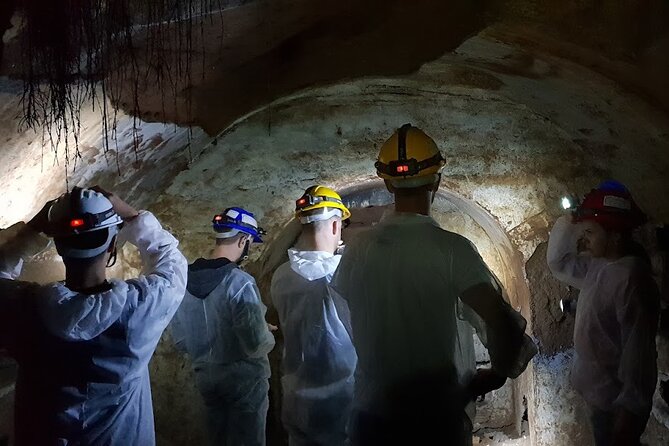
This tour starts in a way I really like, a breather before the underground. You begin at Via Amedeo Crivellucci, then walk through Caffarella Park for about 1 kilometer, roughly half a mile, surrounded by greenery and open air. It is a simple trick, but it matters. Rome’s main sights can feel nonstop and loud, so this first stretch helps you reset your brain before you enter a place built for darkness.
Expect it to be more than a token photo stop. The walk gives you time to settle in, and it also adds to the feeling that you are going somewhere real, away from the usual traffic of tour buses. And because the whole experience is around 2 hours 30 minutes, that early outdoor time sets the rhythm nicely. You will not spend the entire day crawling through underground hallways.
The only catch is that this does add up. Even with the park walk only listed as about 1 km, people have noted that the total distance to the underground entrance can feel long. If you are the type who hates waiting around or walking slowly, consider arriving by taxi or Metro so you start the tour already in “on the move” mode.
Other descents into the catacombs:
- Rome: Capuchin Crypts and Catacombs Tour with Transfers
★ 4.6 · 6,456 reviews - The Original Roman Crypts and Catacombs Tour with Transfers
★ 4.5 · 4,896 reviews - Rome: Catacombs of St. Callixtus Entry Ticket & Guided Tour
★ 4.6 · 3,037 reviews - Rome: Guided Roman Catacombs Tour with Transfers
★ 4.6 · 1,830 reviews
Sotterranei di Roma: Roman quarries under your feet
Once you reach the underground, the tone changes fast. The core setting is the Sotterranei di Roma, a vast underground system created from tunnels dug to extract building materials for the imperial city. This is not a single room or a tidy corridor. It is the idea of Rome growing under itself, with passageways and spaces created by human labor, then kept and reused long after the original project was finished.
What I think you’ll appreciate most is the way the tour connects the physical marks to real people. You are guided through areas where chisel marks on the walls can still be seen. The story includes the reality that the spaces were dug by enslaved workers, often under brutal conditions. That does not turn it into a depressing lecture. It gives meaning to what you are looking at. When you see the cuts, suddenly you understand they were not decorations. They were work.
A practical point for your body: underground corridors can be uneven and sometimes feel narrow, even when the route is well managed. The group size helps here. With a maximum of 10 people, the guide can keep the pacing controlled and keep you from getting stretched out, which is useful in low-light spaces.
If you enjoy archaeology that feels like fieldwork rather than museum-style display, this part usually hits the right note. And if you came specifically hoping for constant, dramatic scenery, manage expectations. Much of what you’ll see is cut stone, niches, tool marks, and the geometry of underground engineering. That is the point. Still, if you want nonstop variety in every corner, you might find some stretches repetitive.
Catacombs by lamp light: crossing darkness on purpose
The next big shift is into the catacombs area, where Christians buried their loved ones in underground tunnels for dozens of kilometers. This is where the tour becomes less about stone engineering and more about human tradition. You’ll hear how burial customs played out in these tunnels and how the space functioned as a kind of long-term, underground community memory.
The lighting approach is a major reason this tour feels different. You will be guided to cross the darkness using an ancient Roman lamp. One of the most memorable moments described is learning how Roman-style oil lamps work, then experiencing a pitch-black pause by switching off lights while the guide talks about burial practice. That is not just a theatrical stunt. It helps you understand what darkness actually means underground, where walls swallow sound and sight.
It is also a good reminder for your planning. Go in with comfortable shoes and a calm mindset. You will spend time looking closely at surfaces, and the lighting can change what you think you see. Bring patience. This is an experience built around atmosphere.
Two practical considerations to keep you comfortable:
- Underground can be cold and damp, so bring a layer you can actually wear inside.
- Some people have mentioned air quality feels poor at times. If you have respiratory sensitivities, consider that and take it slow.
Roman quarries to mushroom farms to wartime traces
Here’s what I find especially intriguing: the tour treats the underground like a living timeline. The same quarry tunnels created for construction materials later became something else. In more recent periods, parts of the spaces were reused as mushroom farms, which is why you may hear about fungal growth and farming history tied to these tunnels.
You’ll also reach what remains of a fungus dating back to World War II. That detail is so specific it sticks in your head. It ties the underground not only to ancient Rome but also to the 20th century, when these spaces served new purposes and kept surviving under new conditions.
This layered storytelling is why the experience can feel more authentic than a standard “walk and point” tour. You are not just being shown ancient objects. You are being shown how a place gets repurposed, and how each era leaves its mark. Even when the marks are subtle, they add meaning to the walls.
One more reality check: underground spaces can be dark, damp, and visually similar across multiple corridors. If you are expecting constantly changing murals, grand statues, or bright religious artwork, you might feel underwhelmed. The focus is on the structure, the marks, and what the guide helps you infer from the environment.
Pagan temple and the story of early Christianity’s spread
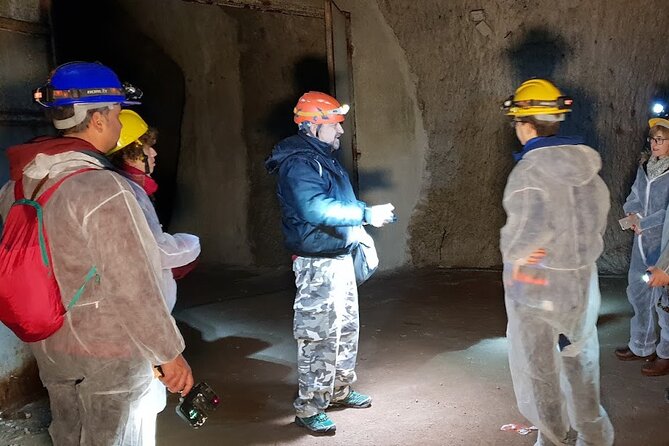
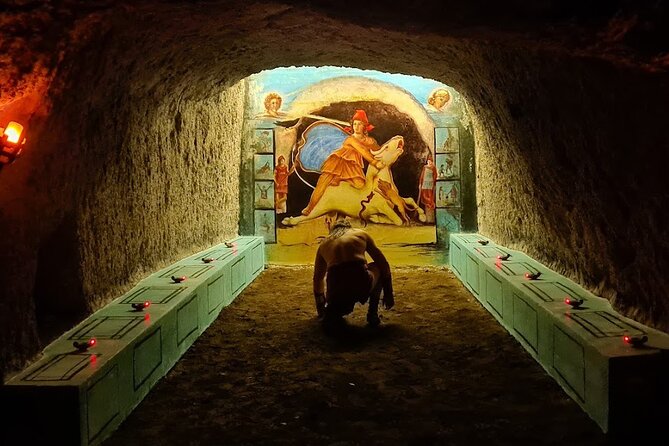
As the tour progresses, you visit a pagan temple dug into the ground. This part is tied to discussion of secrets related to the spread of Christianity in ancient Rome. In other words, you are not only visiting sites that Christians used. You are also seeing how early Christian life intersected with older religious spaces and beliefs that came before it.
Some of the best tour moments described involve guided explanations that make these links feel logical. The guides named in the experience, like Riccardo, Giuseppe, Joseph, Daniela, Roberto, and Maurizio, come up for a reason. People praise them for being animated, for handling complex topics clearly, and for making the route feel interactive rather than scripted.
I also like how this stop rounds out the story. Instead of leaving you with only one era, you get a sense of the long conversation between belief systems, and how physical spaces reflect that shift over time. It is history, but it is history you can stand inside.
And yes, there may be a tasting element for some groups. One description includes mulsum, a Roman wine made according to traditional recipes, with honey and spices. If that is offered during your run, it adds a final sensory layer after all that stone and darkness.
Another shape for the same afternoon in Rome:

Time, walking, group size, and what to wear
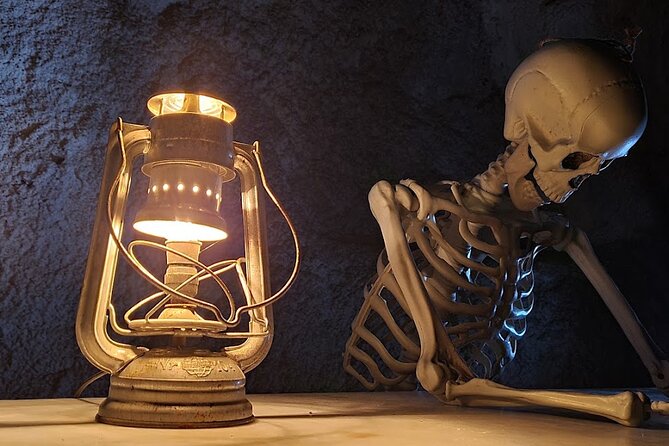
The tour runs for about 2 hours 30 minutes. That length is a good match for people who want something meaningful without committing a full half-day or day. With a maximum of 10 travelers, you’ll likely move as a unit, and the guide can keep up with questions even when the space is tight.
What you wear matters more here than on most Roman walking tours. The park start is outdoors, but the underground portion can feel noticeably colder and damp. People also recommend bringing a jumper, especially if you get cold easily. If you have a light sweater or a packable jacket, bring it.
For shoes, think grip and comfort. You will be walking inside and outside, and underground surfaces can be uneven. Closed-toe shoes are the safe choice.
If you are short on time in Rome, consider how you plan to get to the meeting point. The tour is near public transportation, and it makes sense to use that. Still, because the walk to the entrance can add up, one smart tip is to take a taxi or Metro to meet the guide and avoid extra wandering on your own before you begin.
Price and value: what $114.14 buys you
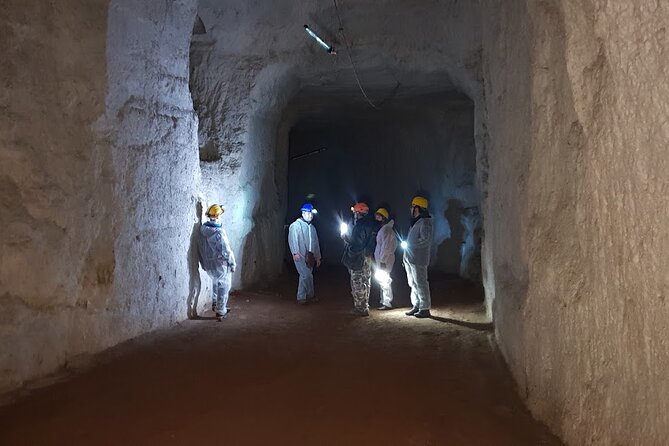
At $114.14 per person for an approximately 2.5-hour guided visit, you are paying for access to underground spaces that are hard to explore on your own. The price also includes an admission ticket, which is important here. Underground catacombs and quarry tunnels are not the same as a normal street-level “see and go” experience. Your guide is doing real work: lighting management, pacing, and interpretation of how these spaces were made and used.
Value also comes from the small group size. In cramped underground areas, crowds can turn a fascinating site into a slow shuffle. A max group of 10 helps keep the experience controlled and more personal, especially when the tour includes low-light moments.
If your goal is to see Rome through the usual highlights, this might not be the best fit. But if you want something that feels off the beaten path, focused on archaeology, and genuinely atmospheric, the cost makes more sense. You are not just buying a ticket, you are buying the ability to read a place that would be confusing in the dark.
Practical tips so the tour feels smooth
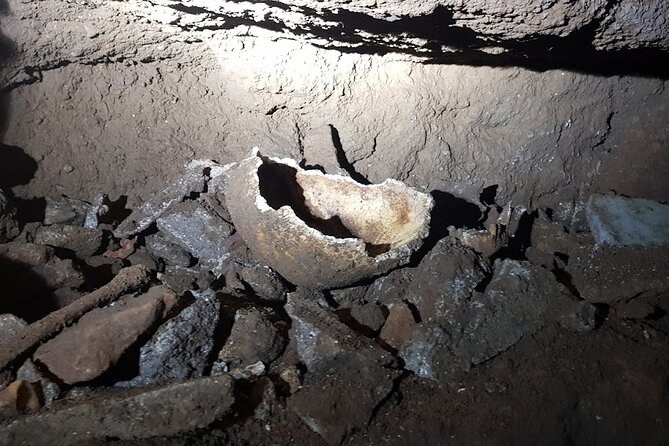
A few nuts-and-bolts notes that can save you frustration:
- Bring a warm layer. Underground gets cold and damp.
- Plan for walking. The park start is about 1 km, and the overall walk to the underground entrance can feel longer than that.
- Use the meeting point wisely. Start at Via Amedeo Crivellucci, 8, and avoid adding lots of extra walking beforehand.
- Go in with the right mindset. You are stepping into quarry tunnels and catacomb corridors, so a lot of what you see will be cut stone and stonework details, not constant showpieces.
- Bring comfort for air and low light. If you are sensitive to stuffy environments, slow your pace and ask your guide for any helpful moments to catch your breath.
- Expect English-only guiding. If your group needs a different language, this one is listed as English.
One last tip: because the tour is small and time-based, arriving on time really matters. Underground tours run tight. If you show up late, you can lose the best parts of the route, like the low-light lamp moment.
Should you book the Labyrinth of Rome tour?
I’d book it if you want a break from standard Rome sightseeing and you like archaeology that feels human. The Caffarella Park start is a nice reset. The quarry tunnels with chisel marks, the catacombs with lamp-light crossing, and the blend of ancient and later layers, including wartime fungus traces and a pagan temple, make this feel like more than a checklist.
I would think twice if you hate slow, damp environments, or if you are expecting bright, flashy visuals the whole time. Some people have found parts repetitive or said air can feel poor. This is an underground experience first, comfort second, scenery third.
If you fit the first group, this is the kind of tour that can give you a Rome you did not know you wanted.
FAQ
How long is the Labyrinth of Rome tour?
It lasts about 2 hours 30 minutes.
What is included in the price?
The admission ticket is included.
What language is the tour offered in?
The tour is offered in English.
How large is the group?
The maximum group size is 10 travelers.
Where does the tour start and end?
The meeting point is Via Amedeo Crivellucci, 8, 00179 Roma RM, Italy, and the activity ends back at the same meeting point.
Is there a mobile ticket?
Yes, the tour provides a mobile ticket.
Is it near public transportation?
Yes, it is near public transportation.
Do I need good weather?
Yes, the experience requires good weather. If it is canceled due to poor weather, you’ll be offered a different date or a full refund.
What is the cancellation policy?
Free cancellation is available up to 24 hours in advance for a full refund. If you cancel less than 24 hours before the start time, the amount paid is not refunded.
Are service animals allowed and can most people participate?
Service animals are allowed, and most travelers can participate.
Latest additions from Rome
- Rome: Testaccio Market Food Tour with Street Food & Wine★ 5.0 · 8 reviews
- Exclusive Pasta & Tiramisu Class with Wine near by Colosseum★ 5.0 · 8 reviews
- Private Professional Photoshoot in Rome★ 5.0 · 8 reviews
- Loreto “Shrine of the Holy House of the Virgin Mary” Private Tour from Rome★ 5.0 · 8 reviews
- Rome Day to discover Florence and Pisa Hotel Pickup★ 4.5 · 8 reviews
- Guided Tour of Vatican Museums and Sistine Chapel★ 5.0 · 8 reviews
- Rome: Christmas Nativities and Angels Tour★ 3.1 · 8 reviews
- Rome: Cooking Class of fresh Pasta and Tiramisu Cake★ 5.0 · 8 reviews
Catacombs of Rome Tours, compared.
Capuchin Crypts and Catacombs Tour with Transfers
Read our review →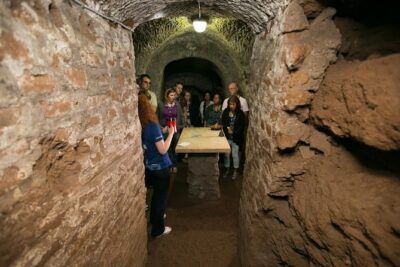
The Original Roman Crypts and Catacombs Tour with Transfers
Read our review →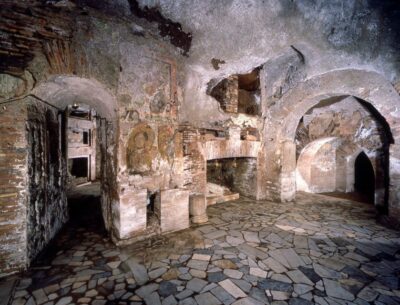
Catacombs of St. Callixtus Entry Ticket & Guided Tour
Read our review →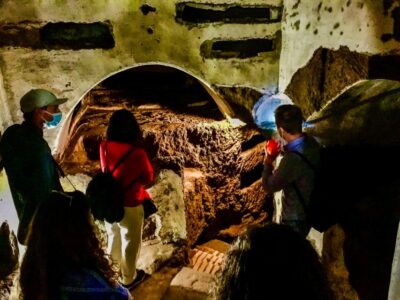

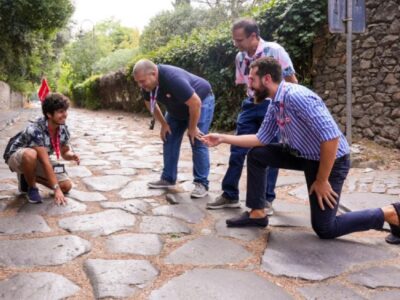
Catacombs and Capuchin Crypt Guided Tour with Transfer
Read our review →
Appian Way & Aqueducts E-Bike Tour (Catacombs & Food)
Read our review →
Appian Way, Catacombs, & Roman Aqueducts E-bike Tour
Read our review →Browse the lists this tour appears in