
Reviewed · APPIAN WAY AND AQUEDUCTS TOURS
The ancient aqueducts of Rome
Roman water still runs through these ruins. This small guided walk takes you into Parco degli Acquedotti in the Appia Antica area, where you can spot ancient aqueduct engineering and even see water activity tied to older reuse. It is history you can follow with your feet, then understand with a guide’s explanations.
I especially love how the setting keeps things human scale. You move through a park that feels used by locals, not packed with tour groups, and the walk stays mostly flat while still giving you plenty of viewpoints. I also like the guide style, often led by archaeologists, who connect what you’re seeing to politics, construction choices, and everyday water supply.
One possible drawback is simple: this is still a walking tour, and it is outdoors. You’ll want comfortable shoes, and you’ll also need good weather since the experience depends on it.
In This Review
- Key highlights you should know before you go
- Roman Aqueducts in Parco degli Acquedotti: why this walk feels different
- Getting to Giulio Agricola and finishing near Lucio Sestio (the easy part)
- Park rules of the road: what “mostly flat” really means
- Stop in the park: seven aqueducts you can compare like an engineer
- The 144 BC aqueduct: when old arches kept working
- Sixtus V, Pope Felice, and the 1500 AD reuse of Marcio arches
- The Aqueduct with healthiest water: the Water Giant arches
- Anio vetus and Claudius: the highest of Rome’s aqueducts
- Why the guides can change the whole experience
- The Appian Way connection: seeing roads next to water systems
- What the price gets you: $96.38 for 2 hours in a small group
- Who should book this aqueduct walk, and who might skip it
- Should you book this Underground Rome aqueduct tour?
- FAQ
- How long is the ancient aqueducts of Rome tour?
- Where does the tour start and where does it end?
- Is the tour offered in English?
- What group size should I expect?
- Do I receive a mobile ticket?
- What should I wear?
- What if the weather is bad or I need to cancel?
Key highlights you should know before you go
- Seven aqueducts in a few hectares at one of Rome’s most distinctive archaeological parks
- A 1500 AD aqueduct reuse story linked to Sixtus V and the way older arches were repurposed
- You can spot water leaking from a working canal, not just dead stone
- Heights that mattered, including sections linked to the city-wide supply and very tall arches
- Small group size (max 10) plus English guiding and a mobile ticket
- Less crowded, more local, with cyclists, joggers, and people hanging out in the park
Roman Aqueducts in Parco degli Acquedotti: why this walk feels different
Rome has the big, famous monuments. This experience is about something more practical and more Roman: water. The aqueducts you’ll see are not just pretty ruins, they are the infrastructure that made a huge city work.
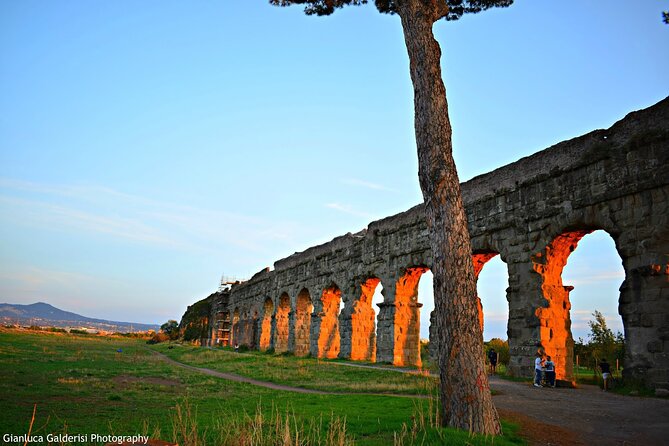
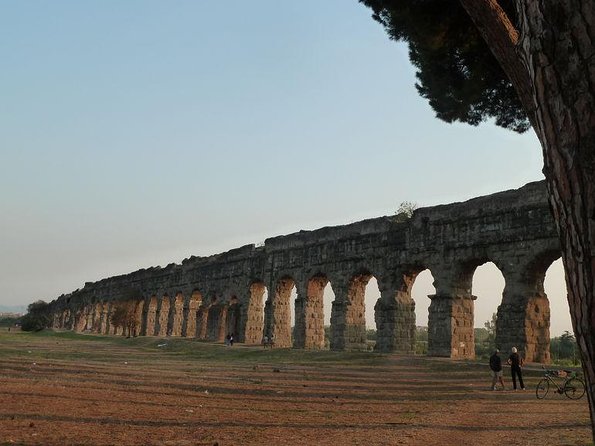
What makes this tour special is the location and the scale. In Parco degli Acquedotti, you’re walking within an archaeological area that packs seven aqueducts into a small stretch of land. That is a rare combination. Instead of jumping between separate sites across the city, you can compare construction styles and purposes almost like you’re standing in an open-air textbook.
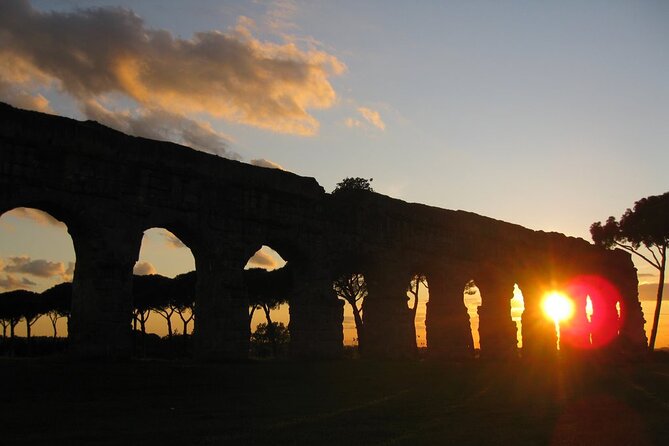
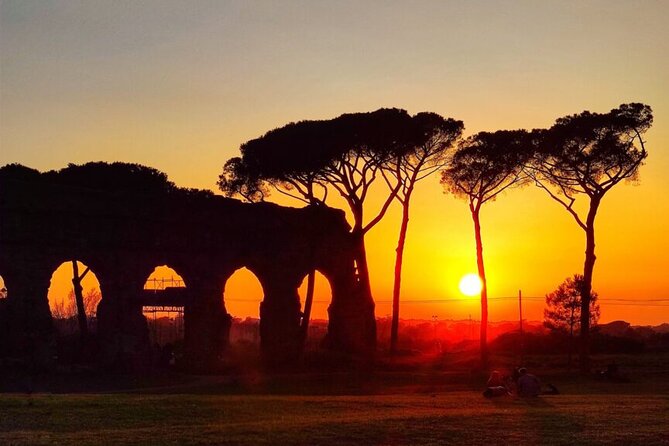
And because it’s in a real park used by everyday people, the mood is calmer. Expect an evening-sun, locals-on-the-path kind of feel, not a stand-still museum vibe.
More of the Appian Way and the aqueducts:
- Rome: Appian Way & Aqueducts E-Bike Tour (Catacombs & Food)
★ 4.9 · 1,498 reviews - Rome: Appian Way, Catacombs, & Roman Aqueducts E-bike Tour
★ 4.9 · 1,421 reviews - Appian Way Aqueducts Bike Tour (Catacombs & Lunch Option)
★ 5.0 · 975 reviews - Rome: Appian Way, Aqueducts, and Catacombs Tour
★ 4.7 · 942 reviews
Getting to Giulio Agricola and finishing near Lucio Sestio (the easy part)
The tour starts at Giulio Agricola (00174), Rome, meeting at the metro stop area after a short snack with the group. It ends at Lucio Sestio (00174). That end-to-end setup is handy because it avoids the annoying backtracking that can happen on self-guided walks.
The experience is also described as near public transportation. Practically, that means you are not committing to a long transfer out to the countryside. You are going from central Rome’s metro network to a park in the Appia Antica zone and back.
Group size is capped at 10 travelers, so the pace tends to stay manageable. You get time to ask questions and look closely instead of sprinting between viewpoints.
Park rules of the road: what “mostly flat” really means
You’ll be walking through the park for about 2 hours (approx.), and most of the movement is mostly flat. Still, it’s outdoors, and it’s a guided route through multiple aqueduct areas, so expect a steady walking effort rather than a brief viewing stop.
Comfort matters here. The guidance is straightforward: wear comfortable shoes. I’d treat that as non-negotiable. Even if the terrain is gentle, you’ll be on uneven archaeological surfaces and park paths.
Also, the tour requires good weather. If skies are bad, the operator will offer a different date or a full refund. So if you’re planning a tight schedule, pick a day with flexibility.
Stop in the park: seven aqueducts you can compare like an engineer
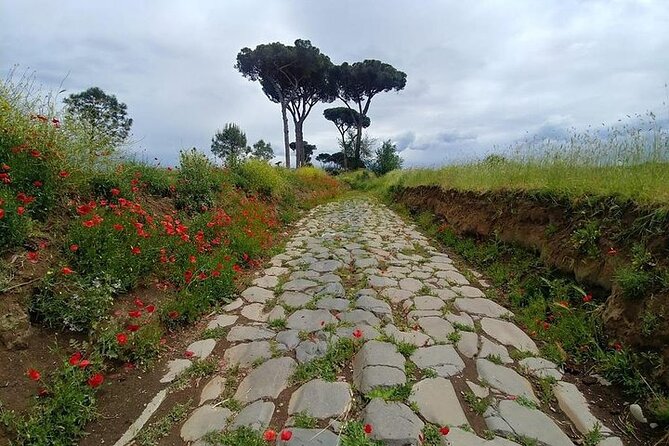
Once you’re in the park, the tour centers on Roman aqueducts and their long afterlife. You’ll pass through the area where multiple aqueducts overlap across centuries, which is why the park is considered unique in the world. The comparisons are the point: different rulers, different water needs, different reuse decisions.
You’ll also see a peripheral side of Rome, outside the normal tourist channels. Instead of only seeing ruins behind fences, you get a sense of the city’s “edge,” where local routines and ancient stones share the same space.
Even though this is “aqueducts,” the tour is not just architectural sightseeing. The guide work focuses on why those stones were built where they were, and what changes happened when aqueduct routes were improved or reused.
The 144 BC aqueduct: when old arches kept working
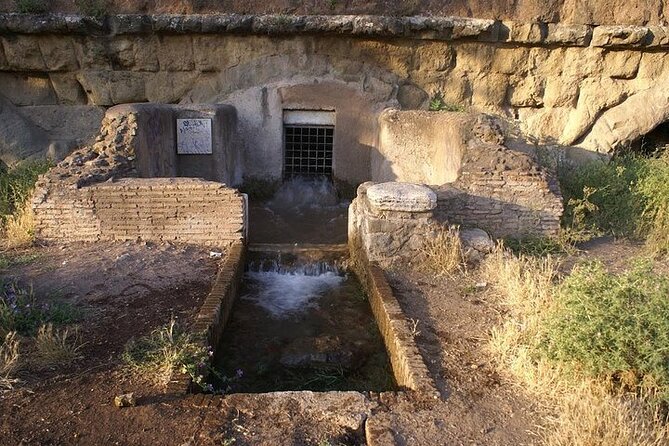
One of the sections you’ll see connects to an aqueduct built in 144 BC. The key detail is its lifespan and reuse history. This one was partially used for a long time, even recently, because it was reused by the Felice aqueduct.
That reuse piece matters because it changes how you view the ruins. You are not looking at a single moment in time. You’re looking at infrastructure that kept getting adapted. Rome treated water systems like living assets, not throwaway projects.
As you walk, it helps to focus on how the route and structure shape the water’s movement. A guide can help you notice construction choices that make sense only when you imagine gravity doing the work.
Another shape for the same afternoon in Rome:


Sixtus V, Pope Felice, and the 1500 AD reuse of Marcio arches
Another highlight is an aqueduct tied to Sixtus V in the 1500 AD period. This one is associated with Pope Felice and is built by reusing the arches of the Marcio.
This is one of those Roman stories where the stones come back around. Instead of starting from nothing, older arches were repurposed. It’s a very Rome kind of engineering logic: preserve what can still carry the load, then build what you must.
Even better, the underground part still works, and you can see water leaking from the canal. That single observation turns the tour from “ancient ruins” into something closer to “how a system behaves,” even today.
The Aqueduct with healthiest water: the Water Giant arches
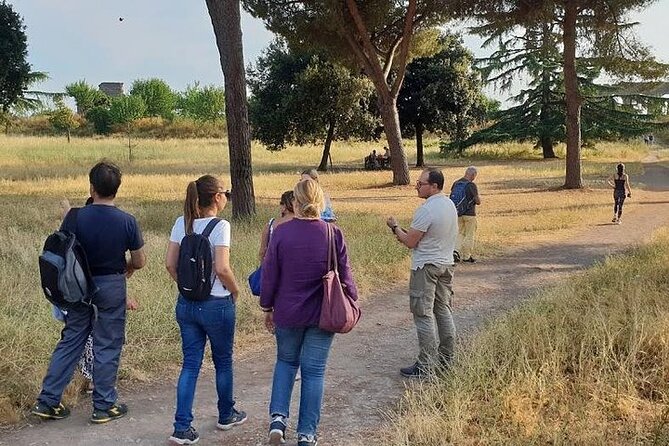
Next comes the aqueduct described as having the healthiest water, and at a height that allowed it to supply the entire city of Rome. If you’re used to thinking aqueducts as flat lines of stone, this is the reminder that height was everything.
You’ll notice stretches where the arches reach impressive heights, in some sections up to 30 meters. That scale gives you the nickname idea of a true Water Giant: big structure, big vertical planning, and a water supply designed for an entire metropolis.
As you look up, try to connect the visual geometry to the goal. The arches weren’t decorative. They were the structure that carried water where it needed to go to keep flowing through the city.
Anio vetus and Claudius: the highest of Rome’s aqueducts
The tour also includes the Anio vetus aqueduct. This one was built by emperor Claudius together with the Claudian aqueduct, and it’s described as the highest in absolute of all 11 aqueducts that supplied Rome.
That’s a good piece of context because it reframes the question from Where is the aqueduct? to What problem did this particular system solve? In Rome’s water network, different aqueducts had different roles, and height could mean different distribution points and flow control.
Watching the guide point out how the site relates to the city’s water needs makes this section click. The stones stop feeling random and start feeling like deliberate infrastructure.
Why the guides can change the whole experience
In Rome, aqueducts can sound like a “technical tour.” Here, the guiding approach turns the engineering into something you can actually follow.
A repeated theme is that the guides are not just reciting dates. Many are described as archaeologists, and they bring in charts, photos, and humor while handling questions in a patient way. People have also loved moments where the guide shows little details you might miss on your own, like identifying features in the park or pointing out the Roman road.
You may also get the chance to go close enough that you can physically touch parts of the aqueduct structures, where allowed. That kind of hands-on contact helps your brain stop treating the ruins like a postcard.
Names that come up in the guide roster include Joseph, Alex, Ricardo (and Riccardo), Giuseppe, Liviana, and Mauricio. If you’re the kind of traveler who cares about guide energy, this tour tends to deliver.
The Appian Way connection: seeing roads next to water systems
One of the reasons this area is so rewarding is that water and roads belong to the same story. Even when the tour focuses on aqueducts, guides often weave in the surrounding Roman infrastructure.
A highlight mentioned is a section of the ancient Roman road, sometimes called the Latin road, and seen near the park area. It’s the kind of moment that makes you feel like you’re walking in the same corridor where people moved two millennia ago.
Also, people note that this park is less crowded and more interesting than the more famous Appian Way stretch. That matters because your eyes can actually take in details when you’re not constantly navigating tour group traffic.
What the price gets you: $96.38 for 2 hours in a small group
The price is $96.38 per person for about 2 hours. That is not a bargain-bucket sightseeing add-on, but it also isn’t trying to compete with the big museum ticket prices.
Here’s the value logic that made sense to me: the tour fee pays for expert interpretation and a guided route through a specialized archaeological area, not for a major entry fee. The park admission is described as free for the stop, so your payment is primarily about having someone connect the dots and keep the experience flowing.
It also helps that the group is limited to 10 travelers and the tour is in English with a mobile ticket. A small group and a clear guide narrative are exactly what you want for something as technical as aqueduct height, routing, and reuse.
If you’re the type who enjoys walking and learning at the same time, this cost can feel fair. If you only want quick monument photos, it might feel more like a guided lesson than a casual stroll.
Who should book this aqueduct walk, and who might skip it
This tour fits well if you want a break from the usual Colosseum and Vatican circuit. You’ll be in a quieter park setting with locals around, and you’ll focus on engineering and how Rome handled a daily need at scale.
It also suits families. One review even notes kids running around and exploring. If your group includes younger travelers, just keep expectations realistic about walking time and uneven ground.
I’d be cautious if you have limited tolerance for walking outdoors, even though the route is mostly flat. This is still a two-hour stroll, and it relies on good weather.
Should you book this Underground Rome aqueduct tour?
If you want the Rome most visitors skip, and you like understanding how cities work, I’d book it. The best part is the combination: seven aqueducts in one park, a route that stays out of the main crowds, and guides who can make the technical story click.
Book it on a day when you can manage the outdoors and you’re happy to walk. If that sounds like your style, this is one of the most satisfying ways to see Roman ingenuity without fighting for space in the usual lines.
FAQ
How long is the ancient aqueducts of Rome tour?
The tour lasts about 2 hours.
Where does the tour start and where does it end?
It starts at Giulio Agricola (00174 Rome) and ends at Lucio Sestio (00174 Rome).
Is the tour offered in English?
Yes, the tour is offered in English.
What group size should I expect?
The experience has a maximum of 10 travelers.
Do I receive a mobile ticket?
Yes, the tour uses a mobile ticket.
What should I wear?
Wear comfortable shoes for walking.
What if the weather is bad or I need to cancel?
The experience requires good weather. If it is canceled due to poor weather, you will be offered a different date or a full refund. You can cancel up to 24 hours in advance for a full refund. If you cancel less than 24 hours before the start time, the amount paid is not refunded.
Latest additions from Rome
- Rome: Testaccio Market Food Tour with Street Food & Wine★ 5.0 · 8 reviews
- Exclusive Pasta & Tiramisu Class with Wine near by Colosseum★ 5.0 · 8 reviews
- Private Professional Photoshoot in Rome★ 5.0 · 8 reviews
- Rome Day to discover Florence and Pisa Hotel Pickup★ 4.5 · 8 reviews
- Loreto “Shrine of the Holy House of the Virgin Mary” Private Tour from Rome★ 5.0 · 8 reviews
- Rome: Christmas Nativities and Angels Tour★ 3.1 · 8 reviews
- Guided Tour of Vatican Museums and Sistine Chapel★ 5.0 · 8 reviews
- Rome: Cooking Class of fresh Pasta and Tiramisu Cake★ 5.0 · 8 reviews
Appian Way and Aqueducts Tours, compared.
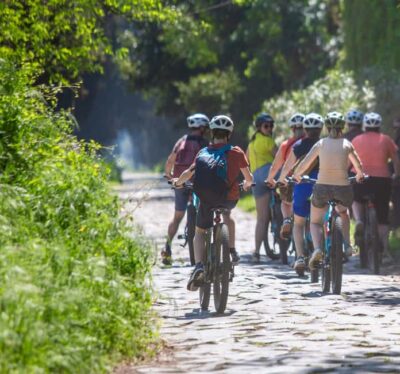
Appian Way & Aqueducts E-Bike Tour (Catacombs & Food)
Read our review →
Appian Way, Catacombs, & Roman Aqueducts E-bike Tour
Read our review →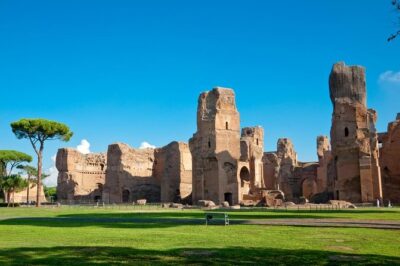
Appian Way Aqueducts Bike Tour (Catacombs & Lunch Option)
Read our review →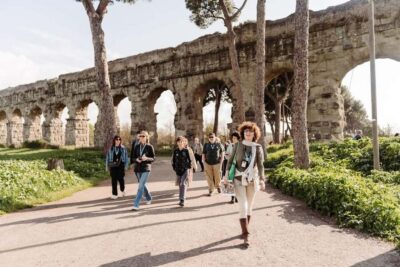
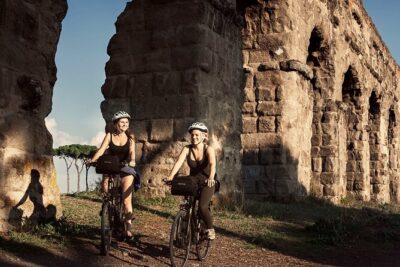
Appian Way, Catacombs and Aqueducts Park Tour with Top E-Bike
Read our review →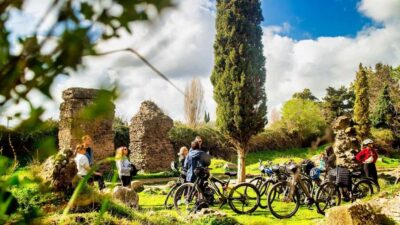
Appian Way Aqueducts Bike Tour (UPG Catacombs & Lunch)
Read our review →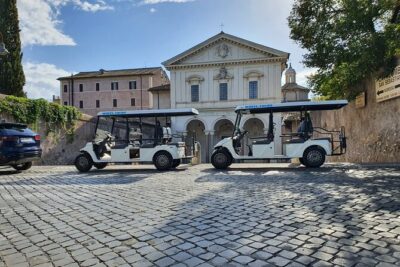
Rome Catacomb & Appian Way Small-Group Tour by Golf Cart
Read our review →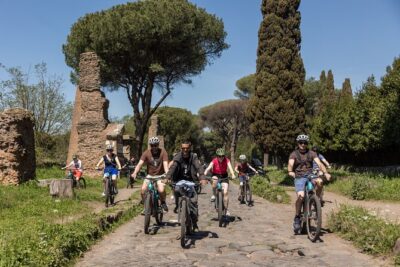
Appian Way & Aqueducts small group e-bike tour(catacombs & food)
Read our review →Browse the lists this tour appears in