
Reviewed · CATACOMBS OF ROME TOURS
Subterranean Rome: Catacombs and Appian Way Discovery
Two hours underground and on ancient cobbles. This private Rome experience threads together the Appian Way and the Catacombs of San Callixtus, with catacomb admission included so you can skip ticket hassle. I like the fact that you get a comfortable air-conditioned vehicle with Wi-Fi, plus a pace that can fit your group. The one real thing to consider is that the whole plan is short, so you will move through each stop fairly quickly.
If you see names like Patrick (Patricio), Constantine, or Mirko Tatano attached to your guide, that often signals strong explanations and good timing. You’ll be shown why Porta San Sebastiano mattered, what you’re really looking at in the catacombs, and how the Appian Way became Rome’s “Queen of Roads.”
In This Review
- Key things that make this Rome catacomb and Appian Way tour work
- The warm start: Porta San Sebastiano and the Aurelian Walls
- Heading underground: Catacombs of Saint Callixtus without ticket stress
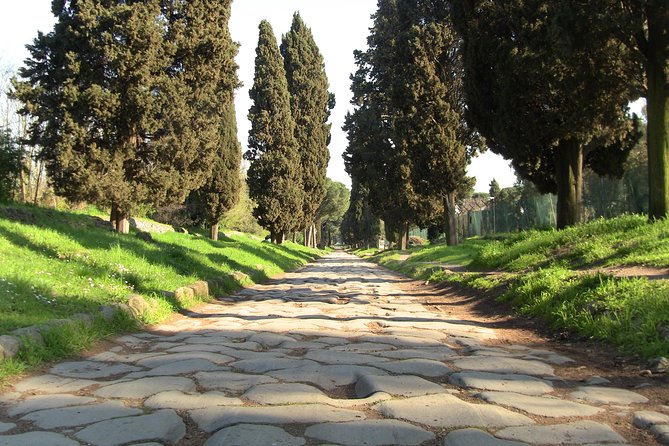
- Appian Way on foot: cobblestones, tombs, and the road that changed Rome
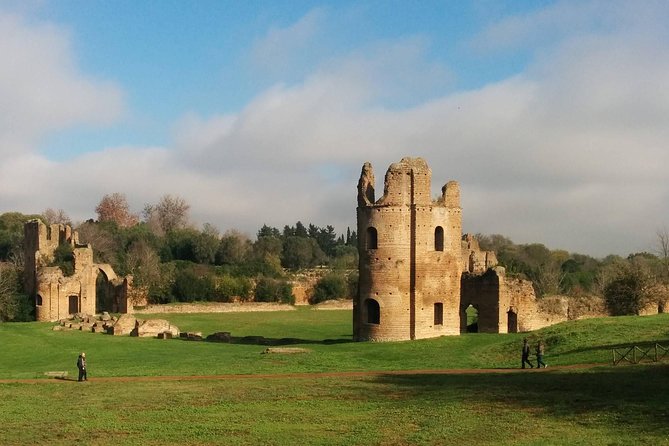
- Villa di Massenzio: the emperor, the ruins, and a circus track
- Chiesa del Domine Quo Vadis: the small church with big symbolism
- What you will actually experience in 2 hours 30 minutes
- Comfort, communication, and smooth logistics that matter in Rome
- Price and value: is $223.49 a fair deal?
- Who this Appian Way and catacombs tour is best for
- Should you book Subterranean Rome? My take
- FAQ
- Where does the tour meet?
- How long is the experience?
- Is this tour private?
- What is included for the catacombs?
- Do I need tickets for the other stops?
- What language is the tour offered in?
- Is there Wi-Fi and air-conditioning during transport?
- Will I receive a mobile ticket?
- What information do I need to book?
- Can I get a refund if my plans change?
Key things that make this Rome catacomb and Appian Way tour work
- Catacombs entry is included, so you do not waste time or budget on tickets.
- Air-conditioned, Wi-Fi-equipped private transport makes the summer ride a lot more tolerable.
- Porta San Sebastiano connects the Aurelian Walls to the road that shaped Roman expansion.
- Appian Way walking includes iconic stops like the Tomb of Cecilia Metella and nearby ancient burial sites.
- Villa di Massenzio adds a quieter, big-scale Roman moment, including the Circus of Maxentius.
- Domine Quo Vadis is brief but memorable, with a centuries-old Christian tradition tied to the site.
The warm start: Porta San Sebastiano and the Aurelian Walls
The tour begins at Porta San Sebastiano, one of Rome’s best-preserved gates from the era of the Aurelian Walls. Even if you are not a hardcore fortifications person, this stop gives you something most central Rome sightseeing does not: a clear sense of how Rome protected itself and funneled movement in and out of the city.
This gate is also practical. It sets the tone for the day. You go from street level, to Rome’s defensive story, then toward the Appian Way where distance and infrastructure suddenly matter. If you like explanations that help you connect monuments across a few miles, you will appreciate this opening.
One small tip for your mindset: at Porta San Sebastiano, try to focus less on one photo spot and more on the idea of a city edge. That mental shift makes the later parts feel more connected.
More of the Appian Way and the aqueducts:
- Rome: Appian Way & Aqueducts E-Bike Tour (Catacombs & Food)
★ 4.9 · 1,498 reviews - Rome: Appian Way, Catacombs, & Roman Aqueducts E-bike Tour
★ 4.9 · 1,421 reviews - Appian Way Aqueducts Bike Tour (Catacombs & Lunch Option)
★ 5.0 · 975 reviews - Rome: Appian Way, Aqueducts, and Catacombs Tour
★ 4.7 · 942 reviews
Heading underground: Catacombs of Saint Callixtus without ticket stress
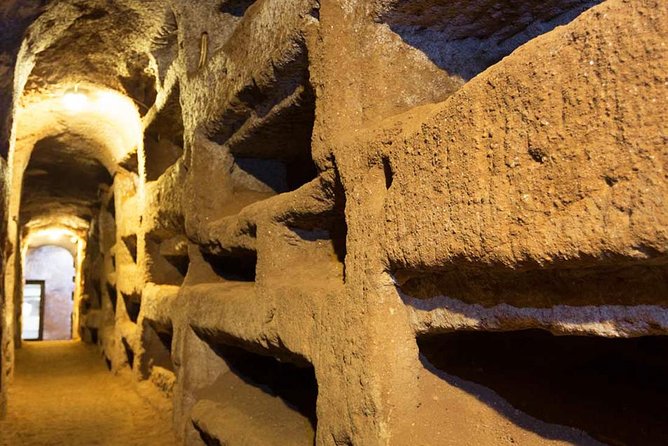
The headline stop is the Catacombs of Saint Callixtus, known in some contexts as the Catacombs of San Sebastiano along the Appian Way area. What you are stepping into is an early Christian burial setting that dates back to the 2nd century AD, used when above-ground cemeteries faced restrictions.
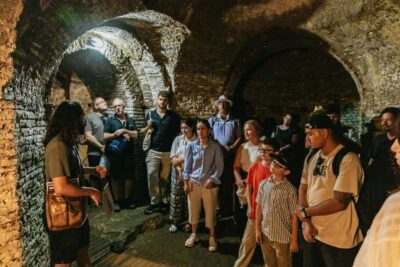
Here is what makes this stop genuinely worth your time. You are not just looking at a tunnel. You are seeing an underground system built for burials over multiple levels, with thousands of niches where people were laid to rest. The walls carry inscriptions and symbols that can feel very human, especially when someone explains what the imagery meant to early Christians.
You should also know what to expect visually. Some online photos make the catacombs look like a place of visible skeletons. In reality, you may not see bone displays in the way those pictures suggest. The focus is more often on the niches and the early Christian artwork and markings. So go in for the symbols, the setting, and the story, not for a Halloween-style walkthrough.
The good part for your planning: entry to the catacombs is included. That removes one of Rome’s most common small frustrations, hunting for ticket windows or figuring out entry timing.
Appian Way on foot: cobblestones, tombs, and the road that changed Rome
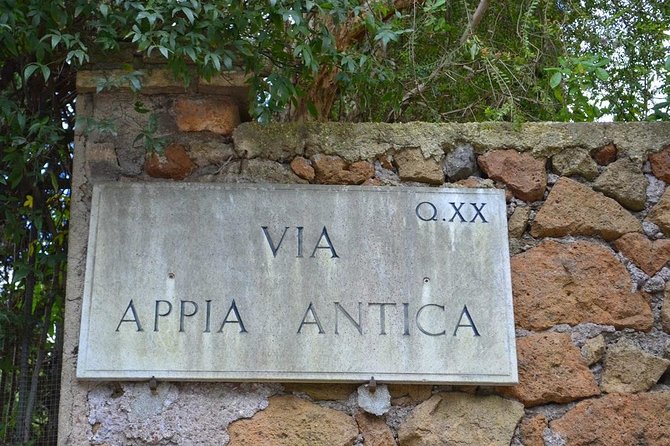
After the underground quiet, you shift to open air and the feeling that Rome has space around it again. The Appian Way (Via Appia Antica) is often called the Queen of Roads, and there is a reason people get dramatic about it. This road was built in 312 BC by Appius Claudius Caecus and became a major artery for Roman military and economic expansion, linking Rome to the southern regions.
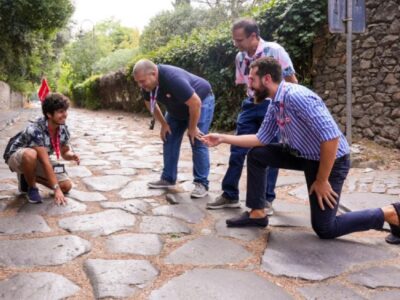
What you will actually do on the ground matters more than the nickname. You get a chance to walk on the ancient cobblestones, then see how the road sits in a corridor of countryside and historical remnants. Even in a short visit, it is the kind of place where the scale hits you. Walking it makes the idea of long-distance infrastructure feel real, not theoretical.
Two itinerary moments add extra value here:
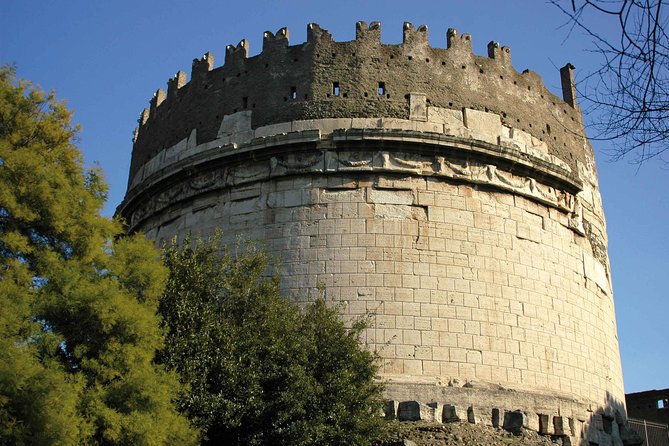
- You are guided to burial and monument points, including the Tomb of Cecilia Metella.
- You are also exposed to the bigger picture of the Appian Way as a trade and supply route, with historical references to events associated with the road.
If you want the best photos, think about timing and shade, not just composition. Roman sun can be intense, and you have a nice advantage here: you return to an air-conditioned vehicle afterward.
Villa di Massenzio: the emperor, the ruins, and a circus track
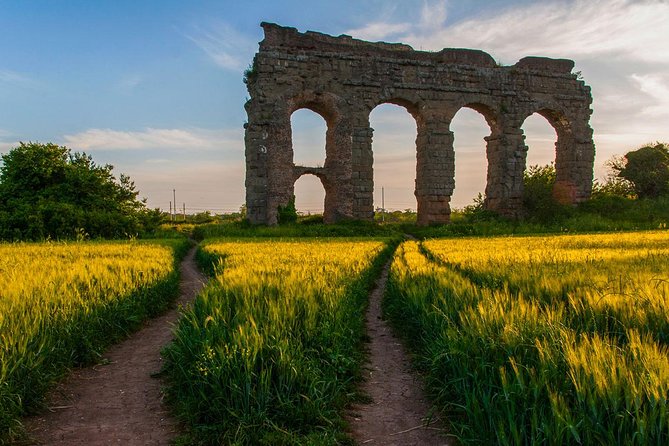
Next you reach Villa di Massenzio, a complex tied to Emperor Maxentius in the early 4th century AD. This stop is shorter, but it is one of those places where you understand something about Rome that the Colosseum does not teach as directly: entertainment and power were often tied together.
The ruins connect to the Circus of Maxentius, a racing track that could hold over 10,000 spectators. Even just seeing the remains, you can picture the scale. Chariot racing mattered. Public spectacle was a tool of rule and identity, and this place is a surviving reminder of that system.
There is also a political storyline baked in. Maxentius’s rivalry with Constantine and the Battle of the Milvian Bridge in 312 AD are linked to this era. If your guide shares the context, the ruins go from “pretty stones” to “a snapshot of a turning point.”
This stop tends to suit people who like Roman engineering and how emperors lived with big-city drama nearby.
Chiesa del Domine Quo Vadis: the small church with big symbolism

Right along the Appian Way you will visit the Chiesa del Domine Quo Vadis. It is small, but it carries a famous Christian tradition tied to Saint Peter and a vision of Christ during Peter’s flight from Rome.
The name translates as Lord, where are you going? According to tradition, the moment of the vision is connected to footprints imprinted on the stone inside the church. The current structure has roots in early periods, with a build in the 4th century during Constantine’s era, and later rebuilding.
This is not a “must-see” on most Rome checklists. It becomes worth your attention when you want variety after catacombs and road walking. It also gives your brain a breather. You go from bones and stones, to a quiet church detail that people have revered for centuries.
If you care about religious history, this stop will feel like a tidy payoff to the symbolism you saw underground earlier.
Other descents into the catacombs:
What you will actually experience in 2 hours 30 minutes
Let’s talk timing, because that is the real make-or-break.
This tour runs about 2 hours 30 minutes. That means:
- You get a quick, focused taste of several places.
- You will likely spend most of your “standing and staring” time in the catacombs and along the Appian Way, where you slow down enough to register what you are seeing.
- Other stops like Villa di Massenzio and Domine Quo Vadis are brief, but they are chosen because they add contrast and context.
So if you want long museum-style linger time, you might feel rushed. If you want a well-structured highlights loop that covers both above-ground and underground Rome, this format can be ideal.
Also, pay attention to language. The tour is offered in English, and the value depends heavily on how clearly your guide can explain what you are looking at. One way to protect yourself is to confirm that you will have a true guide with commentary, not just a driver who handles transport.
Comfort, communication, and smooth logistics that matter in Rome
Rome can be tough on your schedule, and summer can be tougher on your body. This tour includes practical comfort in the vehicle: Wi-Fi and air-conditioning, plus water and candies. That is not just a perk. It changes how you enjoy the day. Long walks in heat are easier when you know you have cold air and a quick reset at the end.
You also get hotel pickup, which is a big deal in Rome. Getting to the Appian Way side is not as simple as it sounds from central areas. Pickup removes the friction that can turn a short tour into a long day.
Add mobile ticket convenience, and you reduce the small day-of stress. You also receive confirmation at booking time, and you will need to provide age and full name for group members. That matters because it affects entry and the way your day is set up.
The operator also notes that most people can participate, so it is broadly flexible.
Price and value: is $223.49 a fair deal?
At $223.49 per person, this is not a “cheap ride.” But the value is not just the transportation.
You are paying for:
- Private transportation with Wi-Fi and air-conditioning
- Catacombs entry included
- A private tour format where it is only your group
- Water and candies
- Time with stops that connect as a single story, from the city gate to underground burial spaces, then to the road and Roman entertainment sites
If you tried to do this on your own, the cost would often creep up fast once you add catacomb admission plus a private guide plus a car for the Appian Way side. This is also a day where time matters. A well-planned route saves you the mental load of figuring out the order and how long things really take out there.
That said, short private tours depend on guide quality. If you want heavy commentary and deep explanations, choose your guide carefully. If you primarily want transportation to two stops with minimal narration, you may find a simpler option and spend less.
Who this Appian Way and catacombs tour is best for
This experience fits best if you:
- Want catacombs plus Appian Way in one smooth half-day plan
- Like history that connects locations, not just isolated photo stops
- Prefer private pacing over large-group movement
- Travel in hotter months and want the comfort of an air-conditioned ride
- Enjoy Christian art and symbolism as much as you enjoy Roman stone and engineering
It is less ideal if you:
- Want to spend a long time in only one location
- Expect the catacombs to match dramatic photo myths about skeleton displays
- Need a very specific kind of narration, since the quality depends on your on-the-day guide performance
If your group is mix-and-match, say a history fan plus someone who just wants a scenic road walk, the variety here helps.
Should you book Subterranean Rome? My take
Book this tour if you want a tidy, high-value highlights loop that hits three big themes in Rome: defense and infrastructure, early Christian burial art, and the Appian Way as a road that shaped the empire. The included catacombs entry plus air-conditioned private transport makes it a smart way to avoid small hassles that can derail a short day.
I would think twice if your top priority is maximum time inside one site, or if you are hoping for the exact kind of catacombs “skeleton display” you might see in marketing photos. In this format, it is about the setting and the symbolism, not a lengthy exhibition.
If you do book, ask yourself one question: do you want guided storytelling, or do you mostly want a comfortable car to reach the places? If you want storytelling, choose your guide with care, and if you see names like Patrick (Patricio), Constantine, or Mirko Tatano available, that is a solid sign that your day will feel more than just transport.
FAQ
Where does the tour meet?
Hotel pickup is offered, so you will be collected from your hotel.
How long is the experience?
It runs for about 2 hours 30 minutes.
Is this tour private?
Yes. It is a private tour/activity, and only your group participates.
What is included for the catacombs?
Entry to the catacombs is included, and there is no need to purchase admission separately for that stop.
Do I need tickets for the other stops?
Catacombs entry is included. For the Appian Way portion, admission is also listed as included, while some other stops are listed as admission free.
What language is the tour offered in?
The tour is offered in English.
Is there Wi-Fi and air-conditioning during transport?
Yes. The vehicle includes free Wi-Fi and air-conditioning, plus water and candies.
Will I receive a mobile ticket?
Yes, a mobile ticket is provided.
What information do I need to book?
You should provide the age and full name of group members.
Can I get a refund if my plans change?
Free cancellation is available. You can cancel up to 24 hours in advance for a full refund.
Latest additions from Rome
- Rome: Testaccio Market Food Tour with Street Food & Wine★ 5.0 · 8 reviews
- Exclusive Pasta & Tiramisu Class with Wine near by Colosseum★ 5.0 · 8 reviews
- Private Professional Photoshoot in Rome★ 5.0 · 8 reviews
- Loreto “Shrine of the Holy House of the Virgin Mary” Private Tour from Rome★ 5.0 · 8 reviews
- Rome Day to discover Florence and Pisa Hotel Pickup★ 4.5 · 8 reviews
- Rome: Christmas Nativities and Angels Tour★ 3.1 · 8 reviews
- Guided Tour of Vatican Museums and Sistine Chapel★ 5.0 · 8 reviews
- Rome: Cooking Class of fresh Pasta and Tiramisu Cake★ 5.0 · 8 reviews
Catacombs of Rome Tours, compared.
Capuchin Crypts and Catacombs Tour with Transfers
Read our review →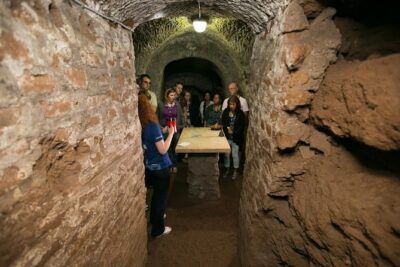
The Original Roman Crypts and Catacombs Tour with Transfers
Read our review →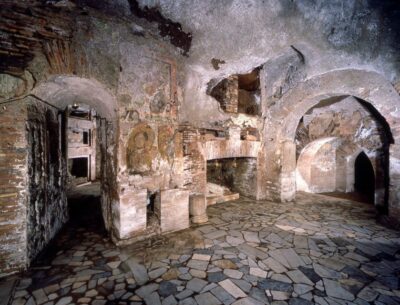
Catacombs of St. Callixtus Entry Ticket & Guided Tour
Read our review →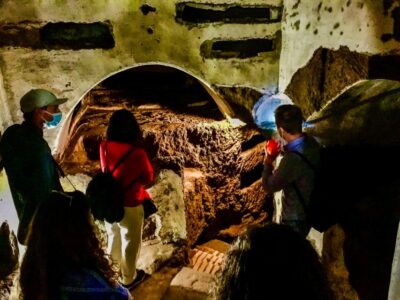
Catacombs and Capuchin Crypt Guided Tour with Transfer
Read our review →
Appian Way & Aqueducts E-Bike Tour (Catacombs & Food)
Read our review →
Appian Way, Catacombs, & Roman Aqueducts E-bike Tour
Read our review →Browse the lists this tour appears in